Week-4 : Basic Calibration of Single cylinder CI-Engine
Week-4 : Basic Calibration of Single cylinder CI-Engine
SI vs CI
|
S.No./Engine type |
SI engine |
CI engine |
|
1. |
It is an engine in which the spark is used to burn the fuel. |
It is an engine in which heat of compressed air is used to burn the fuel. |
|
2. |
SI engine works on Otto cycle |
CI engine works on Diesel Cycle |
|
3. |
It draws a mixture of fuel and air. |
It draws only air during suction stroke. |
|
4. |
The carburettor is employed to mix air and petrol. |
The injector is responsible to inject fuel. |
|
5. |
SI engine has compression ratio 6 to 10. |
CI engine has compression ratio 15 to 25. |
|
6. |
These are high speed engines. |
These are relatively low speed engine. |
|
7. |
SI engine are lighter and cheaper, due to low compression ratio and maintenance cost is low. |
CI engine are heavier and costlier, due to high compression ratio and maintenance cost is high. |
|
8. |
The pressure at the end of compression is 10bar. |
The pressure at the end of compression is 35bar. |
|
9. |
The thermal efficiency is up to 26%. |
The thermal efficiency is around 40%. |
|
10. |
The SI engine are generally employed in light duty vehicles such as scooters, cars, motorcycles etc. |
The CI engines are generally employed in heavy duty vehicles like trucks, buses, earth movers etc. |
BSFC - Brake specific fuel consumption abbreviated BSFC and also known by the term power-specific fuel consumption or simply specific fuel consumption, is a type of comparison ratio which looks at an engine’s fuel efficiency in terms of how much fuel the car uses versus how much power it produces. The formula for calculating brake specific fuel consumption is fuel consumption divided by power, and often the results are expressed in kilowatts per hour.
Exhaust temperature - In modern internal combustion engines, the knowledge of the exhaust gas temperature is necessary for the management and diagnosis of the exhaust gas aftertreatment system, as well as for the protection of components that may be sensitive to thermal overloads.
In the diesel engine, aftertreatment components that are often actively managed based on exhaust gas temperature include diesel particulate filters (DPF) and NOx reduction catalysts such as SCR catalysts and NOx adsorber catalysts. In stoichiometric petrol engines, the engine management strategy depends on the temperature of the three-way catalyst (TWC).
A/F ratios - Thermal engines use fuel and oxygen (from air) to produce energy through combustion. To guarantee the combustion process, certain quantities of fuel and air need to be supplied in the combustion chamber. A complete combustion takes place when all the fuel is burned, in the exhaust gas there will be no quantities of unburned fuel. Air-fuel ratio (A/F) is the ratio between the mass of air and mass fuel used by the engine when running.
The ideal (theoretical) air-fuel ratio, for a complete combustion, is called stoichiometric air-fuel ratio. When the air-fuel ratio is higher than the stoichiometric ratio, the air-fuel mixture is called lean. When the air-fuel ratio is lower than the stoichiometric ratio, the air-fuel mixture is called rich. For a gasoline engine, the stoichiometric air-fuel ratio is around 14.7:1 and for diesel engine it is 14.5:1.
Simulation
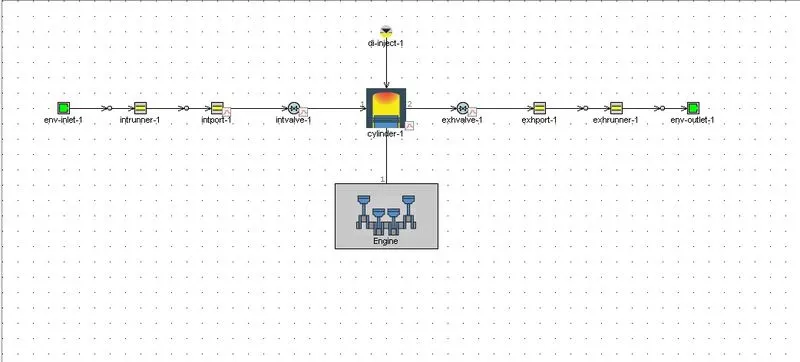
Open GT power console>> select engine performance>> select 1cyclDI engine
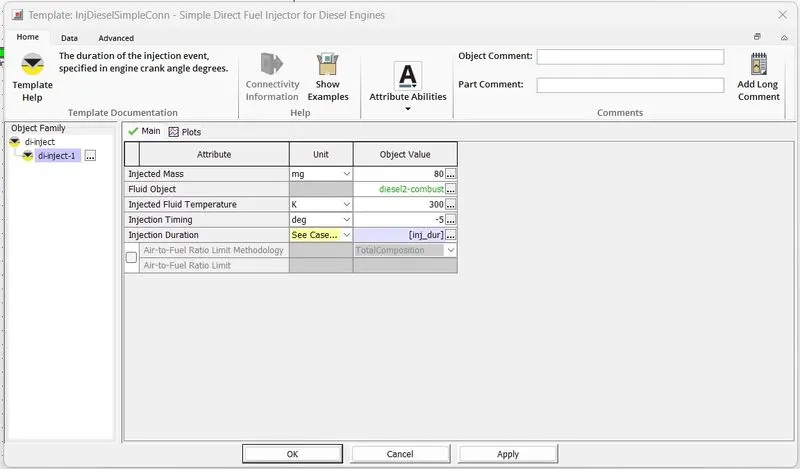
Setting up Boundary Conditions - Injection Duration
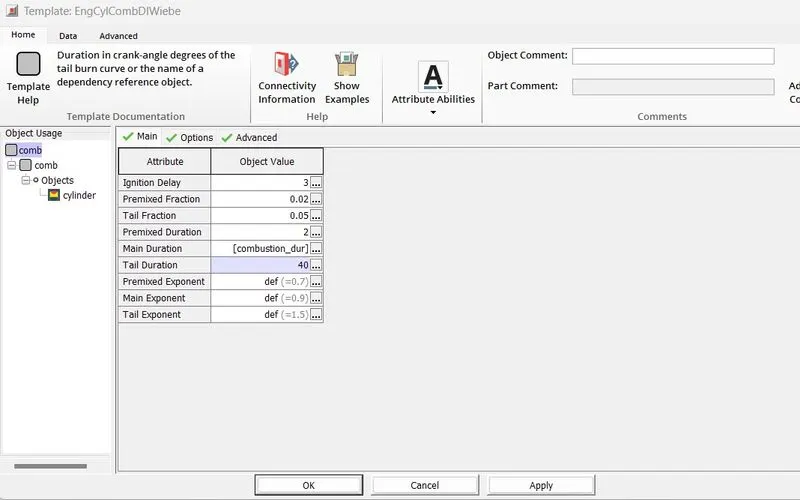
Combustion Duration
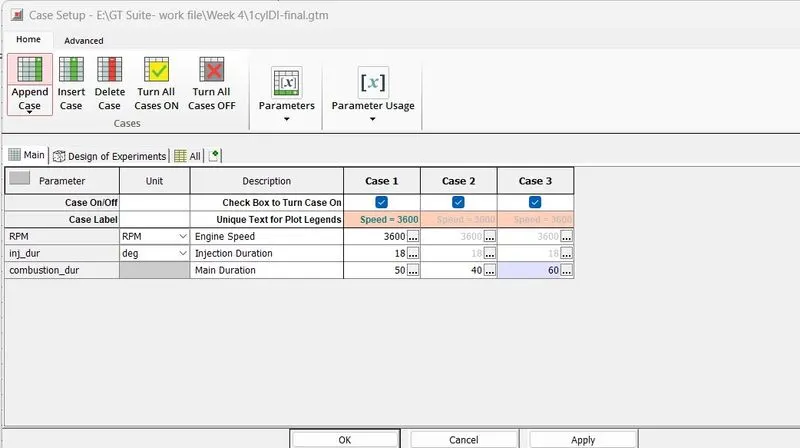
Case Setup
Inline cylinder pressure

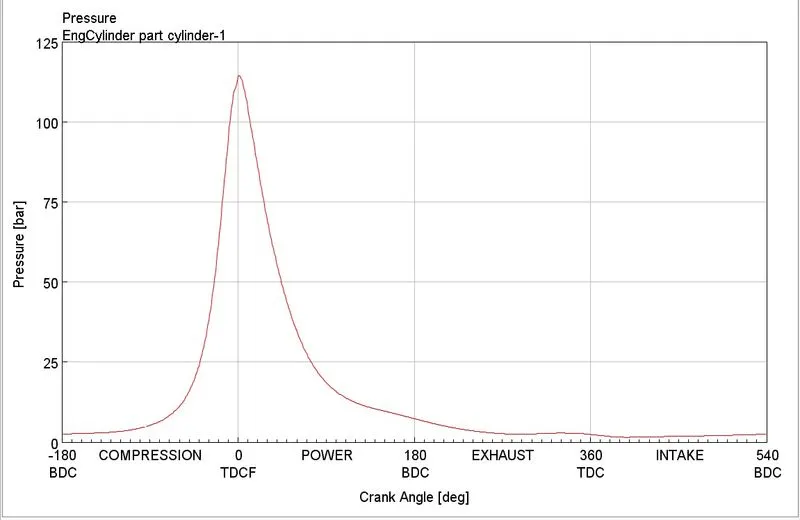
Pressure
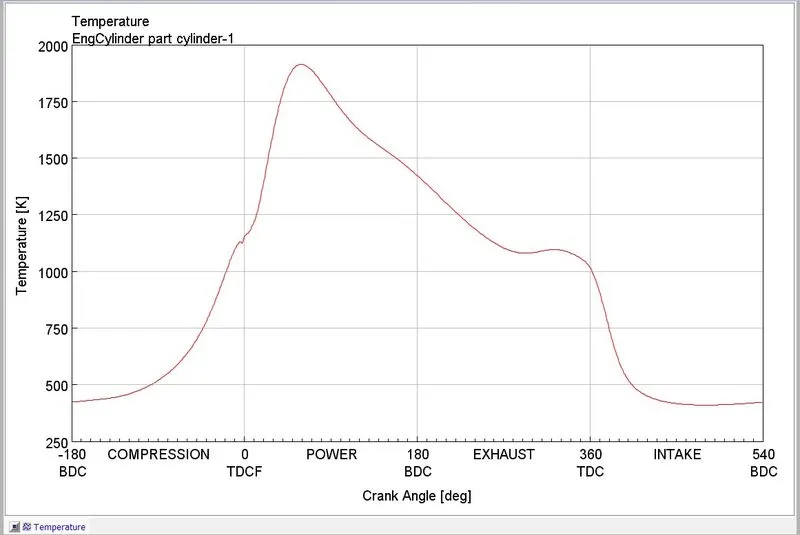
Temperature
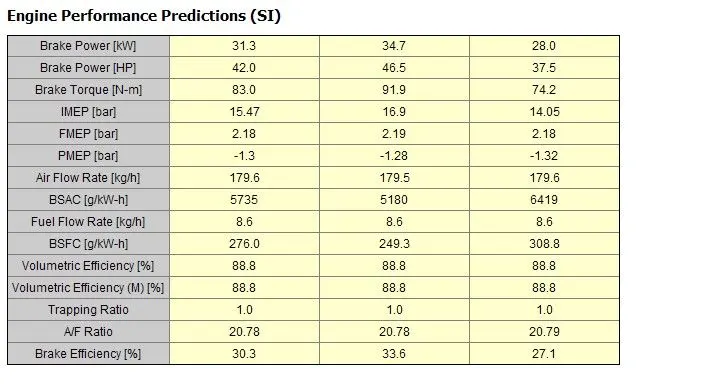
Engine Performance Predictions
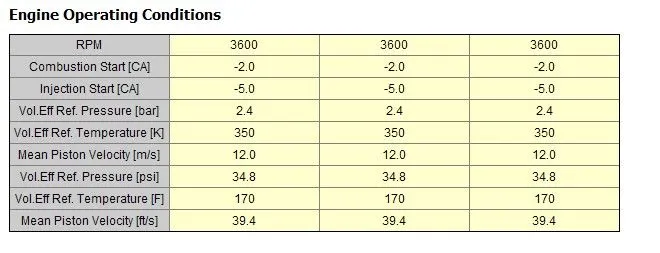
Engine Operation Conditions
It is clear from the graphs the burn rate has decreased due to increase in the burn duration. Peak of pressure and temperature has reduced because fuel is not burning violently. Longer duration of burn rate has reduced the torque and power, while it increased the BSFC. Other parameters are more or less same.