Week 7: Literature review - RANS derivation and analysis
Answer
Reynolds Stress
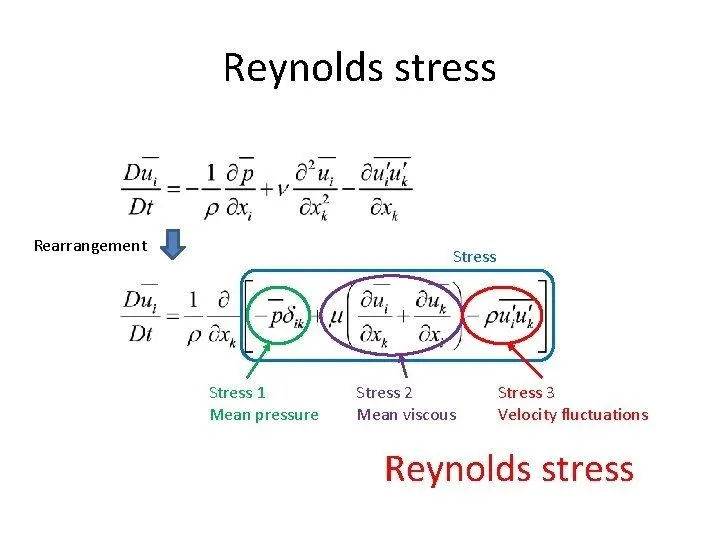
Reynolds stress results from the turbulent transport of momentum. It can be defined as the component of the total stress tensor in a fluid obtained from the averaging operation over the Navier-Stokes equations to account for turbulent fluctuations in fluid momentum.
In terms of accuracy for modeling energy cascades where there is significant eddy activity, the RSM outperforms other less complex methods. However, there are pros and cons to consider when opting to apply this method for your turbulence modeling.
Advantages of the Reynolds Stress Equation Model
- Only the initial and boundary conditions are needed.
- All Reynolds transport equation components are solved.
- Most generally applicable method.
- Can be used to solve complex 3-D problems.
- Stress due to buoyancy and curvature effects can be reduced.
Disadvantages of the Reynolds Stress Equation Model
- Complex and computationally costly.
- Can have divergence issues.
Turbulent Viscosity
The turbulent transfer of momentum by eddies creates internal fluid friction. It is the fundamental idea of how we define viscosity in turbulent flow, i.e. internal fluid resistance. Eddy viscosity explains what causes internal friction.
Molecular viscosity is the same as viscosity. The Coefficient of Molecular Viscosity is the same value as dynamic viscosity. Molecular viscosity is the transport of mass motion momentum solely by the random motions of individual molecules not moving together in coherent groups. Molecular viscosity is analogous in laminar flow to eddy viscosity in a turbulent flow
Derivation
Reynolds Decomposition
In fluid dynamics and turbulence theory, Reynolds decomposition is a mathematical technique used to separate the expectation value of a quantity from its fluctuations.
For example, for a quantity  the decomposition would be

where  denotes the expectation value of , (often called the steady component/time, spatial or ensemble average), and
  , are the deviations from the expectation value (or fluctuations). The fluctuations are defined as the expectation value subtracted from quantity such that their time average equals zero.
The expected value, , is often found from an ensemble average which is an average taken over multiple experiments under identical conditions. The expected value is also sometimes denoted  , but it is also seen often with the over-bar notation.
Direct numerical simulation, or resolving the N-S equations completely in  , is only possible on small computational grids and small time steps when Reynolds Numbers are low. Due to computational constraints, simplifications of the Navier-Stokes equations are useful to parameterize turbulence that are smaller than the computational grid, allowing larger computational domains.
From Governing Equations
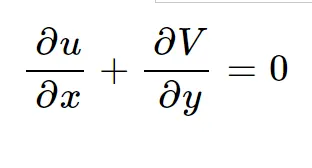
Continuity equation
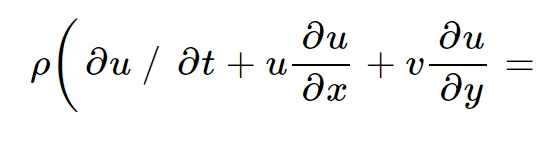
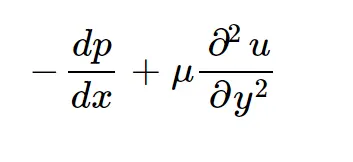
Momentum Equation
Energy Equation
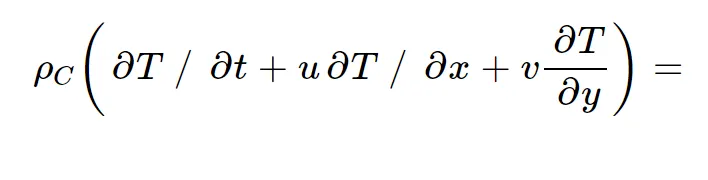
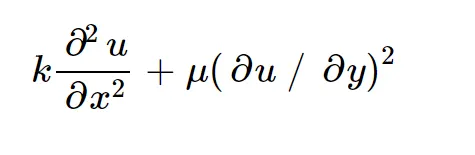
Reynolds Decomposes



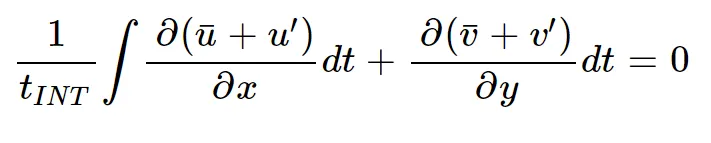
Time Integral

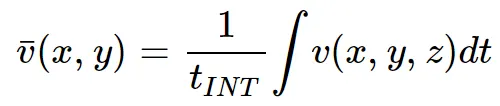
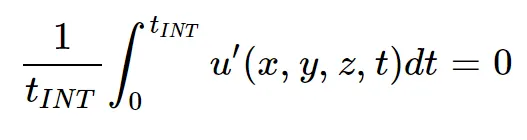

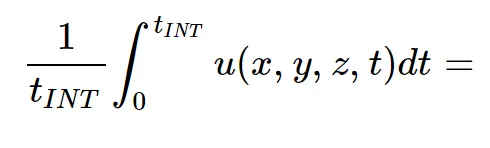
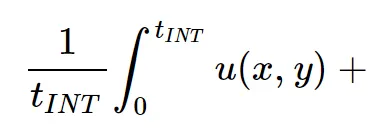
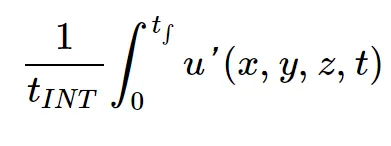
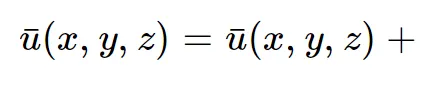
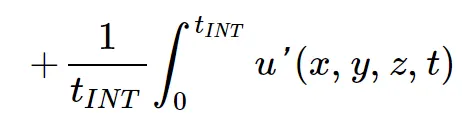
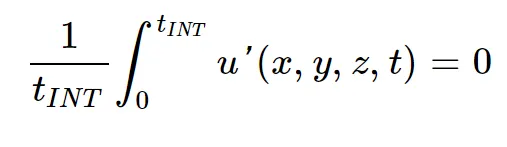
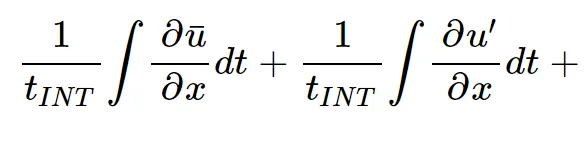
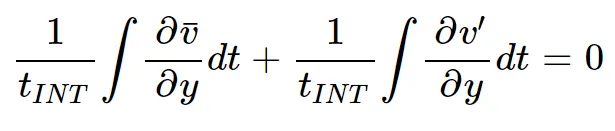
Apply Reynolds Decomposition
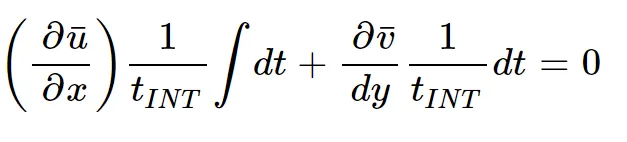
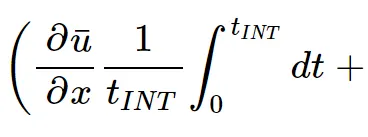
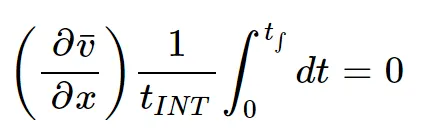
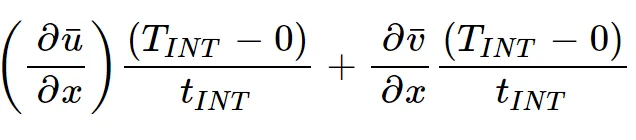
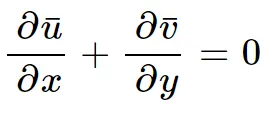
Continuity Equation
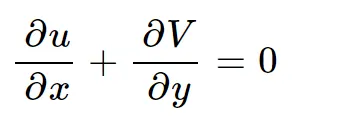
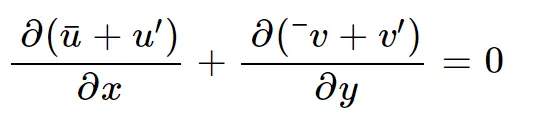
Finally
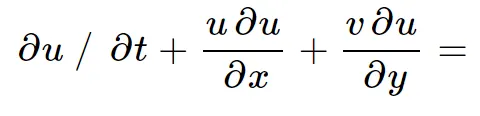
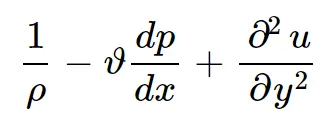
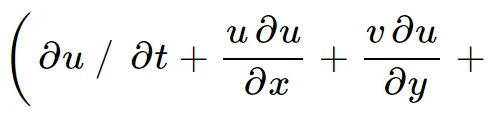
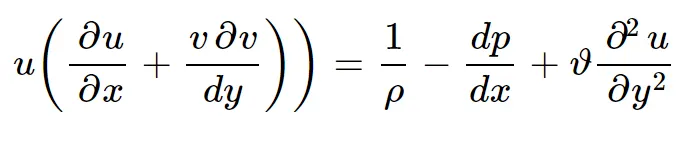
Momentum Equation
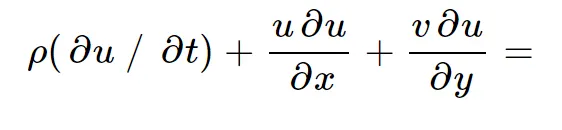
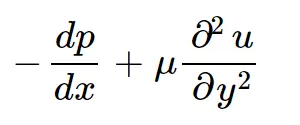
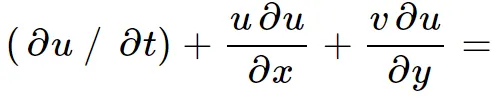
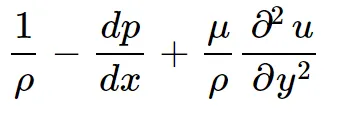

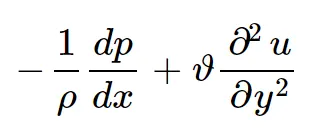
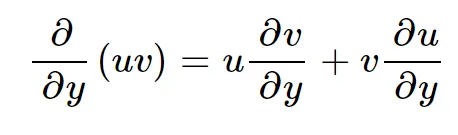
Applying Product rule
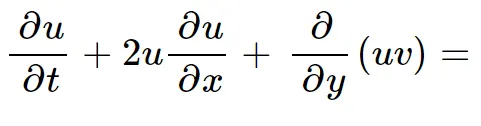
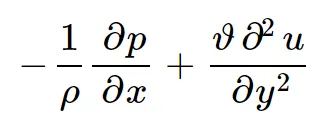
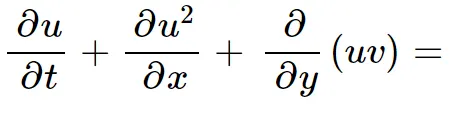
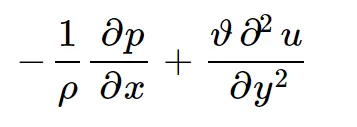
Simplified
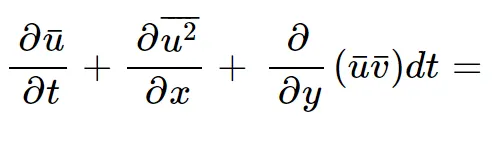
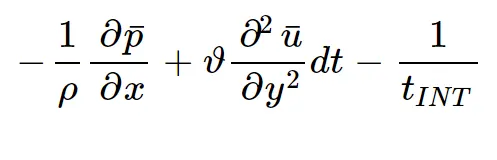
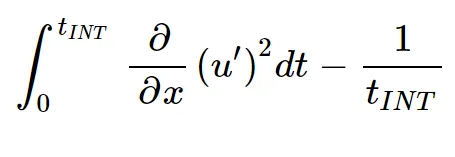
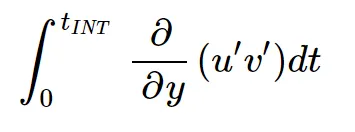
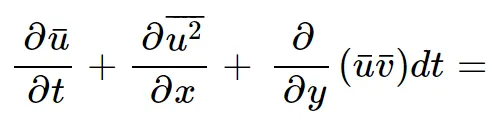
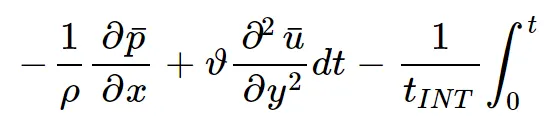
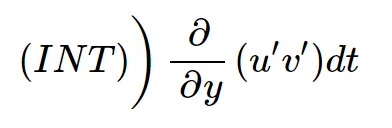
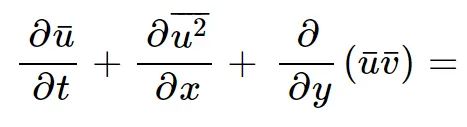
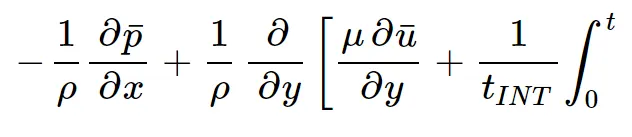
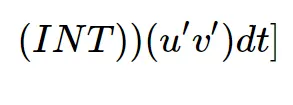
The above-mentioned equation is as follows
Inertial term = Pressure Term + Molecular Viscocity + Momentum Diffusivity
Thankyou!!!