Week 2 - Flow over a Cylinder.
Aim
Simulate the flow over a cylinder and explain the phenomenon of Karman vortex street.
PART-I
- Simulate the flow with the steady and unsteady case and calculate the Strouhal Number for Re= 100.
PART-II
- Calculate the coefficient of drag and lift over a cylinder by setting the Reynolds number to 10,100,1000,10000 & 100000. (Run with steady solver)
- Discuss the effect of Reynolds number on the coefficient of drag. [ Results should be validated with any standard literature and error should be within 5 %]
Answer
In fluid dynamics, a Karman vortex street (or a von Karman vortex street) is a repeating pattern of swirling vortices, caused by a process known as vortex shedding, which is responsible for the unsteady separation of flow of a fluid around blunt bodies. It is named after the engineer and fluid dynamicist Theodore von Karman and is responsible for such phenomena as the "singing" of suspended telephone or power lines and the vibration of a car antenna at certain speeds.
As a fluid particle flows toward the leading edge of a cylinder, the pressure on the particle rises from the free stream pressure to the stagnation pressure. The high fluid pressure near the leading edge impels flow about the cylinder as boundary layers develop about both sides. "As a fluid particle flows toward the leading edge of a cylinder, the pressure on the particle rises from the free stream pressure to the stagnation pressure. The high fluid pressure near the leading edge impels flow about the cylinder as boundary layers develop about both sides. Since the innermost portion of the shear layers, which is in contact with the cylinder, moves much more slowly than the outermost portion of the shear layers, which is in contact with the free flow, the shear layers roll into the near wake where they fold on each other and coalesce into discrete swirling vortices. A regular pattern of vortices called a vortex street trail aft in the wake." Von Karman vortices form at all scales of fluid motion.
A vortex street will form only at a certain range of flow velocities, specified by a range of Reynolds numbers (Re), typically above a limiting Re value of about 90. The (global) Reynolds number for a flow is a measure of the ratio of inertial to viscous forces in the flow of a fluid around a body or in a channel, and may be defined as a non-dimensional parameter of the global speed of the whole fluid flow:
Geometry
A geometry with the following dimension is created using spaceclaim.
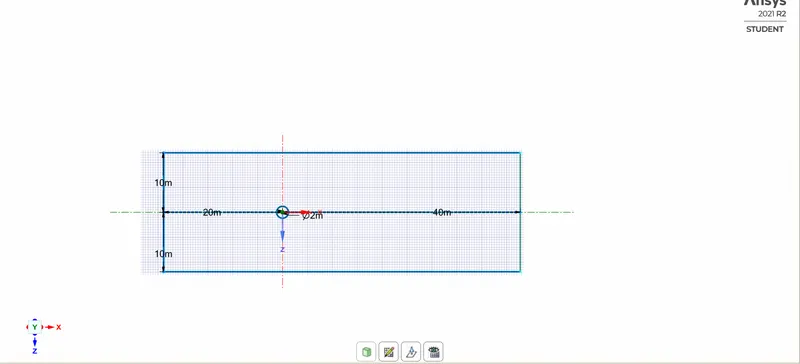
Meshing
A triangular element shape is used for solving this problem. Mesh size is set to 0.25 for finer results.
The circumference of the circle is refined using the sizing option, where we defined with more number of elements, that is 36 number of element sides in the cylinder circumference.
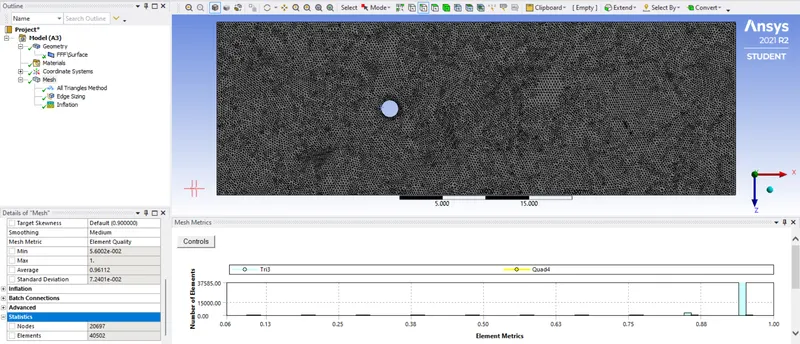
Here there are a total of 40502 elements and 20697 nodes are present in this meshing. As you can see, in the chart given below, the element quality is more than 0.05, hence the quality of the mesh is fine.
Named selection
The names given to various sides are as follows. So, for the user-defined names like inlet, outlet, wall, symmetry, Ansys automatically detects the keyword and it automatically set the boundary condition to make it easy.
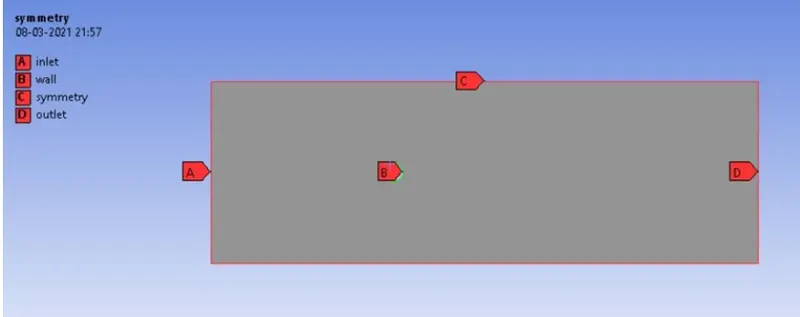
**************************************PART 1*********************************************
To Simulate the flow with the steady and unsteady case and calculate the Strouhal Number for Re= 100
As we know Reynolds number Re is
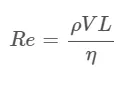
where
Re = Reynolds number = 100
ρ = Density = 1
V = Velocity = ?
L = Charastrectisc length = 2 meter
η = Viscosity coefficient = 0.02
Here, we know the value of the Reynolds number, but the velocity value corresponding to the Re is unknown. So, the Velocity corresponding to the Reynolds number should be found to solve the problem.
Hence we get a velocity of 1 m/s, which we need to be set in the inlet of the boundary condition.
Boundary conditions
- Inlet velocity - 1m/s
- Outlet - Gauge pressure - 0Pa
- Wall - No slip
- Symmetry - Symmetry
Other parameters
- The Viscous model -Laminar
- Fluid -air
- solver - pressure based
Iterations
Steady
Number of Iterations = 450
Unsteady / Transient State
Time step size - 0.1 seconds
Timestep - 600
Results Obtained
Residual Plot
Steady Transient
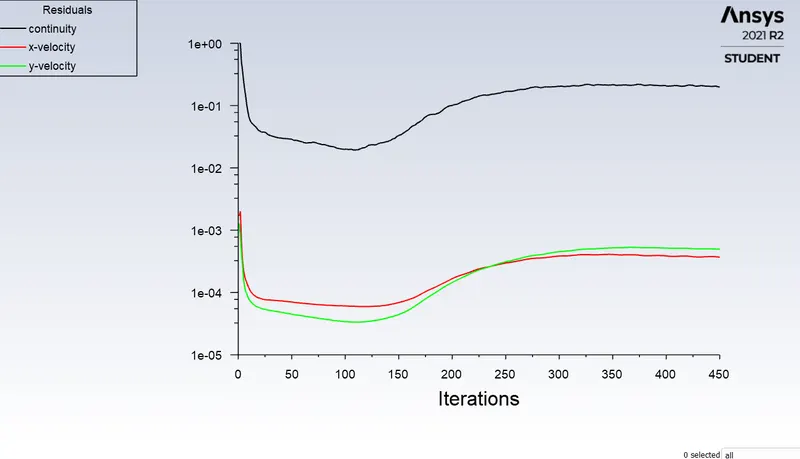
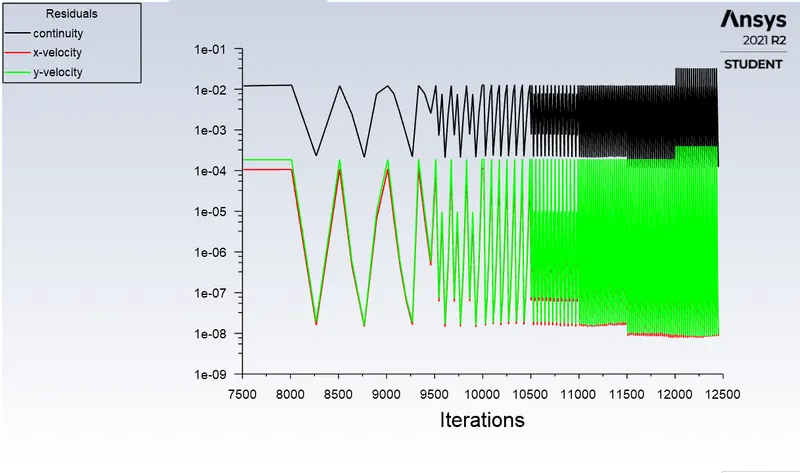
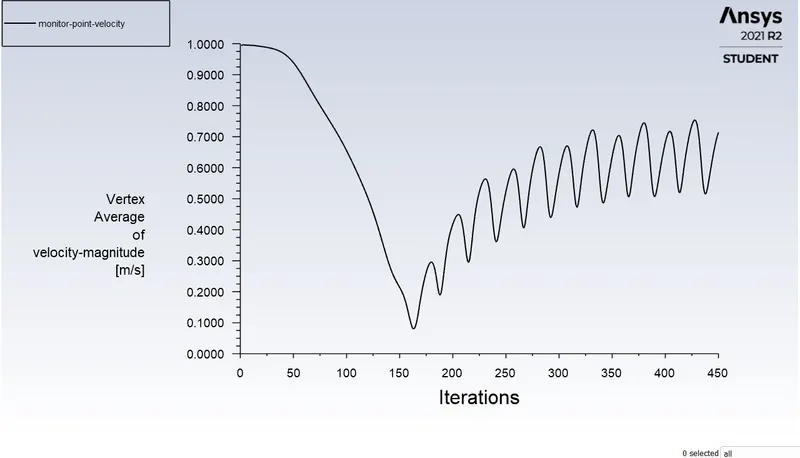
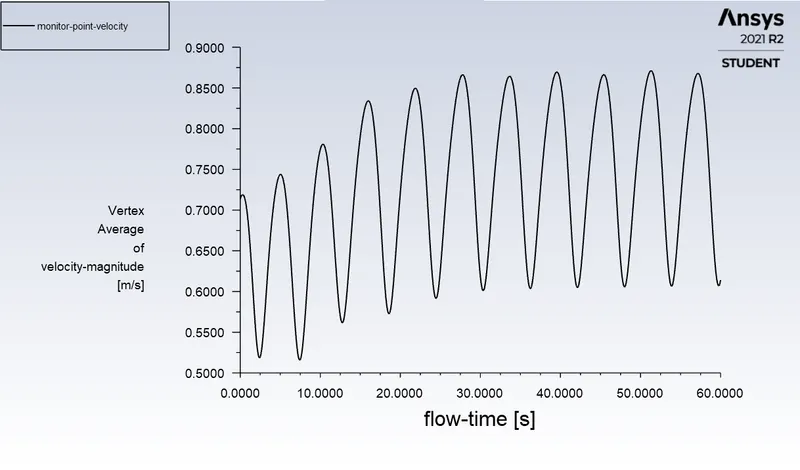
Plot for Vertex average of velocity
Steady Transient
Velocity Contour
Steady Transient
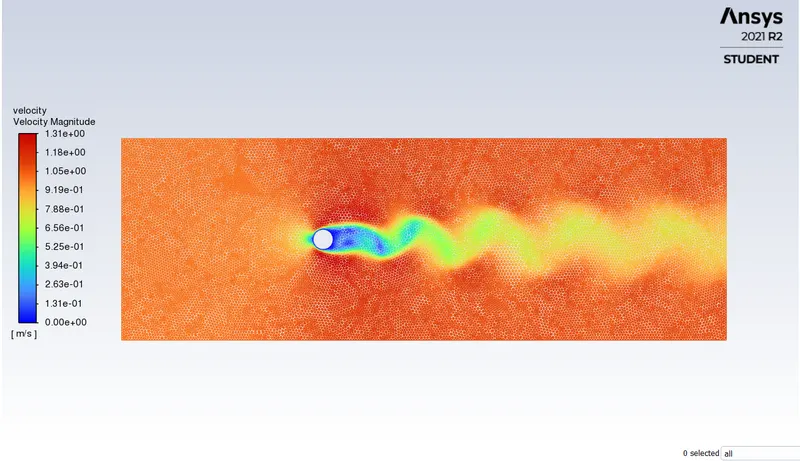
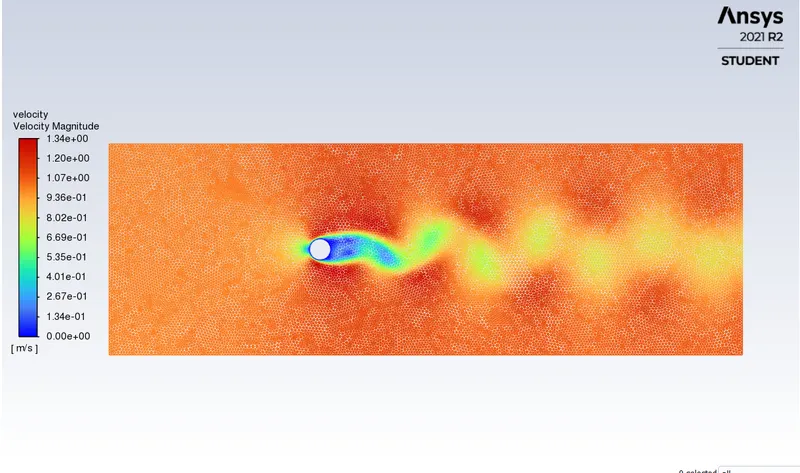
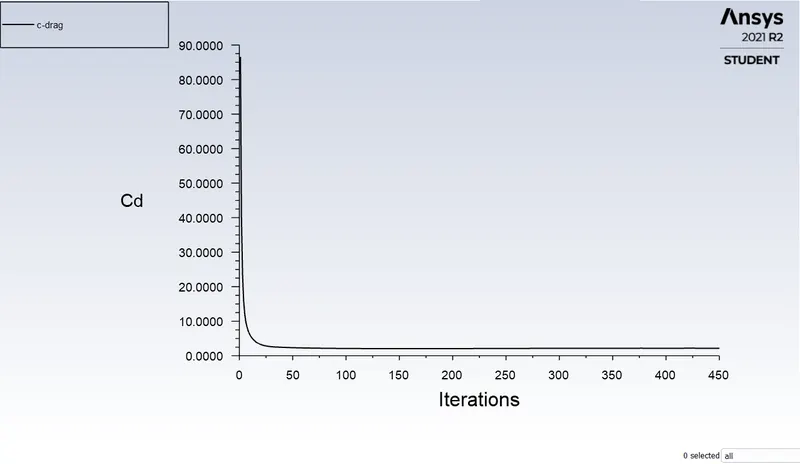
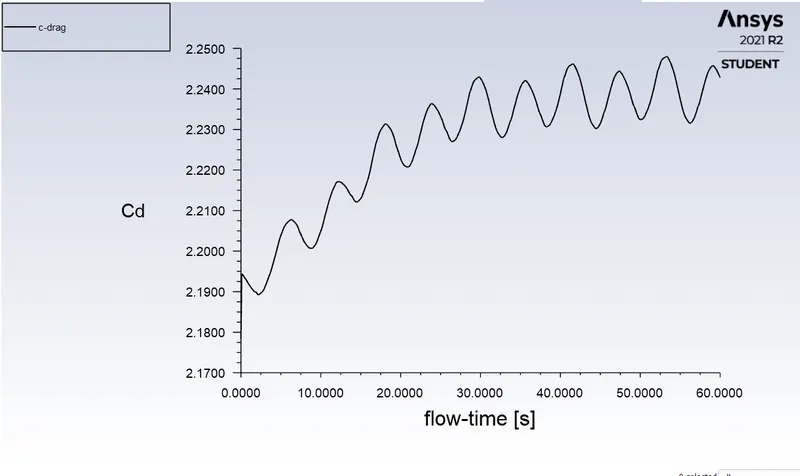
Coefficient of Drag plot
Steady Transient
Coefficient of Lift plot
Steady Transient
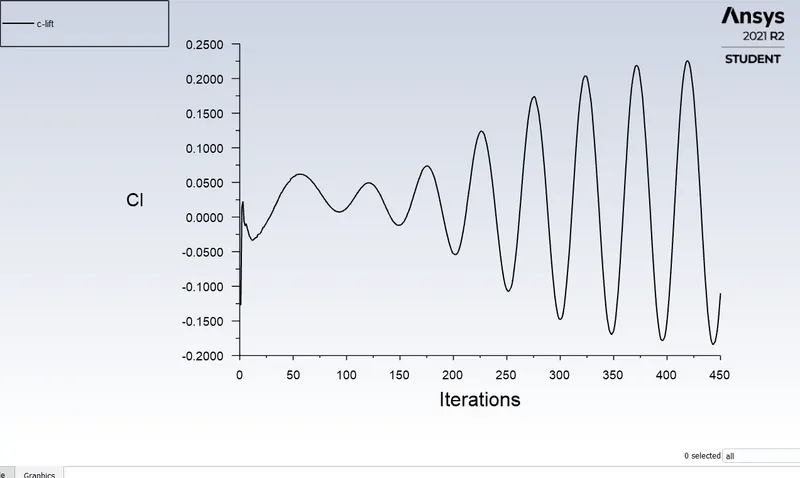
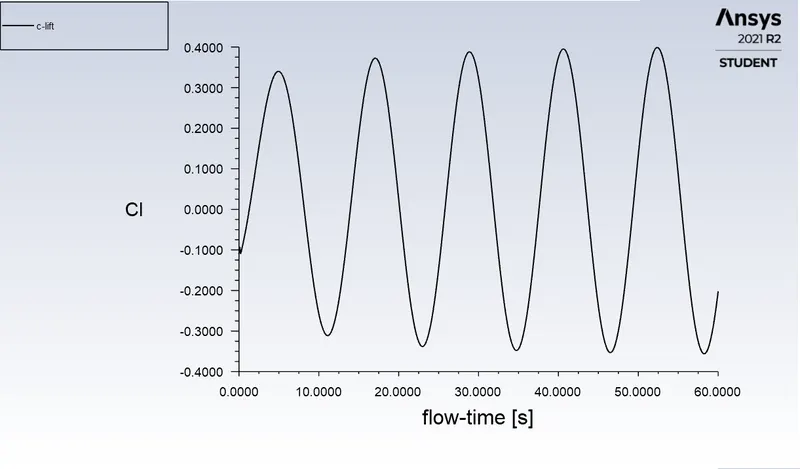
Strouhal Number
It is a dimensionless value useful for analyzing oscillating unsteady fluid flow dynamic problems.
It can be expressed as
St= ω l/ V
where St = strouhal number
ω = oscillation frequency
l = characteristic velocity
V = flow velocity
The Strouhal Number represents a measure of the ratio of the inertial forces due to the unsteadiness of the flow or local acceleration to the inertial forces due to changes in velocity from one point to another in the flow field.
Strouhal Number
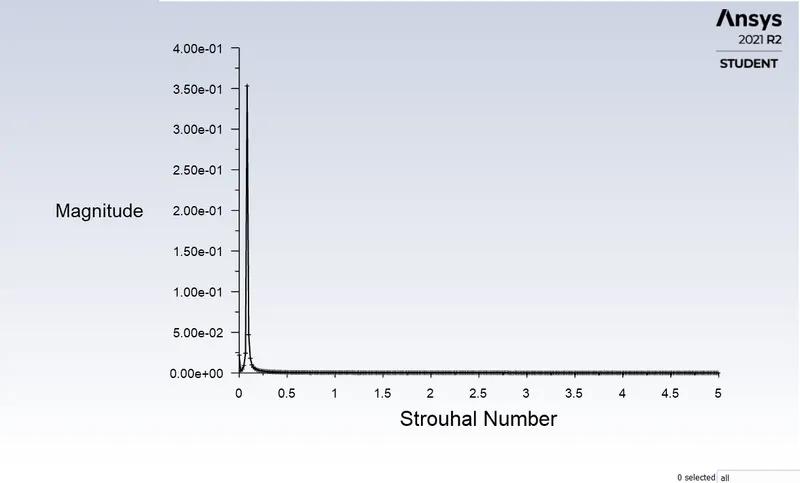
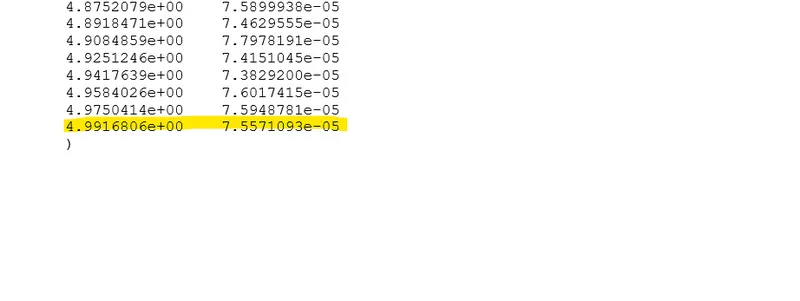
The strouhal Number obtained = 0.9916806e+00
********************************************PART 2***************************************
AIM
- Calculate the coefficient of drag and lift over a cylinder by setting the Reynolds number to 10,100,1000,10000 & 100000. (Run with steady solver)
- Discuss the effect of Reynolds number on the coefficient of drag. [ Results should be validated with any standard literature and error should be within 5 %]
For the given Reynolds number, the corresponding inlet velocity is
Reynolds Number Inlet Velocity
10 0.1
100 1
1000 10
10000 100
100000 1000
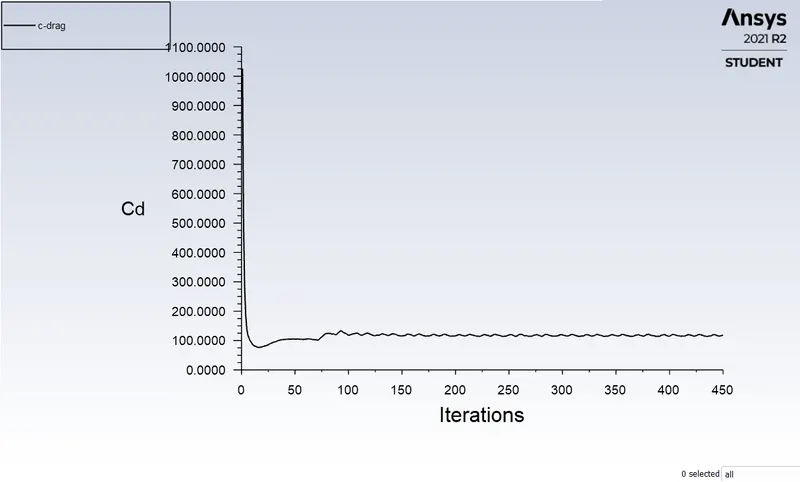
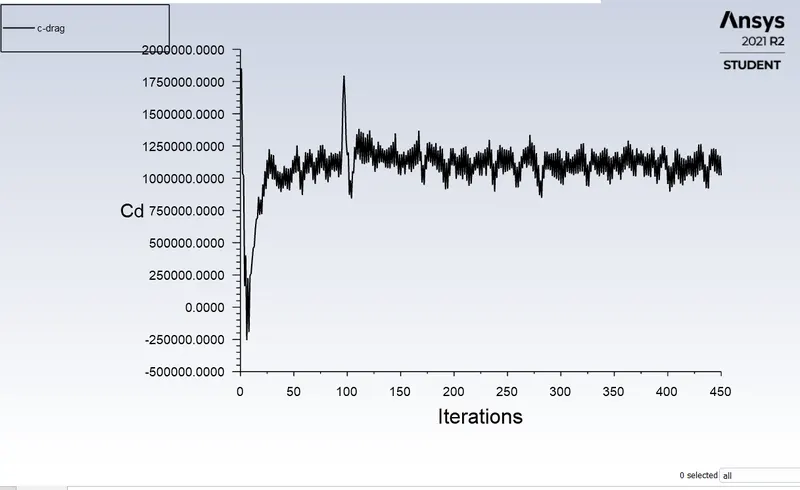
PLOT FOR COEFFICIENT OF DRAG
Re -10 Re -100
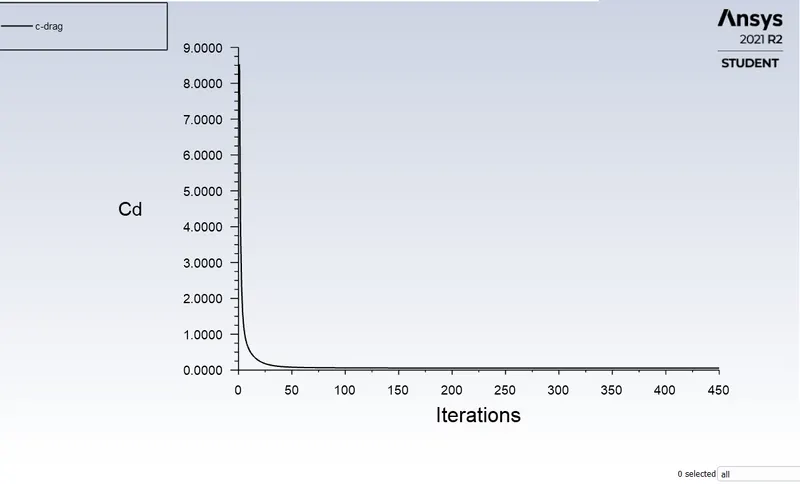
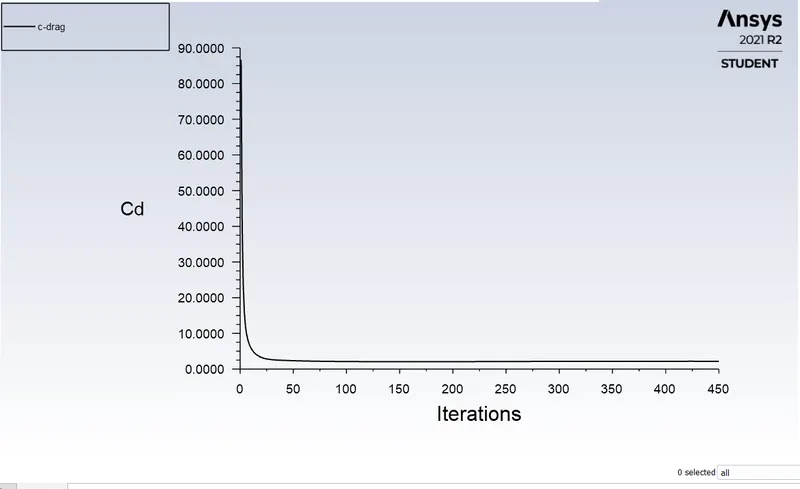
Re - 1000 Re -10000
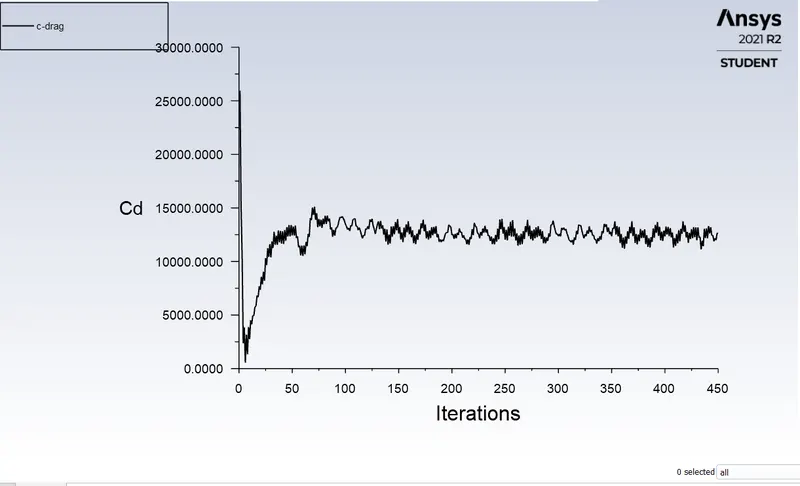
Re -100000
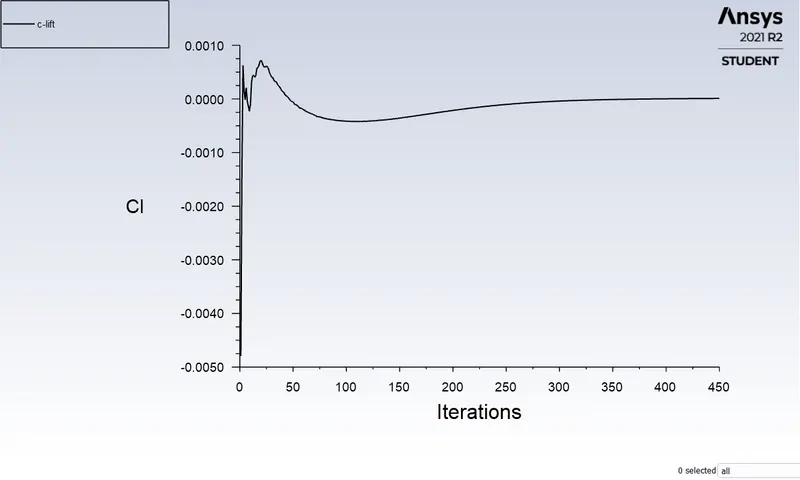
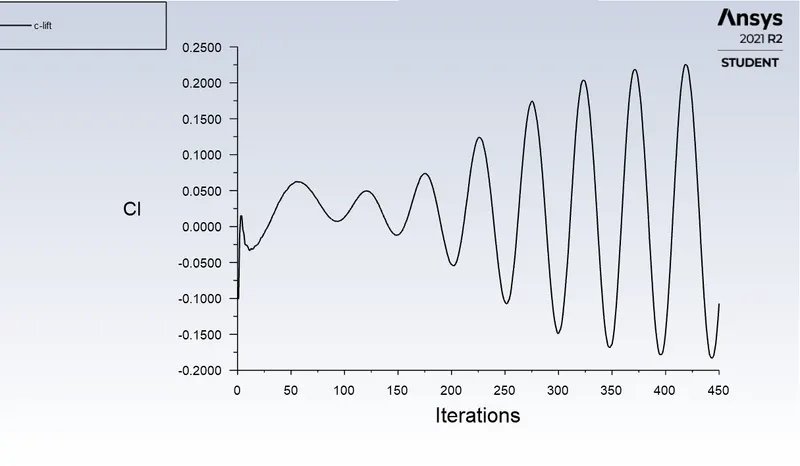
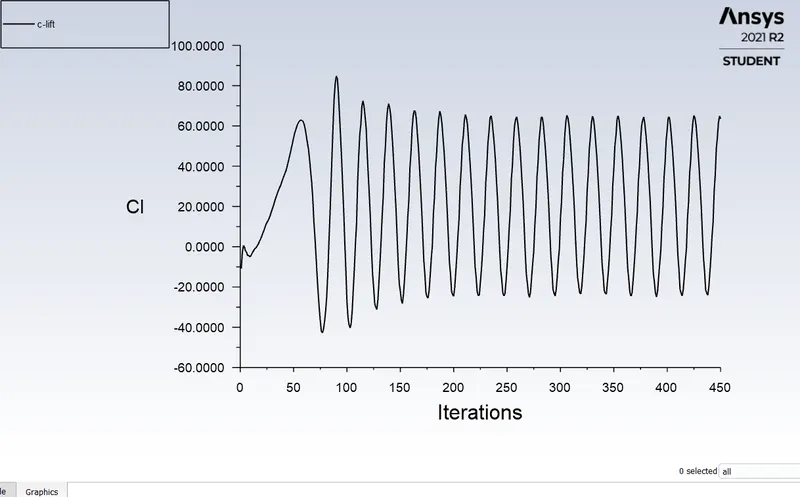
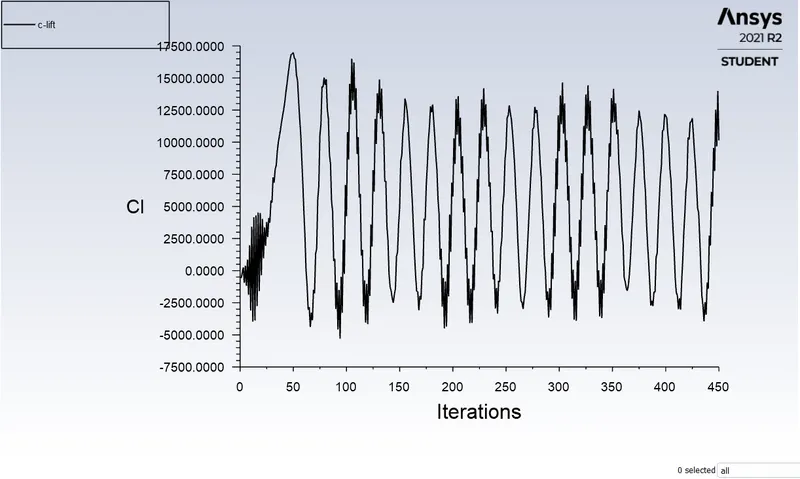
PLOT FOR COEFFICIENT OF LIFT
Re - 10 Re-100
Re - 1000 Re -10000
Re -100000
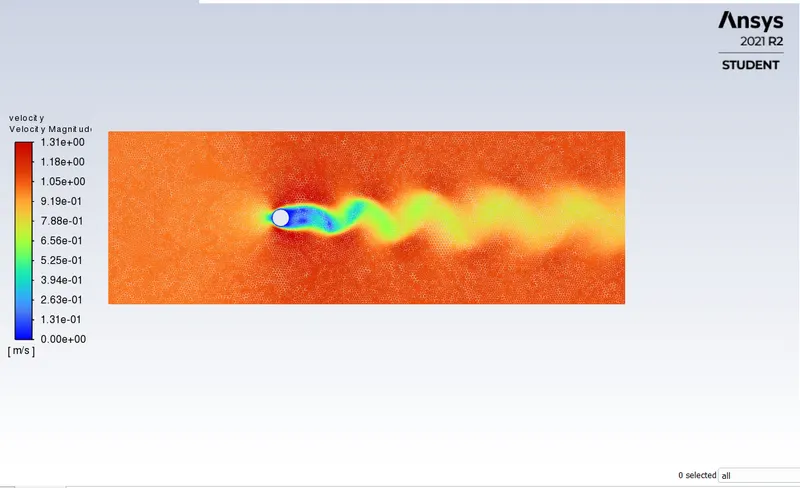
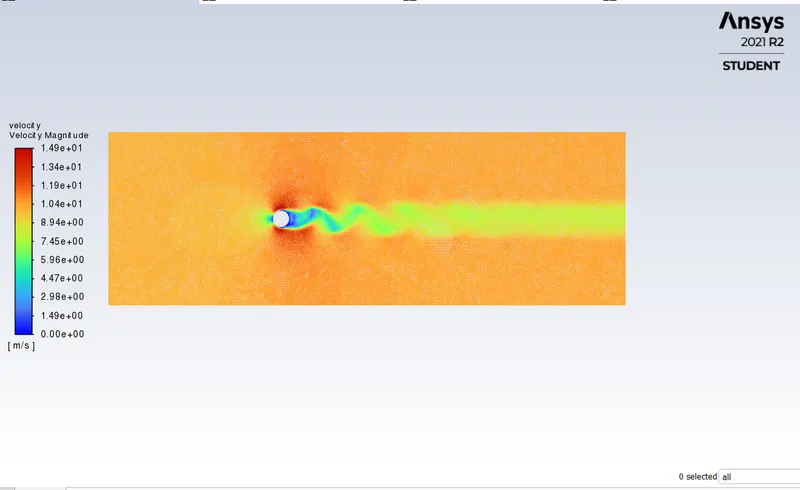
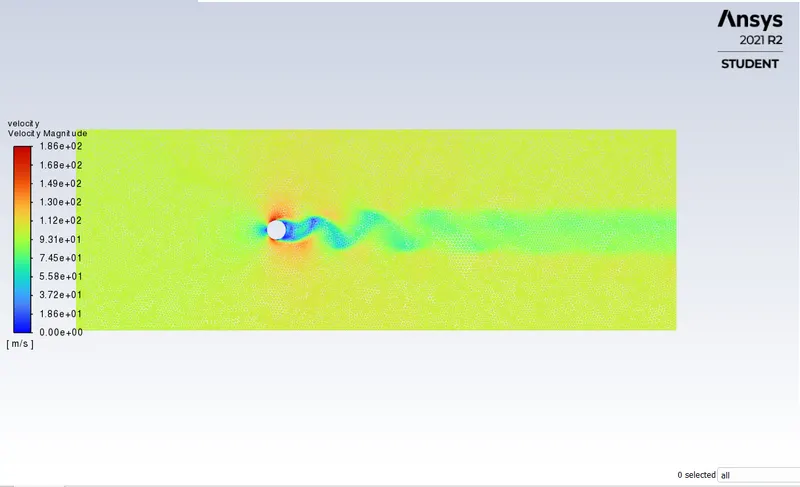
VELOCITY CONTOUR
Re - 10 Re - 100
Re - 1000 Re - 10000
Re - 100000
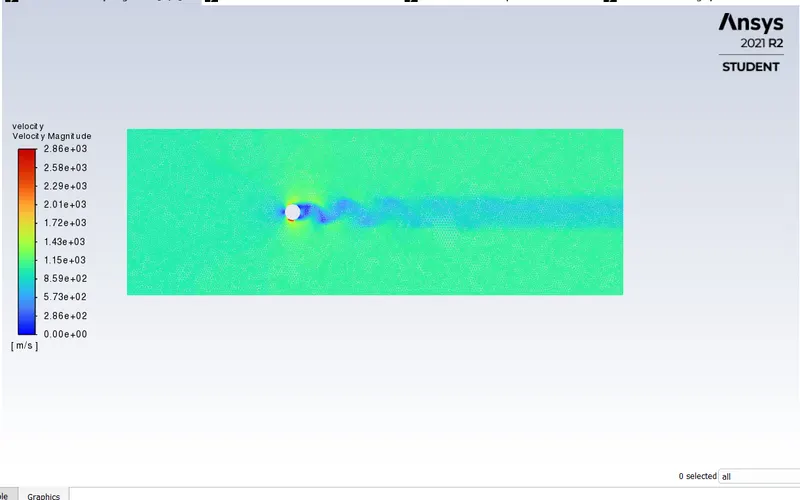
Let us consider the Reynold Number of 100
Here, the Coefficient of Drag = 1.9
The theoretical value of Cd corresponds to the Reynold number from the reference paper is 1.33
Hence the fluctuation of the answer is 30%, which is a bit higher.
Conclusion
As the Reynold number is increased further, the vortices are shed alternately from the upper and lower cylinder surface at a definite frequency depending on the Reynolds number. And, for the values of Re greater than or equal to 1000; we can see the oscillations increase, and the wakes behind the cylinder are turbulent in nature while showing laminar boundary layer separation. As Reynolds number keeps increasing, inertial forces start to dominate over viscous forces. The coefficient of drag (Cd) starts decreasing and there is a significant fluctuation in the Coefficient of lift (Cl) and the Vertex average of Velocity magnitude at the monitoring point rises at the same time.
Reference
Reference Research Paper:- https://www.sciencedirect.com/science/article/pii/S0307904X08000243