Simulation of Bullet penetrating a Bucket Using Ansys Workbench
OBJECTIVE
- To assign the tantalum material to the bullet, and the aluminum 1100, titanium alloy, and aluminum alloy material to the bucket, according to the case.
- To mesh the model, and apply the boundary condition.
- To collect the results and interpret.
PROCEDURE
This simulation was performed to check the penetration of a bullet into the bucket of different materials viz. aluminum 1100-O, titanium alloy, and aluminum alloy. The simulation was solved using the explicit dynamics module of Ansys. The material was imported before proceeding further using Engineering data.
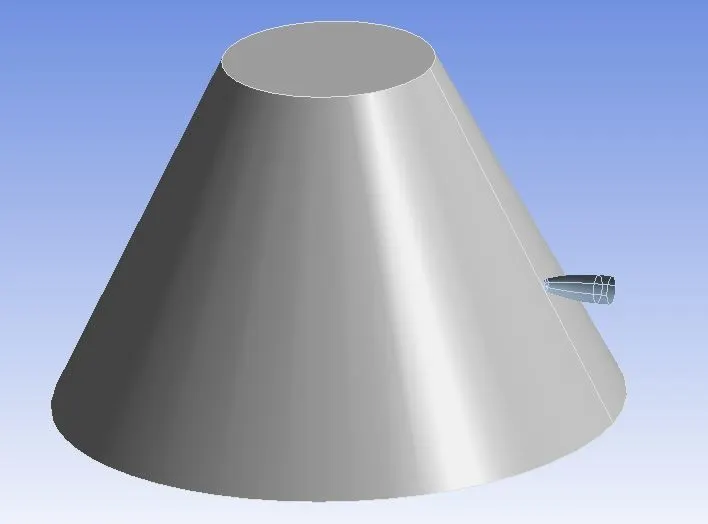 |
|
Figure 1: Bucket and bullet model in Ansys GUI. |
The Mesh section of the explicit dynamics module was opened. In that, the material of the bullet was set to tantalum, and the material of the bucket was changed in every 3 cases. The stiffness behavior of the bullet was changed to rigid.
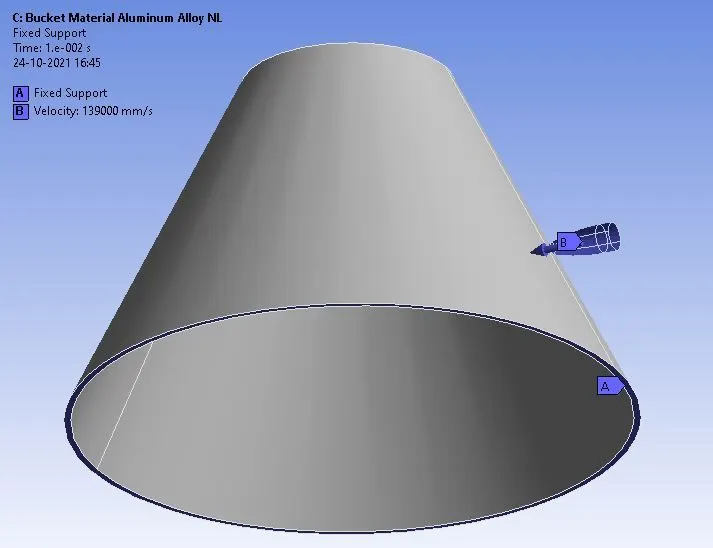
Further, the automatically created contact cards were deleted, as it was not required. Then mesh was created for the model with an element size of 8 mm, and 4 mm on the slant edge region of the bucket. The analysis was set to terminate at 0.01 s. In boundary condition, the bucket was fixed, and the initial velocity of 1.39E+05 mm/s was applied to the bullet as shown in the figure.
 |
|
Figure 2: Fixed support for the bucket, and an initial velocity of 1.39E+05 mm/s for the bullet. |
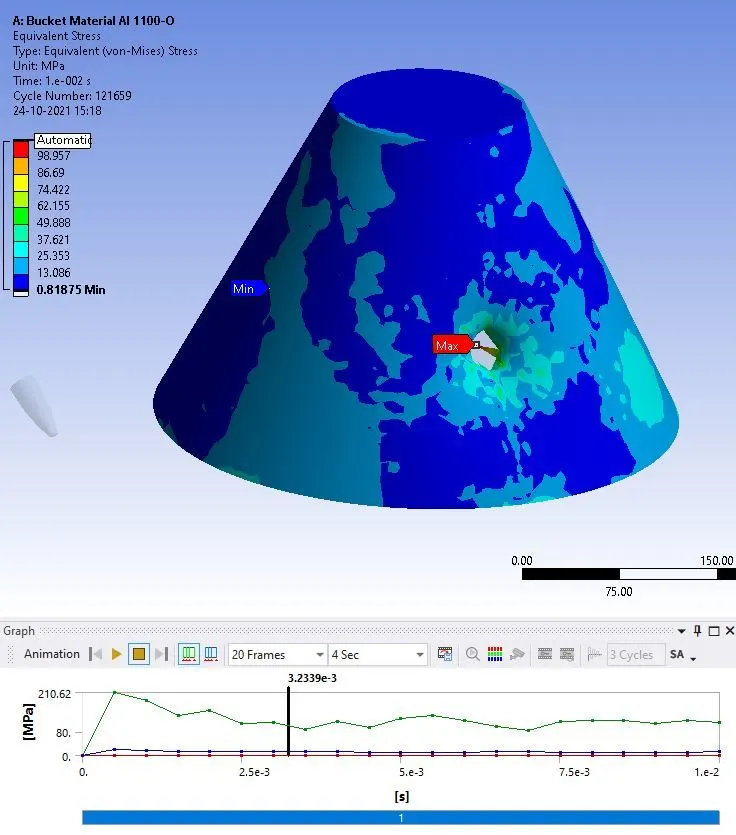
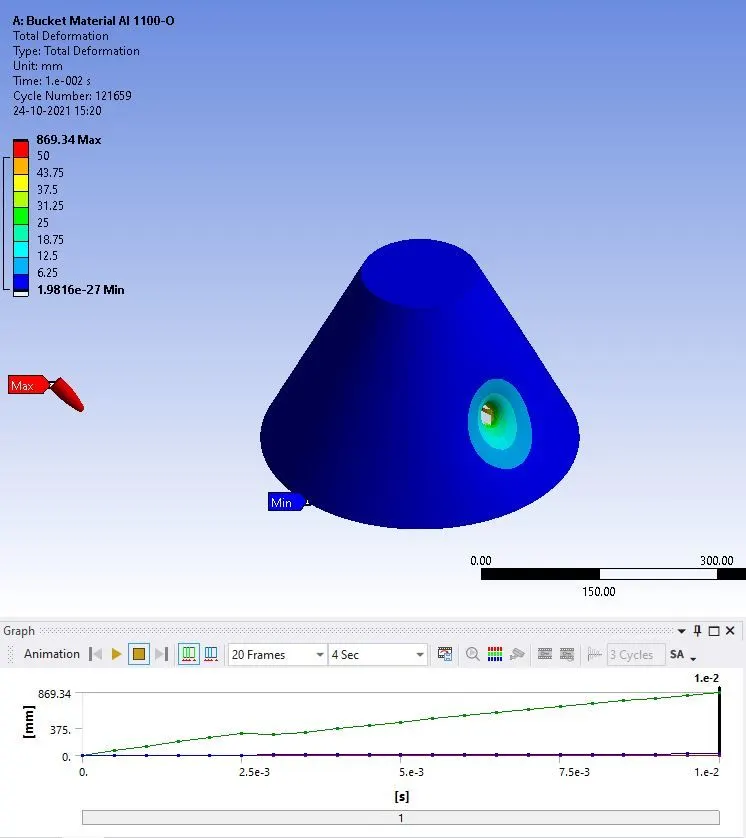
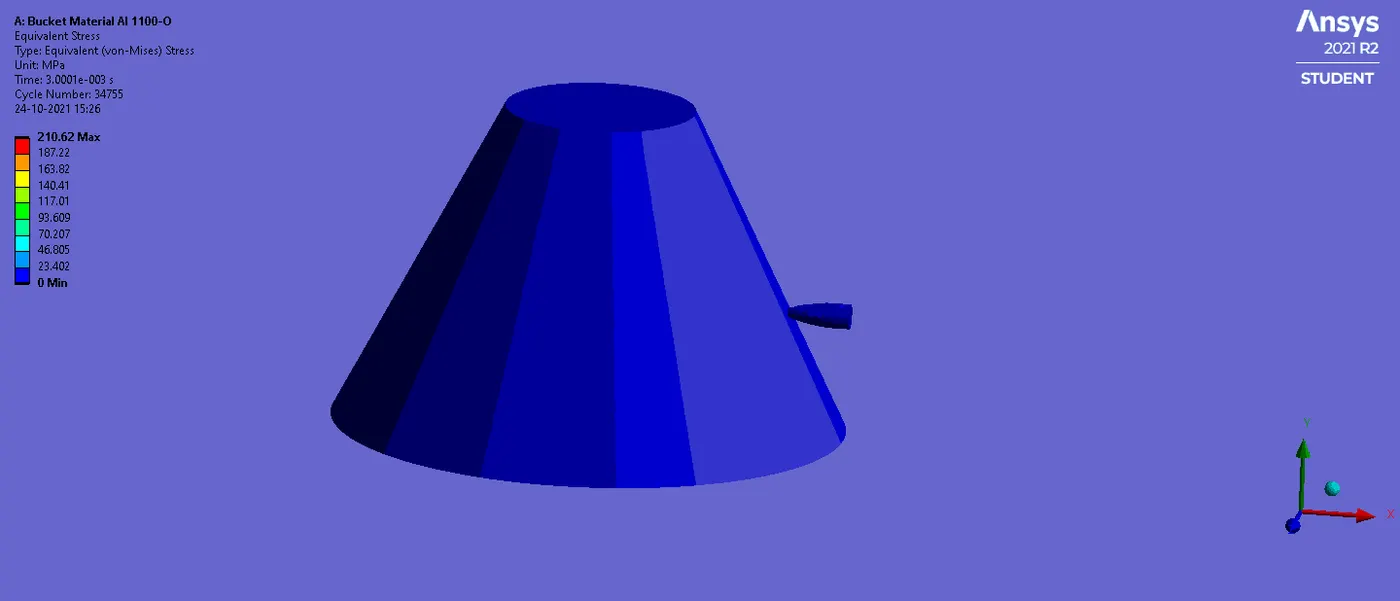
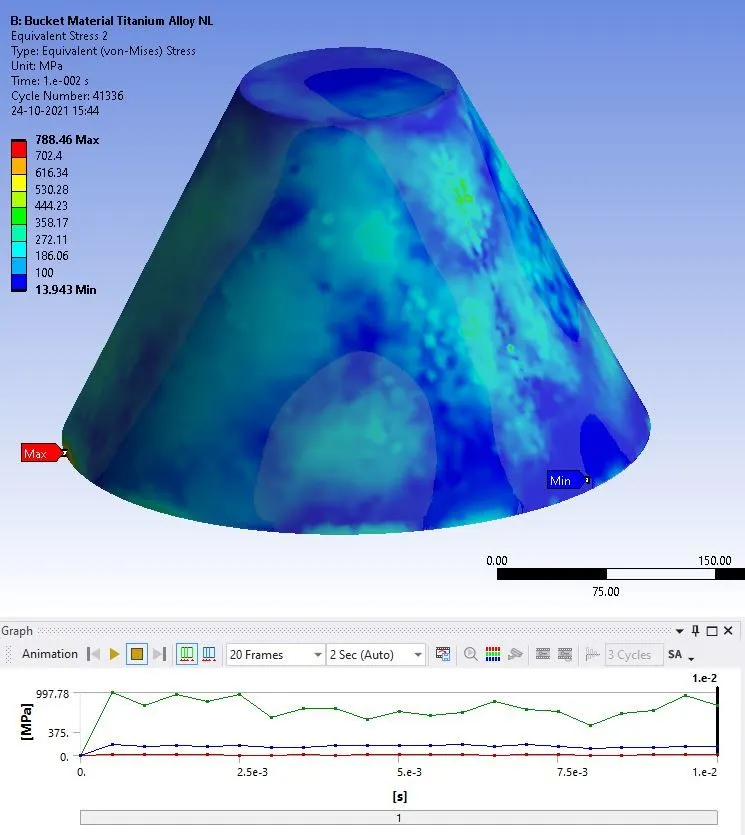
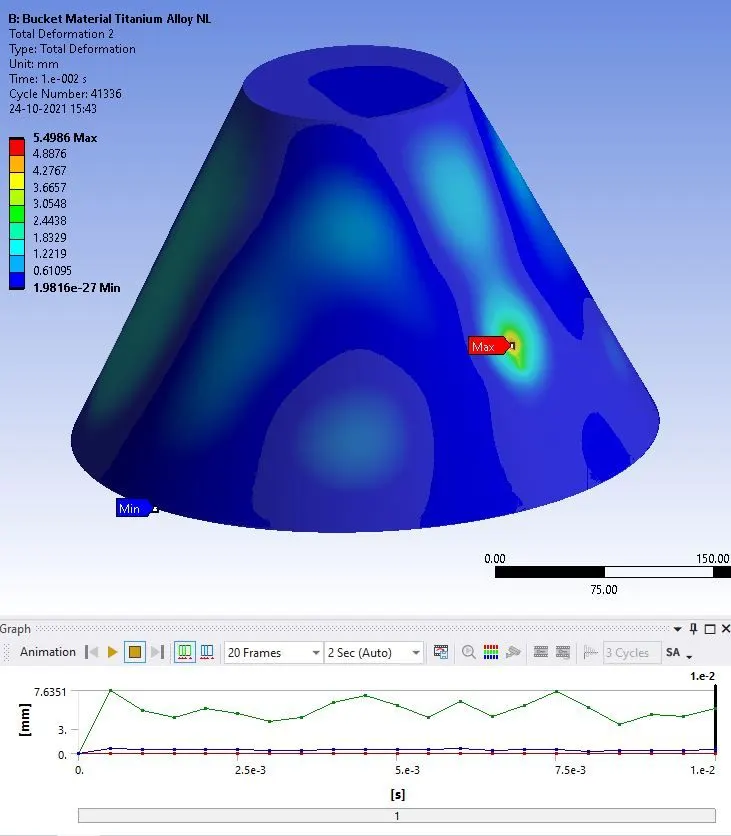
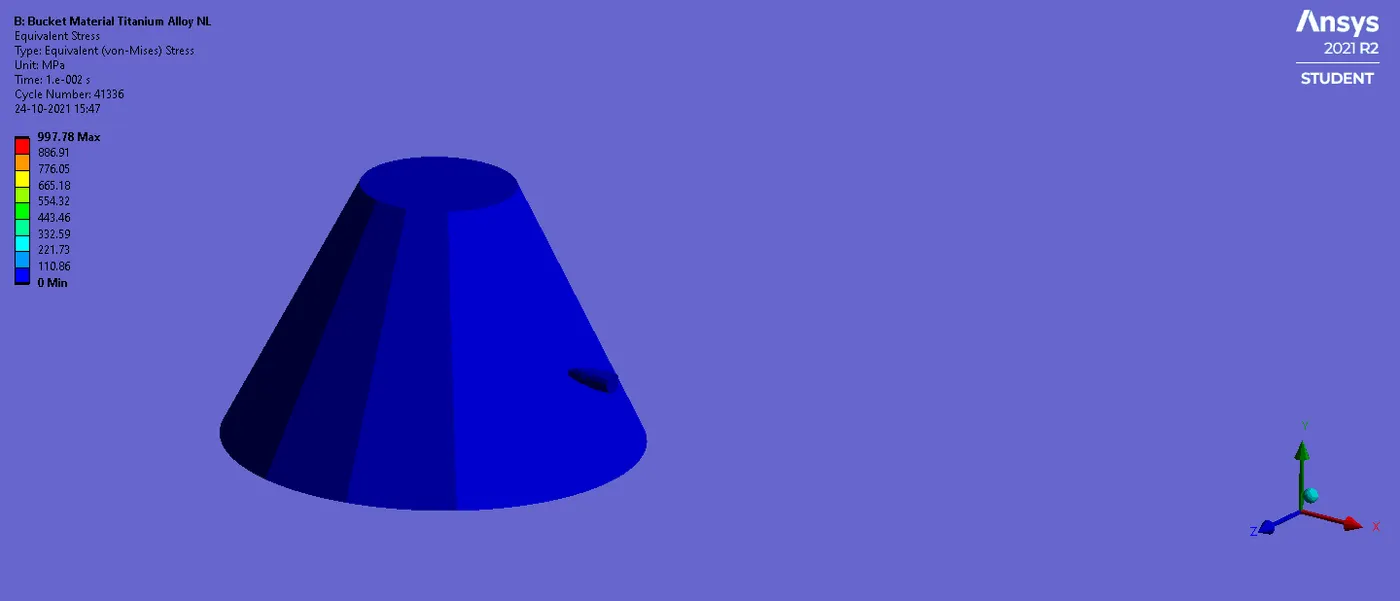
In the solution, the results for equivalent stress, and total deformation was requested. The results of each case are shown in the figures below.
 |
 |
|
Figure 3(a): Equivalent stress in the case when AL 1100-O material was used for the bucket. |
Figure 3(b): Total deformation in the case when AL 1100-O material was used for the bucket. |
 |
 |
|
Figure 4(a): Equivalent stress in the case when titanium alloy material was used for the bucket. |
Figure 4(b): Total deformation in the case when titanium alloy material was used for the bucket. |
 |
 |
|
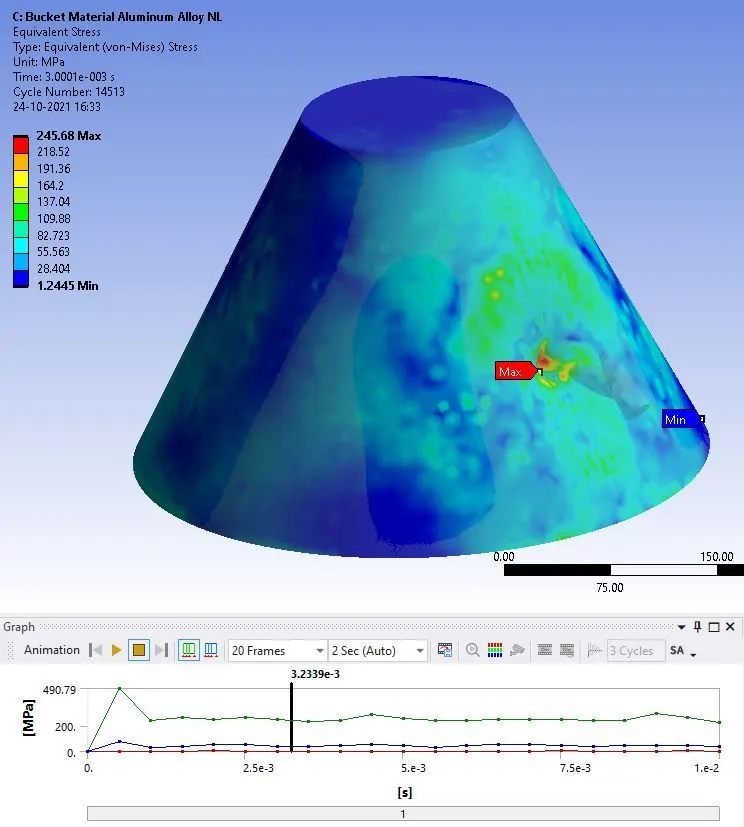
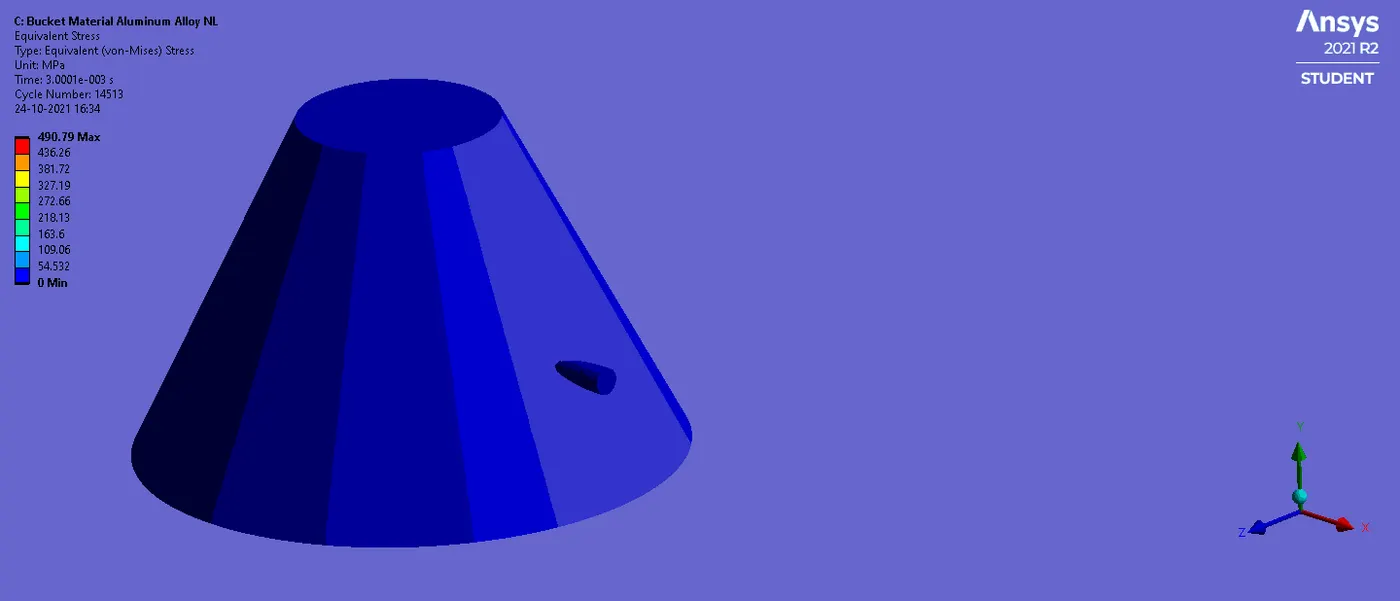
Figure 4(a): Equivalent stress in the case when aluminum alloy material was used for the bucket. |
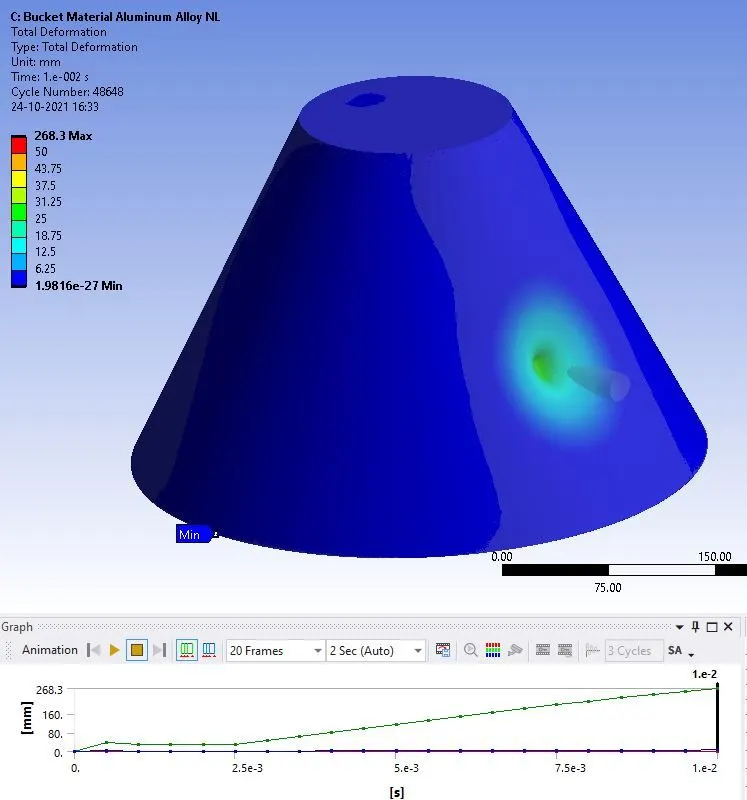
Figure 5(b): Total deformation in the case when Aluminum alloy material was used for the bucket. |
CONCLUSION
In this work, the penetration of the bullet throughout the bucket was analyzed. In the first case, the material of the bucket was AL 1100-O, in the second it was titanium alloy, and in the third, it was aluminum alloy. The material of the bullet was the same in all three cases i.e., tantalum. The density of the AL 1100-O was 2707 kg/m3, the density of titanium alloy was 4620 kg/m3, and the density of aluminum alloy was 2770 kg/m3. The density of these materials was the major factor, to resist the bullet penetrating into the bucket. In the first case, when the AL 1100-O material was used, the bullet penetrated throughout the first wall of the bucket but was slowed down after its first penetration. Thus, couldn't reach the next wall of the bucket. In the second case, when titanium alloy material was used, the bullet couldn't penetrate and reflected back, due to the high density of the material. And in the third case, the bullet made a pinned deformation in the bucket, but couldn't tear the bucket. Thus it can be concluded that for the bullet of tantalum material shoot with the velocity of 139000 mm/s, a minimum density of 2770 kg/m3 is required to not let it pass through.