Investigation of Stress Concentration on a Plate with hole using Ansys
OBJECTIVES
- To design the plates of two different cases.
- To mesh the model.
- To apply the boundary conditions.
- To evaluate the results.
- To find out the stress and displacement in both the plates, and find out which plate has performed well, from an analysis point of view.
- To find out which plate is good to manufacture.
PROCEDURE
For simulating this case, the Static Structural module was chosen, for two cases. In those modules, in Engineering Data, Structural Steel was selected as the default material. So. It is kept as it is, as the material does not affect the stress concentration.
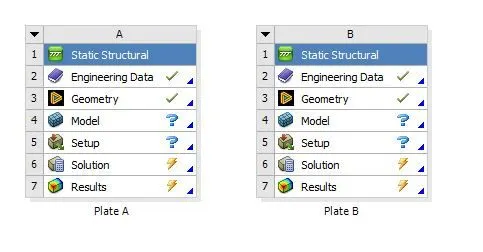
Figure 1: Static Structural module was chosen for this work.
Further, using SpaceClaim, according to the design provided, the two plates were modeled in separate modules of Static Structural analysis, as shown in the figures below.
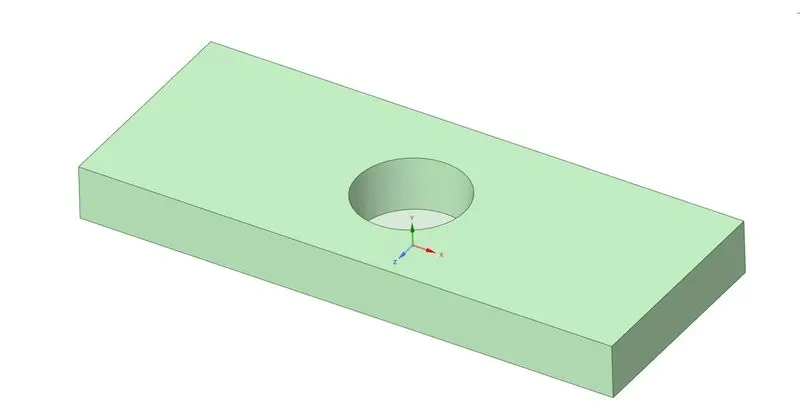
Figure 2(a): Plates A modeled using SpaceClaim.
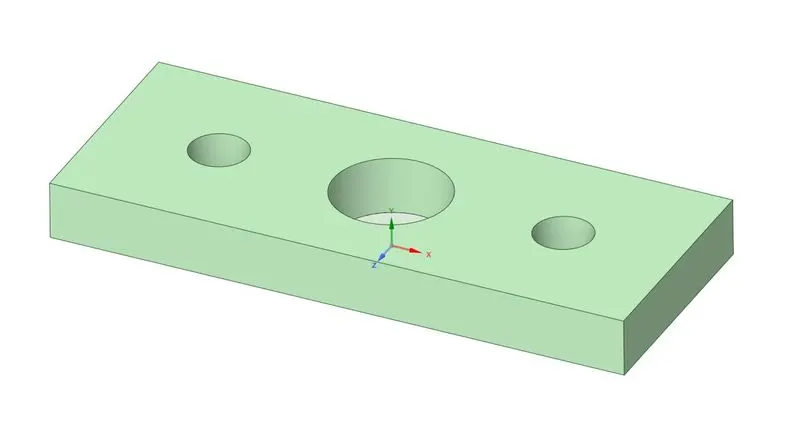
Figure 2(b): Plates B modeled using SpaceClaim.
Now, using Model section of Static Structural module, both of those parts, were first assigned with the structural steel material, and then the mesh was performed on it, using tetrahedron elements of 5 mm element size, as shown in figures below.
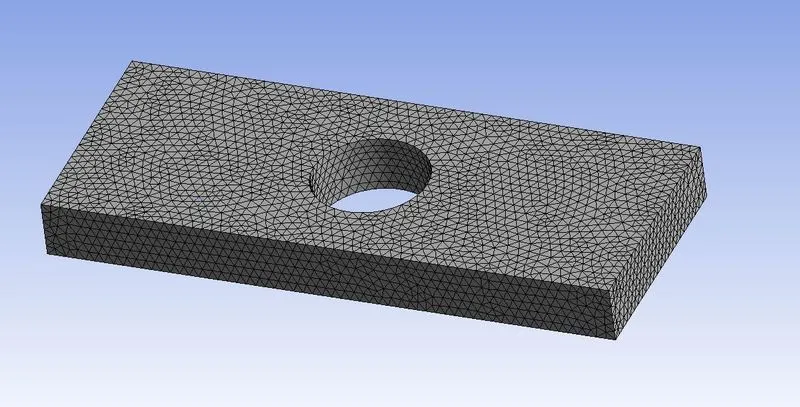
Figure 3(a): Meshing of plate A.
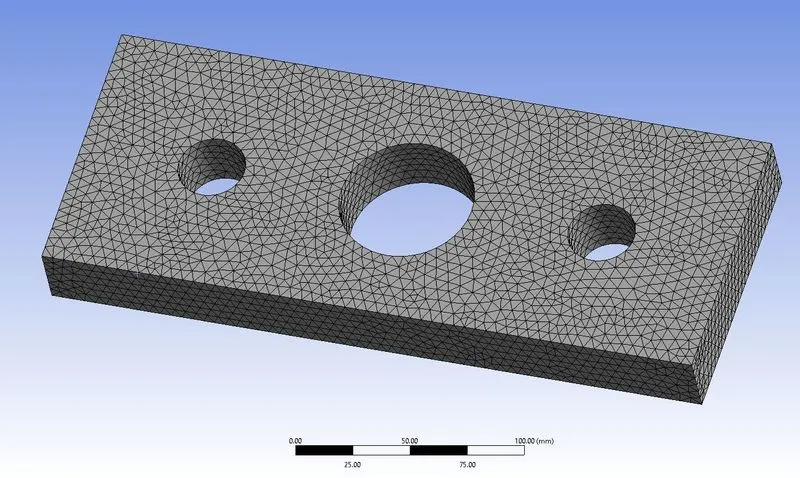
Figure 3(b): Meshing of plate B.
Boundary Conditions
In boundary condition, as shown in the figure below, both of the plates were fixed at one end, and a force of 500 N was applied on the opposite face.
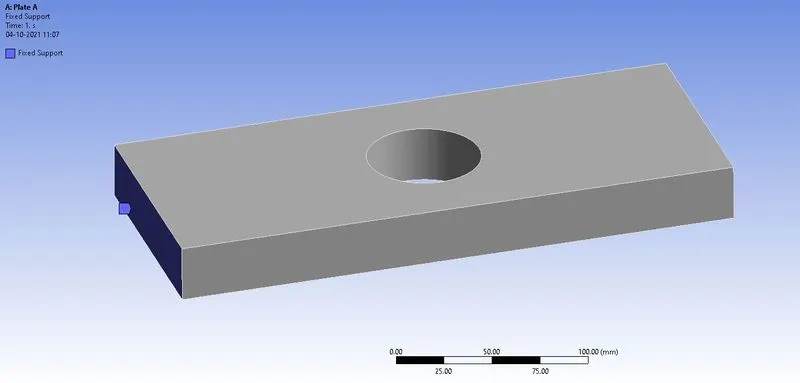
Figure 4: Plate A fixed at one side of the face.
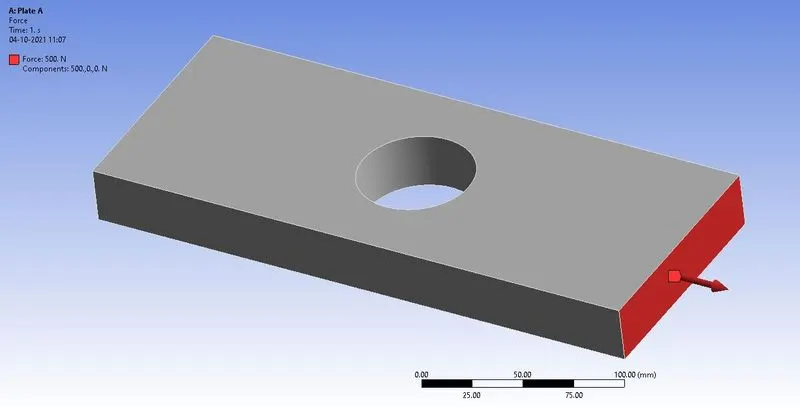
Figure 5: Force of 500 N applied on another side of the face.
A similar boundary condition was applied on plate B. After applying the boundary condition, in the result, Equivalent (Von-Mises) stress, and Total Deformation results were requested. After ensuring that the model was ready for the simulation to solve, the problem was solved.
Post-processing
The figures below show the Equivalent (Von-Mises) stress generated in the two plates. In case A, or plate A, the maximum Von-Mises stress generated was 0.6 MPa, whereas, in the case of plate B, it is 0.57 MPa. Statistically, it is a 5% decrease in the stress level, which is appreciable. The reason behind this decrease in the stress level is the distribution of stress concentration.
It is clearly can be observed in the figures below, that how, the zero stress is localized in case A, how it is distributed in case of plate B.
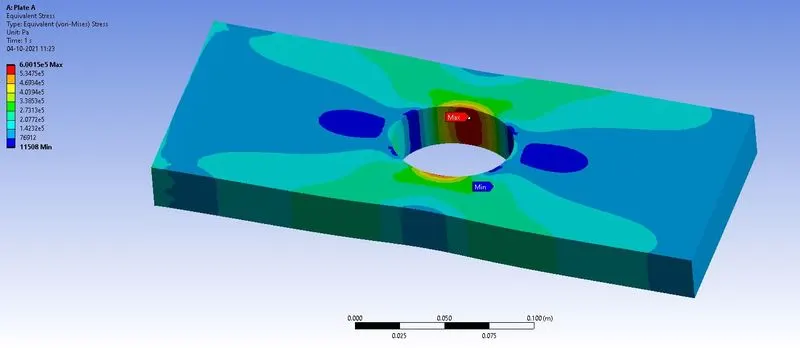
Figure 6(a): Equivalent (Von-Mises) stress in plate A.
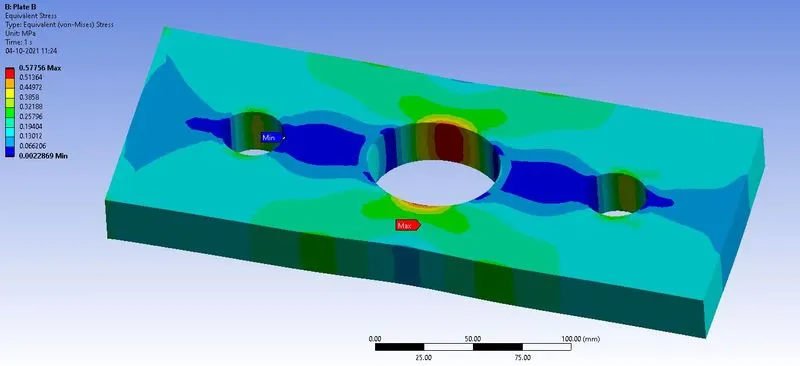
Figure 6(b): Equivalent (Von-Mises) stress in plate B.
This large distribution of zero stress in case B, is also due to less resistance to deformation, due to the absence of material. The result is that the stress gets distributed to the lateral side of deformation, as that’s the region that tends to have less surface area.
The deformation can also be seen in the figure below. Plate A has the maximum deformation of 2.75E-04 mm, whereas plate B has the maximum deformation of 2.97E-04 mm. As discussed earlier, the reason is because of less material, there is less resistance to deformation. Statistically, it is an 8% increase in deformation, which is very significant.
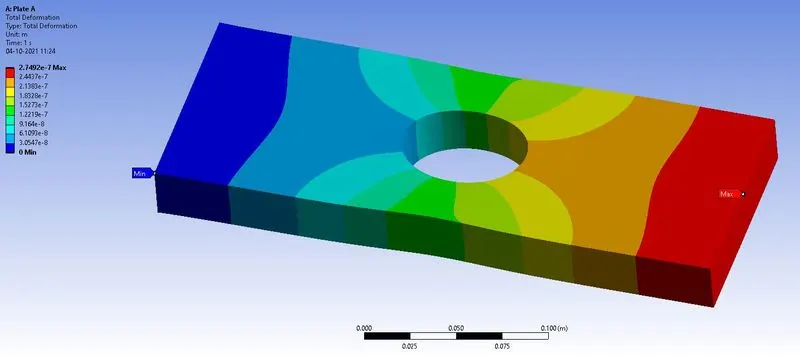
Figure 7(a): Deformation in plate A, with maximum deformation of 2.75E-4 mm.
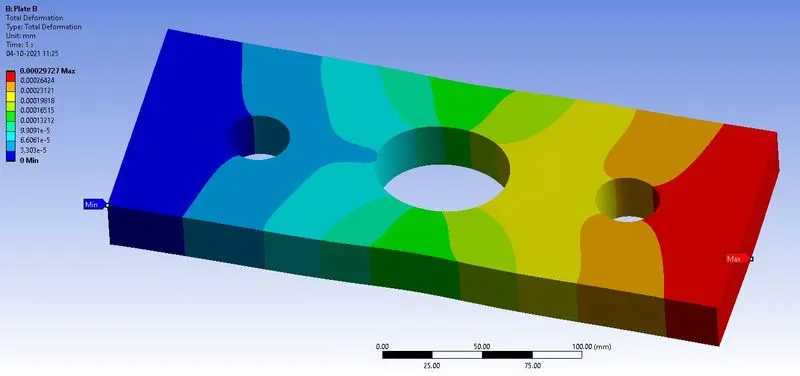
Figure 7(b): Deformation in plate B, with maximum deformation of 2.97E-4 mm.
CONCLUSION
In this work, two cases were compared. In the first case, the plate was with only one hole, and in another case, the plate was with three holes. Due to a greater number of holes in plate B, there is less stress concentration, however, due to the absence of material, or less material usage, there is also less resistance to deformation. Clearly, there is a 5% decrease in stress concentration, but an 8% increase in deformation. Now, it depends on the kind of application, to which can result fruitful.
Moreover, from the manufacturing point of view, for the manufacturing of plate B, two types of drill bits are required. It means, there is more wear and tear of the tools. There is also more time is required for the manufacturing of plate B. Although, there is less usage of material, less stress concentration, but it costs more for manufacturing.