Assignment 3-2D Element Formulation Challenge
Aim: To run the simulation, study the 2D element formulation and compare the results.
Objective:
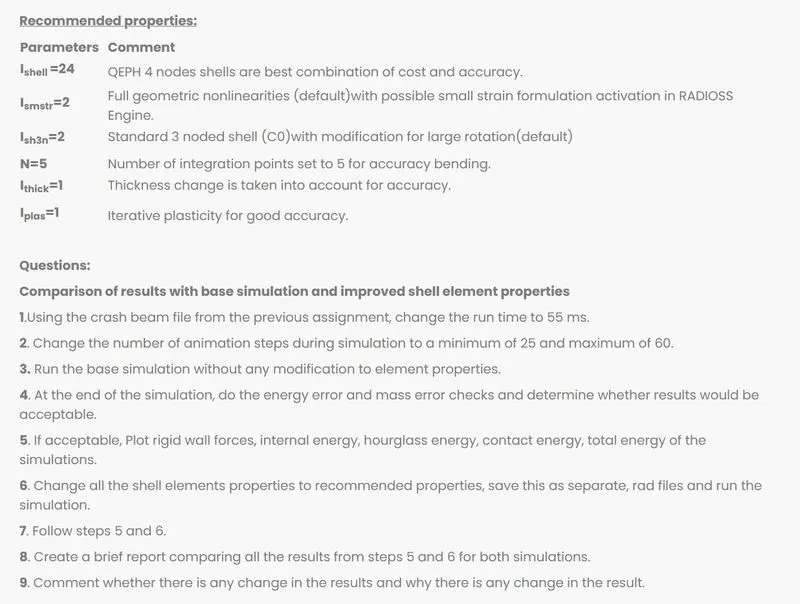
Introduction:
What is hourglass energy?
It is a weird mode of deformation that occurs in under integrated shell elements where no stresses are produced. As stresses are not produced, it reduces the accuracy and true response of the structure.This leads to inaccurate strain and displacement results with unrealistic deformations. In an under-integrated element, displacements and forces exist for each node of the element. If the summation of all these forces and displacements provides zero stress and strain on the integration point of the element, then that element fails to calculate the stiffness for the mode of deformation. Due to no stiffness calculation, the deformation happens in a very weird manner. This is when we call, the element has entered into hourglass. The hourglass occurs only at the under integrated shell elements. To avoid hourglass, we go with reduced integration elements.We saw two types of reduced integration shell elements: Ishell=1,2,3,4 and Ishell=24. The control of hourglassing also changes on the type of shell elements used. Ishell=1,2,3,4 (Q4) employs perturbation method for controlling hourglassing. Ishell=24 (QEPH) employs a physical stabilization method for controlling hourglassing.
Hourglass energy should be always less than the internal energy and should be upto 5% of the internal energy.
What is energy error?
If the energy errors are negative, then some energy is dissipated. This dissipation can be of any type for example, incase of under integrated elements, the hourglass energy can explain a negative energy error since it is not counted in the energy balance. The acceptable amount of hourglass energy is about 10-15%. If the energy error is positive, there is energy creation. Incase of QEPH elements, the solution is calculated accurately as there is no hourglass energy produced. A positive energy error of 1-2% is acceptable. If the positive energy error is larger, then incompatible kinematic conditions warning is what needs to be checked. If the energy error is -99%, the computation has diverged. This happens due to false energy balance that is created due to inappropriate model definition. For a normal explicit analysis, it is recommended that Hourglass energy+contact energy ≤ 15% Total energy.
Mass Balance
If the mass increases, its variation must remain smaller than 1% for each part and overall not more than 3% of the model. If it is more than 3%, then your results are bad. The added mass needs to be post processed in order to check whether they are varying in a very large extent.
Procedure:
For Case 1
- Let us first import the .rad file using import solver deck.
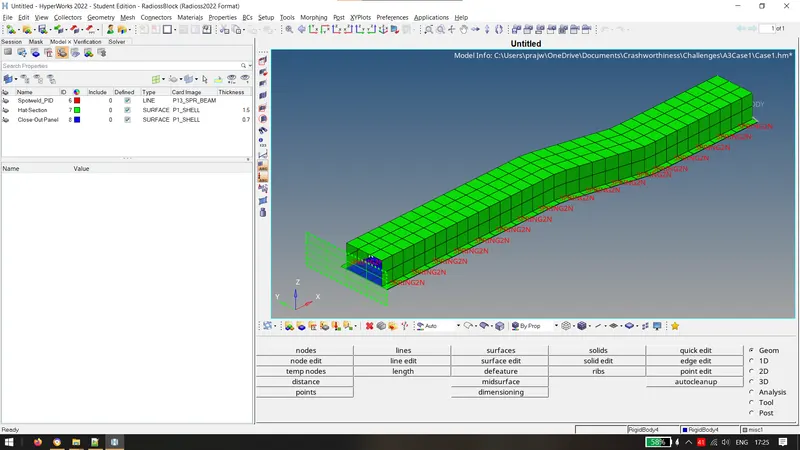
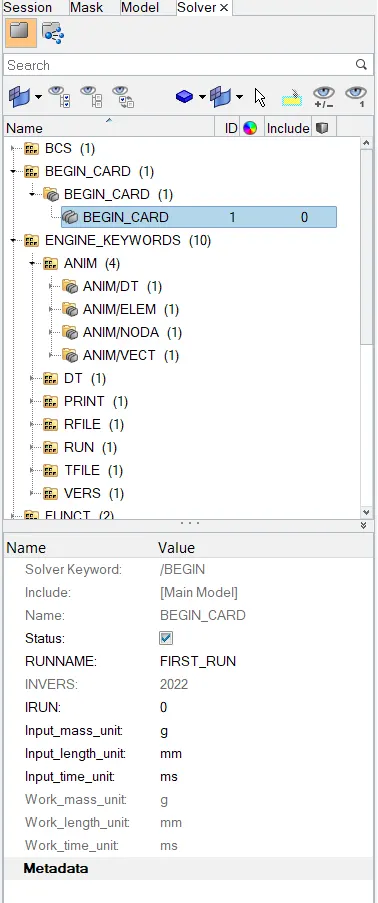
- In the solver deck change the following settings for 30 frame steps:
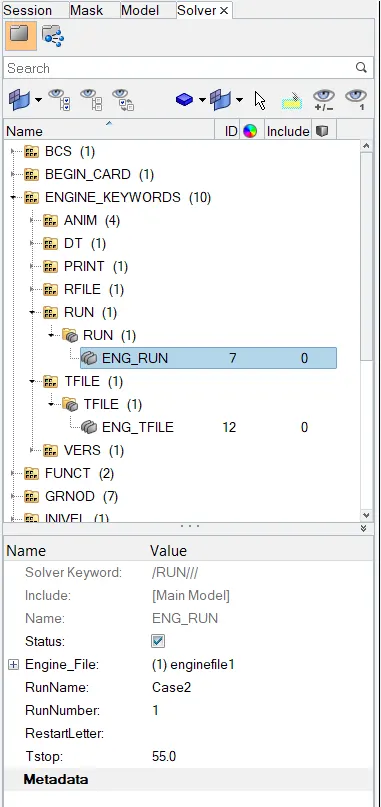
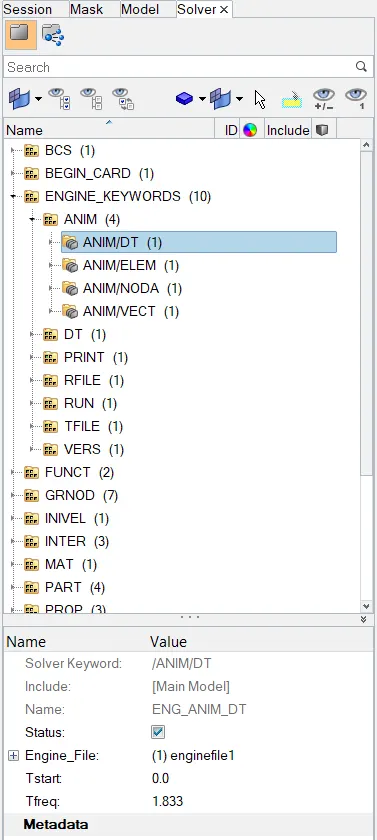
- Following settings have been used for the model:
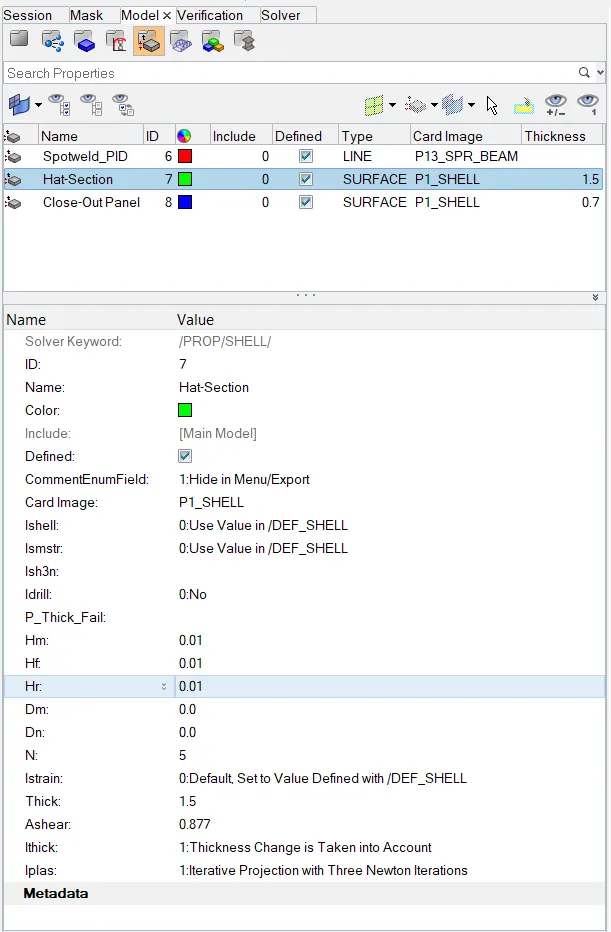
- Now, save the model and run the analysis. (analysis > radioss > following settings below > Radioss)
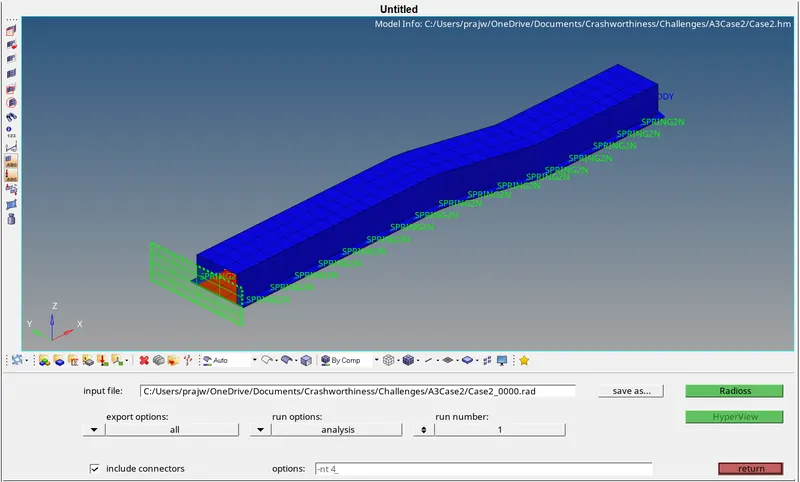
- After running analysis open the results:
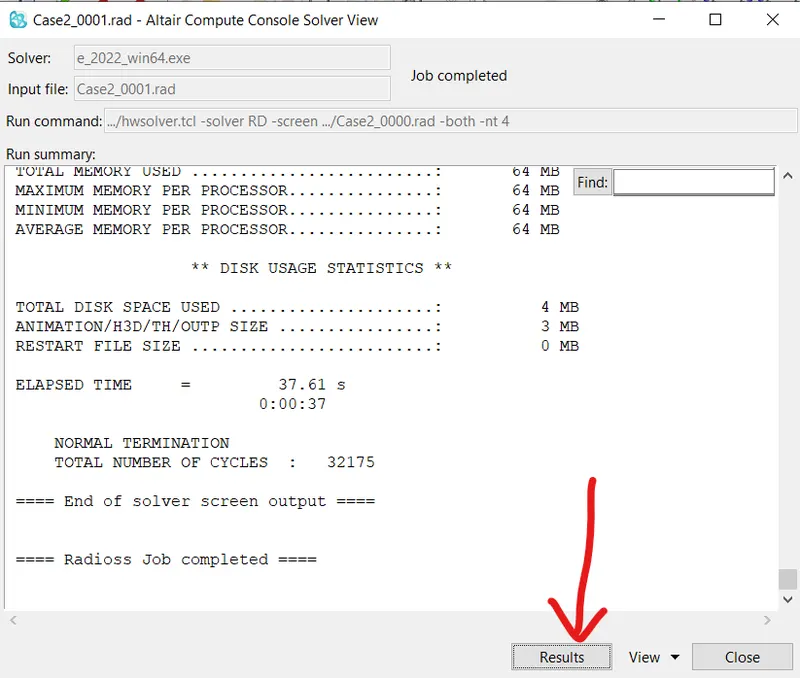
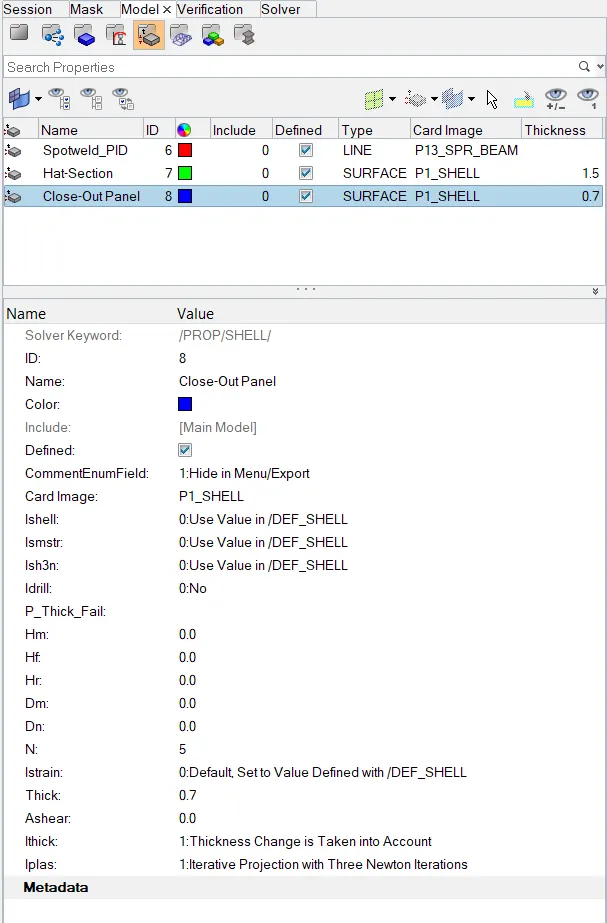
Now for Case2:
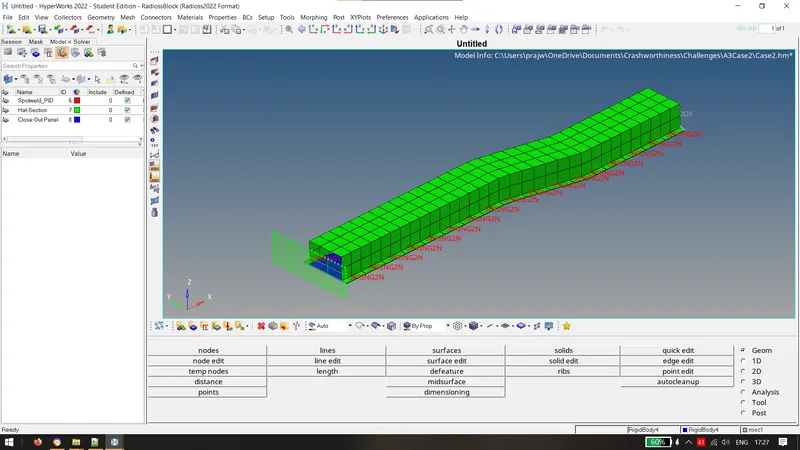
Model Properties for case 2:
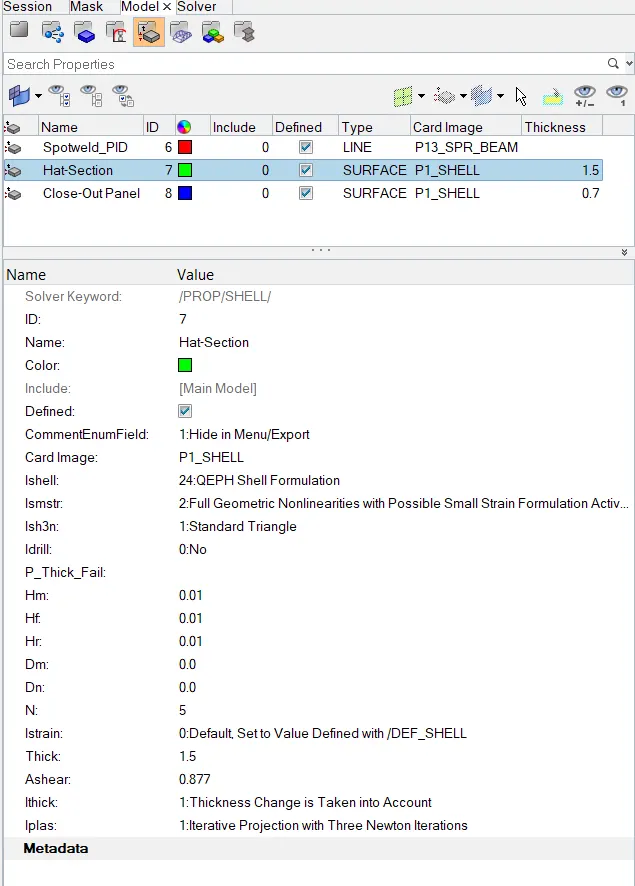
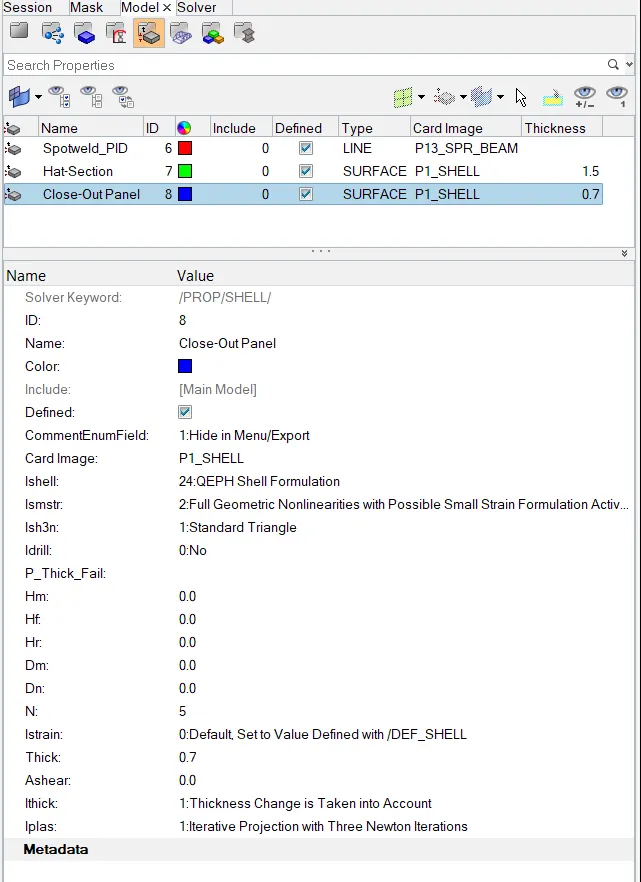
- Now, similarily perform analysis as done above and get the results:
Divide the window into 4 parts and plot the graphs and animations for the results required as shown in the objective. Use Hyperview and Hypergraph 2D for Plotting Vonmises Stress, Hourglass energy, time vs rigid wall forces, time vs energies stated below:
Note: Only 7 frames are visible from 30.
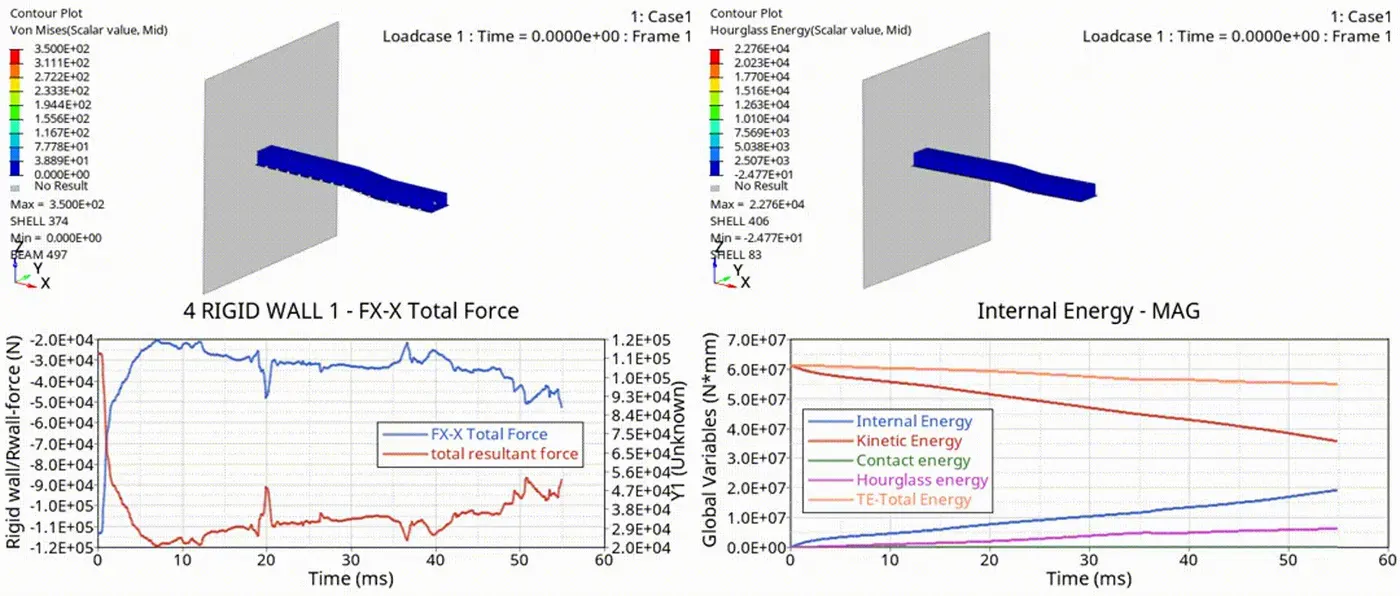
For Case 1:
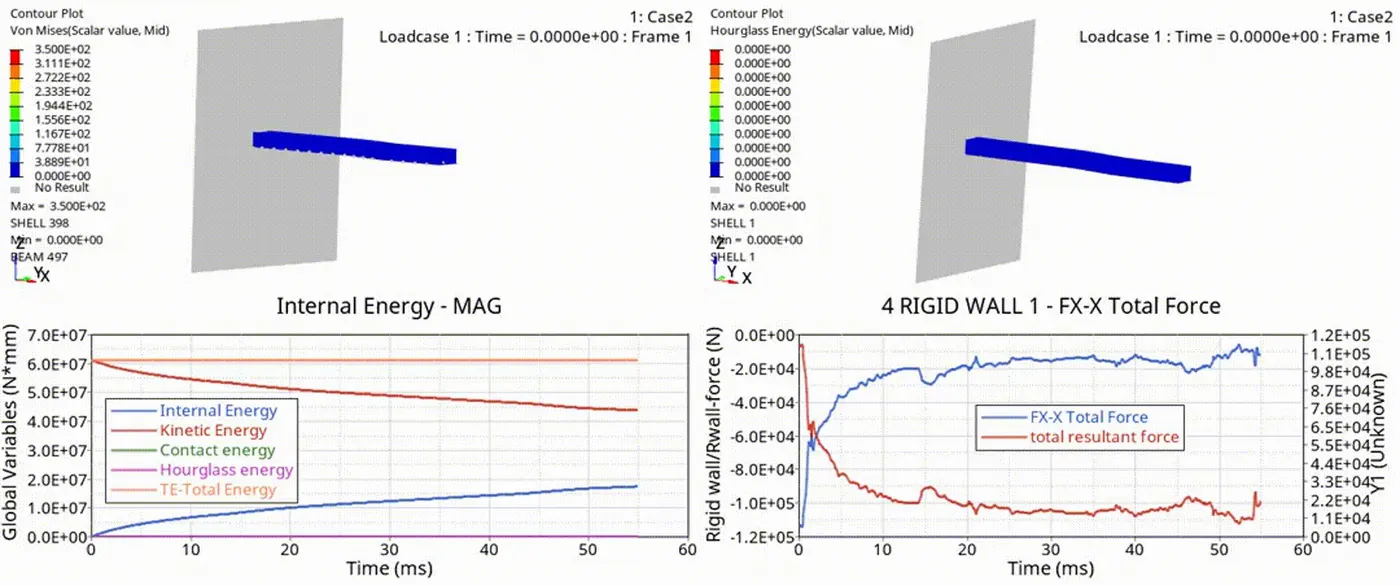
For Case 2:
Also for energy error and mass error, we open the 0001.out file in notepad:
For case1:

For case2:

Conclusion: (Checkout the information provided in the beginning for results conclusion)
About Energy Errors and Mass Errors: We can see that the energy errors in the first case is seen to be -10.3% whereas in case 2, the energy error is -0.1%. The lesser the energy error, the better are the results. The mass error is also seen to be almost same in both the cases i.e. 0.165E-3 which is acceptable. The mass added is same throughout the process.
For Hourglass Energy: We can say that the max hourglass energy for the first case is 2.267e4 and for the second case it is 0 as seen in the plots. The result for hour glass energy in second case is ideal.
For Rigid Wall Forces: The X total forces in case 1 is seen to be increasing uptill 6ms and decreasing after it and vice versa for total resultant forces. Also, the X total forces in case 2 is seen to be increasing and and decreasing for total resultant forces.
For Energies: From the plots and the output file, we can conclude that: The total energy in case 1 is decreasing and in case 2 it seems to be constant. The internal energy is lesser in case case 2. The kinetic energy is greater in case 2. The contact energy is same in both the cases.