Week 4 -Wire Bending Challenge
AIM: To simulate the Wire Bending in ansys workbench.
Objective:
To perform an analysis to simulate the bending of a wire and to use Copper Alloy (Non Linear), Aluminium Alloy (Non-Linear), and Magnesium Alloy (Non-Linear) for the wire alone. To find out the Equivalent stress and Equivalent strain on the wire alone.
Procedure:
- After opening Ansys Workbench, use static structural as the mode of analysis for simulation.
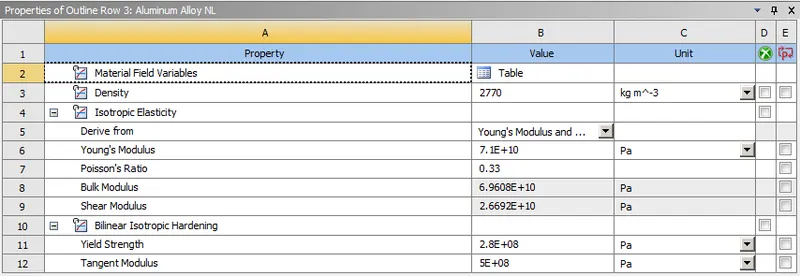
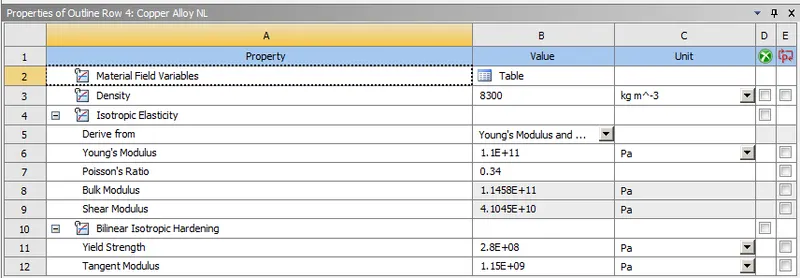
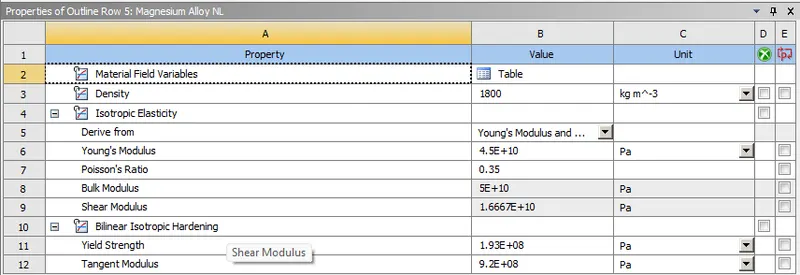
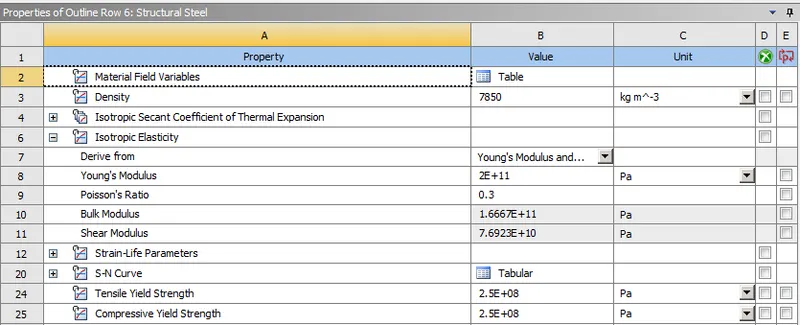
- Now, add structural steel, copper alloy NL, aluminium alloy NL and magnesium alloy NL from engineering data.
- Import the model provided and check the geometry in the Ansys Spaceclaim for any abnormalities.
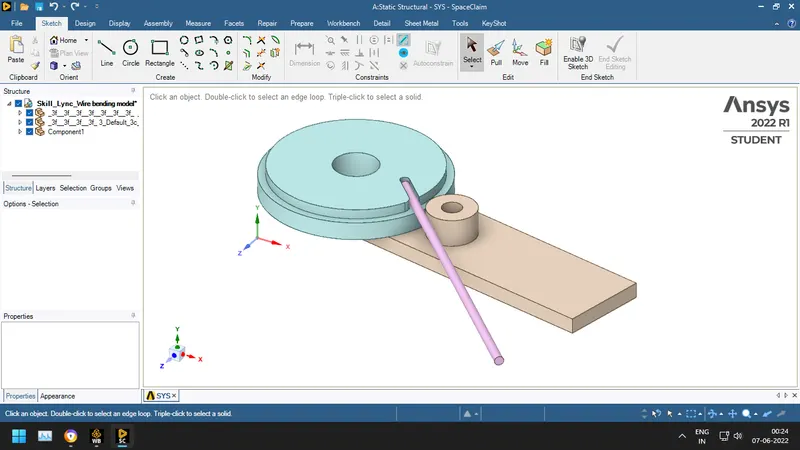
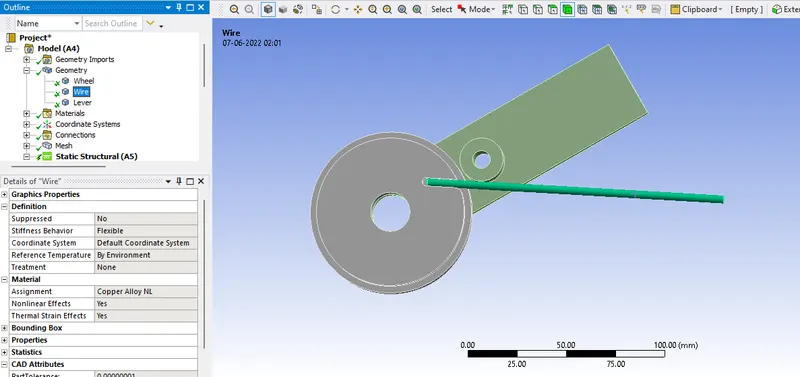
- Assign copper alloy NL as the material to the wire and let the wheel and lever be structural steel.
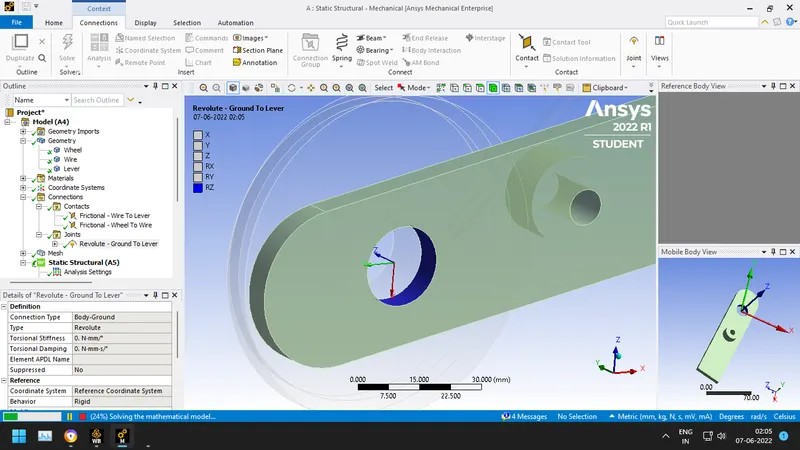
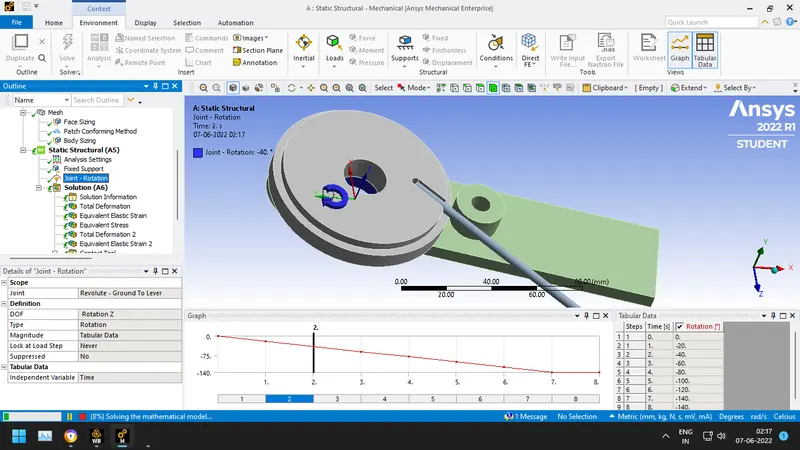
- Create contact Points and Joints. Let all the contact points be frictional with a friction of 0.2 and create body to ground - revolute joint in z axis as shown below.
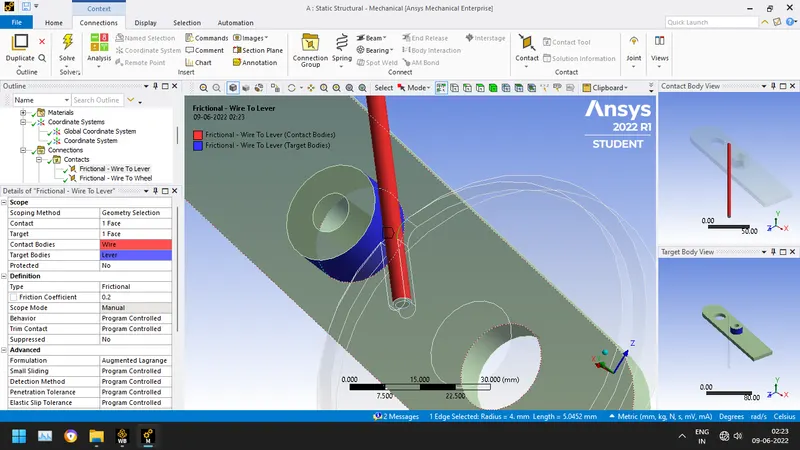
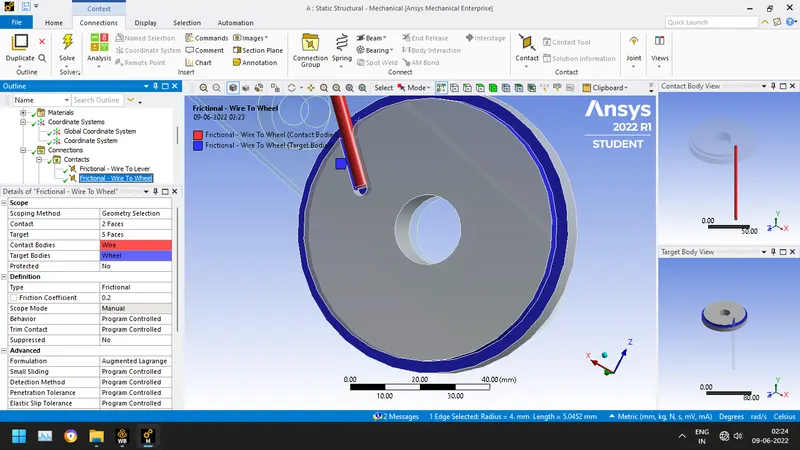
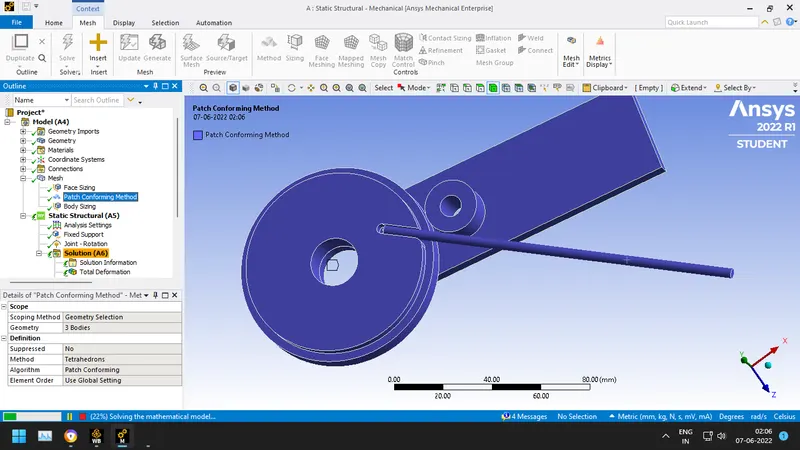
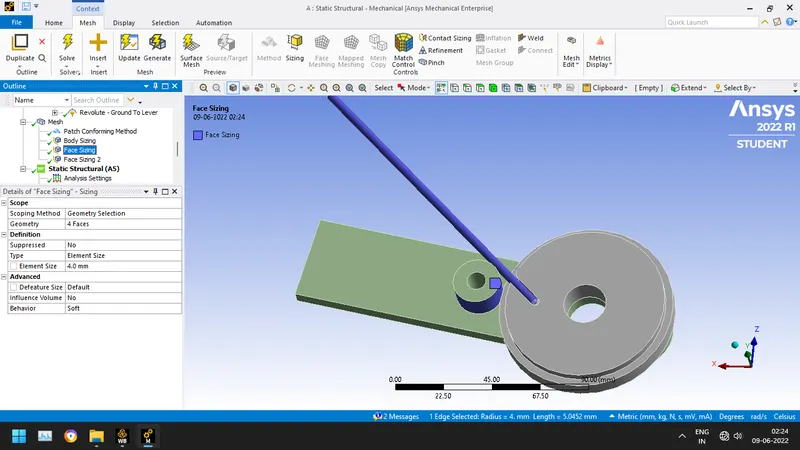
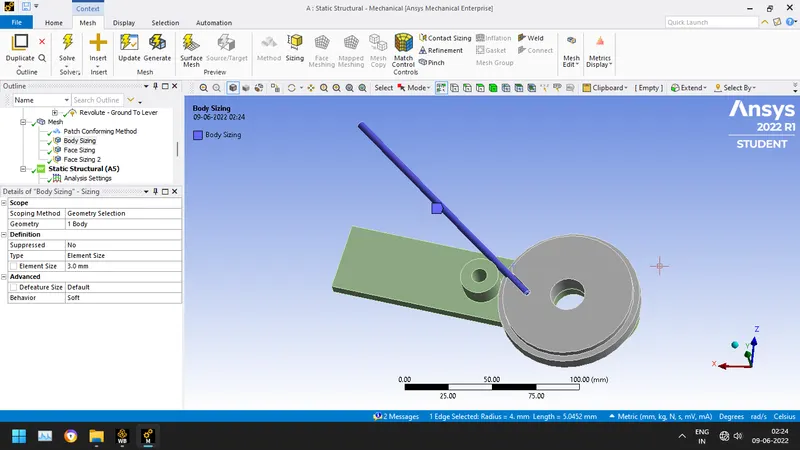
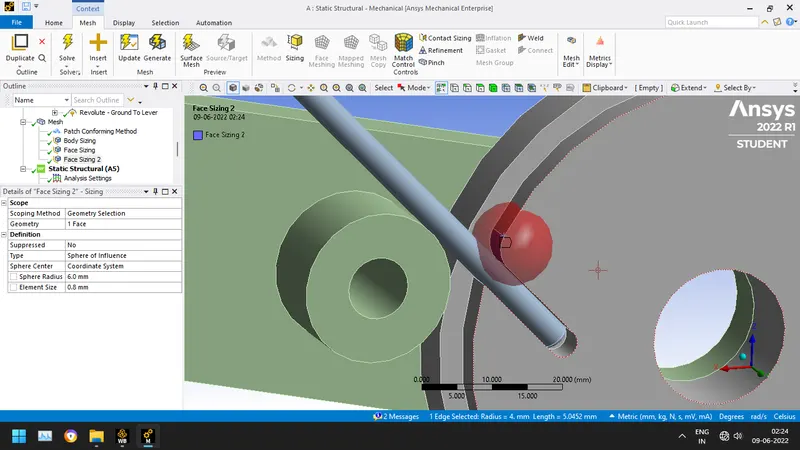
- Mesh all the components with default element size. And refine mesh on the faces which are coming in contact for our study using sizing of 4 mm. Apply tetrahedron to the the type of mesh and give fine mesh near the contact of wire and lever by creating a co ordinate sytem; for better results use it as sphere of influence of radius 6mm for 0.8mm element size.
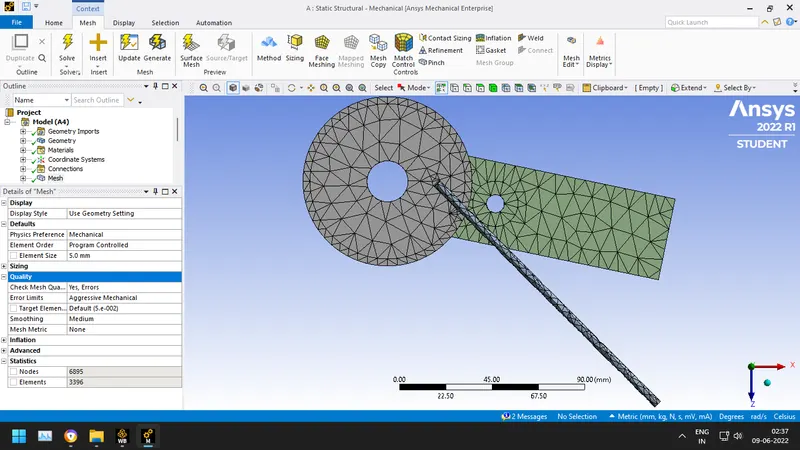
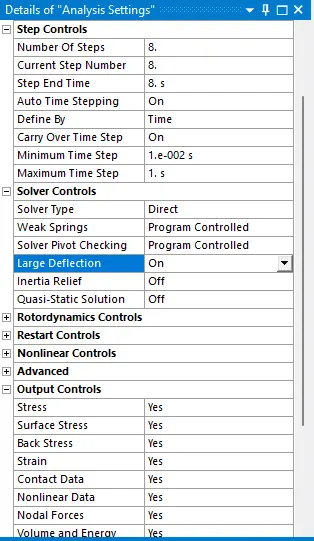
- Following analysis settings have been set for the simulation for 8 steps:
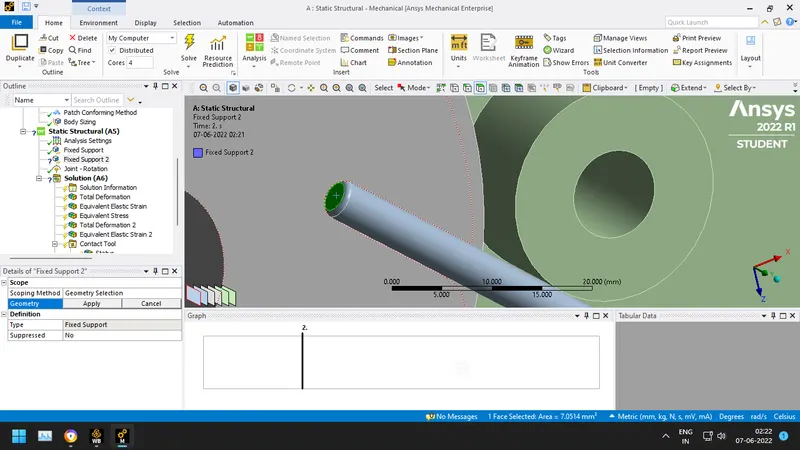
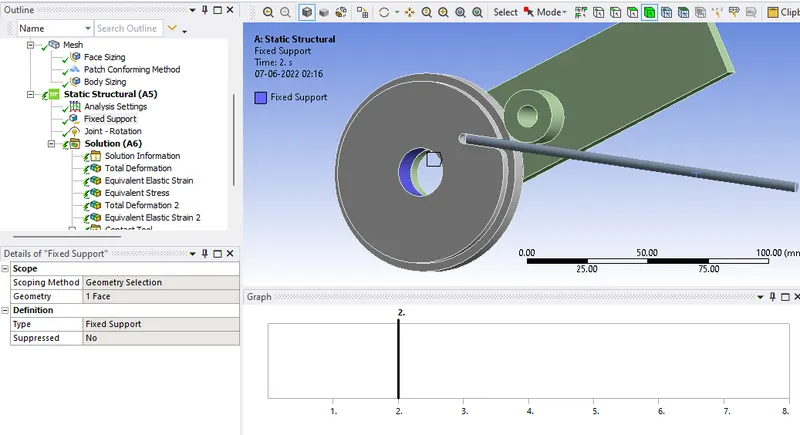
- Add a fixed support to the wheel and the wire; add a rotational joint about z axis for 140 degree as shown:
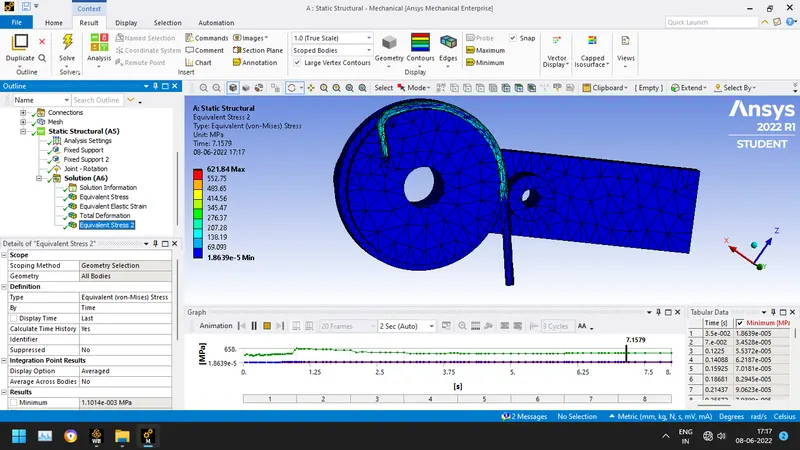
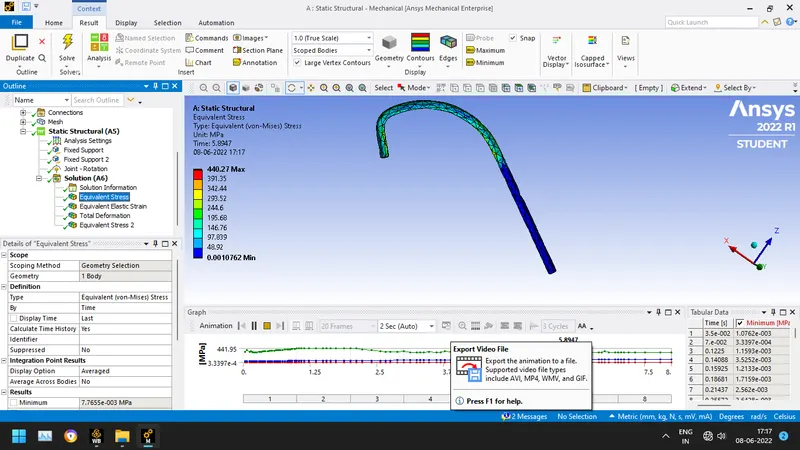
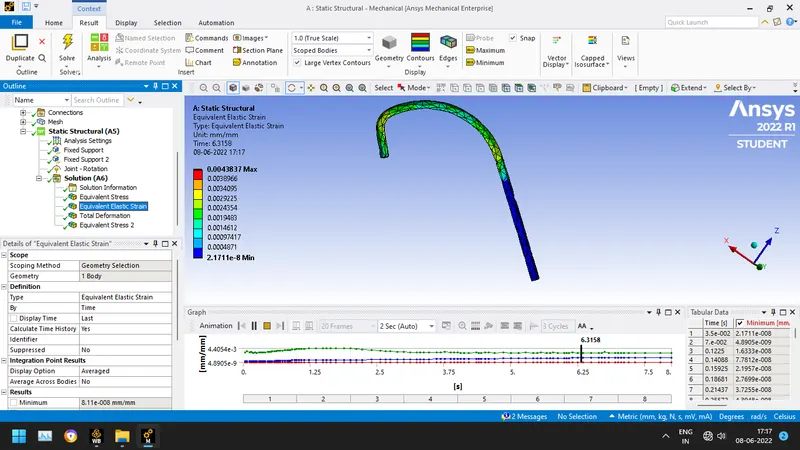
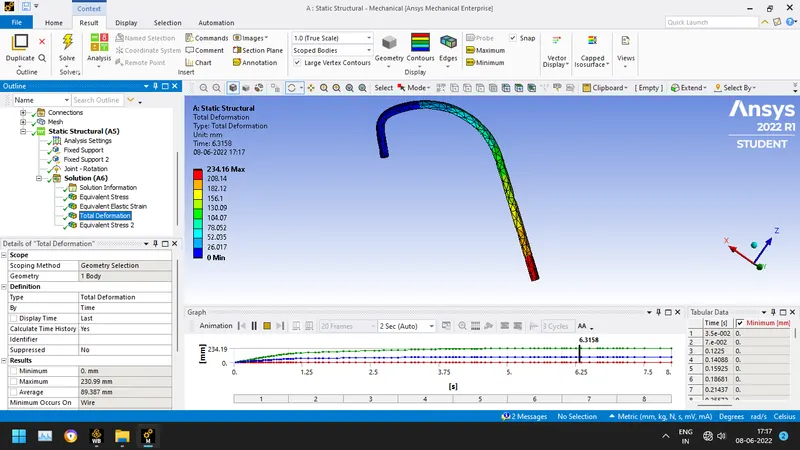
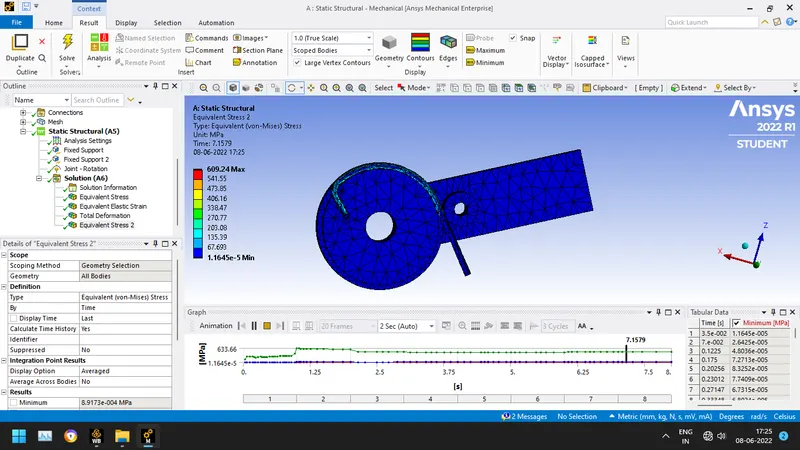
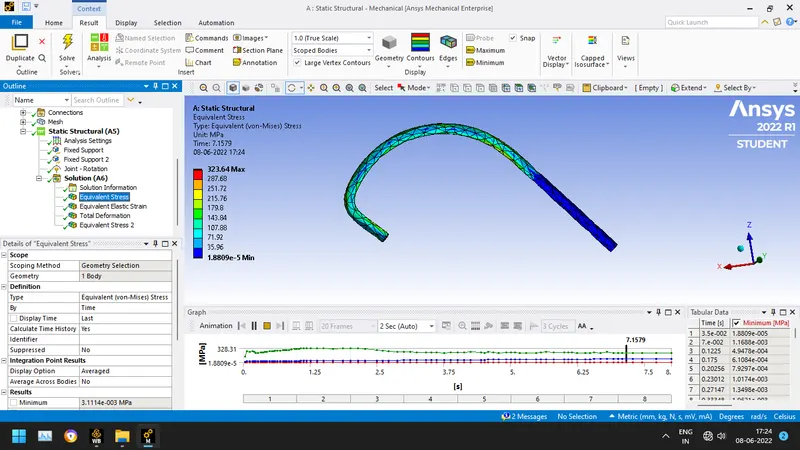
- Now, Insert total deformation, equivalent stress and equivalent elastic strain for wire.
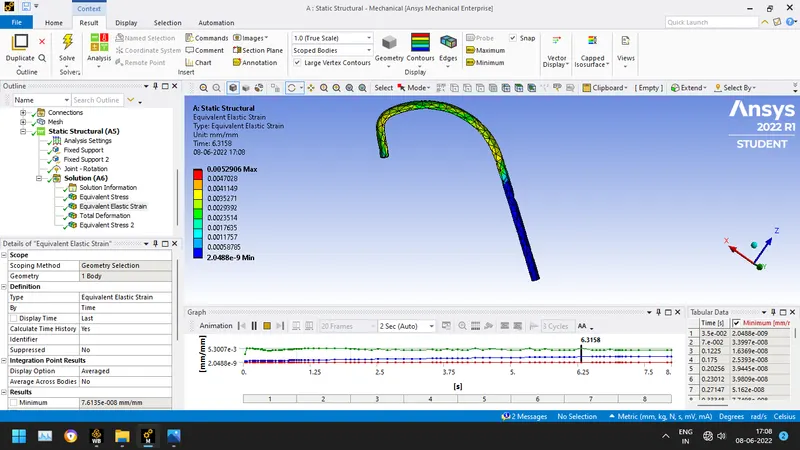
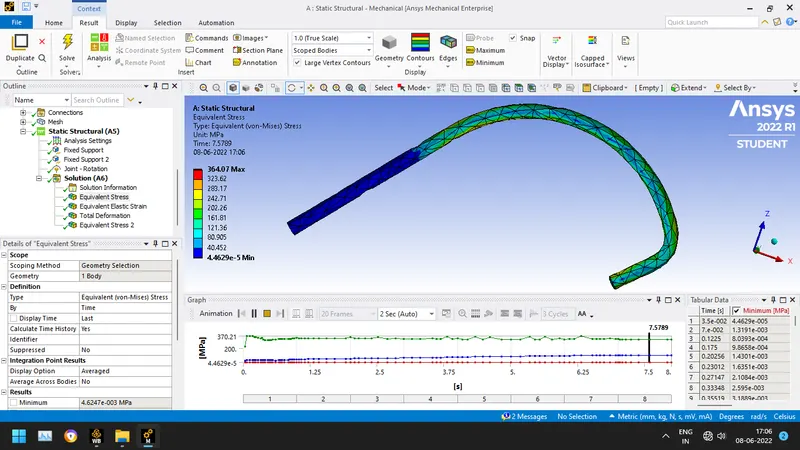
- After performing the simulation for all 3 materials, following solutions have been obtained for wire bending.
Case1) For Copper Alloy NL
Case 2) For Magnesium Alloy NL
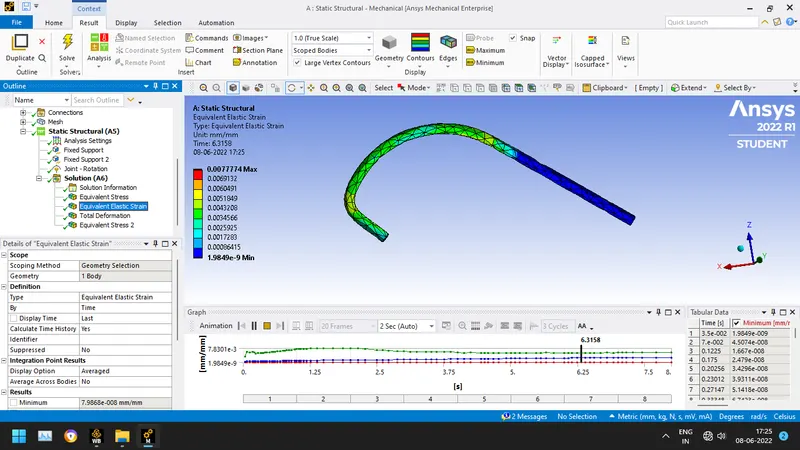
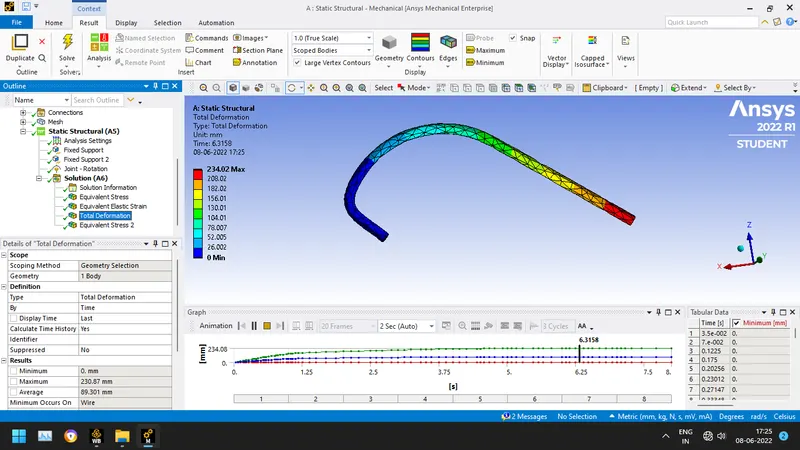
Case 3) For Aluminium Alloy NL
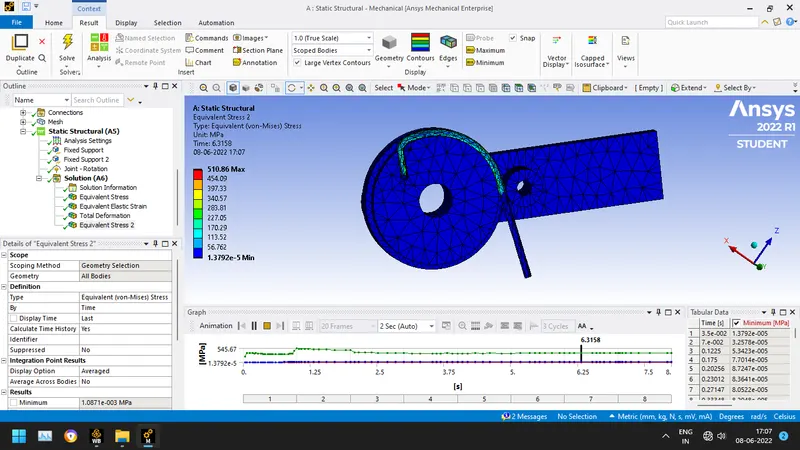
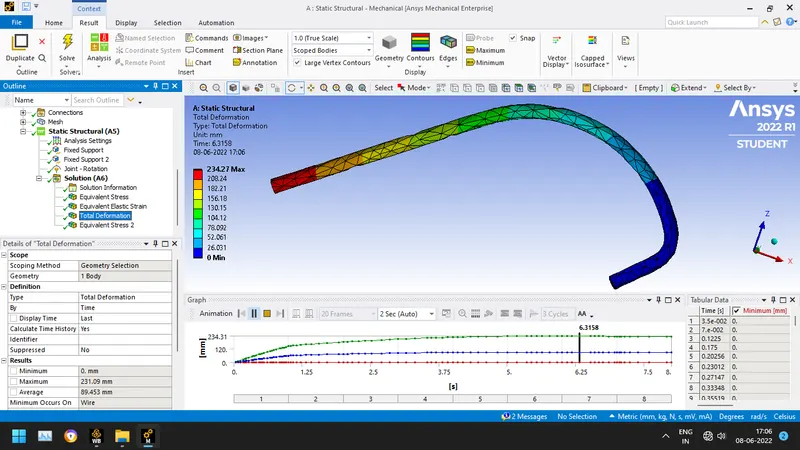
Conclusion:

From the above results, we can say that the maximum stress of 440.27 MPa & 0.0043 max strain is obtained in copper alloy NL material. Also, the least max stress of 323.64 MPa with highest strain of 0.0077 was observed in Magnesium Alloy. Hence, magnesiuum alloy NL is easily bendable inducing low stresses on the wire than the rest.
In terms of the stress-strain curve, Young's modulus is the slope of the stress-strain curve in the range of linear proportionality of stress to strain. The greater the modulus, the stiffer is the material.
So from the material properties mentioned in the beginning, the least youngs modulus is for magnesium alloy NL which is the reason for inducing low stresses in the wire. Also, poison ratio for Mg Al NL is higher than the rest which causes more strain to be generated on the wire.