Week 7-Long Piston With Cam
Aim: To perform a transient structural analysis on the piston and cam mechanism.
Objective: To run the analysis with Frictionless contact, Frictional with 0.1 and 0.2 as the frictional contact for a total of 3 cases. Find out the Equivalent Stress, Directional Deformation and Equivalent Elastic Strain and compare them for all the three cases. Give an inference as to why the results vary between cases.
Procedure:
- After opening Ansys Workbench, use transient structural as the mode of analysis for simulation.
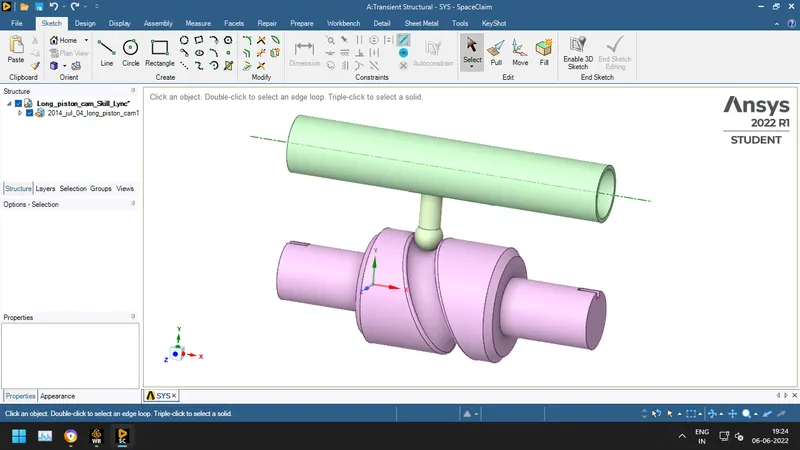
- Since structural steel is used for both piston and cam, import the geometry given. Checking the geometry in the Ansys Spaceclaim for any abnormalities.
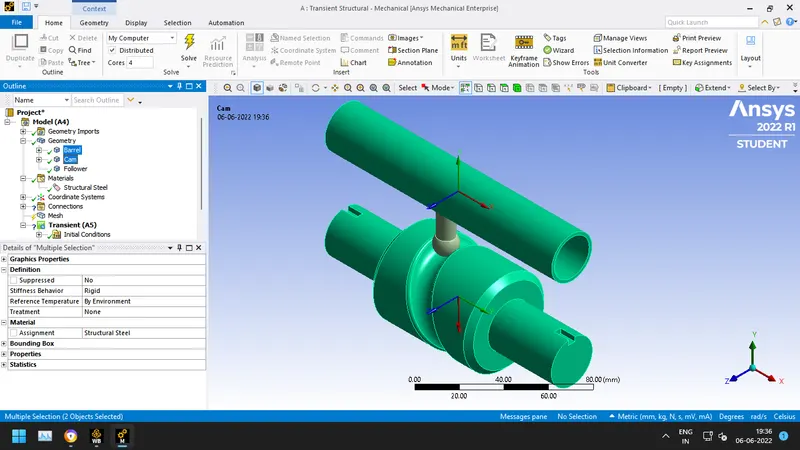
- Now, open Ansys Mechanical and give specific names as cam, follower and barrel to the components as shown below, let barrel and cam be rigid:
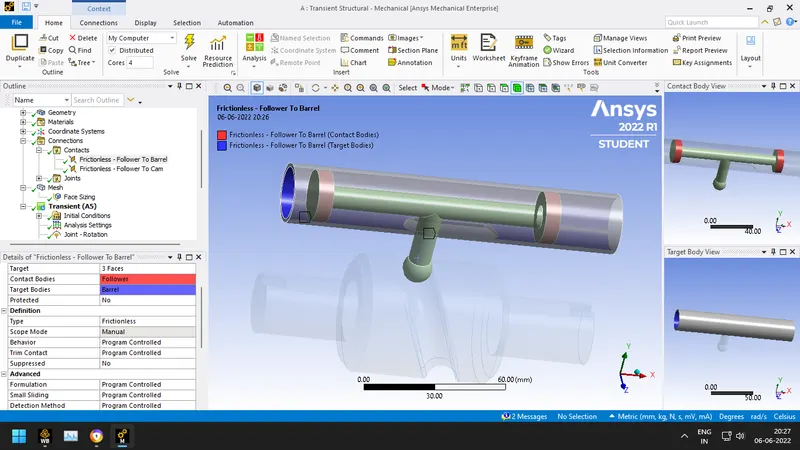
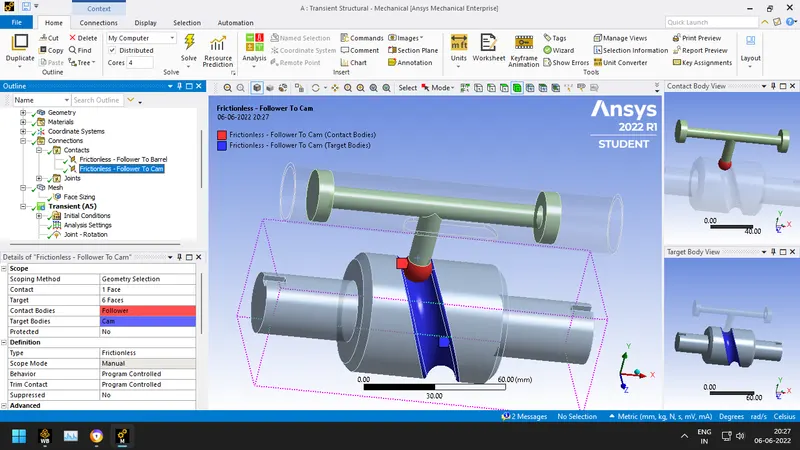
- Create frictionless contact points between the cam, follower and barrel.
- Create fixed, translational and revolute joints for the simulation as shown:
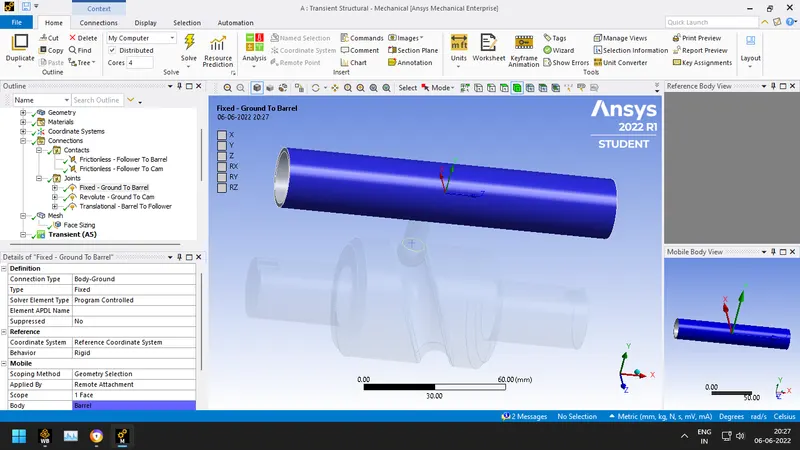
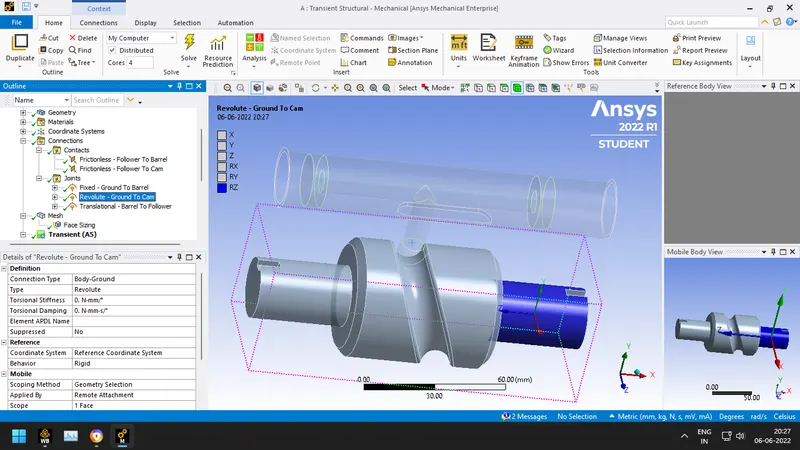
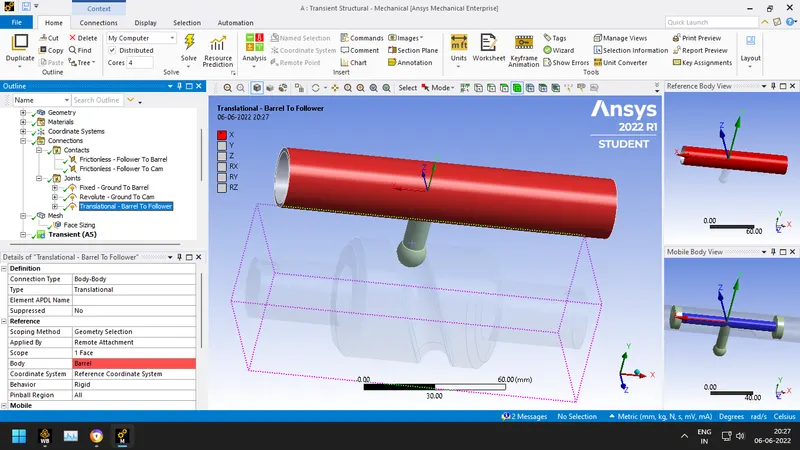
- Mesh all the components with default element size. And refine mesh on the faces which are coming in contact for our study using sizing of 3 mm.
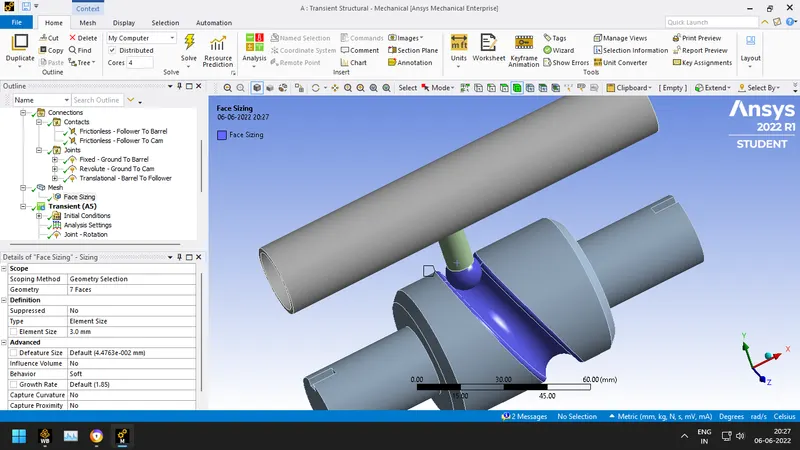
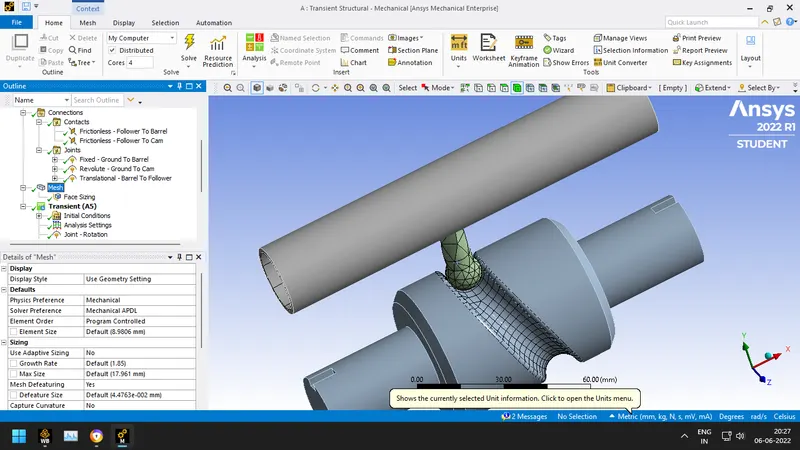
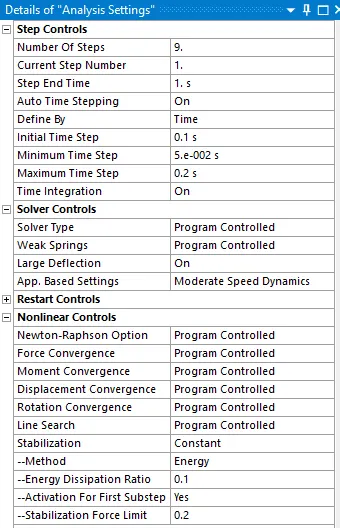
- Following analysis settings have been set for the simulation for 9 steps:
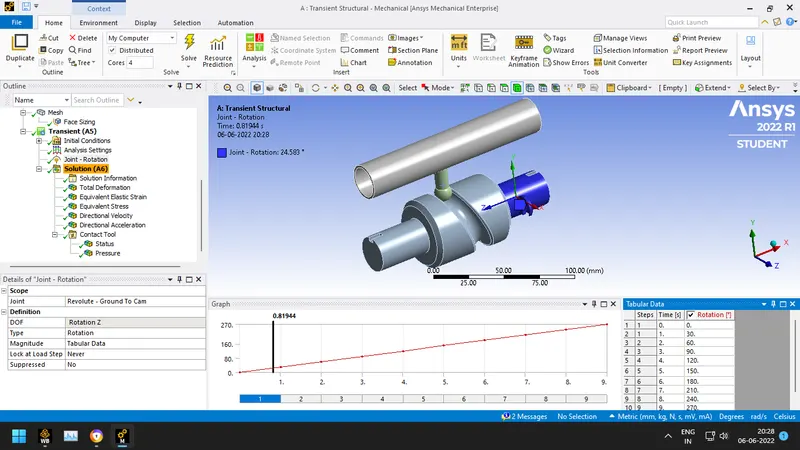
- Now adding joint rotation to the cam for 270 degree in z axis as shown below:
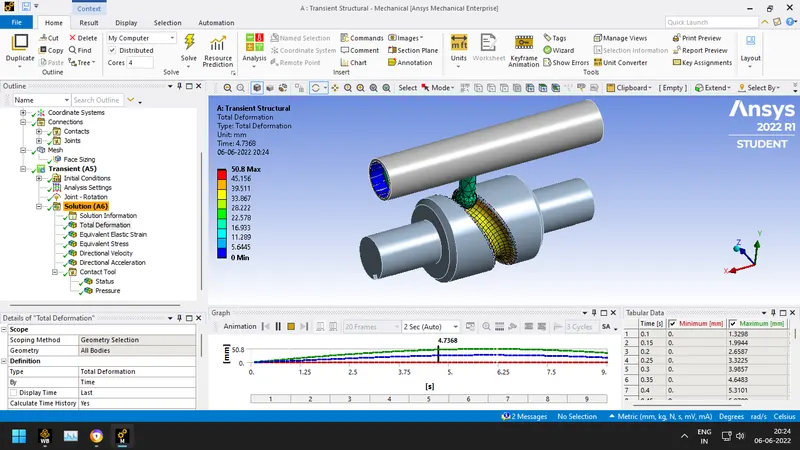
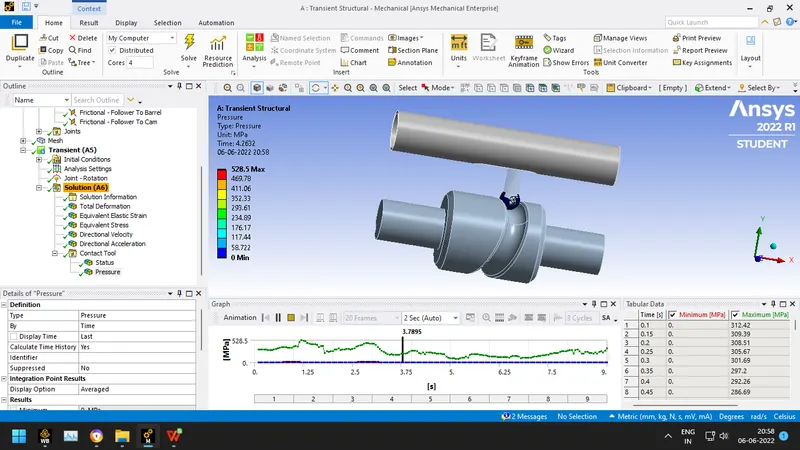
- Now, Insert total deformation, equivalent stress, directional velocity and acceleration, equivalent elastic strain and contact pressure.
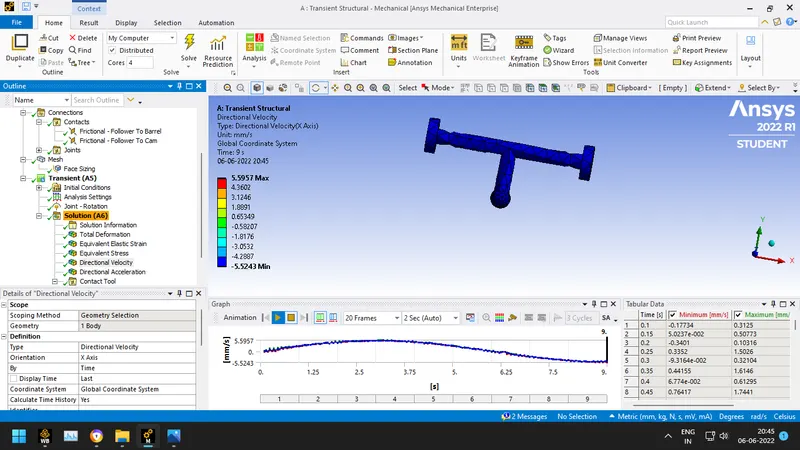
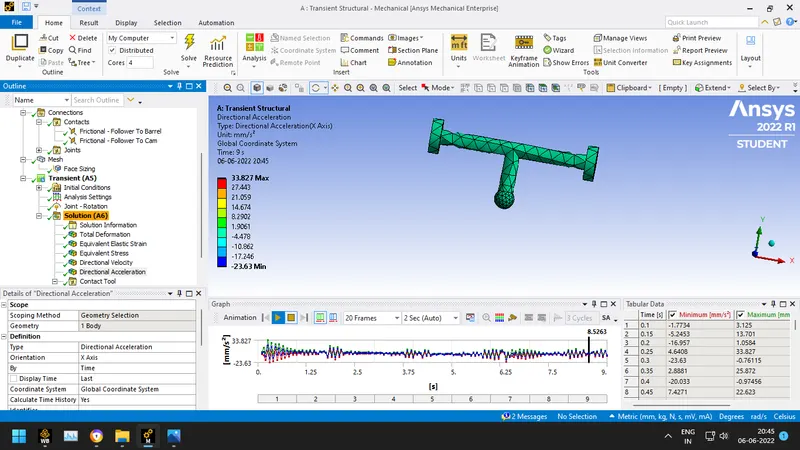
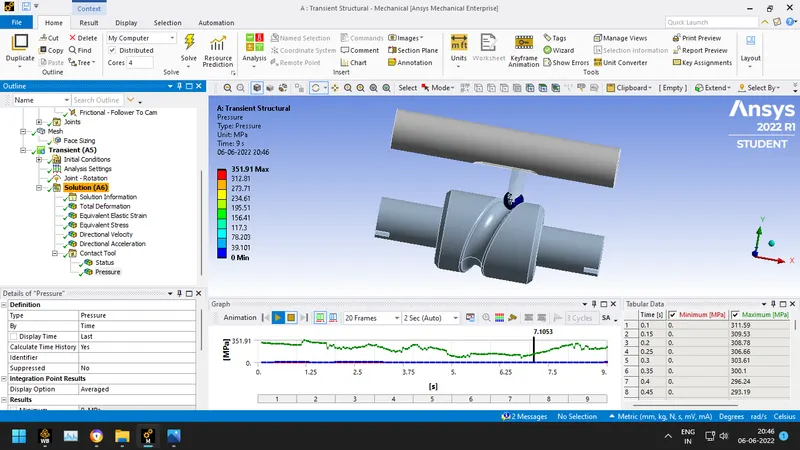
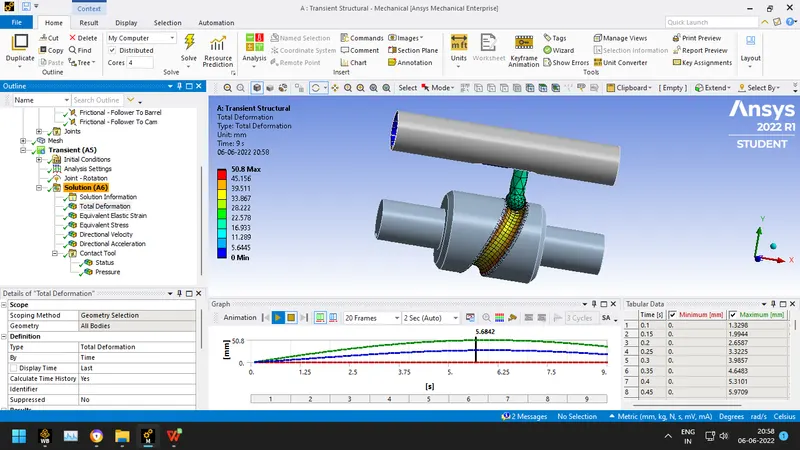
- Finally following solutions have been obtained after running the simulation for the above:
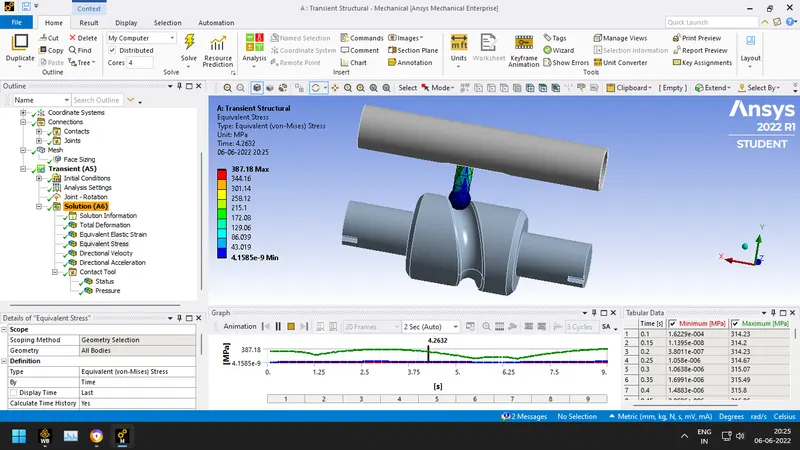
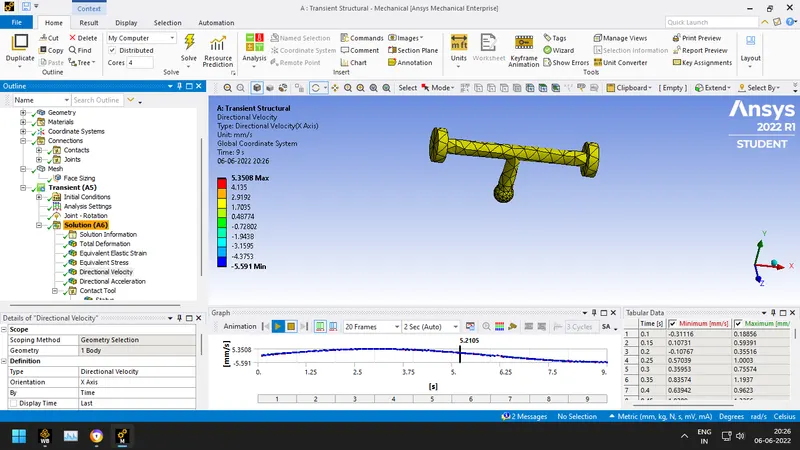
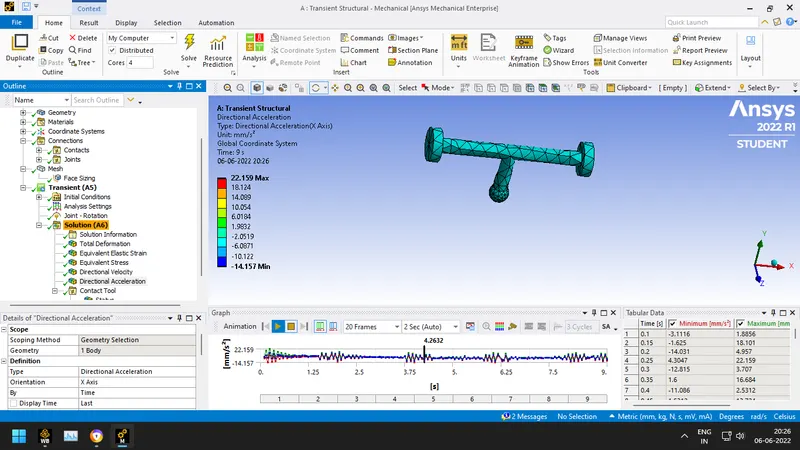
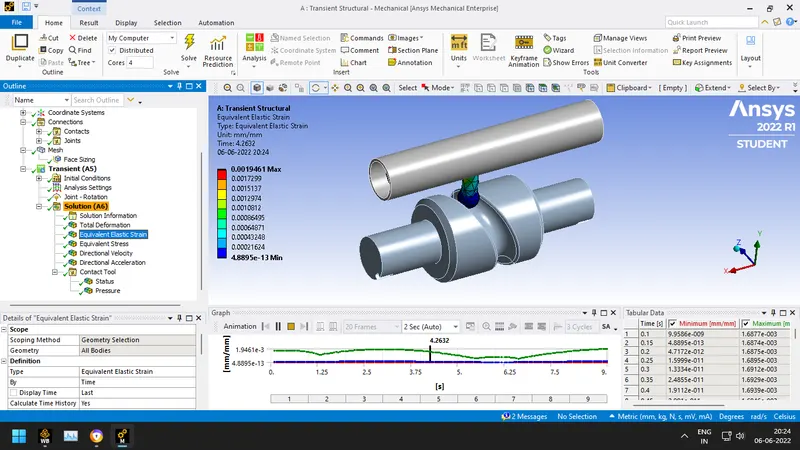
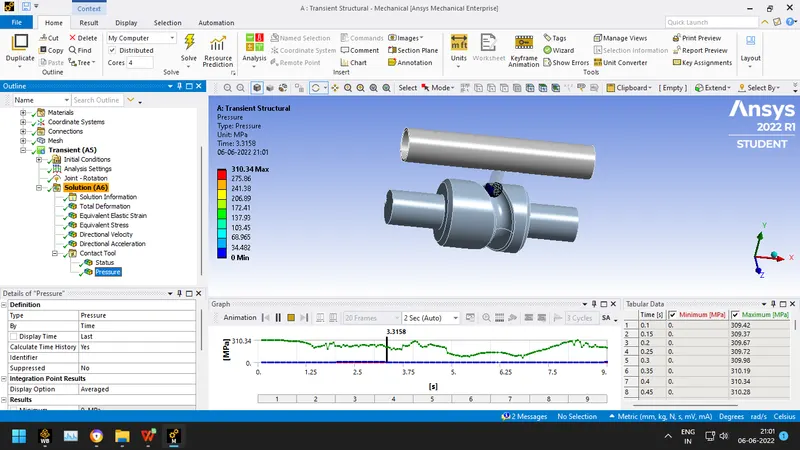
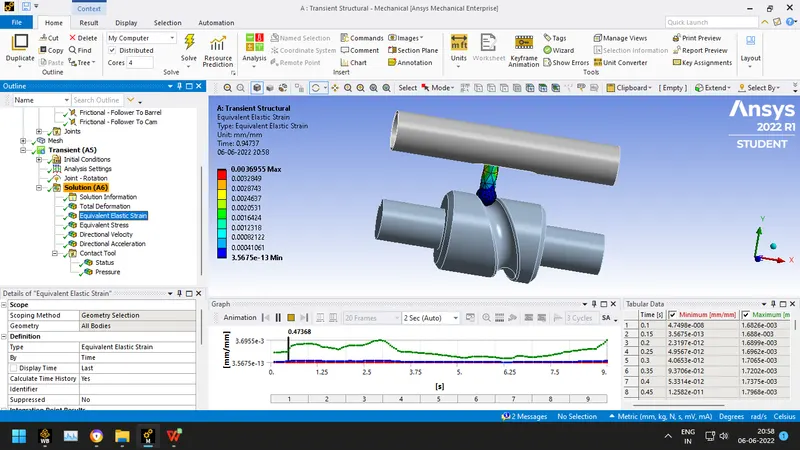
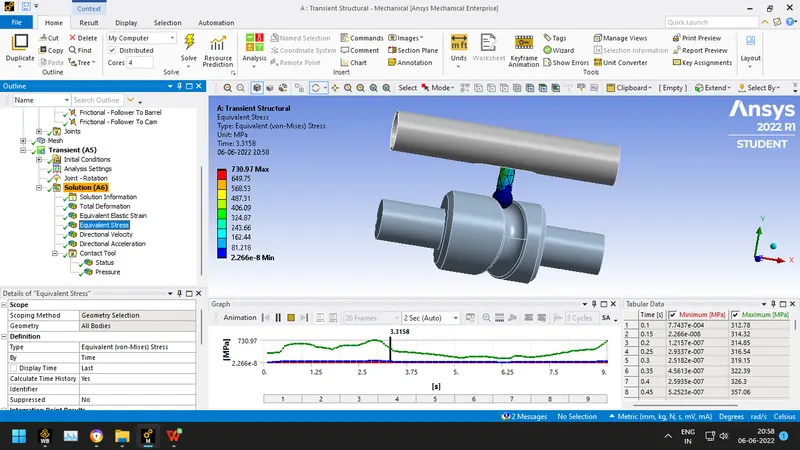
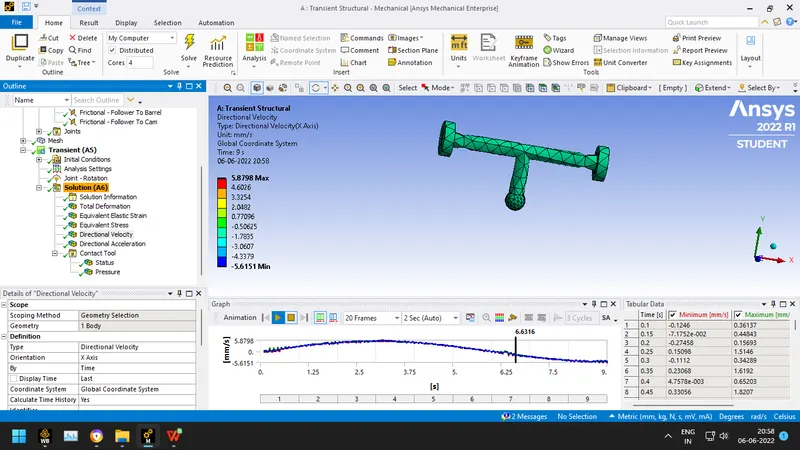
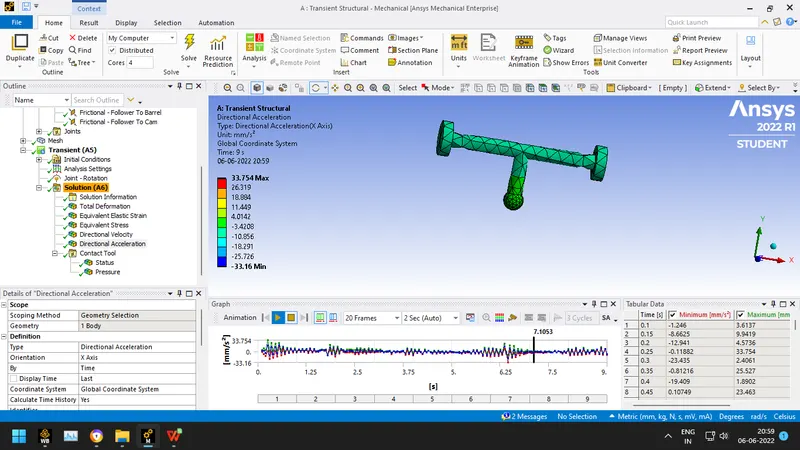
- For case 2 with frictional contacts with friction as 0.1; the results obtained are
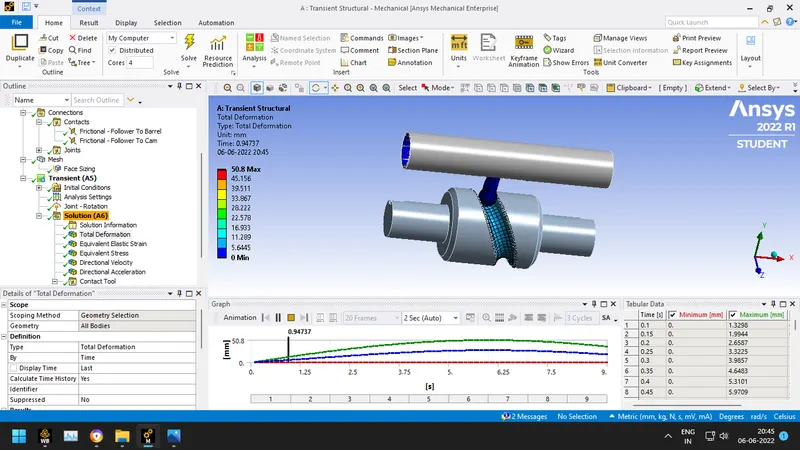
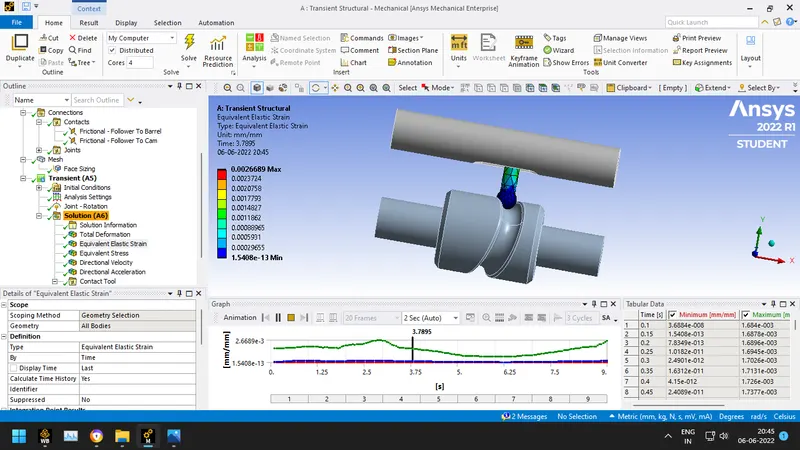
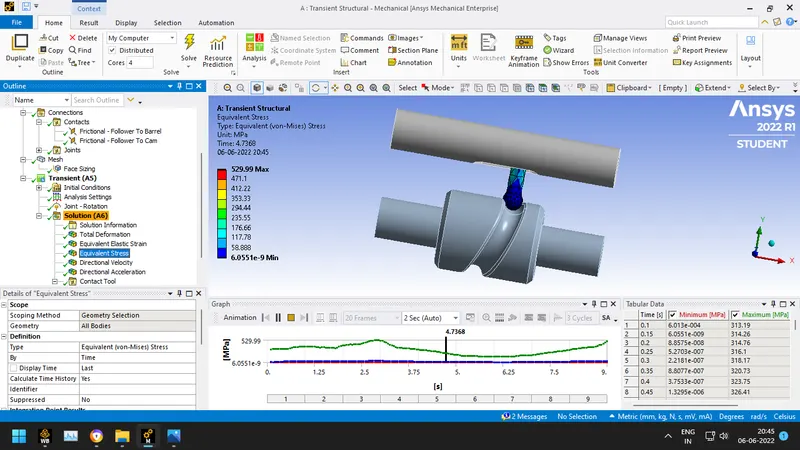
- For case 3 with frictional contacts with friction as 0.2; the results obtained are
Conclusion:

From the above table, we can say that the with increase in friction:
- Maximum stresses and contact pressures are generated.
- Directional velocity and equivalent strains are seen to be increasing.
- The total deformation is constant throughout.
- Increase in acceleration of the follower.
Inshort, friction plays a major role in inducing stresses on the components while in contact.