Week 2 Bevel Gear Challenge
AIM: To simulate the Bevel Gear in ansys workbench.
Objective:
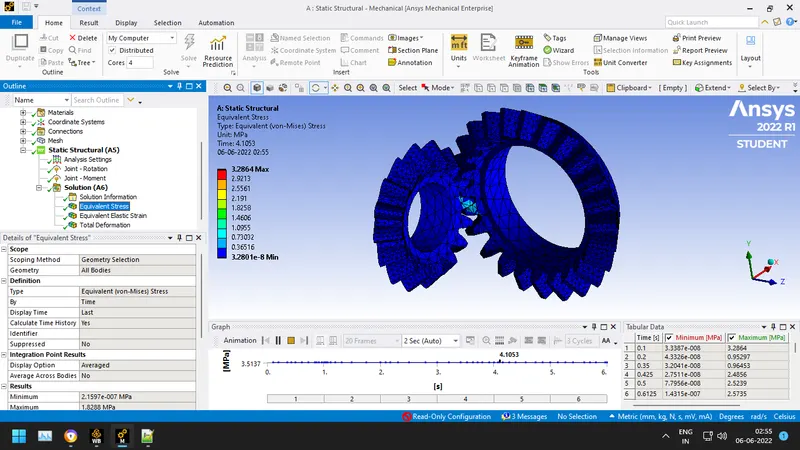
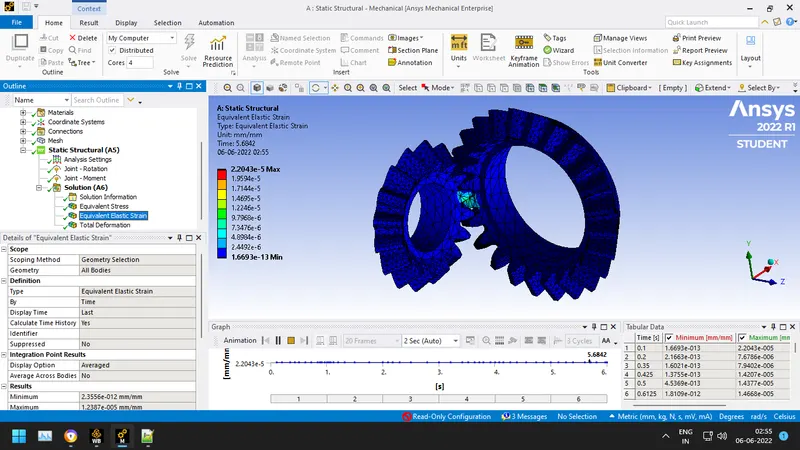
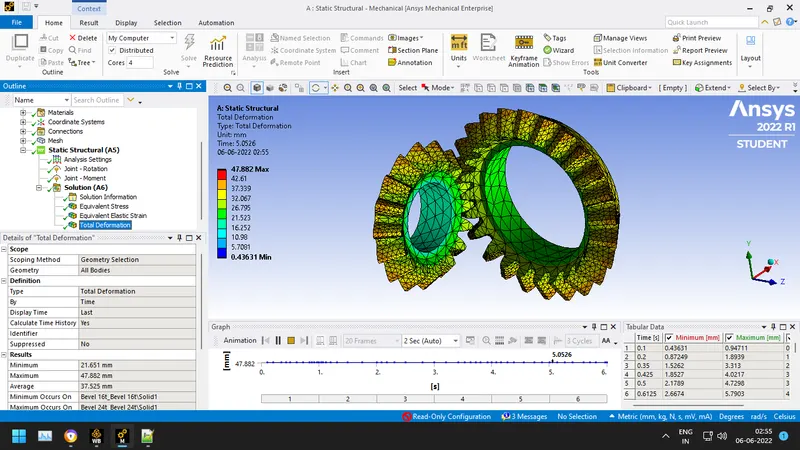
To write a few words on what a grid dependency test is and its use. Perform a grid dependency test for the Bevel gear simulation for mesh sizes of 6,5 and 4 mm. Solve for Von-Mises stress, Equivalent elastic strain, and Total Deformation using the previously mentioned mesh sizes.
Introduction:
What is Grid Dependency Test ?
While performing any simulation we always think about the mesh quality. If we provide a mesh which is very fine or of high density (higher number of nodes and elements); then the time and power required for computation of simulation will also increase. So, Grid Dependency test is basically a test or simulation that depends on the grid size or mesh quality which helps us to determine an optimal mesh size where the results generated are an approximate to the simulation generated by finer mesh. The most fundamental method of checking the mesh quality is to refine a mesh until a critical result such as Equivalent stress does not change significantly with each refinement. Inshort, Grid dependency test is where analysis begins with a coarse mesh and it is refined to finer mesh for each run until the results do not change significantly and depend of the grid size any more.
Procedure:
- After opening Ansys Workbench, use static structural as the mode of analysis for simulation.
- Now, structural steel is the default material added to the gears.
- Import the model provided and check the geometry in the Ansys Spaceclaim for any abnormalities.
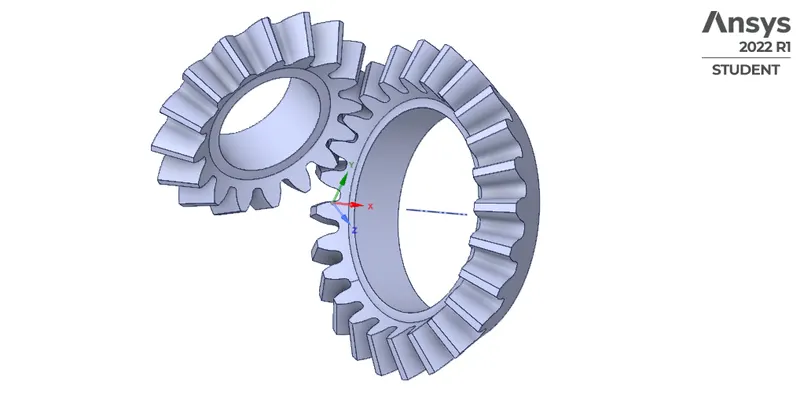
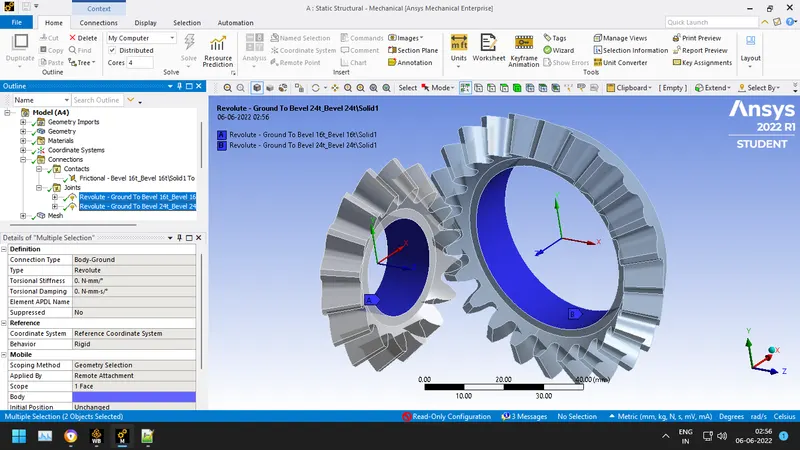
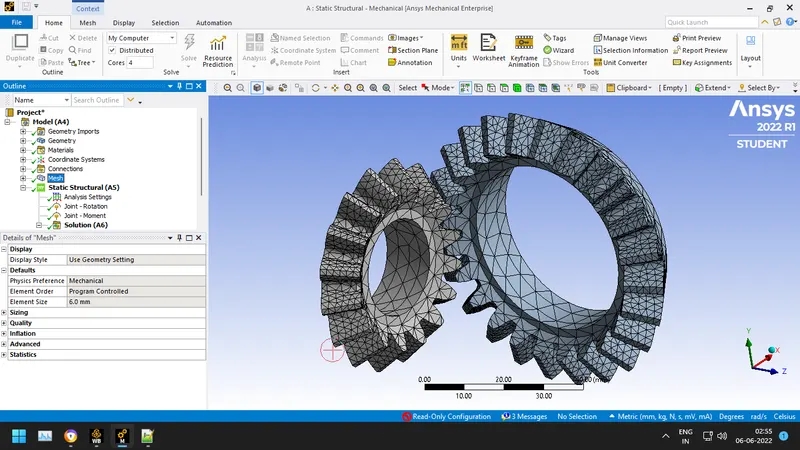
- Create contact Points and Joints. Let all the contact points be frictional and create body to ground - revolute joints in z axis as shown below.
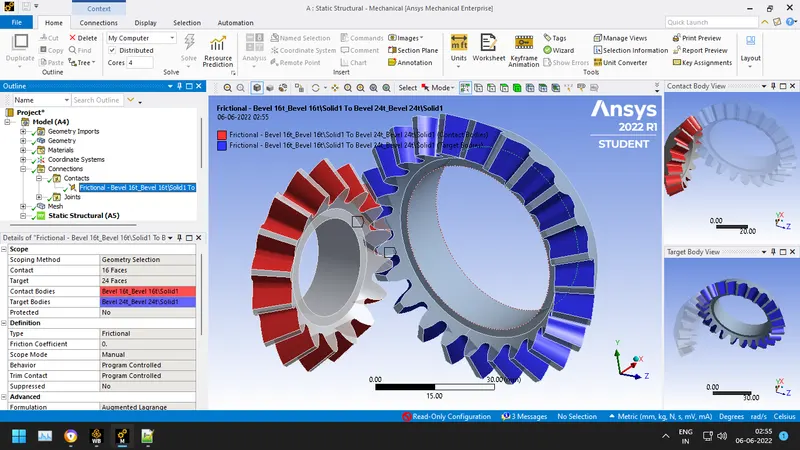
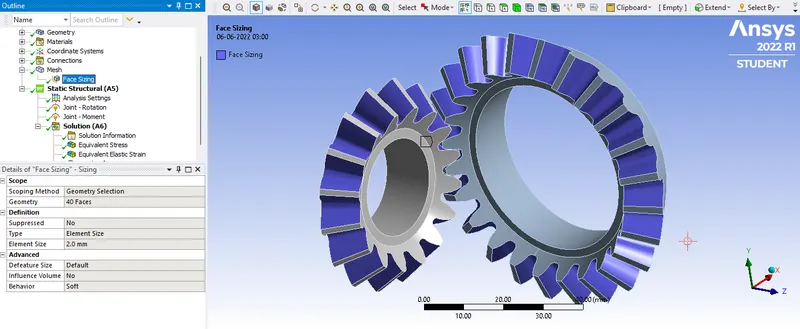
- Mesh all the components with 6 mm element size. And refine mesh on the faces which are coming in contact for our study using sizing of 2mm.
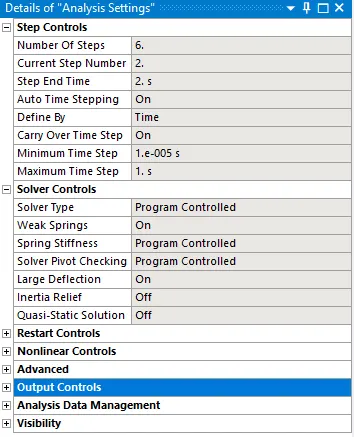
- Following analysis settings have been set for the simulation for 6 steps:
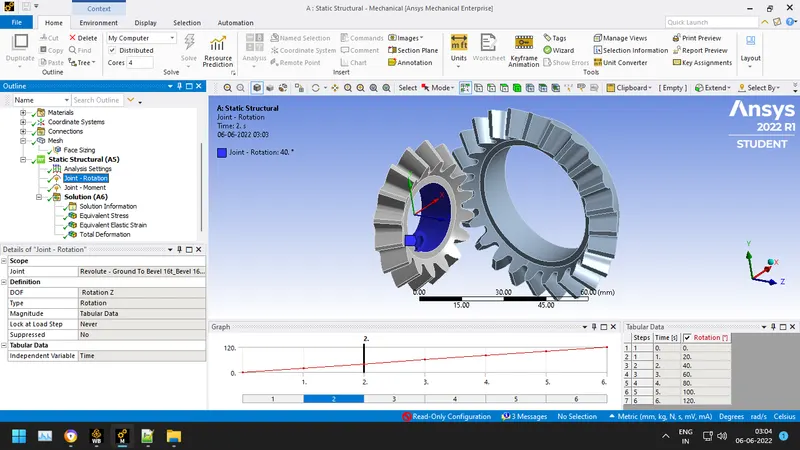
- Following rotational joint has been created with 120 degree with moment of 100 as shown:
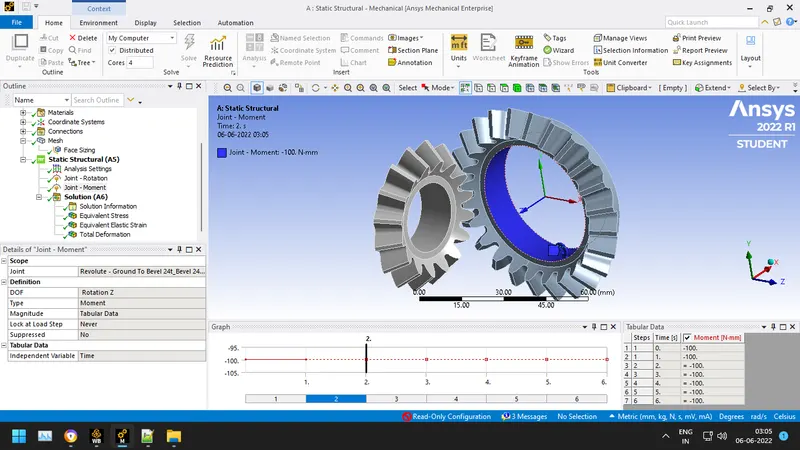
- Now, Insert total deformation, equivalent stress, contact tool for pressure, equivalent elastic strain.
- Finally following solutions have been obtained after running the simulation for bevel gear for all different element sizes.
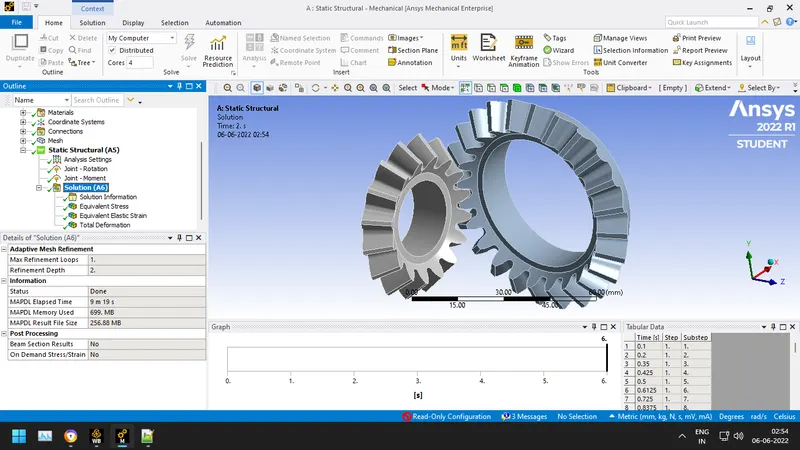
Case1) For 6mm Element Size
Solution time for 6mm mesh is 9 min 19 sec.
Also, we have
Case 2) For 5mm Element Size
Solution time for 5mm mesh is 9 min 56 sec.
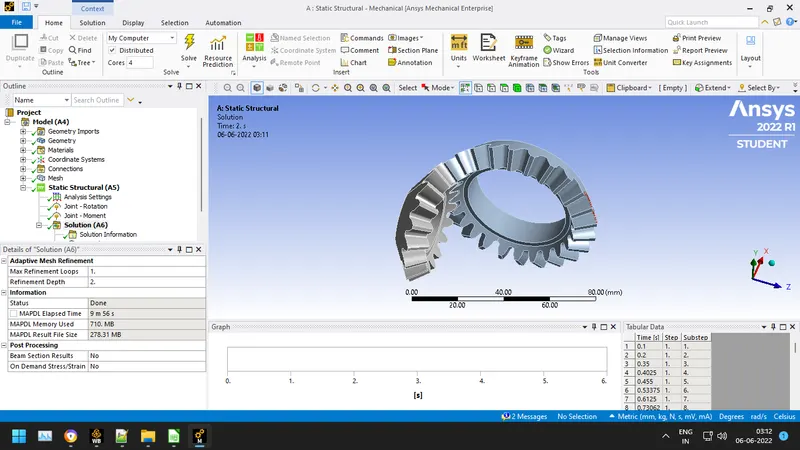
Also, we have
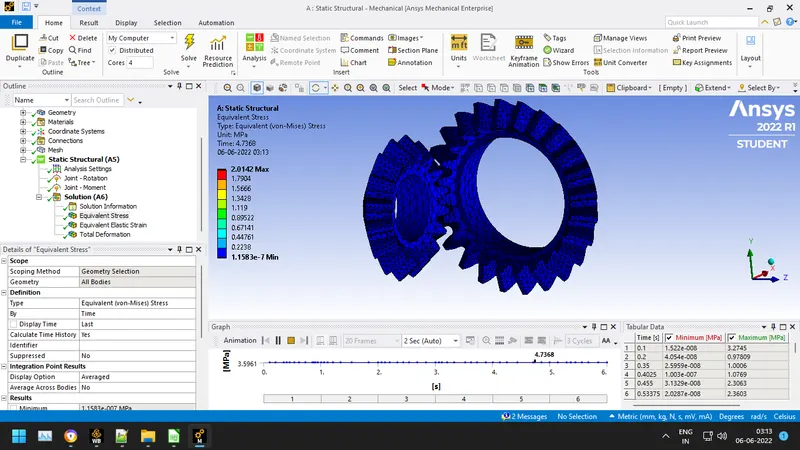
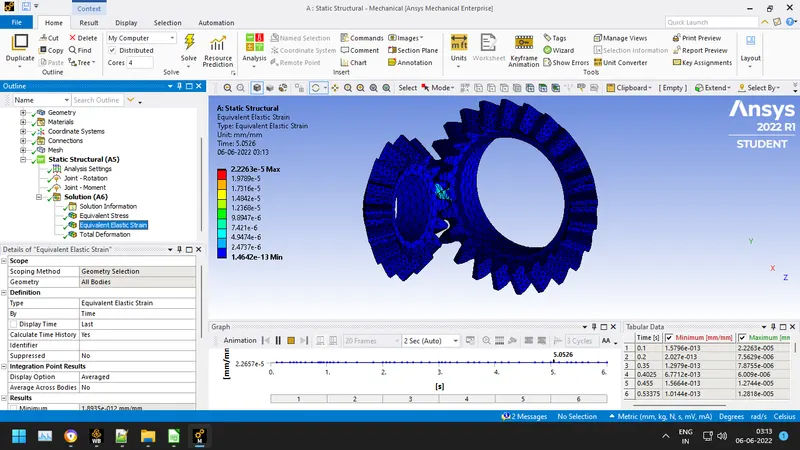
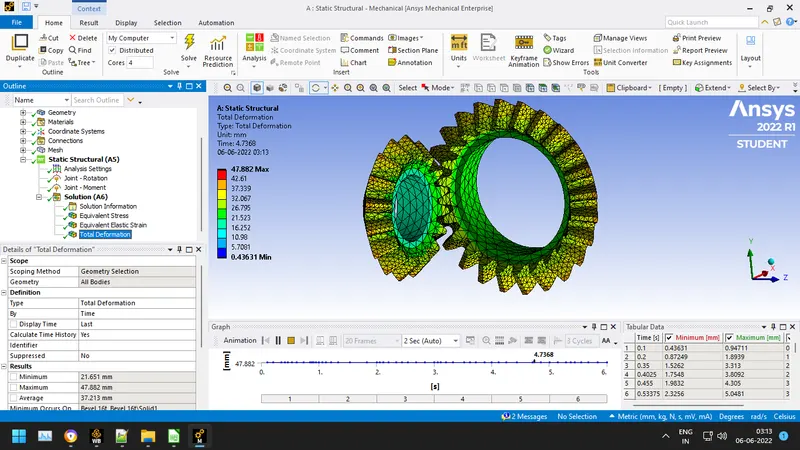
Case 3) For 4mm Element Size
Solution time for 4mm mesh is 10 min 41 sec.
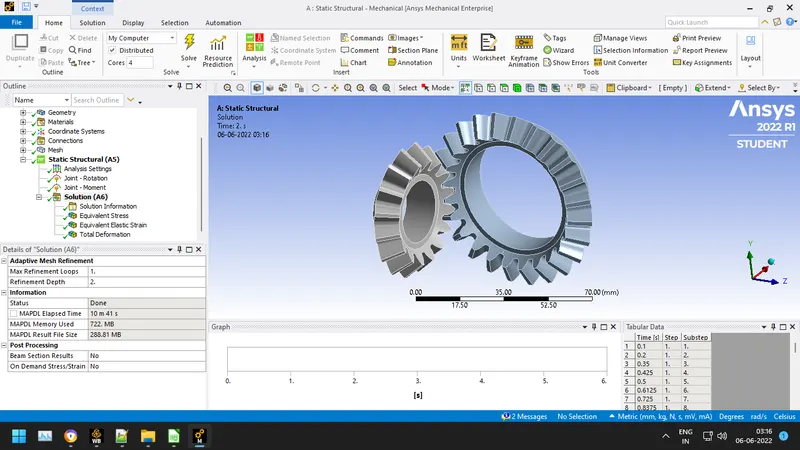
Also, we have
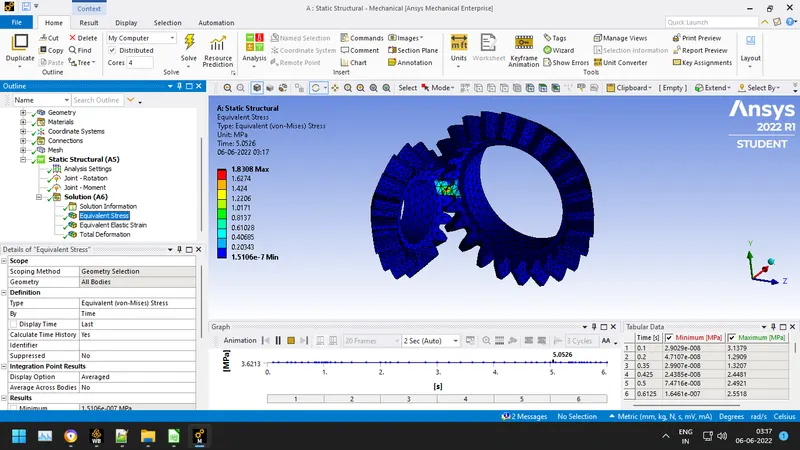
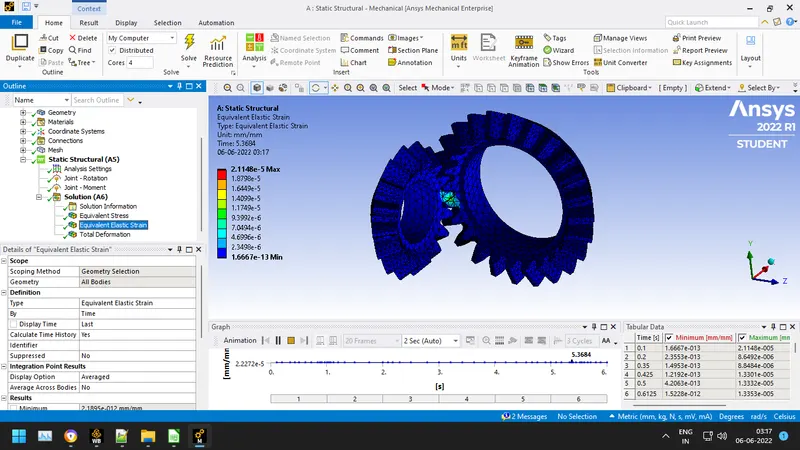
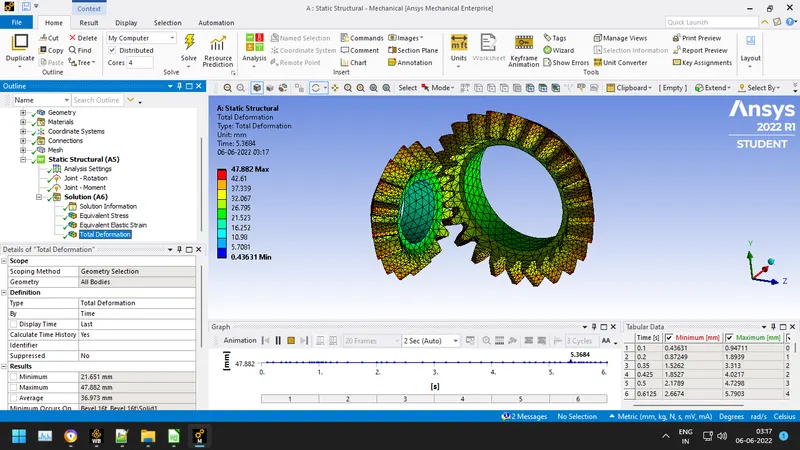
Conclusion:

From the above results, we can say that the max stress is generated in the 6mm mesh with least amount of time. And the least amount of stress is generated in 4mm mesh where maximum amount of time has been taken. the max stress generated in the 5mm mesh is close to 4mm mesh; so we can select an element size of 5mm to be the best among the therree cases. Thus, selecting a 5mm is basically grid dependency test. It has an approximate or very close result to that of 4 mm results thereby reducing time and computational power. This plays a major role in large simulations where a lot of components are involved in the simulation.
Also, there is is a small variation in strains induced and the deformations are constant throughout.
Grid Dependency test also sometimes depend on the experience and technical expertise of the FEA analyst.