Week 1 Stress Concentration on a Plate with hole
Aim: To perform a static structural analysis on a plate with a single hole and three holes and then comparing the deformation and stress developed in them.
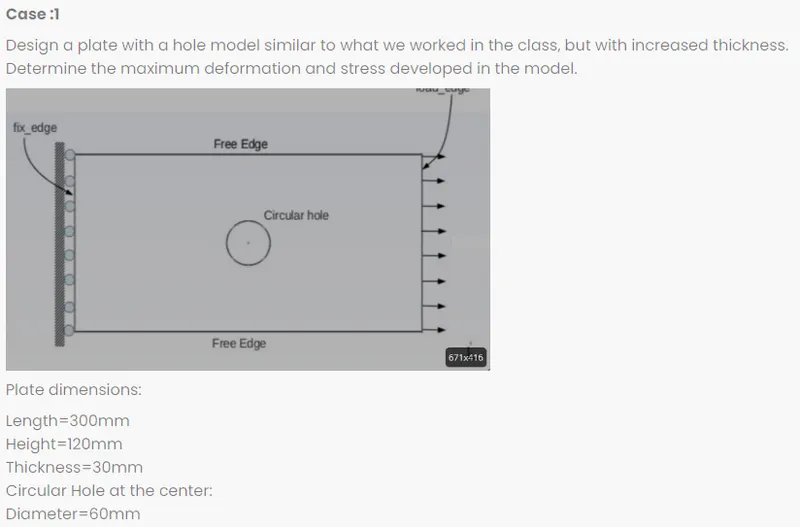
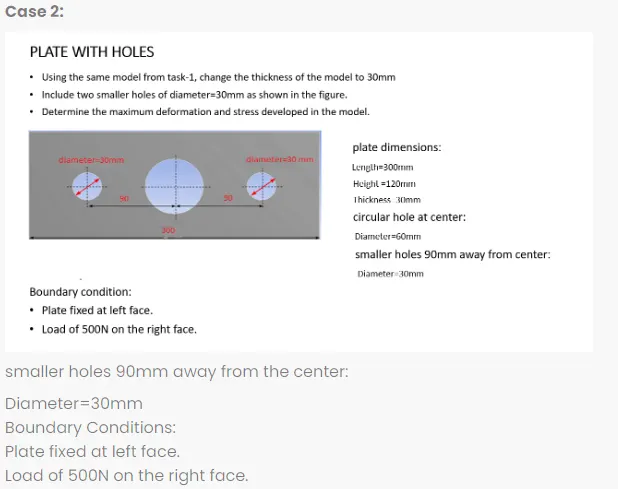
Objective: The two cases are as follows:
Procedure:
- After opening Ansys workbench, import static structural. Now, the geometry editing can be done in the ansys spaceclaim.
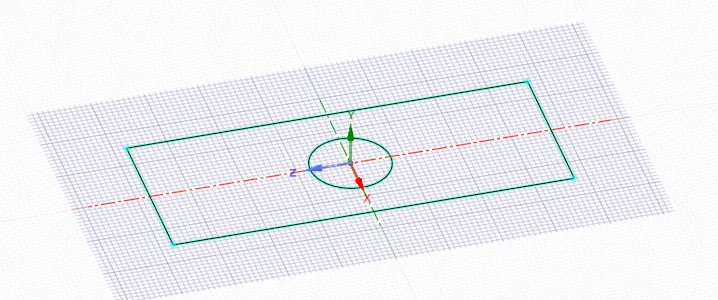
Case 1: Create a center rectangle of 300*120 and then create a circle of 60 inside the rectangle. Then drag the whole geometry created for 30 thickness. (Dimension in mm)
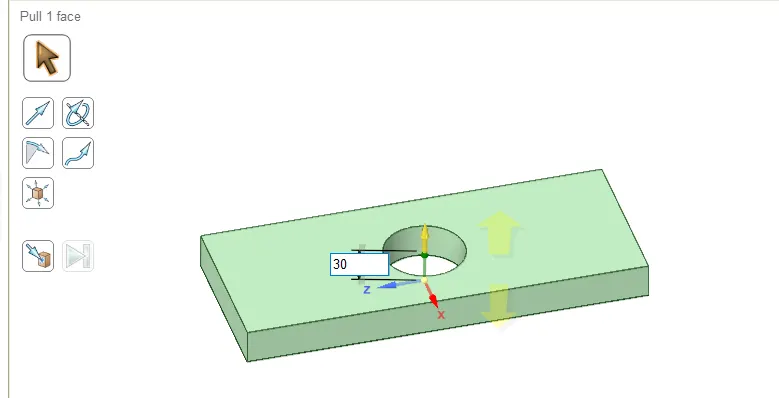
The final model obtained is
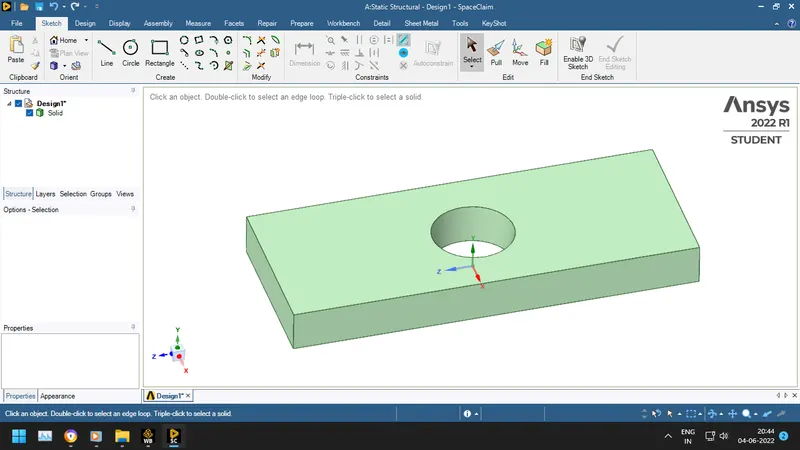
- Now close the spaceclaim and open the model from the project menu.
- Now, Tetrahedrons is the mesh method that has been used. Generate mesh with an element size of 2mm.
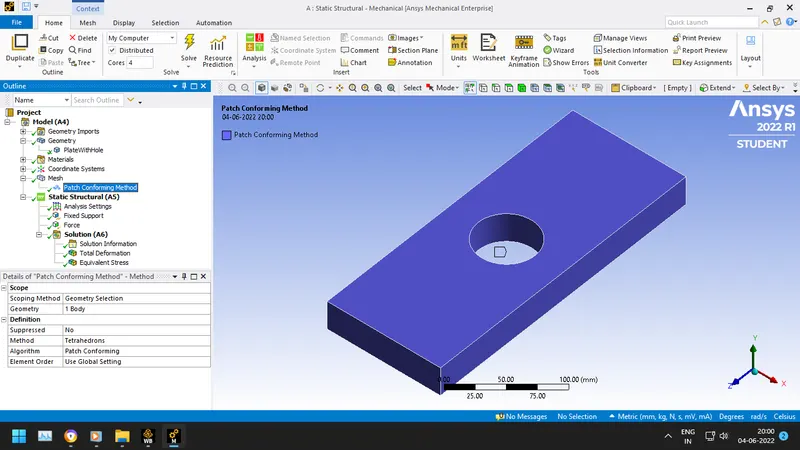
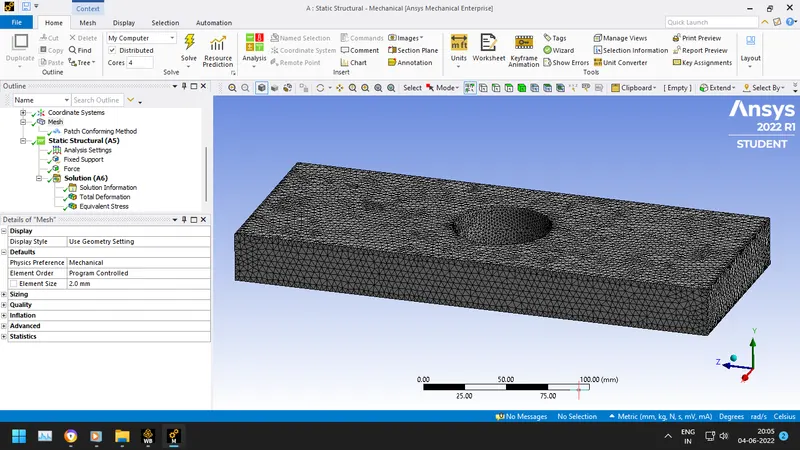
- Following analysis settings have been used.
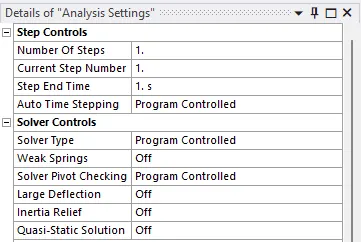
- Now, apply a fixed support at one end and a force of 500N at the other end.
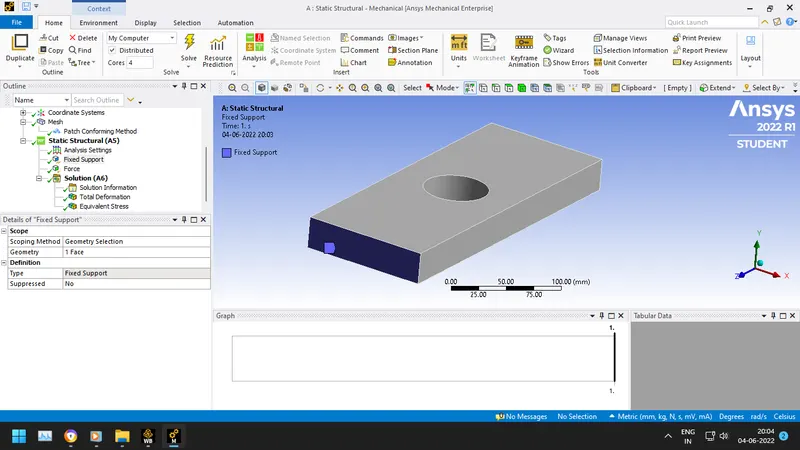
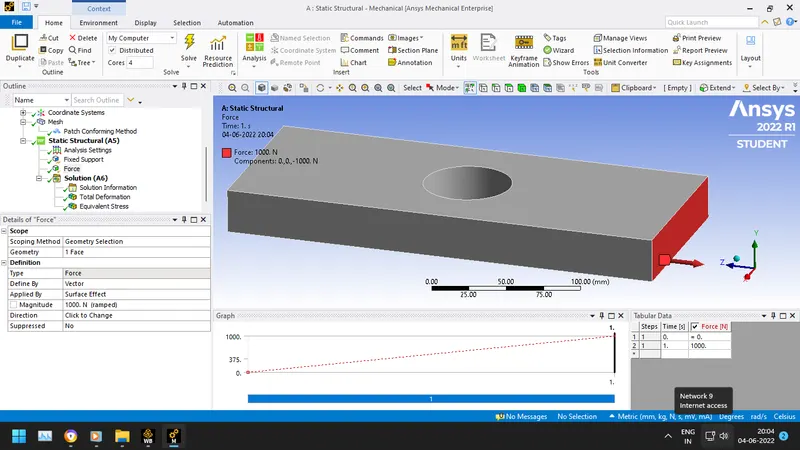
- Insert Total Deformation and Equivalent stress and then solve. Following results have been obtained for the given simulation:
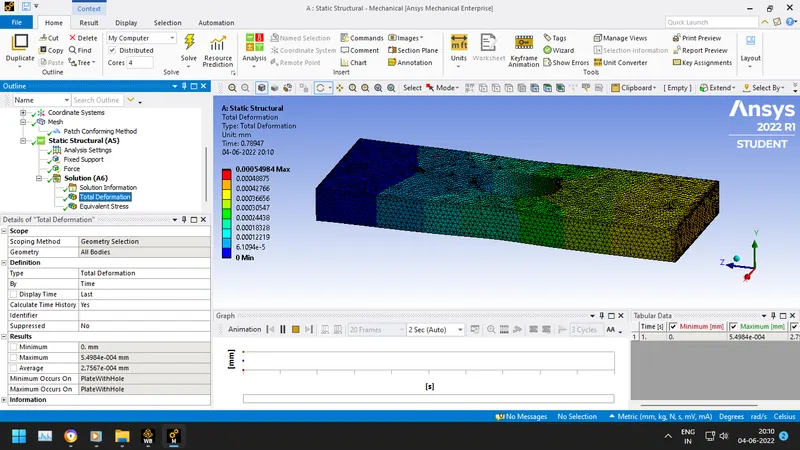
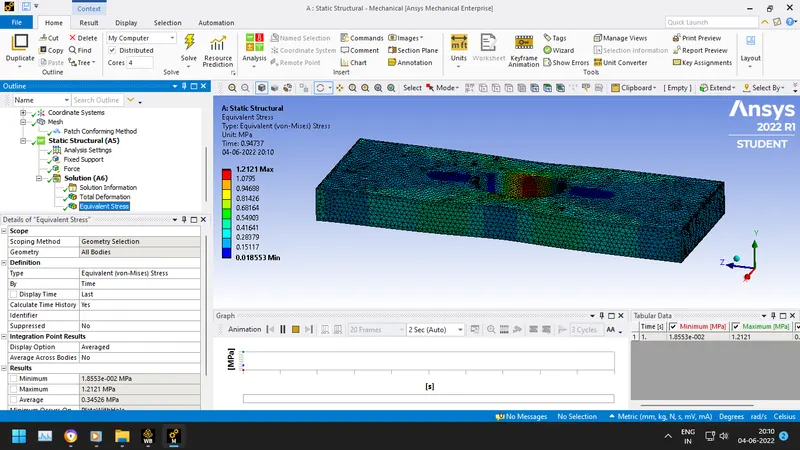
Case 2: Follow the same procedure as mentioned above.
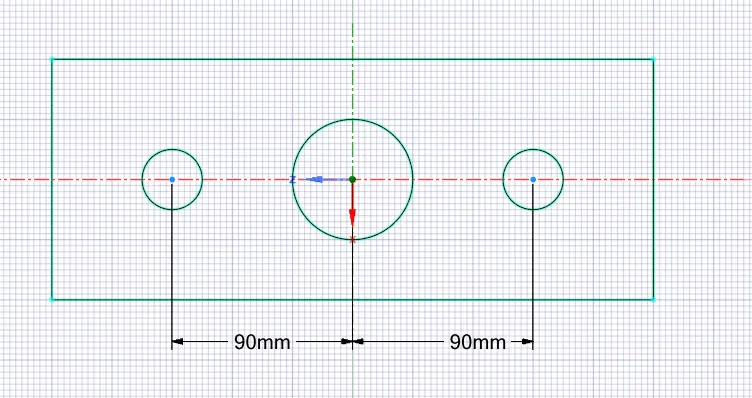
The sketch created:
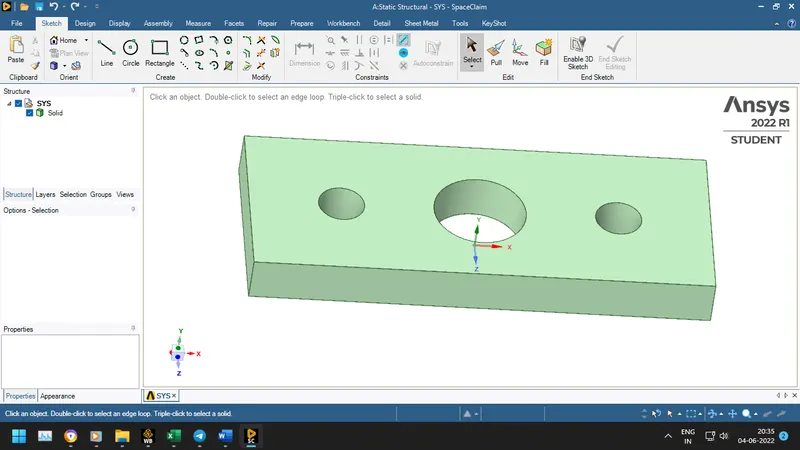
The final model:
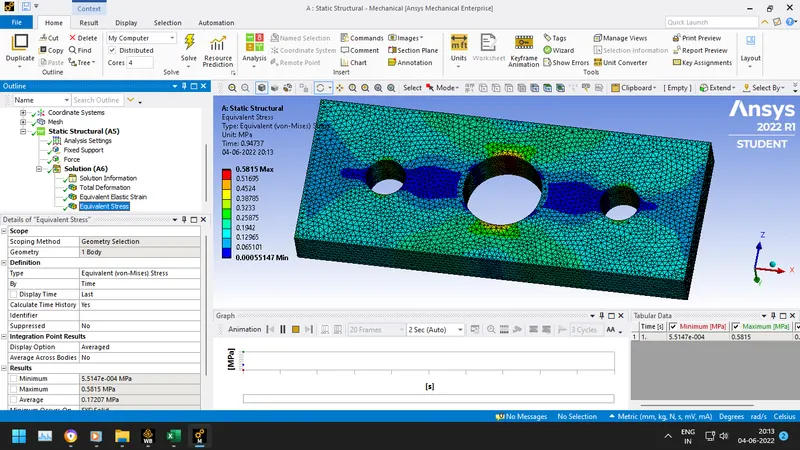
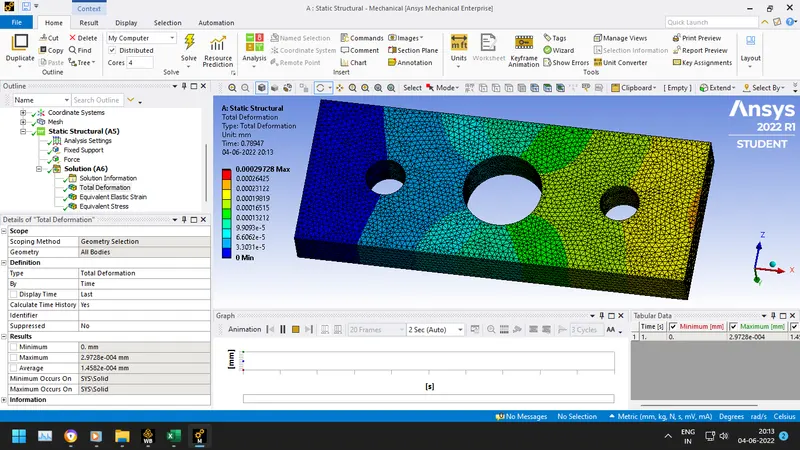
The results obtained are as follows:
Conclusion:

From the results above, we can conlcude that the plate with one hole has more deformation than the plate with three holes. The maximum stress induced is in the plate with one hole.
From the analysis point of view, we should be choosing a plate with three holes because if we compare the stresses and the deformation for both cases it has lower stress induced and the deformation produced is also less. This is because the force applied is distributed between all three holes.
From the manufacturing point of view, we can choose a plate with one hole because less number of holes leads to less work on the job and it is cost effective because of its tooling created. The time also reduces.
The selection of the plates depends on the user's requirement. If the requirement is for low, stresses then plate with 3 holes should be selected where cost also plays a major role in its production.