Week 4- Rolling operation
AIM: To simulate the Rolling Operation in ansys workbench.
Objective:
Simulate the rolling operation on a workpiece made of copper & increase the length of the workpiece by 60mm and decrease its size on both sides by 8mm. Run the simulation for 14 steps and you can give small but random values for the displacement. Ensure that the edge of the workpiece is displaced by 90mm.
Introduction:
Rolling process is a deformation process in which metal in its semi-finished or finished form is passed between the two opposing rollers, which reduces the metal’s thickness through the compression process. The rollers roll around the metal as it squeezes in between them. The rolling process consists of two opposing rollers and a metal squeezing in between them. The basic consideration is that the thickness between the rollers should be less than the metal’s initial thickness. This consideration will help metal’s forward motion as it passes through the gap between the rollers. Rolling process decreases the thickness of metal and increases its length and breadth, keeping overall volume constant.
Procedure:
- After opening Ansys Workbench, use static structural as the mode of analysis for simulation.
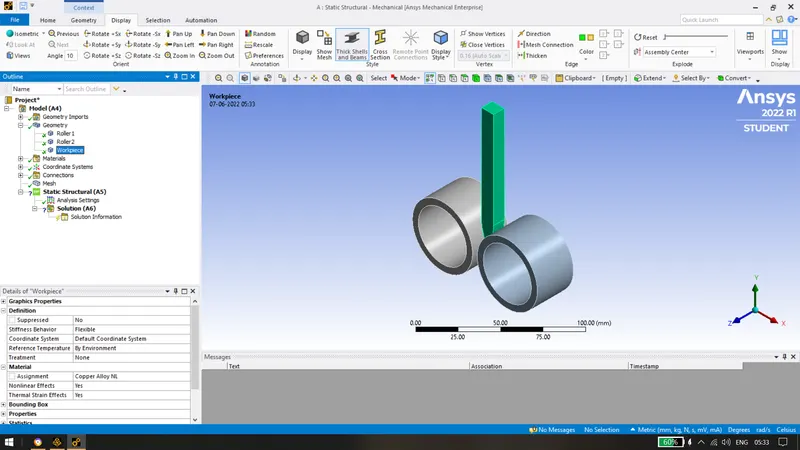
- Now, add structural steel for rollers and copper alloy NL for workpiece from engineering data.
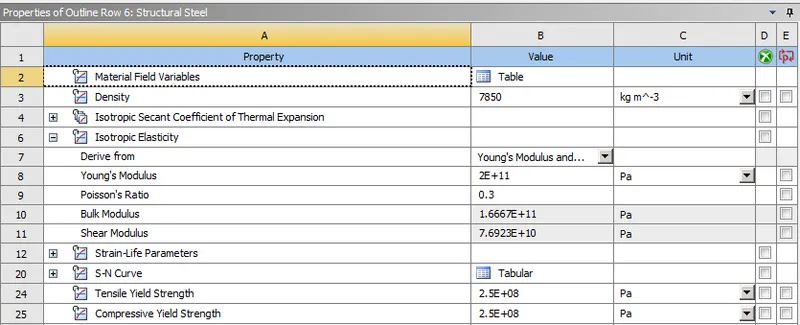
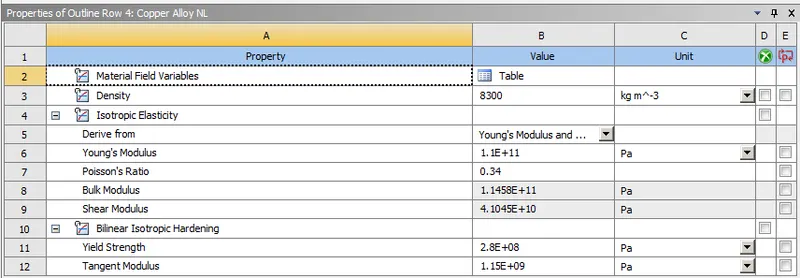
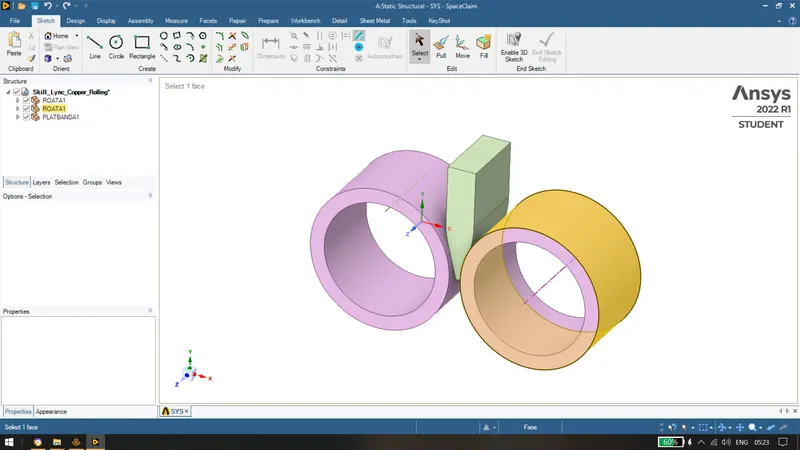
- Import the model provided and check the geometry in the Ansys Spaceclaim for any abnormalities.
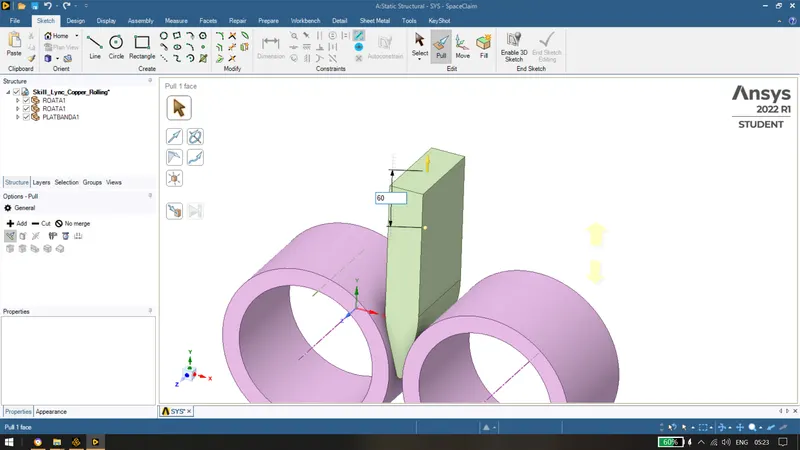
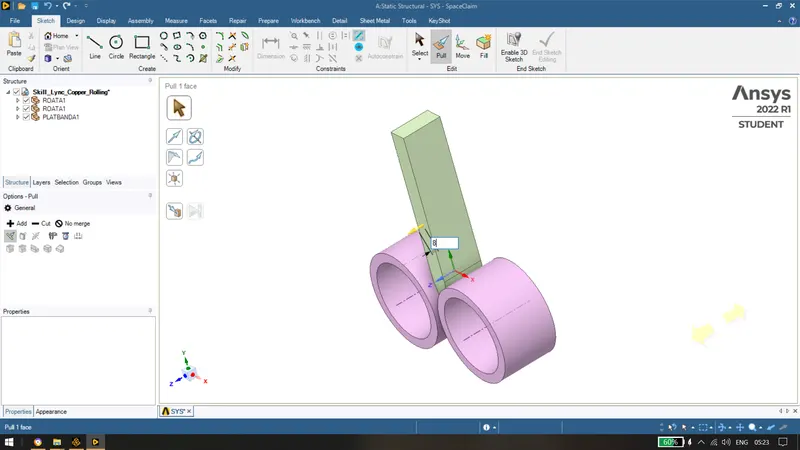
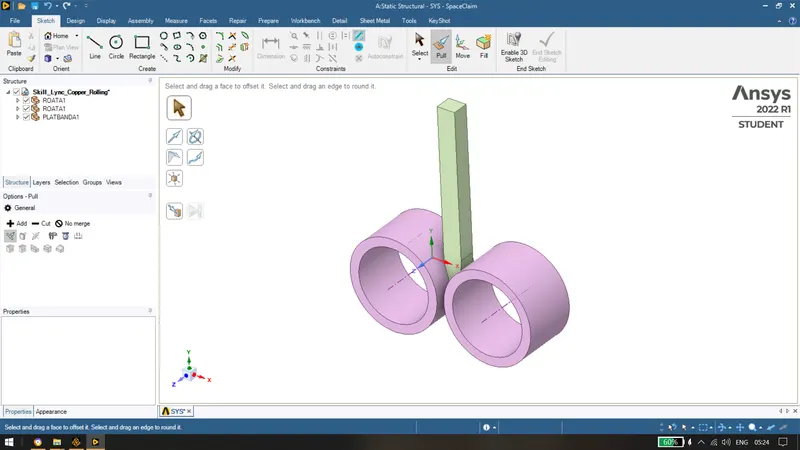
- Increase the length of the workpiece by 60mm and reduce by 8 mm from both sides.
The final model obtained:
- Assign material to wire.
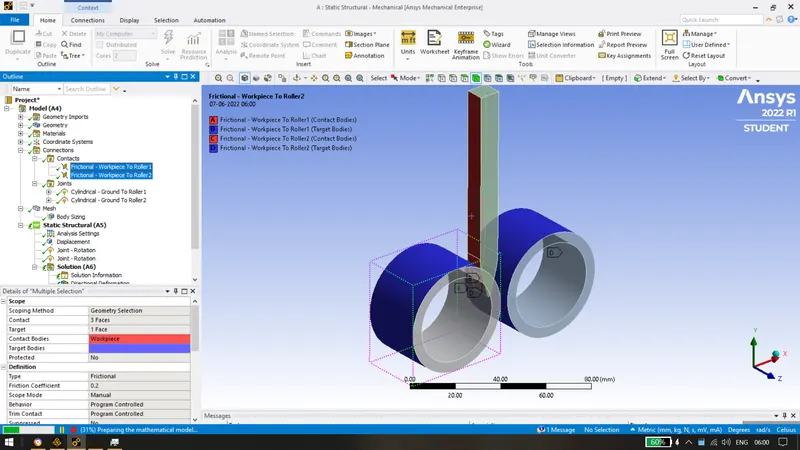
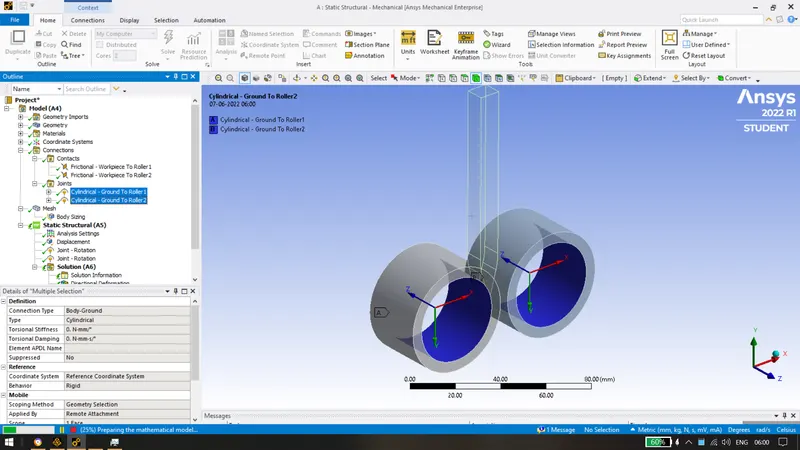
- Create contact Points and Joints. Let all the contact points be frictional with friction of 0.2and create body to ground - cylindrical joints for both rollers in z axis as shown below.
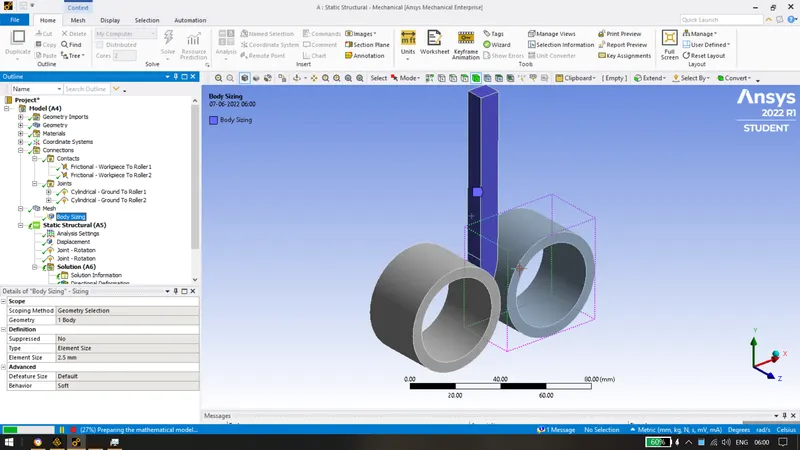
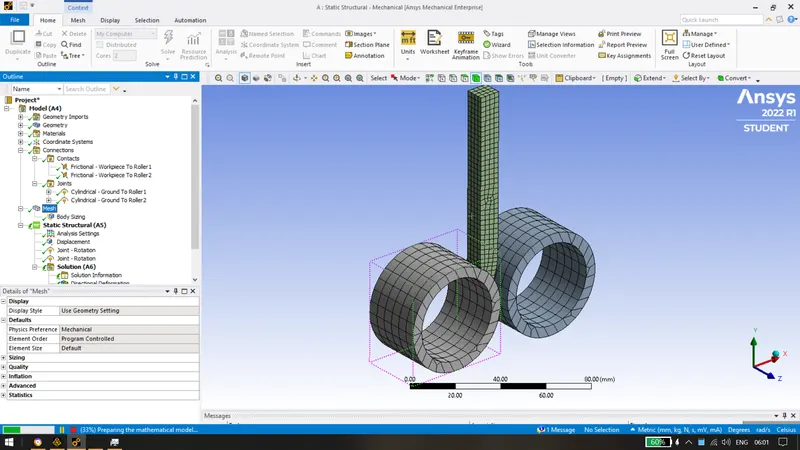
- Mesh the rollers with default element size. And refine mesh on the workpiece body sizing of 2mm.
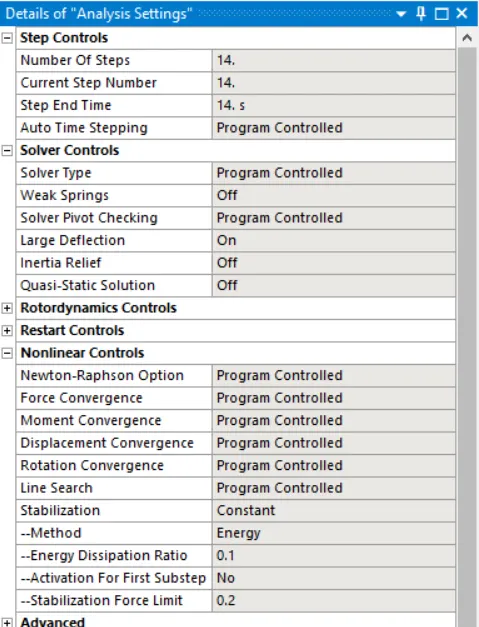
- Following analysis settings have been set for the simulation for 14 steps:
- Following rotational joints have been created with 210 degree in opposite directions; displacement of 90 mm is given in 14 steps as shown:
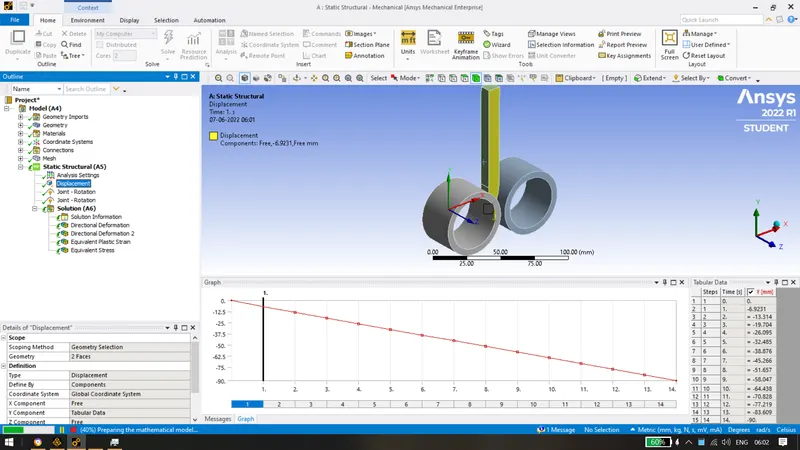
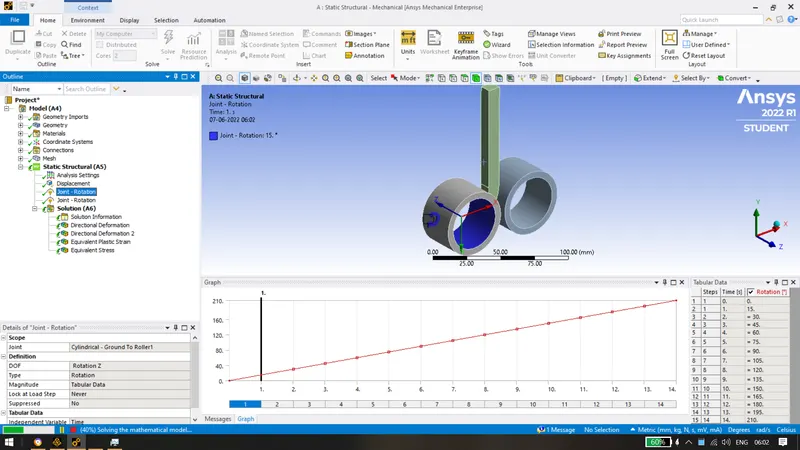
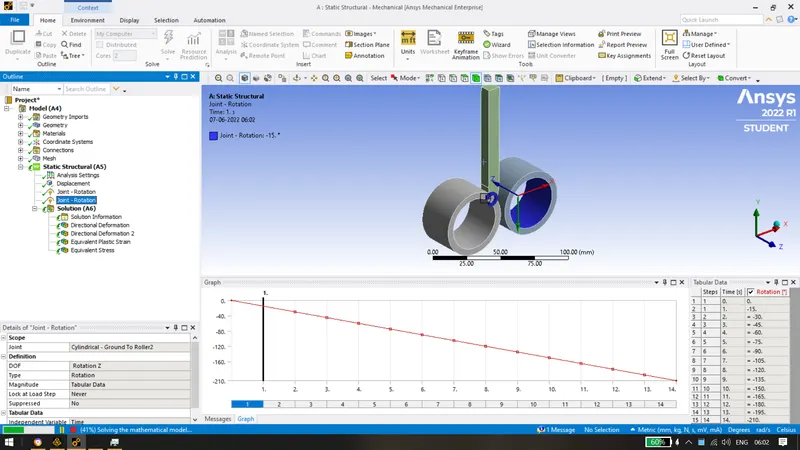
- Now, Insert total deformation, equivalent stress, contact tool for pressure, equivalent elastic strain.
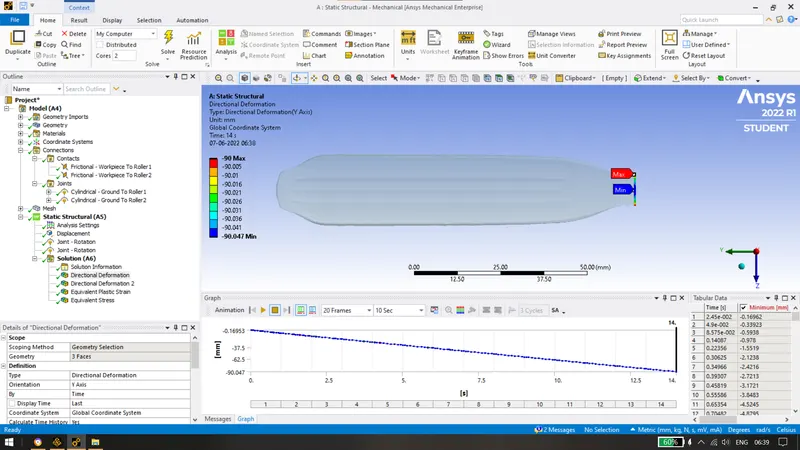
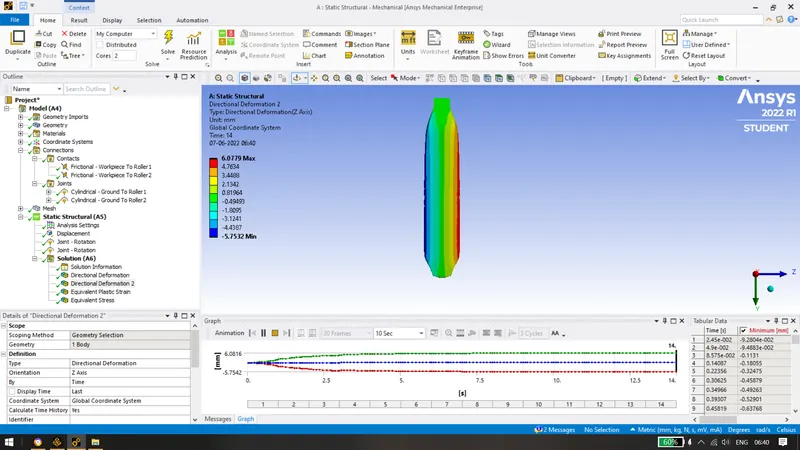
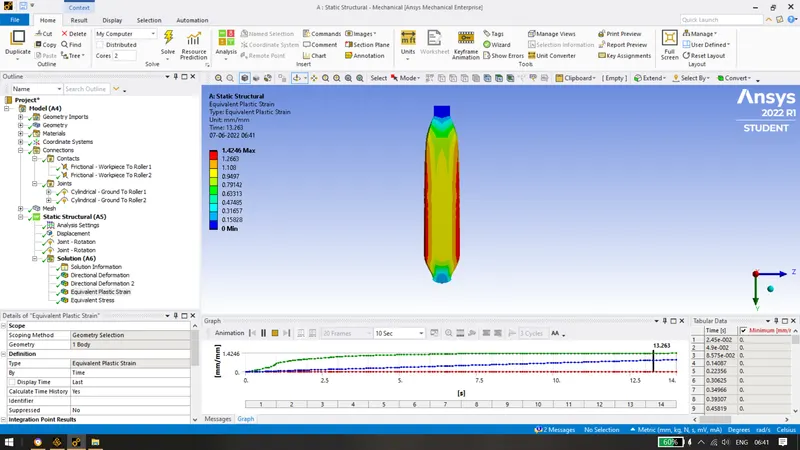
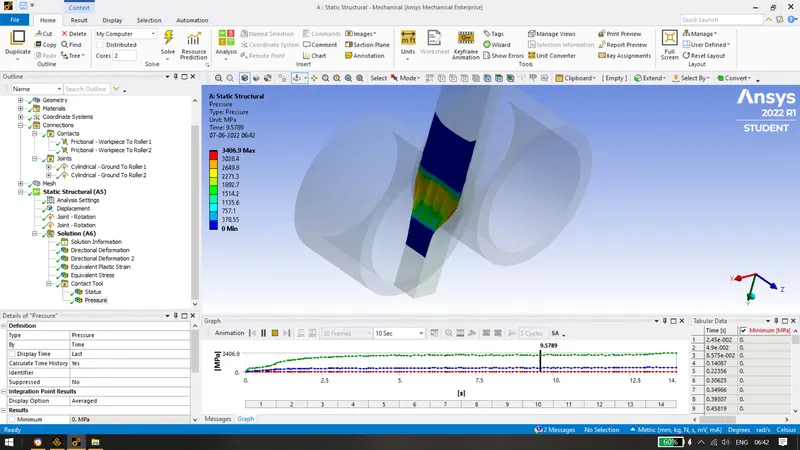
- Finally following solutions have been obtained after running the simulation for rolling operation:
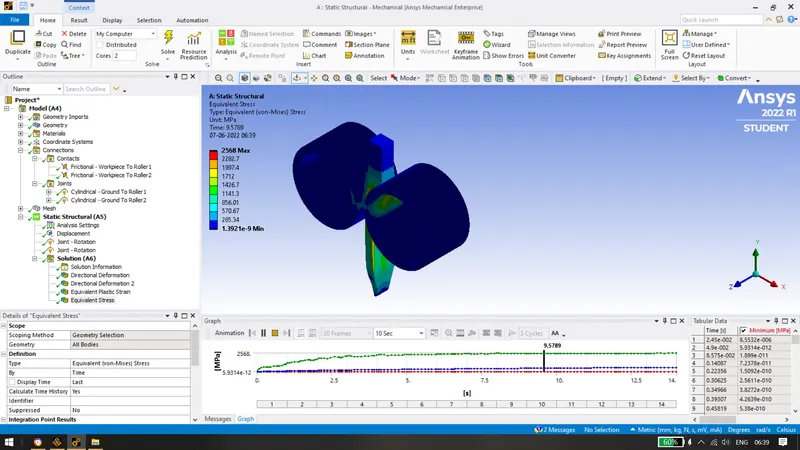
Conclusion: From the above results, we can say that
The max stress obtained for the whole body is 2568 MPa; Directional deformation of 90 mm in Y axis is obtained; Directional deformation of 6.077 mm in z axis is obtained; Equivalent Plastic Strain of 1.4246 for workpiece is obtained; Max Contact pressure of 3406.9 MPa is seen.
Thus we have successfully rolled the workpiece for 90mm using 14 steps.