Week 2 - Flow over a Cylinder.
FLOW OVER A CYLINDER
Challenge
In this challenge, flow over a cylinder is simulated in fluent and certain characteristics like vortex sheet, boundary layer flow separation,Reynolds number,etc are calculated. Also we will simulate the flow with the steady and unsteady case and calculate the Strouhal Number for Re= 100. It is also expected to calculate lift and drag coefficients over the entire cylinder for given reynolds number of 10,100,1000,10000,100000 by running with a steady solver. The effect of reynolds number on lift and drag coefficients are also understood.
Theory
For a visocus incompressible flow, the results of dimensional analysis state that the drag coefficient is a function of reynolds number i.e.`underset(D)(C)=f(Re)` , where `Re=(rho*V*D)/mu` is the reynolds number. Here, the reynolds number can be varied by adjusting the flow velocity.
A boundary layer is a small viscous layer formed adjacent to a solid surface within which viscous effects are more dominant in nature.
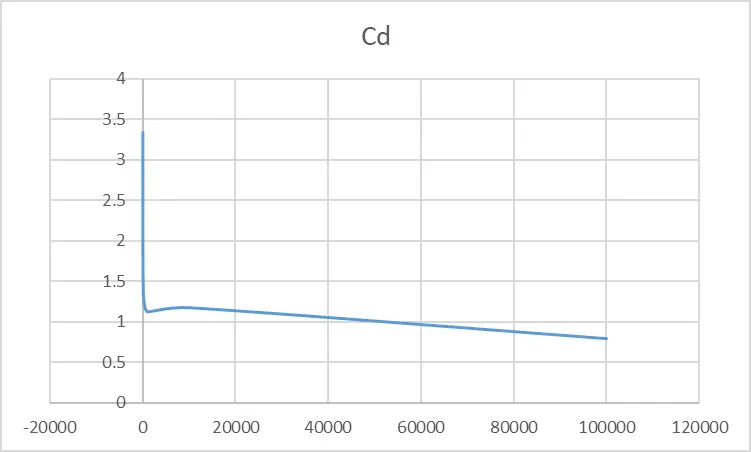
`underset(D)(C)`is initially very large for Re<1,but decreases monotonically upto Re=300000. The reason for this variation is stated below:
- For low values of Re,say 0
- For 4
- As Re is increased above 40,the flow behind the cylinder becomes unstable, the vortices are shed from the body in a regular fashion and flow upstream. This pattern of vortex sheet is called as Von-Karman Vortex sheet.
- As Re is increased to larger numbers, the karman vortex street becomes turbulent and begins to metamorphose into a distinct wake. The laminar boundary layer on the cylinder separates from the surface on the forward face at a point about 80 degree from the stagnation point.
- For Re<`3*10^6` ,boundary layer transists directly to turbulent flow at some point on the forward face, and the boundary layer remains totally attached over the surface until it separates at an angular location slightly less than `120^o`
- For 4
Setting up the problem in fluent
The first step is the construction of geometry. A small rectangular plate is constructed with a hole at a certain distance from one end(called as inlet). The next step is meshing. In this step, we divide the domain into small number of elements by controlling the sizing parameter(preferably using sizing of elements) and then adding inflation layers to the wall. Names are provided to the boundary as inlet,outlet,symmetry,wall.
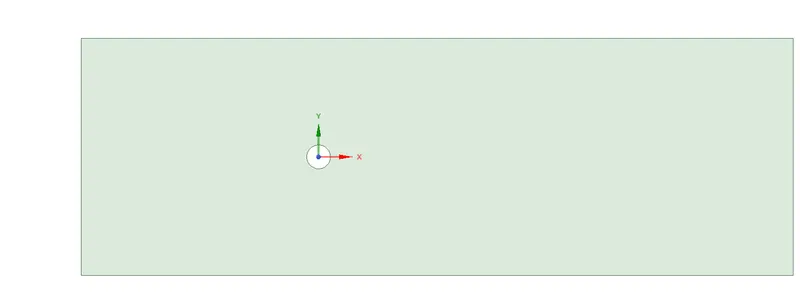
Diameter of the cylinder is 2 m.
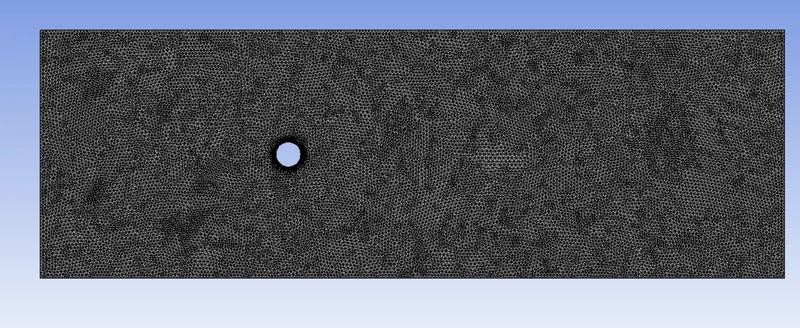
MESHING
The next step involves setting up the physics of the simulation by specifying the type of viscous model used(laminar), specifying the initial and boundary conditions and varying them subjected to different values of reynolds number. Both the Steady and transient cases are run and the solutions are obtained and post processing is done.
Results and discussions
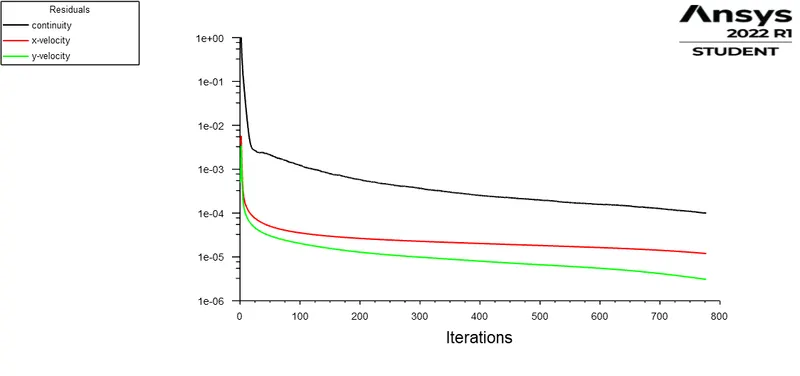
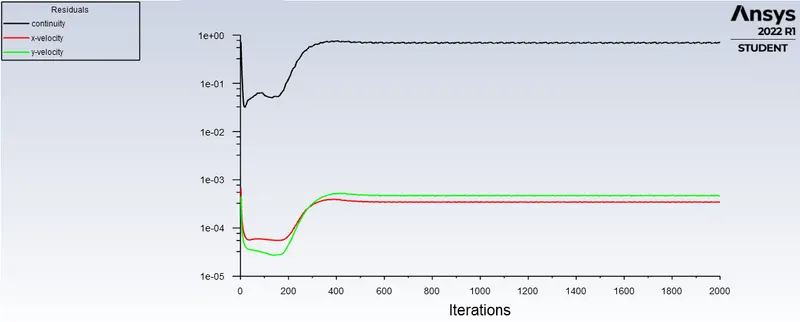
The first plot under each case of reynolds number corresponds to convergence of the solution.
Re-10
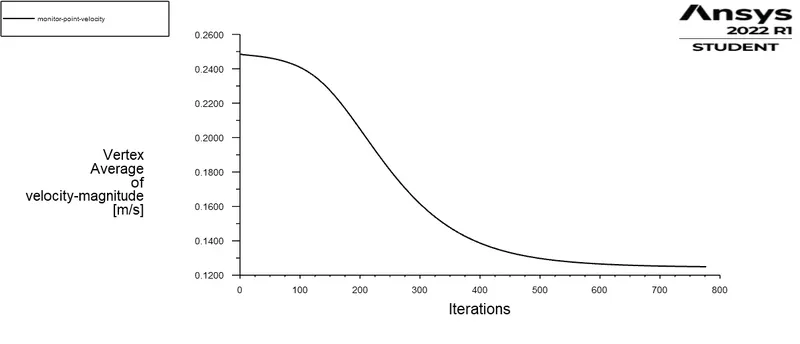
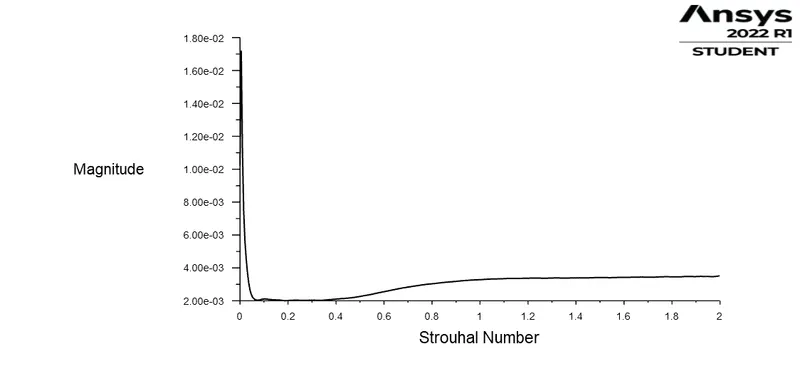
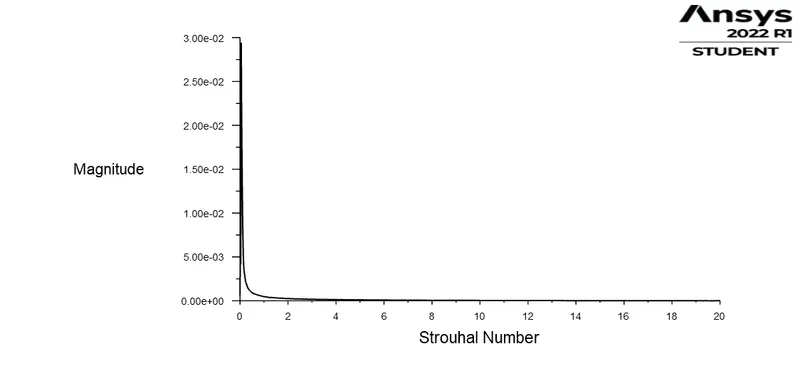
Variation of strouhal number
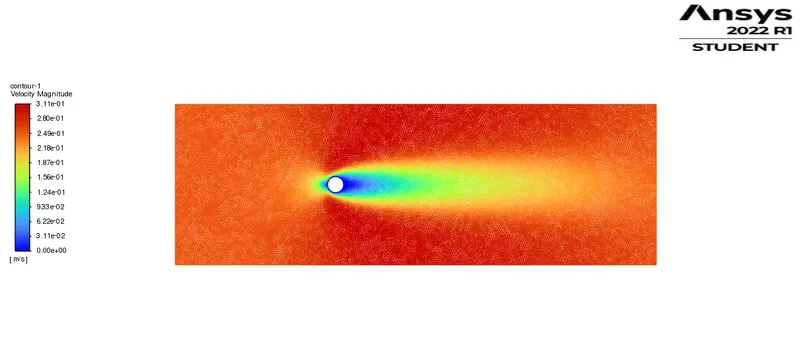
Velocity contour over a cylinder
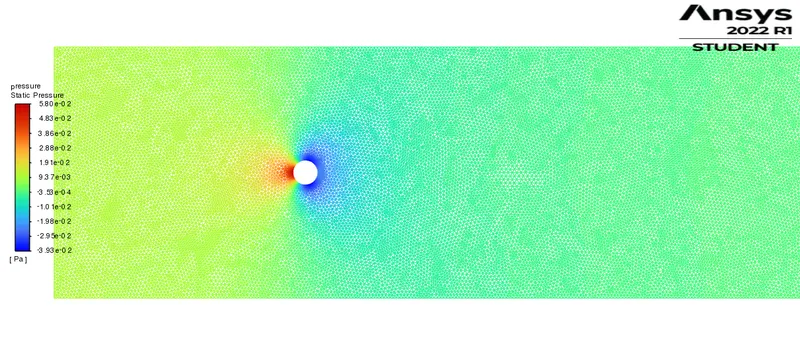
Pressure contour over a cylinder
Re-100(steady)
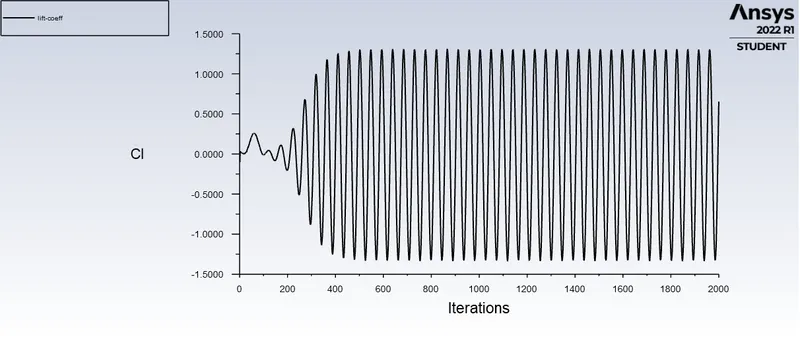
Oscillations of cl sustained as a result of onset of vortices
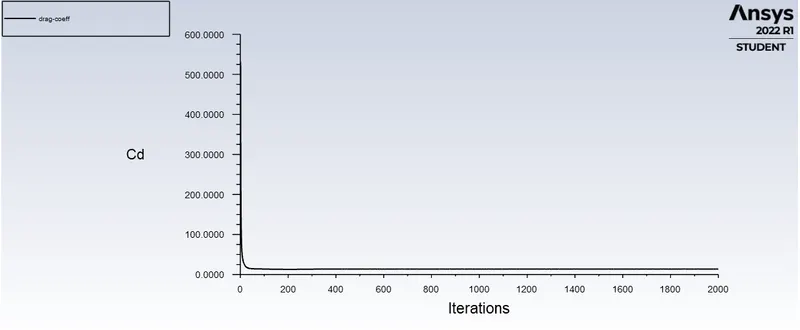
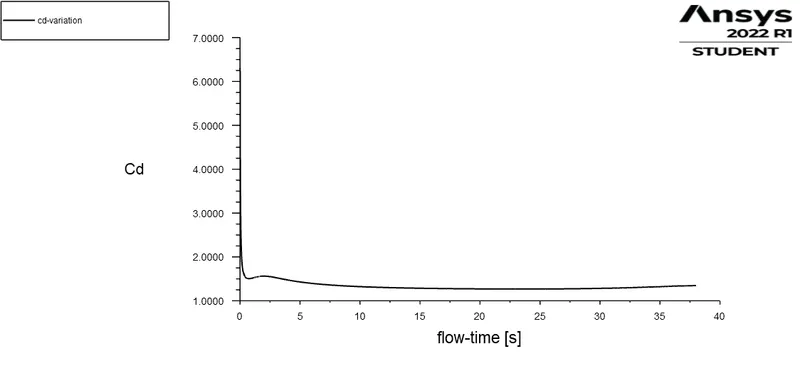
Variation of cd over different iterations
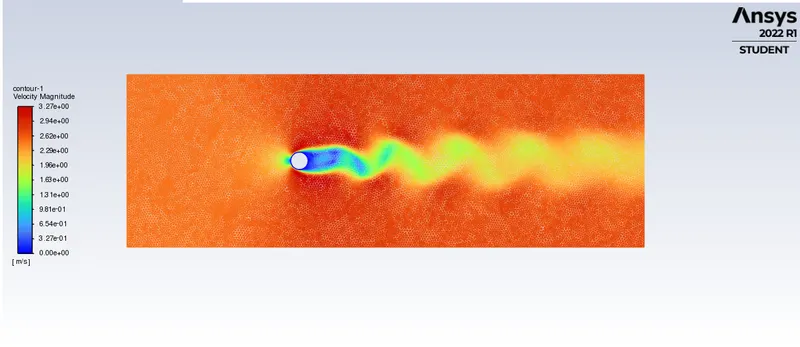
Velocity contour over a cylinder
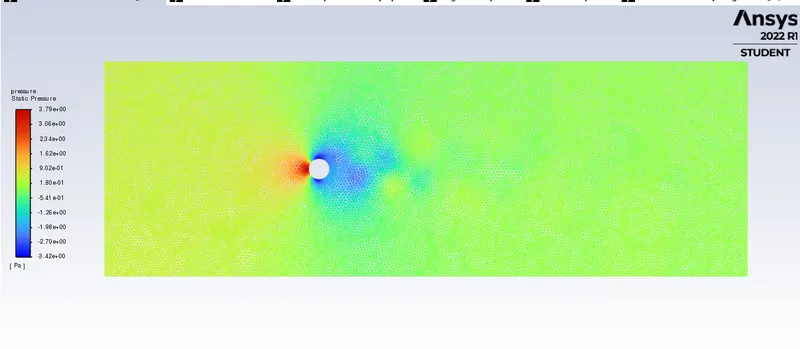
Pressure contour over a cylinder
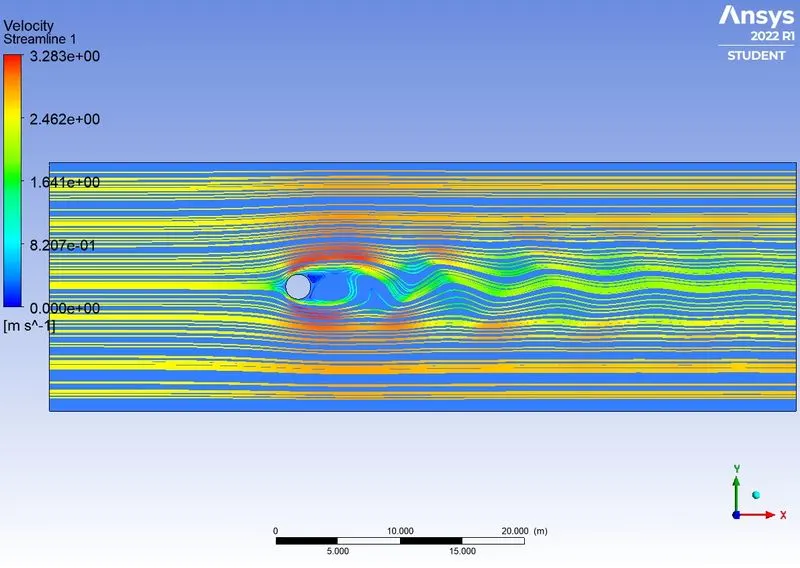
Velocity streamlines over a cylinder
Re-100(transient flow)
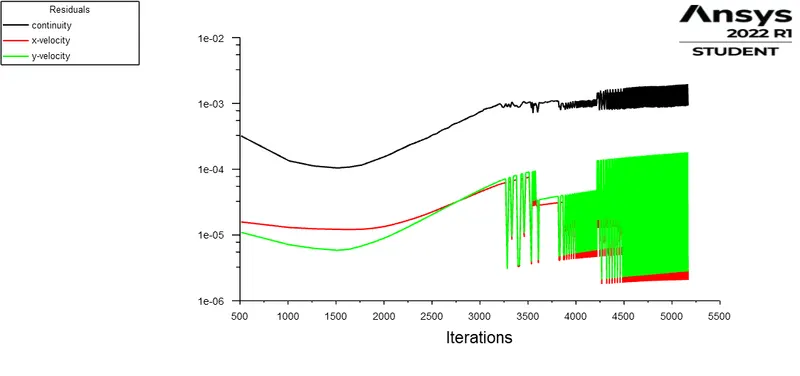
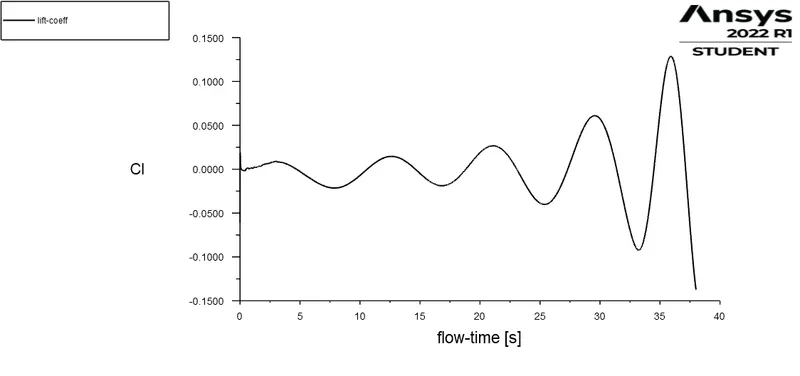
Oscillations of Cl during transient flow simulation
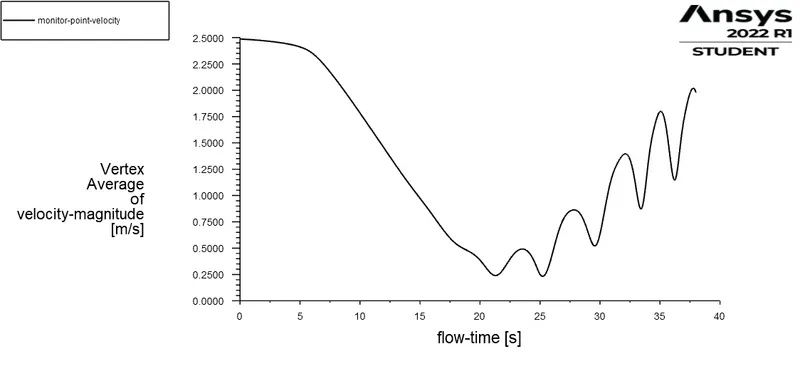
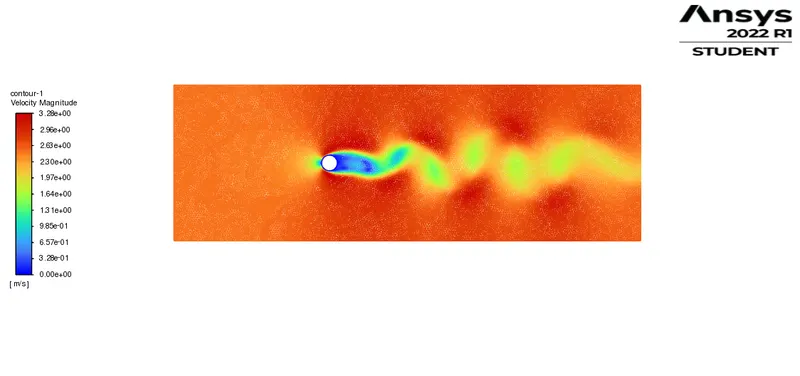
Velocity contours over the cylinder
Re-1000
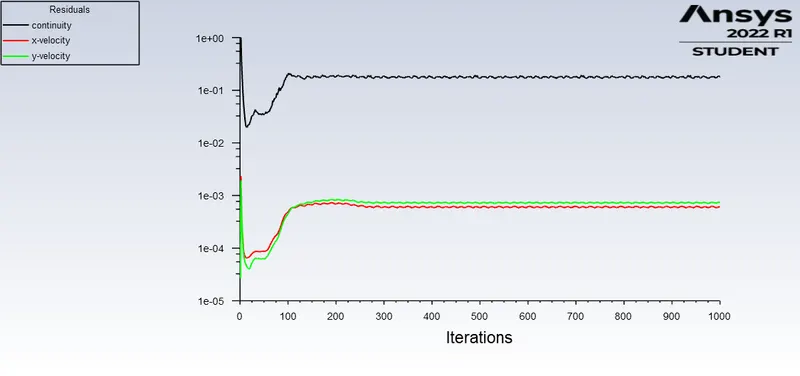
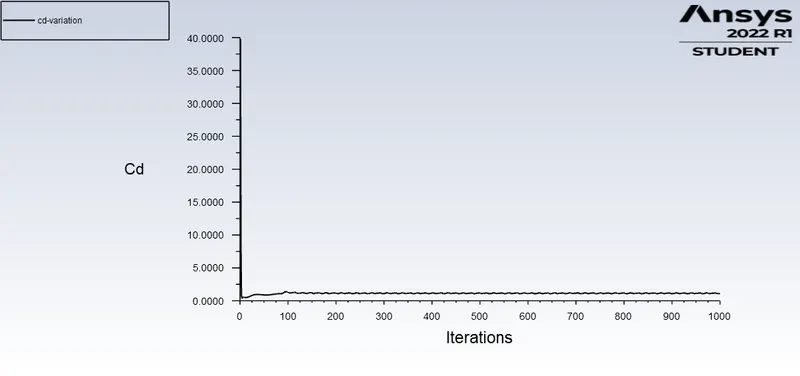
Variation of cd over different iterations
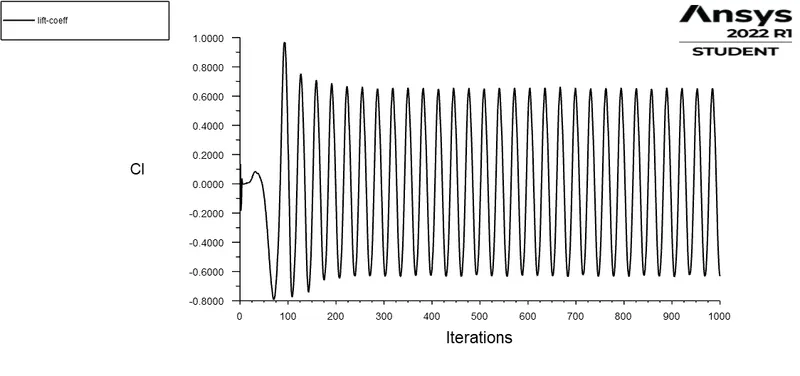
Oscillations of cl sustained as a result of onset of vortices
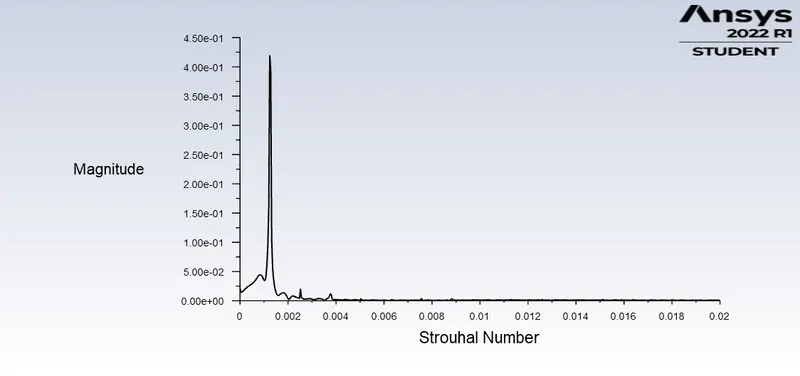
Variation of strouhal number
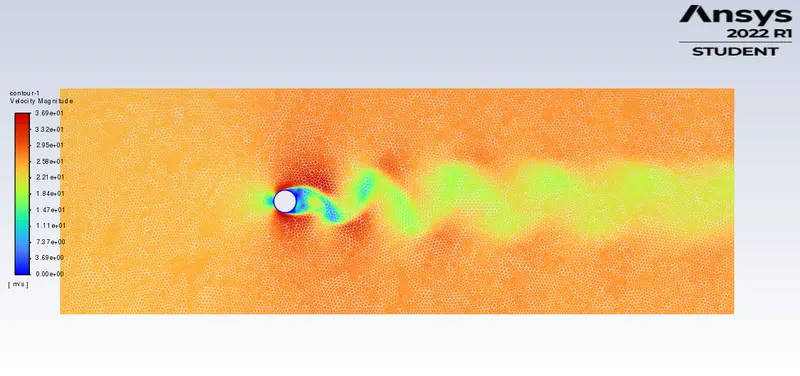
Velocity contour over a cylinder
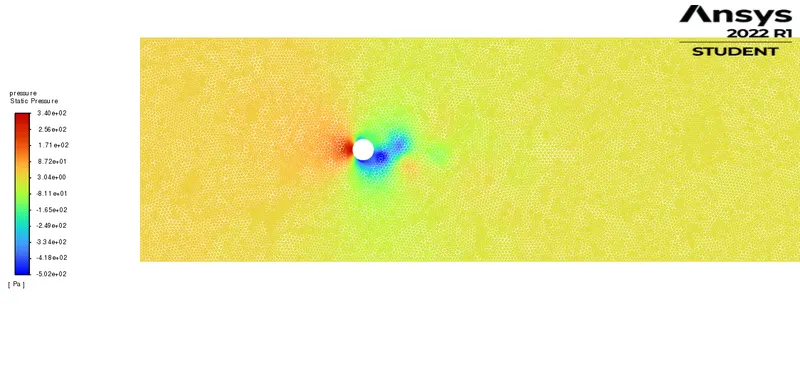
Pressure contour over a cylinder
Re-10000
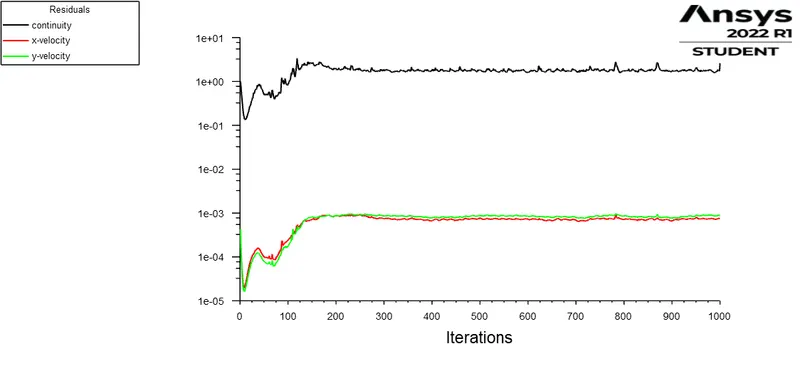
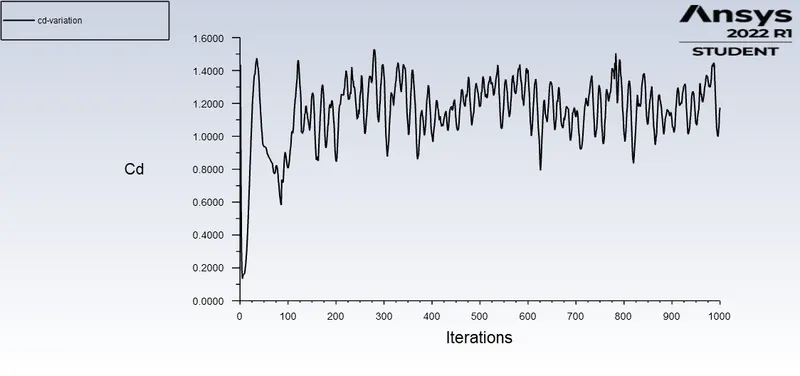
Oscillations of cl sustained as a result of onset of vortices
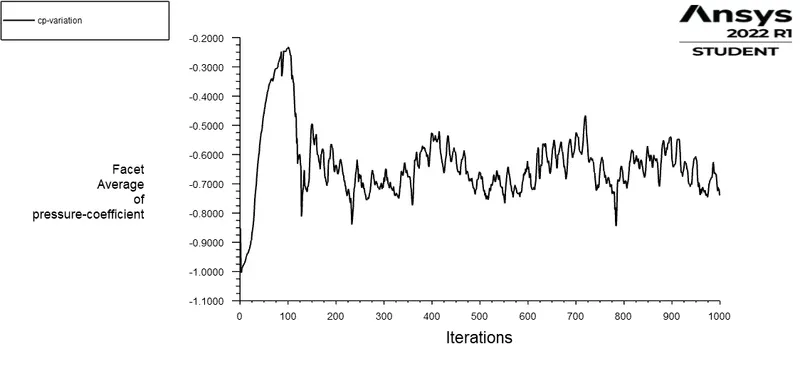
Oscillations of Cp sustained as a result of onset of vortices
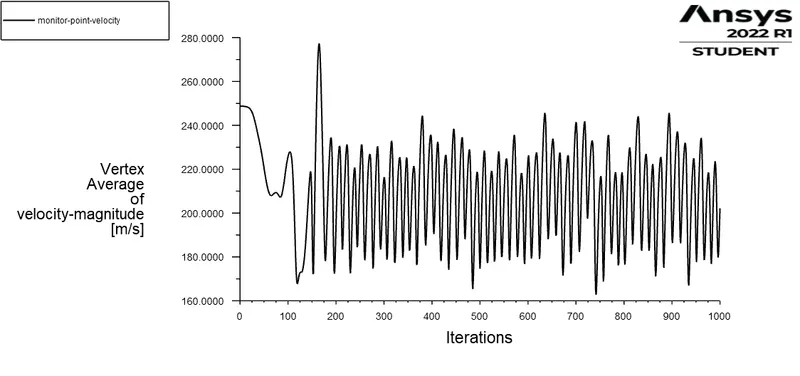
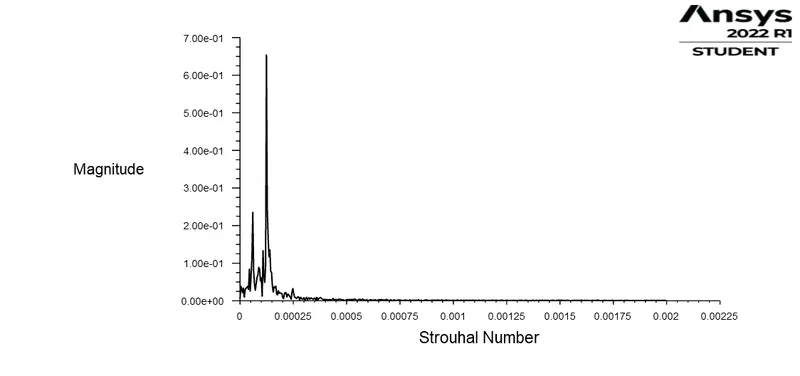
Variation of strouhal number
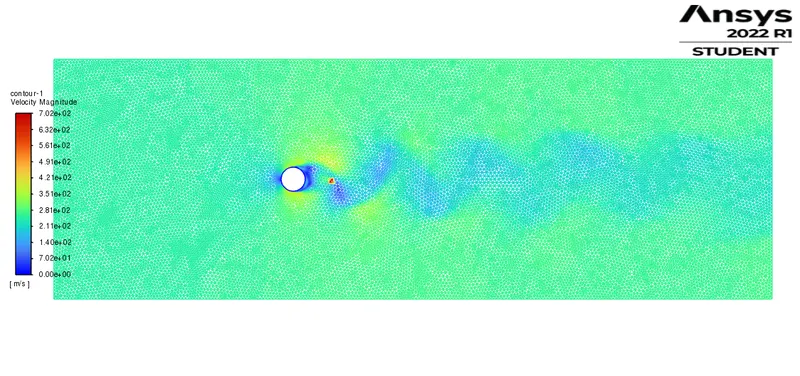
Velocity contour over a cylinder
Re-100000
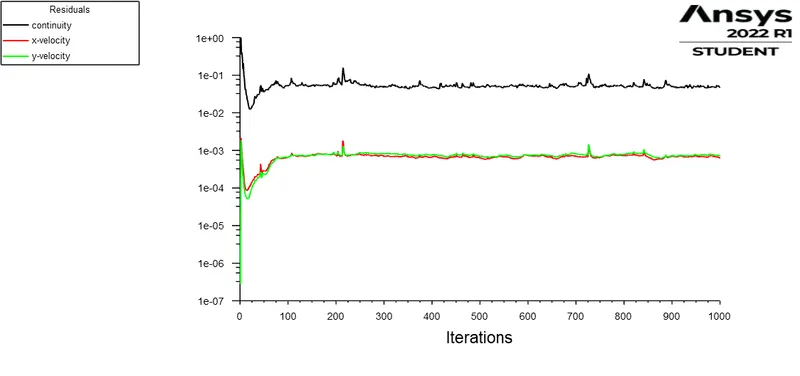
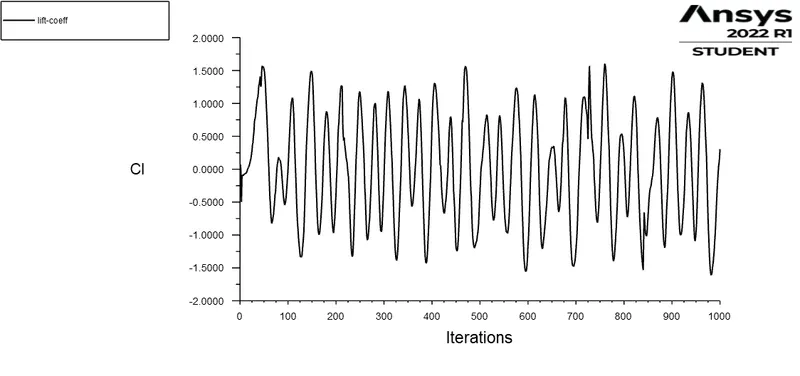
Oscillations of Cl sustained as a result of vortices metamorphosing into wake
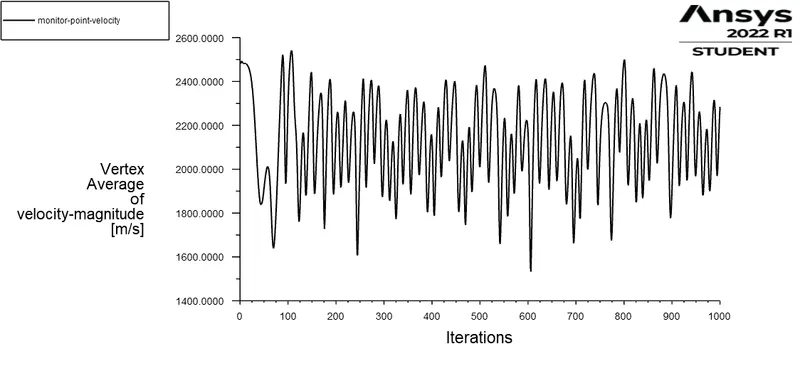
Oscillations of velocity behind the cylinder sustained as a result of vortices metamorphosing into wake
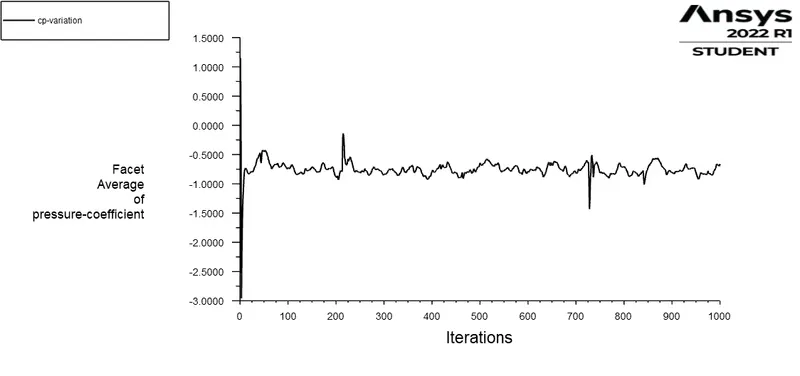
Oscillations of Cp sustained as a result of vortices metamorphosing into wake
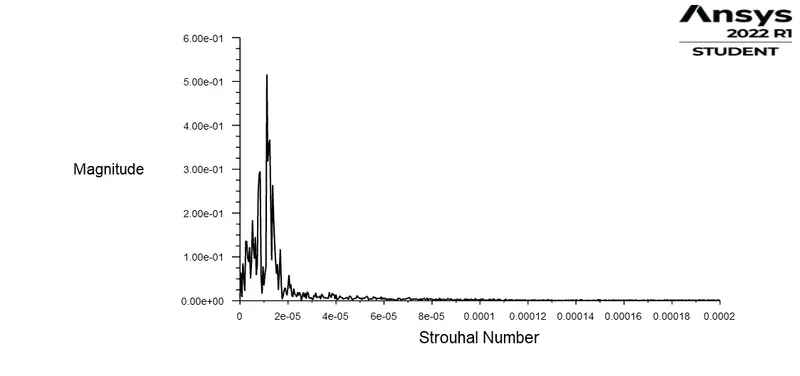
Variation of strouhal number
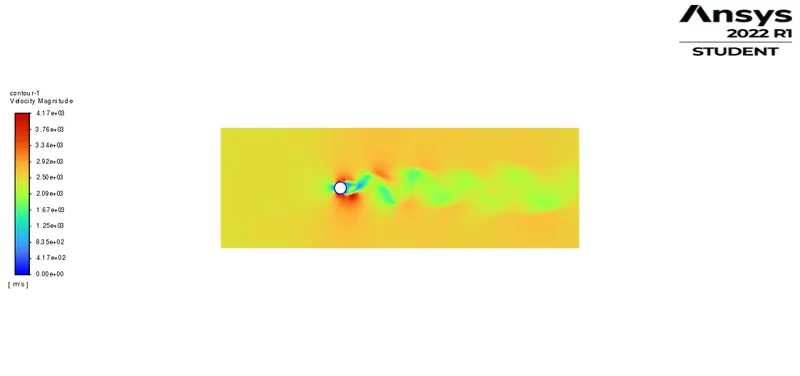
Velocity contour over a cylinder
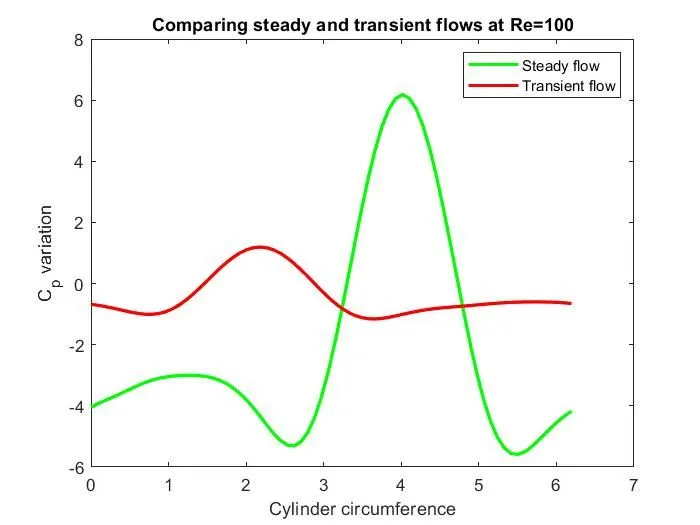
As is evident from the plots shown above, values of lift coefficient start to fluctuate wildly from Reynolds number 100 due to the formation of a vortex sheet behind the cylinder due to the separation of boundary layers. Further, when the reynolds number >100000, the vortex sheet gets converted to a fat wake and the boundary layer transitioning to turbulent. We can also conclude that the computational power required to run transient simulation is very huge but at the same time, transient simulation provides accurate results as compared to steady state results.
Plots to Compare pressure distribution over the cylinder for different cases of Re
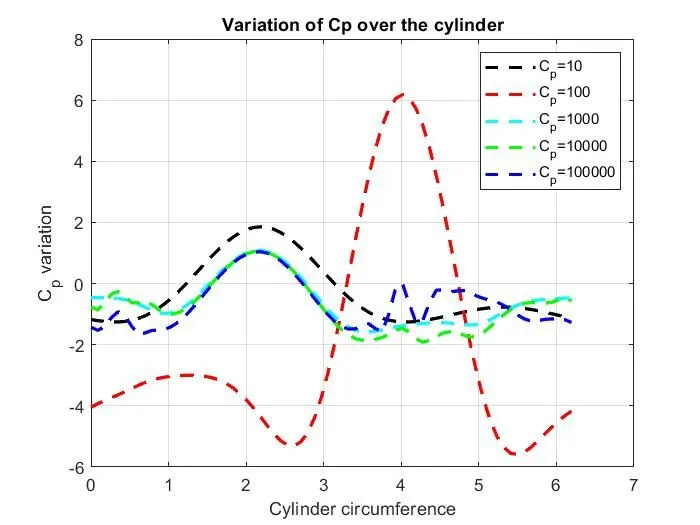
Plot to compare Cp for steady and transient flow at reynolds number 100
TABULATION OF CD AND CL VS REYNOLDS NUMBER
| Reynolds number | Cd | Cl | Strouhal number |
| 10 | 3.3355 | 0.0002628 | 0.115 |
| 100 | 1.3474 | 0.064 | 0.0957 |
| 1000 | 1.1243 | oscillates from -0.6318 to 0.6318 | 0.42 |
| 10000 | 1.1746 | oscillates from -0.869547 to 0.869547 | 0.65 |
| 100000 | 0.79283 | oscillates from -0.3055 to 0.3055 | 0.516 |
Variation of Cd as a function of Re
In steady case,Strouhal number=0.0957 In transient case,Strouhal number=0.0294
References
1. Fundamentals of Aerodynamics, JD Anderson
2. Fluid Mechanics,White FM