Week 10 - Simulating Combustion of Natural Gas.
Simulating Combustion of Natural Gas
| Table of contents |
| Aim |
| Theory |
| Procedure |
| Results and discussions |
Aim
To perform a combustion simulation on the combustor model and plot the variation of the mass fraction of the different species’ in the simulation using line probes at different locations of the combustor and to plot for CO2, H2O, CH4, N2, O2, NOx emissions & Soot formation in the given combustion geometry simulation.
Theory
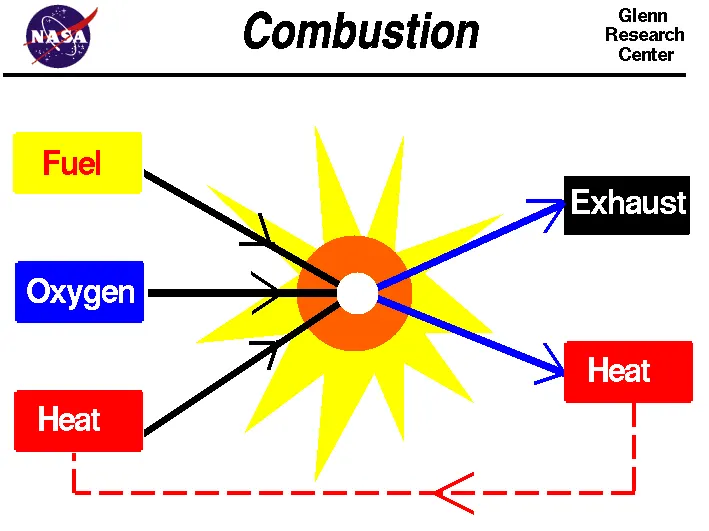
To move an airplane or a model rocket through the air, we must use a propulsion system to generate thrust. Different types of aircraft use different types of propulsion devices, but all aircraft rely on some type of engine to generate power. Rocket engines, internal combustion, or piston engines, and jet engines all depend on the burning of fuel to produce power. Burning a fuel is called combustion, a chemical process that we study in middle or high school.
Because combustion is so important for aircraft and rocket propulsion, we will review the fundamentals. Combustion is a chemical process in which a substance reacts rapidly with oxygen and gives off heat. The original substance is called the fuel, and the source of oxygen is called the oxidizer. The fuel can be a solid, liquid, or gas, although for airplane propulsion the fuel is usually a liquid. The oxidizer, likewise, could be a solid, liquid or gas but is usually a gas (air) for airplanes. For model rockets, a solid fuel and oxidizer is used.
During combustion, new chemical substances are created from the fuel and the oxidizer. These substances are called exhaust. Most of the exhaust comes from chemical combinations of the fuel and oxygen. When a hydrogen-carbon-based fuel (like gasoline) burns, the exhaust includes water (hydrogen + oxygen) and carbon dioxide (carbon + oxygen). But the exhaust can also include chemical combinations from the oxidizer alone. If the gasoline is burned in air, which contains 21% oxygen and 78% nitrogen, the exhaust can also include nitrous oxides (NOX, nitrogen + oxygen). The temperature of the exhaust is high because of the heat that is transferred to the exhaust during combustion. Because of the high temperatures, exhaust usually occurs as a gas, but there can be liquid or solid exhaust products as well. Soot, for example, is a form of solid exhaust that occurs in some combustion processes.
During the combustion process, as the fuel and oxidizer are turned into exhaust products, heat is generated. Interestingly, some source of heat is also necessary to start combustion. Gasoline and air are both present in your automobile fuel tank; but combustion does not occur because there is no source of heat. Since heat is both required to start combustion and is itself a product of combustion, we can see why combustion takes place very rapidly. Also, once combustion gets started, we don't have to provide the heat source because the heat of combustion will keep things going. We don't have to keep lighting a campfire, it just keep burning.
To summarize, for combustion to occur three things must be present: a fuel to be burned, a source of oxygen, and a source of heat. As a result of combustion, exhausts are created and heat is released. You can control or stop the combustion process by controlling the amount of the fuel available, the amount of oxygen available, or the source of heat.
Procedure
The procedure involves creating a 2D geometry of a combustion chamber with providing fuel and air inlet and an outlet.
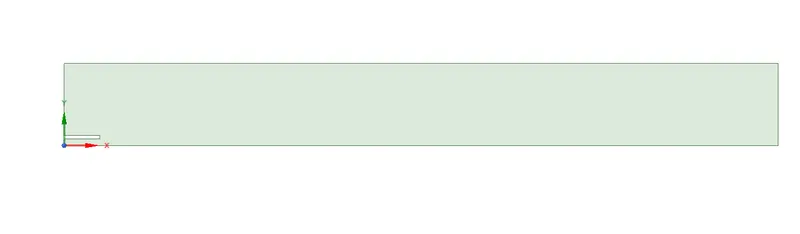
Once done, the next step is to mesh the geometry. Proximity capture is turned on so as to get a finer mesh at the fuel inlet as shown below
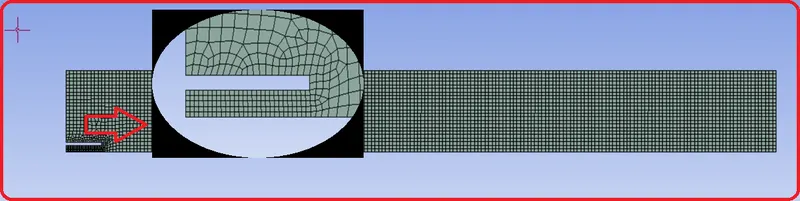
Update the mesh and exit meshing.
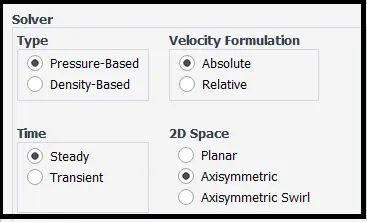
The next step is to setup the conditions needed to simulate combustion. Turn on energy equation and the viscous equation is set to k-epsilon. Next step is to turn on species model to transport and the nox and soot models are also turned on. In the species model, volumetric checkbox is enabled and inlet diffusion is also enabled. One step soot model is enabled.
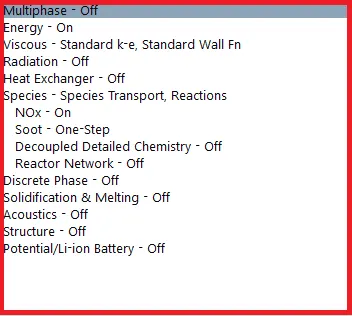
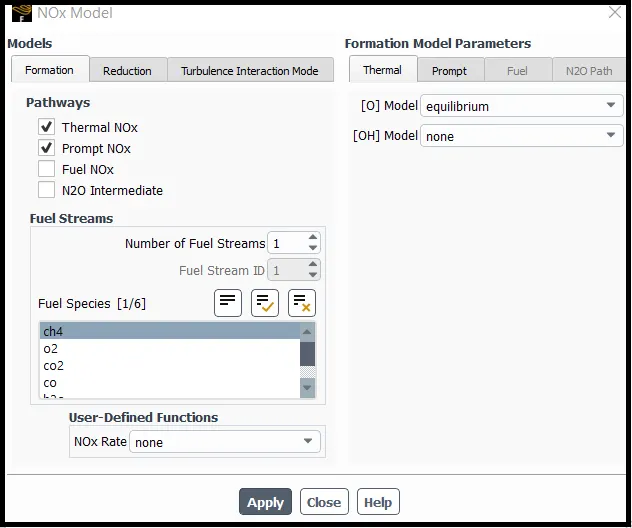
Once done, the next step is to give boundary values for air-inlet and fuel inlet. Velocities are specified at these inlets as 0.5 and 80 m/s respectively. In the species tab under fuel inlet boundary, specify the mole fraction of methane and water. In the air inlet boundary tab, specify the mass fraction of oxygen in the species tab. Initialise the solution and run it for a set of iterations. Create report definitions of outlet parameters of temperature, soot and NOx concentrations for all the cases mentioned. Once done, postprocessing is carried out.
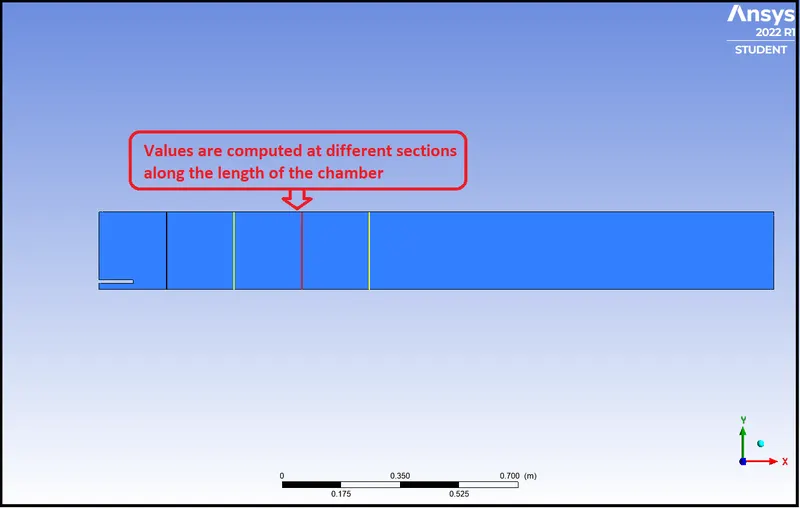
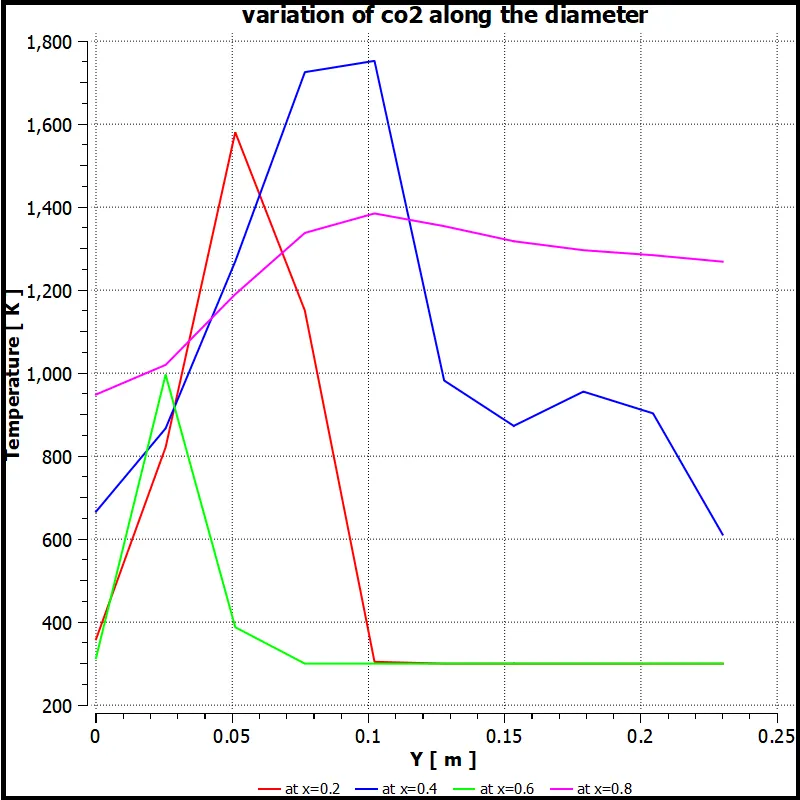
In postprocessing, lines are drawn at different sections(at 0.2m,0.4m,0.6m,0.8m) to determine various properties which are tabulated as shown below.
Results and Discussions
The following are the results obtained for various molefraction values of methane and water and values along with its contours are plotted in a table.
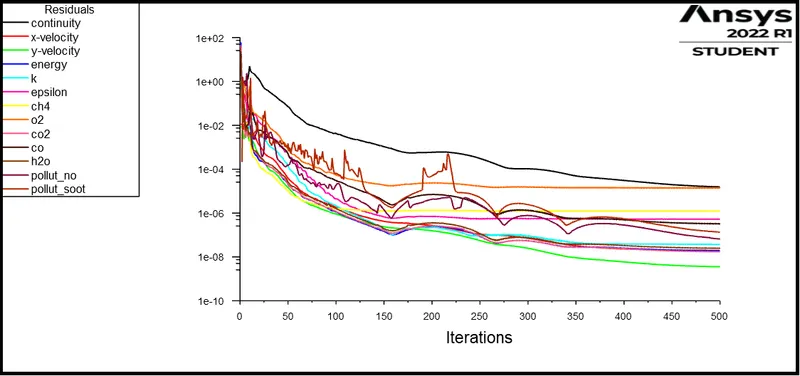
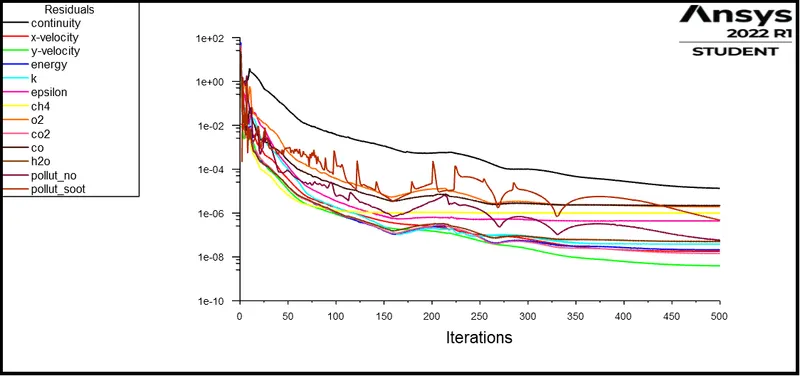
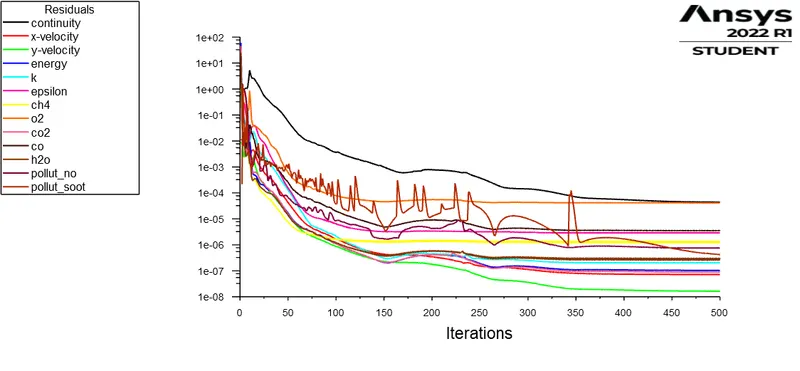
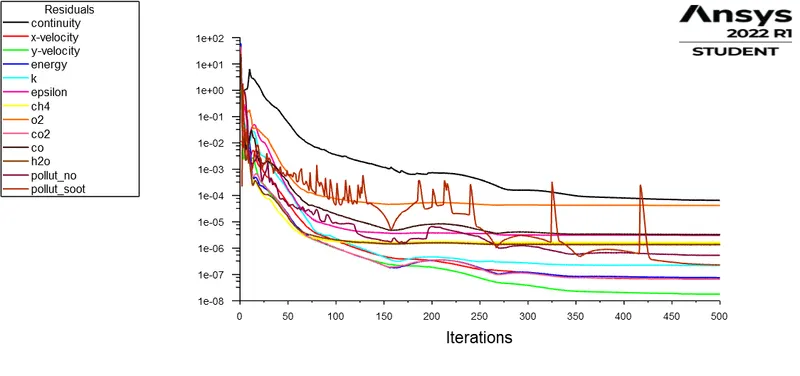
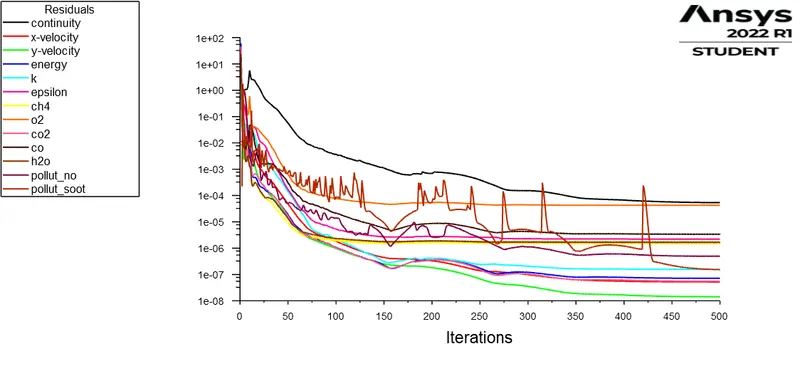
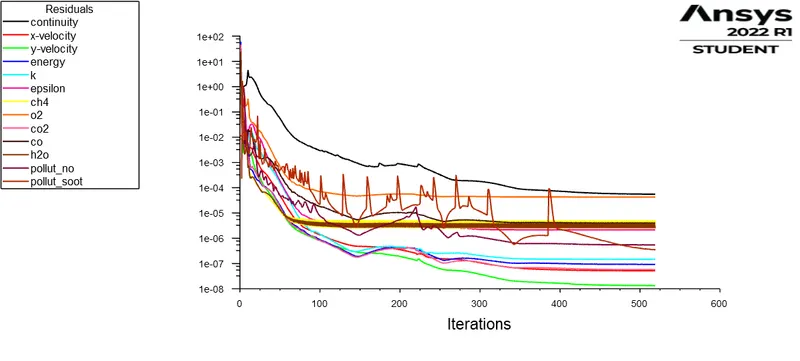
Convergence study
|
CH4=1 H2O=0 |
 |
|
CH4=0.95 H2O=0.05 |
 |
|
CH4=0.9 H2O=0.1 |
 |
|
CH4=0.85 H2O=0.15 |
 |
|
CH4=0.8 H2O=0.2 |
 |
|
CH4=0.7 H2O=0.3 |
 |
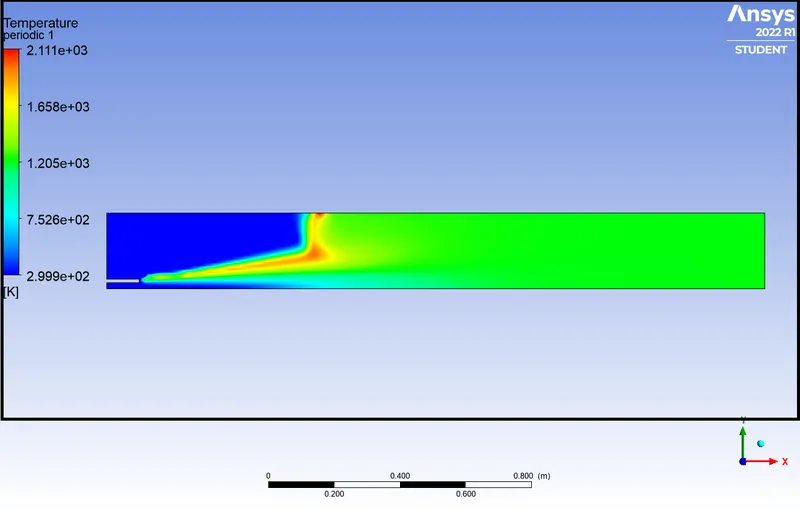
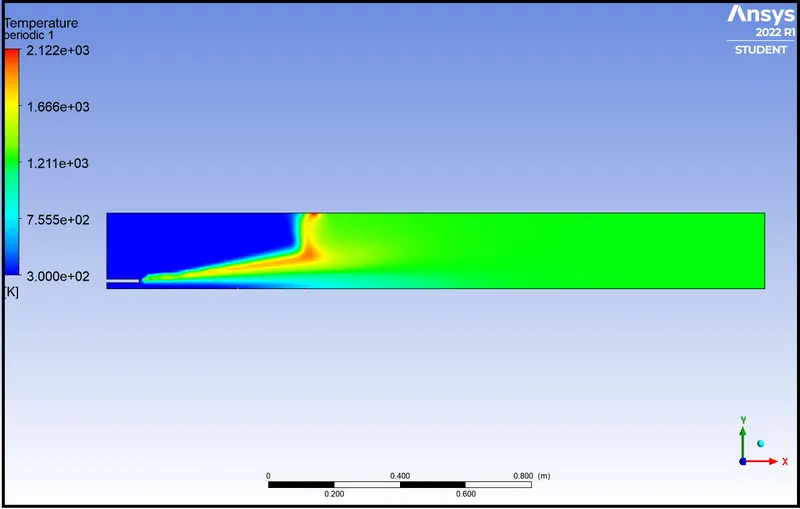
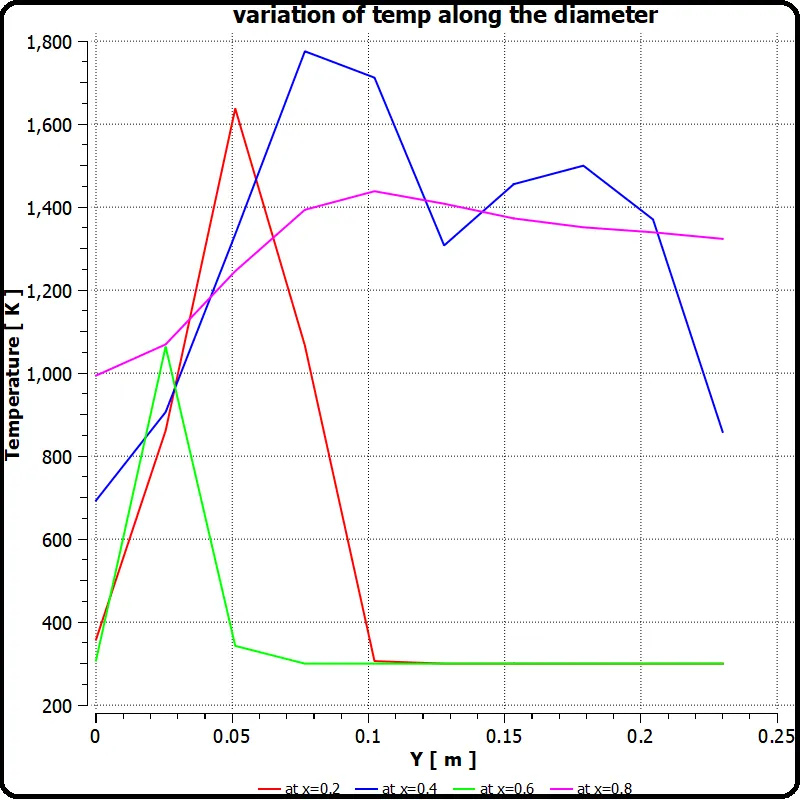
Temperature contours and plots showing variation
|
CH4=1 H2O=0 |
 |
 |
|
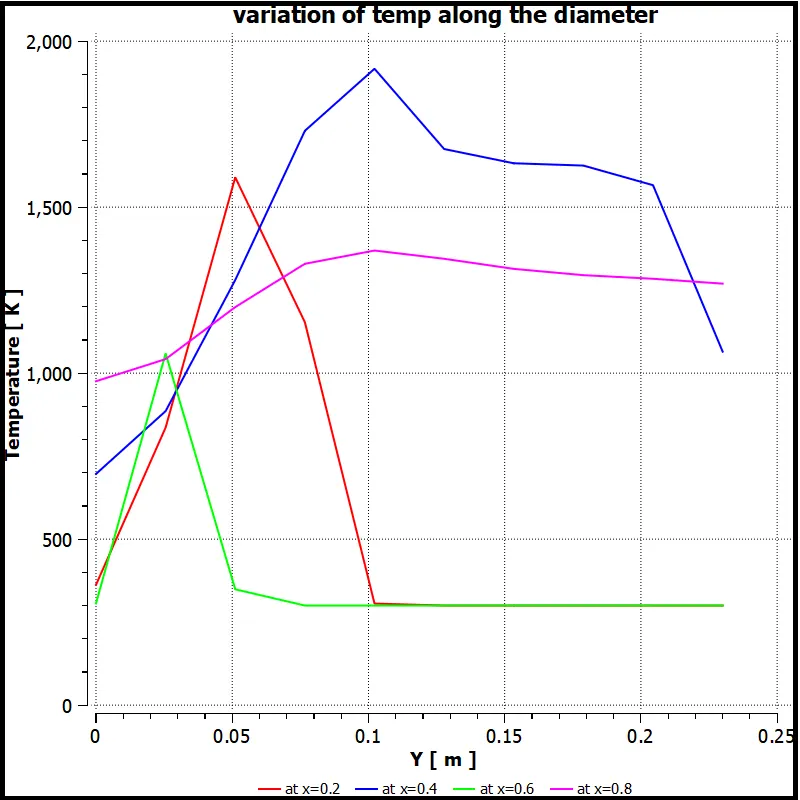
CH4=0.95 H2O=0.05 |
 |
 |
|
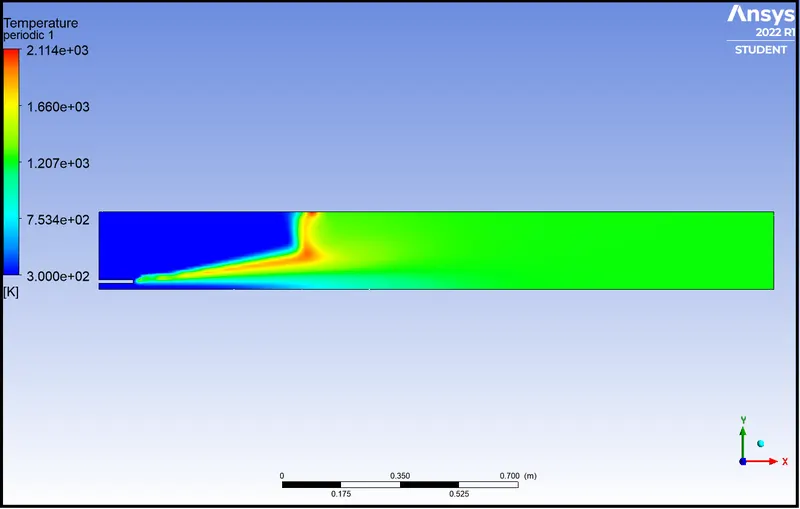
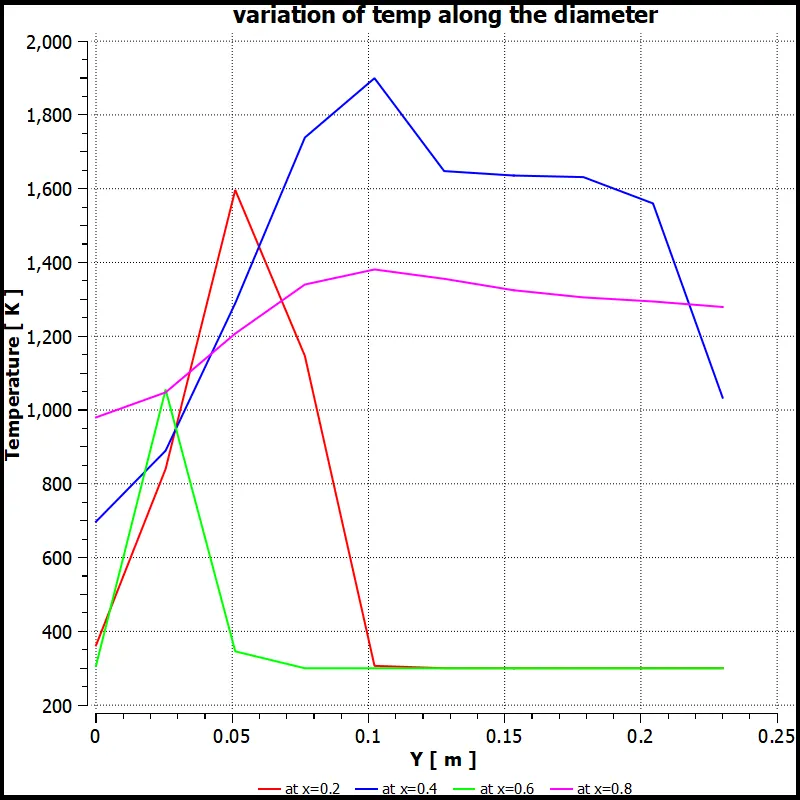
CH4=0.9 H2O=0.1 |
 |
 |
|
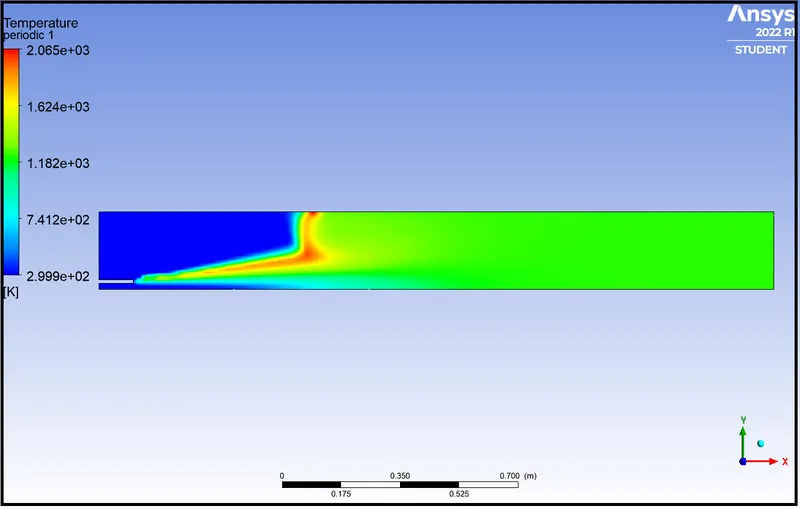
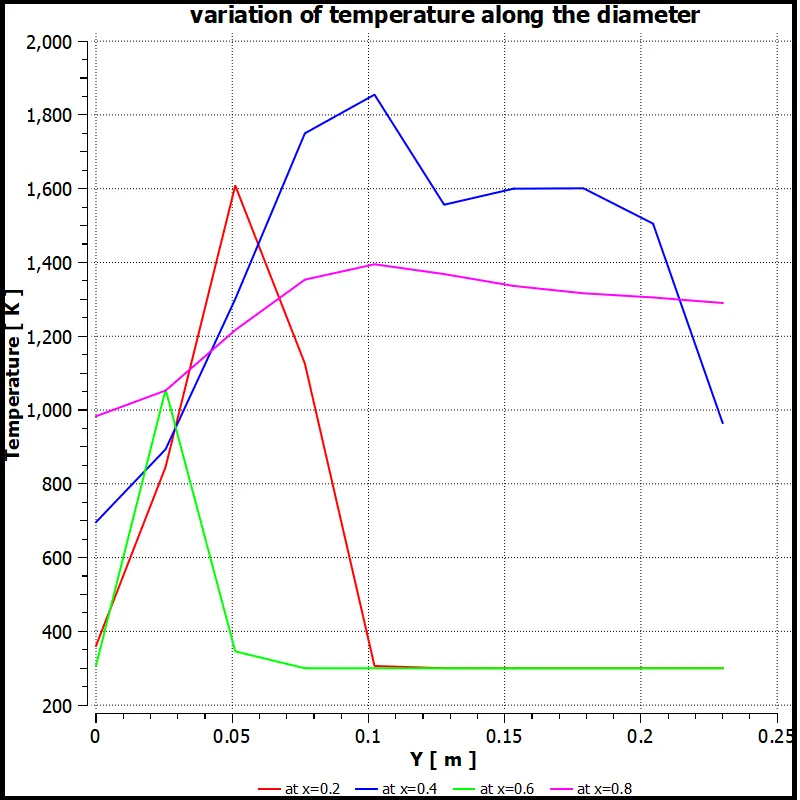
CH4=0.85 H2O=0.15 |
 |
 |
|
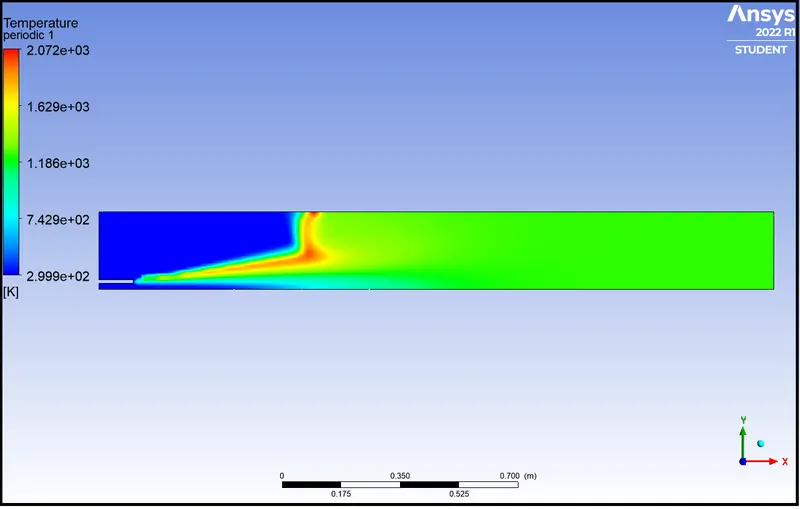
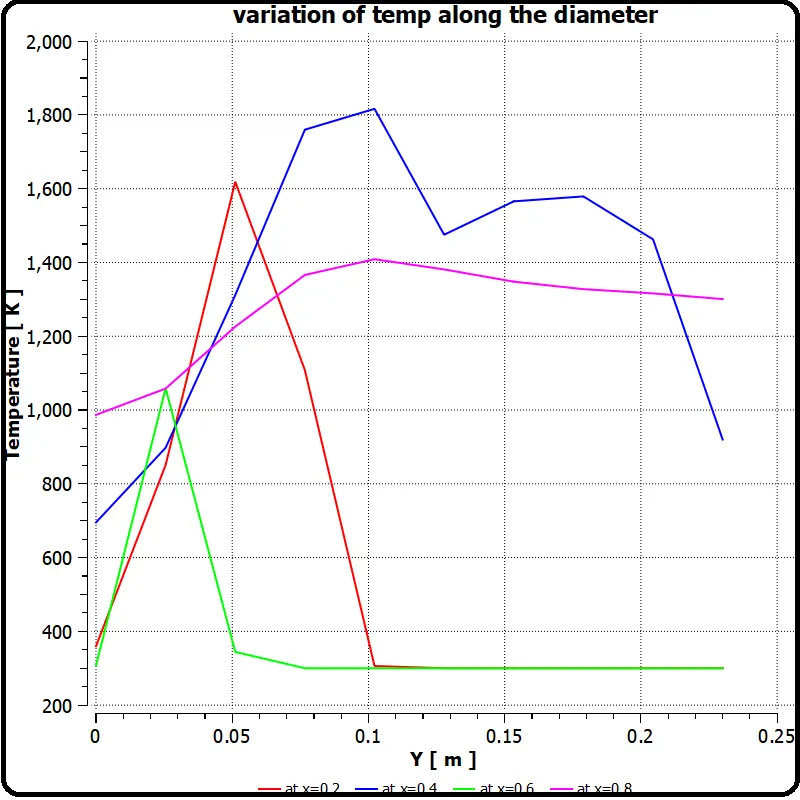
CH4=0.8 H2O=0.2 |
 |
 |
|
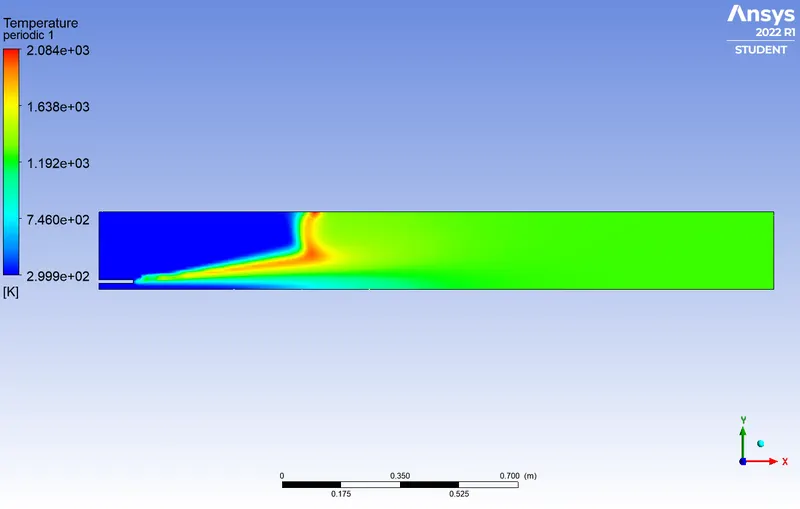
CH4=0.7 H2O=0.3 |
 |
 |
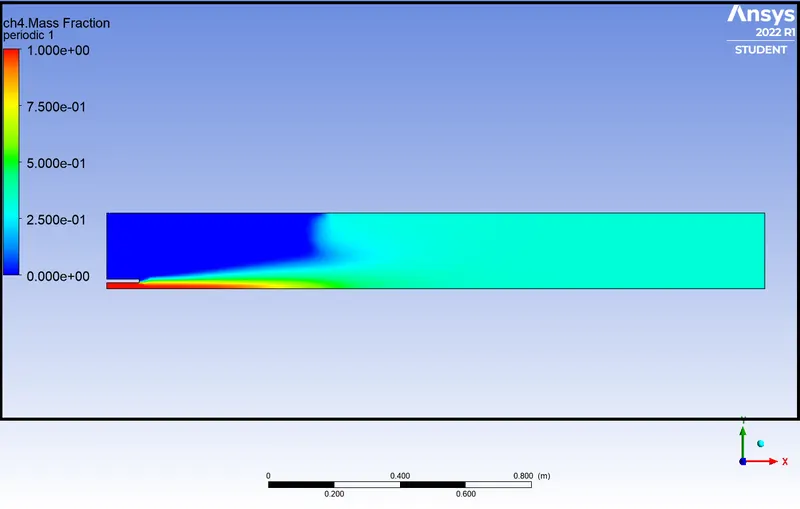
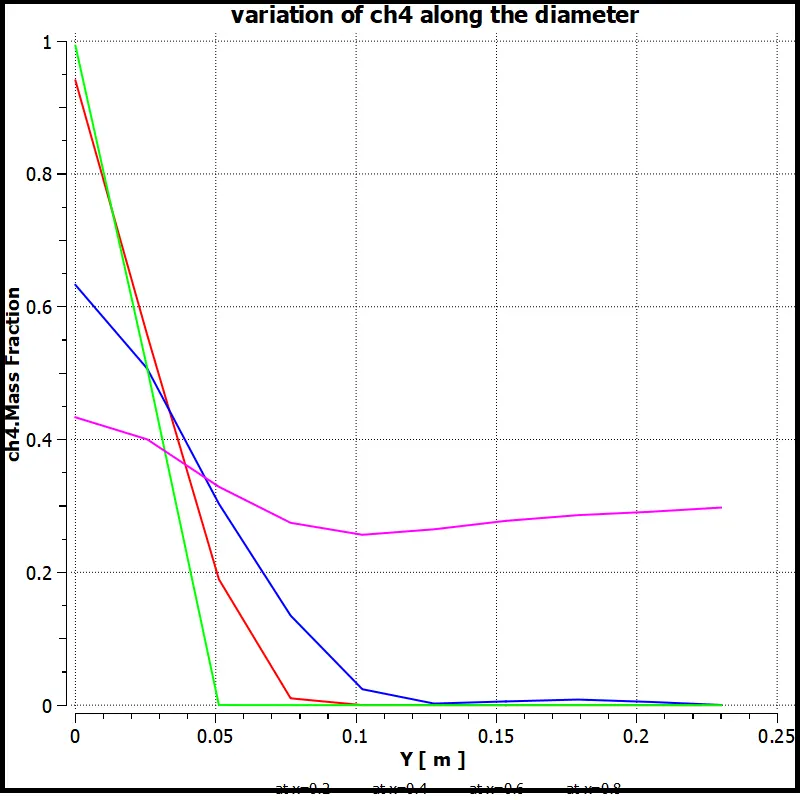
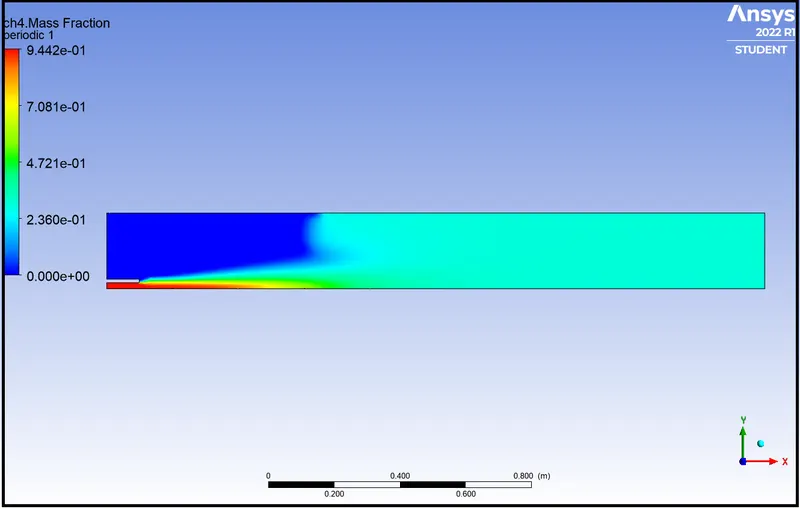
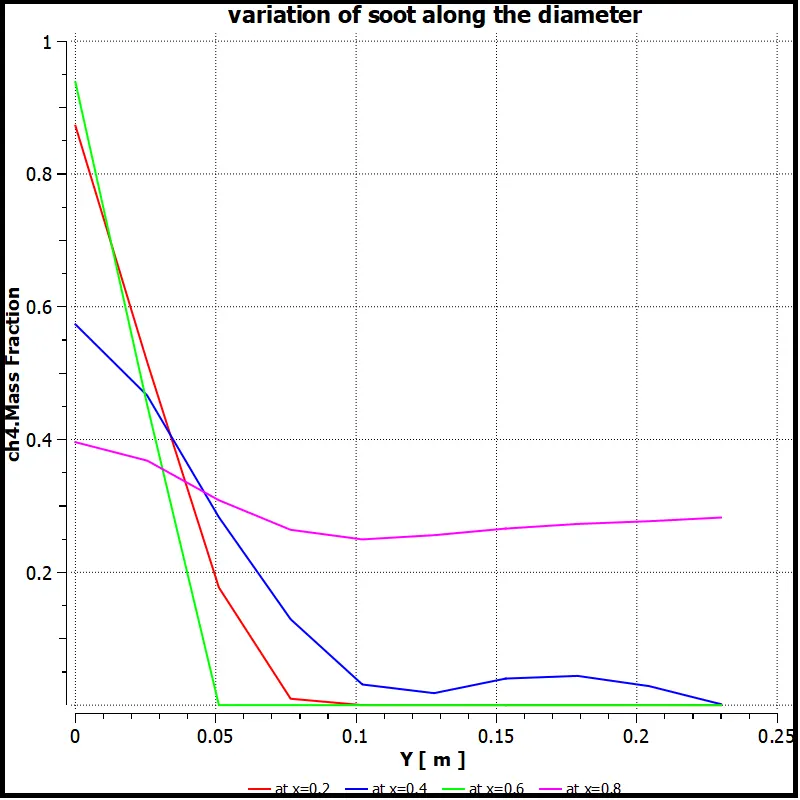
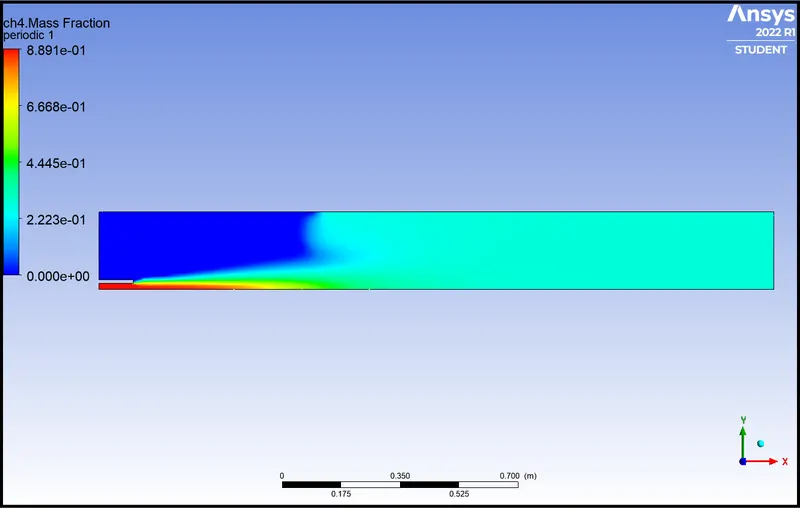
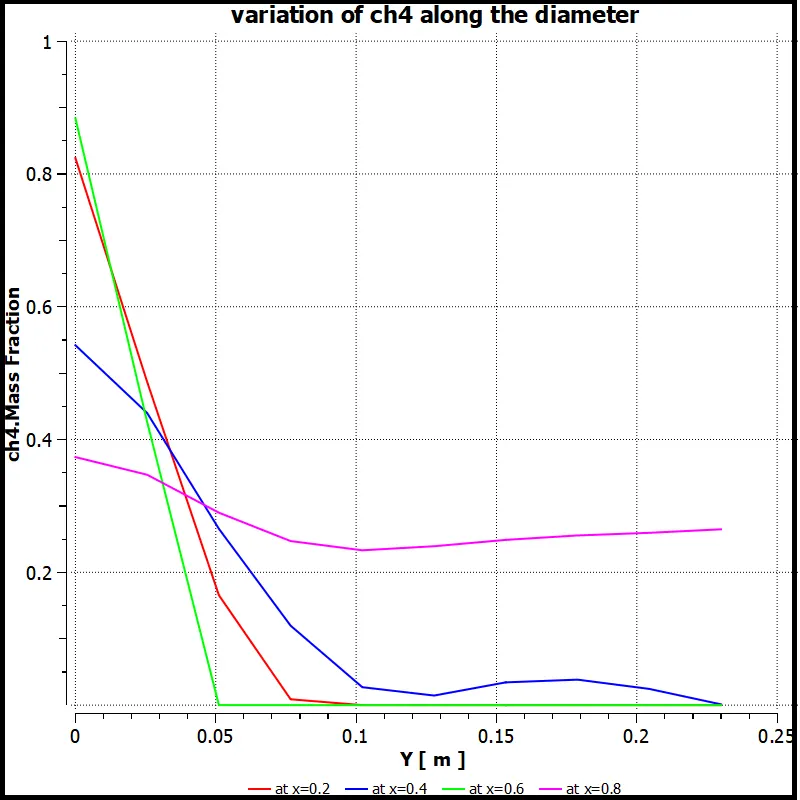
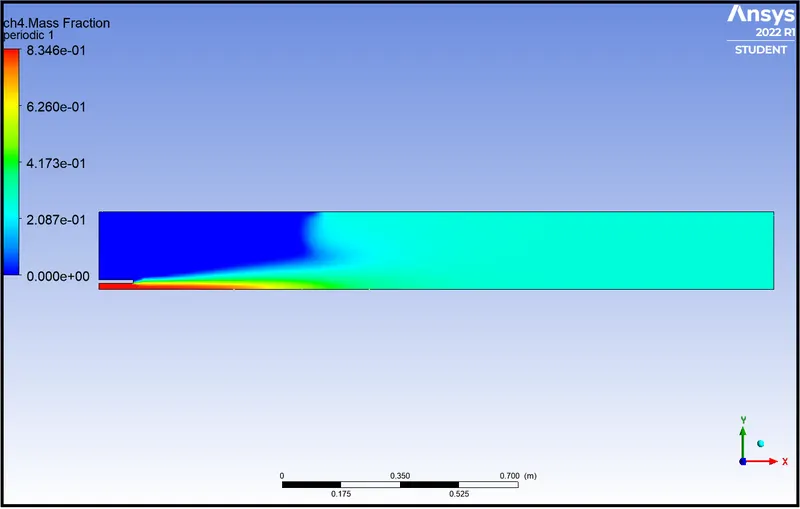
Mass fraction of ch4 and plots showing variation of ch4 at different sections
|
CH4=1 H2O=0 |
 |
 |
|
CH4=0.95 H2O=0.05 |
 |
 |
|
CH4=0.9 H2O=0.1 |
 |
 |
|
CH4=0.85 H2O=0.15 |
 |
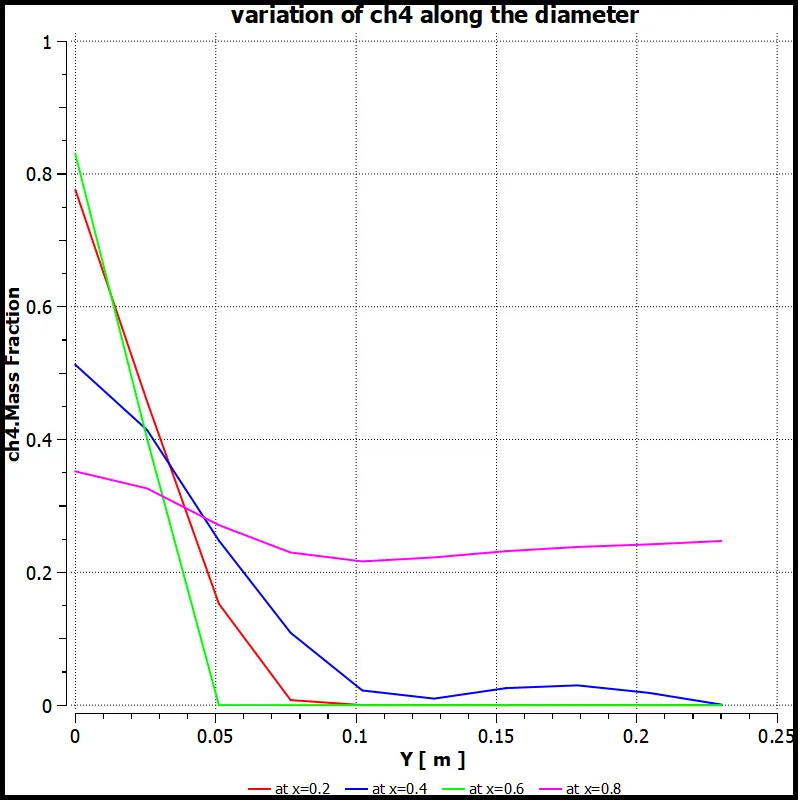 |
|
CH4=0.8 H2O=0.2 |
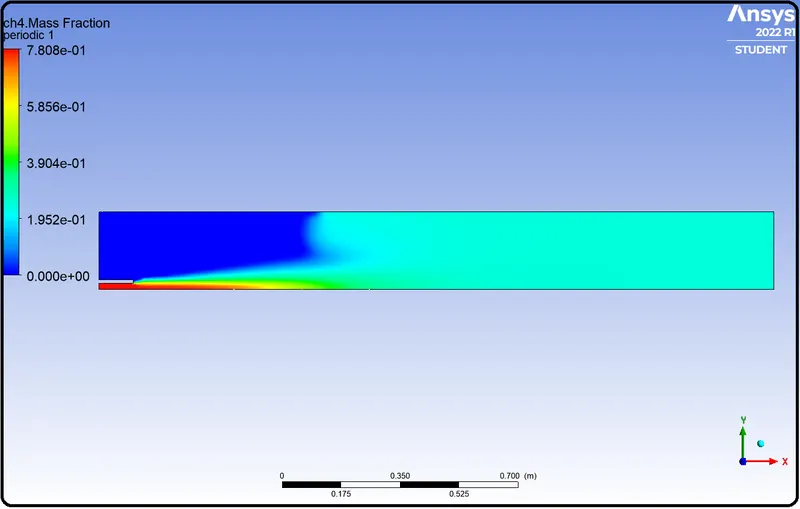 |
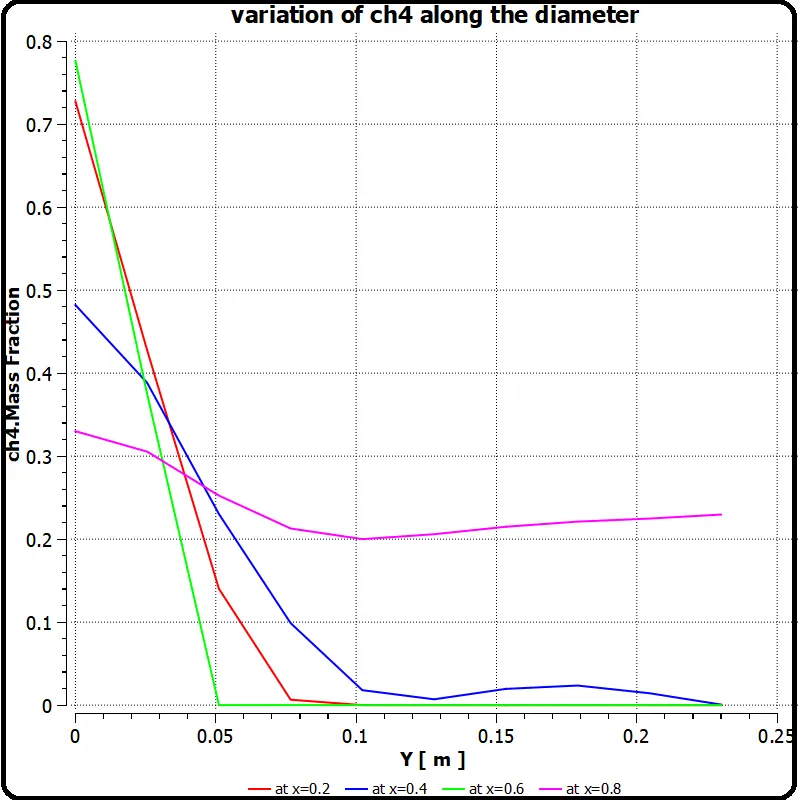 |
|
CH4=0.7 H2O=0.3 |
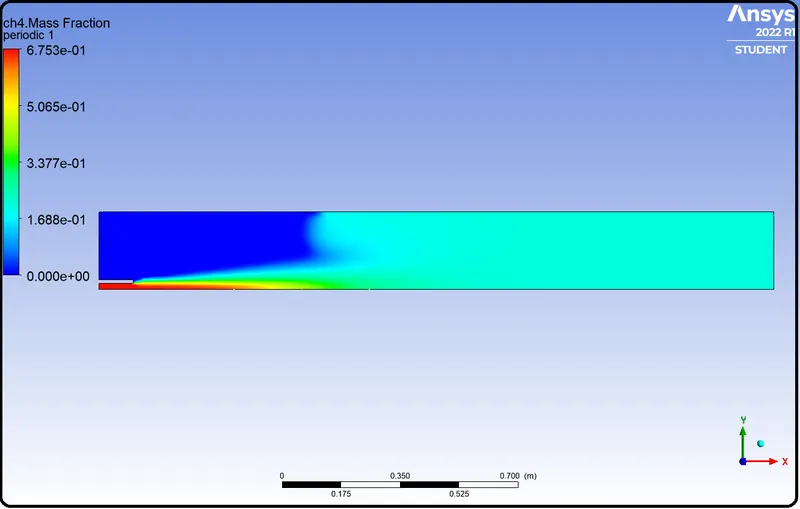 |
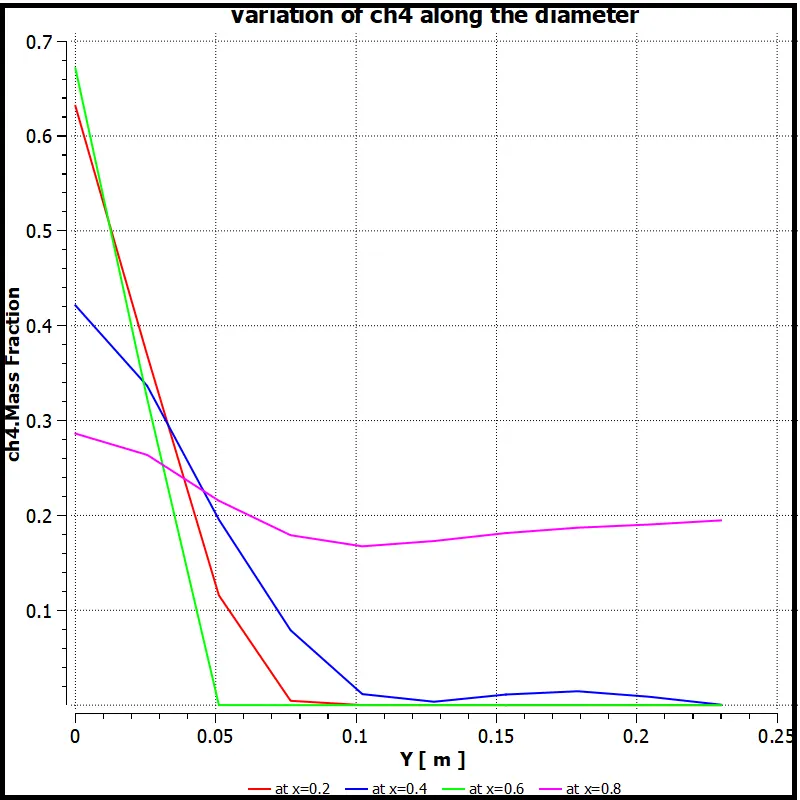 |
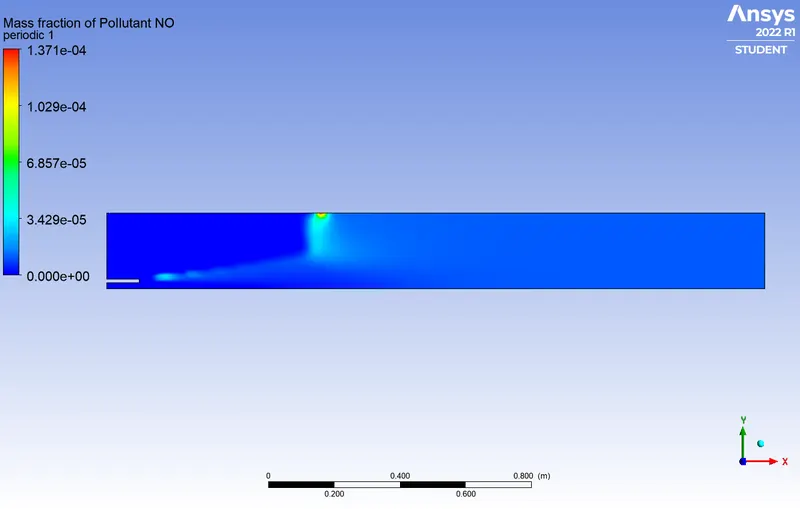
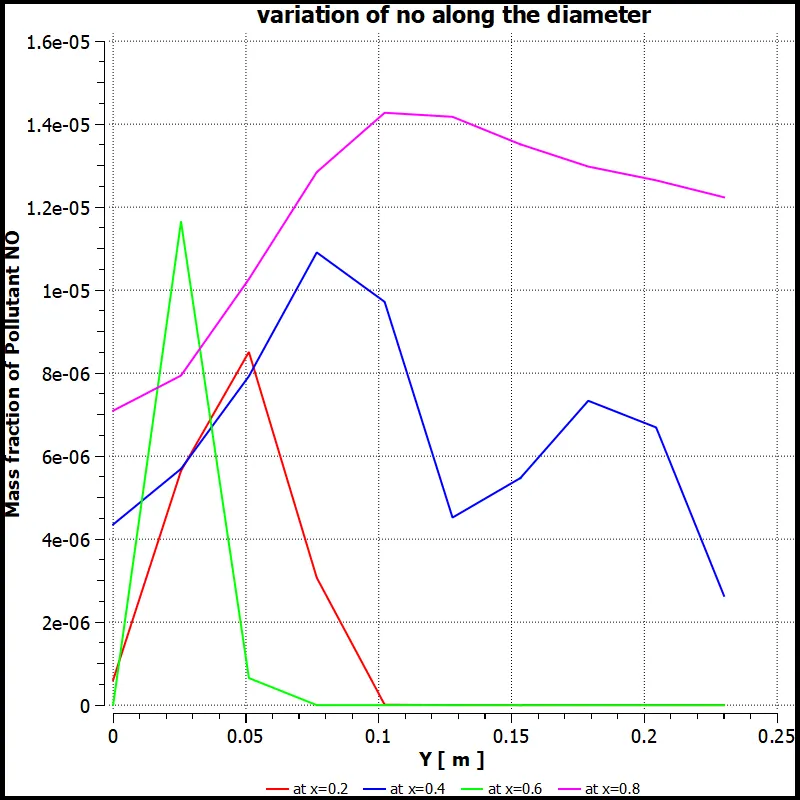
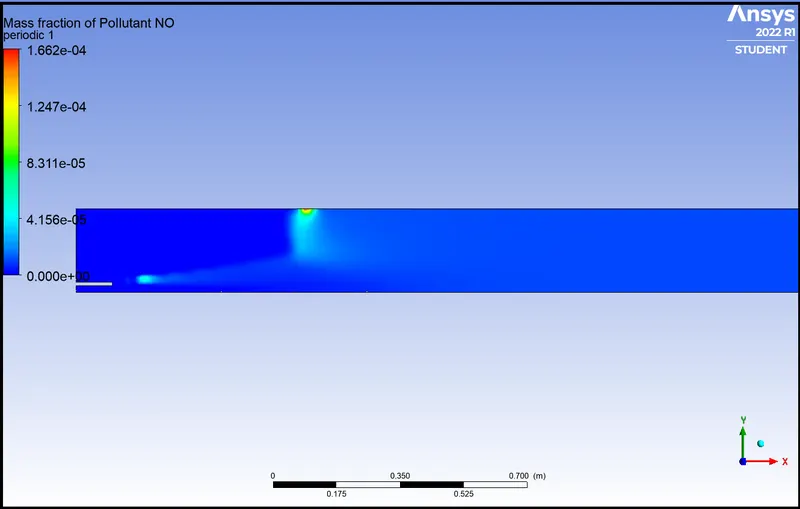
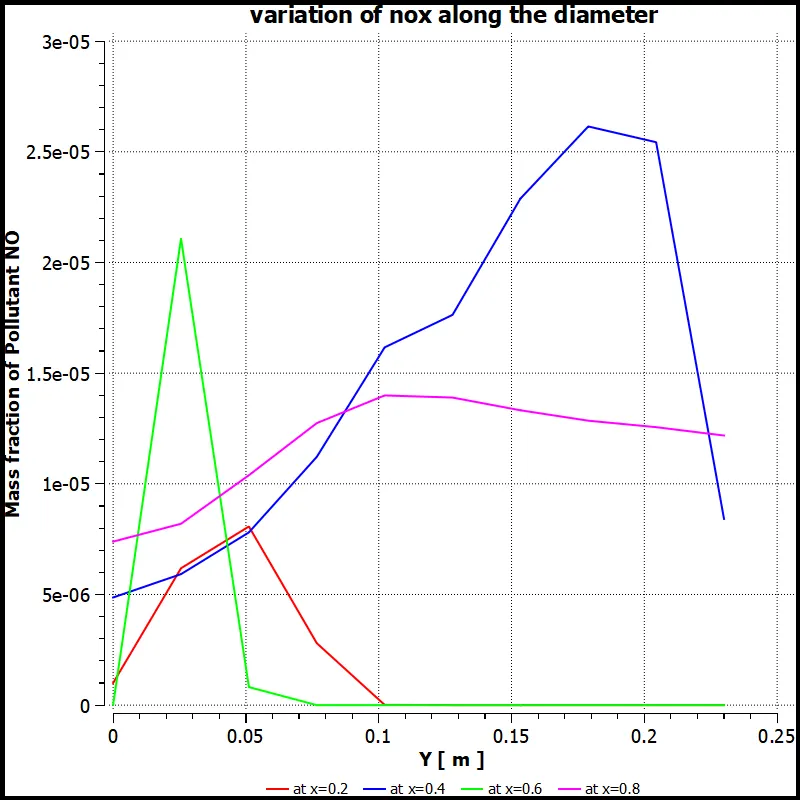
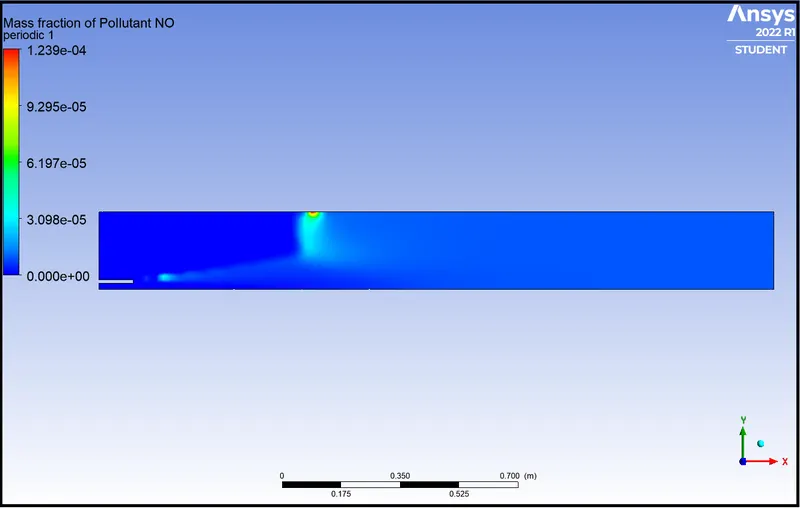
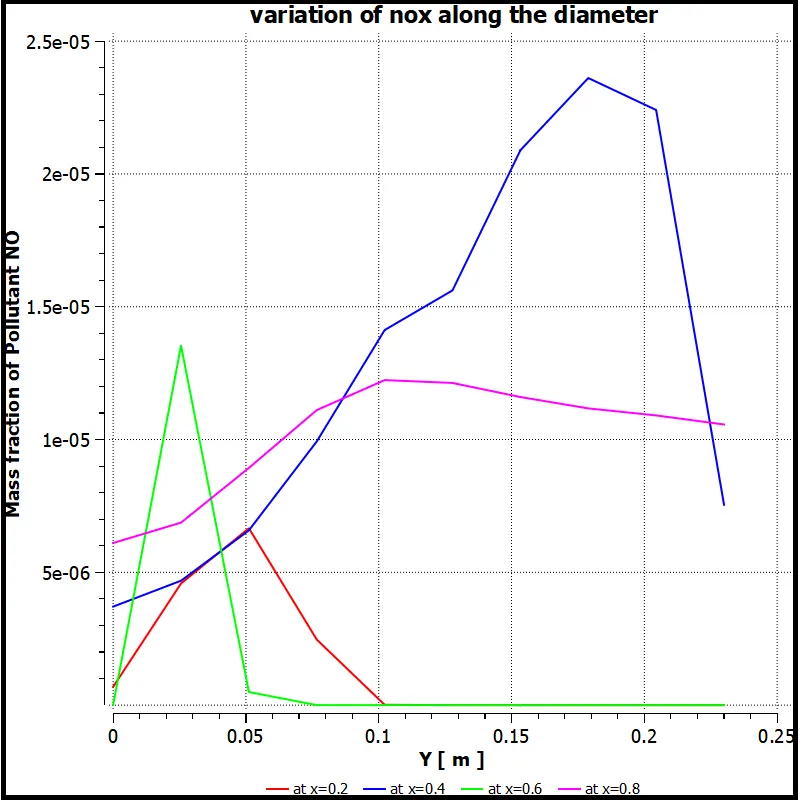
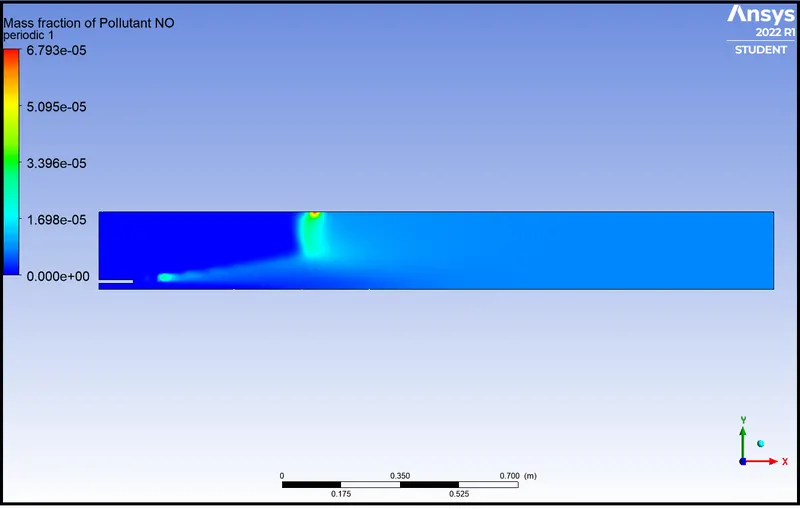
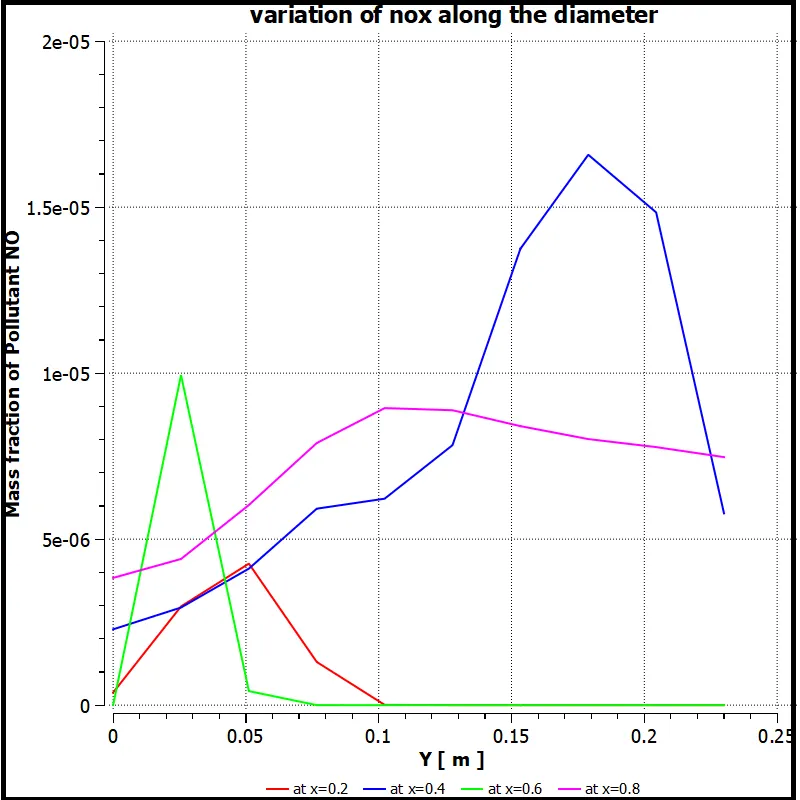
Mass fraction of NOx and plots showing variation of nox
|
CH4=1 H2O=0 |
 |
 |
|
CH4=0.95 H2O=0.05 |
 |
 |
|
CH4=0.9 H2O=0.1 |
 |
 |
|
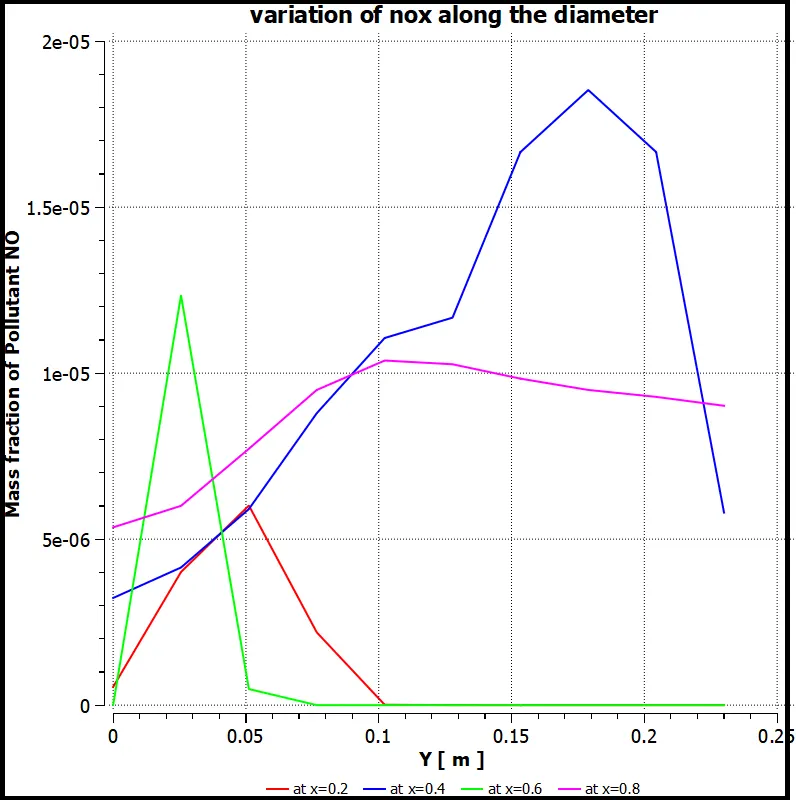
CH4=0.85 H2O=0.15 |
 |
 |
|
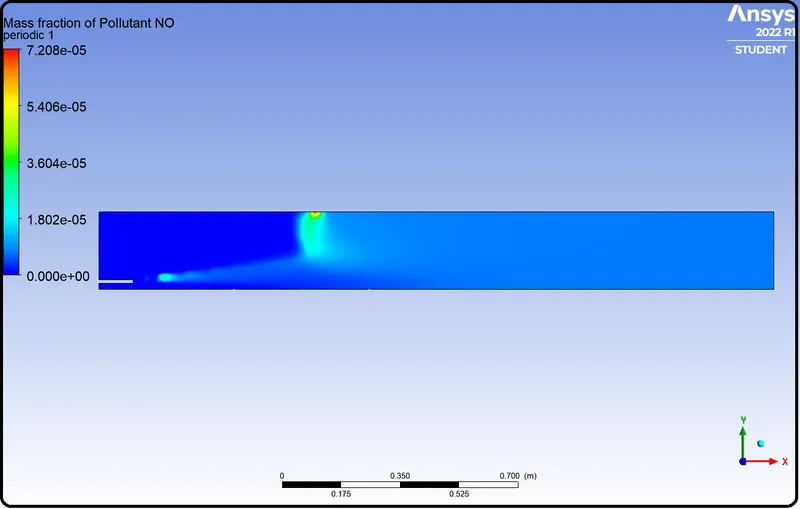
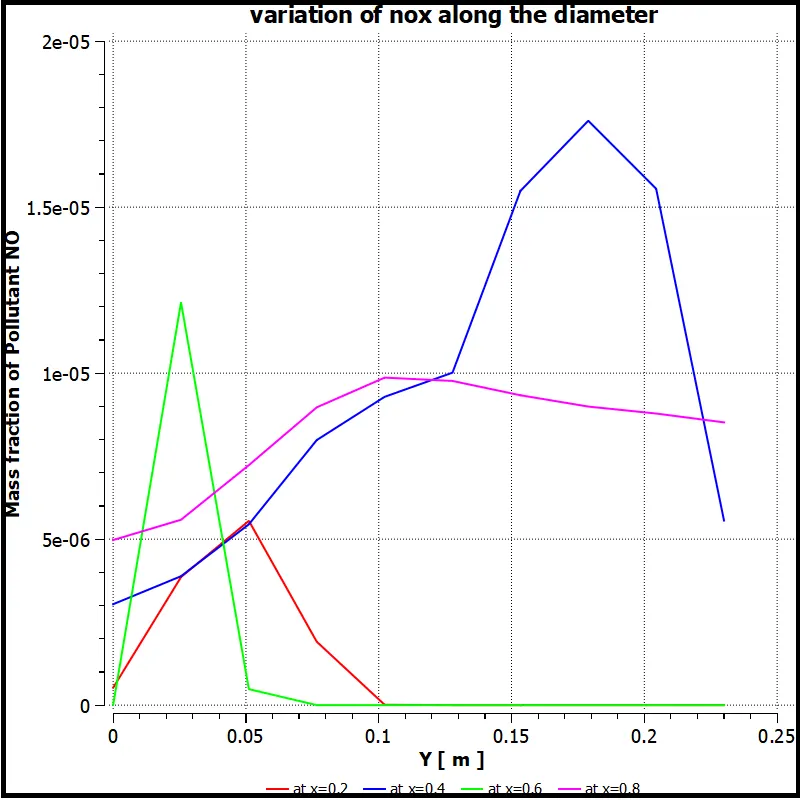
CH4=0.8 H2O=0.2 |
 |
 |
|
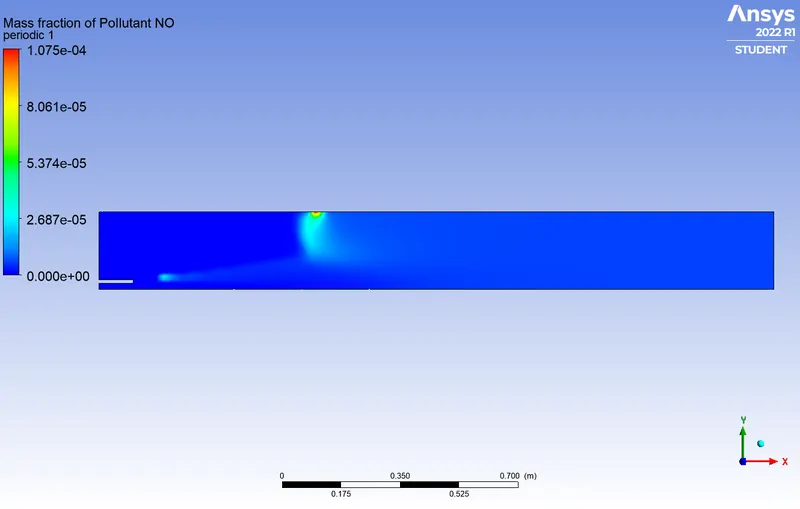
CH4=0.7 H2O=0.3 |
 |
 |
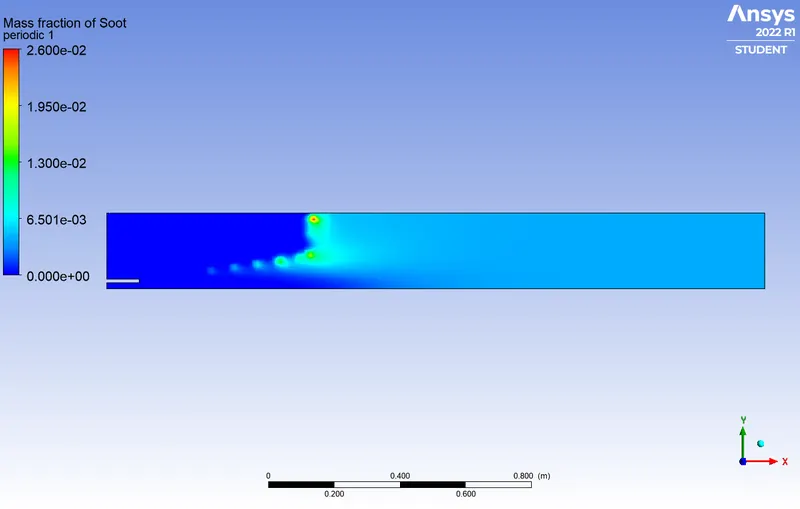
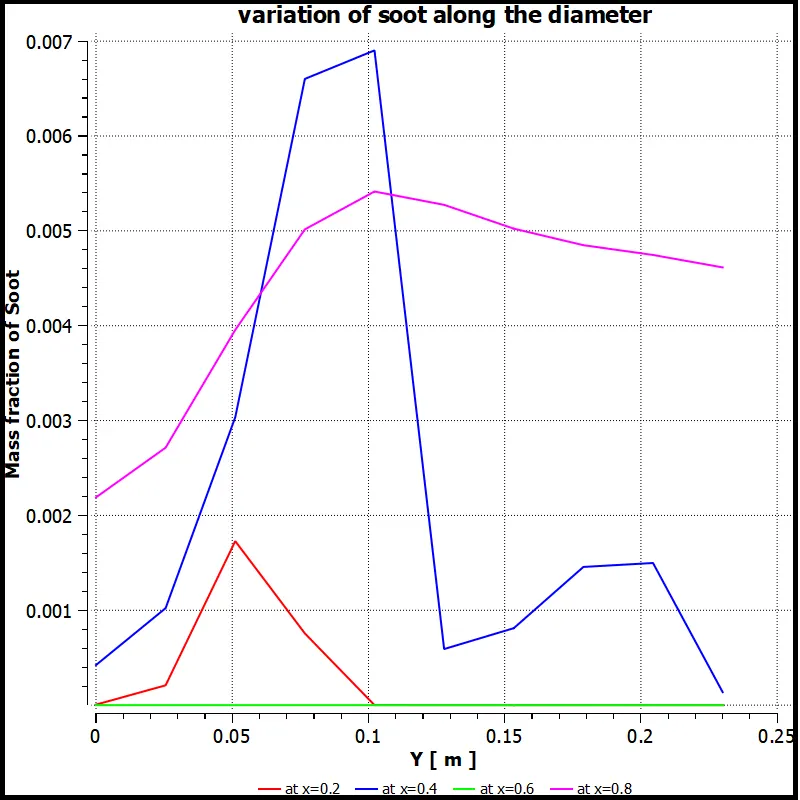
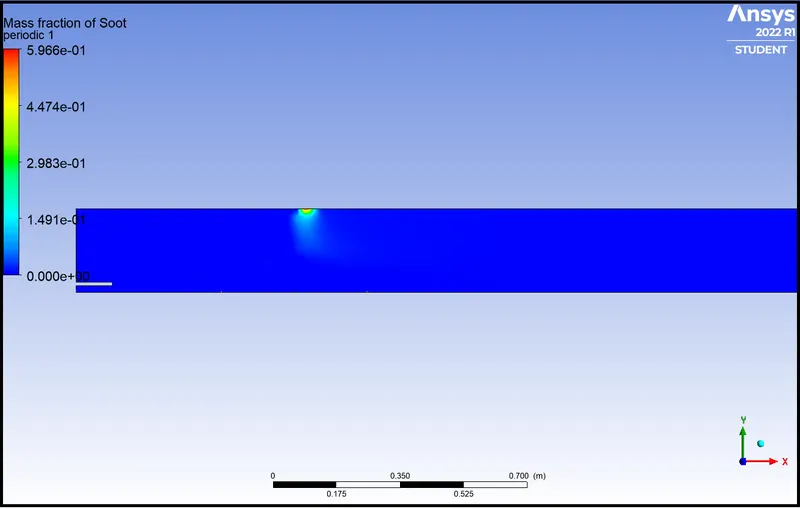
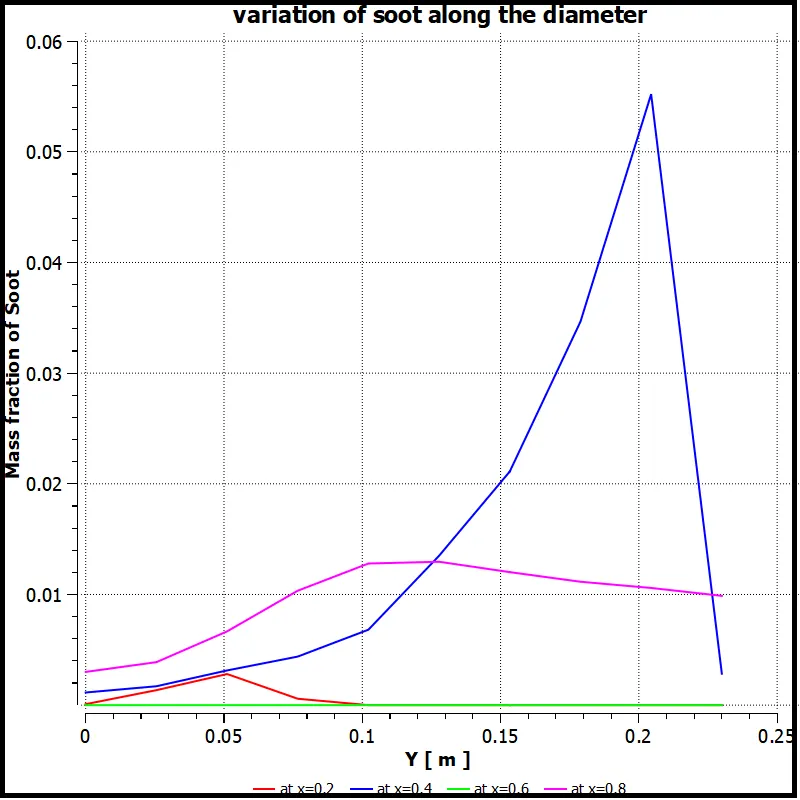
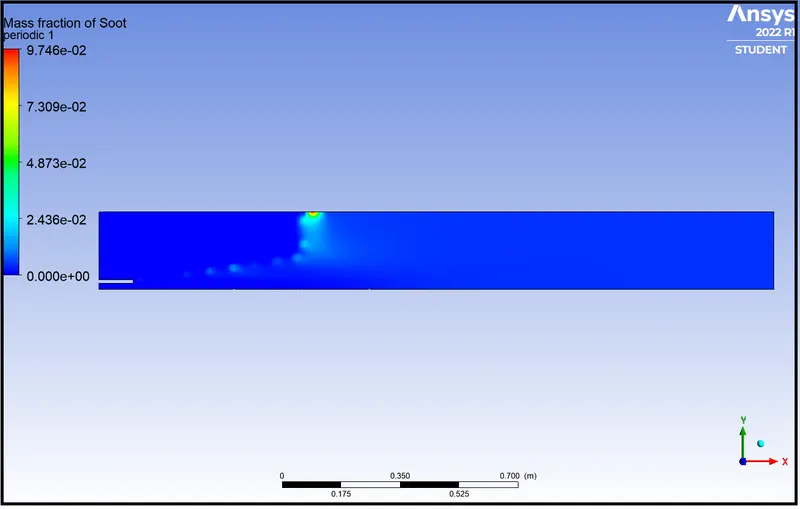
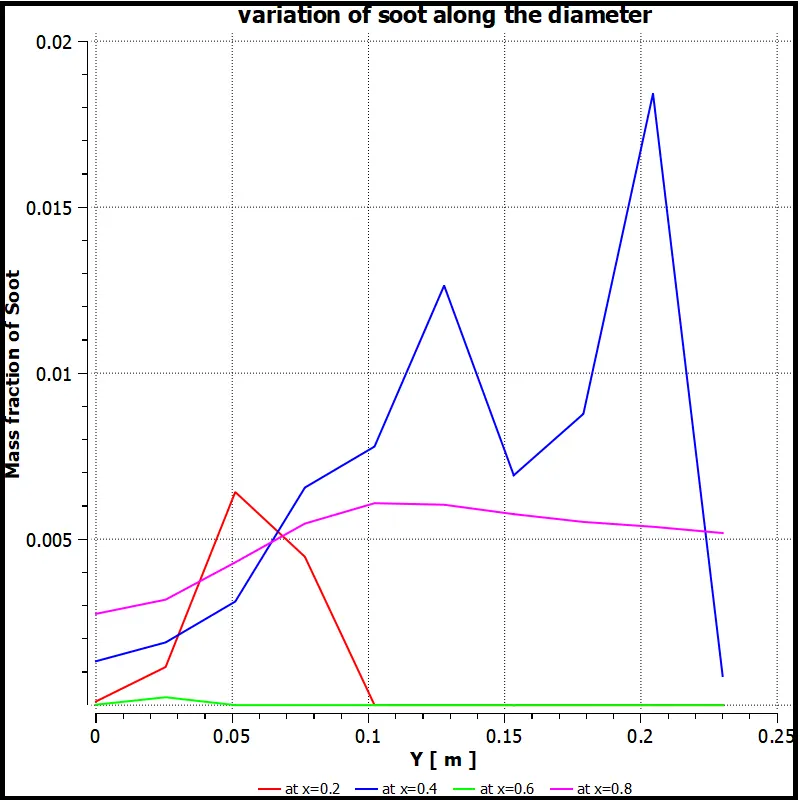
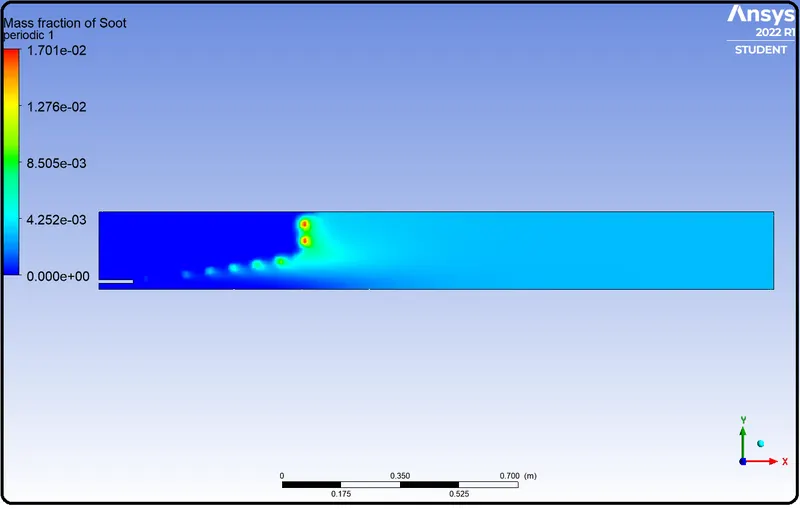
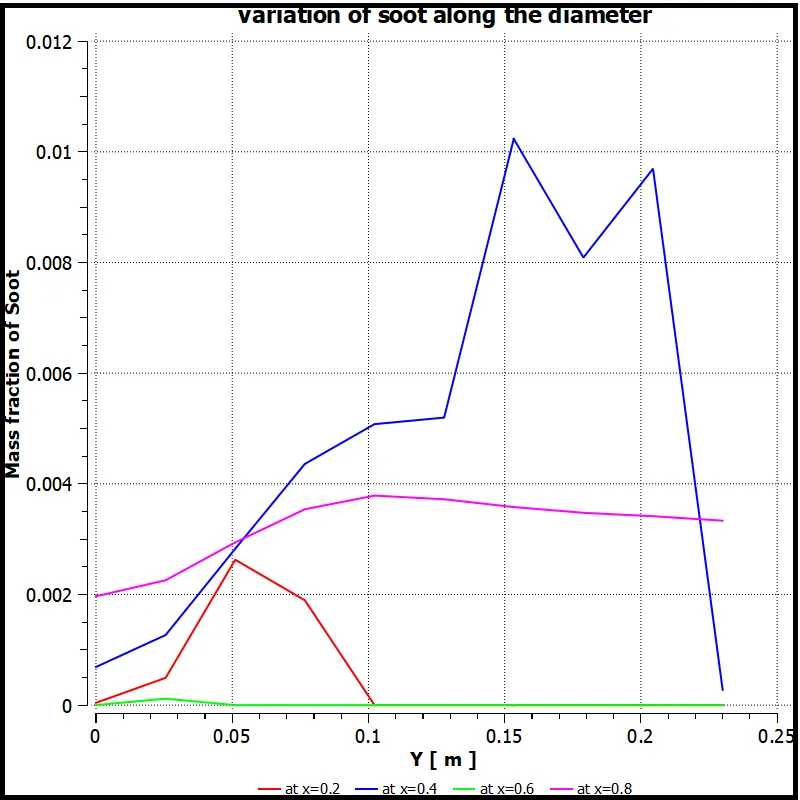
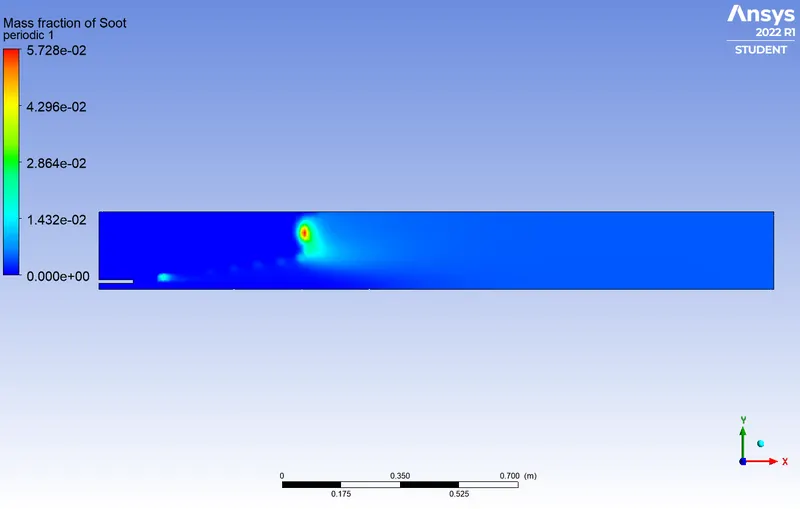
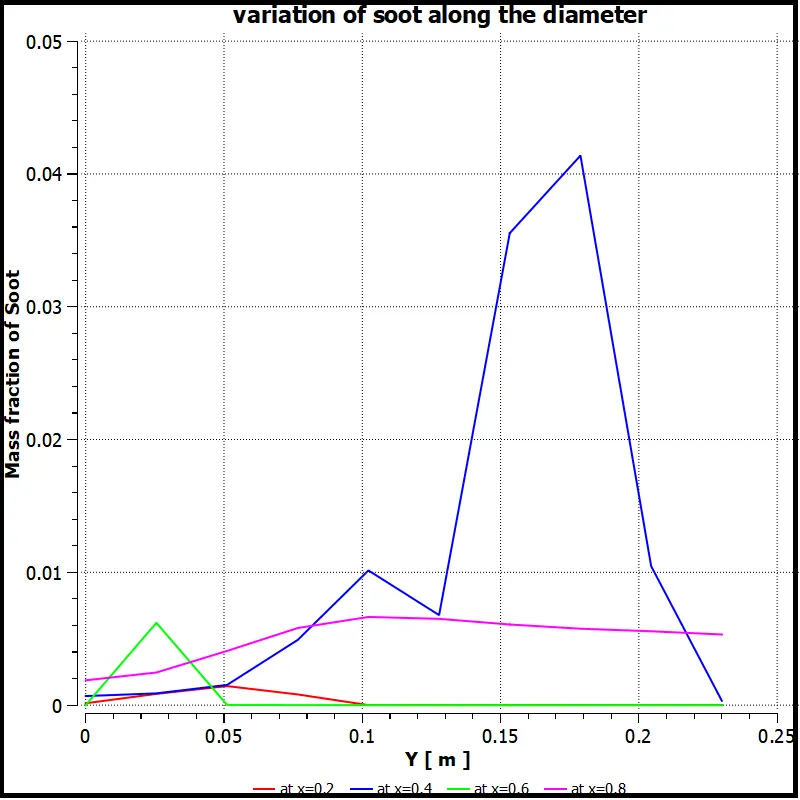
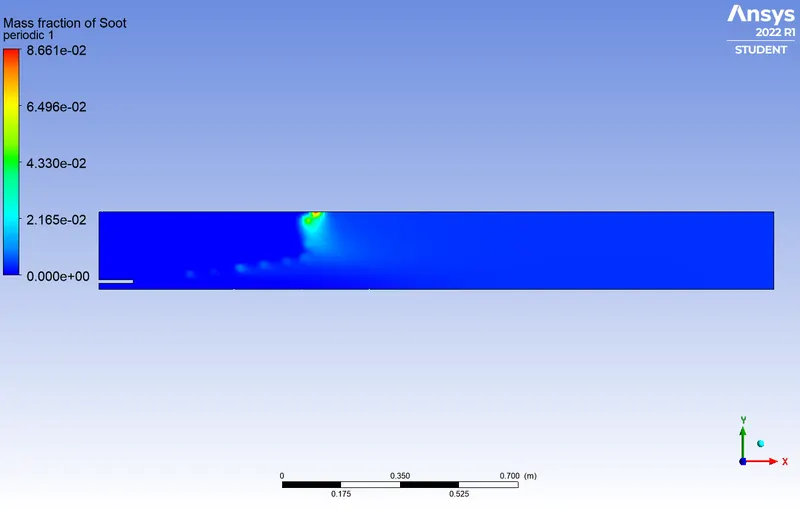
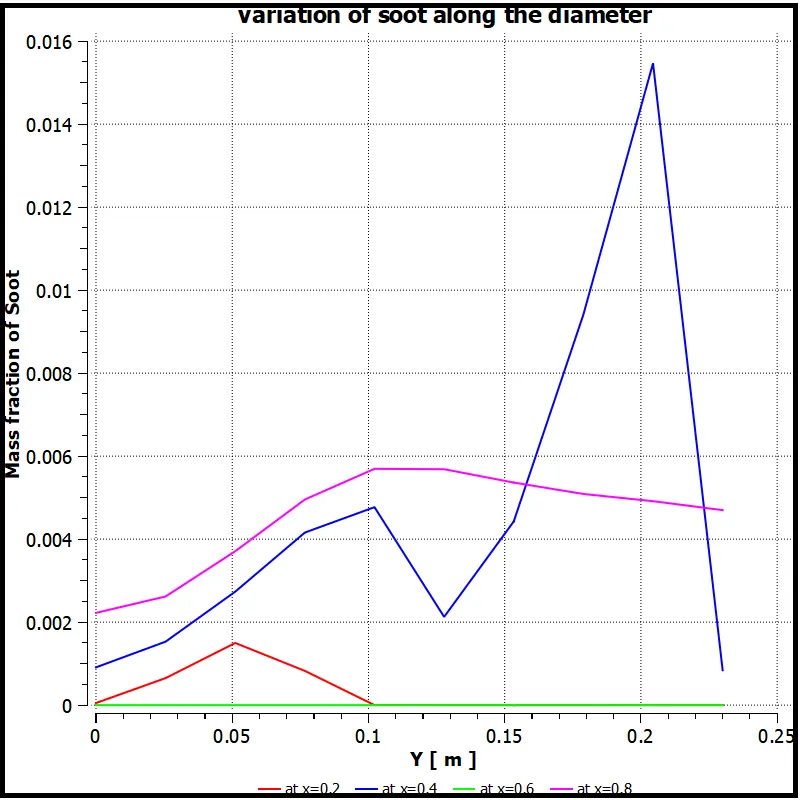
Formation of soot and plots showing variation of soot
|
CH4=1 H2O=0 |
 |
 |
|
CH4=0.95 H2O=0.05 |
 |
 |
|
CH4=0.9 H2O=0.1 |
 |
 |
|
CH4=0.85 H2O=0.15 |
 |
 |
|
CH4=0.8 H2O=0.2 |
 |
 |
|
CH4=0.7 H2O=0.3 |
 |
 |
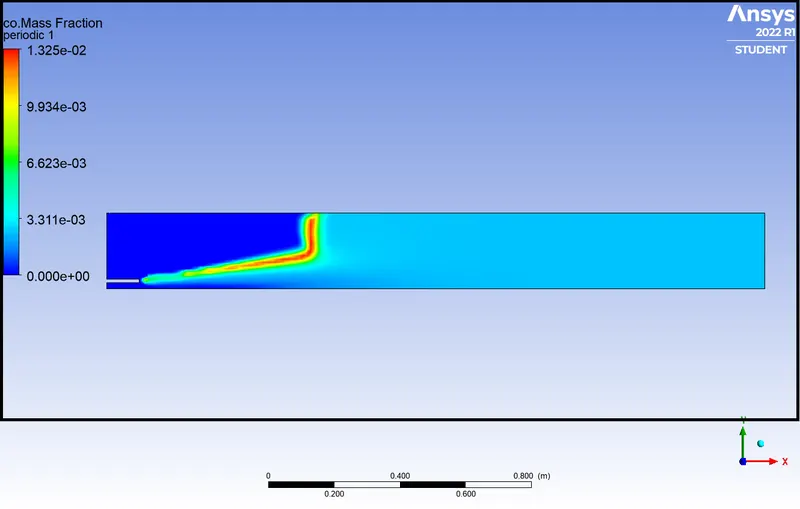
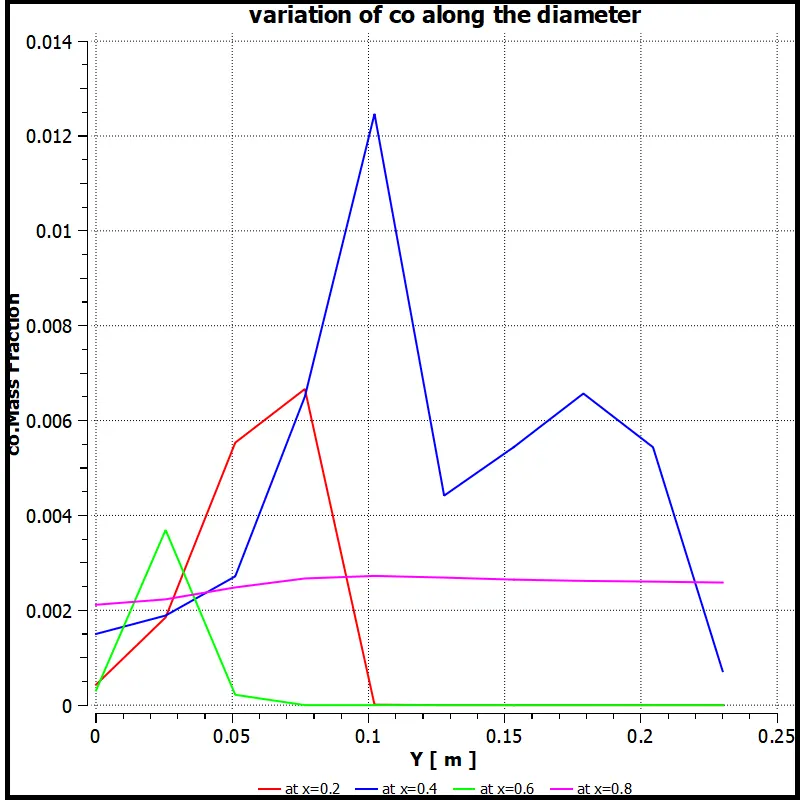
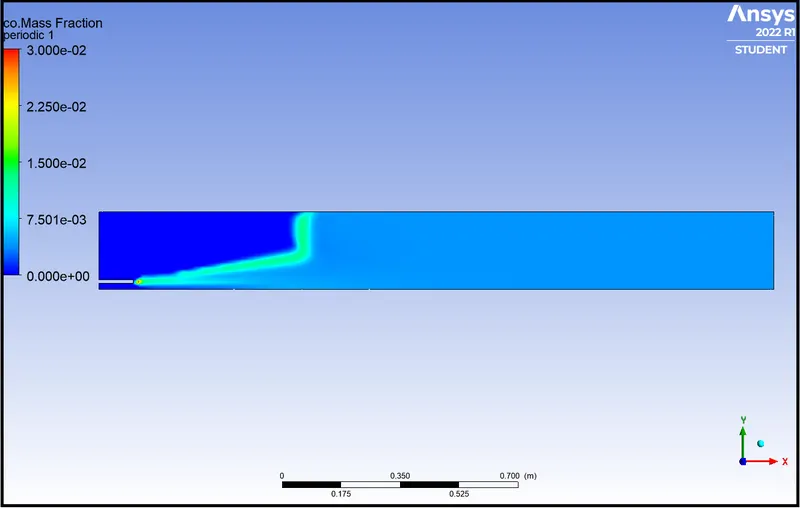
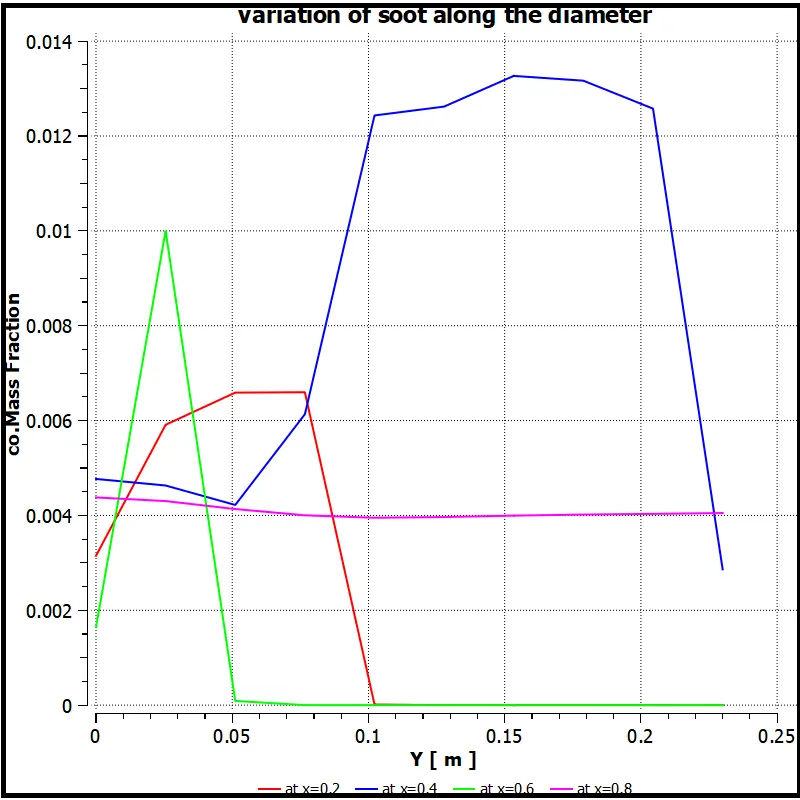
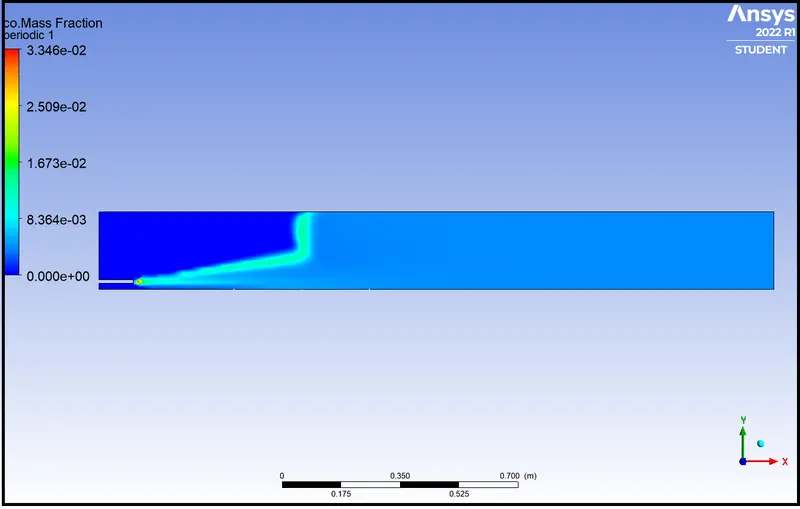
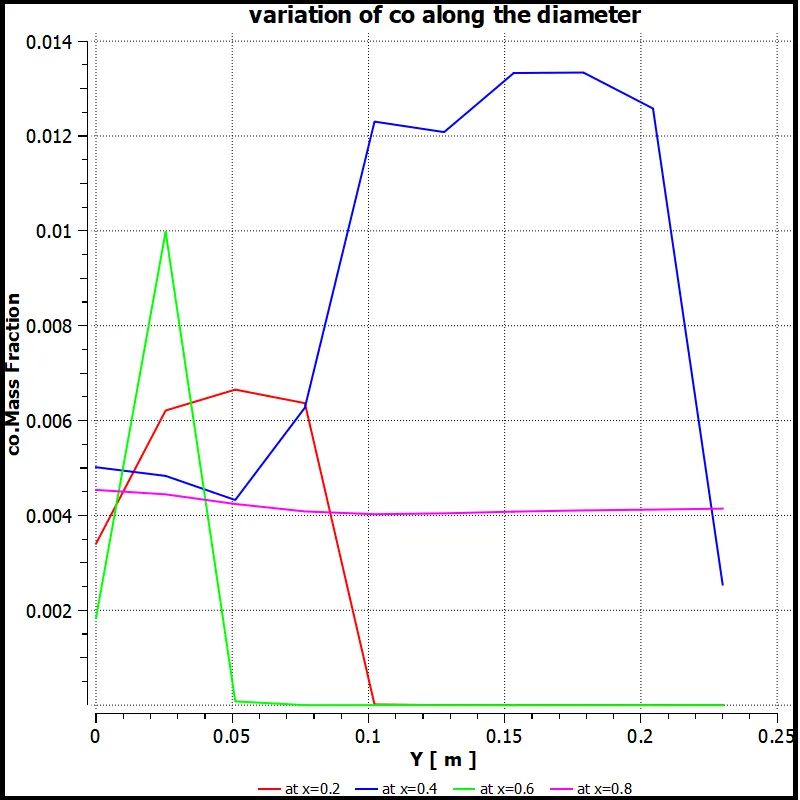
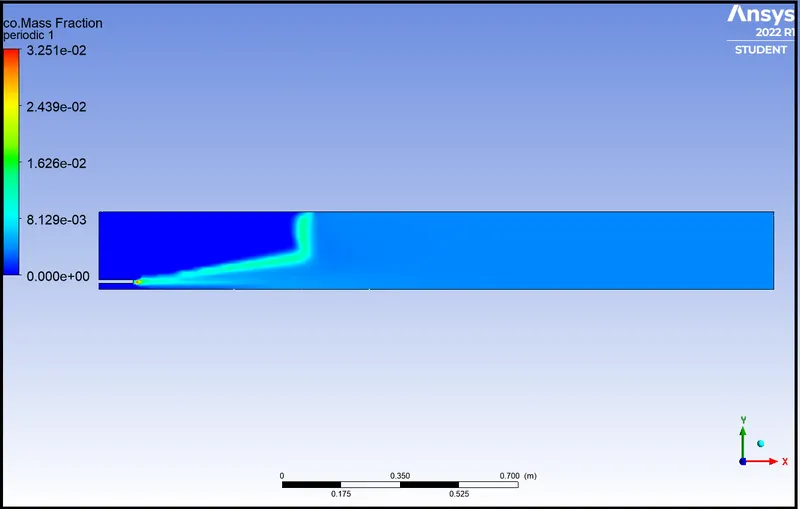
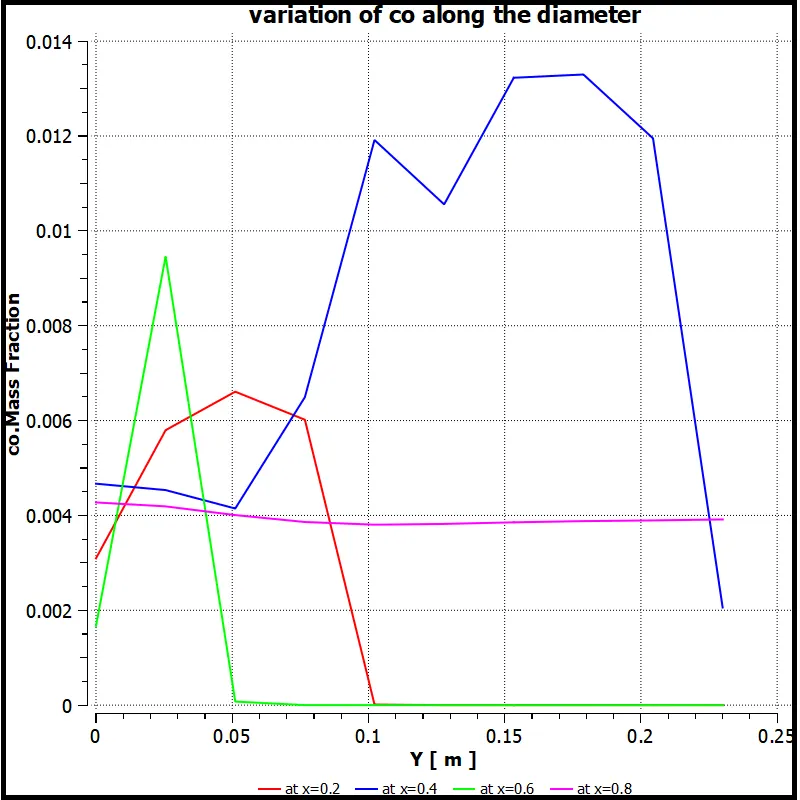
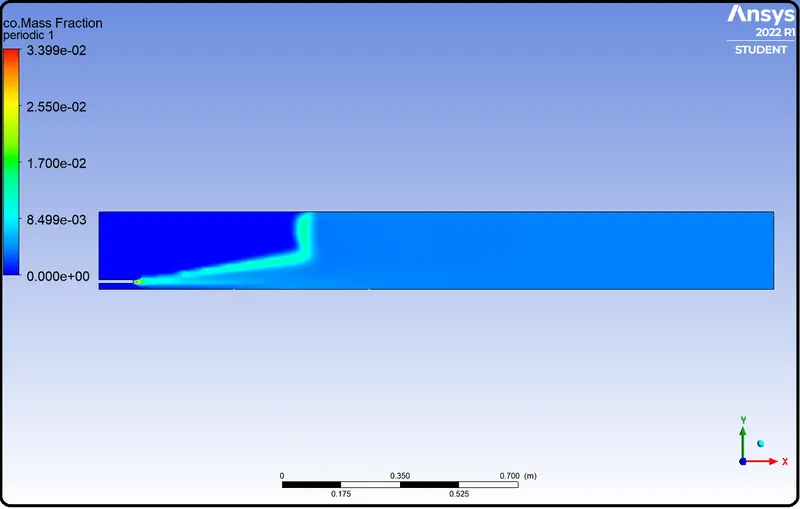
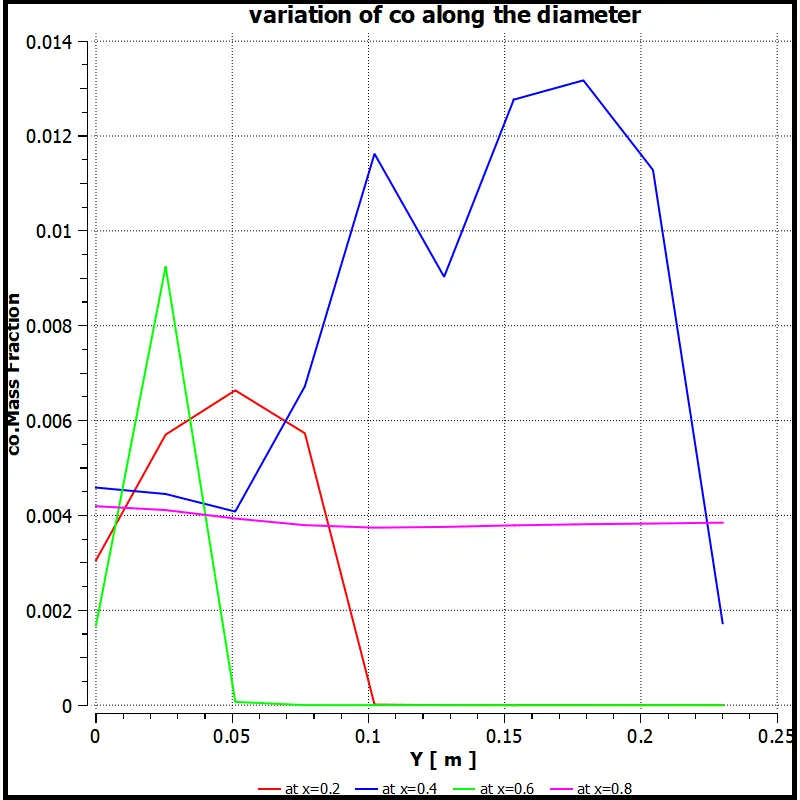
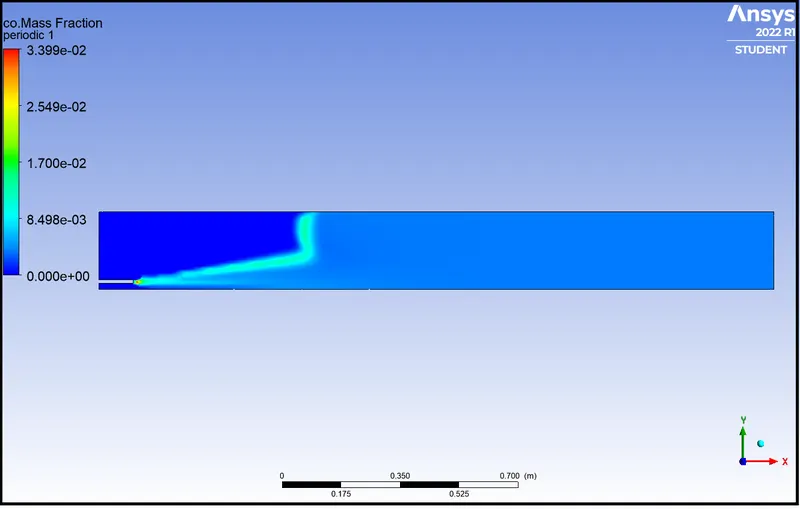
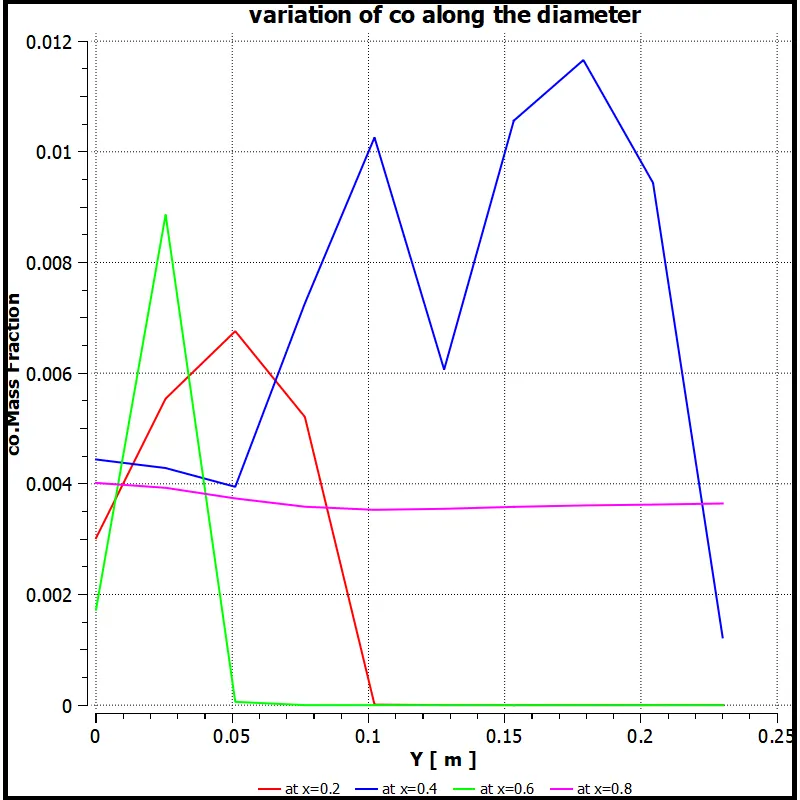
Mass fraction of co and its variation along the diameter at different sections
|
CH4=1 H2O=0 |
 |
 |
|
CH4=0.95 H2O=0.05 |
 |
 |
|
CH4=0.90 H2O=0.10 |
 |
 |
|
CH4=0.85 H2O=0.15 |
 |
 |
|
CH4=0.8 H2O=0.2 |
 |
 |
|
CH4=0.7 H2O=0.3 |
 |
 |
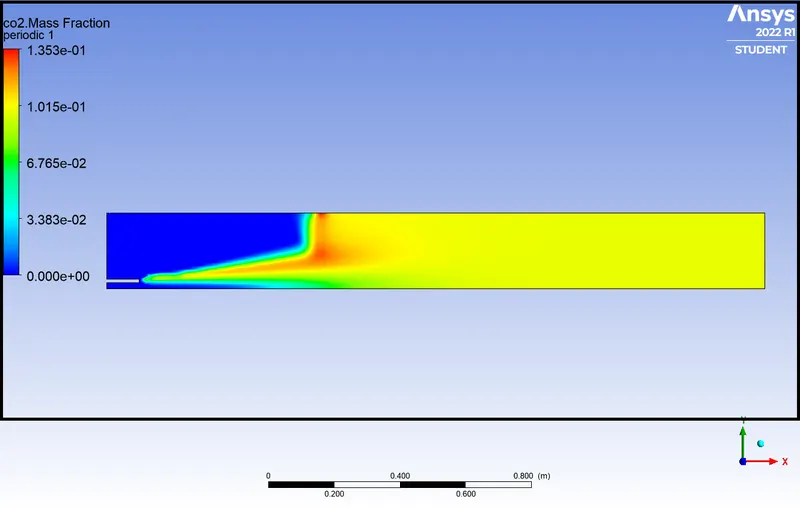
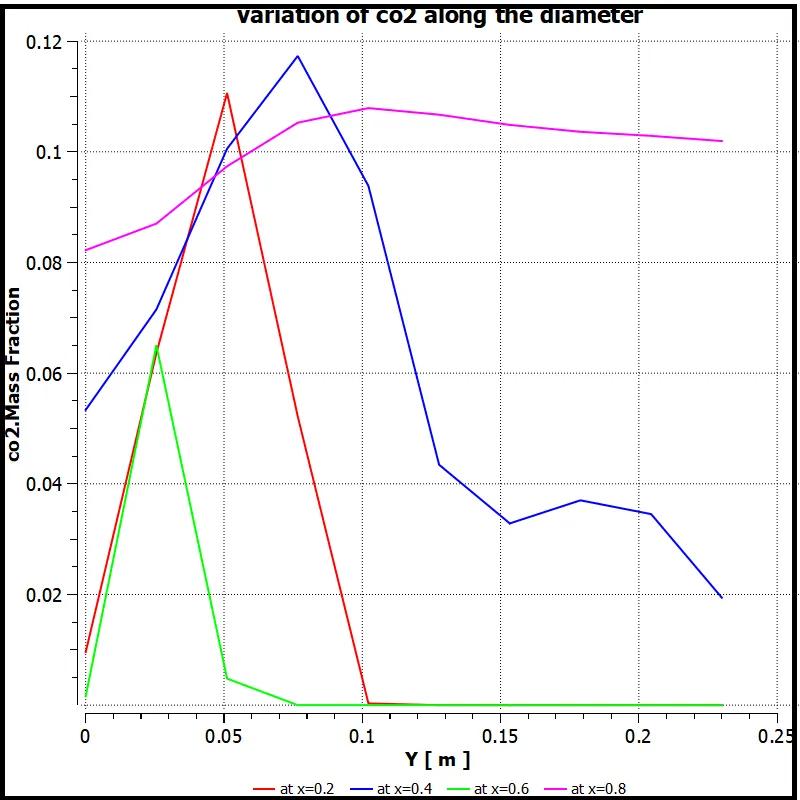
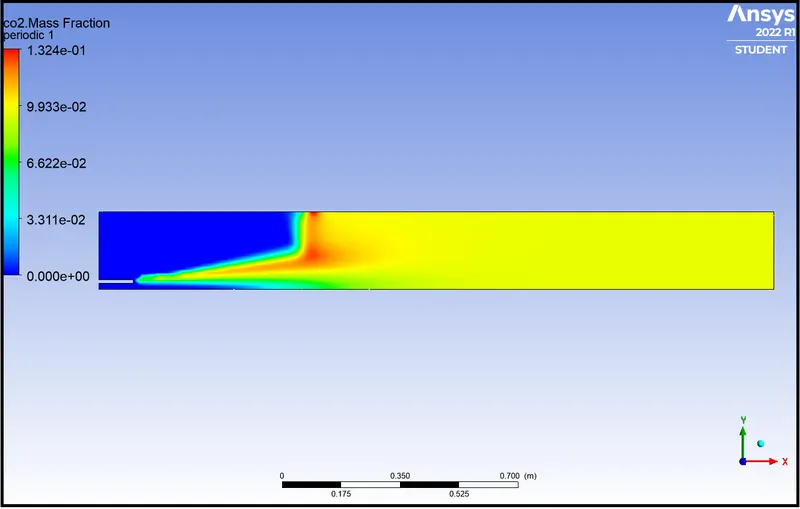
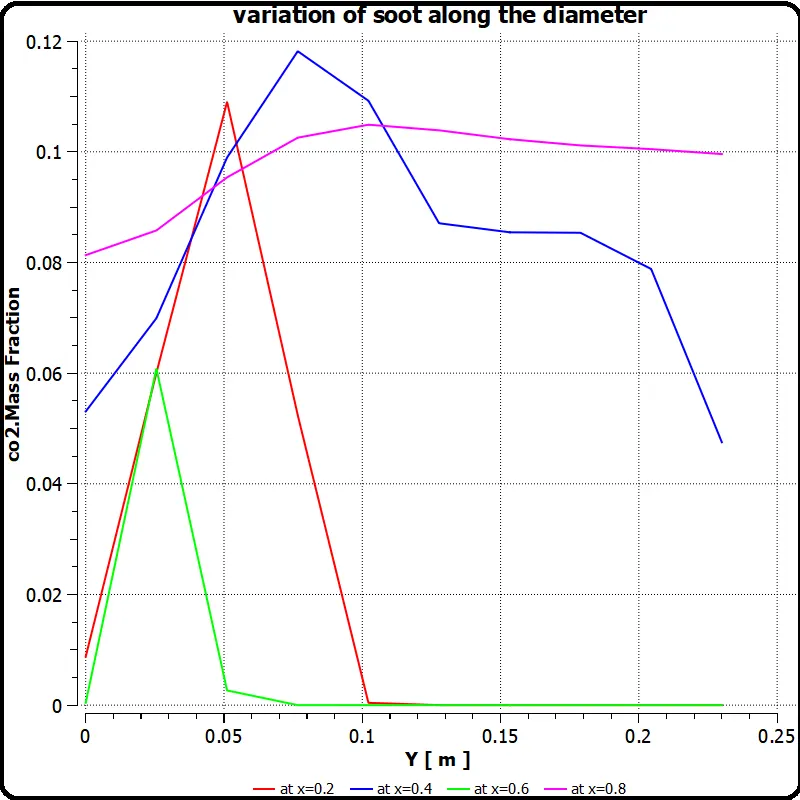
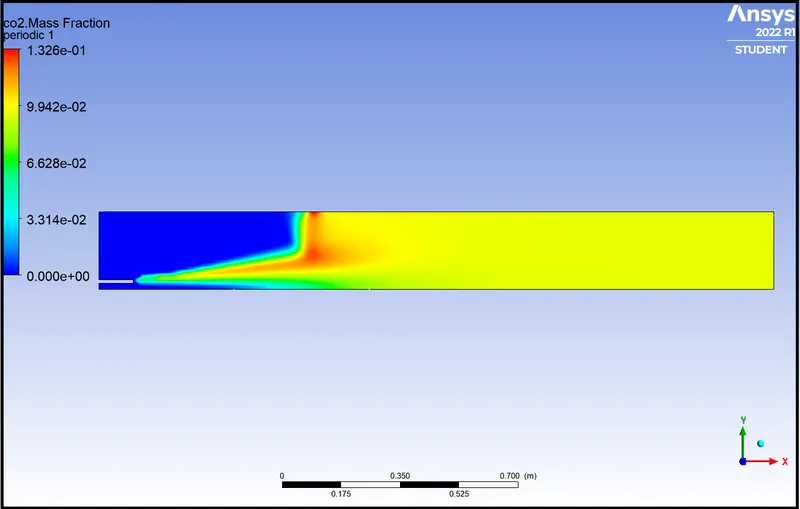
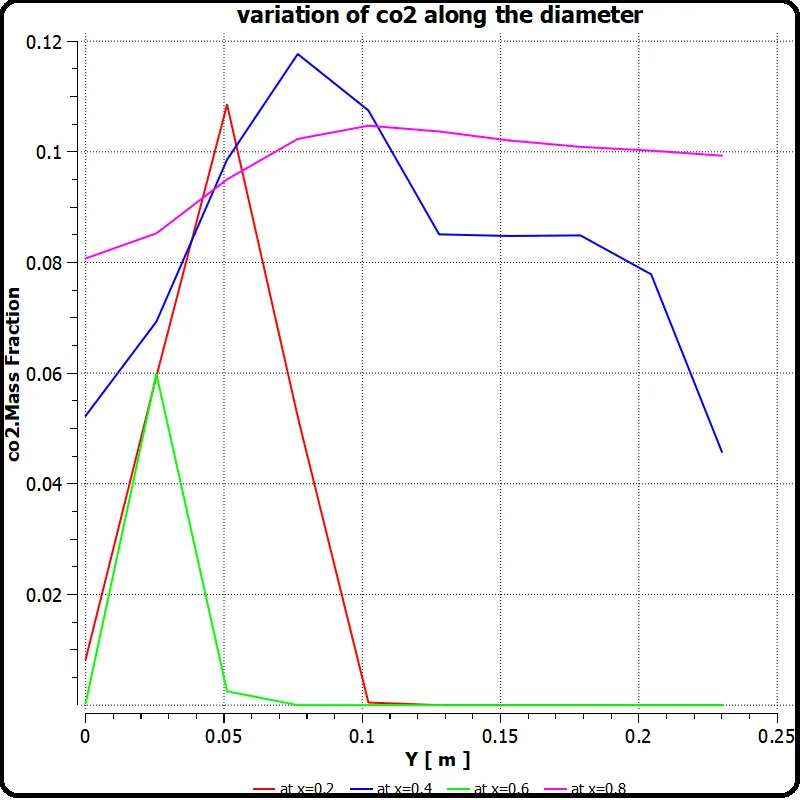
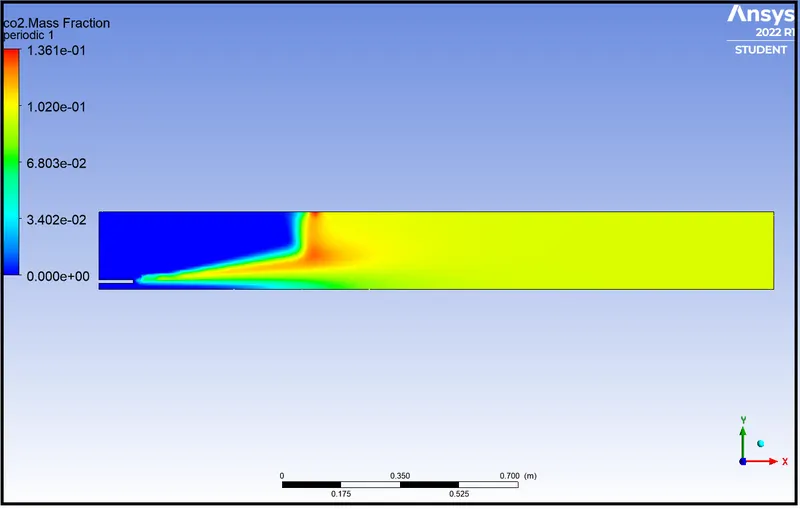
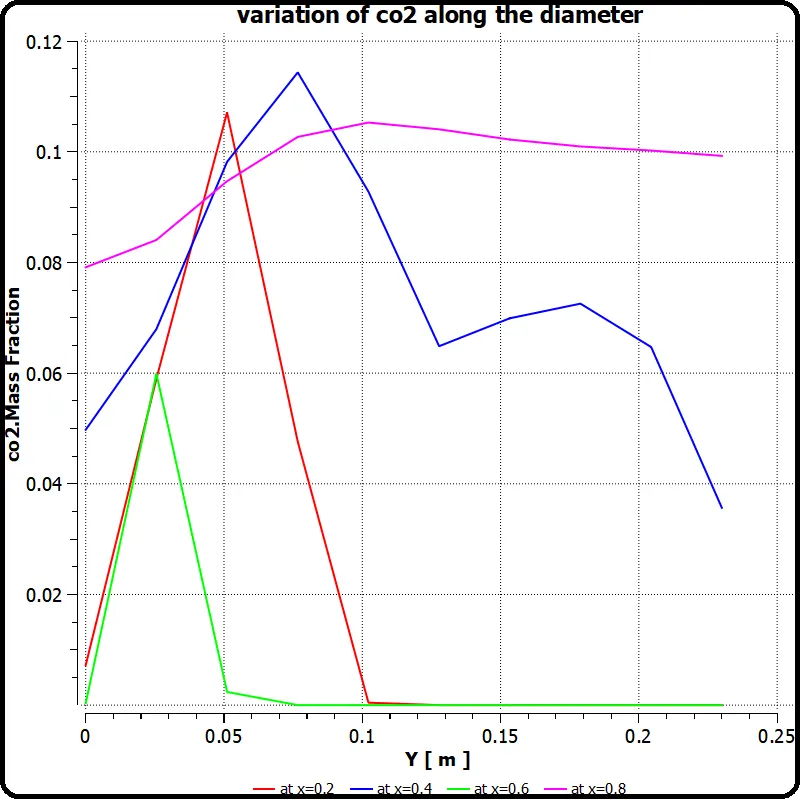
Mass fraction of CO2 plots showing variation of CO2
|
CH4=1 H2O=0 |
 |
 |
|
CH4=0.95 H2O=0.05 |
 |
 |
|
CH4=0.9 H2O=0.1 |
 |
 |
|
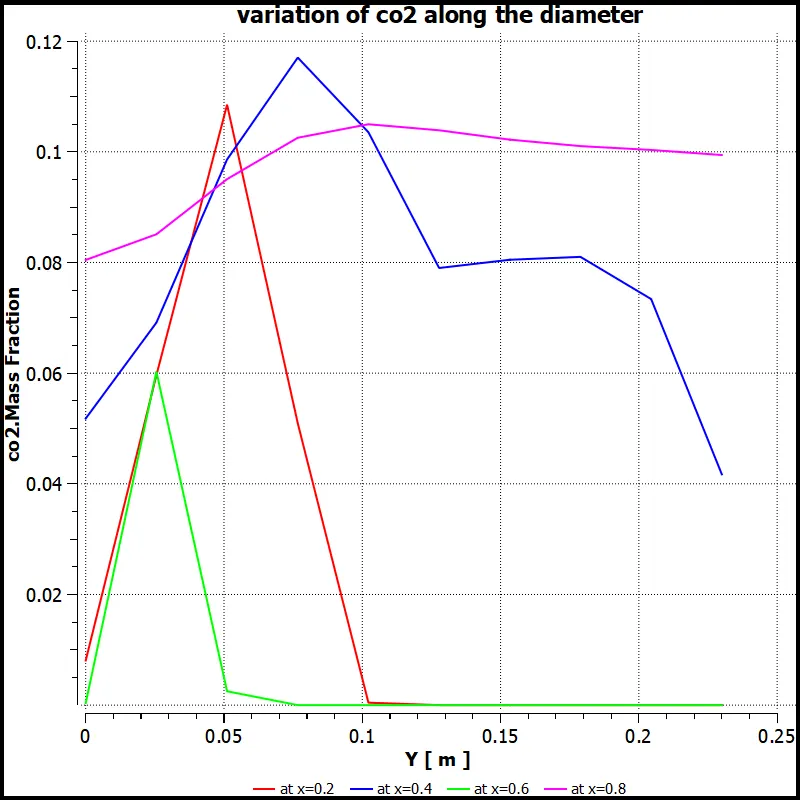
CH4=0.85 H2O=0.15 |
 |
 |
|
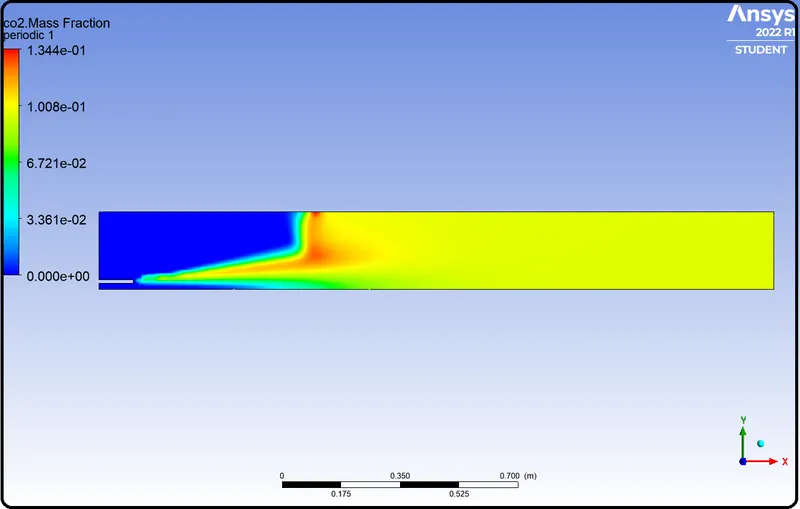
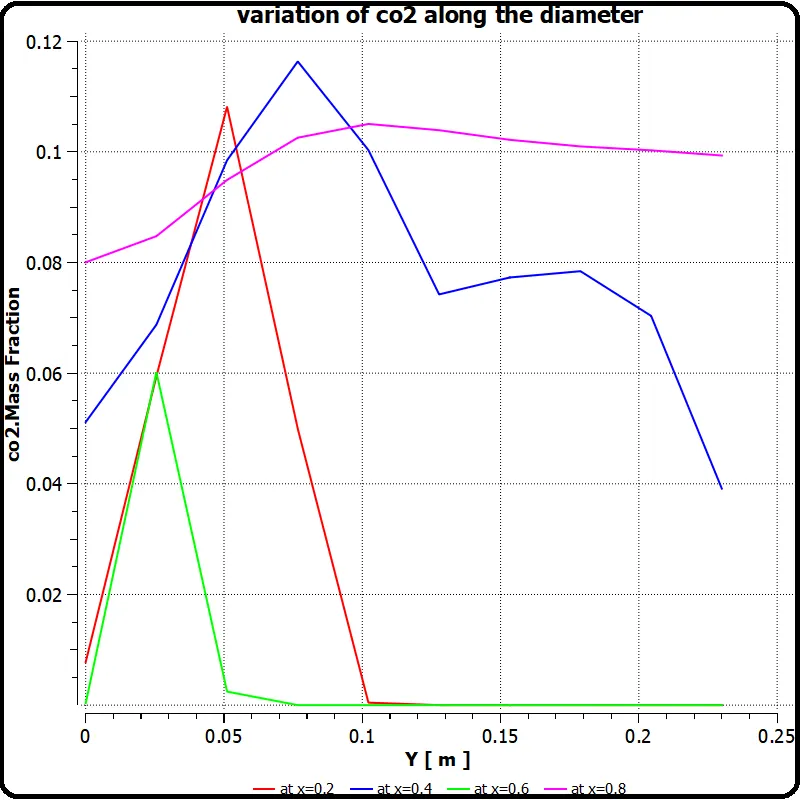
CH4=0.8 H2O=0.2 |
 |
 |
|
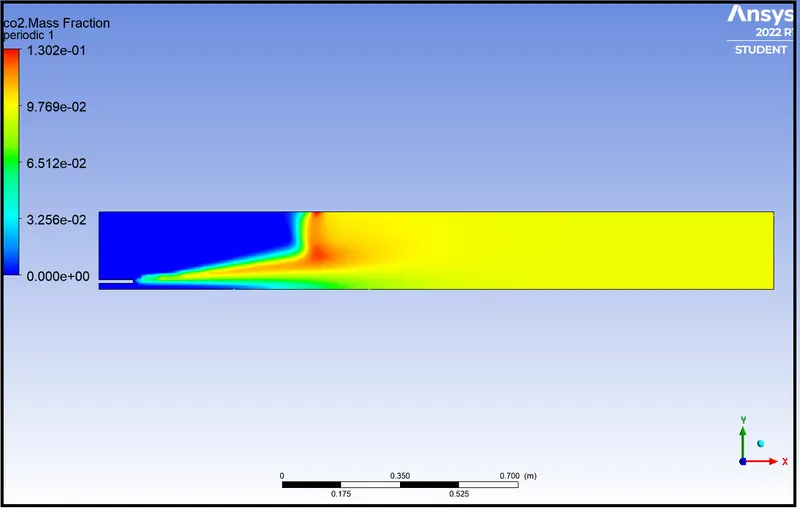
CH4=0.7 H2O=0.3 |
 |
 |
Comparison of the data obtained in all cases of mole fractions
| Mole fraction of species | Outlet temperature(in K) | Composition of Nox | Composition of soot |
|
CH4=1 H2O=0 |
1212.2 |
1.122e-05 |
0.00828 |
|
CH4=.95 H2O=0.05 |
1218.937 | 1.118e-05 |
0.00420 |
|
CH4=0.90 H2O=0.10 |
1227.7 | 9.678e-06 | 0.004703 |
|
CH4=0.85 H2O=0.15 |
1237.115 | 8.312e-06 | 0.00309 |
|
CH4=0.80 H2O=0.20 |
1246.632 | 7.814e-06 | 0.004649 |
|
CH4=0.70 H2O=0.30 |
1266.6539 | 6.715e-06 | 0.00417 |
- Thus the simulation studies are carried out for different mole fractions of methane and water respectively.
- From the following contours and plots, we can infer that the addition of water results in decreased production of NOx as a by product of combustion.
- We can also infer that the outlet combustion temperature increases with the addition of water, which will help in increased production of power.
- The production of soot remains unaffected with the addition of water.
- The concentration of CO2 at the outlet almost remains unaltered with the addition of water.
- At x=0.4m, we observe max. mass fractions of soot. This is because of incomplete combustion(Flame needs some length to combust the fuel and air properly)
- The boundary of the contours indicate the flame zone within which combustion happens.
- In gas turbine engines, water is injected in compressor, which increases the outlet temperature thereby resulting in less addition of fuel.
- Thus addition of water reduces production of harmful gases like NOx and soot repectively.