Structural analysis of a buidling using Robot Structural Analysis
1) What are HVAC systems? Why are they essential in the modeling of buildings
HVAC :
- Defined: HVAC stands for Heating, Ventilation, and Air Conditioning.
- HVAC refers to the different systems used for moving air between indoor and outdoor areas, along with heating and cooling both residential and commercial buildings.
- They are the systems that keep you warm and cozy in the winter and feeling cool and fresh in the summer.
- They also are the systems that filter and clean indoor air to keep you healthy and maintain humidity levels at optimal comfort levels.
IMPORTANT OF HVAC :
- Each component in your home may be separate, such as a radiant system combined with window air conditioning units. However, it is more common for combined systems such as central heating and AC systems that use a single blower to circulate air via internal ducts in a home, or with a ductless system for different rooms or zones in the house.
- The purpose of an HVAC system is more than just warming or cooling a space. Instead, it serves to improve indoor air quality and provide comfort for everyone inside a building. While there are several different types of HVAC systems, they all begin with the same essentials.
- First, there is a source of fresh air intake from the outside or from within the home. This process is called ventilation, and it happens in two different ways. Natural ventilation is present in most homes and refers to the way air typically moves in and out through windows, doors, vents, and other openings. This exchange of air is necessary to replenish oxygen, and to remove odors, carbon dioxide, and excessive moisture.
- Mechanical ventilation uses a mechanical system ‐ the V in HVAC ‐ to move air in and out. In the past, there was plenty of natural ventilation in most homes from gaps and cracks in the construction along with opening and closing of doors. However, modern construction is creating homes that are far more tightly sealed so ventilation is becoming an increasingly important component in home HVAC systems. Once the air is brought in, it is drawn into an air handling unit where the work begins. Here, air is drawn through filters to remove dirt, dust, allergens, and other particles.
- Next up, is comfort. Air is either sent to be heated or sent to be cooled and have excess humidity removed. Once the air is clean, fresh, and at a comfortable temperature, it is directed into the home. For central systems, this means moving through a network of ducts and registers to different rooms. For other systems, this usually means being directed right into the space.
2) From week 7 assignment, based on the building designed use the same Revit file to design a HVAC system for each floor to cover the topics included in the class.
a. Typical HVAC unit includes Distribution center
b. Collector
c. Ducts
d. Blower
Based on the layout choose appropriate ducts and elevation using property browser and assign the components to appropriate groups to complete modeling of the HVAC unit
AIM :
To based on the building designed use the same Revit file to design a HVAC system for each floor to cover the topics included in the class.
INTRODUCTION :
HVAC stands for Heating, Ventilation and Air Conditioning. It is a process of treating the air to control its temperature, humidity, filtering and distributing it to meet the comfort requirements of the occupant or people in the conditioned space (room).
Heating, ventilation, and air conditioning (HVAC) system is designed to achieve the environmental requirements of the comfort of occupants and a process. HVAC systems are more used in different types of buildings such as industrial, commercial, residential and institutional buildings.
PROCEDURE :
STEP : 1
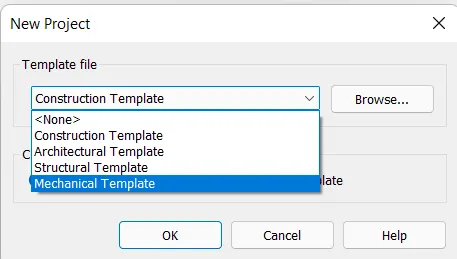
- Open the revit software
- taken a new project by using the template mechanical
STEP : 2
- After opening the new machanical template we want link the architectural plan insert in the template
- Use the revit link option to link this process
STEP : 3
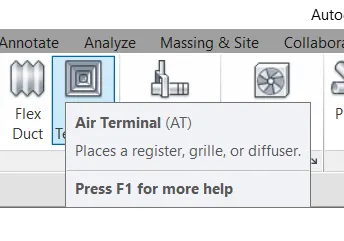
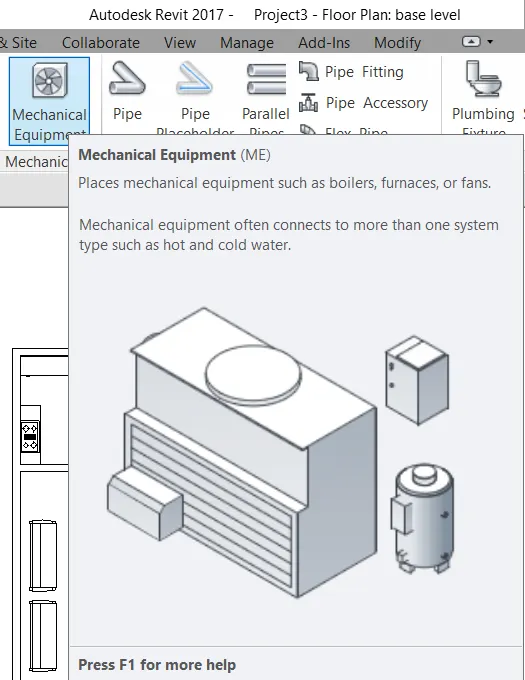
- Next we can place the mechanical equipment and air terminal on the building
- After placing the equipments like supply diffuser and return diffuser and air handling unit
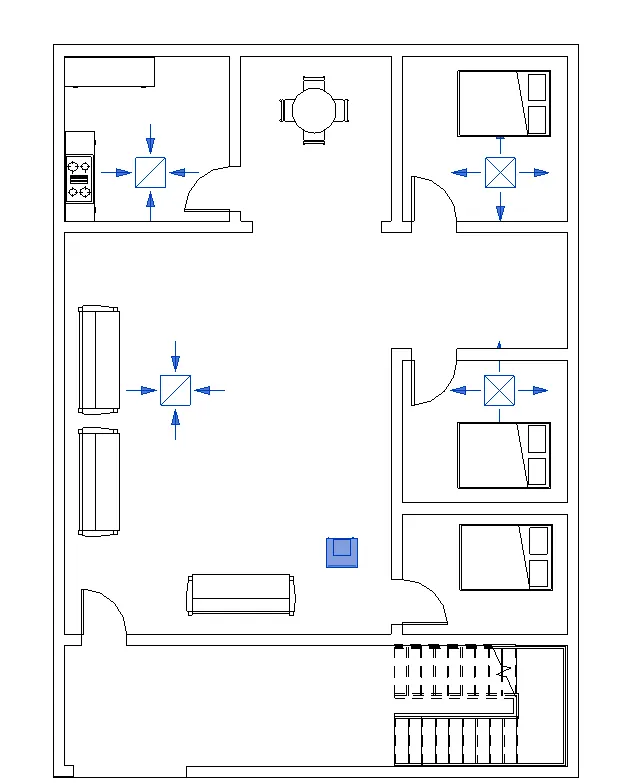
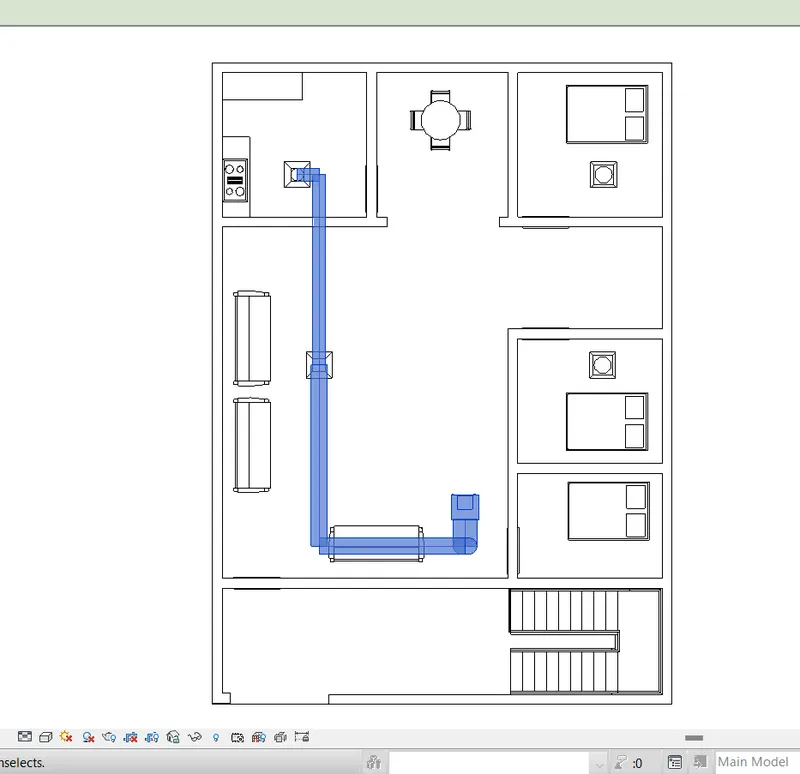
- select only the supply diffuder and air handling unit, then go to duct and save the rename
- Go to the generate layout and make them a connect with lines
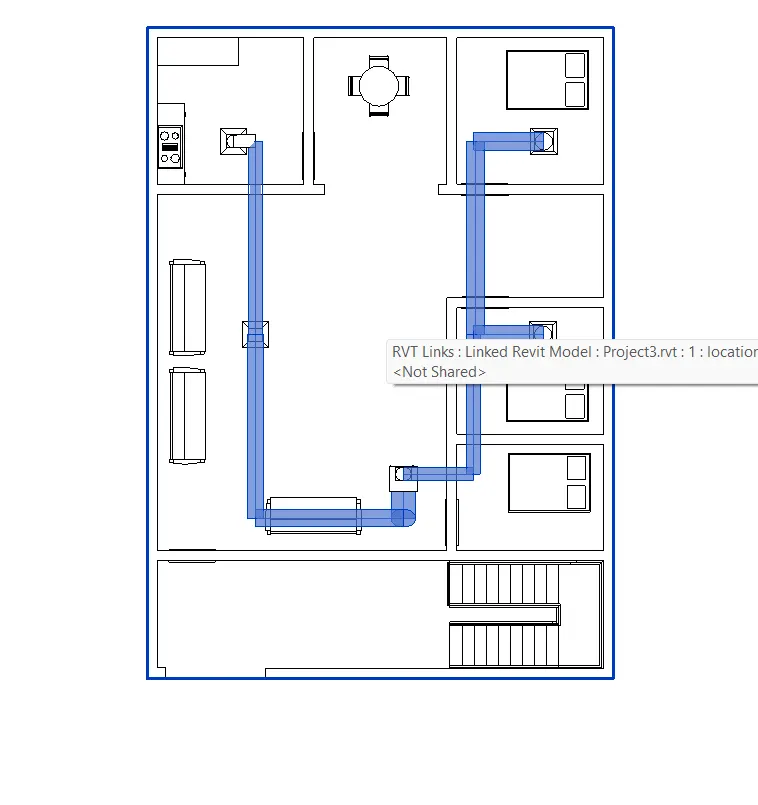
- After they connected make solution types to differnt connection making
- And use setting option for adjust to offset the height
- And click finish to done the model
RESULT :
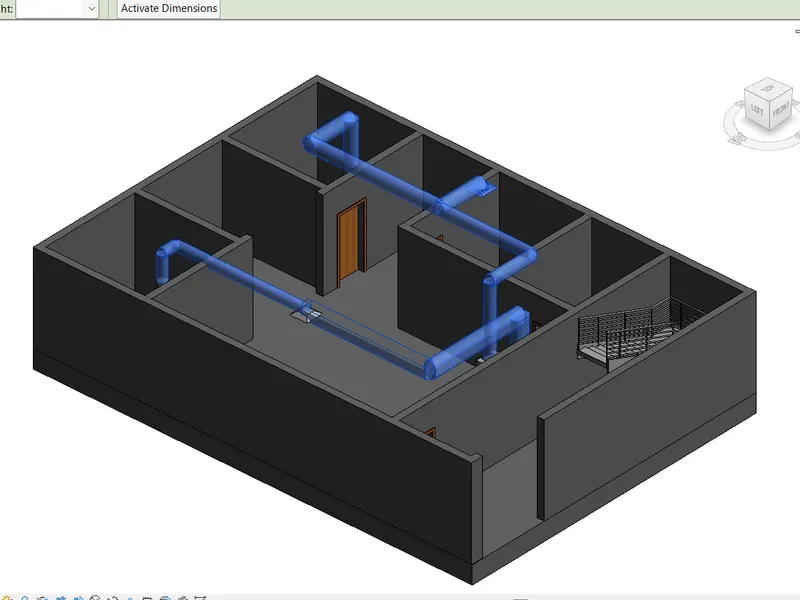
HVAC design as sucessfully created for the plan . The doned result as shown below.
3) Use the add-ins tab to load plug-ins for robot structural analysis to your Revit software
AIM :
To Use the add-ins tab to load plug-ins for robot structural analysis to your Revit software
INTRODUCTION :
Robot Structural Analysis Professional is structural load analysis software that verifies code compliance and uses BIM-integrated workflows to exchange data with Revit. It can help you to create more resilient, constructible designs that are accurate, co-ordinated and connected to BIM.
ROBOT structural analysis ( ARSA) is pretty good structural analysis software. Not as user friendly when compared with ETABS or STAAD pro. You can release slab edges or wall edges so to get a precast structural effect. Have an idea about the meshing options and different shell options in ARSA.
PROCEDURE :
- Open the revit software
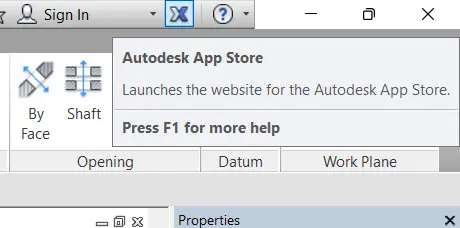
- Go right side of the top screen for autodesk app store
- Click the store and the website will be open.
- Search the structural analysis tollkit 2020.
- And make them download and install
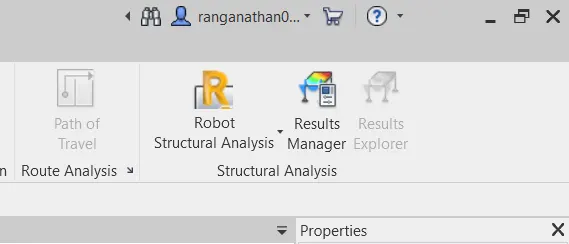
- after complete the installation open the revit software see on the analysis tab at top right screen
- There appear a new robot structural analysis tab
RESULT :
The installation of robot structural analysis from thr autodesk software is finally doned.
4) Why do we need to assess buildings/analyze while modeling elements? Does design affect modeling in anyways?
- we need to assess buildings and analyse while modeling elements. ... design affects modeling in many ways as the structure can be balanced or not and it may also result changes in the model.it may also result in collapse of the building if the analysation of model is not done properly.
-
perform an accurate analysis a structural engineer must determine information such as structural loads, geometry, support conditions, and material properties. The results of such an analysis typically include support reactions, stresses and displacements. This information is then compared to criteria that indicate the conditions of failure. Advanced structural analysis may examine dynamic response, stability and non- linear behavior. There are three approaches to the analysis: the mechanics of materials approach (als0 known as strength of materials), the elasticity theory approach (which is actually a special case of the more general field of continuum mechanism), and the finite elements approach. The first two make use of analytical formulations which apply mostly simple
linear elastic models, leading to closed-form solutions, and can often be solved by hand. The finite element approach is actually a numerical method for solving differential equations generated by theories of mechanics such as elasticity theory and strength of materials. However, the finite-element method depends heavily on the processing power of computers and is more applicable to structures of arbitrary size and complexity.
5) From the structural model developed in week 6 and 7, export the complete analytical model to robot structural analysis.
a. List your assumptions on what boundary conditions will be realistic for the analysis approach
b. Use the design standards to decide what loads must be applied to floorings based on the type of structure decided
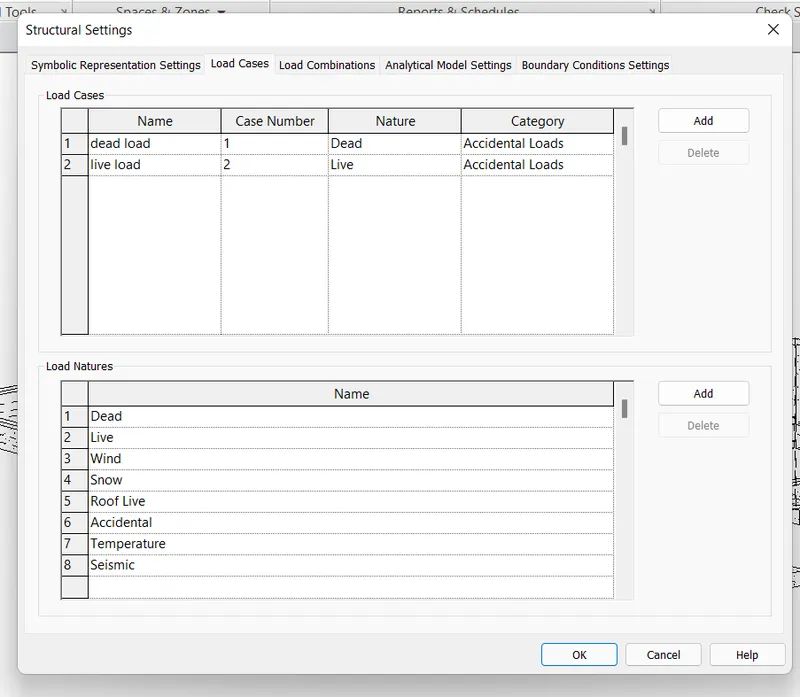
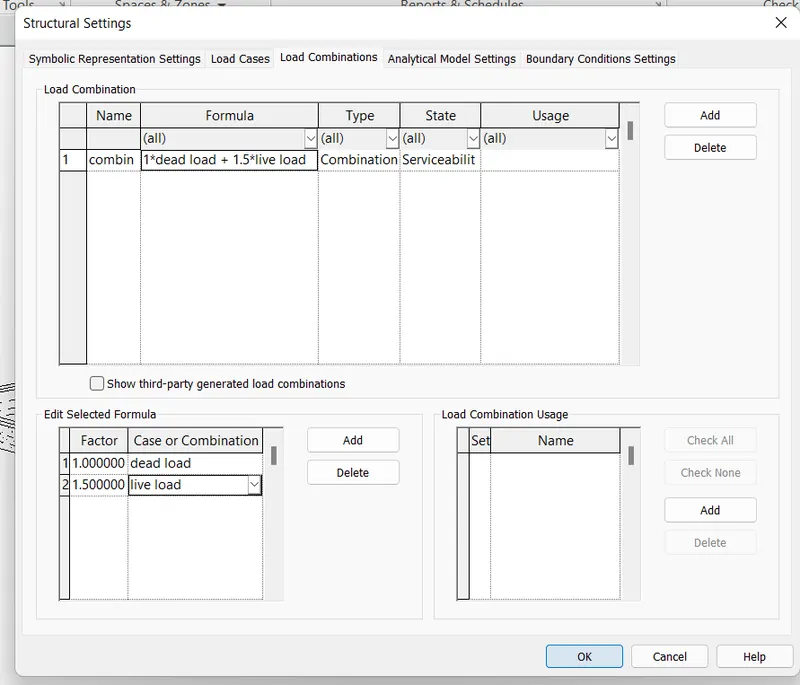
c. List the load combinations and include them in the analysis model
d. Analyze the building and report the following results
i. Maximum Moment in each floor for all Load Combinations
ii. Maximum Displacement in each floor for all Load combinations
iii. Lateral Displacement in building for all Lateral Load combinations
e. After analysis, do you think you have a better approach or idea in modeling structural members?
AIM :
To structural model developed in week 6 and 7, export the complete analytical model to robot structural analysis.
INTRODUCTION :
Upon first use of Autodesk Robot Structural Analysis 2012, an Activation dialog box will be displayed, click Activate. The wizard guides you through the brief registration and activation process. You can manually access the Activation dialog box by clicking the Application menu button.
Autodesk's structural design software, Robot Structural Analysis Professional is a finite element analysis software suited for engineers who require a structural analysis solution that allows them to model, analyse and design a range of materials such as steel structures and concrete structures to Eurocodes, American
PROCEDURE :
STEP: 1
- Open the revit software
- Open the file as an structural template alredy as created
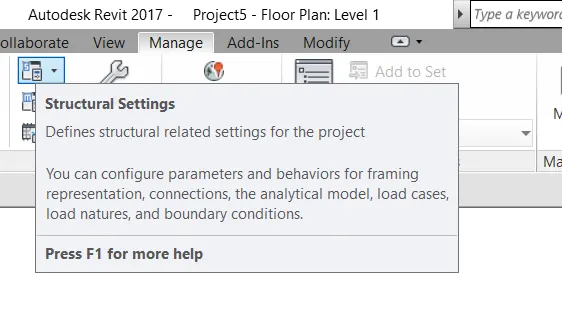
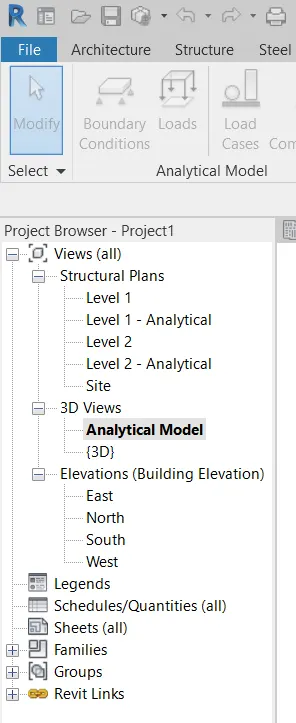
- Next we can open the structural setting tab in manage tool bar as given below
STEP : 2
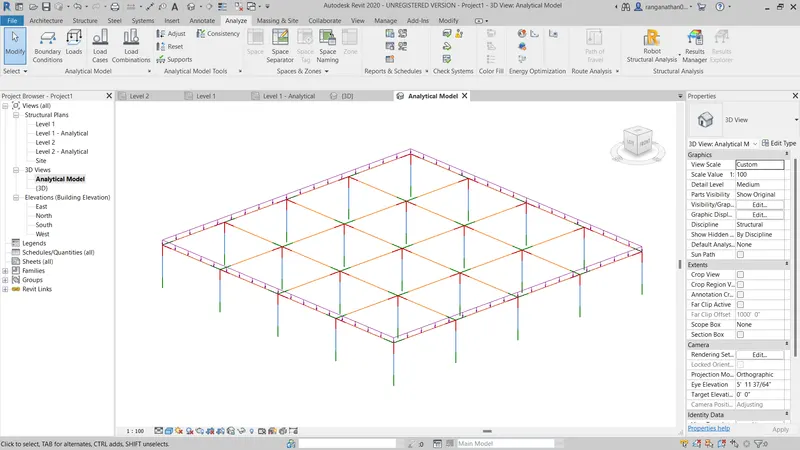
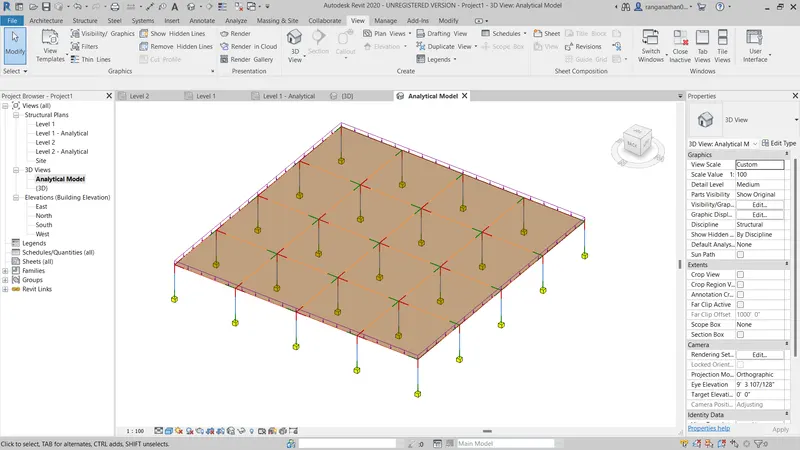
- Next we can make the boundary condition to the analytical model
- Next we can apply the load by using the load tab
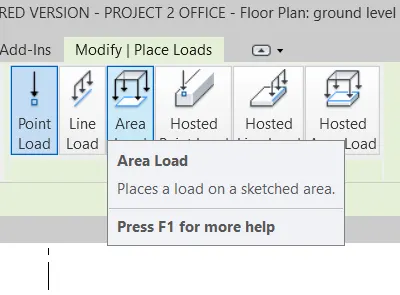
- select the load option in file tab and taken the point load and area load
- And assign the load in the slab using rectangle option.
STEP : 3
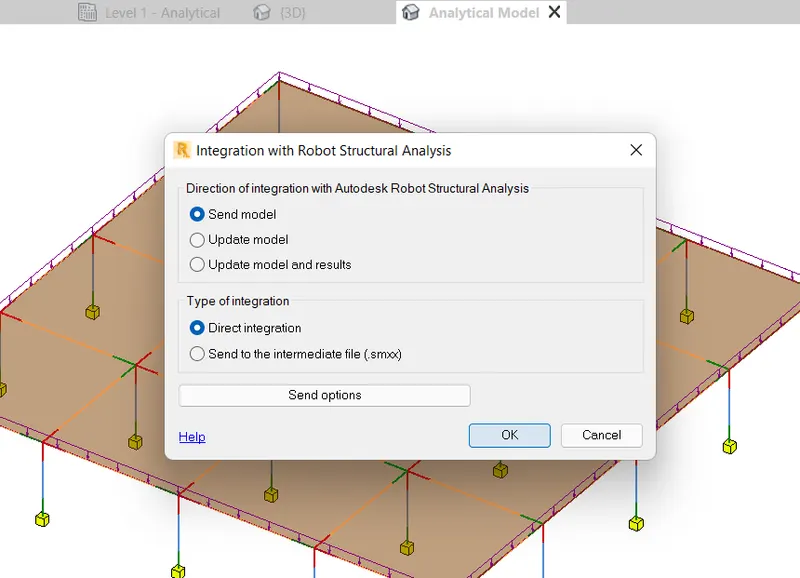
- Next we can export the analytical model to the robot structural analysis, using the robot structural analysis option in the analysis tool bar.
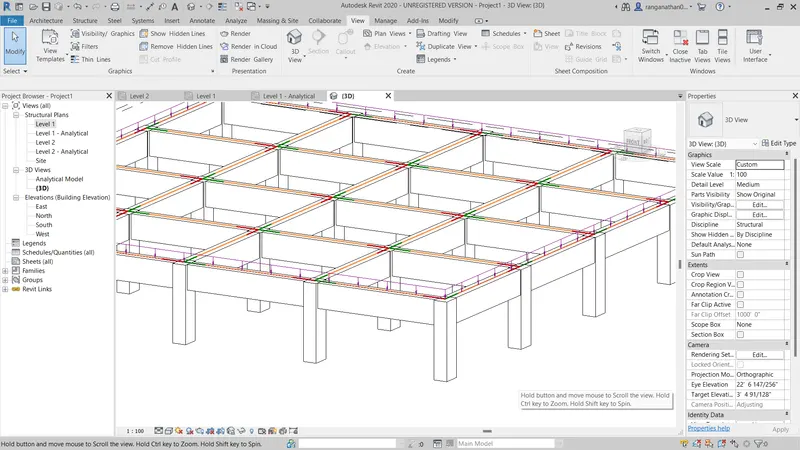
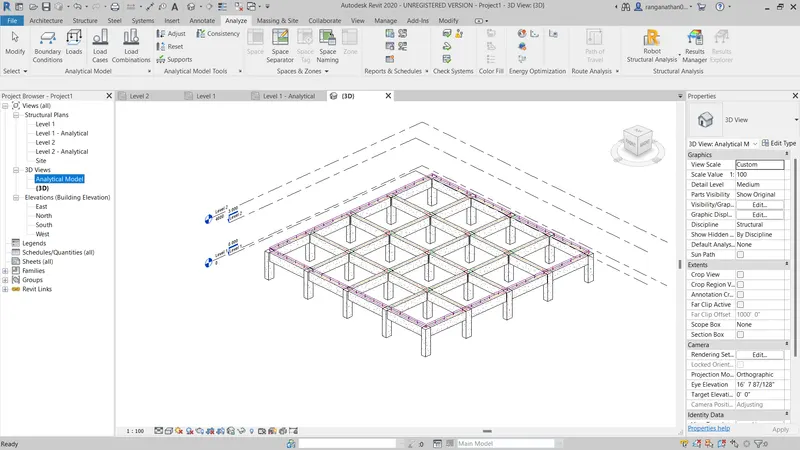
STEP : 4
- After selecting the robot structural analysis option the new tab will be visible and click on them ok,
- finally check the reaction of the forces
RESULT :
6) What is energy analysis and why do we need to consider it while modeling in Revit?
How does the factor of sustainability improve the quality of your design?
What is energy analysis :
- With the increasing demand for more energy-efficient buildings, the construction
industry is faced with the challenge to ensure that the energy performance predicted during the
design is achieved once a building is in use. - Energy simulation tools are increasingly used for
analysis of energy performance of buildings (Augenbroe et al. 2004; Aksamija 2009; Aksamija
2010; Wetter 2011; Aksamija 2012). Today, there are many building performance simulation
programs with different user interfaces and different simulation engines that are capable of these
analyses. - The intent of this paper is to document the comparative analysis research conducted
towards conceptual Whole Building Energy Analysis (WBEA) through the software programs
such as Vasari/Green Building Studio (GBS) and Sefaira, which are applicable to early design
stages. - Next stage of the research is to also compare more robust simulation programs that are
applicable for later stages of the design process, such as eQuest and EnergyPlus, which was not
included in this paper. The intent is also to inform designers and engineers about the potential for
integrating simulation programs with the design, which would yield accurate predictions about
the building performance. - This is an essential aspect in design of high-performance buildings,
and improving the design decision-making process (Aksamija and Abdullah 2013). Given the
significant variety of such simulation tools, it is crucial to understand limitations of the tools and
the complexity of simulations. - Prior to conducting this research, our objective was to find an
efficient and beneficial method of seamlessly integrating WBEA into the design process.
The notion of calculating building’s energy usage as a “whole” is not a new concept—
there are existing simulation tools that have been around for the last two decades. However,
why do we need to consider it while modeling in Revit?
- Energy simulation can help you analyze the movement of energy in, out, and through the rooms and volumes in a building model. This information can help designers make better informed, cost-effective decisions that improve the performance and reduce the environmental impact of buildings
How does the factor of sustainability improve the quality of your design?
-
Energy Simulation can help in analyzing the movement of energy in, out, and through the rooms and volumes in building models. this information can help designers make better informed, cost-effective decisions that improve the performance and reduces the environmental impact of buildings.
-
A sustainable design is intended to completely eliminate negative environmental impacts through thoughtful designs. A sustainable design regardless of application will seek to incorporate environmentally preferable outcomes such as: Lower energy and water consumption through the entire life cycle.
1. Minimize impact on climate change by reducing greenhouse gas emissions or mitigation through carbon neutralizing activities.
2. Limit resource consumption through waste-freecmanufacturing.
3. Following 3R principle ( Reduce, reuse, recycle) Look for ways to incorporate biomimicry principles wherever possible.
4. Give preferences to non-toxic materials.
5. Emphasize quality and durability over price.