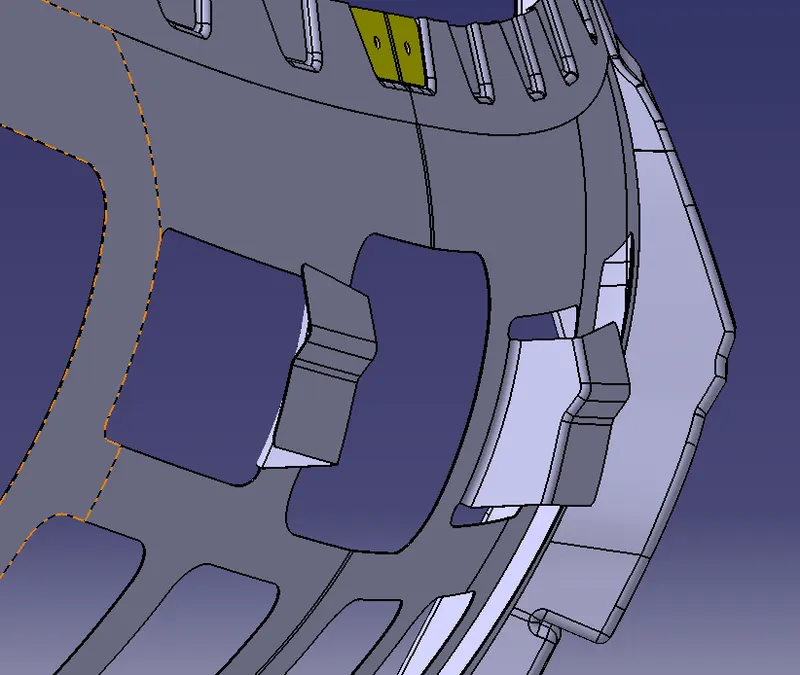
Design of backdoor
Introduction:
The Backdoor or Tailgate is the panel that covers the boot (or trunk) of an automobile. It enables access to the main luggage compartment. A hinge allows the boot lid to be raised, while devices such as springs or gas cylinders hold it up in the open position.
In principle, tailgates have to fulfill similar requirements and are subject to the same design guidelines as bonnets. However, aluminum sheets are used much less for Tailgate than for bonnets.
The Backdoor is hinged at the top and open upwards, tailgates are lateral opening doors that are hinged at the left or right side.
They greatly benefit from a reduced weight due to easier handling. In addition, a reduced weight can translate into significantly lower rear axle loads (as these panels overhang the rear axle) and hence additional seating capacity.
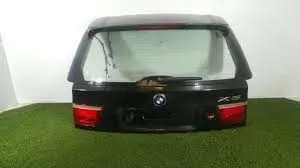
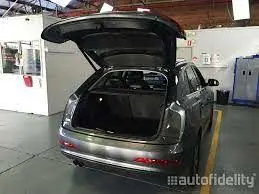
Types of the back door based on working positions.
The door or opening of a cargo area may be hinged at the top, side, & bottom. If the door hinged in the bottom it is called a tailgate.
Top-mounted:
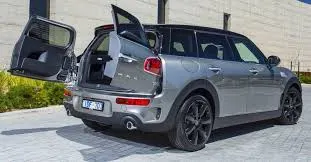
This type of back doors is used in a station wagon, pickup truck, and some sport utility vehicles
Today’s modern cars use top-mounted tailgating systems which are both powered and also gas stay supported. These top-mounted tailgates provide greater rear visibility compared to side-mounted or bar doors which have canter pillars in them.
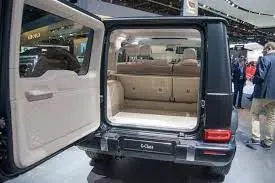
SIDE MOUNTED DOORS:
As the name signifies side-mounted doors are the one which is used in the van type MPVs, SUVs, pickup truck vehicles. These side-mounted doors or barn doors are a lot easier compared to top-mounted doors.
These doors are generally smaller in size and can be easily accessed. These doors are more convenient for the goods handlers for long pipes and lengthy components where one door is kept open. These doors also save accidental head impacts. It is a lot easier to load and unload items in the side-mounted doors.
Bottom / split type:
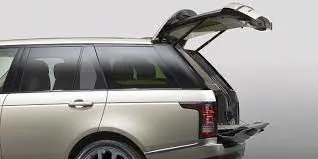
This bottom type or split type backdoor system is used in the car type such as estate type car, pickup trucks, and some luxury SUVs.
These are the most convenient type of back door in which the bottom split is used as a support or even as a table for the tour-going people.
Types based on working mechanism.
Gas stays type:
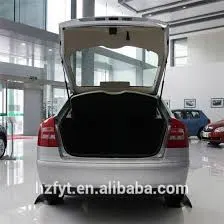
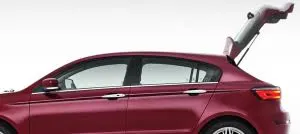
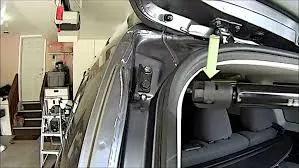
Gas stay types backdoor/liftgate/tailgate is an ideal and most commonly used tailgate mechanism from lower segment car to luxury car segment. The ideal components of the tailgate consist of a hinge, door, gas stay, and some rubber beadings for sealing of the door.
Powered lift system:
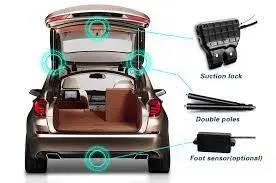
Power trunk lid system is another sophisticated way of trunk/liftgate opening mechanism which is to automatically open and close the trunk/liftgate and release the latch by the touch of a button. The following image shows the component used in the powered trunk/back door lift system.
The powered trunk lift system consists of a power latch, anti-pinch switch, PTG ass’y, PTG main switch. When the switch is pressed in the compartment or outside the power latch releases the latch and the entire backdoor is opened. The anti-pinch switch is located in order to avoid accidental hand insertion during the operation of the door.
Aim:
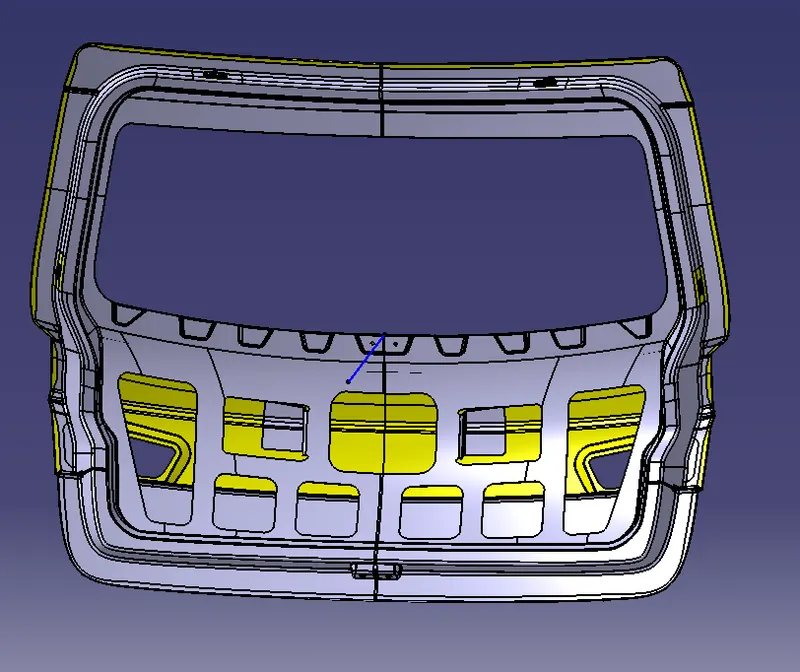
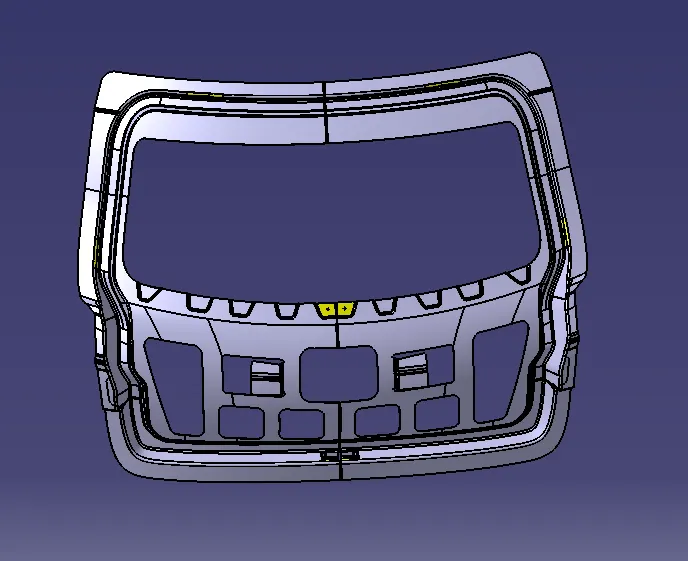
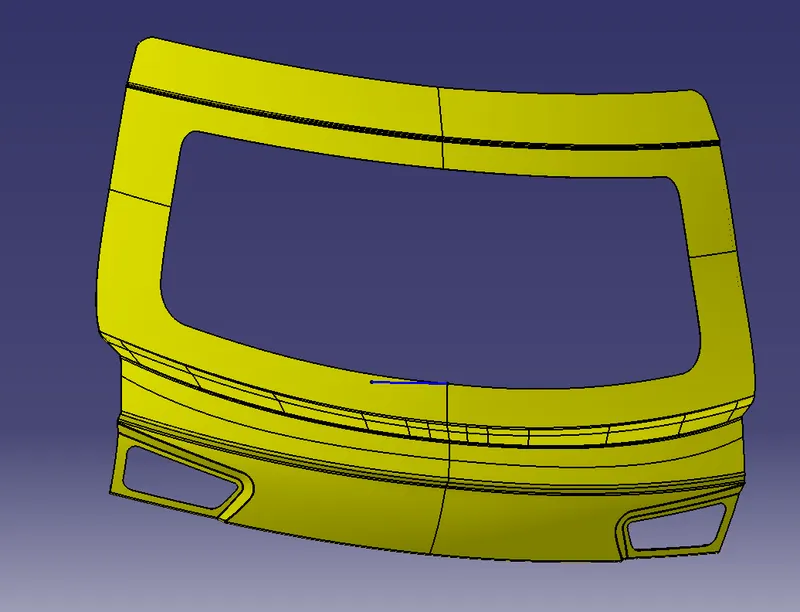
To create a backdoor Inner and outer panel with embossments and reinforcements.
Methodology:
Creating Inner panel.
Creating Embossments.
Creating Reinforcements.
Creating Hemming portion.
Procedure:
Firstly, open the model in CATIA.
Inner Panel:
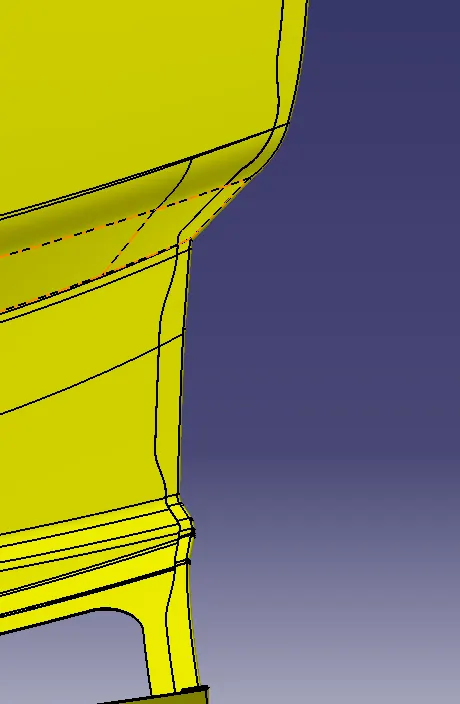
Offset the Outer parent skin to 0mm by creating a new geometrical set.
Then offset the skin to 25mm below from the windshield area.
Now, create a parallel curve with 60mm from the outer boundary.
Similarly, create another parallel curve of 30mm from the previously created parallel curve.
Create this for all the boundaries of the offset surfaces and split it.
Now, the sealant portion is created.
Sweep the outer edge of the sealant portion at 35deg with 100mm and trim it with the offset parent surface.
Similarly, sweep the inner edge of the sealant portion at 25deg with respect to the windshield offset surface.
Now create a connecting curve and give tension to it with respect to the lower shape of the upper panel.
Create a multi-section and extrapolate to the sweep end and trim it.
Now, cut out the excess portion and create embossments for the latch, wiper motor, hinge, and gas struts.
Sweep the cutout portion in the middle of the tail lamp area with respect to draft direction and trim it with the Outer panel offset at 5mm below.
Now, Mirror the panel with respect to the XY plane and join it.
Thicken the panel with 0.75mm thickness.
Outer Panel:
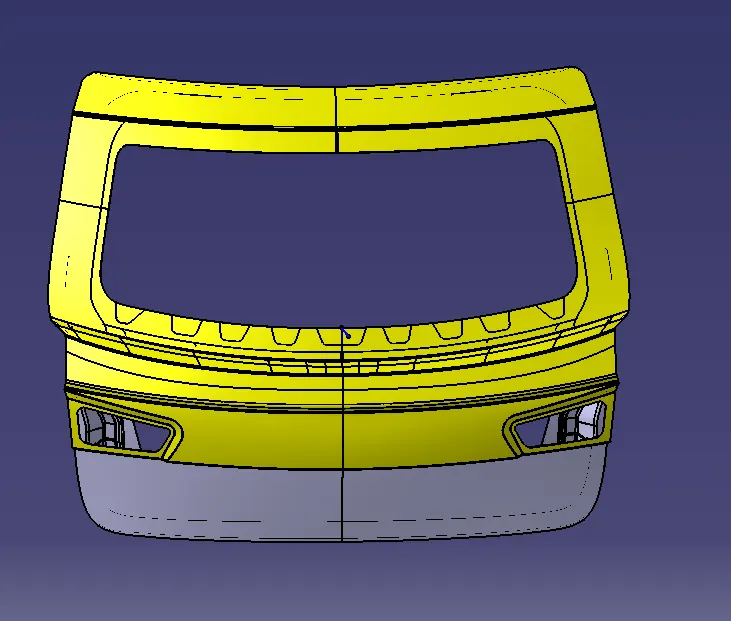
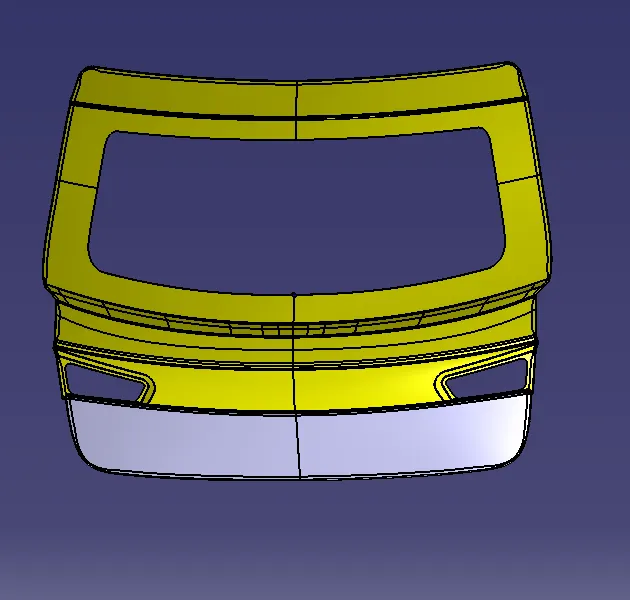
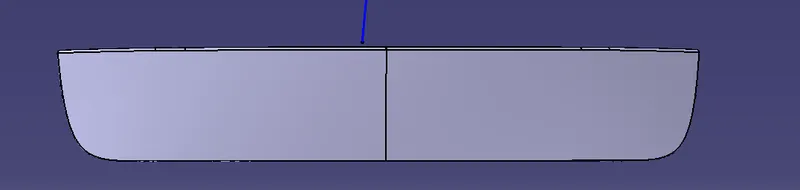
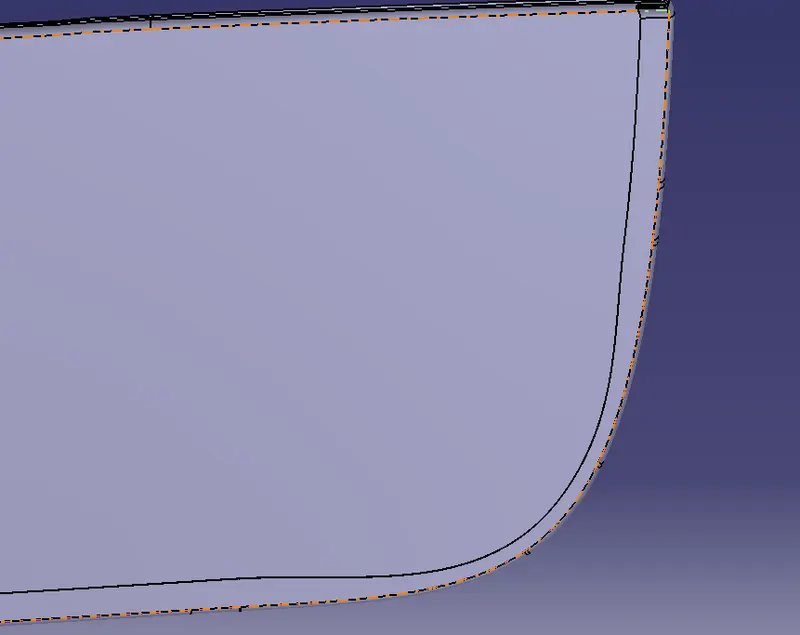
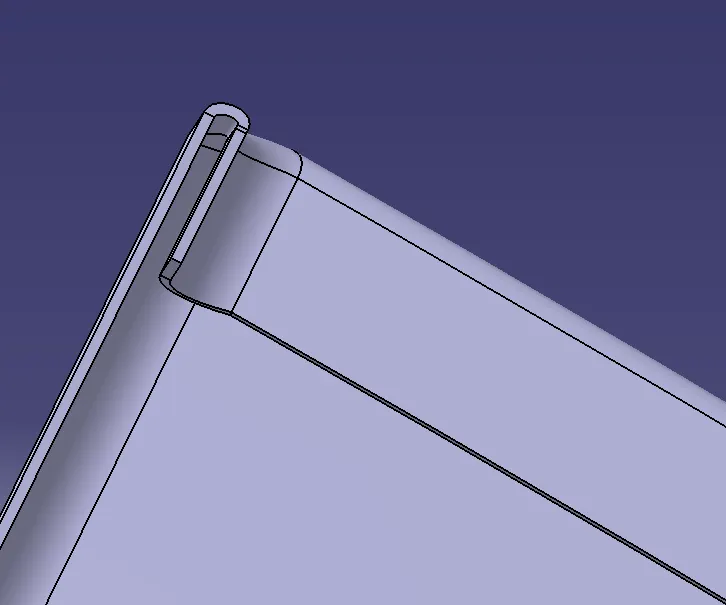
The Outer panel after simplification, the hemming portion is created and given a thickness of 0.75mm the model.
Reinforcements:
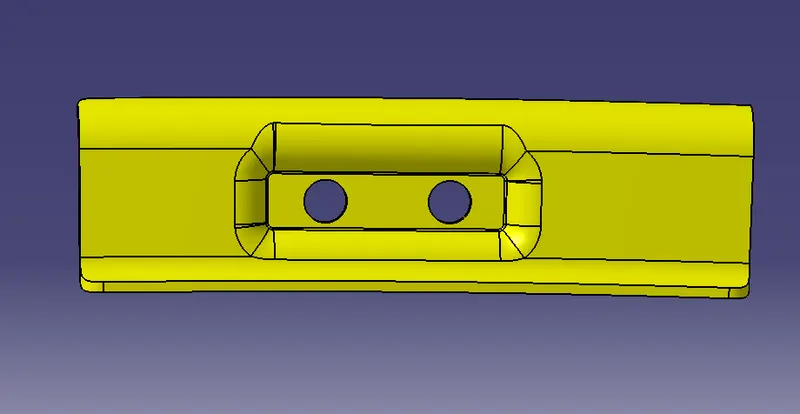
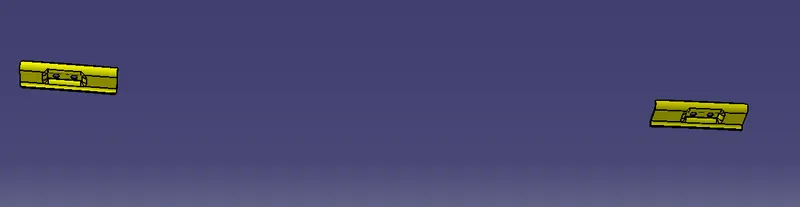
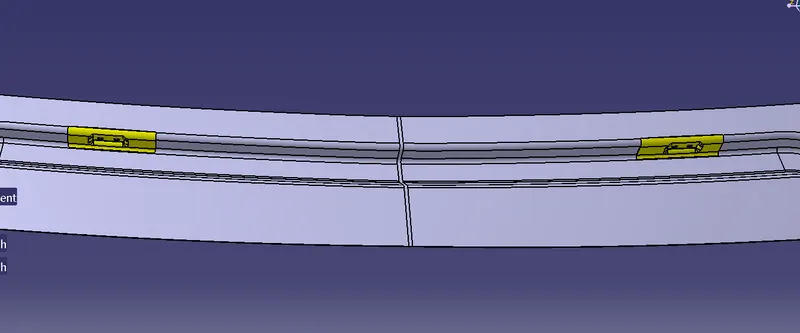
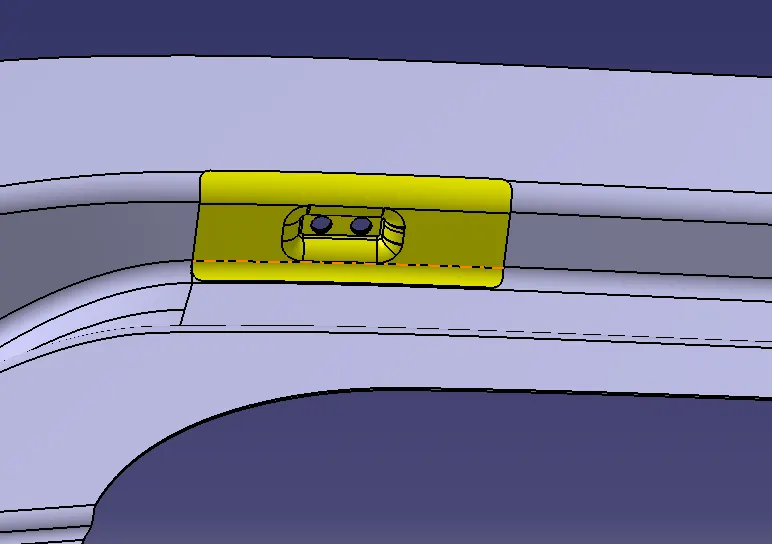
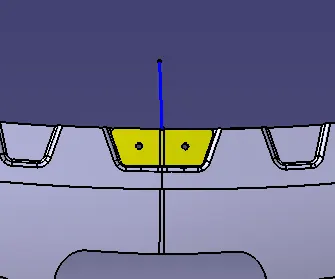
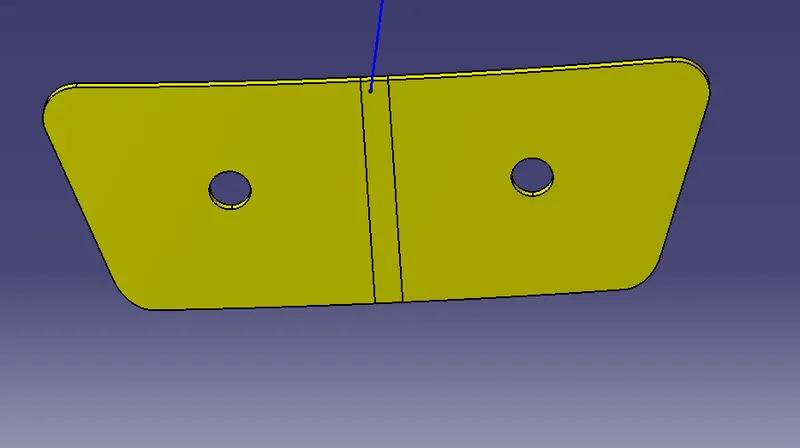
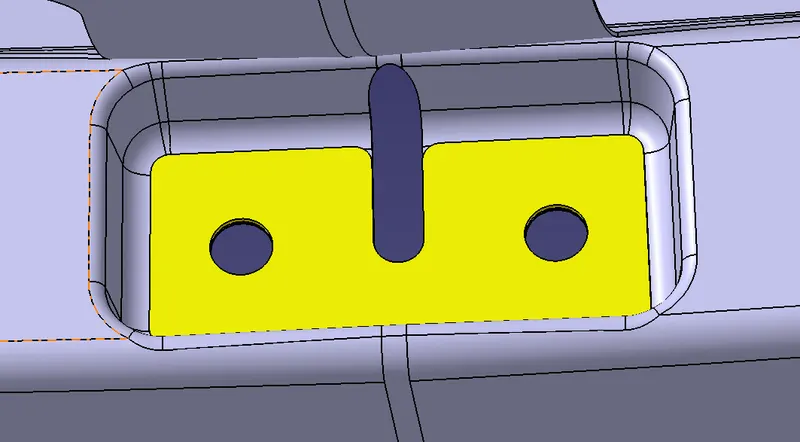
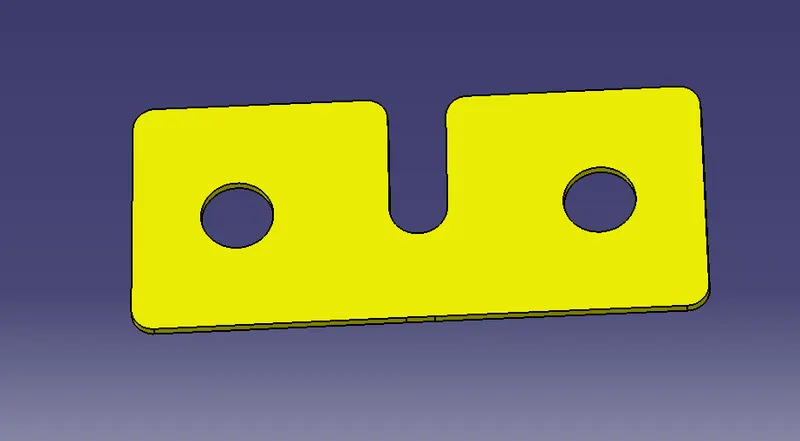
The Inner portions of the inner panel where the embossment is created need to be offset to 0.2mm.
Now, Cut the portion and thicken it with 1.5mm thickness.

Embossing:-
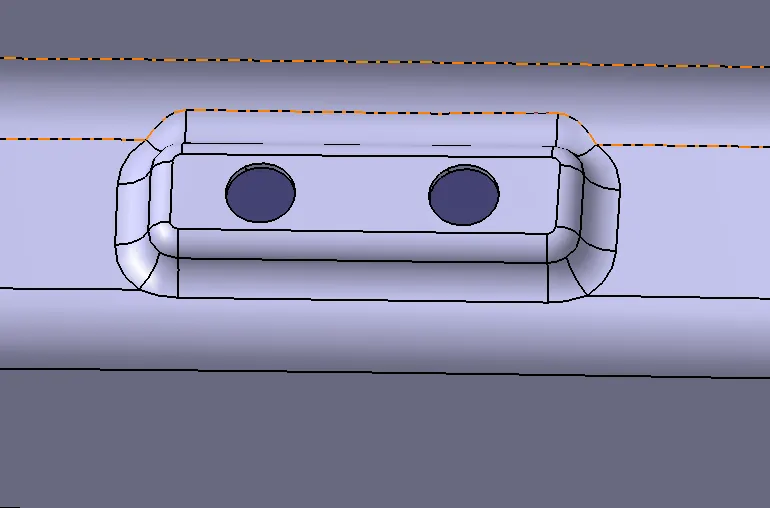
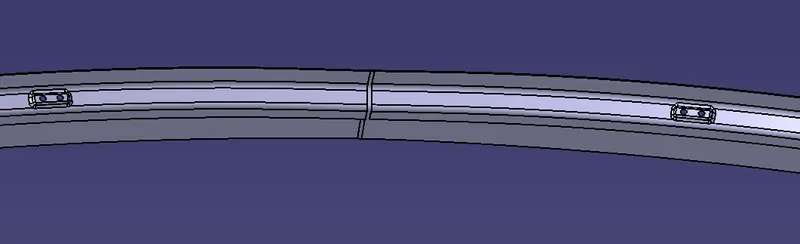
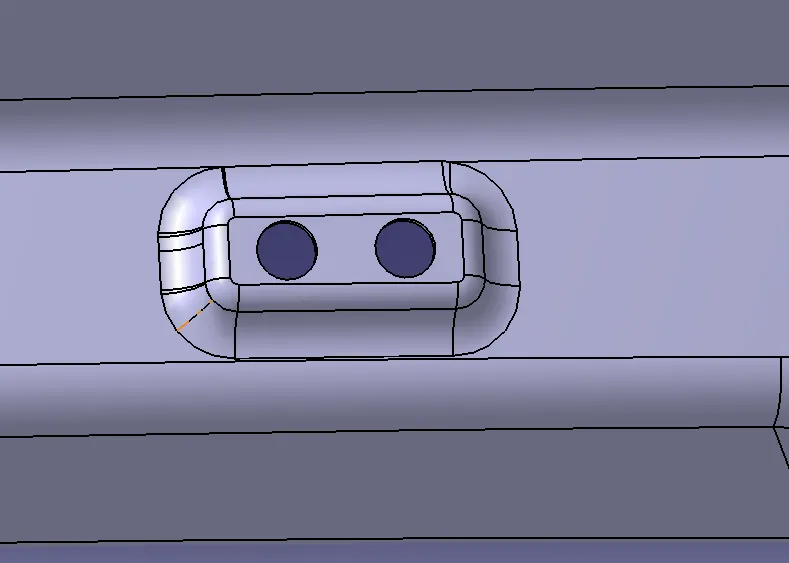
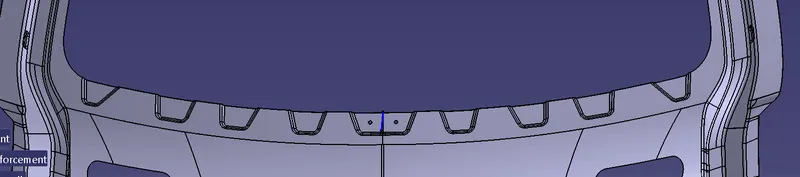
Embossing is a metal forming process for producing raised or sunken designs or relief in sheet material by means of matched male and female roller dies, theoretically with no change in metal thickness. Embosses are created to provide additional strength and to direct the forces towards the hinge and body of the car.
For the inner panel to act as a good reinforcement, it needs to disperse the stress outwards, hence the emboss was designed In such a way that the forces are directed outwards or away from the centre.

Reinforcement:-
Instead of making the whole inner panel a thicker sheet, a sheet with less thickness in addition to local reinforcement is provided to increase the strength of the component and reduce the weight.
Mastic Sealings:–
As we know that the main purpose of the outer panel is for aesthetic looks. Thus we cannot use bolts or welding. This has to be done with the help of hemming and mastic sealants. Mastic sealants are elastic compound that behaves like the rubber.
It is placed between the outer and inner panels. Initially is it in paste form, but after the hot furnace bath, it gets hardened thus joining the outer and inner panel. Mastic sealant has the tendency to increase the strength of the panel and has an influence of 80mm diameter.
Hemming:-
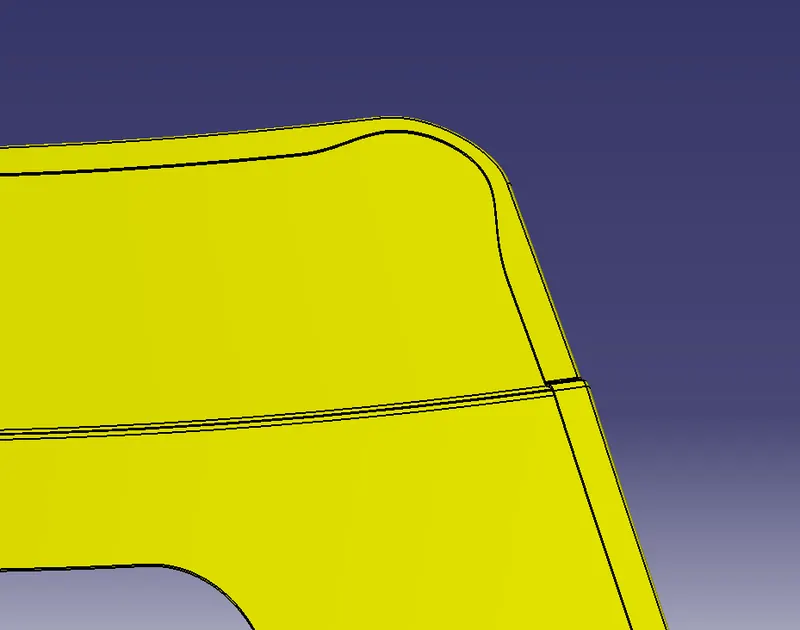
Hemming is the process in which the edge is rolled flush to itself, while a seam joins the edges of two materials. Normally hemming operations are used to connect parts together, to improve the appearance of a part, and to reinforce part edges.
Relief is provided onto the part or component in order to remove any stresses developed in a particular area i.e sharp corners that take place during the hemming process are carried out. Thus corners are rounded or chamfered
Conclusion:
The Tailgate has been created with the engineering standards and all the reinforcements.
FINAL OUTPUT:-