Making doorbell and thermistor form Simulink blocks.
AIM:
To make a Simulink model of Doorbell using solenoid block.
To make a thermistor to sense the temperature of a heater & turn on or turn off the fan.
OBJECTIVES:
- Make a Simulink model of Doorbell using solenoid block with the following details:
- In the above arrangement, when the switch is closed the electromagnet receives electrical power from the battery and pulls the metal arm to hit the bell producing sound.
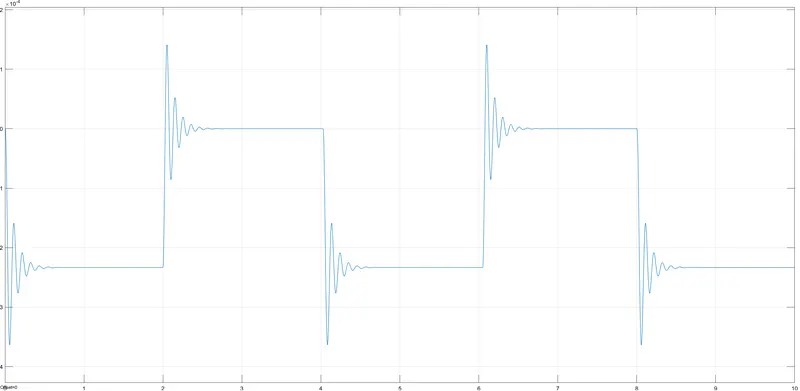
- Create a situation where the switch is closed for 2 seconds and then released.
- Observe the physical movement of the plunger.
- Assume remaining parameters.
- Use a thermistor to sense the temperature of a heater & turn on or turn off the fan as per below conditions:
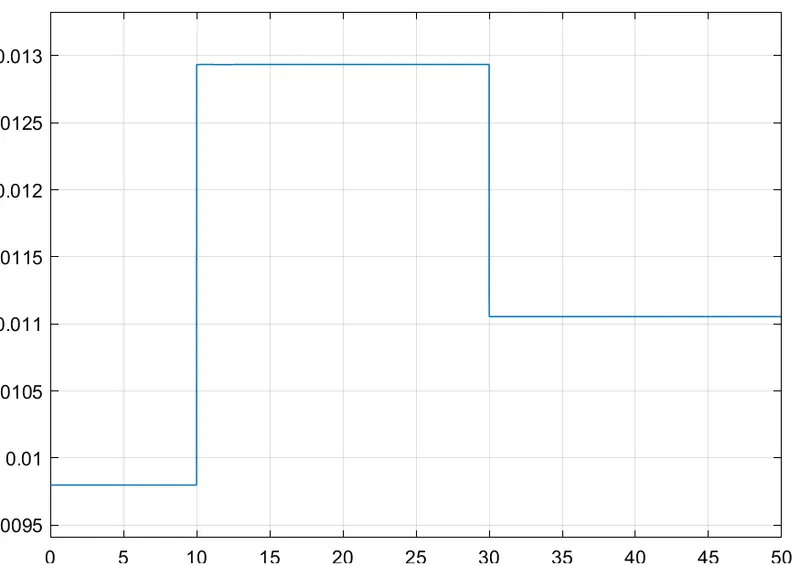
- Temperature source: 20 °C from 0 to 10 seconds, 27 °C from 10 to 30 seconds, 23 °C from 30 to 50 seconds.
- Fan conditions: ON if the temperature above 25 °C, OFF otherwise
PROCEDURE:
Open the matlab, type simulink in the command window or Select simulink in the home bar.
For Door bell:
To create a doorbell in simulink we need simulink block such as Solenoid, Signal builder, Ideal translational motion sensor, switch, battery, electrical reference, mechanical translational reference, solver configuration, Scopes and PS-simulink, Simulink-PS converters.
After inserting on the screen connect them as per required.
Goto signal builder, and plot the graph.
For every 2sec of time the voltage should fluctuate till stop time 10 sec.
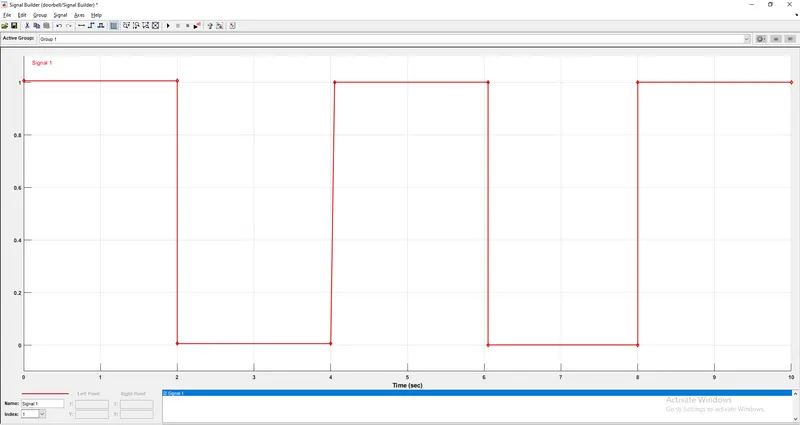
After all the values are entered, run the model.
For results open the scope.
For thermistor to sense the temperature of a heater:
To create a simulink block such as Signal builder, thermal reference, control temperature source, switch, battery, voltage sensor, controlled voltage source, dc motor, Ideal rotational motion sensor, electrical reference, mechanical rotational reference, solver configuration, Scopes and PS-simulink, Simulink-PS converters.
After inserting on the screen connect them as per required.
Goto signal builder, and plot the graph.
For 0-10sec the temp is 20°c, from 10-30 sec the temp is 27°c and from 30-50 sec the temp is 23°c.
As all the values in the thermistor are in kelvin so we need to convert the °c-K, so 20°c=293.15k, 27°c=300.15k, 23°c=296.15k.
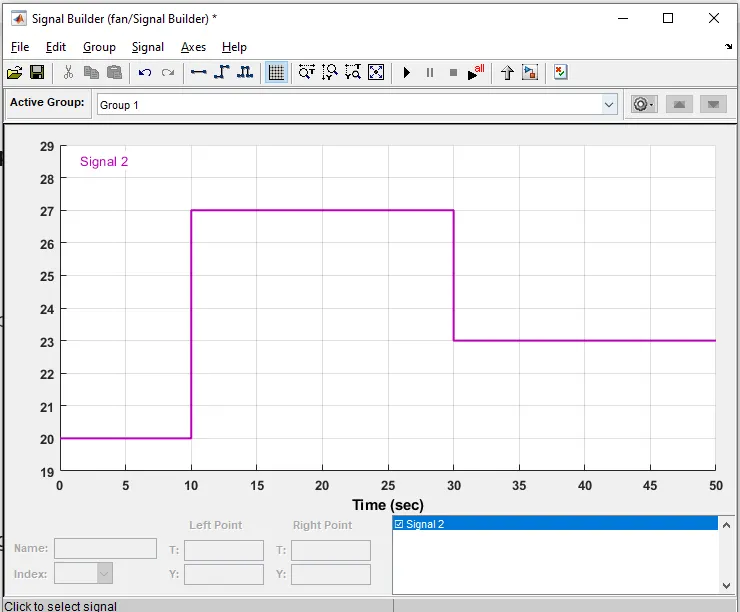
After all the values are entered, run the model.
For results open the scope.
MODEL:
Doorbell-
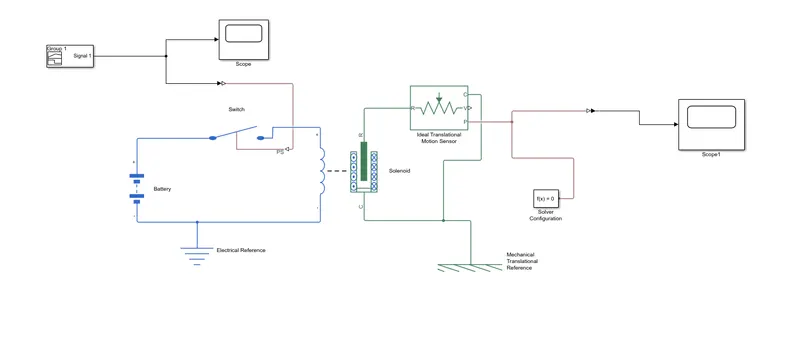
Thermistor-
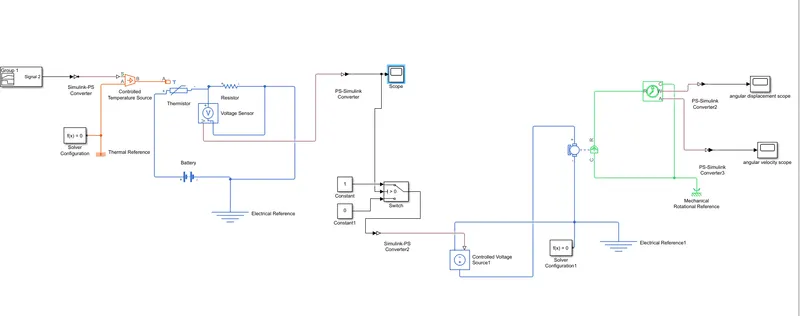
RESULT:
For Doorbell:
For Thermistor controller
Terms used:
Solenoid: A solenoid is a type of electromagnet, the purpose of which is to generate a controlled magnetic field through a coil wound into a tightly packed helix. The coil can be arranged to produce a uniform magnetic field in a volume of space when an electric current is passed through it
Thermistor: A thermistor is a type of resistor whose resistance is strongly dependent on temperature, more so than in standard resistors. The word is a combination of thermal and resistor
Electromagnet: An electromagnet is a type of magnet in which the magnetic field is produced by an electric current. Electromagnets usually consist of wire wound into a coil. A current through the wire creates a magnetic field which is concentrated in the hole, denoting the centre of the coil
Signal builder: The Signal Builder block allows you to create interchangeable groups of signal sources and quickly switch the groups into and out of a model. Signal groups can greatly facilitate testing a model, especially when used in conjunction with Simulink assertion blocks and the optional Model Coverage Tool.
Voltage sensor: A voltage sensor is a sensor that is used to calculate and monitor the amount of voltage in an object. Voltage sensors can determine both the AC voltage or DC voltage level.
Solver configuration: The Solver Configuration block specifies the solver parameters that your model needs before you can begin simulation