Week 1:- Introduction to BiW and Fixtures Challenge
1. BIW (Body in white):
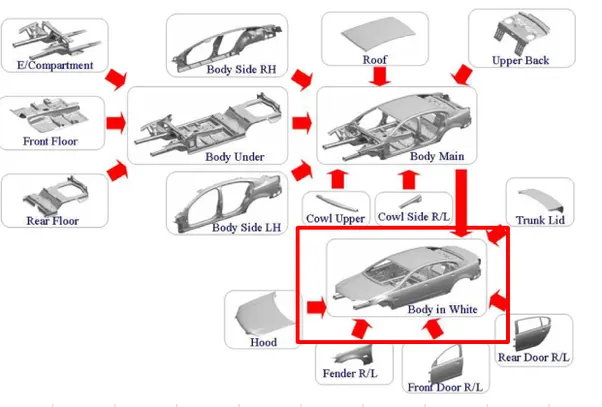
BIW refers to the stage in automobile manufacturing in which the vehicle body sheet has been assembled. This means that the vehicle’s body frame has been joined together including doors, hoods, trunk, bumper and deck lights. At this stage all the chassis assemblies are welded together before painting.
Body-in-white (BiW) is the name given to a car body’s sheet when all its components—barring moving parts (e.g., hoods, fenders, etc.), trims (e.g., glass, seats, etc.), or chassis subassemblies—have been welded together.
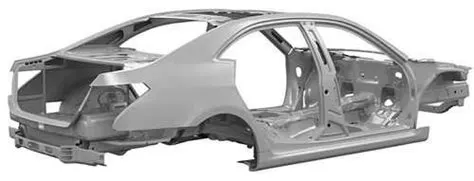
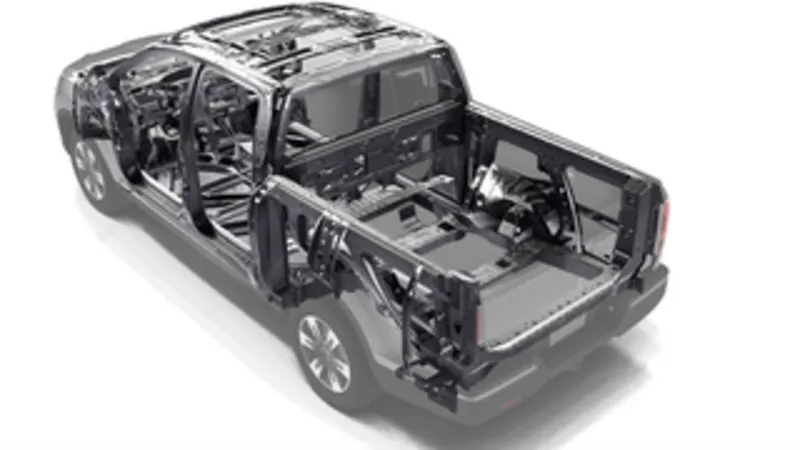
BiW can be made into two structures:
- The more common monocoque structure where all body members are carrying load with chassis in-built with BiW and are integrated with each other
- The body-on-frame structure where the frame is the main load-carrying member
BiW is expected to possess a number of significant properties.
- It must have high tensile strength as well as high stiffness—bending, torsional, static, and dynamic.
- It must also provide good quality safety both to the car body and to its occupants against crashes of all kinds—front, rear, side, or even rollover
- It should also be able to protect occupants from noise, vibration, and/or harshness (NVH) by absorbing or reducing these conditions.
- It should be easy to weld and form, as well as be highly paintable and easy to design.
- It should provide a good surface finish that is smooth, and should also be corrosion resistant.
- Improvement of fuel economy also necessitates the use of lightweight materials in BiW, as it constitutes a significant share of car’s weight in addition, given environmental concerns in recent times, it is also expected to be recyclable.
Given such extensive requirements, only steel and aluminium have been used for making BiW; steel is preferred for its high strength and low cost, while aluminium is preferred for its lower density that helps reduce car weight
BIW parts:
1. UNDER BODY : Underbody is the base of BIW, it consists of sub-assembly of the engine room, rear floor, and chassis.
2. UPPER BODY : The upper body is the composition of Body Side L/R, Roof Panel, Cowl & Dash, front fender, rear fender, all pillars.
3. MAIN BODY : The main body is the assembly of the Under Body and Upper Body.
4. CLOSURES : All Doors, Bonnet(Hood), Deck lids are called closures.
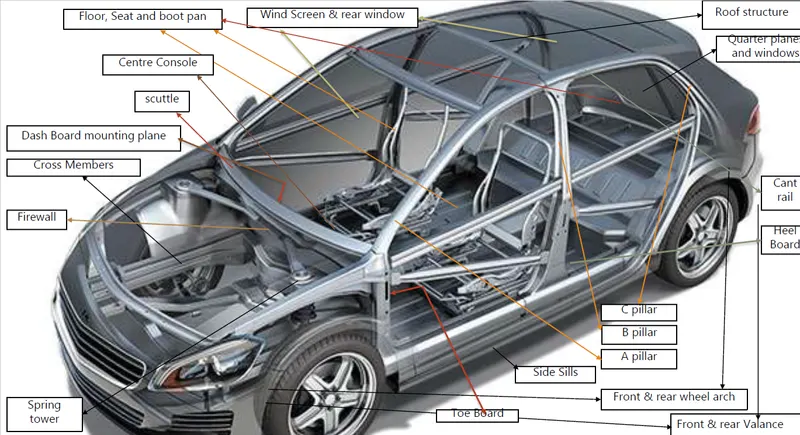
2. BIW nomenclature:
- PILLARS : That area of the car that acts as vertical support for Car’s window area or Greenhouse is known as Pillars. These Pillars are named as A,B,C,D and so on as we move from Front end of car to rear end of the car
- BONNET(HOOD) : The front portion of the car which covers the engine, battery, fan, radiator, etc is known as Bonnet. it is called Hood as well.
- BOOT OR TRUNK : The rear area of the car which is separate from the passenger area and is used to keep luggage is known as the Boot or Trunk.
- COWL : The area just below the windshield, we can say it as a base of the windshield as well, is known as Cowl.
- FENDER :The panel which covers the wheels of the car that starts from the bumper and goes to the door line excluding the engine compartment area is known as Fender. The fender is also called the quarter panel.
3. FIXTURE:
A device which holds the workpiece to be processed (welded), by using 3-2-1 principle.
FIXTURE TYPES:
- Production fixtures: these are used for mass production purposes.
- Pre-Production operation fixtures (PPO): these are used in inital batch production and its study of feasibility.
- Checking fixtures: these are used for car panel geometric inspection purposes.
4. PRINCIPLE OF FIXTURE DESIGN:
Generally a workpiece have 12 DOF's (Degree of Freedoms) in space i.e.
- 6 Translational: X,Y,Z,-X,-Y and -Z
- 6 Rotational: X-CROT, X-ACROT, Y-CROT, Y-ACROT, Z-CROT and Z-ACROT, (CROT=clockwise rotation, ACROAT=Anti-clockwise rotation)
In fixture design, all 12 DOF's must be arrested in to locate the workpiece in the fixture.
5. BIW stations:
A. TOOLS: It is a fixture which consists of number of units together to hold a car part in general.
- Geo tool: A fixture in which geometry of the panels which are welded together is defined accurately. Pin tolerance will be of closer tolerance i.e. 0.15mm generally.
ex: If panel hole diameter is 15mm, then fixture pin diameter should be 14.85mm. - Re-spot tool: It is a fixture in which remaining weld spots which are not achieved in geo tool are welded for the pre welded panel from the geo tool. Pin tolerance for re-spot pin is 0.28mm generally.
ex: If panel hole diameter is 15mm, then fixture pin diameter should be 14.72mm. - Marriage or Hemming tool: It is a fixture in which inner panel assembly and outer panel assembly are joined together. Welding or Hemming are done with the help of this fixture.
B. CHECKING STATIONS: Checking stations tool is used to check automotive parts and assemblies, ensuring all the co-ordinates, realtive dimensions, and positions are as per tolerances. Types of checking stations are:
- Gauge type: Workpiece is held and measuring gauges are introduced to ensure dimesnions and repeatability.
- Fixed type: Workpiece is fixed with clamps and pins, a CMM machine is used to measure co-ordinates of different points and gives report.
- Automated checking fixture
C. GRIPPERS: A device or fixture which holds car panel and is fixed to manipulating end of robot. It is also known as EOAT (End of arm tooling).
- Material handling Gripper: It includes fixture for handling of car panel from one tool station to another tool station.
- Process Gripper: It includes fixture for handling of car panel from one tool station to another tool station and doing processes like pedestal welding, pedestal riveting, Gluing, Sealing, etc.
- Combo Gripper: It includes fixture for handling of car panel from one tool station to another tool station and weld gun of other side.
- Dual Gripper: It includes fixture for handling of car panel from one tool station to another tool station on either side i.e two sided gripper.
D. STANDS: Stands are used as mounting devices for different tooling application. Usually these stands are fixed permanently to the ground so as to avoid any slight movement during long periods of time due to vibrations sustained by it. This eliminates any error in operations performed by the tool in long term.
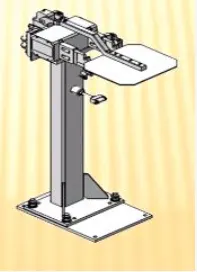
Types of stands are
- Gluing stand: Gluing/sealer gun is fixed to a welded or a standard stand which is grouted to the floor permanently.
- Docking stand: Robots for multi-tasking (ex:welding and material handling) cannot carry both operations due to some limitations, therefore robot will drop and pick gripper or gun after completing respective operation.
- Pedestal stand: Weld gun is mounted to a fixed stand, Pedestal gripper carries the car panel to weld the spot.
- Date stamp stand: It will get date embossed onto the panel.
E. MISCELLANOUS:
- Take -out trolley
- Curing
- Buffer stand
- Racks
- Pallets
- Conveyors
6. BIW Terminologies:
MYLARS/FINGERS: MYLAR is one kind of block that touches the panel and holds or clamps the panel. Mylars are always designed in CAR LINE. Mylar is also called NC(Numerically Controlled)Block.
PLP: Principle Locating points.
BLADE: The plate which connects Riser to the Clamp cylinder is named Blade. This plate plays an important role in building the unit. The plate can be of any shape.
RISER: The part which is mounted on the base plate and holds a clamp or pin cylinder on it, is called Riser. Riser can be Standard Part or manufactured part, it varies from project to project. A riser can be a Single part or welded part. Standard risers also have various shapes and sizes.
SHIMS: Shim is a set of thin plates (2 mm, 1mm, 0.5 mm, 0.25mm) that are used to adjust the gap or used for a better fit. in case no proper fitting between mylar and Panel due to manufacturing errors then this error can be removed using shims. Shims are placed in the carline position so that gap can be adjusted in the required direction like X, Y, or Z.
ROUGH LOCATORS: Rough locators are used to help locate workpieces in the automation process. Locating refers to the desired location where you want the workpiece to be when it is getting worked on either by a person, team, or robot.
HARDWARES: Bolts, nuts, etc; are called hardwares.
CMM: A coordinate measuring machine (CMM) is a device that measures the geometry of physical objects by sensing discrete points on the surface of the object with a probe.
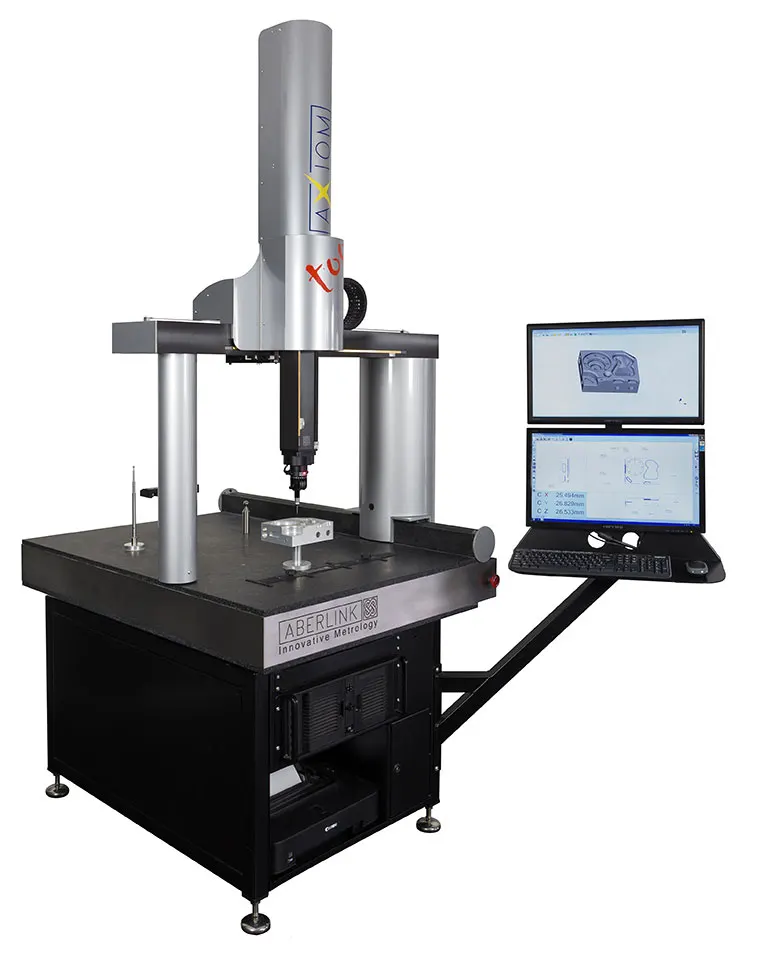
UNITS: A fixture is a combination of units putted together ex: clamp unit, pin unit, base unit. etc.
NUMBER PLATE: Aluminium embossed plate placed on each unit which shows its unit number.
CO-ORDINATE PLATE: Every fixture has a master hole relative to which CMM measures other units placement accuracy, for covering that hole co-ordinate plate is used so that no impurities enters the hole.
NAME PLATE: Plate which mentions details like fixture name, date, panel name, etc.
CLAMP ARM: Movable arm in the clamping unit is called clamp arm.
PIVOT: Axis about which the clamp arm will move
CLASS 'A' SURFACE/ SKIN SURFACE: Surface of BIW that is visible to the end consumer.
REED SWITCHES: Magnetic switches that are mounted on the cylinder, they confirms the postion of piston (up or down i.e. clamping unit movement ) inside the cylinder.
SENSORS: Electrical parts that give the incidation of if the part is mounted on the fixture or not. Mainly used in automated fixtures.