Underbody Coating
UNDERBODY COATING:
It is a thick cladding (typically made of rubber) that is placed uniformly to the car’s underside.
Underbody coating provides long term protection from corrosion to car’s underbody. It also protects parts like internal body panels, frame rails and other inner cavities that are not physically accessible but are prone to corrosion.
The main purpose of undercoating is to check rust especially in the body components like frame rails along with other exposed metal parts. Underbody coating can also reduce wear and tear.
Undercoating can be applied as a liquid, typically sprayed or brushed on, then allowed to dry. It helps to protect the axle, engine, brake system, transmission, exhaust and fuel systems, suspension parts, gas tank, floorboards.
Undercoating can be sprayed on any type of car, truck, or SUV. The type one chooses to use is often determined by the level of damage your car has sustained and/or the extent to which you would like to protect its underbelly.
Pros:
- Minimizes Sound: It minimizes the sound from underneath the car resulting a noiseless, smooth driving experience.
- Heat Insulation: It insulates the interior of the car from extreme temperatures from beneath the vehicle providing a comfortable cabin experience.
- Anti-chipping property: If any stone hits the coating it does not get chipped away hence protects the underbody from exposure to water.
- Vehicle life: A proper undercoating extends the life of your vehicle because of its rust-stopping power.
Cons:
- Best for New Vehicle: The best time to have an undercoating applied is when a vehicle is purchased new because it offers a superior level of protection.
- Less helpful if corrosion is already present: For an undercoating to be the most effective, it should be in place before the underbelly of your car begins to rust.
- Weight increase: When your vehicle weighs more, the distance you can travel on a single tank of fuel is reduced.
Types of UnderBody Coatings:
1. Rubberised underbody coating: It protects the underbody from scratches and keeps it properly. It’s also not difficult to apply this to the undercarriage.
Rubberized coating is ideal if you want to keep the road noise to a minimum and rust and corrosion away.
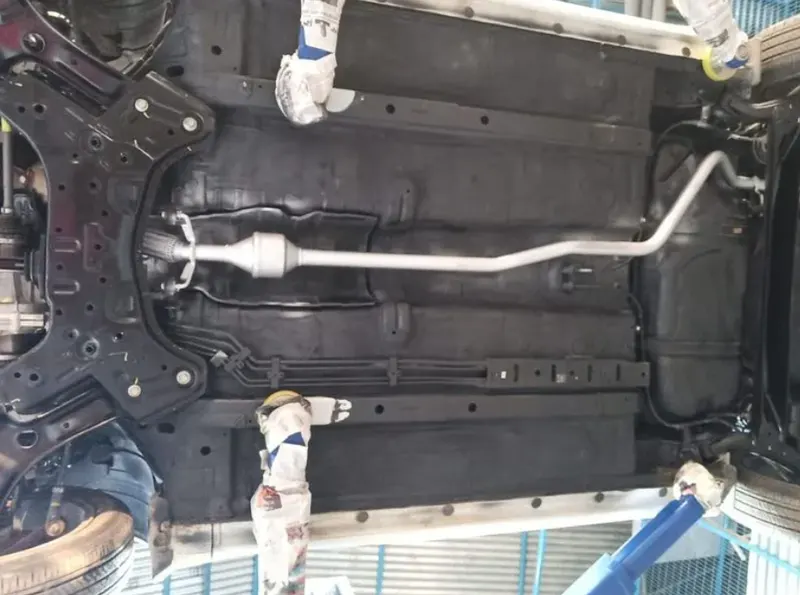
2. Wax Based underbody coating: This transitory undercoating will, on the whole, fade away after a few months. On the plus side, wax-based undercoating is resistant to dampness. It is also the most cost-effective alternative.
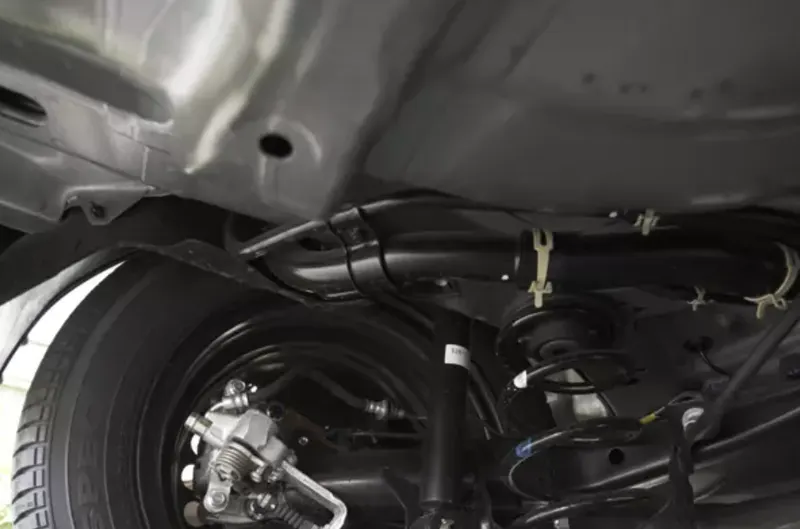
3. Asphalt Based Automotive Coating: Suitable for lorries, trucks, and other heavy vehicles.In comparison to rubber-based coatings, this gives a higher level of protection. Asphalt-based coatings, on the other hand, incorporate a small quantity of rubber for sound insulation. The application of this coating, however, takes some time.
4.Polyurethane Underbody Coating: This covering seals breaks and fractures in the vehicle’s underbody.It provides strong corrosion resistance and also binds to the metal. Unlike an asphalt-based coating, the polyurethane coating may be painted over.