Modelling of 25 storey building with the specified properties using ETABS
AIM-
Model a 25 storey building on ETABS
with structural properties as specified
below. Ground floor or plinth floor level
can be taken at a height of 1.5 metres
from the base. Each of the successive
25 storeys has a storey height of 3 metres.
INTRODUCTION -
ETAB OR ETABS they meaning are same .
it is extendended 3d analysis of building
system.
it is engineering software product .
-that caters to multistorey building
design and analysis .
-ETabs offers single user interface.
-to perform modelling .
analysis , design , and reporting .
PROCEDURE -
-STEP :1
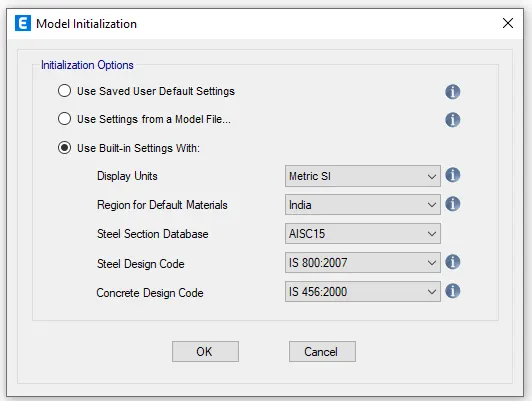
-Open etabs
-click on new mode l
and choose use built in setting with option .
-set display unit is metric SI as per
requirement .
-then click ok .
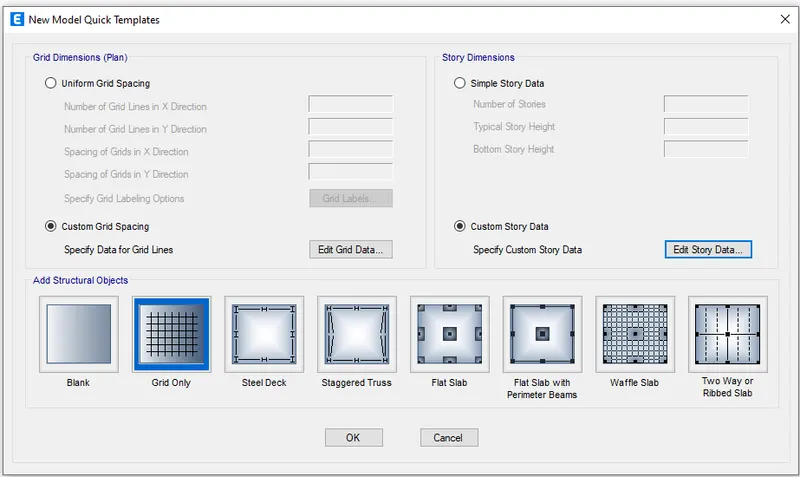
-new dialouge box will apper .
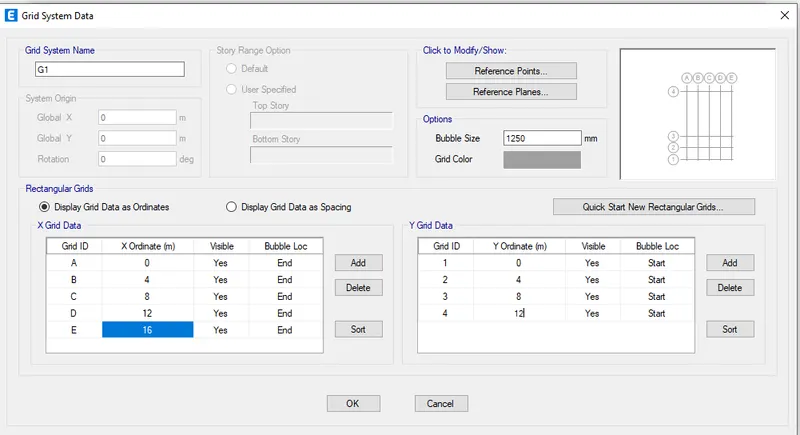
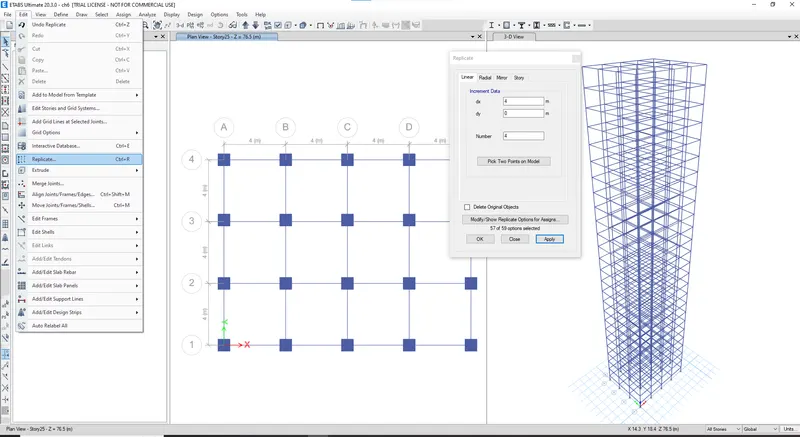
-select custom grid spacing and
then select edit grid data
-new dialouge box will appear
then enter x grid data at a distance
of 4 meter distance .
-
-click ok
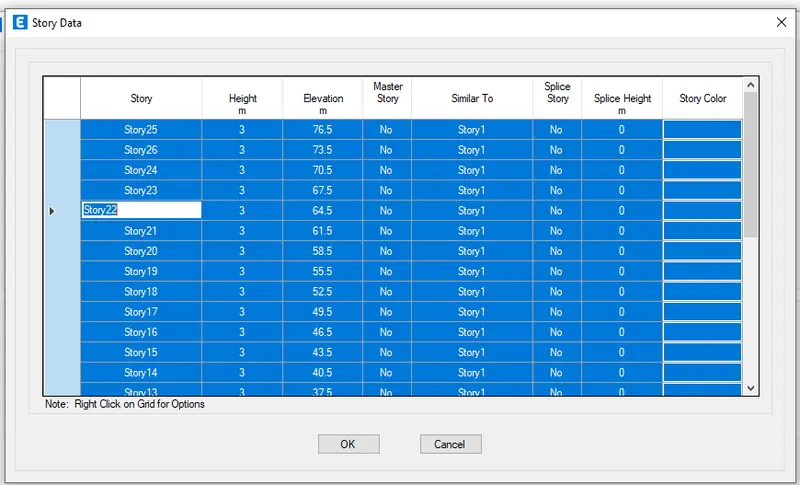
-then select custom story data
and select edit story data .
-add story up to 25
and give input plinth height is 1.5 m .
-and all other story height as 3m .
-
-then make story 1 as master stroy
and all other storey similar to 1
-then our building model is generated .
-
STEP -2
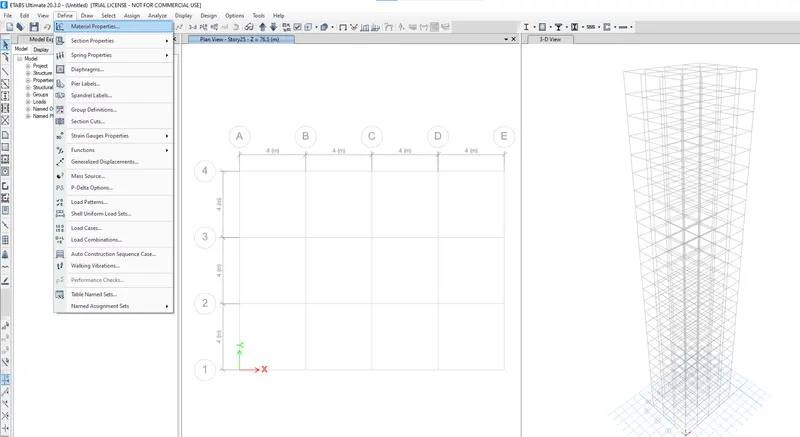
Select material properties
select define from that select
material properties .
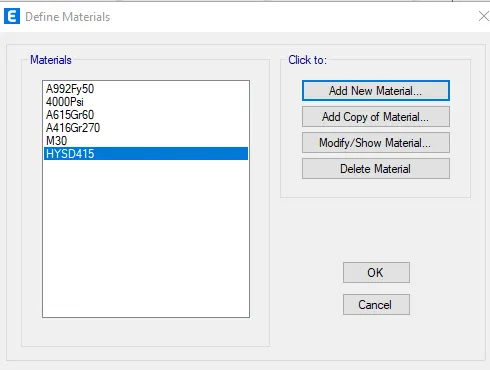
-new window will apeear and
from that select add new new material.
-
-new windows will appear now
define materiakl type concerete
and grade M30 .
-Similar define rebar property .
-
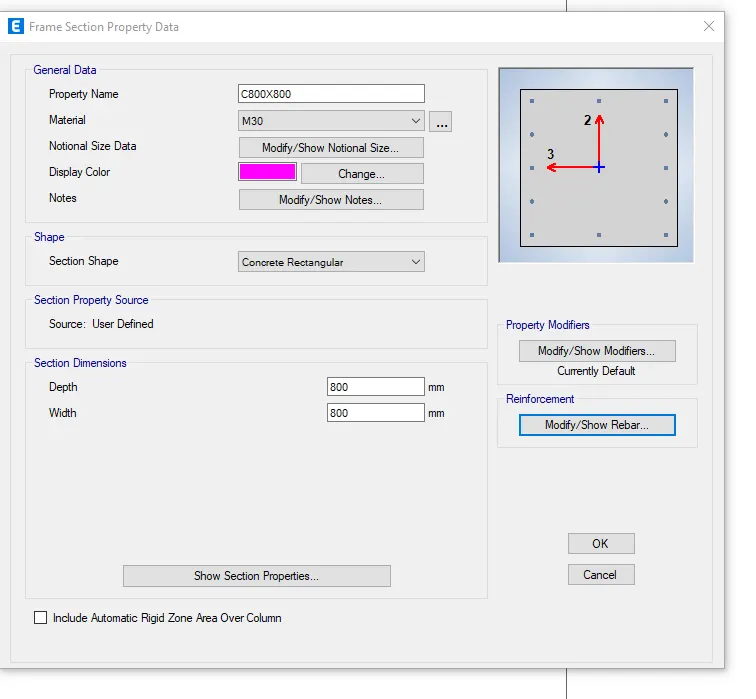
go to define tab , select section properties
and from that select frame properties .
-new window will appear , in that
select add new property .
-then select rectangular concerete
section , rename it as B 300X400
-Change the property as M30
AND changed the size as B 300 X 400
-Similar add column section properties .
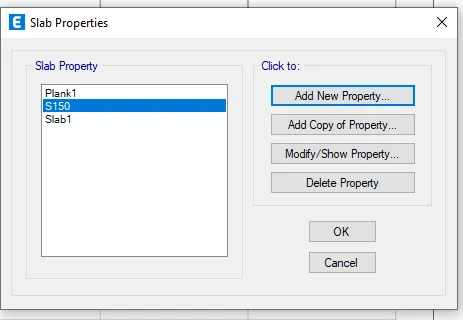
-then go to define select section property .
from that select slab section .
-new windows appear
rename it slab 150 , modelling type
as membrane and changed thickness
as 150mm .
-Draw structural members .
for frist select mode as all stories
at right bottom corner .
-then select quick draw column
and changed property as C 800X800
-Place the column at every intersection
of grid
-then select quick draw column /beam.
-changed property as B 300X400
-PLACE beam at all grids .
-now we need to changed mode as similar
stories at bottom of window .
-in order to avoid slab placement
in plinth level .
-
-select quick draw floor /slab and
draw slab sections
-select assign and click on joint select
pinned support
-fix pin support at base .
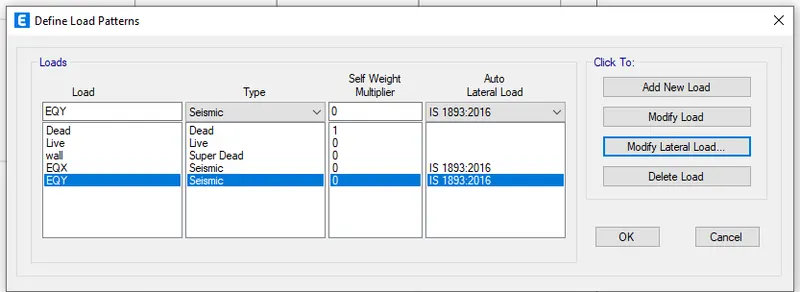
CLICK on define from that select
the load pattern .
-define load like dead load , live load
brick wall load and earthquake load
in x direction and eccentric earthquake
load in position x and -x and
same load in y direction also
mention is code of respective load .
-click on modify lateral load
set range from base to 25th
storey , changed direction
and eccentricity , seismic zone
factor as 1.25 and time period
as .5 sec .
-do same for all earthquake loads .
STEP
ASSIGN LOADS
-to assign loads , select similar stories
at bottom of windows
-then select members .
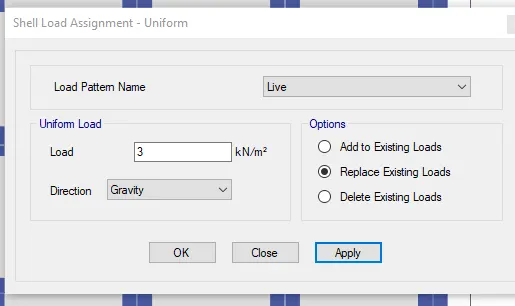
-after go to assign tab > shell load .>
uniform
-A new window will appear in that
select live load and give value as 3 kn/m^2
-click on apply
--then select all story at the bottom
of the windows and select all beam
under select tab .
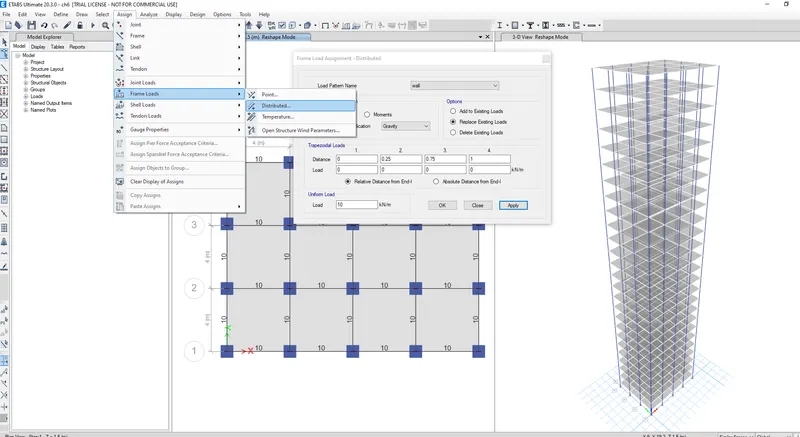
-after that do assign tab > frame load
.distributed .
-enter value 10 kn/m2
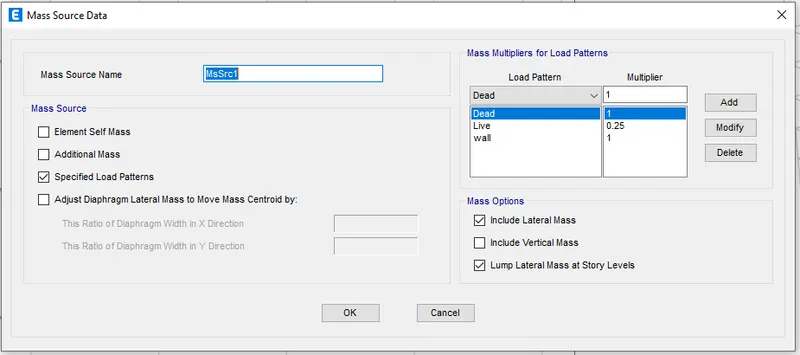
-go to mass source from define tab.
modify mass source and check specified
load pattern .
-add load pattern and assign the model.
ok .
STEP
DEFINE LOAD CASES .
-Click ok .
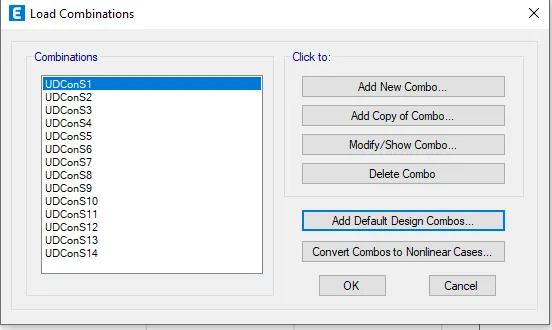
-go to define >load combination .
-click on add default design combos
and select conecrete frame design .
ok.
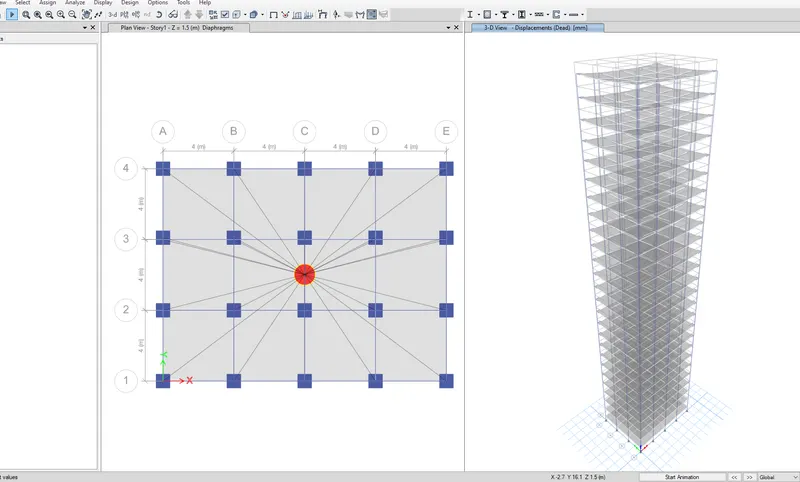
-frist select slab .
then go assign tab ,select shell
and click on diaframe created sucessfully .
-check model , modelled structure varified
without warning and errors .
-then go analysis tab and run analysis .
RESULT -
MODAL 1 TIME PERIOD =4.435 SEC.
MODEL 2 TIME PERODE =4.408
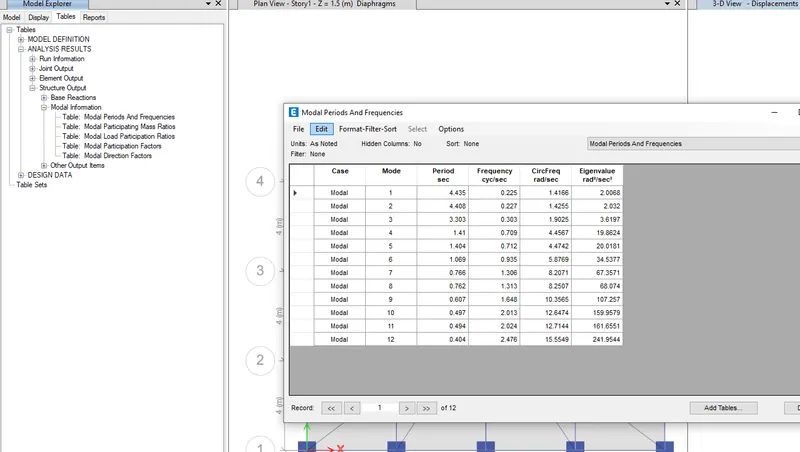
- Display--> show tables-->analysis result-->structure output >modal information > modal participation mass ratios
- From the table the natural time period for mode 1 and torsional DOF are noted as follows
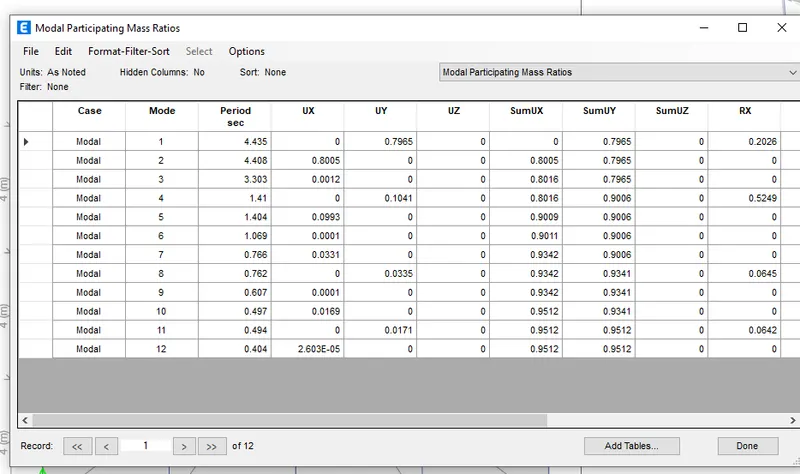
- Tx1= 4.435 seconds, Ty1=4.408 seconds= and Txy1=3.303 seconds
- So from the results it is clear that the torsional time period is less than two translational time
- period is less than two translational time period as required by IS 1893 provision Table 5
- When we add the three mode mass ratios we get 0.8042 which means the first three modes of
- seismic oscillation contribute more than 65% of building weight as per ETABS analysis
- The storey drift for seviceability base shear case (EQxor EQy) is tabulated from the following tool path
- Then go to display-->story response plot
- keeping load case to EQy and switching to max story drift the maximum drift value is noted as 0.0016
- Keeping load case for EQx and switching to max story drift the maximum drift value noted is 0.001492
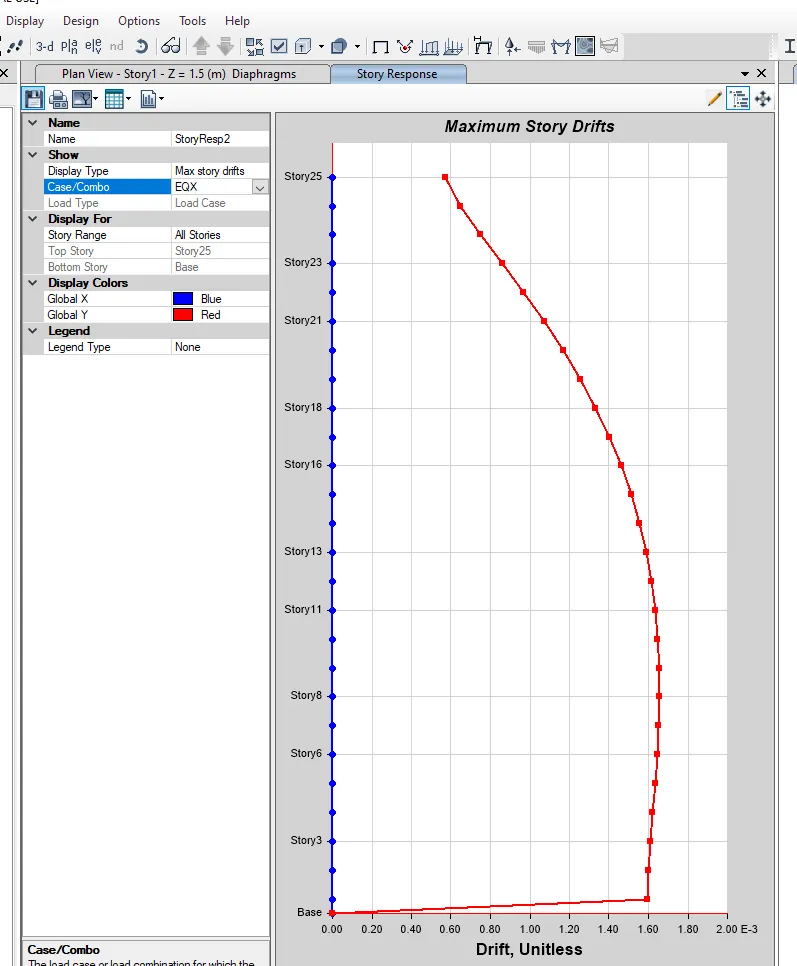
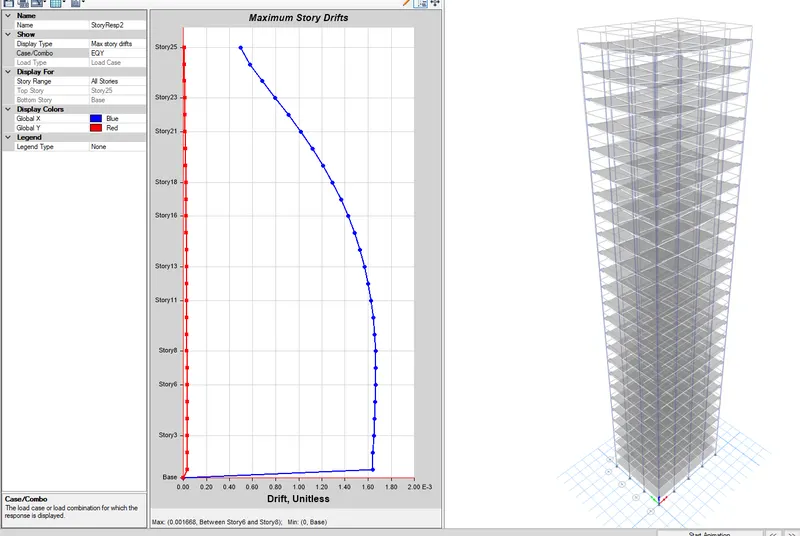
- so as per the clause 7.11.1, the maximum inter storey drift is limited to 0.004 for each story height.
- But our value is is within the code limits