week-11 Joint creation and Demonstration
Aim:-To perform different types of joints using solver as lS-DYNA
Theory:-
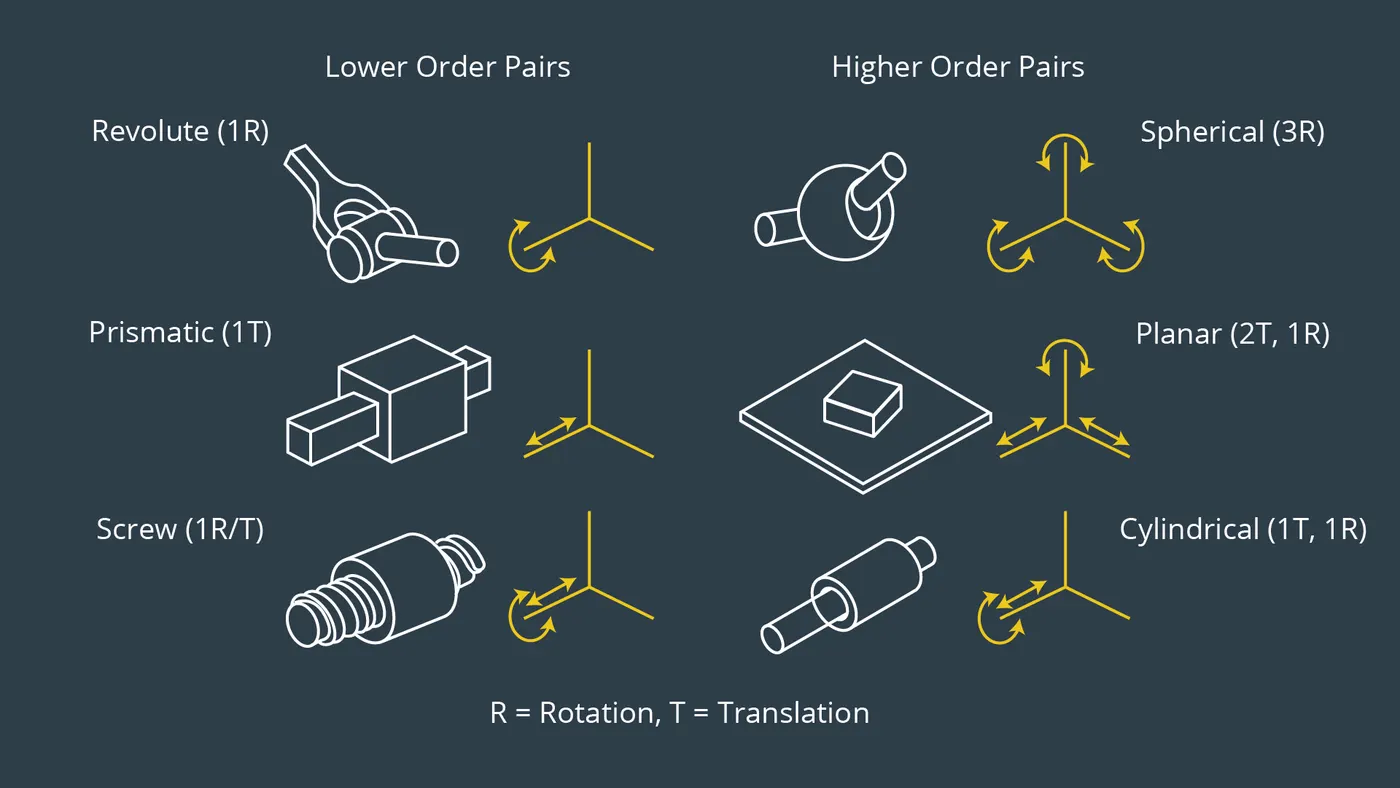
The joint which is used connects two separated parts and makes the connection.
Types of Joints:
Mechanical joints are broadly classified into two classes viz., non-permanent joints and permanent joints.
Non-permanent joints can be assembled and dissembled without damaging the components.
Examples of such joints are threaded fasteners (like screw-joints), keys and couplings, etc.
Permanent joints cannot be dissembled without damaging the components. These joints can be of two kinds depending upon the nature of the force that holds the two parts.
The force can be of mechanical origin, for example, riveted joints, joints formed by press or interference fit, etc, where two components are joined by applying mechanical force.
The components can also be joined by molecular force, for example, welded joints, brazed joints, joints with adhesives, etc.
PROCEDURE:-
- Here we need to create 4 types of joints with two cases.
- For the first case, we need to perform jointly with taking components as rigids
- And for a second case, we need to perform a joint with deformable.
CARD:-
- Material card for rigids we need to select the material as MAT_RIGID.
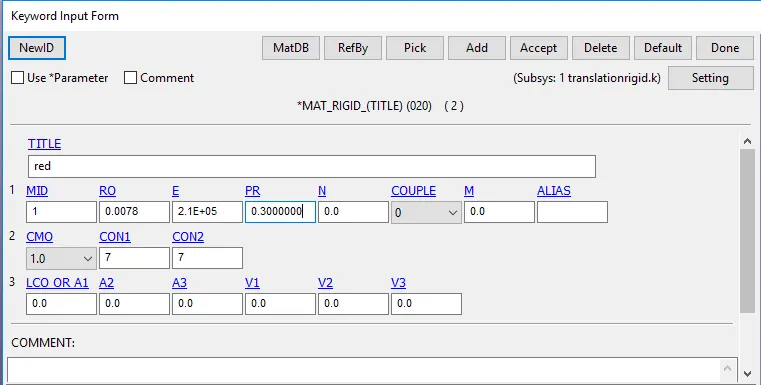
- The advantage of a rigid material card we can constrain the part by defining CMO=1, CON1, CON2=7 which is totally constrained.
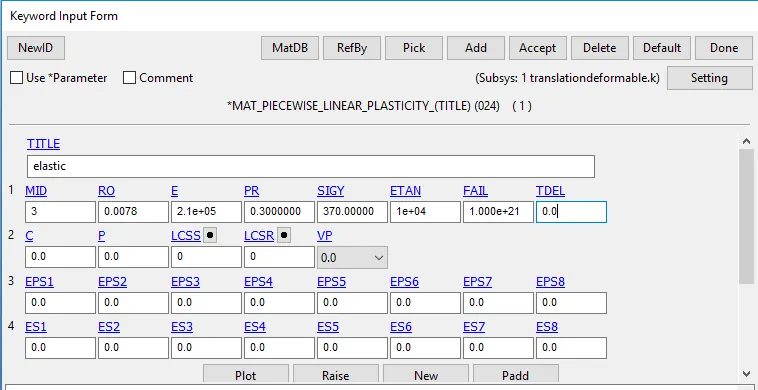
- Material card for deformable we need to select the material as MAT_PIECEWISE_LINEAR_PLASTICITY.
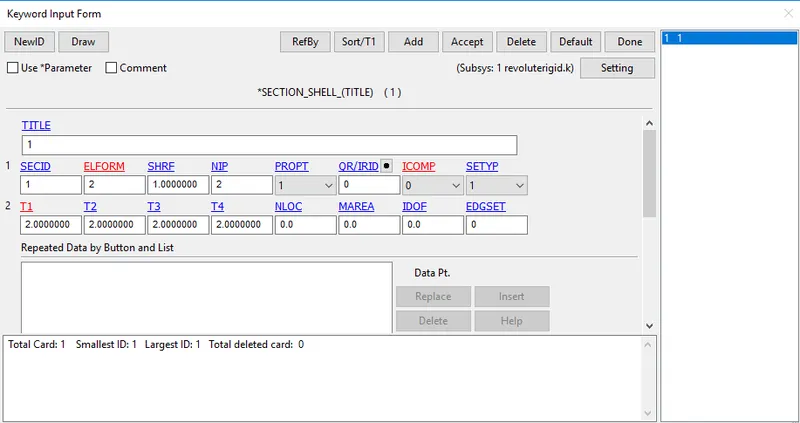
- Section id will be the same for every part.
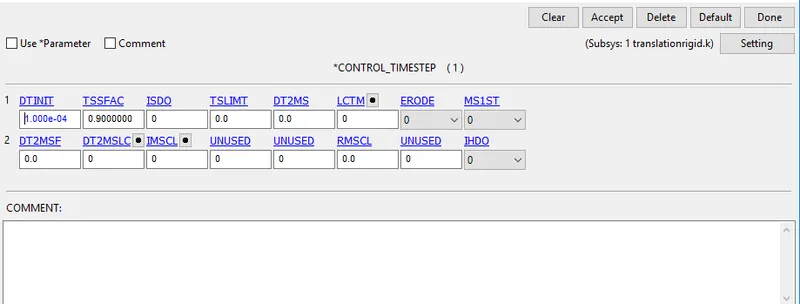
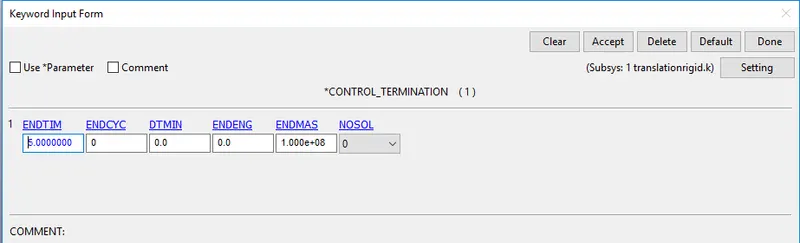
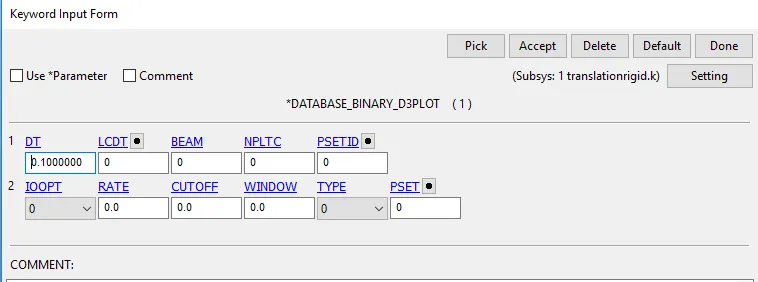
- The control time step is given to control the solution stable and we need to give termination as 5ms and the binary d3 plot.
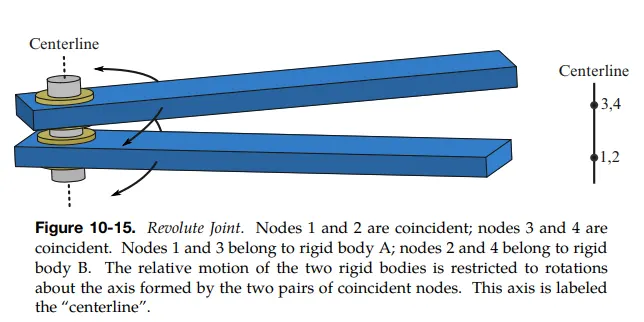
REVOLUTE JOINT:-
RIGIDS:
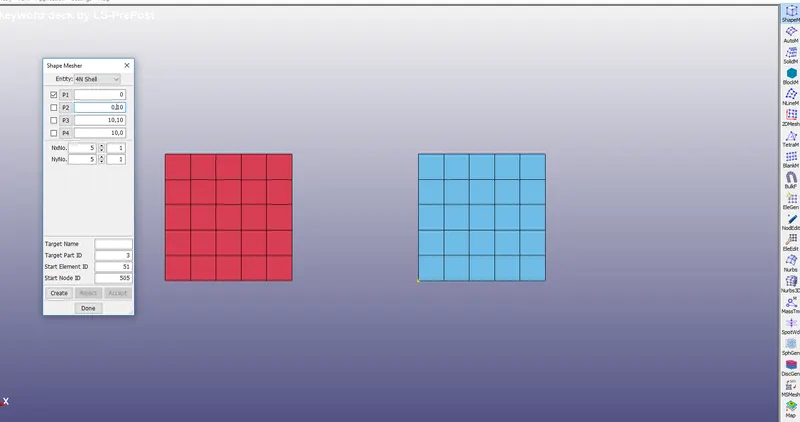
- We need to create 4 nodded shells by using the shape mesher and translate a copy of it to 20mm which is present in the element edit tool.
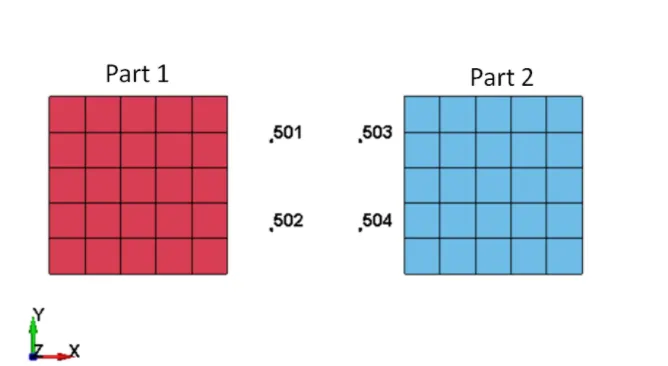
- After that, we need to create two nodes that should be coincident and another two nodes should be linear and coincident with some distance.
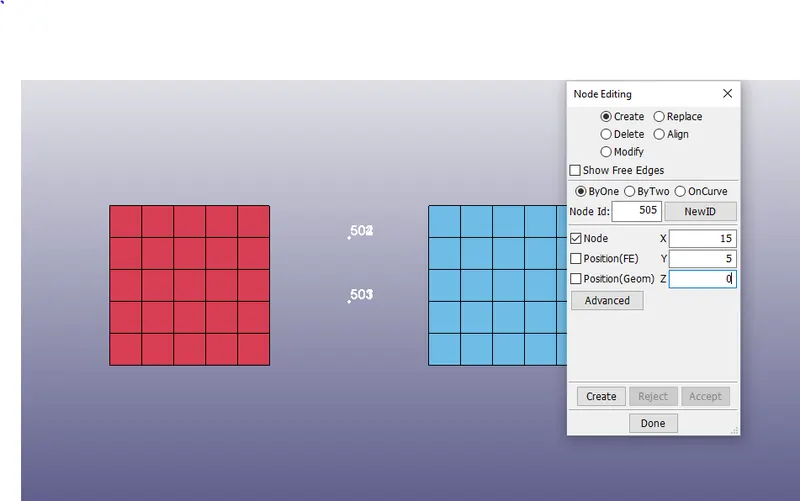
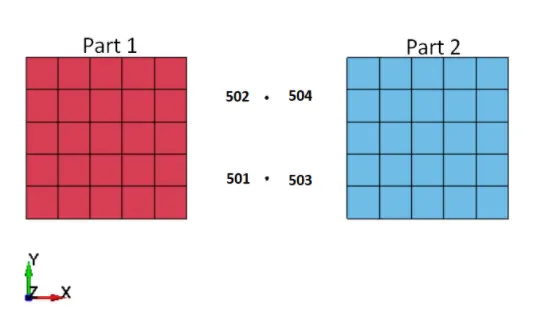
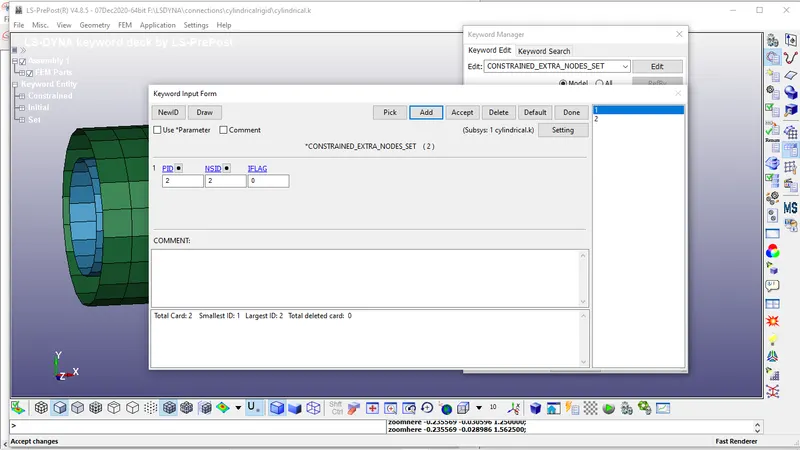
- We need to make node 501,502 as a set for part1 and 504,503 as a set part2 by using a constrained extra node-set.
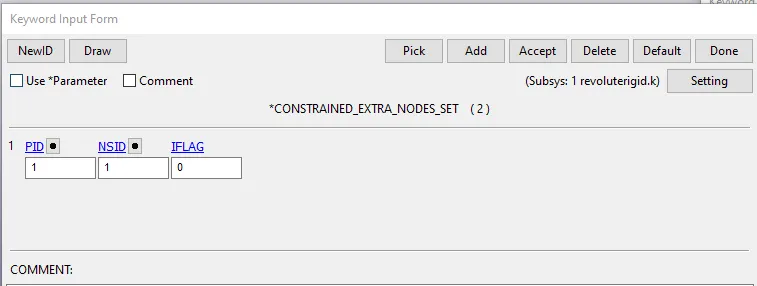
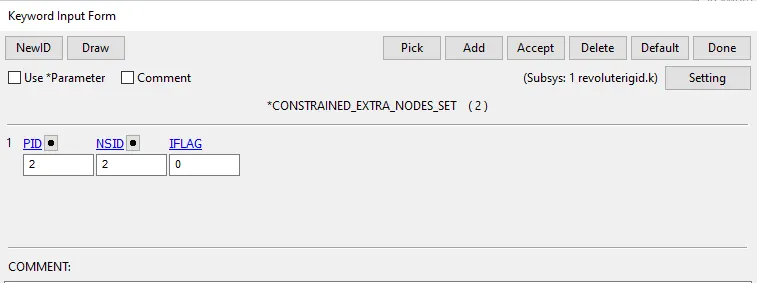
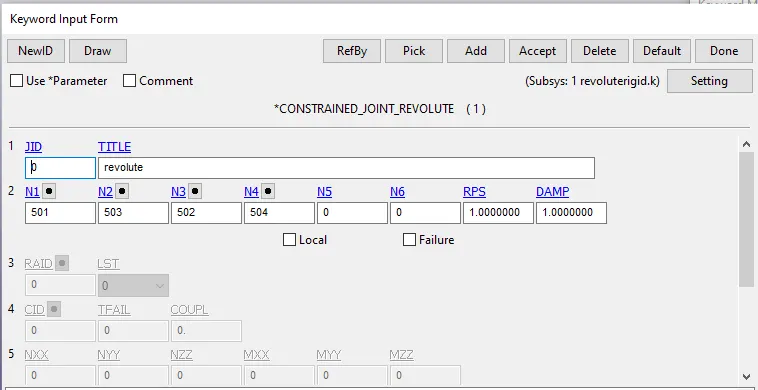
- Then after we need to make a revolute joint by using constrained revolute join by selecting node id in the form of the same coordinate value but it should be connected to different parts
- After this, we need to give velocity to another side by using velocity rigid and other we need to fix.
DEFORMABELS:-
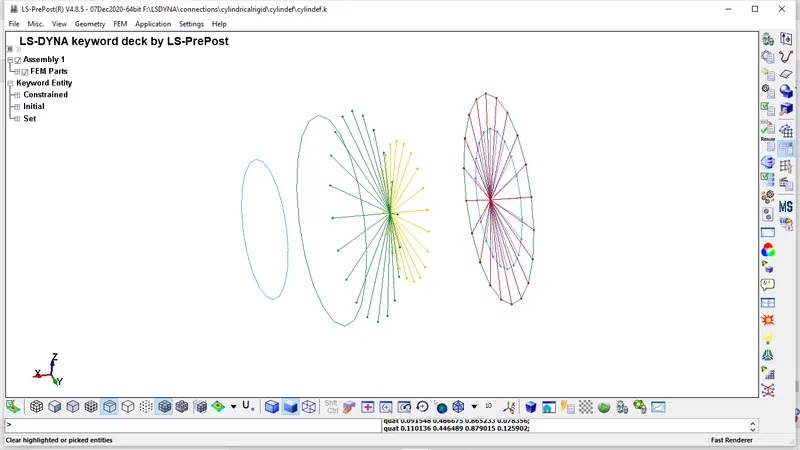
- For deformable we need to create CNRB in place of constrained node-set
- We need to use elastoplastic material.
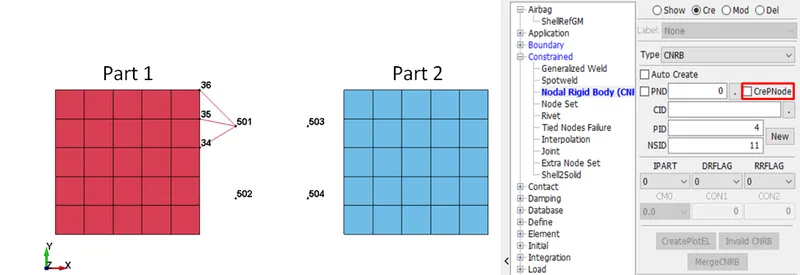
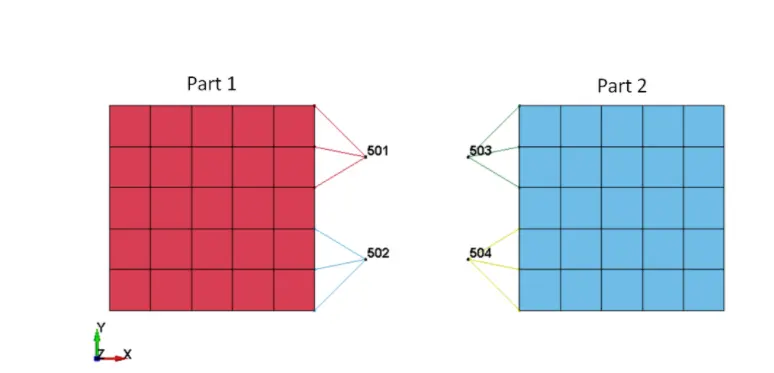
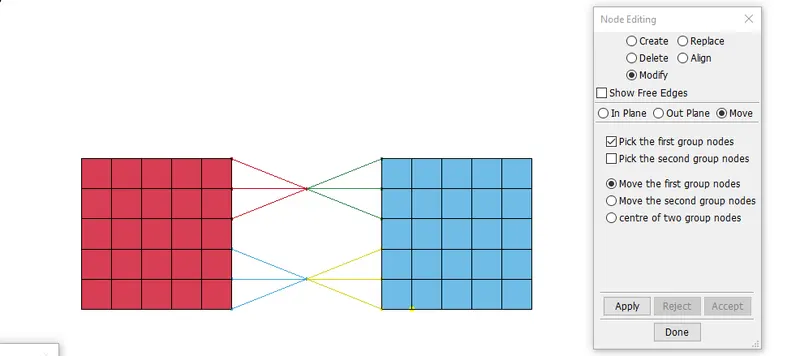
- Then after we need to create the revolute joint as same as follow as rigids
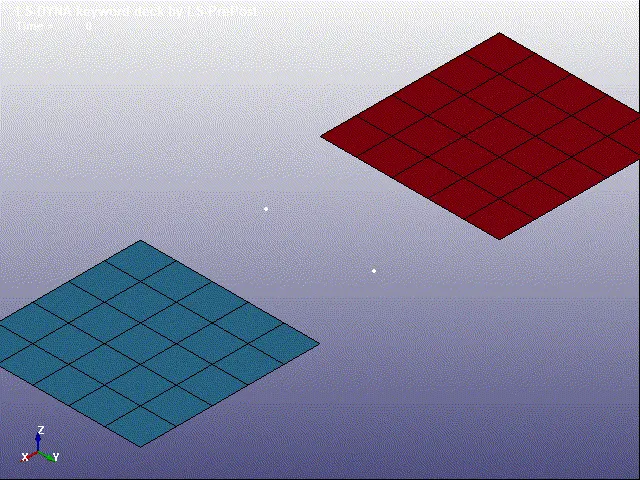
TRANSLATION JOINT:-
RIGIDS:
- We need to create two boxes by using the shape mesher option and select box shell and create.
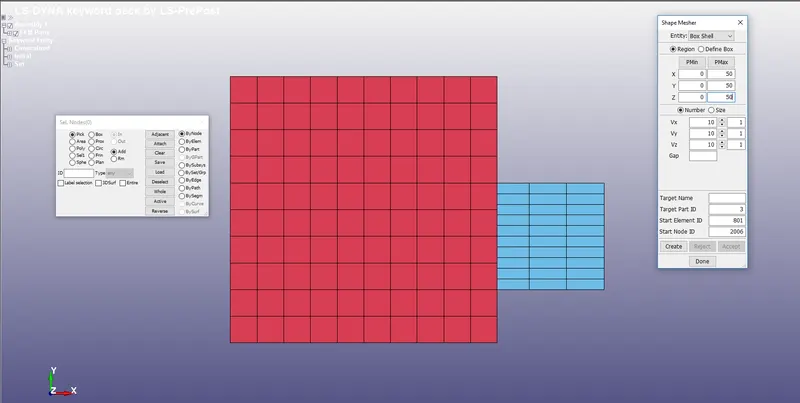
- We need to create the coincident nodes of 6 by pair of three on the same axis.
- And make sure one set of nodes should be offset.
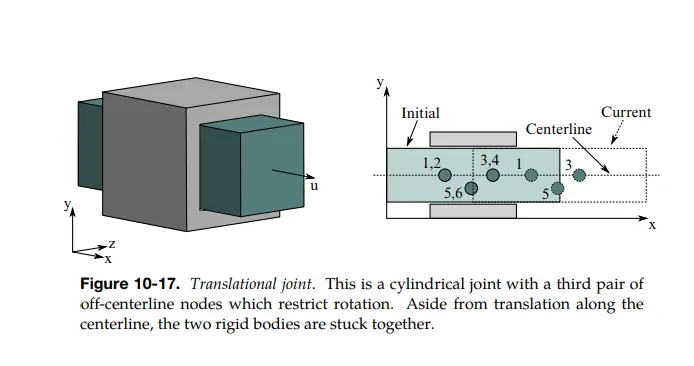
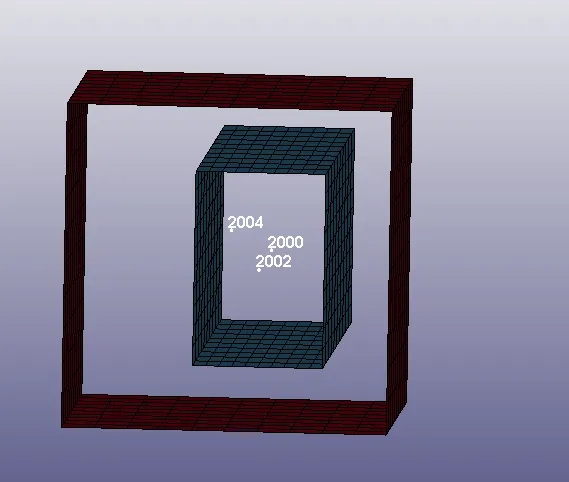
- Here we need to define the 2000,2002,2004 to one part by using a constrained extra node-set.
- 2001,2003,2005 to another part by using an extra node-set.
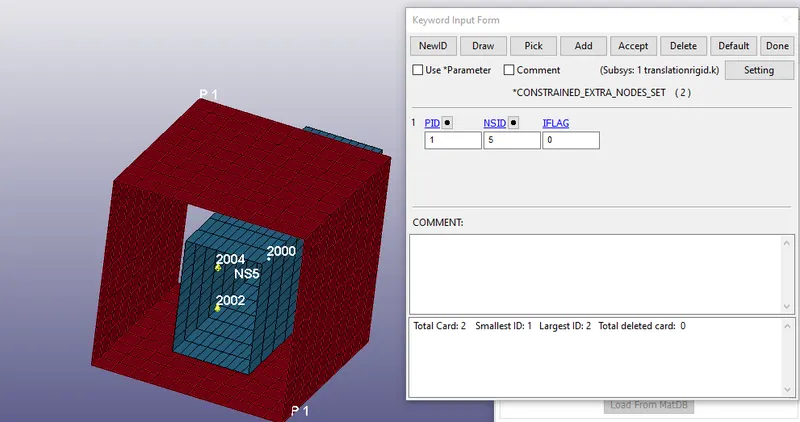
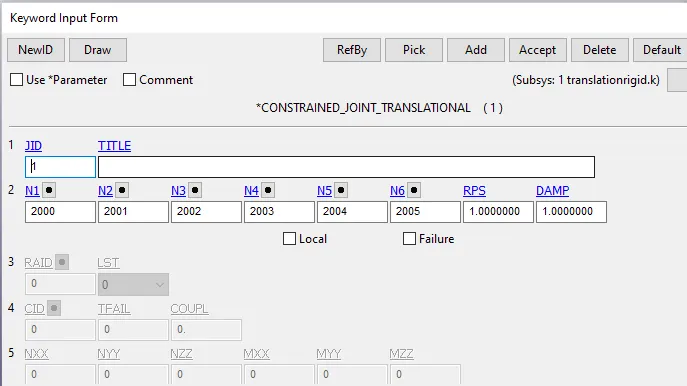
- We need to give velocity to part2 by velocity rigid and run the simulation.
Deformable:
- For deformable we need to create 6 nodes with the center point as the first node and give offset values of other nodes by changing the linear axis other remain constant.
- Then we need to create CNRB with those nodes by switching off the pnode, where the first node will be considered as master nodes.
- Select one node to create CNRB with part1 as such we need to create three CNRBS for part1 and Three for part 2.
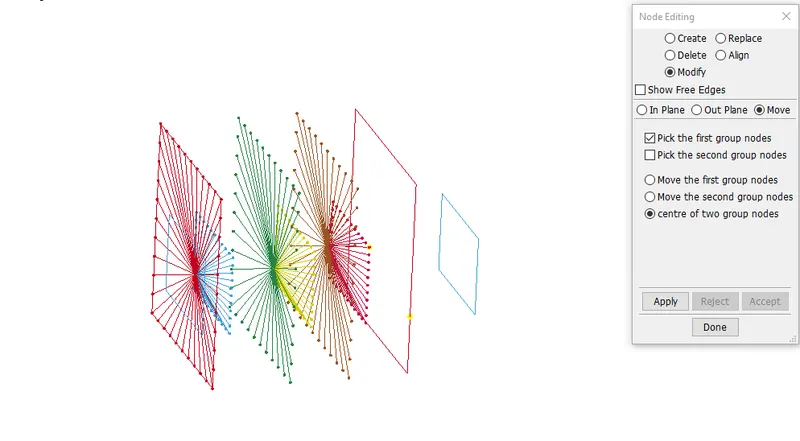
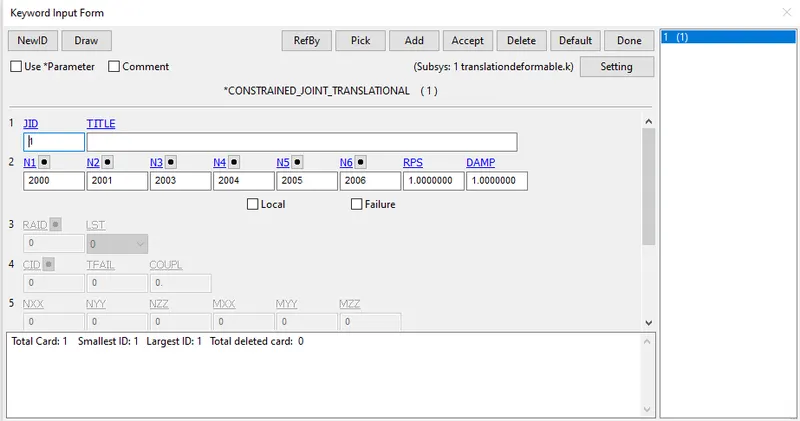
- The same steps followed as rigids.
- Make sure we need to used velocity for deformable and node 5,6 should be offset.
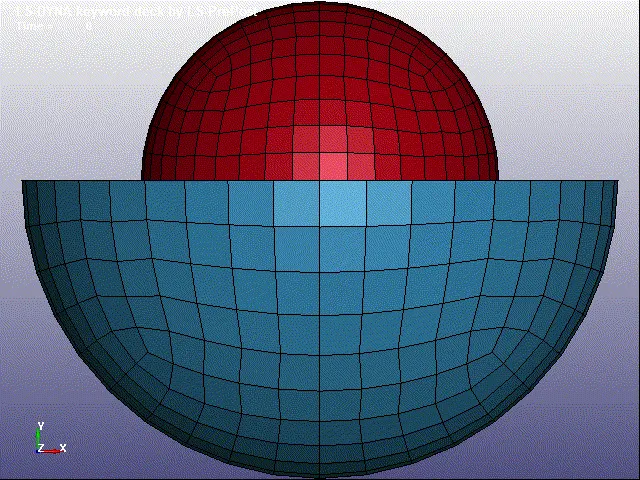
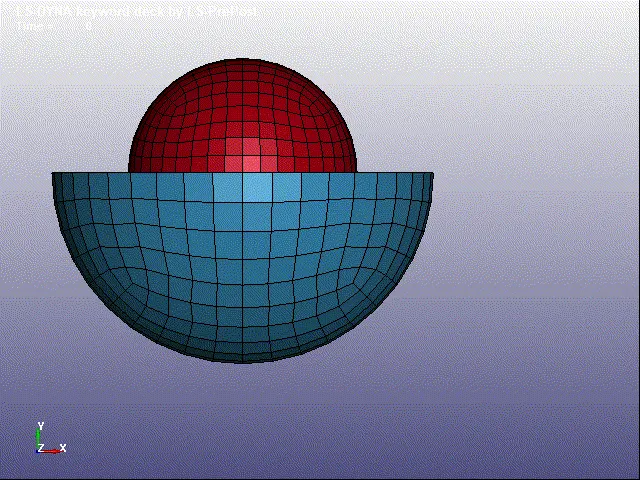
SPHERICAL JOINT:-
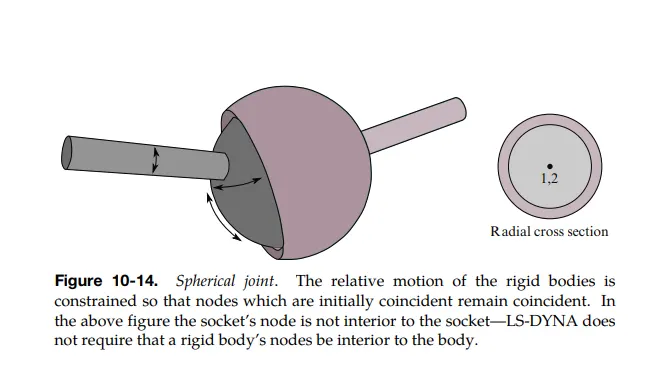
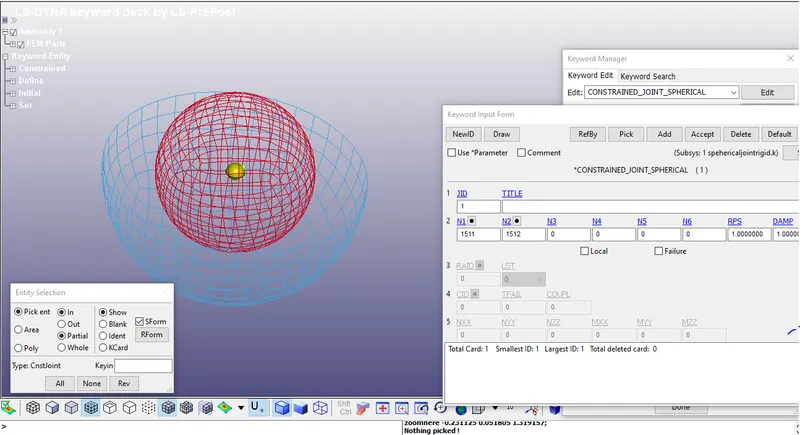
- For this joint, we need to create 2 nodes with the same coordinates and we need to set it to part
- And then we need to assign the spherical joint
- Here we made 2 circles with different radius considering origin as the center point.
- After this, we assigned velocity rigid to the small circle.
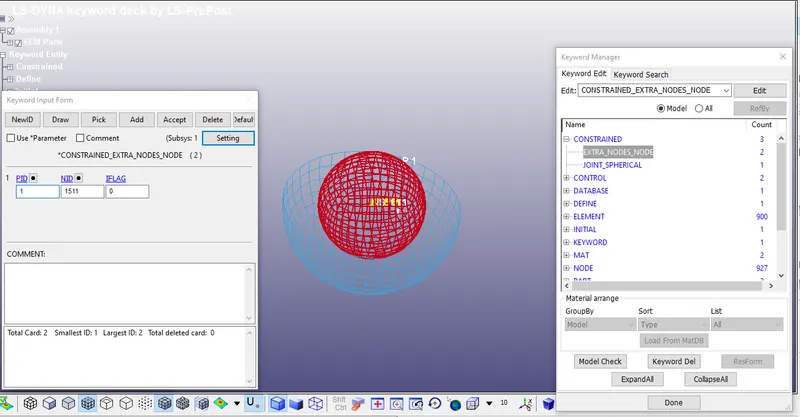
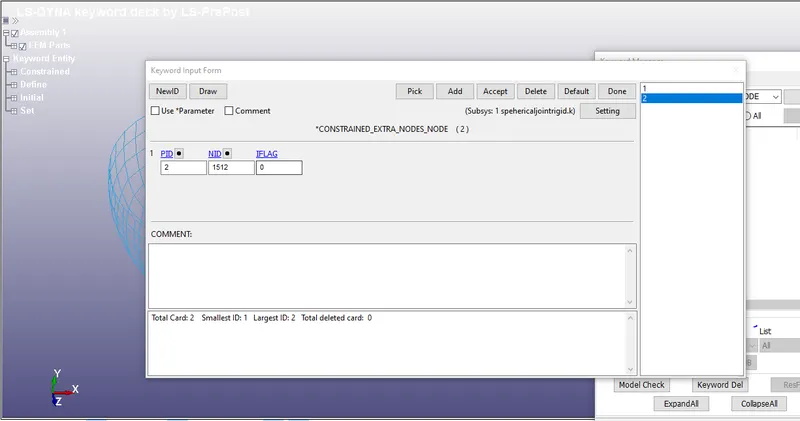
DEFORMABELS:-
- We need to make CNRB by taking origin as a center with respect to two parts.
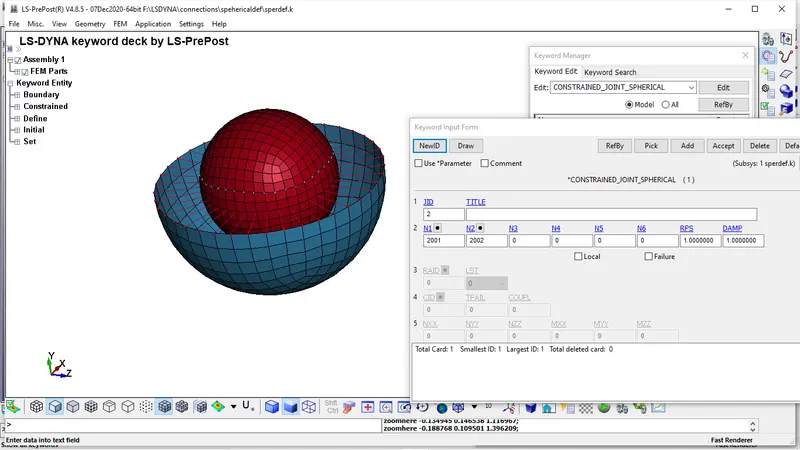
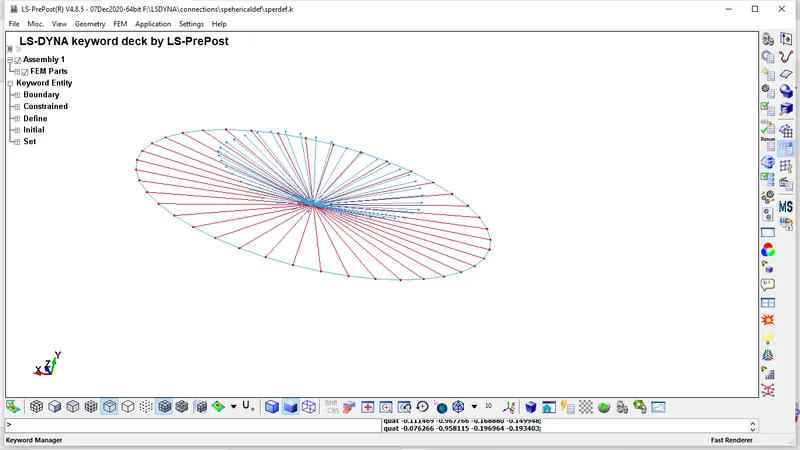
- And same as rigid follows we need to fix bigger circle by boundary SPC constrained.
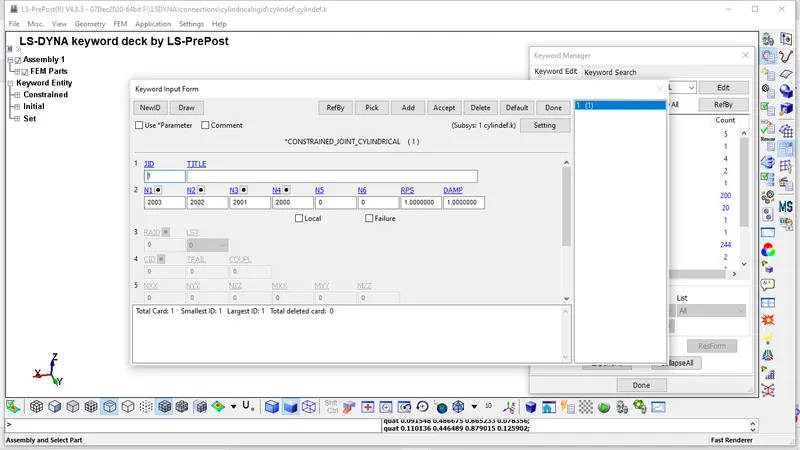
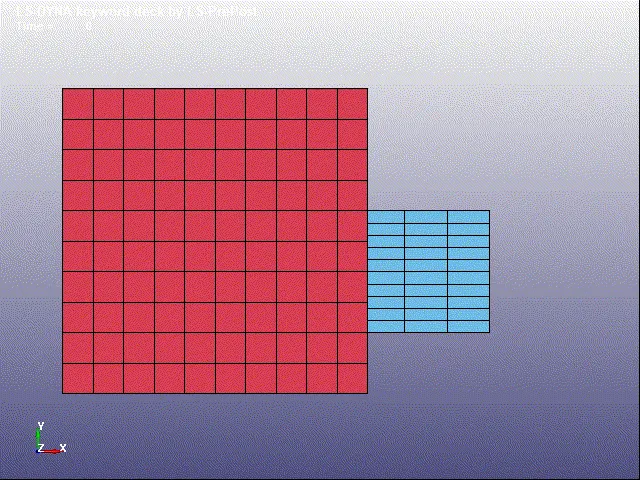
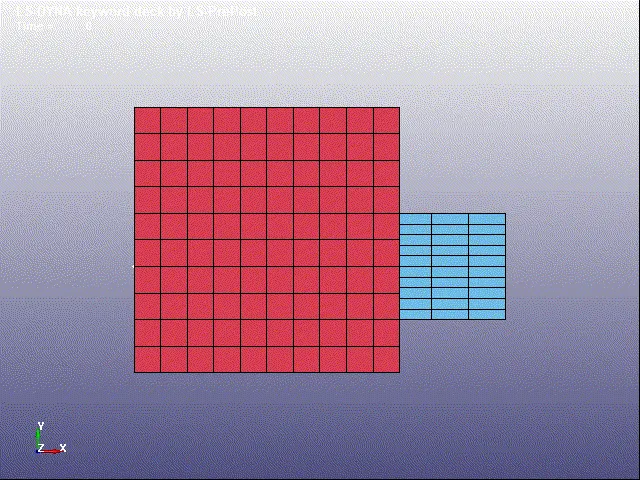
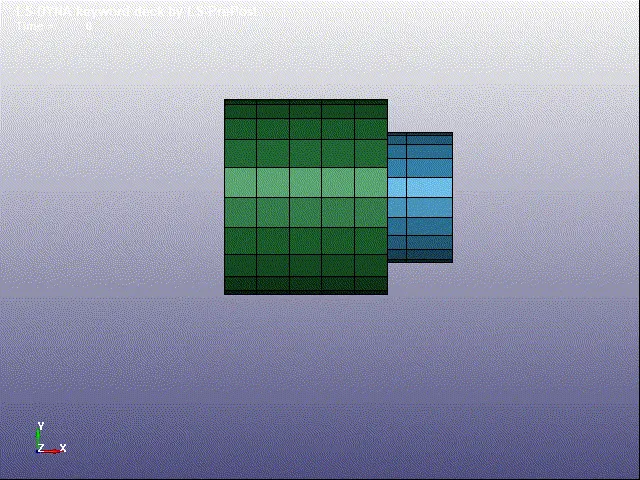
CYLINDRICAL JOINT:-
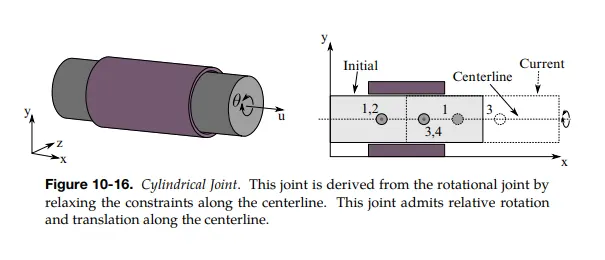
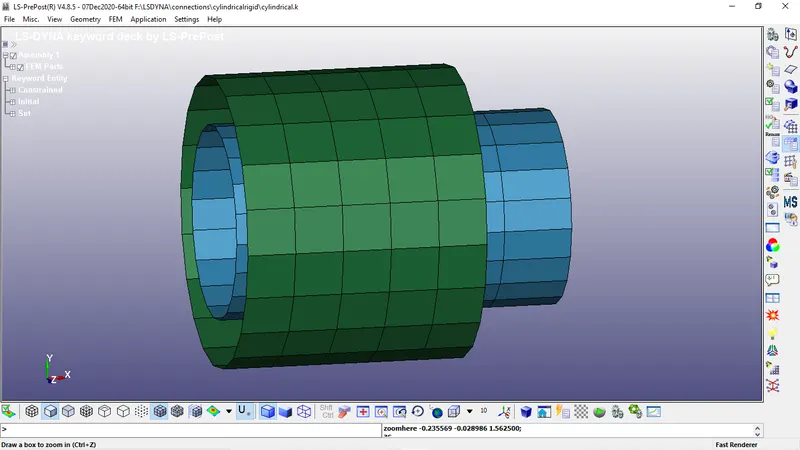
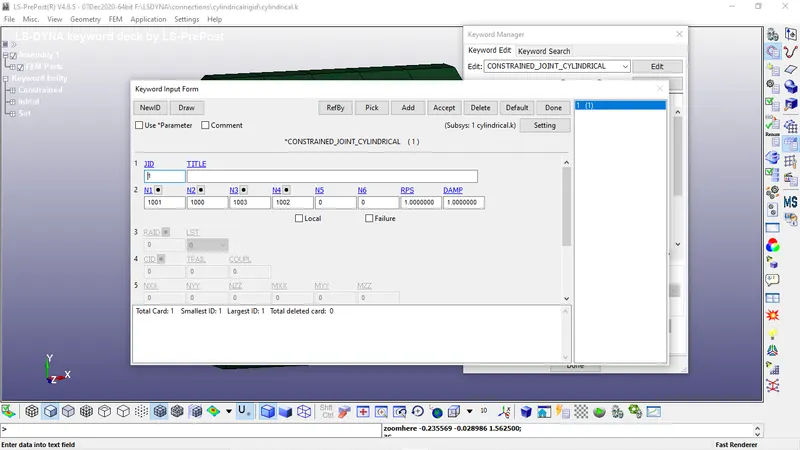
- It was the same as the translation joint but here only two pairs of nodes only required.
DEFORMABLES:-
RESULTS:-
REVOLUTE JOINT(RIGID & DEFORMABELS)
TRANSLATION JOINT(RIGID & DEFORMABELS)
SPHERICAL JOINT(RIGIDS &DEFORMABELS)
CYLINDRICAL JOINT (RIGIDS & DEFORMABELS)
CONCLUSION:-
- Understood how to prepare a deck for creating and stimulation joint.
- Understood how to prepare for joint for deformable and rigids.