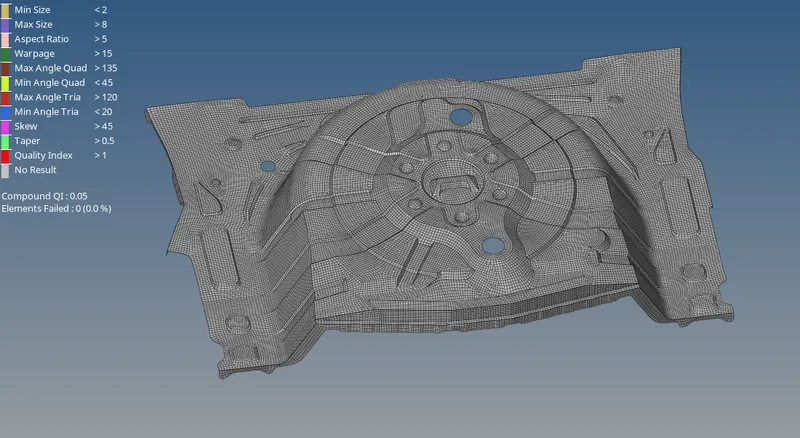
Week 12:Project 2-Meshing of Rear Wheel Holder challenge
AIM:
- To perform preprocessing on the given rear wheel holder sheet metal component using hypermesh preprocessing software
OBJECTIVE:
- To generate the mid surface manually and do a geometric cleanup on the component
- To generate mesh flow and to get proper mesh flow on the given component with low tria concentration
- To check the element quality according to the given quality criteria
- To assign a thickness for the component
PROCEDURE:
1. Import:-
- Import given cad model into hypermesh
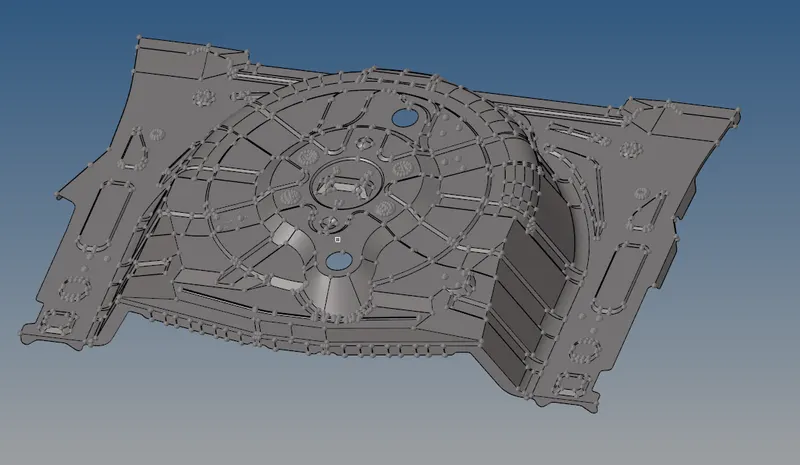
- switch to the topo mode and examine whether the solid exists in the component or not, if solids exist, delete the solid
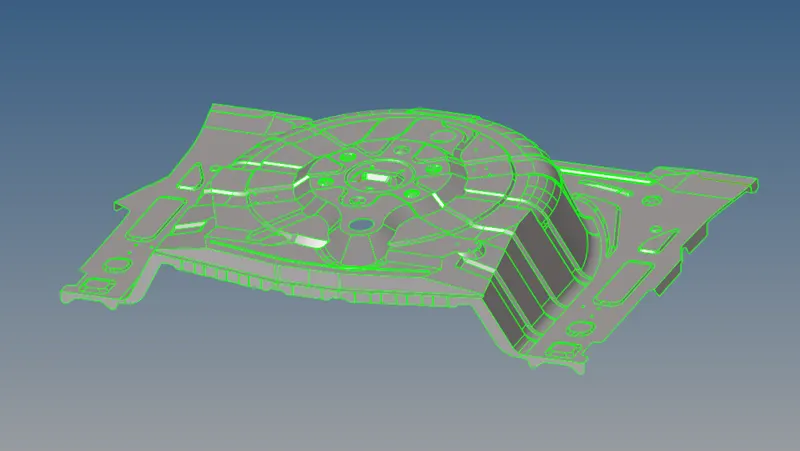
- we need to check whether any errors in geometry
- clear the free edges in the body then only we can extract mid surface properly
2.Mid surface:-
- Organize into a single component and delete the unnecessary component
- we need to measure the thickness of a given component to check whether all region is uniform thickness is .75mm
- Extract mid surface using auto mid surface option by offset + planes + sweep
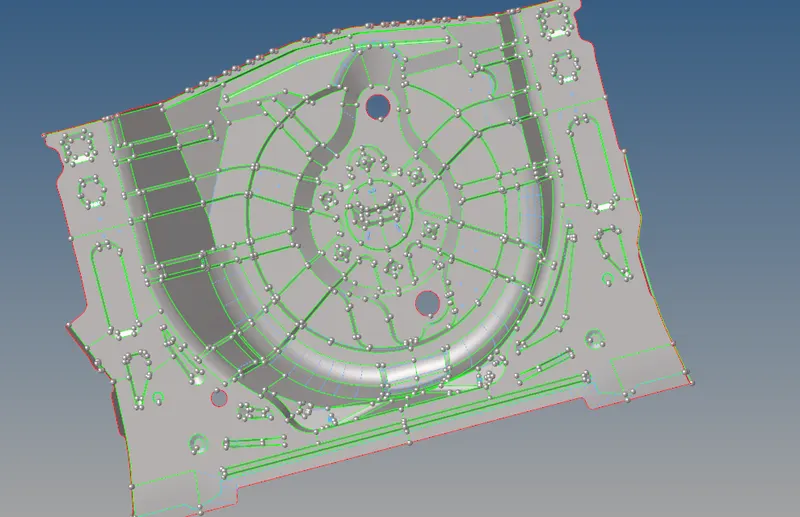
- The middle surface is assigned to a new collector
3. Geometry cleanup:-
- Fix geometric deformation in certain areas by deleting the surface and recreating a new surface there
- Fix all connectivity issues by repacing edges with a suitable tolerance
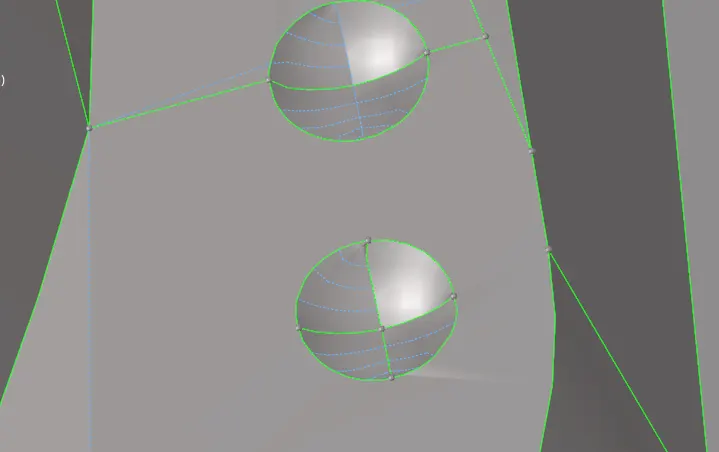
- Do geometric cleanup on mid surface
- check for free edges, if any toggle them and remove it
- Fill the surface with filler surface option
- The split surface line to create split on the surface by node and to line
- Project point to project a point to another line
- In quick edit panel, mostly used tools - toggle edge for toggling
- Add remove point for add and removing points
- Replace point to replace one point to another
- Split surface node to create split on the surface by nodes
- some surfaces are done by ruled option in surfaces
- Delete pinholes

- All geometric cleanup is completed then go to meshing
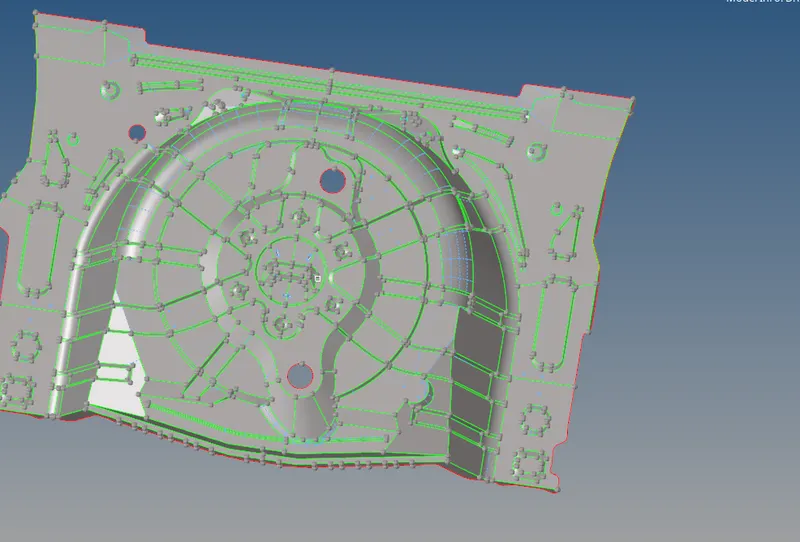
4. Meshing:-
- Enter the quality criteria as given and save the criteria
Target Element Length = 5 Units
| S.N | Quality Criteria | Value |
| 1 | Aspect Ratio | 5 |
| 2 | Skewness | 45 |
| 3 | Warping | 15 |
| 4 | Taper | 0.5 |
| 5 | Min. Length | 2 Units |
| 6 | Max. Length | 8 Units |
| 7 | Min angle Quad | 45 |
| 8 | Max angle Quad | 135 |
| 9 | Min angle Tria | 20 |
| 10 | Max angle Tria | 120 |
| 10 | Tria % | 10 |
- start manual meshing from the center region and spread to geometry
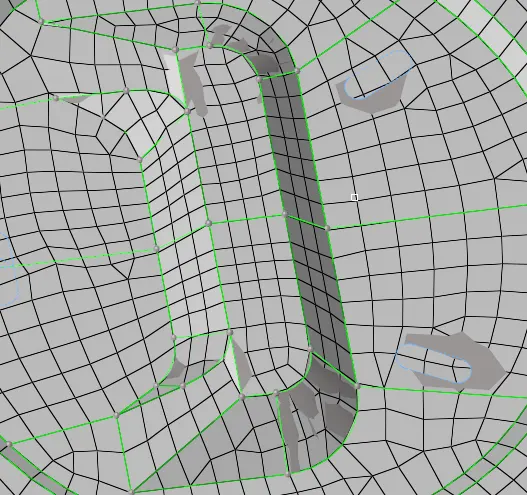
- while meshing do partitions on geometry and mesh manually to improve quality of mesh flow
- Use rebuild mesh after meshing to get good mesh flow with minimized tria, algorithm behind rebuild mesh give you better mesh flow
- Set critetia for rebulid mesh
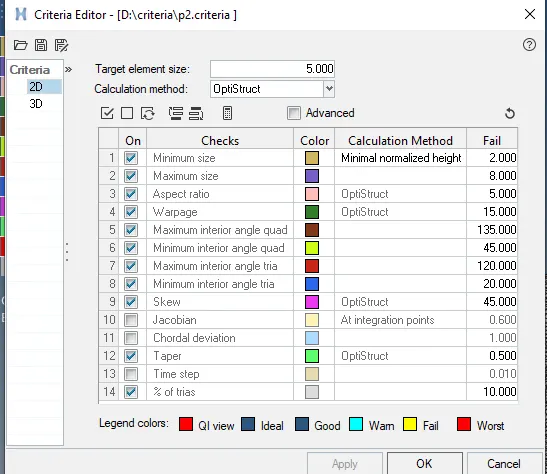
- Eliminate opposite tria , trai on edges,trias on fillets, rotational quads
- In converging areas, we get more tries
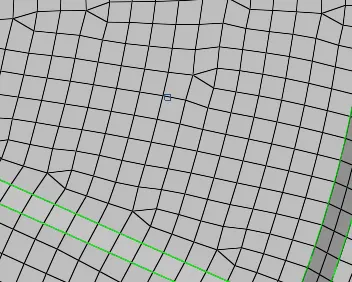
- Reflect certain symmetric geometry to save time
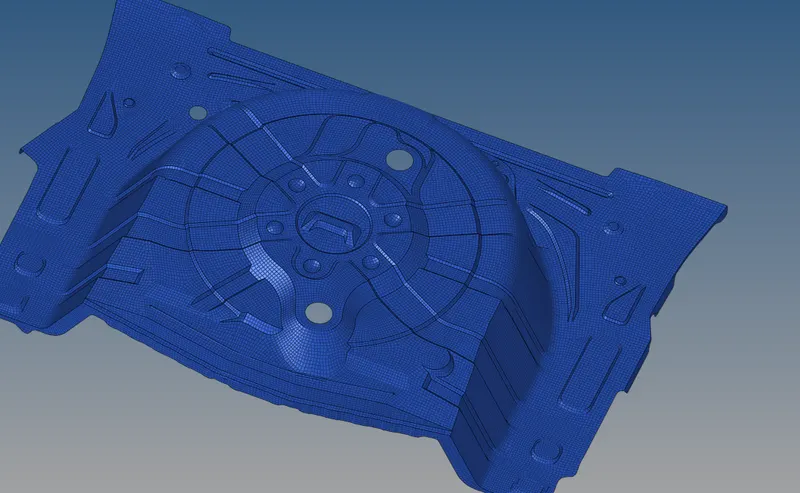
- Eliminate element failure:
- Use options quality index to eliminate failures
- Especially drag tria for removing tria
- Swap edge to move tria
- Split collapse edge
- Element optimizes for optimizing elements
- smooth for smoothing
- combine tria to combine adjacent tria
- After every meshing is done smoothing properly for proper mesh flow
- To eliminate warpage we want to translate most deflected node from plane to inwards the plane
- To eliminate the max quad, minimum quad and trais are by going to distance and set the angle per criteria
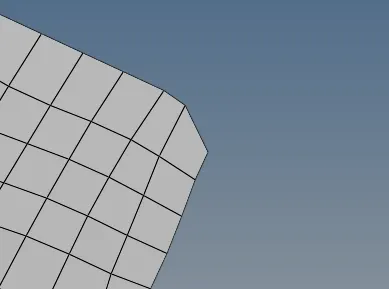
- By doing repeated operations and eliminations of failed elements finally, we got all elements passes quality criteria
i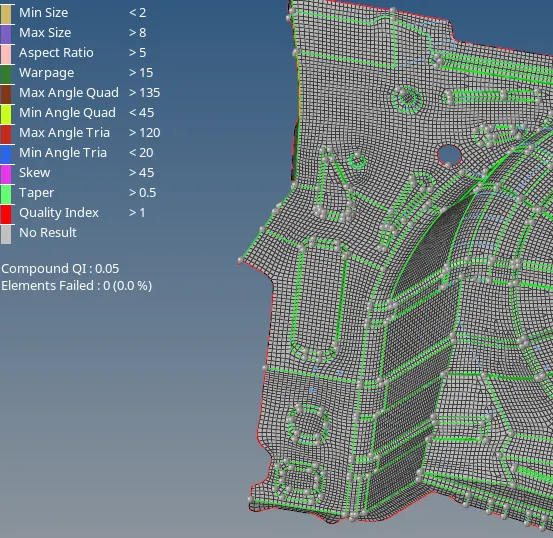
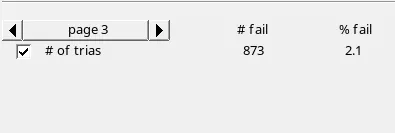
Cheak for tria %
5. Checking for free edges and normals:
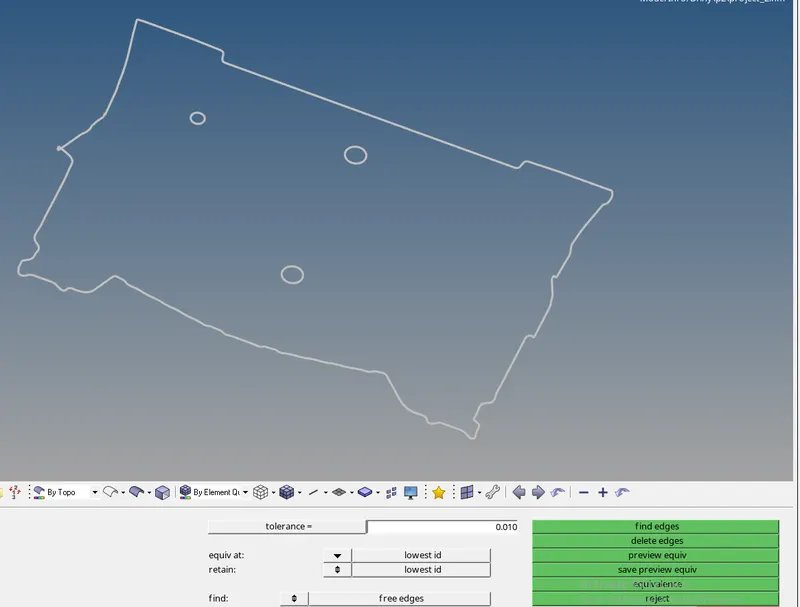
- Check for the free edges from the tools+edges.
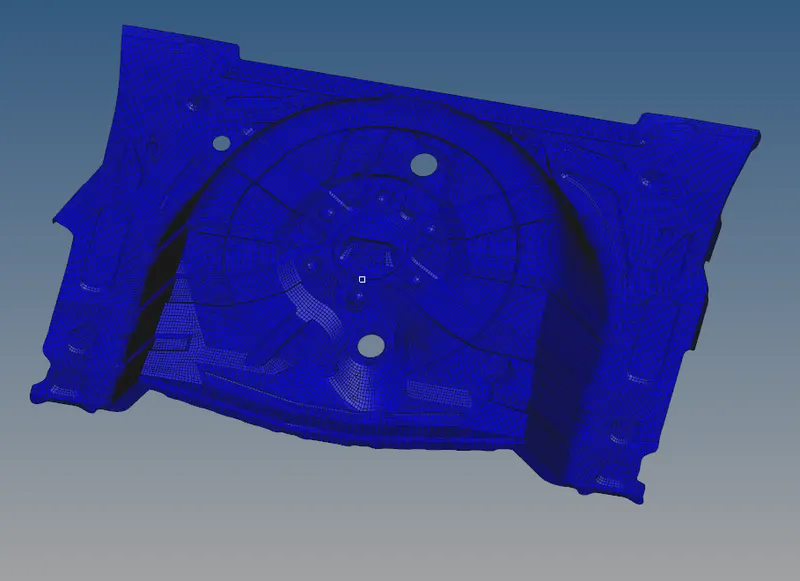
- For normal go to tools+normal, adjust normals.
6. Assign dummy material and property:
- Create a property for the component, and assign it to mesh.
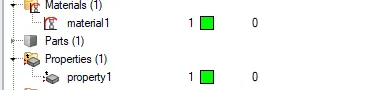
- The thickness of the part is uniform so give a thickness of 0.75mm in the property.