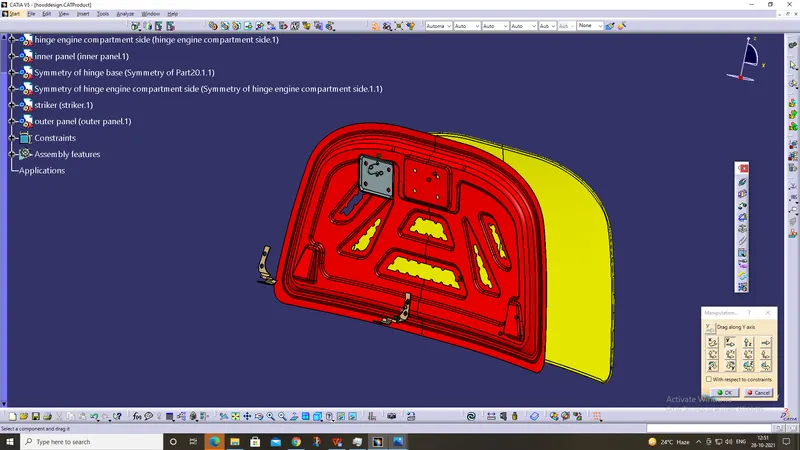
Hood design-Week 2
Objective:-
Design hood outer panel, inner panel, and reinforcements with the given outer hood skin, master section, and design parameters.
Pedestrian Safety:-
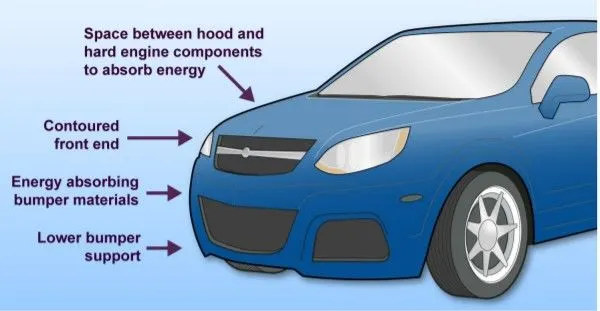
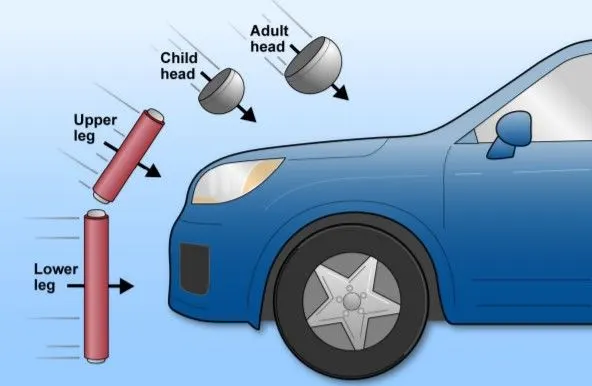
People and vehicles often share the road, especially in densely populated areas. In a fast-paced world with many distractions, the reality is that pedestrians and vehicles are involved in accidents with severe or fatal injuries as a result.
Vehicle safety factors should simultaneously consider occupant and pedestrian safety, given that pedestrians are the third-largest category of traffic fatalities. Most pedestrian deaths occur due to traumatic brain injury, resulting from the hard impact of the human head against the vehicle's stiff hood or windshield. Therefore, how to design a pedestrian-friendly vehicle and propose a new hood structure is a matter of urgency for minimizing pedestrian head injuries. In this study, three kinds of sandwich hood structures are proposed for reducing pedestrian head injuries, including carbon fiber-reinforced polycarbonate, carbon fiber-reinforced foam and aluminum-reinforced polycarbonate.
Deep Drawing:- For steel deep drawing is used.
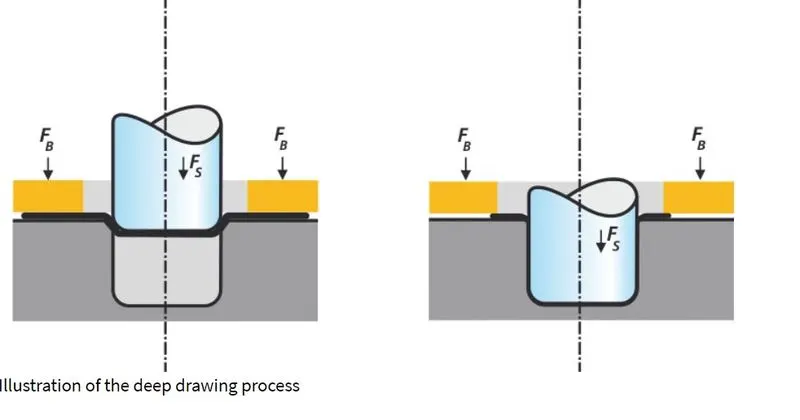
Deep drawing is one of the most widely used processes in sheet metal forming. Apart from its use in many other sectors, it is applied in the automotive industry for the manufacturing of car body parts. The deep drawing process is a forming process that occurs under a combination of tensile and compressive conditions.
Sheet metal blank is radially drawn into a forming die by the mechanical action of a punch. It is thus a shape transformation process with material retention. The process is considered "deep" drawing when the depth of the drawn part exceeds its diameter. This is achieved by redrawing the part through a series of dies.
The flange region (sheet metal in the die shoulder area) experiences radial drawing stress and tangential compressive stress due to the material retention property. These compressive stresses (hoop stresses) result in flange wrinkles. Wrinkles can be prevented by using a blank holder, the function of which is to facilitate controlled material flow into the die radius.
Design parameters:-
Hood Thickness Information
Outer Panel Thickness = 0.75mm
Inner Panel Thickness = 0.75mm
Reinforcement Thickness = 1.5mm
Master Section:-
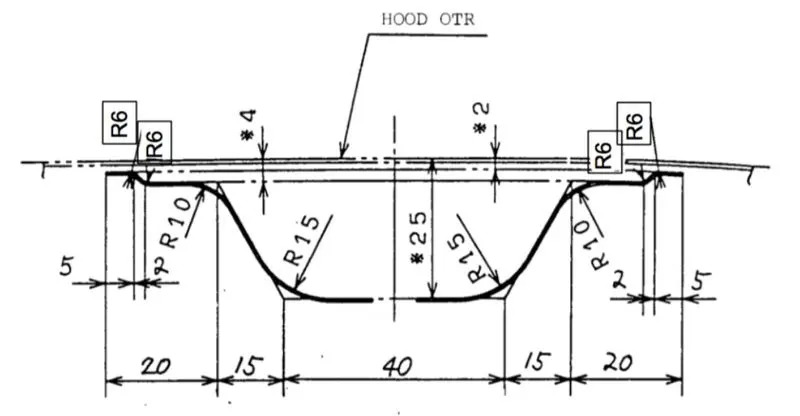
Hood design in CATIA:-
Creation inner panel:-
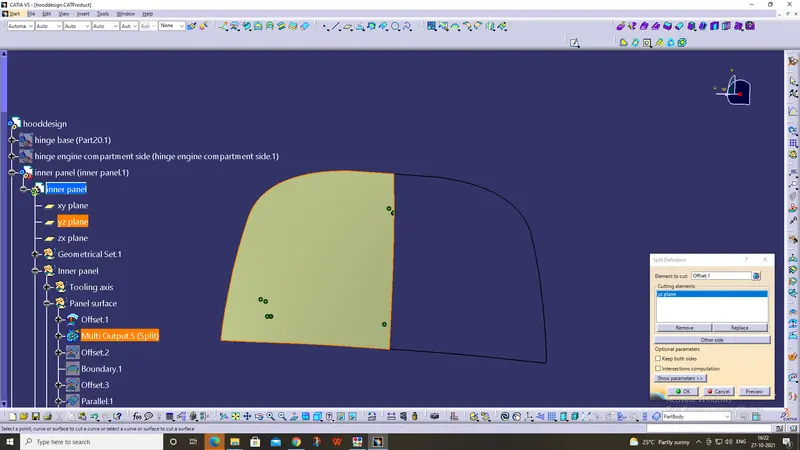
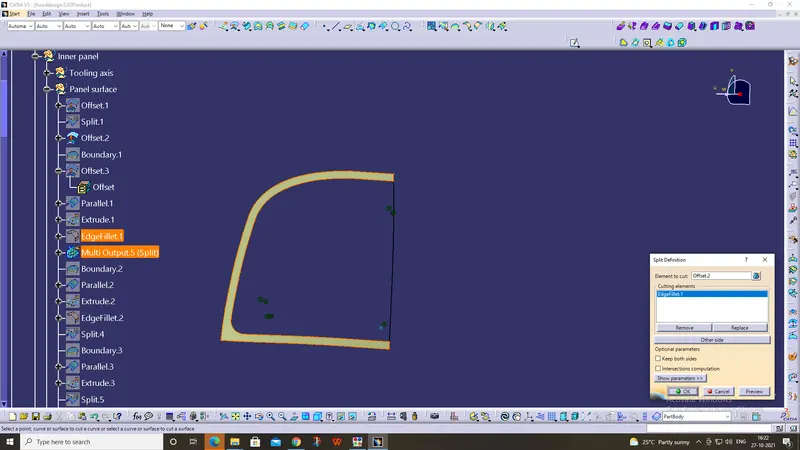
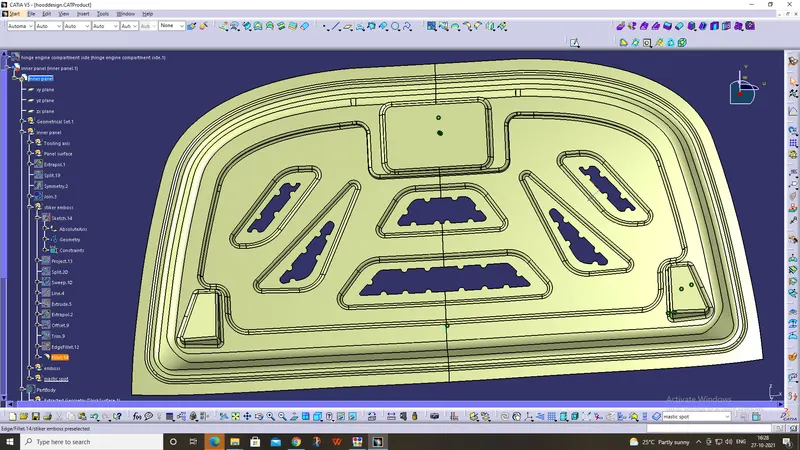
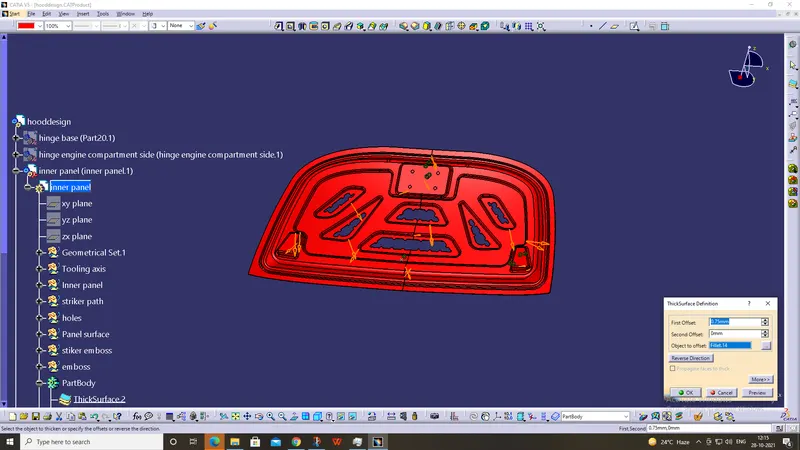
Create emboss:-To compensate for the removal of material emboss are created.
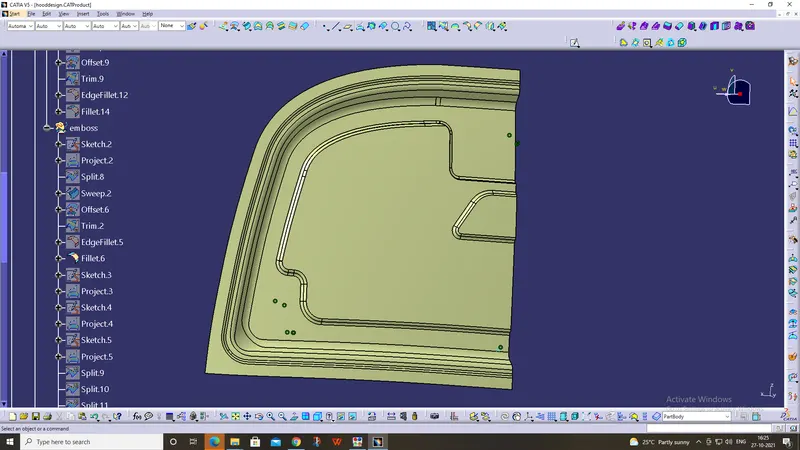
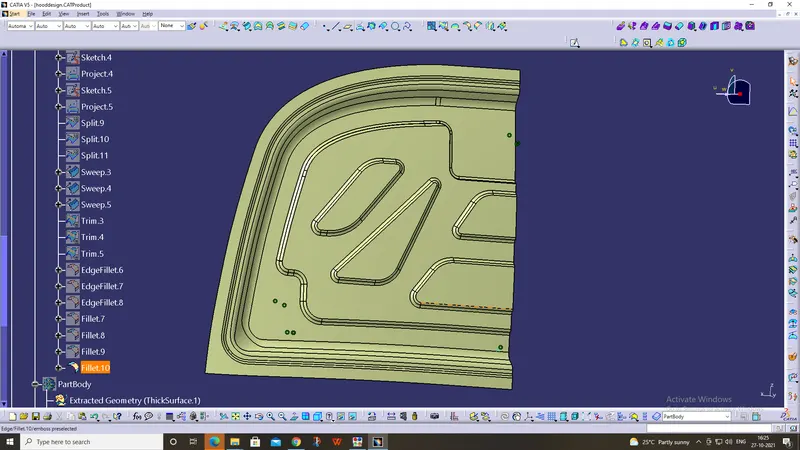
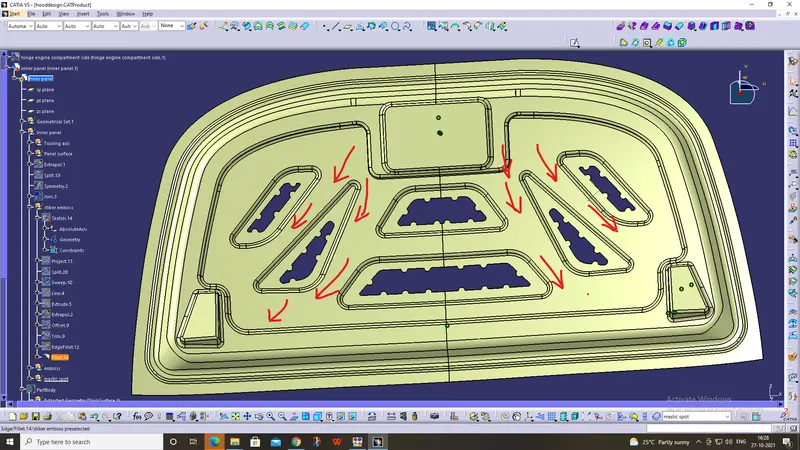
Emboss is created in such a manner that it will change the direction of the impact force towards the hinges and also crumbles that will reduce the impact for the passenger.
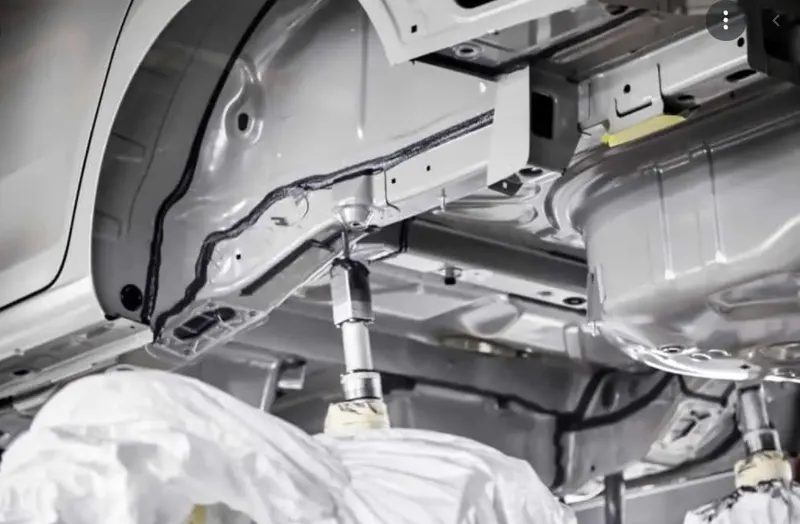
Mastic point
Mastic points are areas where the inner hood panel is joined with the outer panel using mastic glue. This mastic glue keeps the inner panel stuck to the outer panel.
The main purpose of the outer panel is for the aesthetic look. Thus, we cannot use rivets or spot welding. This has to be done with the help of the hemming and mastic sealants. Mastic sealants are elastic compound that behaves like rubber. It is placed between the outer and inner panel. Initially is it in paste form but after the hot furnace bath, it gets hardened thus joining the outer and inner panel.
Created profile for mastic point:-
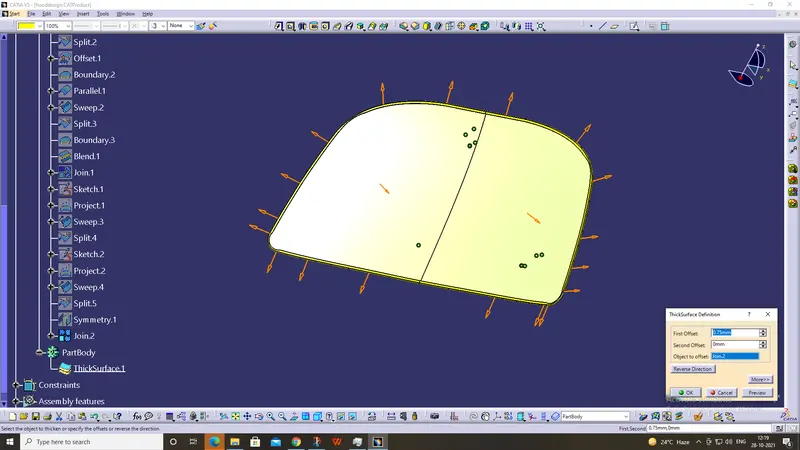
Thicken the surface by 0.75mm.
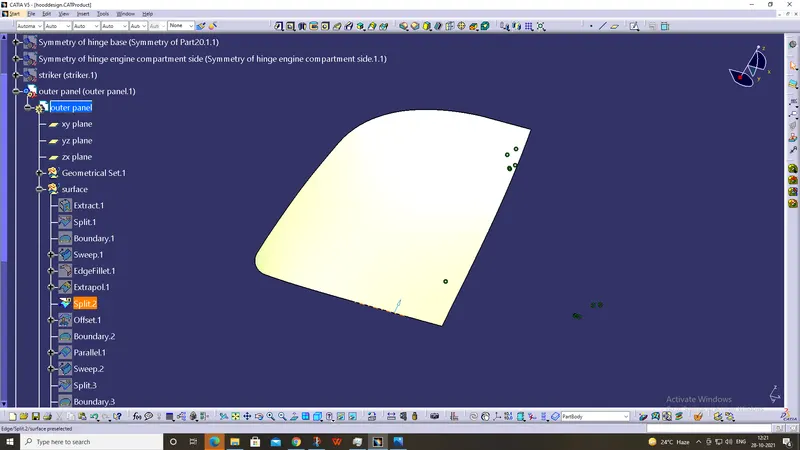
Created the outer panel.
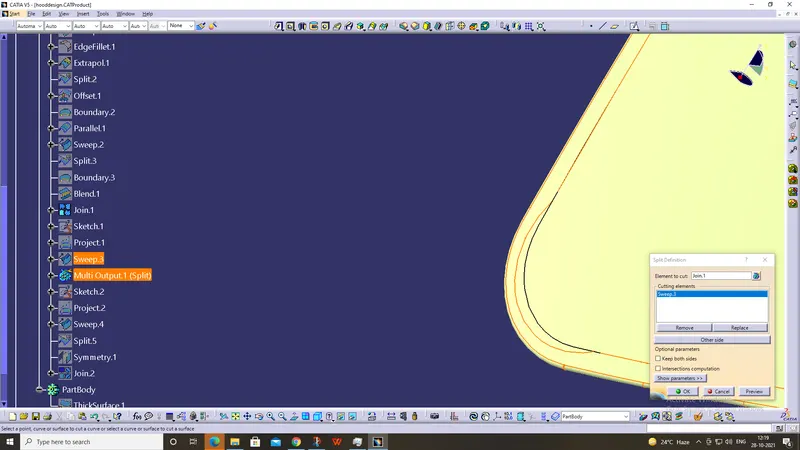
Given relief at the corners.
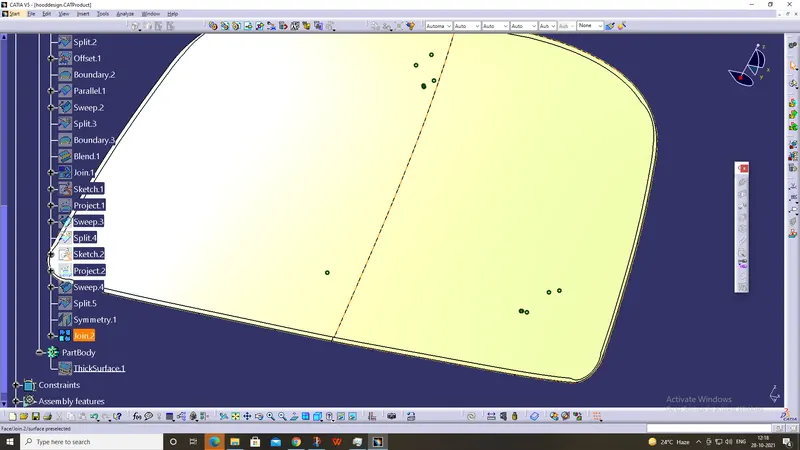
thicken it.
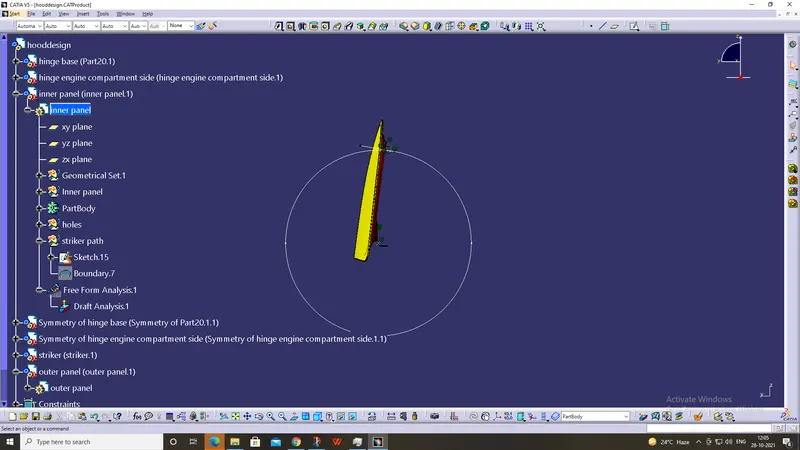
The trajectory of the striker:
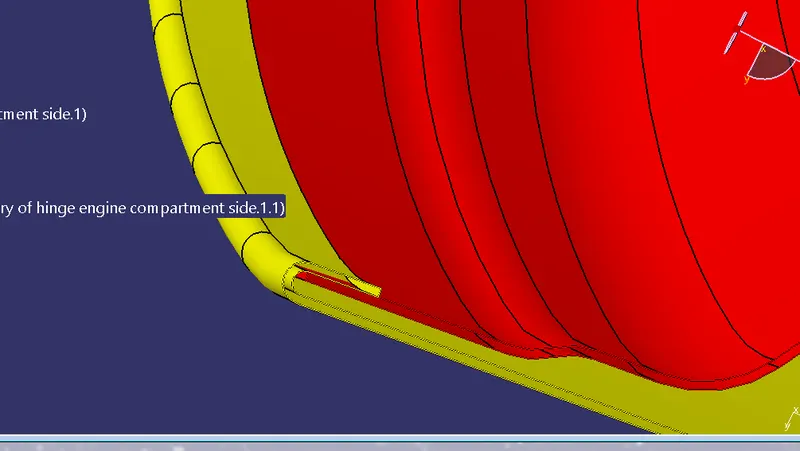
Hemming:-
Hemming is a metal stamping process for producing raised or sunken designs or reliefs bypassing metal sheets or strips between rolls of the desired pattern. The process enables repeated production without variation and does not change the metal’s wall thicknesses.
In-car part production, hemming is used in assembly as a secondary operation after deep drawing, trimming, and flanging operations to join two sheet metal parts (outer and inner) together. Typical parts for this type of assembly are hoods, doors, trunk lids, and fenders.
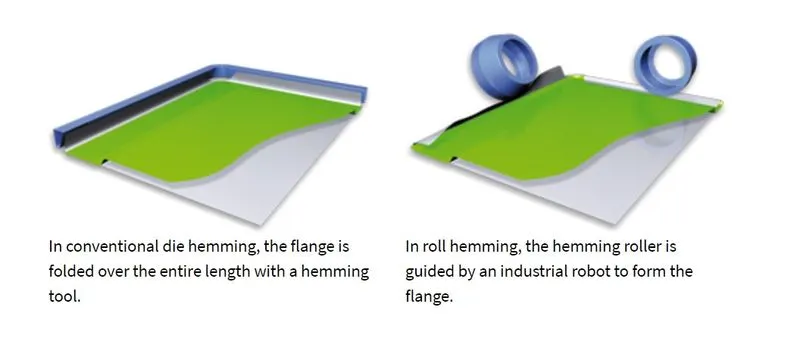
There are two types of hemming operations,
- Conventional die hemming
- Roll hemming
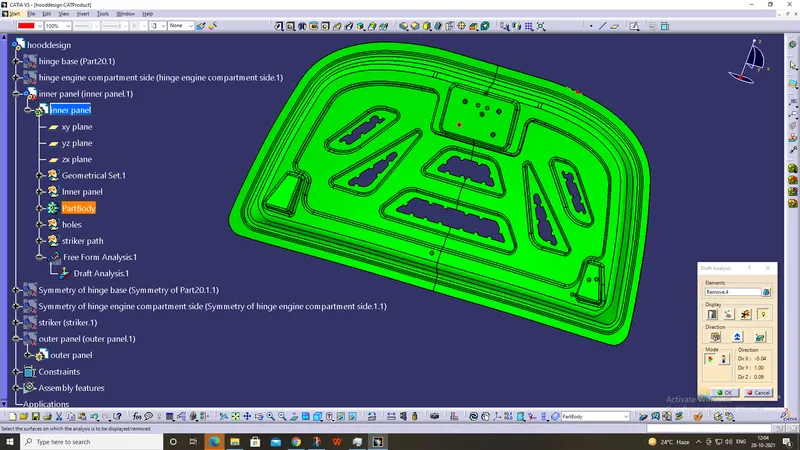
Draft analysis:
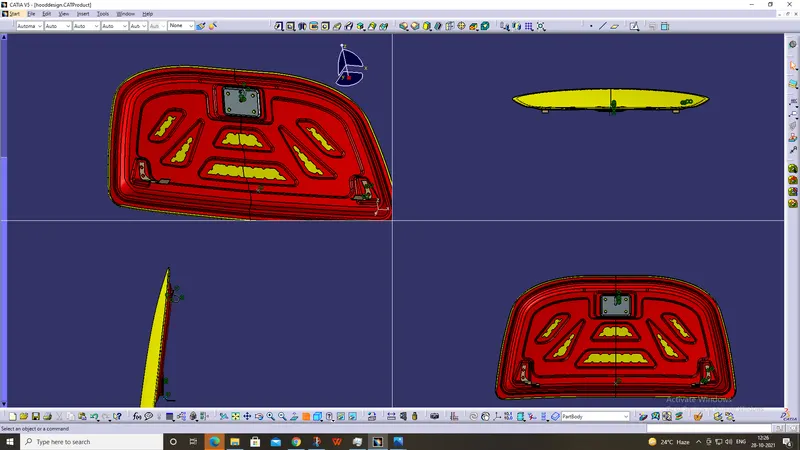
Multi-view of hood:
Exploded view: