Challenge on Combustion
Combustion:
Combustion is a chemical process in which a substance reacts rapidly with oxygen and gives off heat. The original substance is called the fuel, and the source of oxygen is called the oxidizer. The fuel can be a solid, liquid, or gas, although for airplane propulsion the fuel is usually a liquid. During combustion, new chemical substances are created from the fuel and the oxidizer. These substances are called exhaust.
Most of the exhaust comes from chemical combinations of fuel and oxygen. When a hydrogen-carbon-based fuel (like gasoline) burns, the exhaust includes water (hydrogen + oxygen) and carbon dioxide (carbon + oxygen). But the exhaust can also include chemical combinations from the oxidizer alone. If the gasoline is burned in air, which contains 21% oxygen and 78% nitrogen, the exhaust can also include nitrous oxides (NOX, nitrogen + oxygen). The temperature of the exhaust is high because of the heat that is transferred to the exhaust during combustion.
Because of the high temperatures, exhaust usually occurs as a gas, but there can be liquid or solid exhaust products as well. Soot, for example, is a form of solid exhaust that occurs in some combustion processes.
Formation of NOx in different types in combustion, they are:
`O + N_2 iff N +NO`
`N + O_2 iff O+NO`
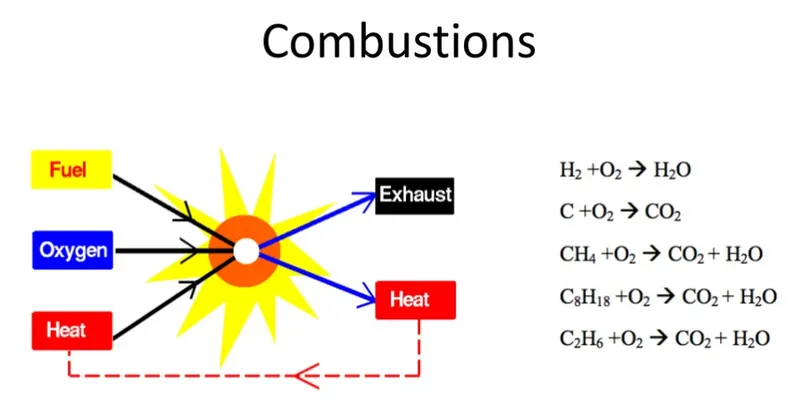
In this challenge, we used the equation `CH_4 + ar(O_2 + 3.72N_2) iff CO_2 + H_2O + N_2`.
Geometry:
Insert the geometry which is in a 3D view. We have to convert it to a 2D view. Click on a plane along the y and z-axis < split body < select the body < select on the plane u want and click on the cutter.
3D View
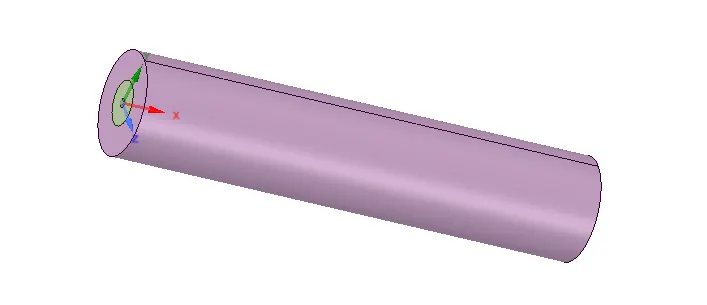
After splitting the body by using the plane we will get like this and combine the body option and combine each part. Then copy the front part of the body and paste it into the new design, which was known as the 2D view.
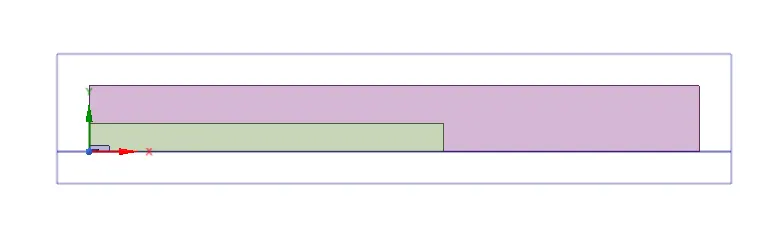
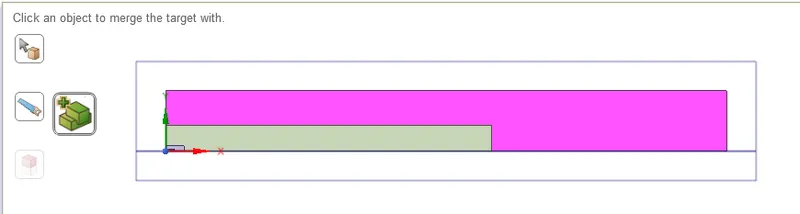
2D view

Mesh:
Mesh grid size = 2mm.
Number of nodes = 17175
Click on sizing < check proximity = yes < num cells across gap = default(3). And click on edges and name the edges as axis, fuel inlet, air inlet, walls, and outside.

Edges (ctrl+e):

Fluent:
Model: K-epsilon RNG, Standard wall function.
Time: steady
Type: pressure-based
2D space: Axisymmetric model
Solver: absolute
Species: Use methane-air 2 step
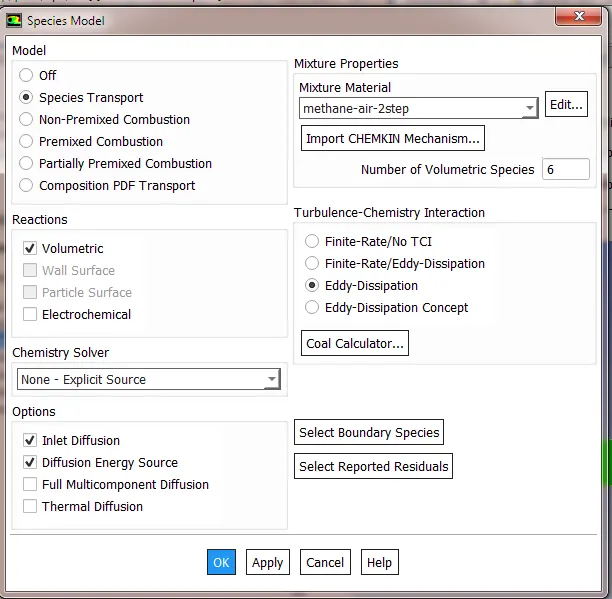
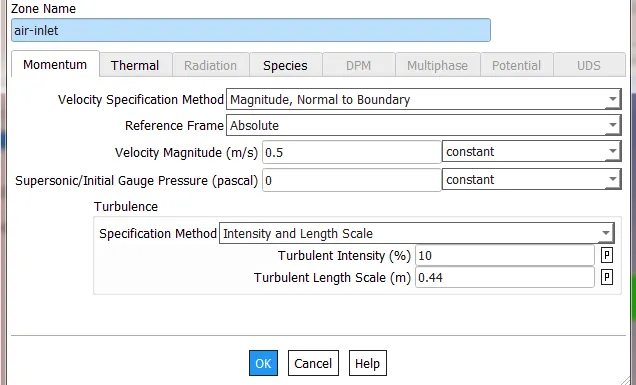
Boundary conditions: Air-inlet: Temperature:300k , Species (`O_2` = 0.23).
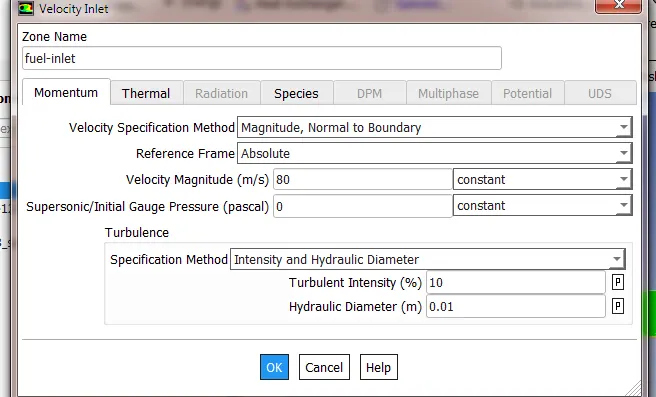
Fuel-inlet: Temperature =300k ; Species (`CH_4` = 1)
Outside = Type(Pressure-outlet); walls = Type(wall).
Go to solving < hybrid method and initialize < create animation and run the calculation.
In case 1 we took `CH_4` = 1 in species in fuel inlet.
But in case 2.1 we took `CH_4` as 0.95 and `H_2O` as 0.05 in the fuel inlet.
But in case 2.2 we took `CH_4` as 0.9 and `H_2O` as 0.1 in the fuel inlet.
But in case 2.3 we took `CH_4` as 0.8 and `H_2O` as 0.2 in the fuel inlet.
But in case 2.4 we took `CH_4` as 0.7 and `H_2O` as 0.3 in the fuel inlet. 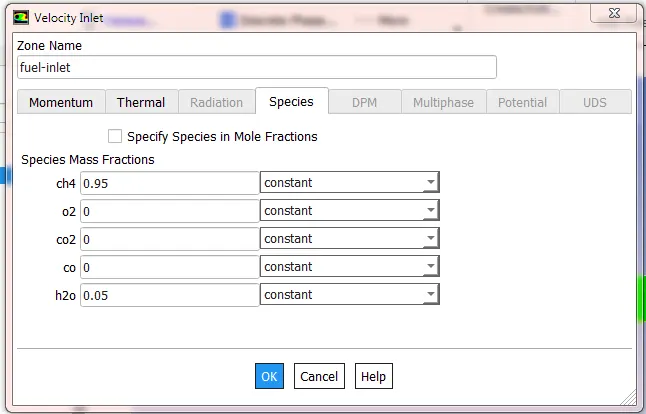
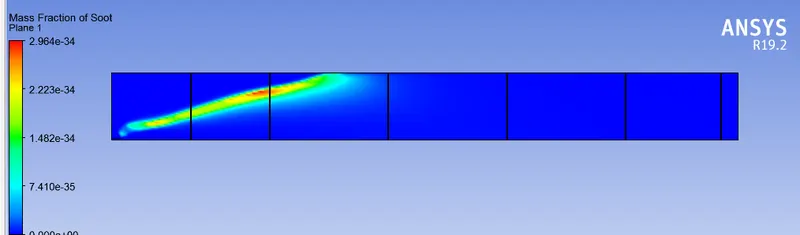
For case 2 we have to apply soot and NOx. For Soot click on species < Soot < select 1-step method < and for NOx < click on Thermal NOx and prompt NOx < select partial equilibrium in [O]model.
After that initialize and run the calculation for 1000 iterations.
Results:
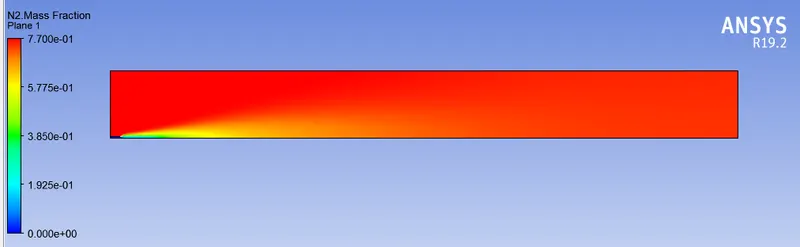
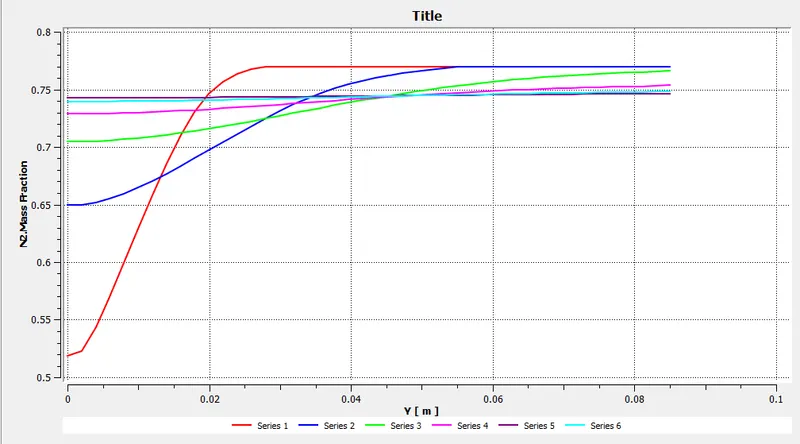
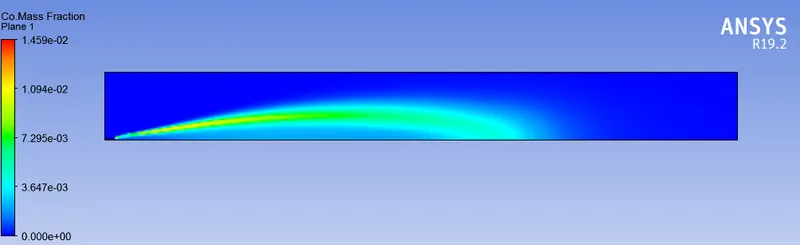
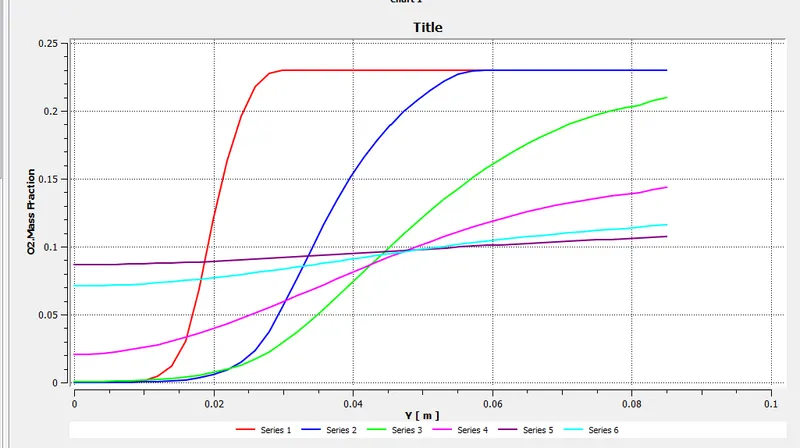
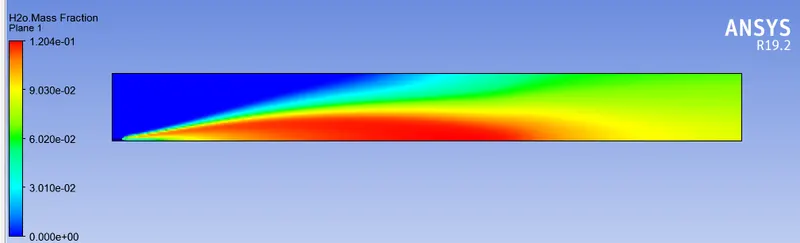
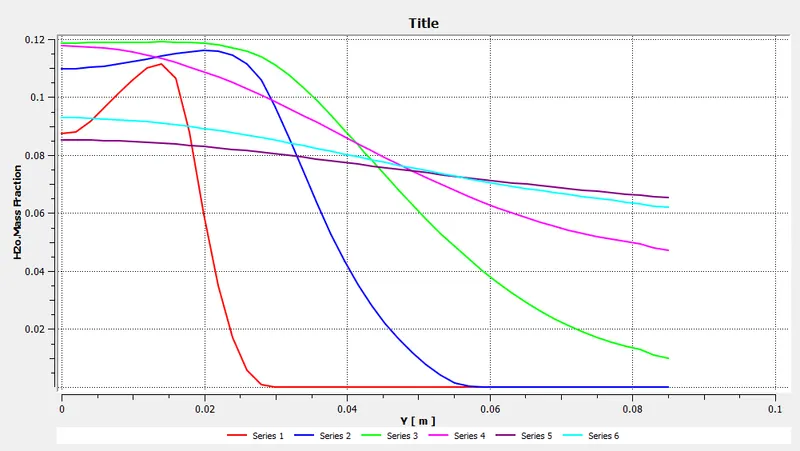
Case 1:
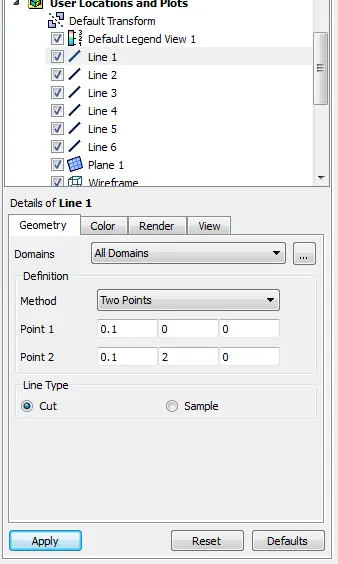
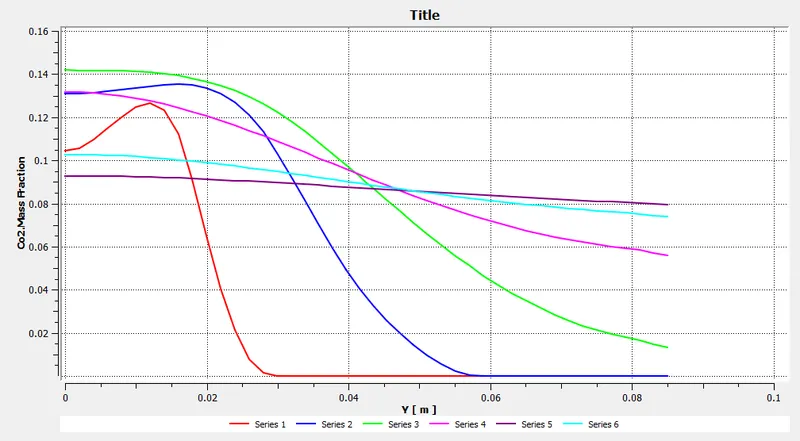
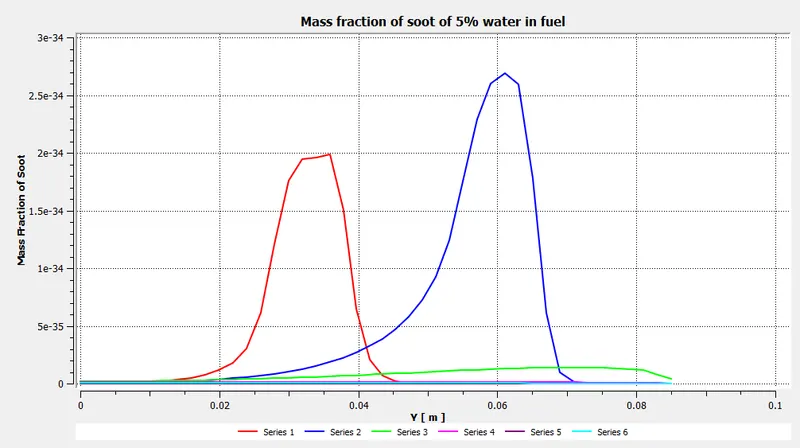
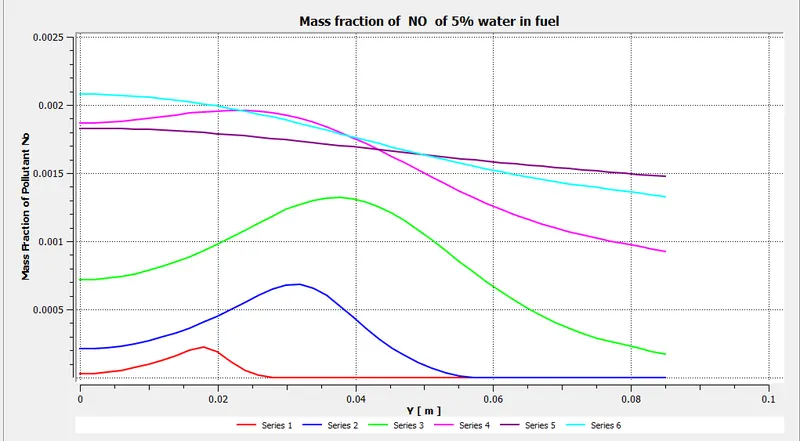
Create 6 lines on the plane with the locations of
line 1:
Point1 x = 0.1, y = 0, z = 0
point2 x = 0.1, y = 2, z = 0 ; line type = cut.
line 2:
Point1 x = 0.2, y = 0, z = 0
point2 x = 0.2, y = 2, z = 0
line 3:
Point1 x = 0.35, y = 0, z = 0
point2 x = 0.35, y = 2, z = 0
line 4:
Point1 x = 0.5, y = 0, z = 0
point2 x = 0.5, y = 2, z = 0
line 5:
Point1 x = 0.65, y = 0, z = 0
point2 x = 0.65, y = 2, z = 0
line 6:
Point1 x = 0.77, y = 0, z = 0
point2 x = 0.77, y = 2, z = 0
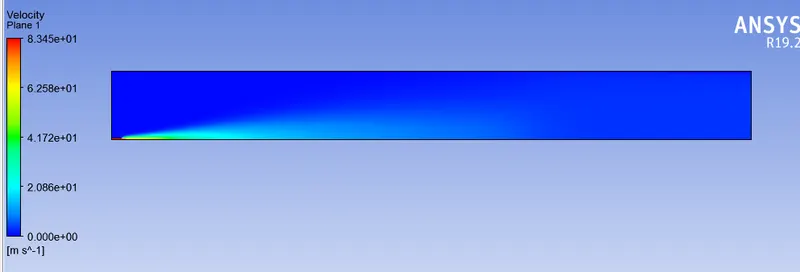
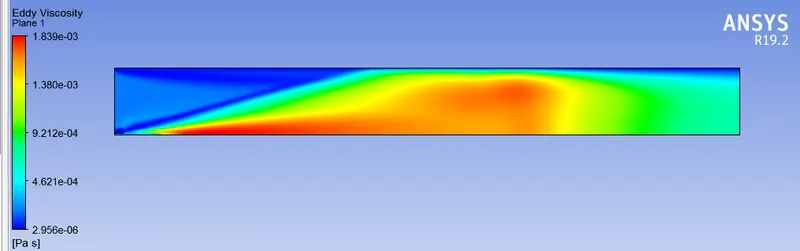
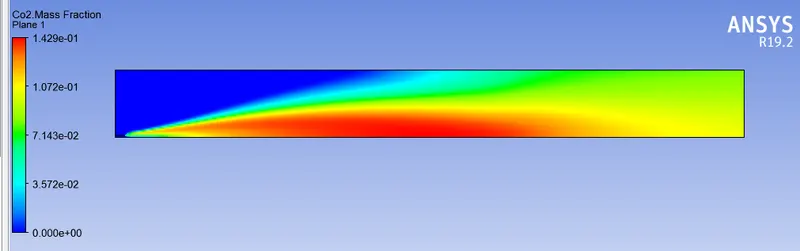
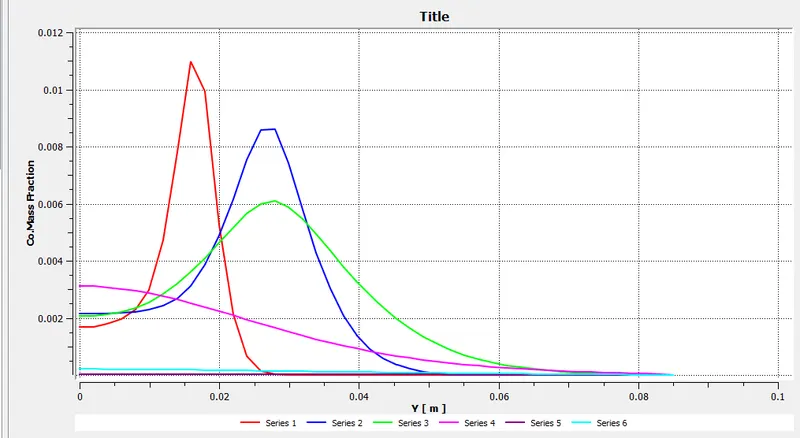
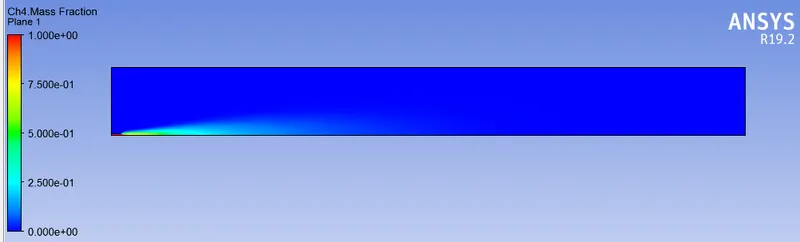
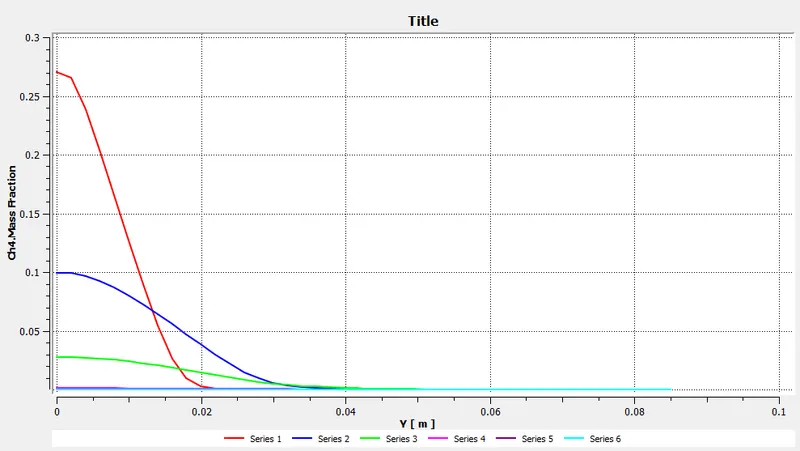
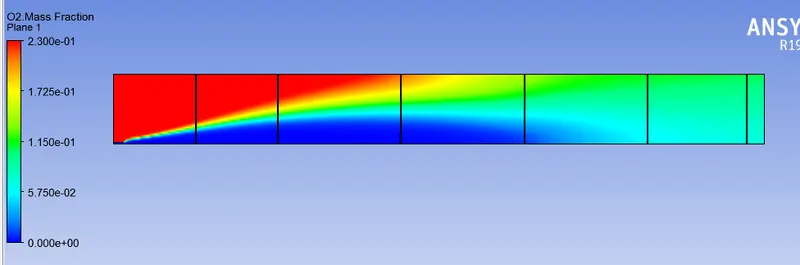
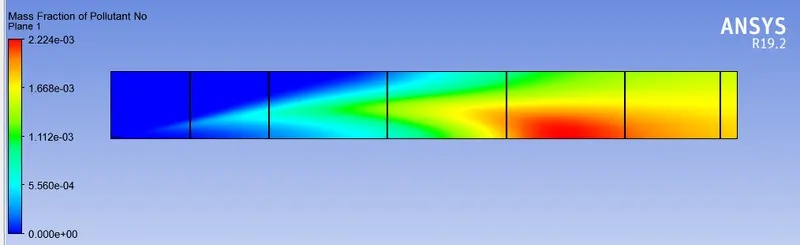
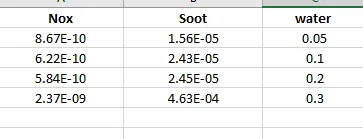
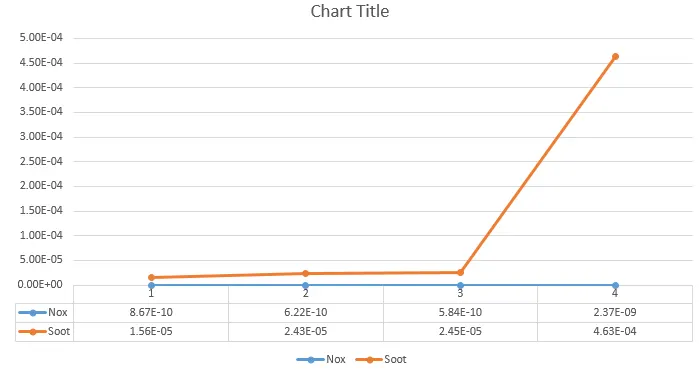
Case 2.1:
Fuel inlet water = 0.05, `CH_4` = 0.95
Mass fraction of soot = 1.5552e-05
Mass fraction of NO = 8.6724e-10
Case 2.2:
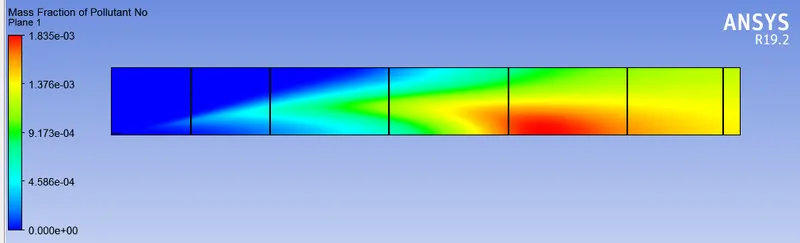
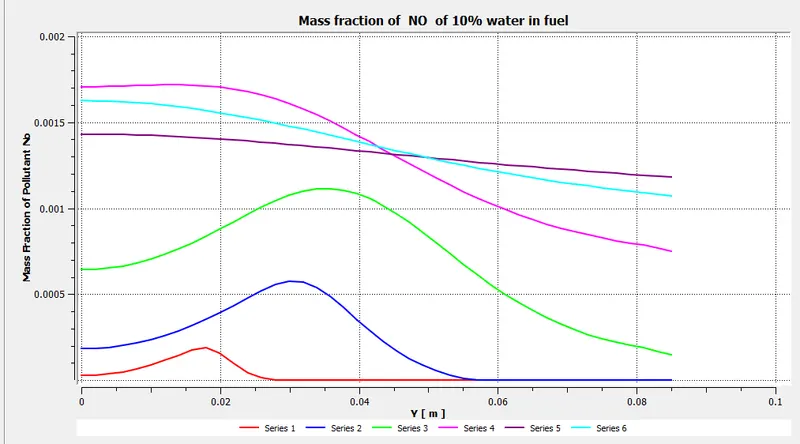
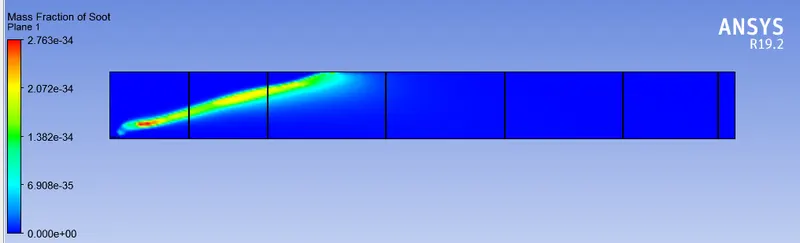
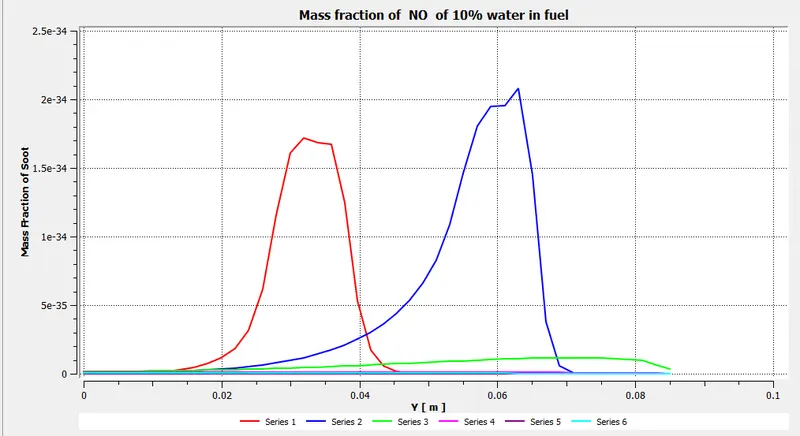
Fuel inlet water = 0.1, `CH_4` = 0.9
Mass fraction of soot = 2.4275e-05
Mass fraction of NO = 6.2155e-10
Case 2.3:
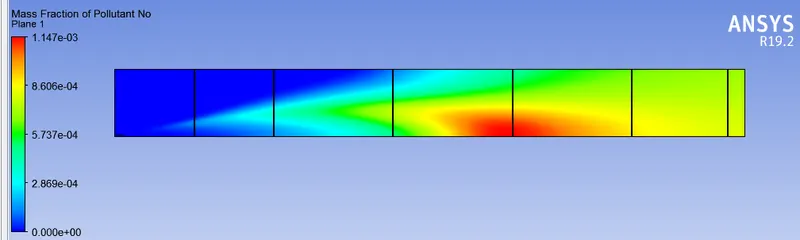
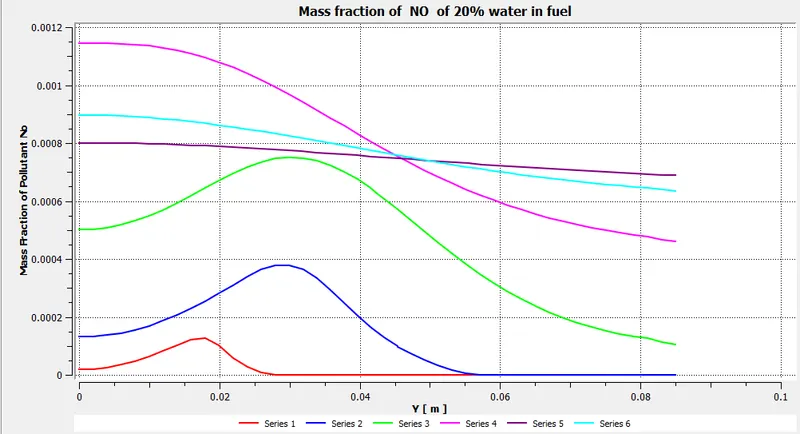
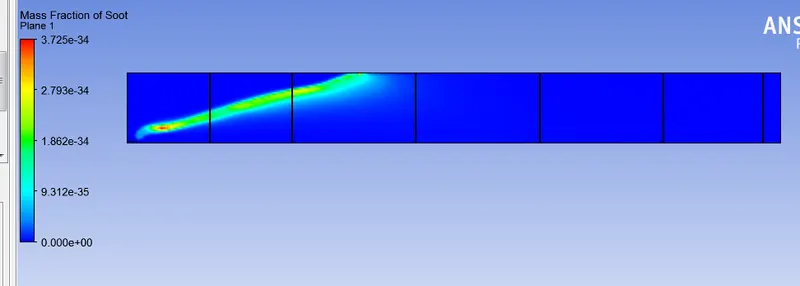
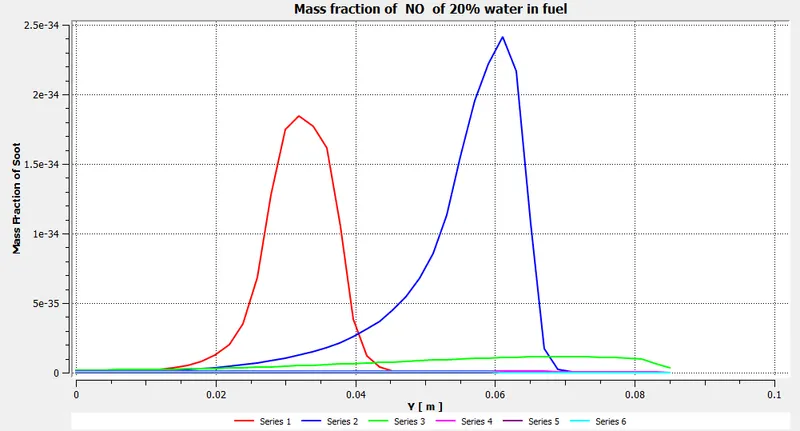
Fuel inlet water = 0.2, `CH_4` = 0.8
Mass fraction of soot = 2.4535e-05
Mass fraction of NO = 5.8406e-10
Case 2.4:
Fuel inlet water = 0.03, `CH_4` = 0.7
Mass fraction of soot = 4.6344e-04
Mass fraction of NO = 2.3734e-09
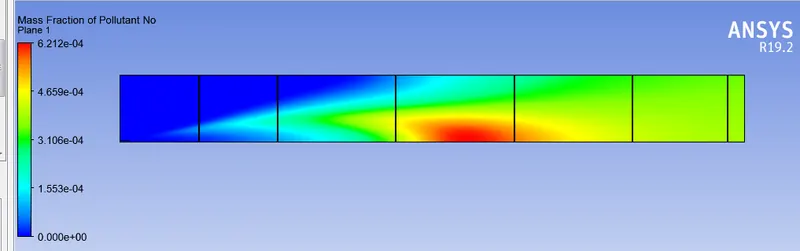
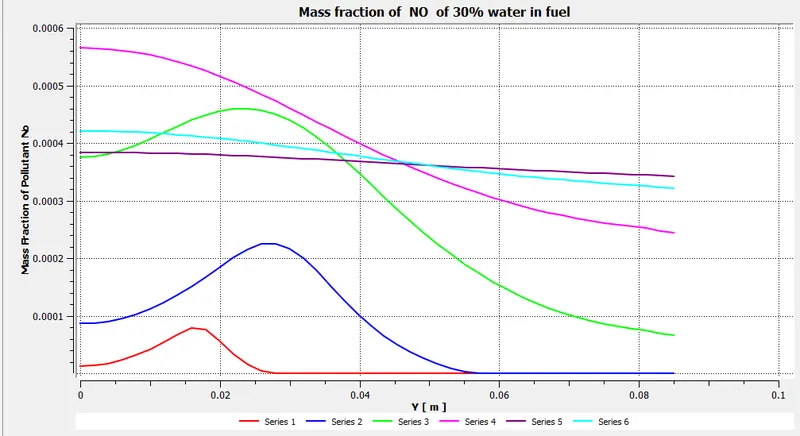
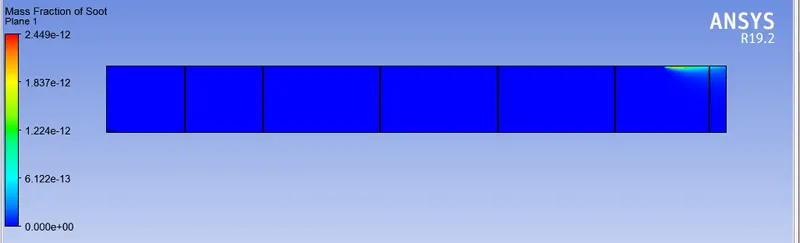
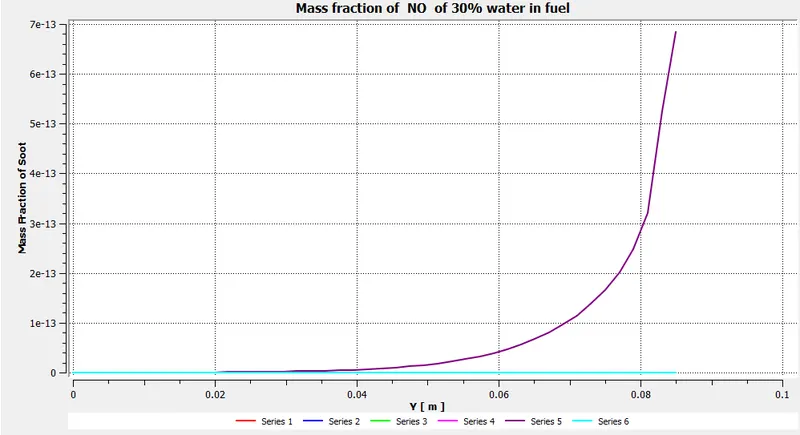
Plot for the mass fraction of soot and NOx:
Conclusion:
- By increasing the water quantity in the fuel, the formation of harmful pollutants like NO and soot will be reduced at the outlet.
- The rate of reduction in the concentration of soot is higher than the NOx in diluting the fuel.
- The soot value decreases with increases with the water quantity in the fuel. The water dilution in the fuel will reduce the emission.