Mixing efficiency
Given
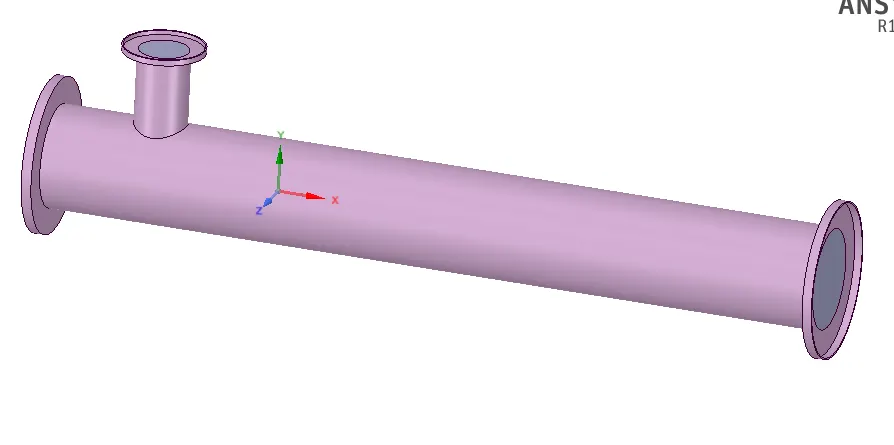
In this challenge, there are two versions of mixing tee geometry. The first one is a short tee and the second one is a long tee mixing geometry.
Temperature:
Hot inlet(in x direction) = 36c
Cold inlet(in y direction) = 19c
Velocity:
Hot inlet = 3m/s.
Hot inlet = 3m/s.
Momentum ratio = cold inlet velocity / hot inlet velocity.
Case 1 Short Mixing Tee:
Geometry:
Open geometry and click on file < open file < select short mixing tee. For the volume extraction click on prepare < volume extraction < select edge option < Make edge selection < click on finish < uncheck the solid and suppress to physics option where the solid part will be suppressed.
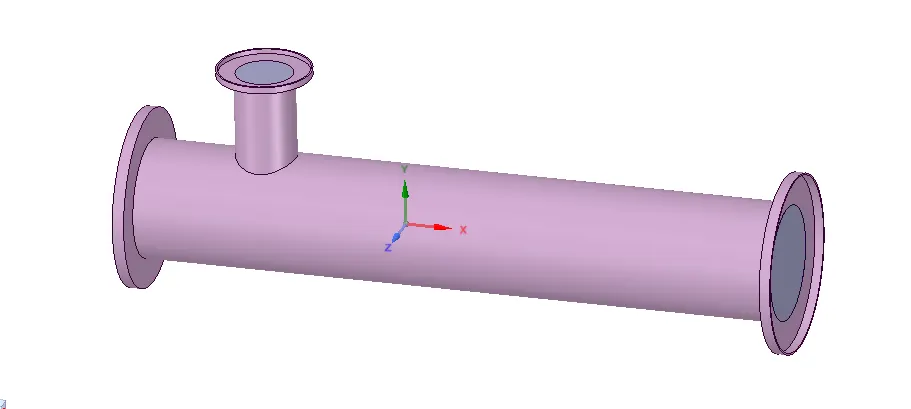
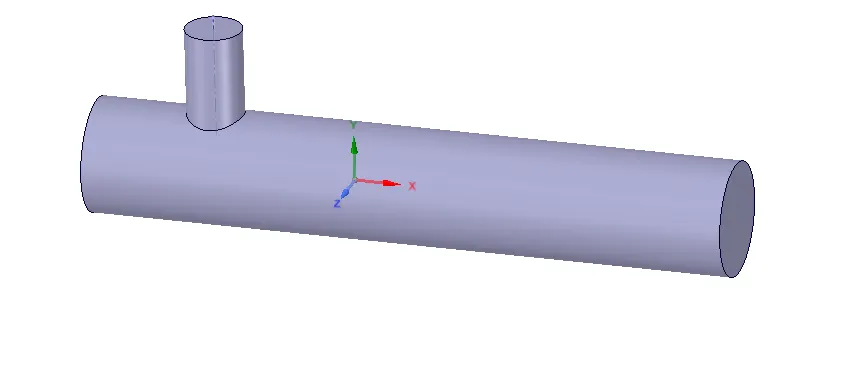
Afer volume extraction, the short tee we get is given below:
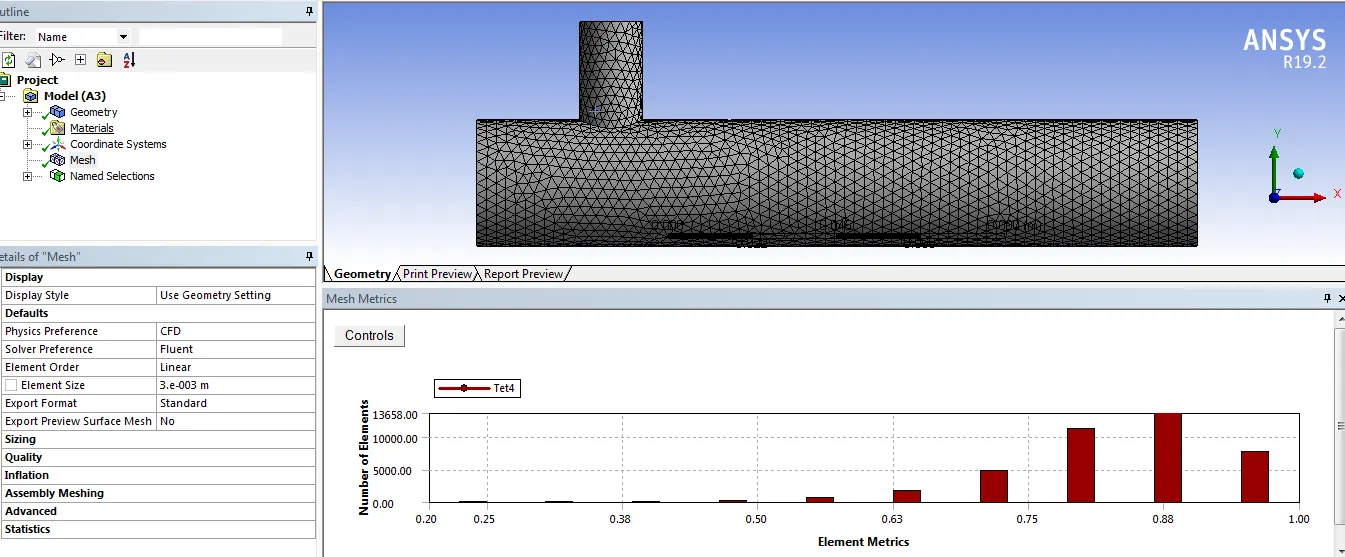
Mesh Generation:
The size of the mesh element is 3e-3, and the boundary names are given before generating mesh.
Setup:
In setup < double-precision < parallel simulation < and keep the no. of processors depends upon the system specifications. After that open graphics window, we will see the meshed geometry, then the process will be given below in the table.
| solver Type | pressure based | pressure based |
| velocity formulation | Absolute | Absolute |
| Time | Steady | Steady |
| Viscous model | k-epsilon | k-omega |
| Materials | Air | Air |
|
central Zones volume-volume |
Type fluid-air | Type fluid-air |
| Boundaries |
inlet-x Temperature = 19c Velocity = 3m/s inlet-y Temperature = 36c Velocity = 6m/s Outlet Pressure = 0 |
inlet-x
Temperature = 19c Velocity = 3m/s inlet-y Temperature = 36c Velocity = 6m/s Outlet Pressure = 0 |
| Initialization | Hybrid | Hybrid |
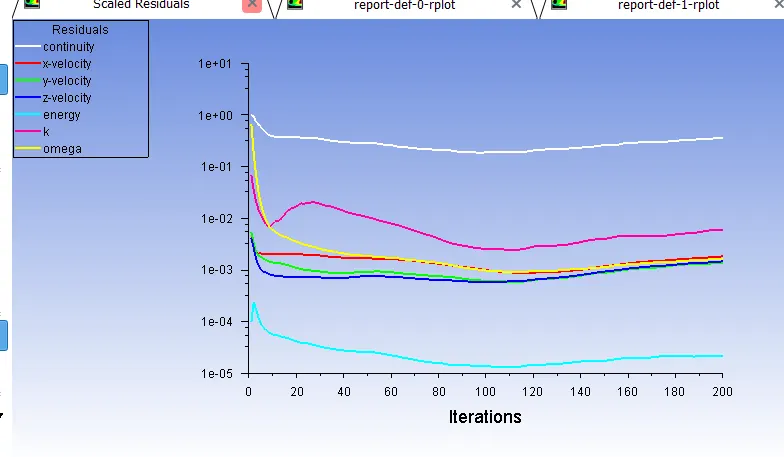
Residual plots:
K-epsilon Model
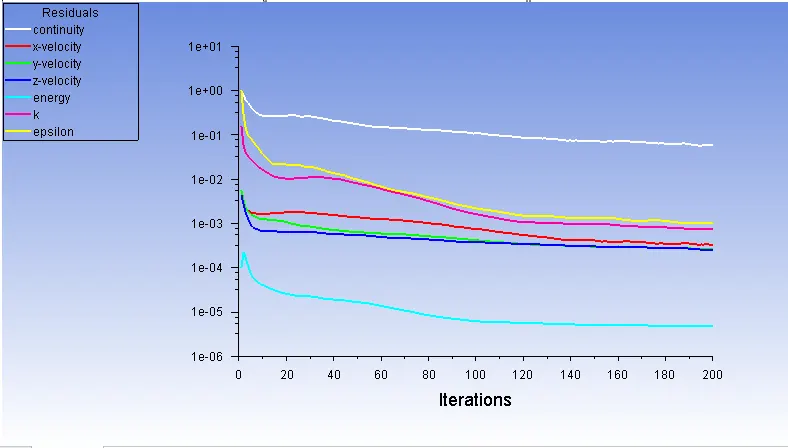
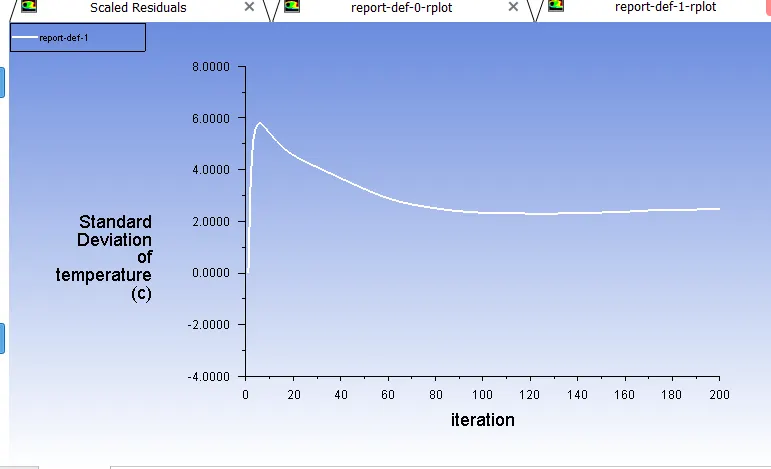
K-omega Model
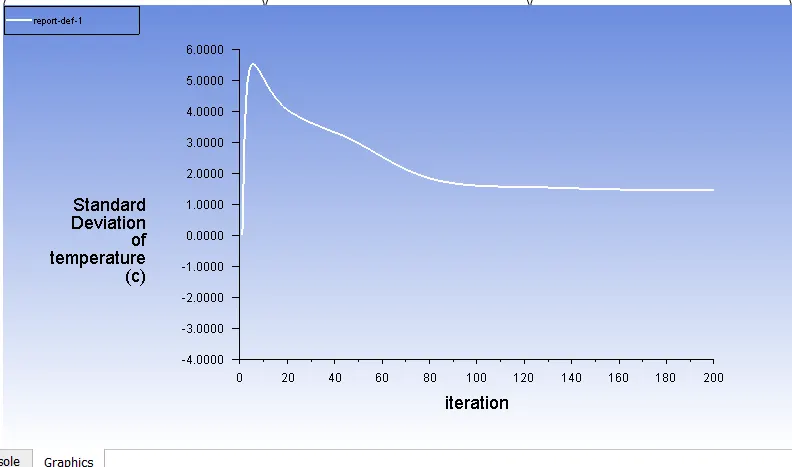
Temperature plots:
K-epsilon Model
K-omega Model
Results:
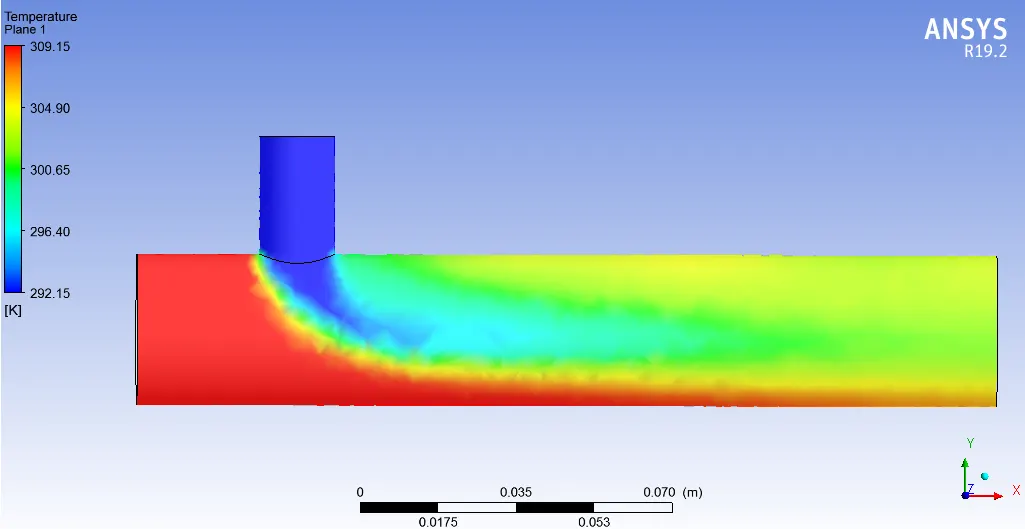
Temperature Distribution:
K-epsilon model
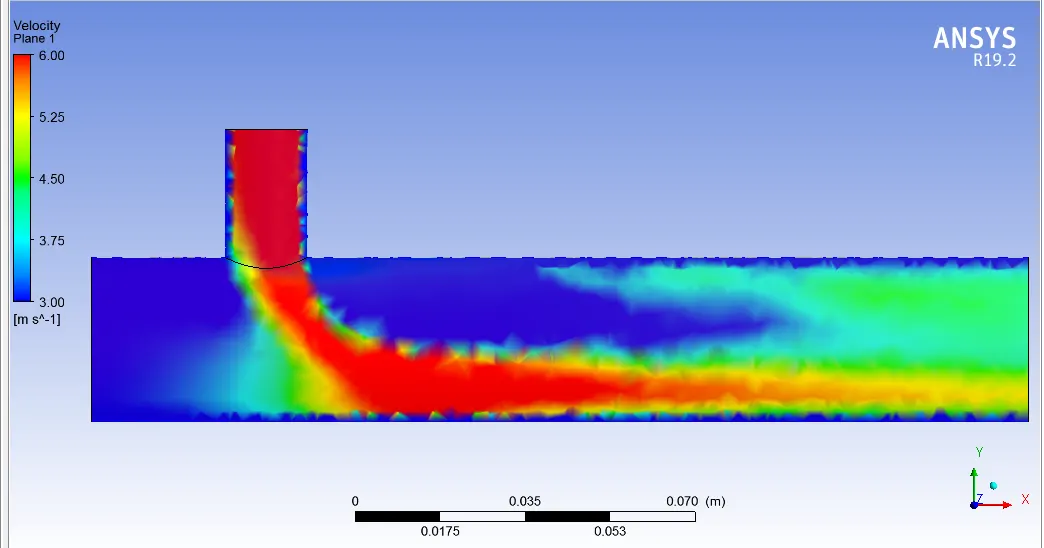
K-omega model
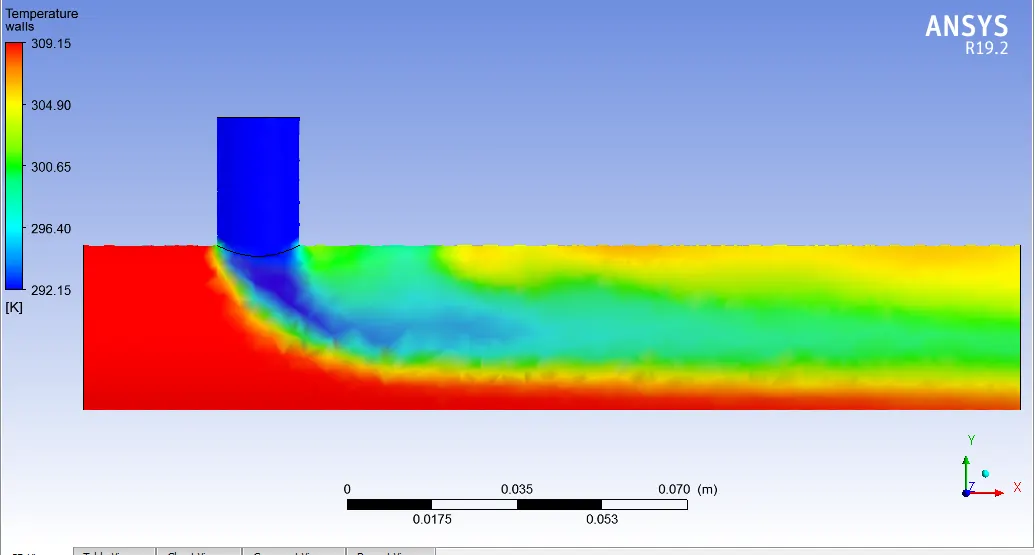
Velocity Distribution:
K-epsilon model
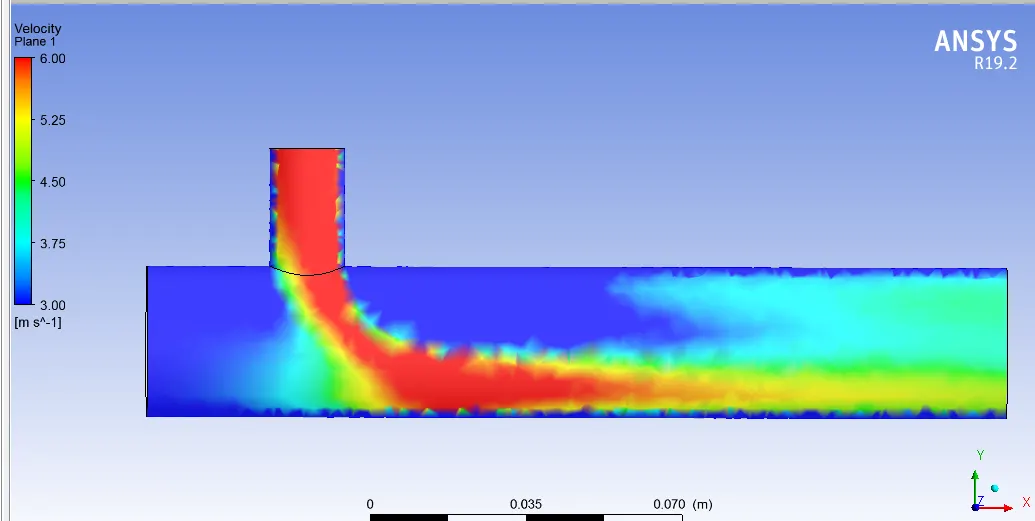
K-omega model
| S.No | K-epsilon | K-omega | |
| 1. | Cell count | 39891 | 39891 |
| 2. | Ave. outlet temp. | 30.56 | 30.55 |
| 3. | No. of iterations | 200 | 200 |
Case 2 Long Mixing Tee:
Geometry:
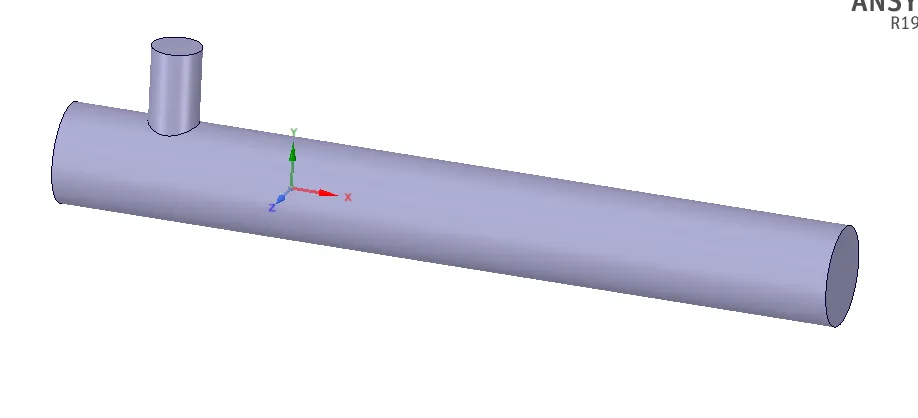
Mesh:
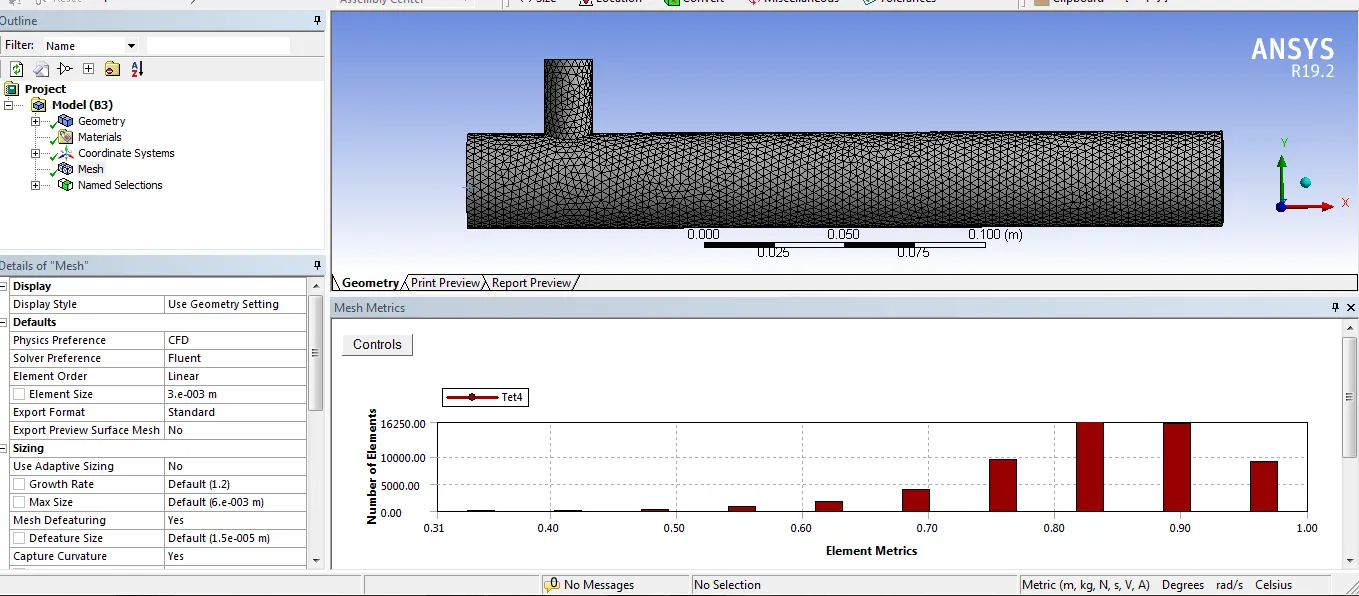
Setup:
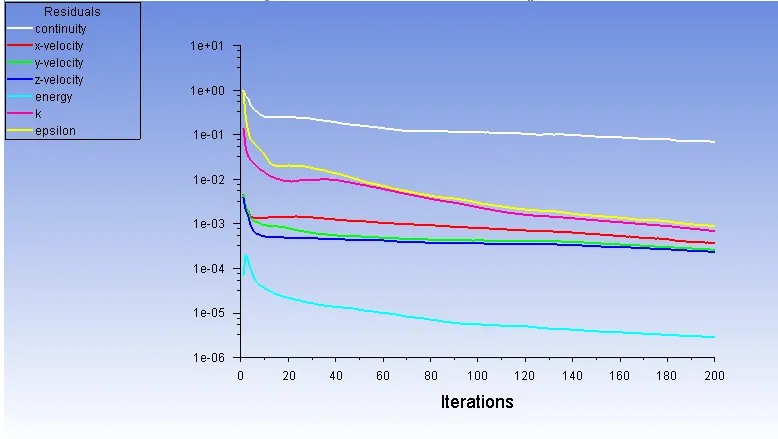
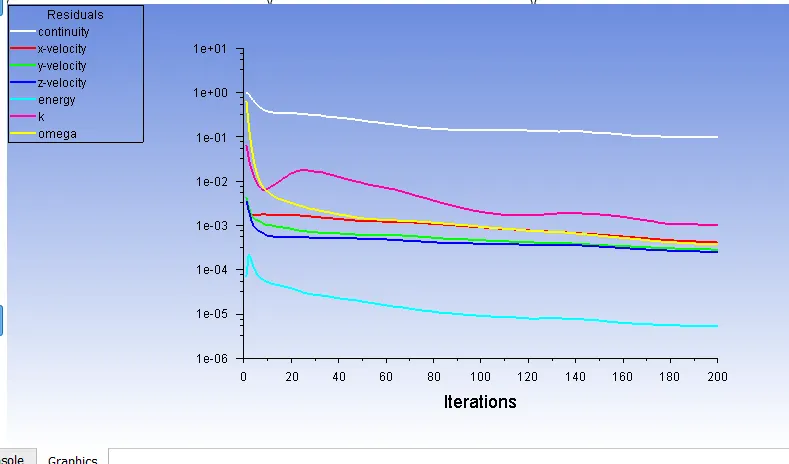
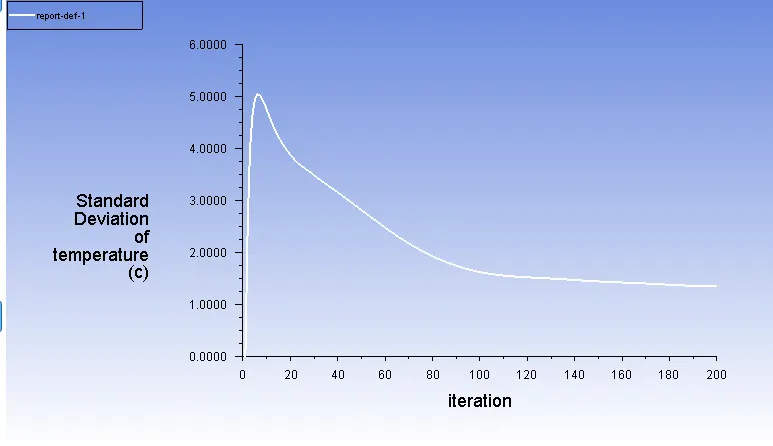
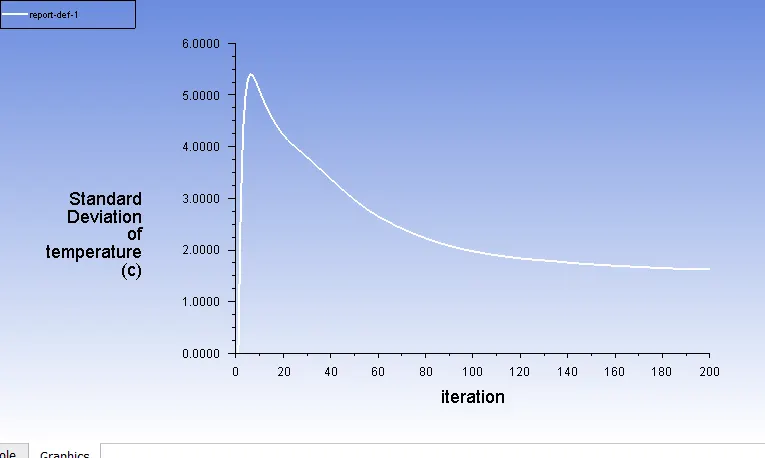
Residual plots:
K-epsilon Model
K-omega Model
Temperature plots:
K-epsilon Model
K-omega Model
Results:
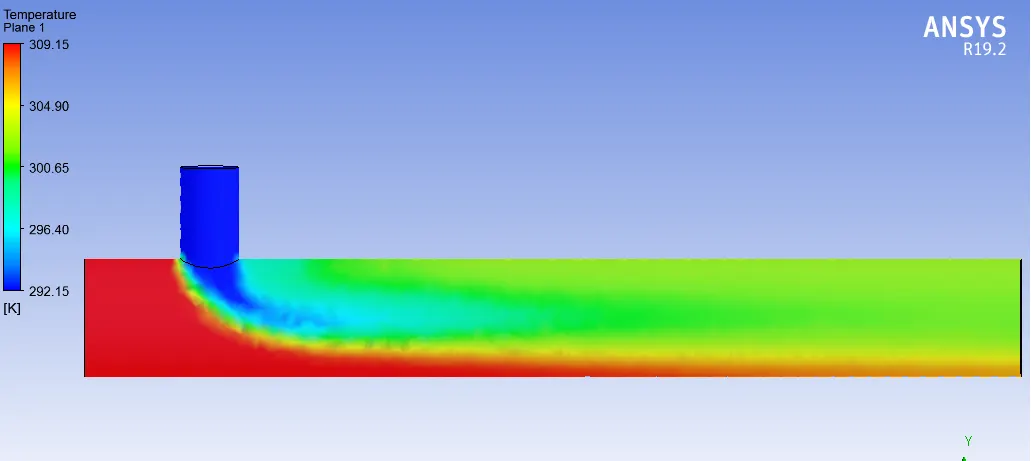
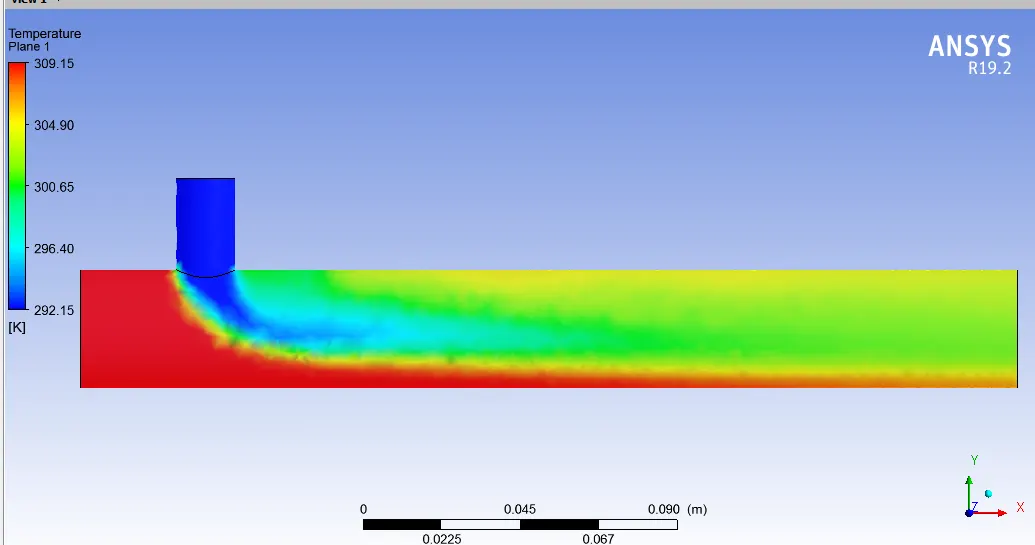
Temperature distribution:
K-epsilon Model
K-omega Model
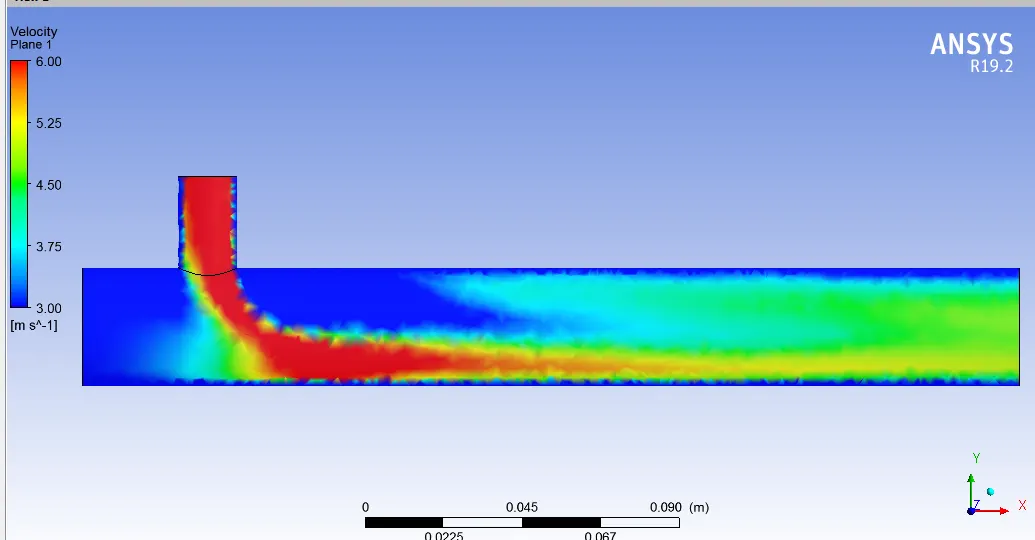
Velocity Distribution:
K-epsilon Model
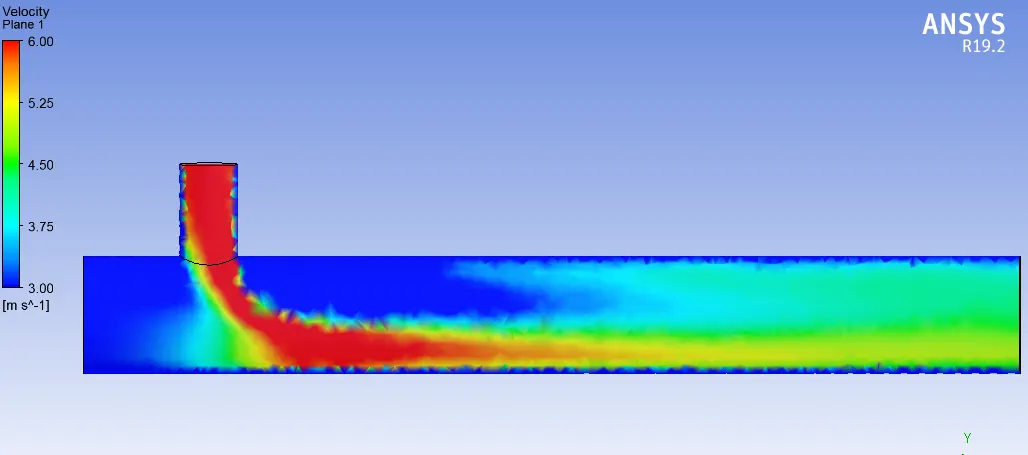
K-omega Model
| S.No | K-epsilon | K-omega | |
| 1. | Cell count | 57099 | 57099 |
| 2. | Ave. outlet temp. | 30.44 | 30.52 |
| 3. | No. of iterations | 200 | 200 |
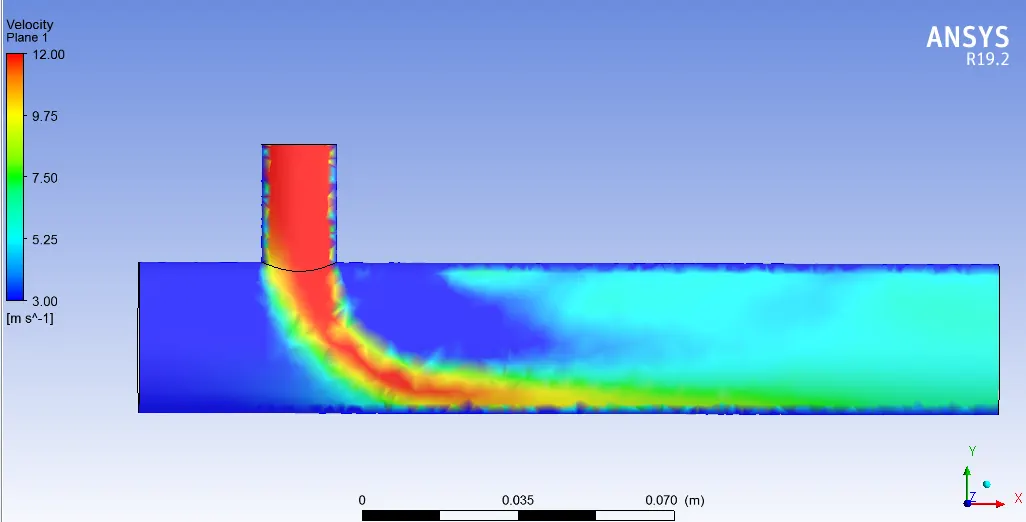
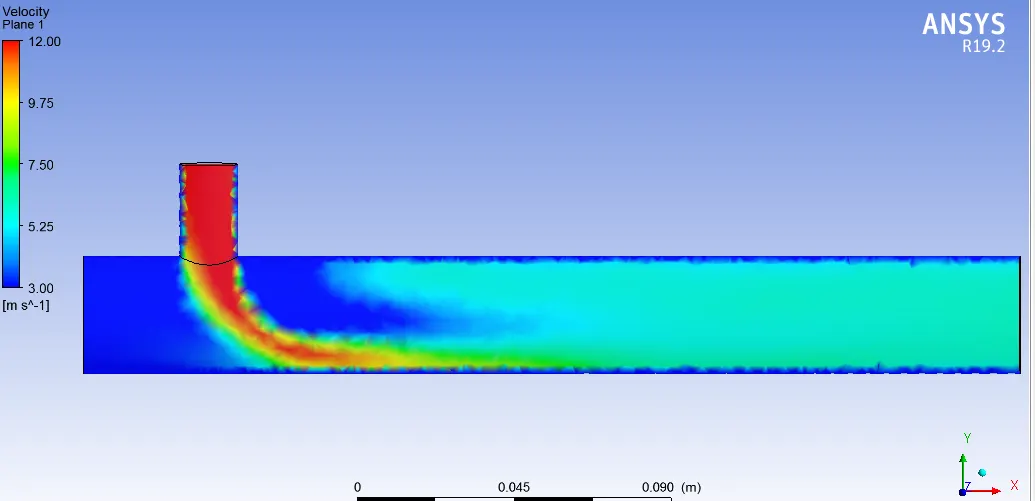
Case 3(change in the velocity):
Hot inlet = 36c; Velocity = 3m/s
Cold inlet = 19c; velocity = 12m/s
Here the momentum ratio is 4, so the inlet velocity is 12m/s.
| solver Type | pressure based | pressure based |
| velocity formulation | Absolute | Absolute |
| Time | Steady | Steady |
| Viscous model | k-epsilon | k-omega |
| Materials | Air | Air |
|
central Zones volume-volume |
Type fluid-air | Type fluid-air |
| Boundaries |
inlet-x Temperature = 19c Velocity = 3m/s inlet-y Temperature = 36c Velocity = 12m/s Outlet Pressure = 0 |
inlet-x
Temperature = 19c Velocity = 3m/s inlet-y Temperature = 36c Velocity = 12m/s Outlet Pressure = 0 |
| Initialization | Hybrid | Hybrid |
Results:
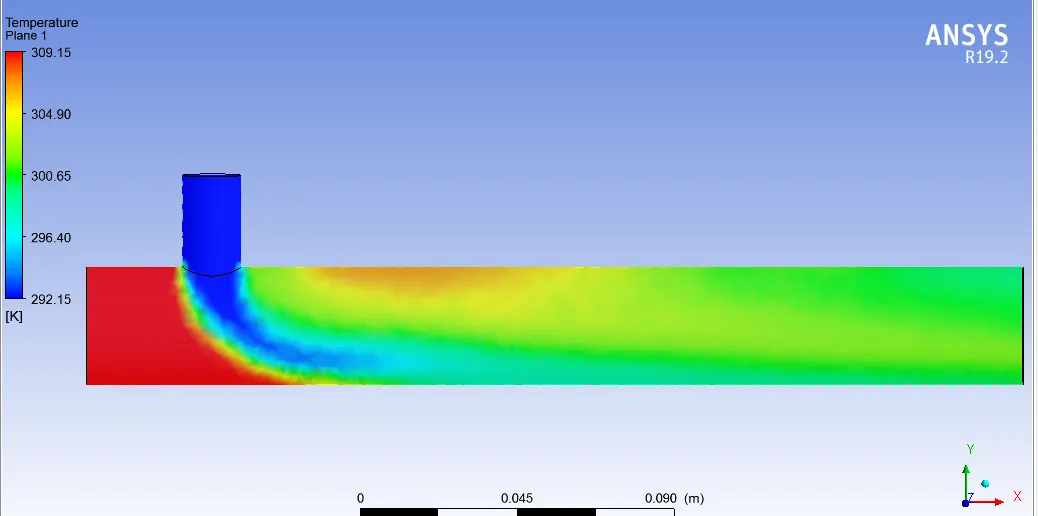
Temperature plots:
Short mixing tee:
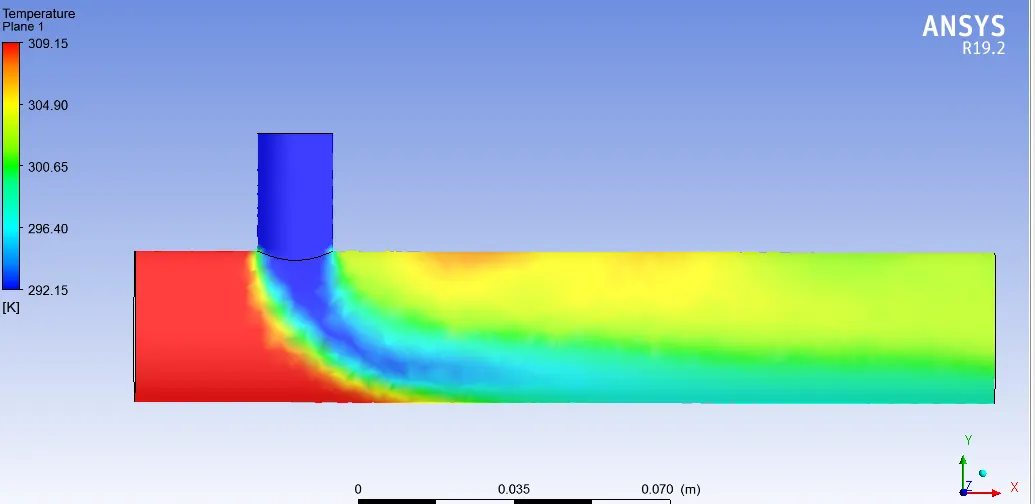
Long mixing tee:
Velocity plots:
Short mixing tee:
Long mixing tee:
Conclusion:
The following details of mixing tee for k-epsilon are mentioned below
| S.no |
case 1 (MR-2) Short T |
case 2 (MR-2) Long T |
case 3 (MR-4) Short T |
case 3 (MR-4) Long T |
|
| 1 | cell count | 39891 | 57099 | 39891 | 57099 |
| 2 | Avg outlet temp C | 30.56 | 30.44 | 28.961 | 28.522 |
| 3 | No. of iterations | 200 | 200 | 200 | 200 |
| 4 | velocity outlet m/s | 4.385 | 4.399 | 6.008 | 5.999 |
From the above tabular results, momentum ratio plays an important role in mixing effectiveness. If the momentum ratio increases the velocity of the pipe increases.
The temperature of the pipe depends upon the mesh size.