Exhaust Port Challenge
CHT Analysis:
Conjugate Heat Transfer(CHT) analysis type allows the simulation of heat transfer between solid and fluid domains by exchanging thermal energy at the interfaces between them. Which is more stable and provides faster convergence as the energy equation is strongly coupled between the solid and fluid regions.
The heat transfer in solids is called Conduction and H.T in liquids is called Convection. The conduction occurs due to direct molecular collision and convection occurs when particles with a lot of heat energy in a liquid or gas move and take the place of particles with less heat energy.
The typical applications of this analysis type are seen in the simulation of heat exchangers, cooling of electronic equipment, and general-purpose cooling and heating systems.
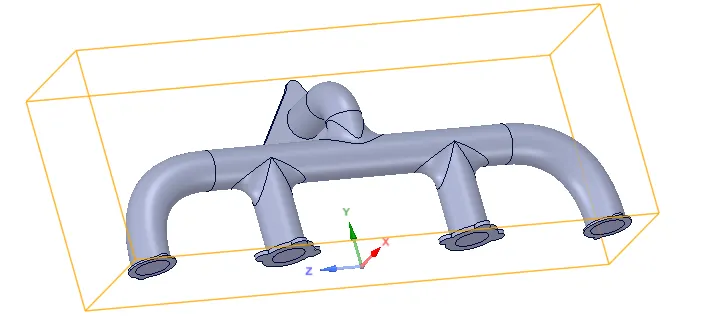
We can see the CHT analysis in the exhaust port.
Mesh:
Now if we click mesh directly then we can see the non-conformal mesh. The non-conformal mesh means the boundaries between the cell zones in which mesh load locations are not identical. To avoid the non-conformal mesh go back to SpaceClaim and move solid-volume and liquid-volume to the new folder and enable the share option in the share topology. Go to workbench < share prep < click on the green tick mark < close SpaceClaim.
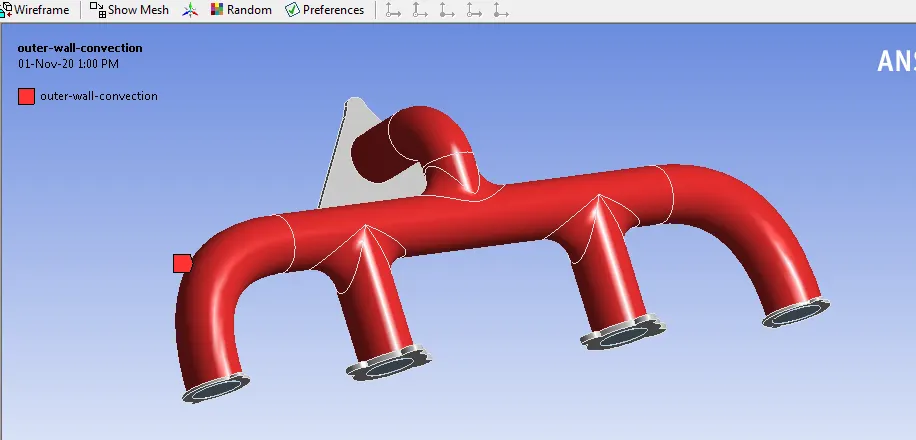
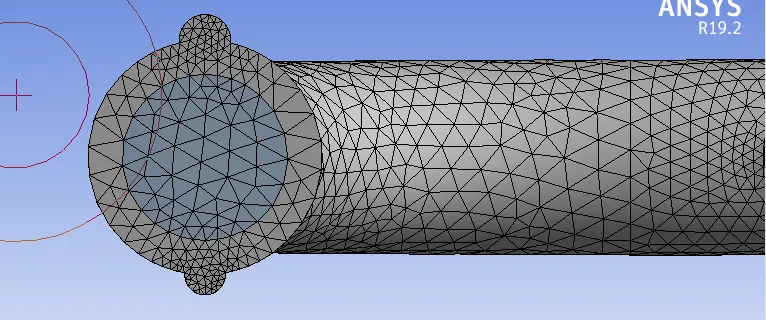
Now open mesh and before click on generate mesh we have to assume the names for the exhaust port, like inlet, outlet, and outer-wall-convection. Now generate a mesh, then we got the conformal mesh.
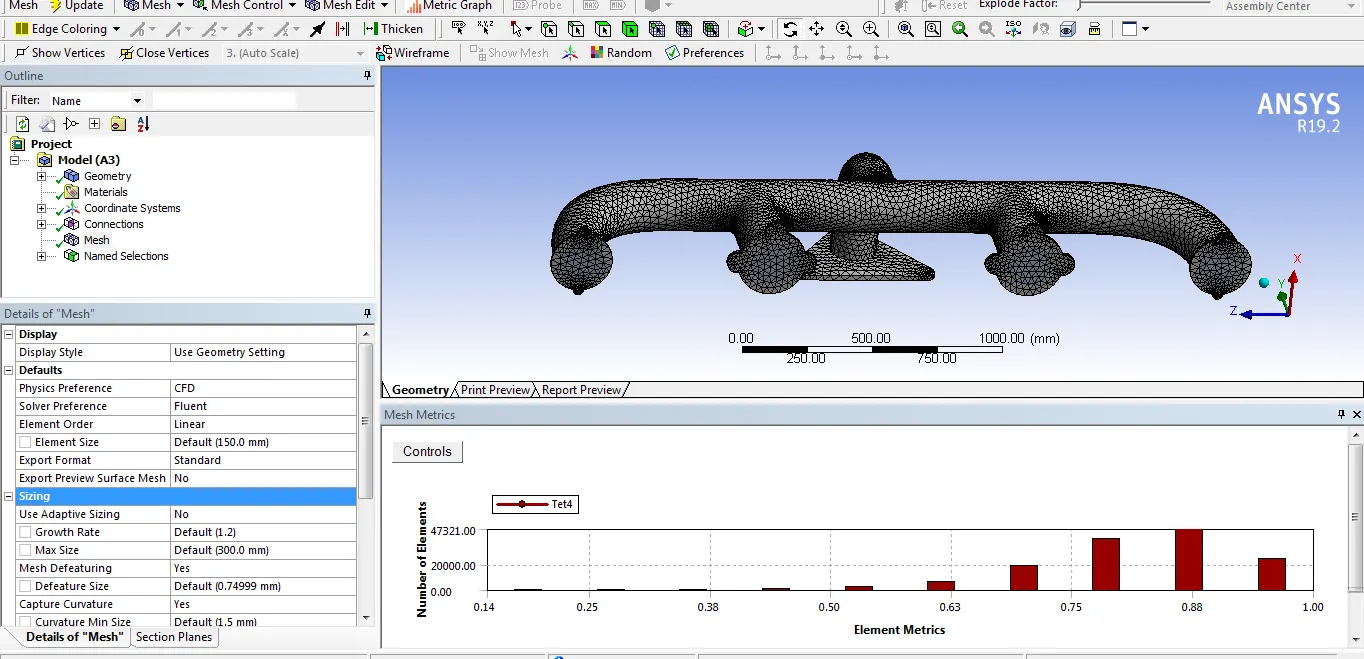
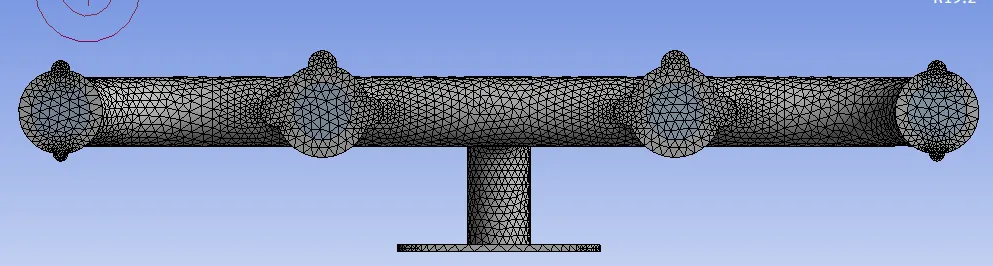
Conformal mesh looks like:
Setup:
K-epsilon (K-`epsilon`) turbulent model is the most common and used model in the CFD to simulate mean flow characteristics for turbulent flow conditions.
Turbulence: K-epsilon
Materials: solid < Al.
Boundaries: Inlet < velocity = 5m/s < temperature = 700k.
Inlet wall convection < In thermal conditions = Convection < heat transfer coefficient = 20 W/m2-k < Temperature = 300k <ok.
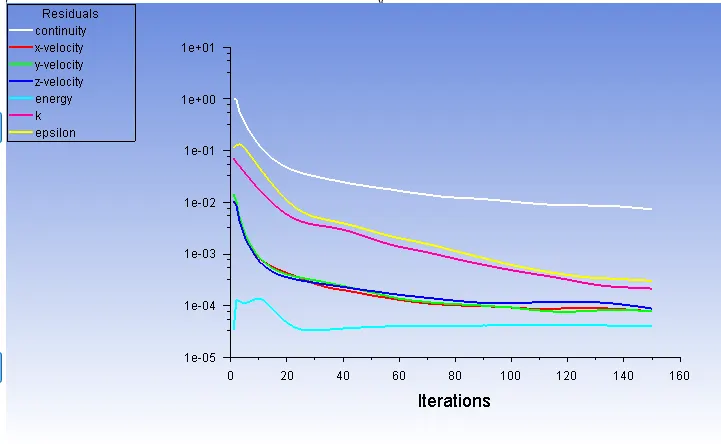
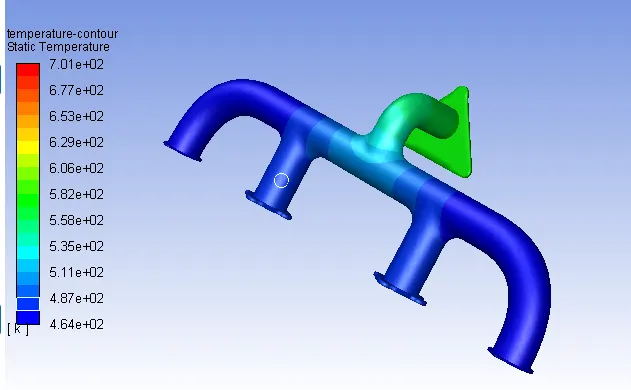
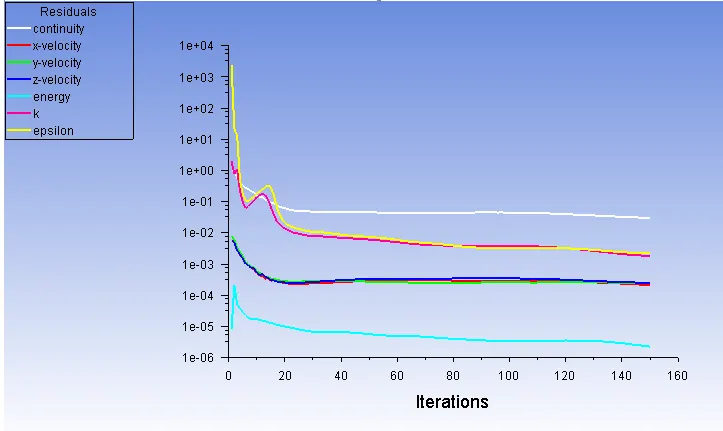
After that create a temperature counter and run for 150 iterations.
Residuals:
Temperature Contour:
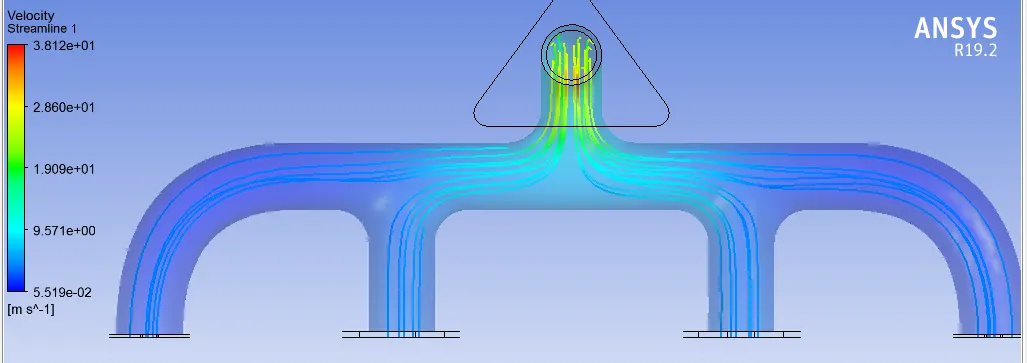
The velocity with streamlines:
Temperature:
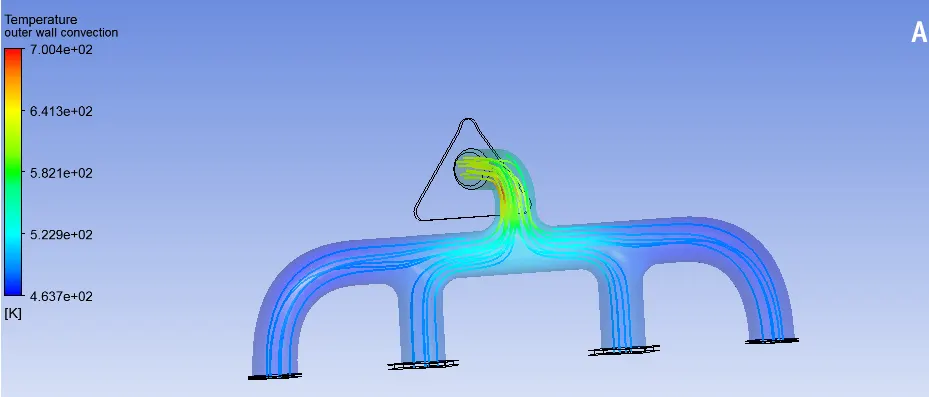
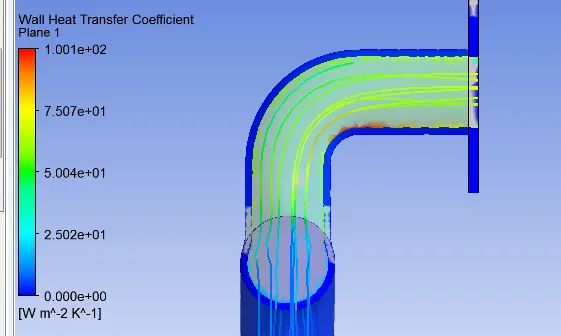
Wall heat transfer coefficient:
Refined mesh:
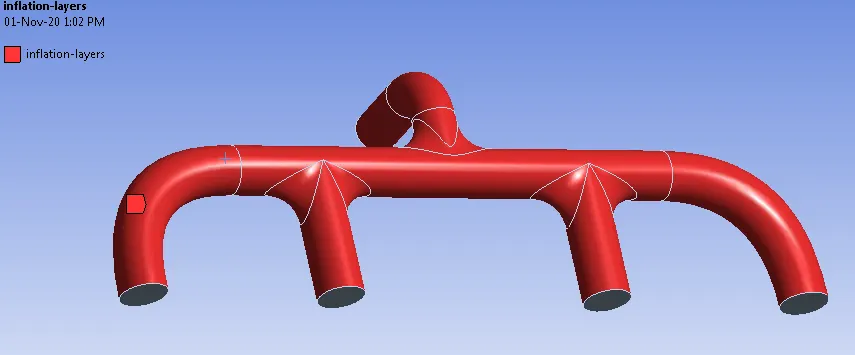
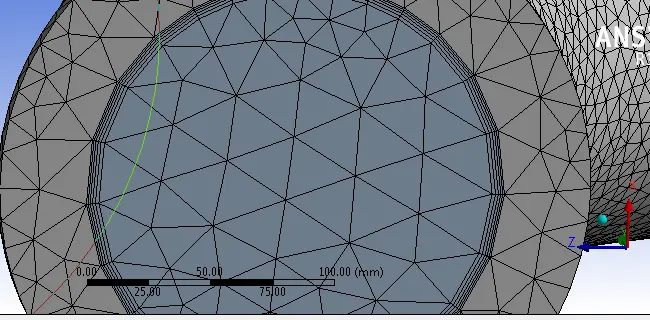
For the refined mesh, we have to reduce the size of the element in the solid region and add some inflation layers with a first-layer thickness of 3.476mm.
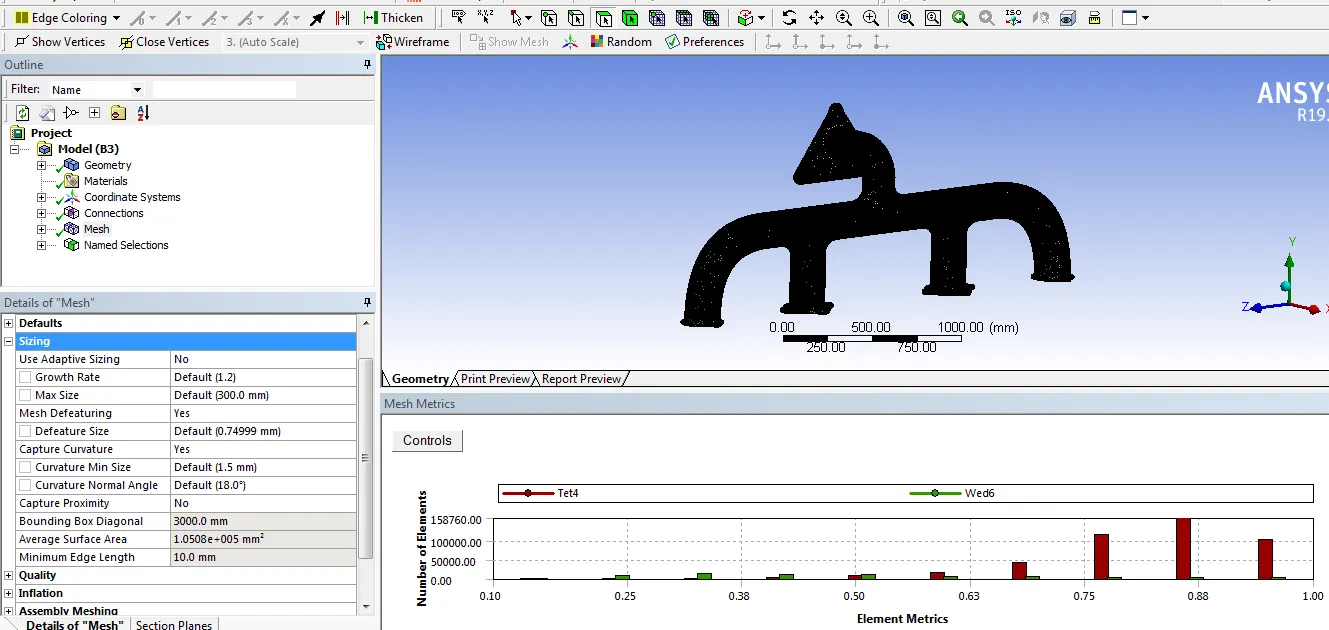
The refined mesh gives accurate results. Body sizing for the outer body = 10mm.
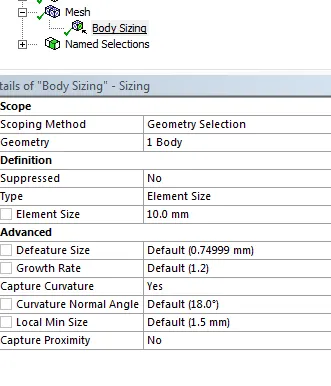
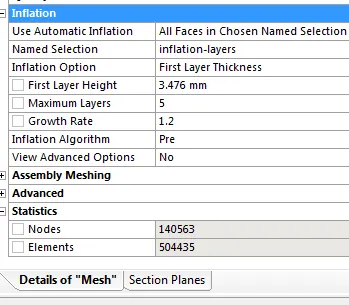
Mesh with inflation layers:
After body sizing the mesh:
 0.
0.
Residuals:
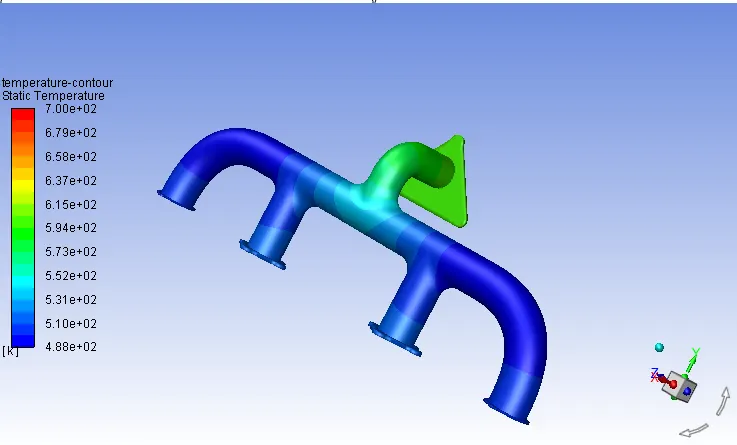
Temperature contour:
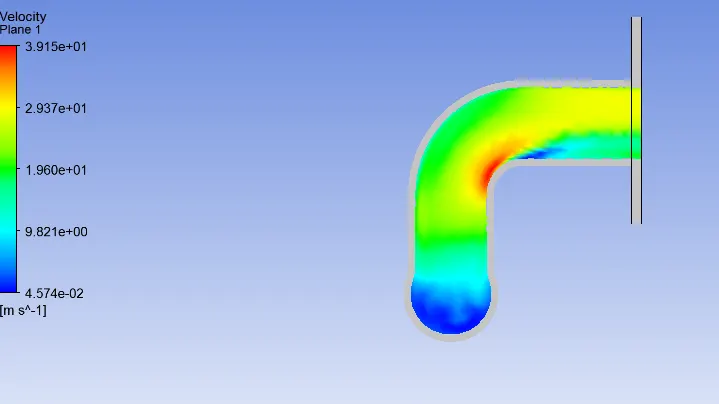
Velocity:
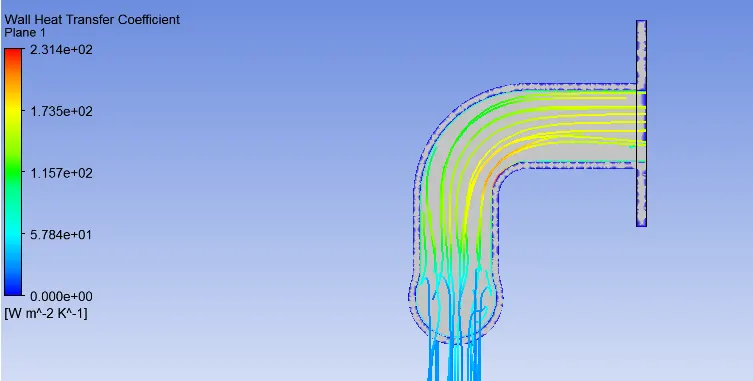
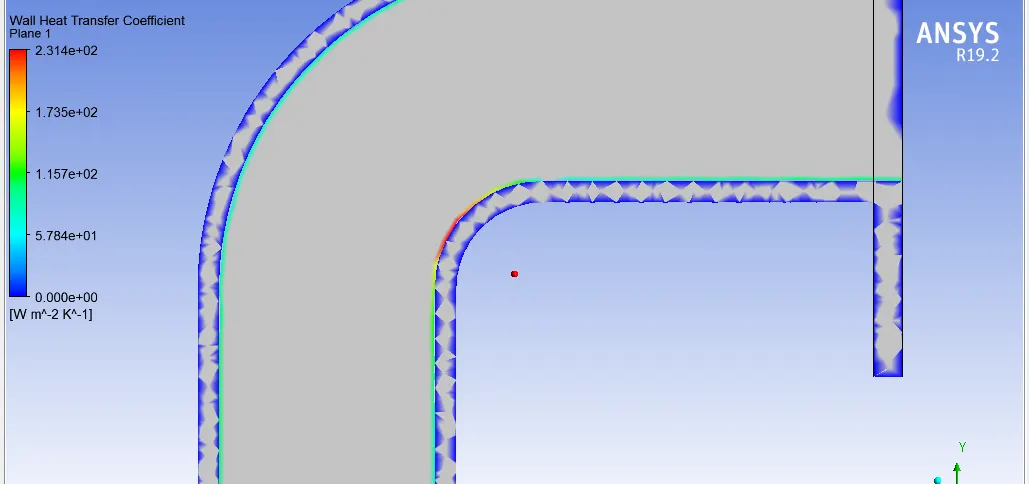
wall heat transfer coefficient:
SST K-omega turbulence model:
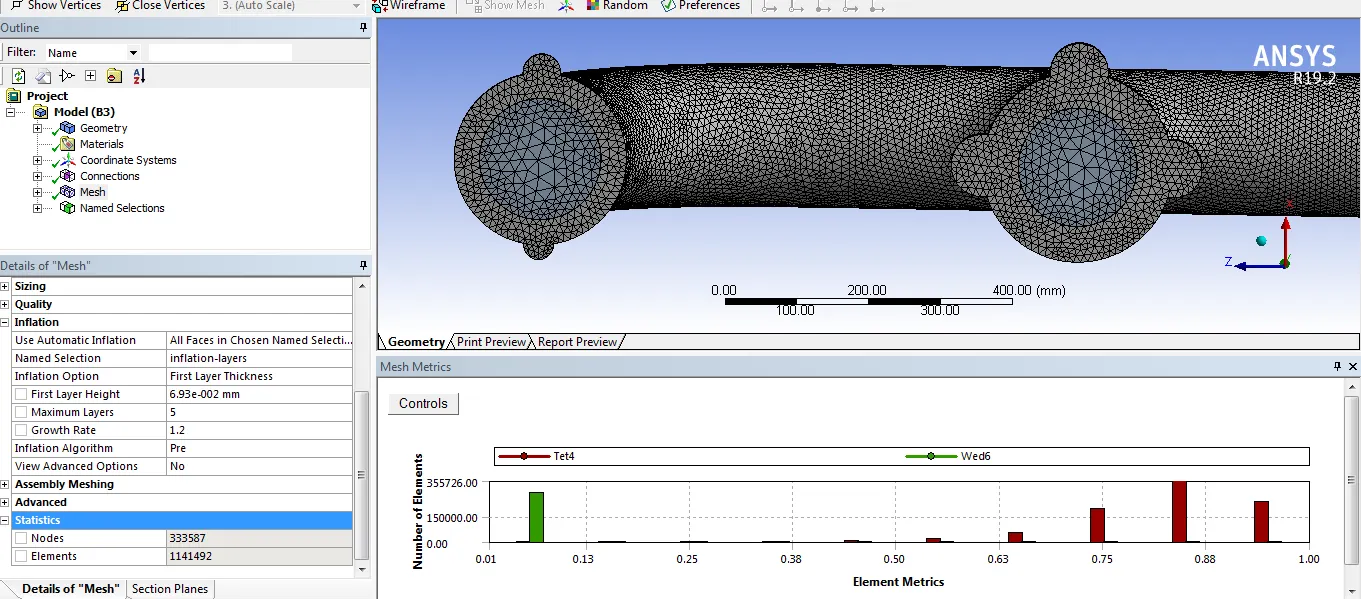
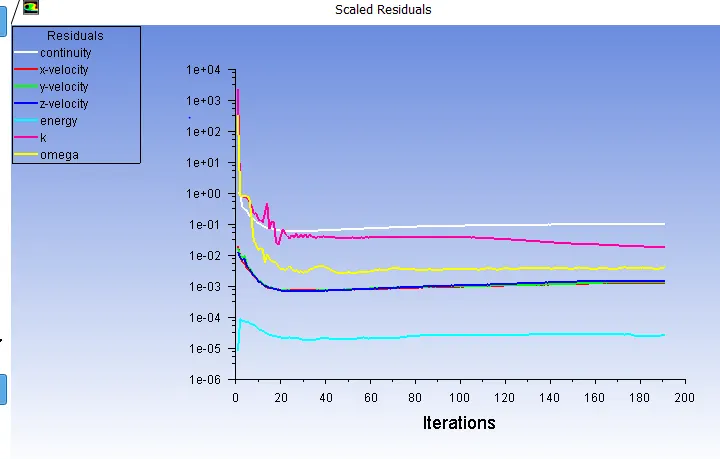
The SST k-omega turbulence model is a two-equation eddy-viscosity model that is used for many aerodynamic applications. It is a hybrid model combining the Wilcox k-omega and the k-epsilon models. The 1st layer thickness is 0.0693mm.
Residuals:
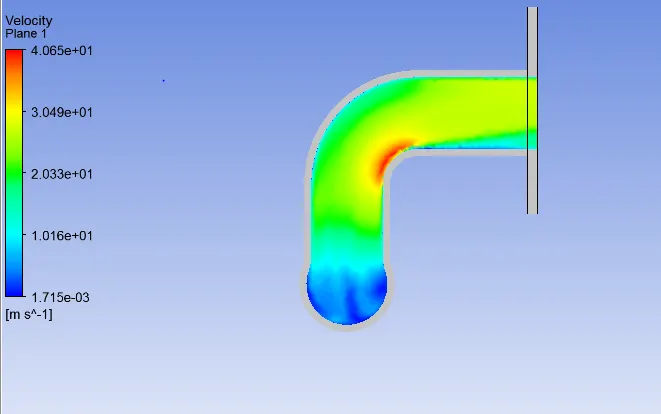
Volume:
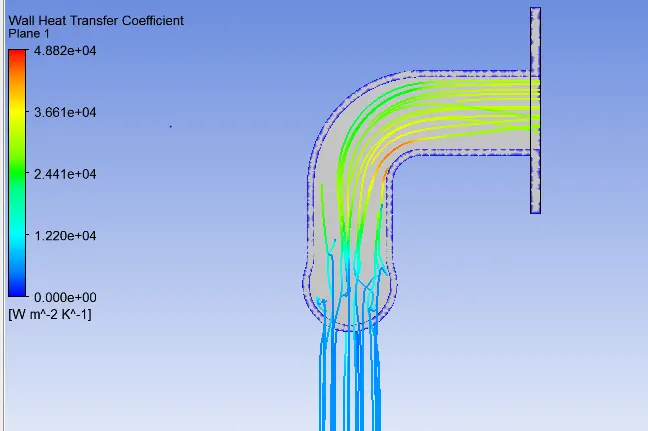
Wall heat transfer coefficient:
HTC verification:
Heat transfer coefficient (HTC) is a quantitative characteristic of convective heat transfer between a fluid medium (a fluid) and the surface (wall) flowed over by the fluid. HTC is calculated from the following Nusselt number.
Where Nu = `(hL)/k`
The HTC of the normal mesh is 100.1W/m^2.k.
The HTC of the refined mesh is 231.4W/m^2.k.
The heat transfer coefficient depends on:
Both the thermal properties of a medium,
The hydrodynamic characteristics of its flow, and
The hydrodynamic and thermal boundary conditions.
Conclusion:
In the exhaust port, the outlet is having the max velocity because here the flow enters through 4 ports and exit at 1 port. Here we are having a high Reynolds number due to high velocity. The refined mesh is having a high heat transfer coefficient compared with normal mesh. As we increase mesh count the heat transfer coefficient also increases.