Conjugate Heat Transfer Analysis on a graphics card.
Conjugate heat transfer analysis(CHT analysis):
The CHT analysis is a type that allows for the simulation of heat transfer between solid and liquid domains by exchanging thermal energy at the interfaces between them. This analysis is also used to correctly predict the surface temperature and heat exchanging capabilities of devices.
In solids, the mode of heat transfer is conduction whereas, in liquids the mode of heat transfer is convection. Heat transfer in solids and liquids are combined in the majority of applications.
Typical applications of this analysis type exist as, the simulation of heat exchangers, cooling of electronic equipment, and the general purpose of heating and cooling the systems.
Graphics card:
A graphics card is a piece of computer hardware that produces the image you see on a monitor. And it is also responsible for rendering an image to your monitor, it does this by converting data into a signal your monitor can understand. The better your graphics card the better, and smoother an image can be produced.
Integrated(graphics built into the motherboard) and Discrete(an add-in graphics card that is installed on to the motherboard as an extra component) are the two types of graphics cards. The GPU(Graphics Processing Unit) is the brain of the graphics card and is what creates the visuals you see on the screen.
The main components of the graphic card are:
Board or base,
Processor,
Fins.
The assembly geometry is shown below:
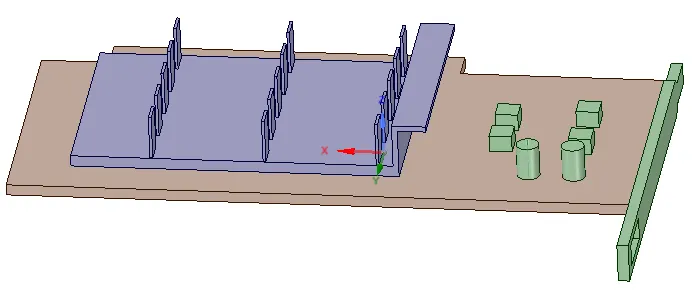
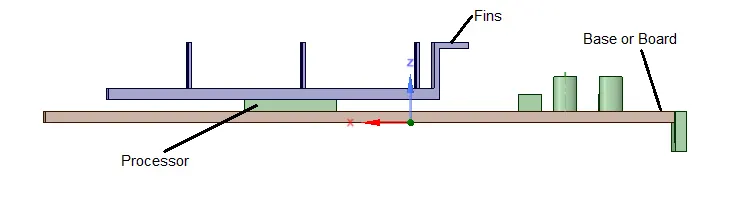
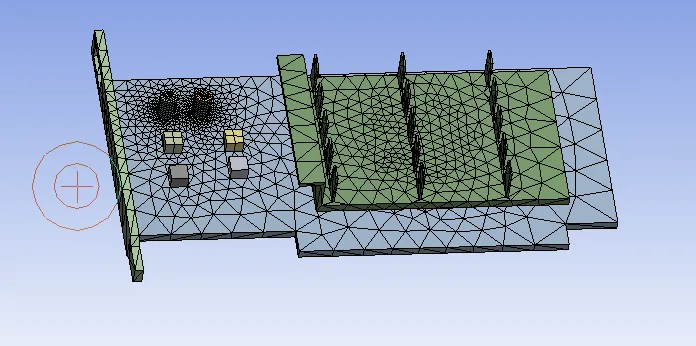
After applying the shared topology.
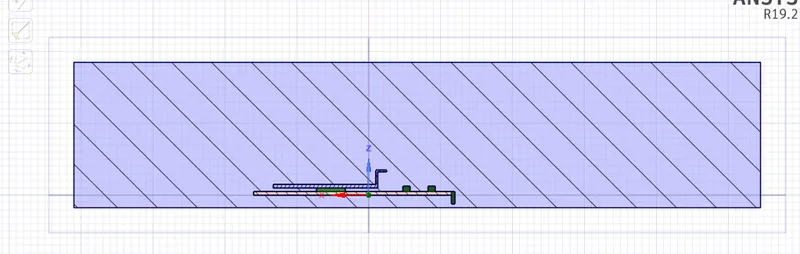
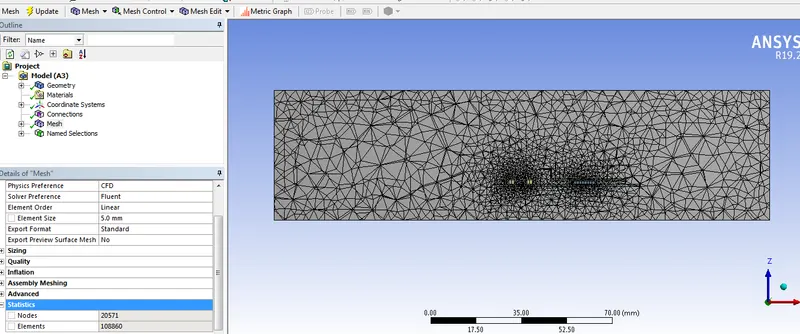
Case 1 Baseline mesh:
Element mesh size = 5mm, processor body size = 1mm.
Number of elements = 108860.
Setup:
Simulation type: steady-state simulation
Solver: Pressure based, Turbulence model: k-omega SST model.
Materials: Fins, Base = Aluminium; Processor = copper.
cell zones < fins, base < change type to solid, and select aluminium as the material < processor < solid < material = copper.
Boundry conditions: inlet < velocity = 1m/s.
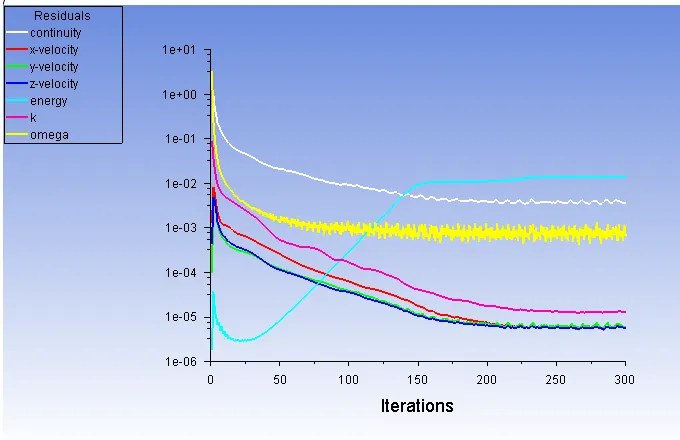
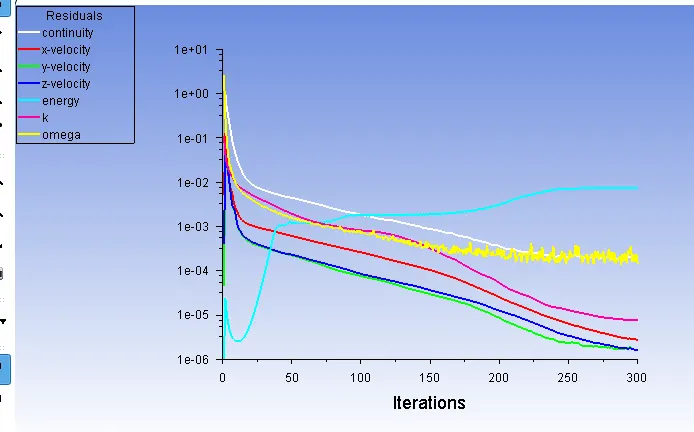
Residuals:
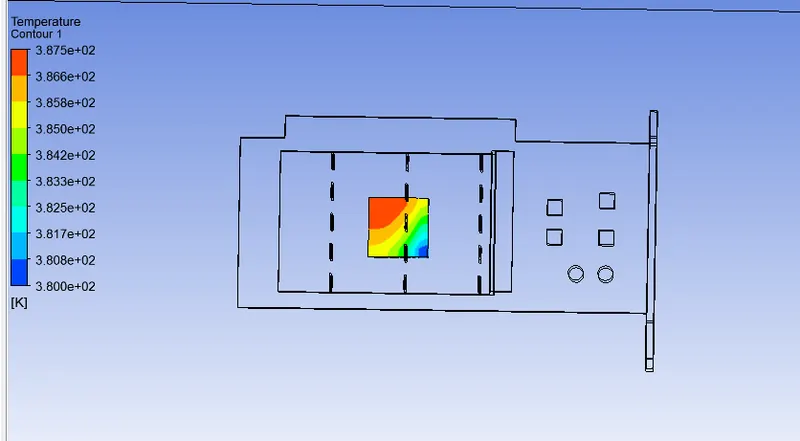
Case 2 Refine mesh:
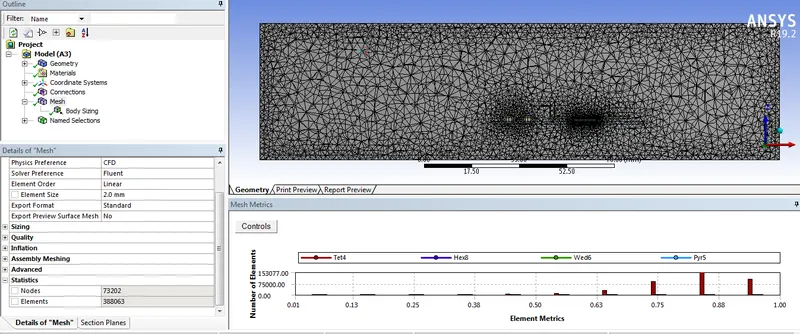
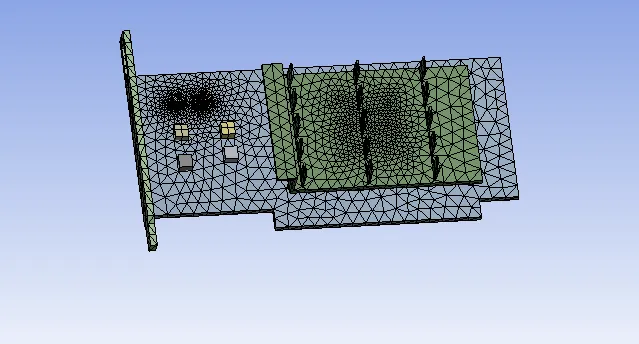
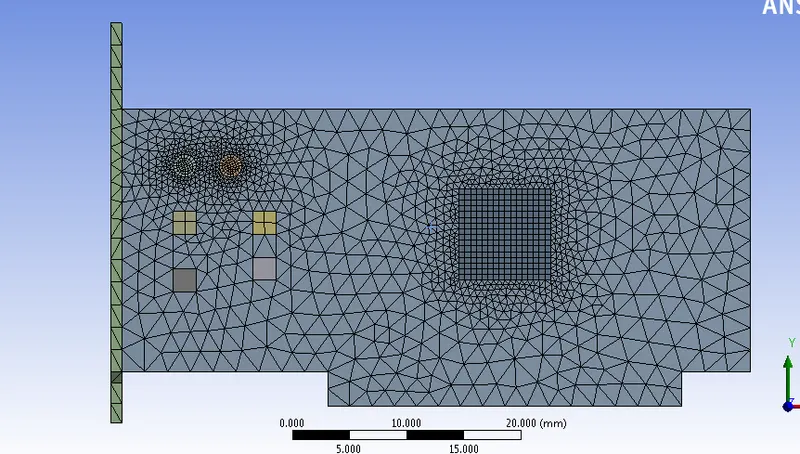
Element mesh size = 2mm, processor body size = 0.5mm.
The number of nodes = 388063.
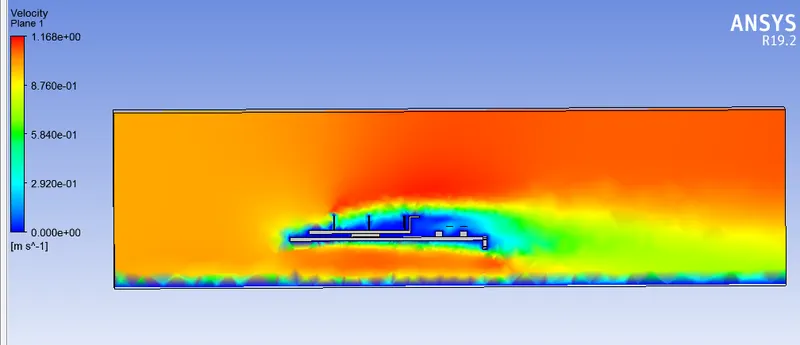
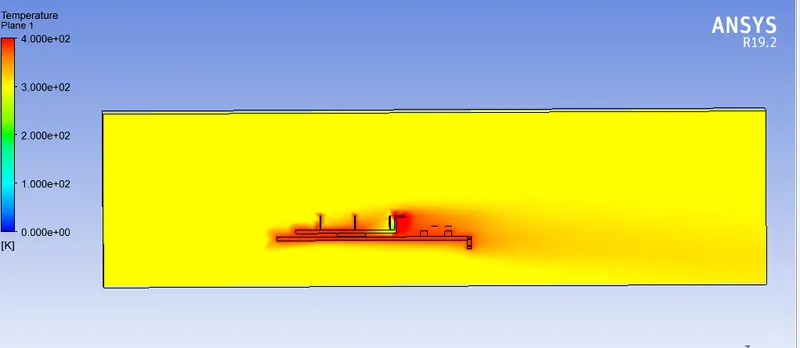
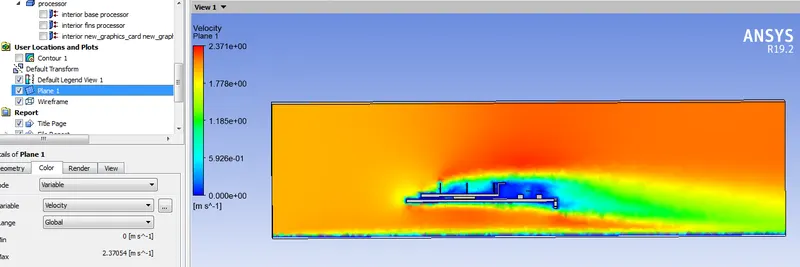
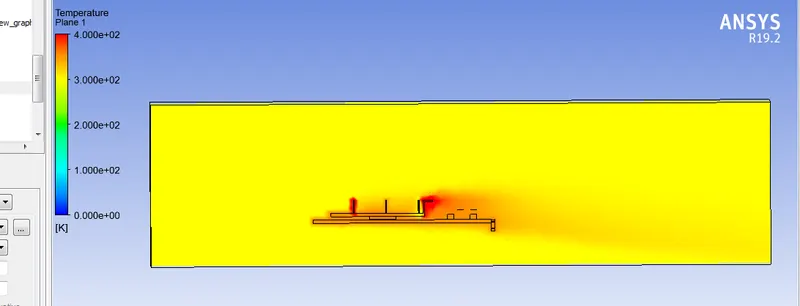
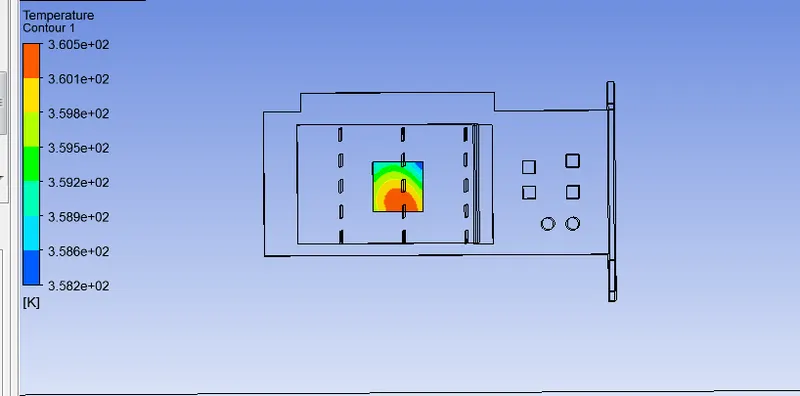
Results:
Residuals:
Conclusion:
From the above observation, the velocity of air increases the temperature of the GPU. In the 1st case, the mesh has coarse that's why the result is a little bit rough, and in the second case, we are getting very smooth results comparing with the 1st case because of the refined mesh.