Attachment Feature Creation
Aim :
Create the dog house and screw bose on the Centre console coin holder considering the design rules.
Objective :
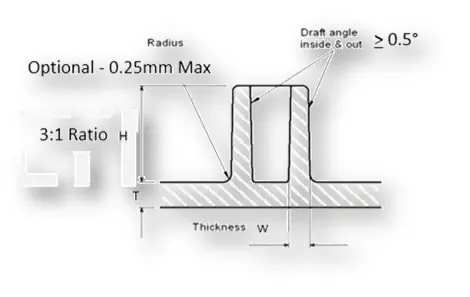
- General Guidelines for Bosses:
- Draft - 0.5 degrees on walls of boss
- Thickness - Typically 40%* of the nominal wall at the base.
- Height to Diameter Ratio - 3:1
- Radii - 0.25mm maximum radii.
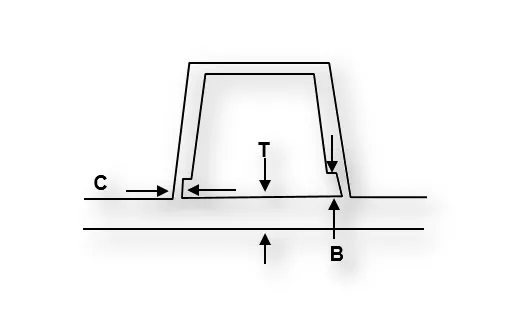
2. Doghouse wall thickness at the intersection of the part wall ( C ) should be 40% or less than the main wall stock ( T ).
Height of ( B ) should be between 3.0 – 6.0 mm
3.Perform the final draft analysis.
Introduction :
A boss feature finds use in many part designs as a point of attachment and assembly. The most common variety consists of cylindrical projections with holes designed to receive screws, threaded inserts, or other types of fastening hardware. Under service conditions, bosses are often subjected to loadings not encountered in other sections of a component. Provide a generous radius at the base of the boss for strength and ample draft for easy part removal from the mold.
Procedure :
Screw boss :
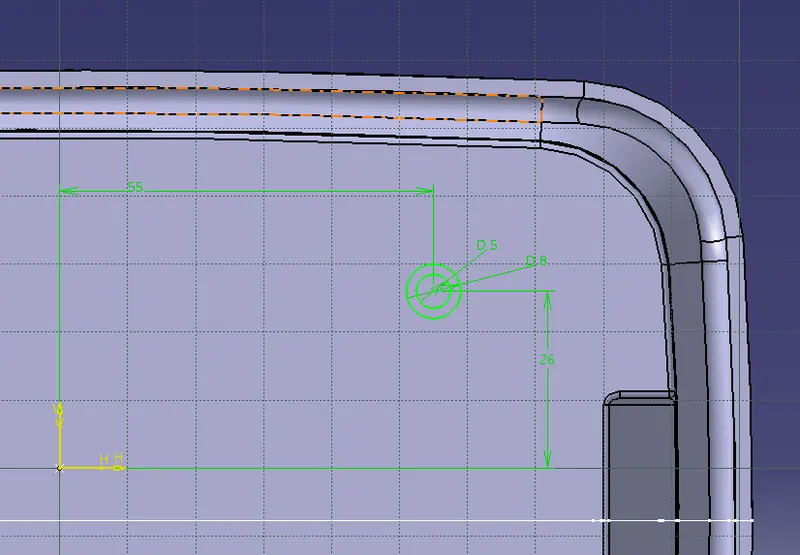
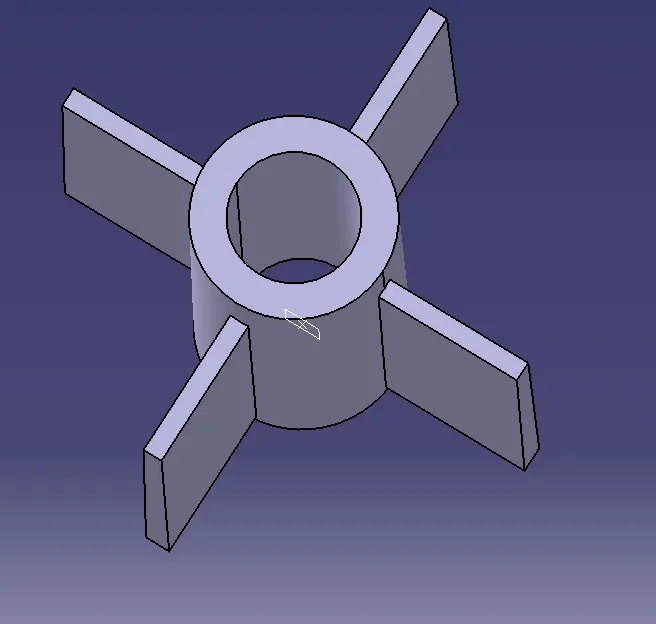
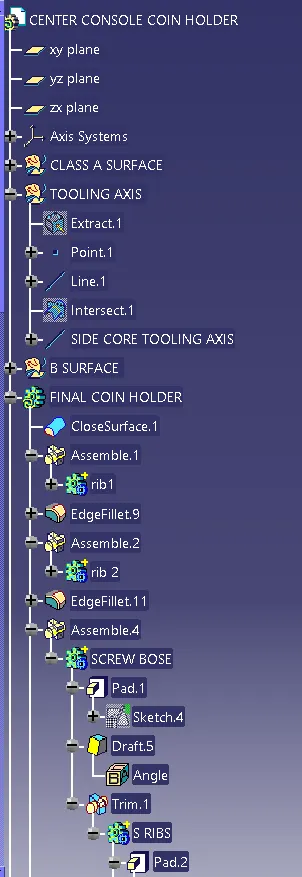
The construction begins with extracting the base and then drawing the two concentric circles.
Considering the diameter value of 5, the outer circle will be 5+(2* 0.6*2.5)= 8.
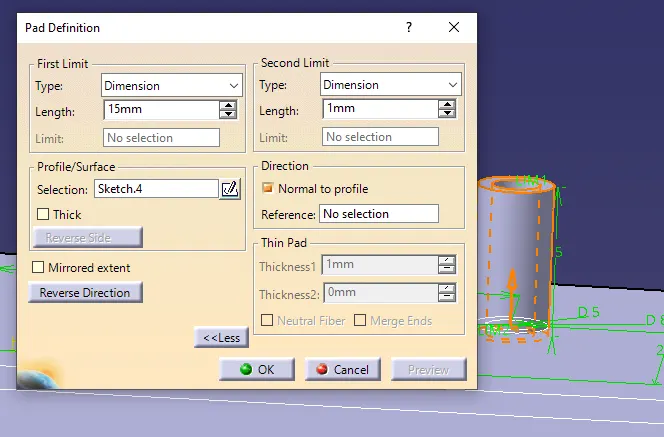
Then, these circles are padded along the tooling direction to a height of 15. Using the 3:1 height to diameter ratio.
The thickened ribs later on drafted by 0.5 degrees and the pulling direction is taken as the upper face of the ribs.
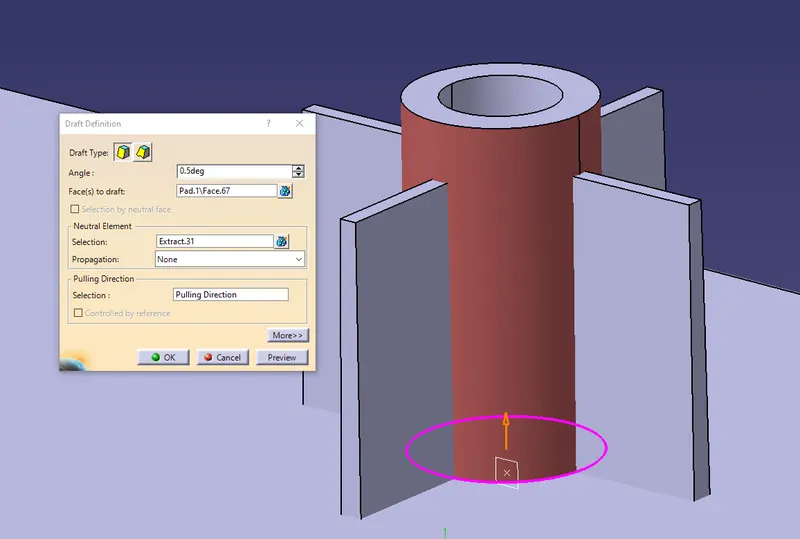
The screw boss is not made alone, they are coupled with the stiffener or ribs to provide structural stability.
The ribs sketch is drawn considering the boss center in a cross shape.
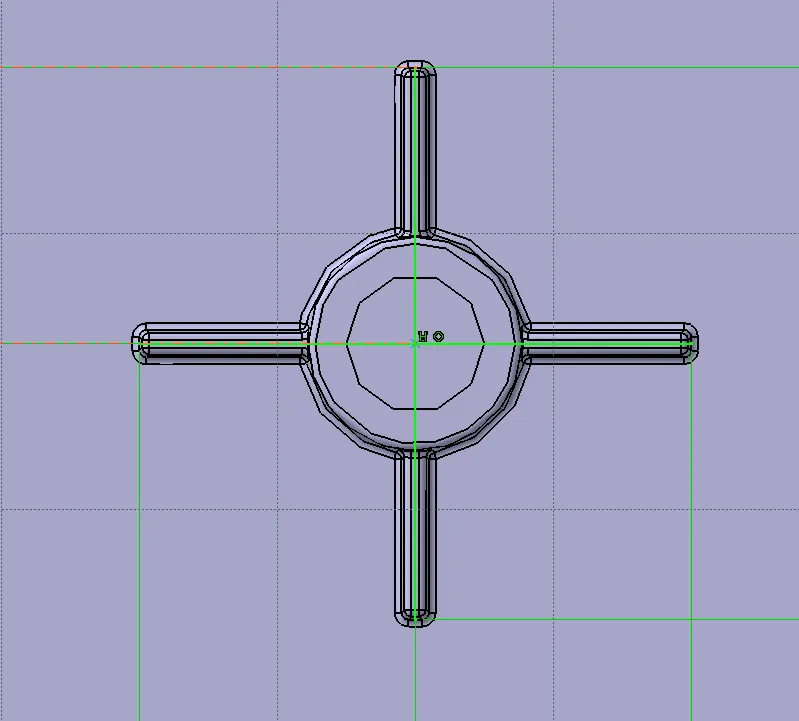
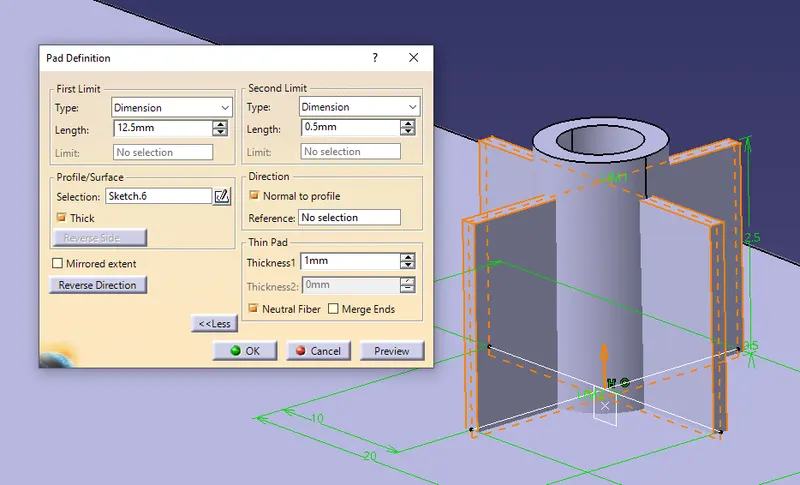
Then, they are extruded to a height of 12.5 and thickened to 1 mm.
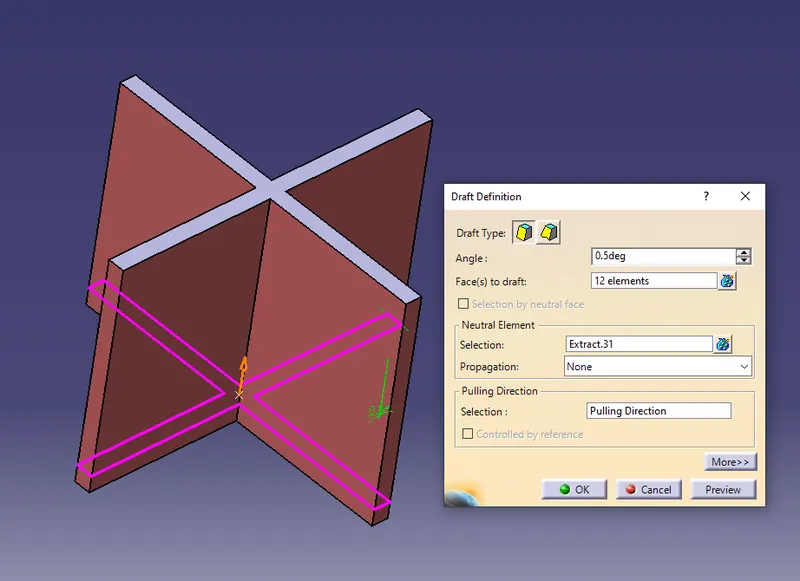
Later, ribs are also drafted to 0.5 degrees.
The screw boss and ribs are then union trimmed to form a single part.
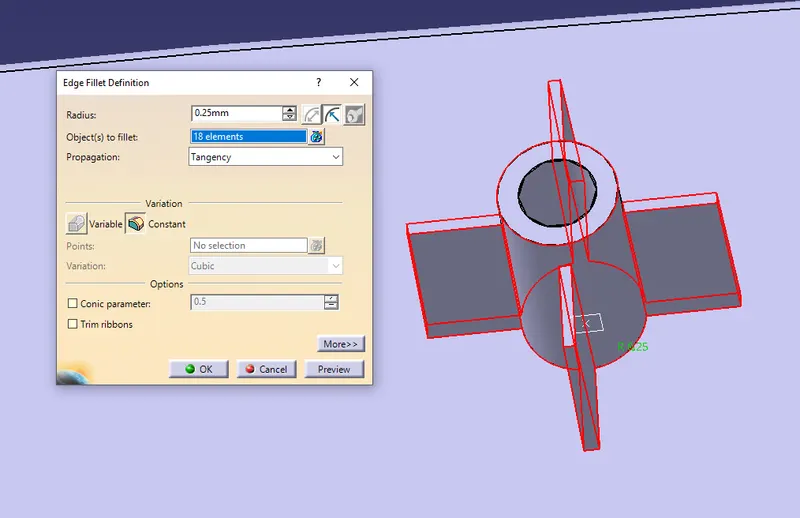
Now, the final screw boss is assembled to the main coin holder component and provided with the fillets or 0.25mm radius.
Dog house :
It is a ‘doghouse’ looking embossment for screws to attach one piece of plastic to another one. For example, you have a bumper cover, and you want to add a garnish to it.
The shaded oval is where the screw comes in and in this example, these doghouses are on the back of an a-surface bumper cover. Now the reason it's a doghouse is that you want to keep the legs of the doghouse thin so that there are no sink marks on the a-surface.
If a plastic component is too thick (as in where the a-surface thickness of 3mm and the doghouse thickness of say 3mm comes together, you would have a sink mark).
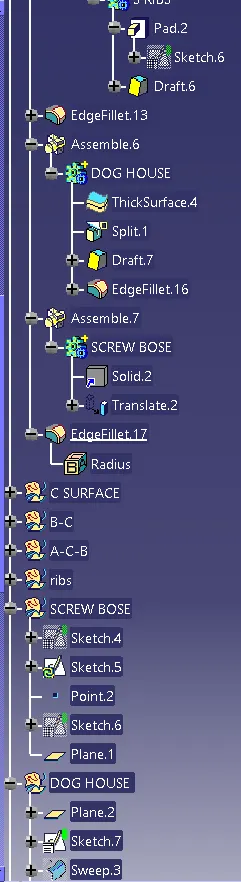
First, the screw boss is translated to someplace, and keeping a reference of this, the dog house is created on the base extracted and a C shape sketch is drawn for the dog house.
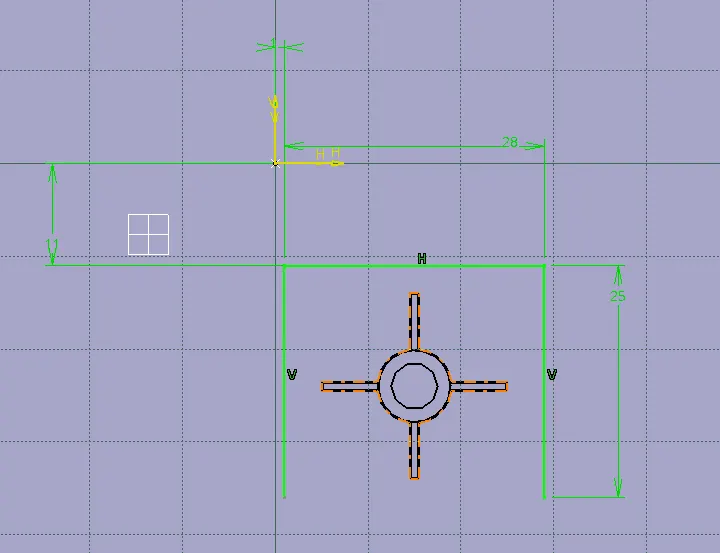
That sketch is swept with a drafting direction of 1.5 degrees and a height of 22mm
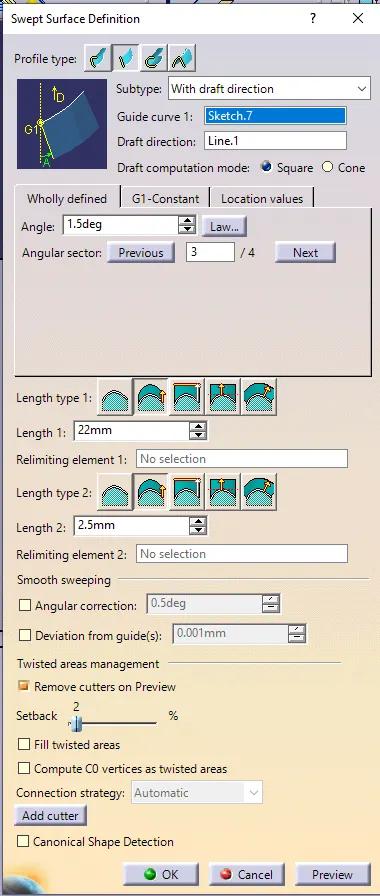
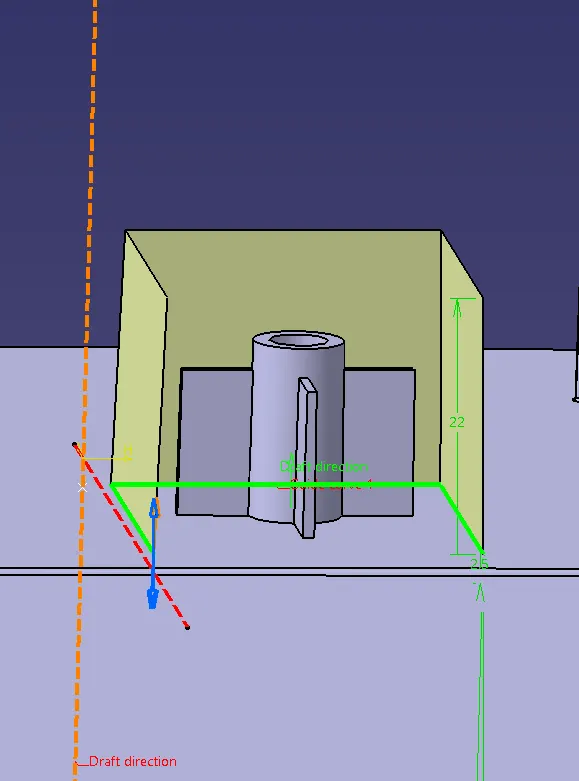
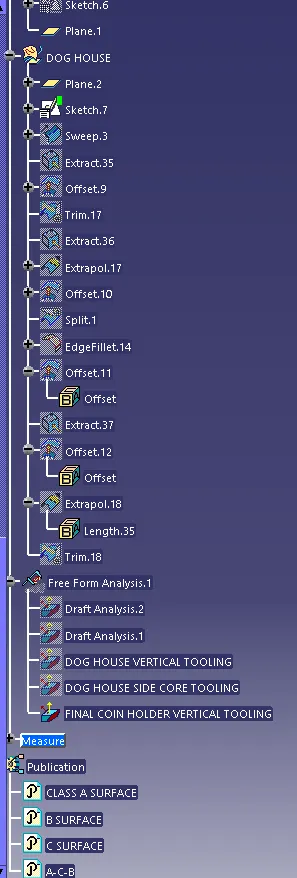
This box needs to be packed from the top, so the base surface is offset to a height that intersects with the top, and then they are trimmed to close the top of the box.
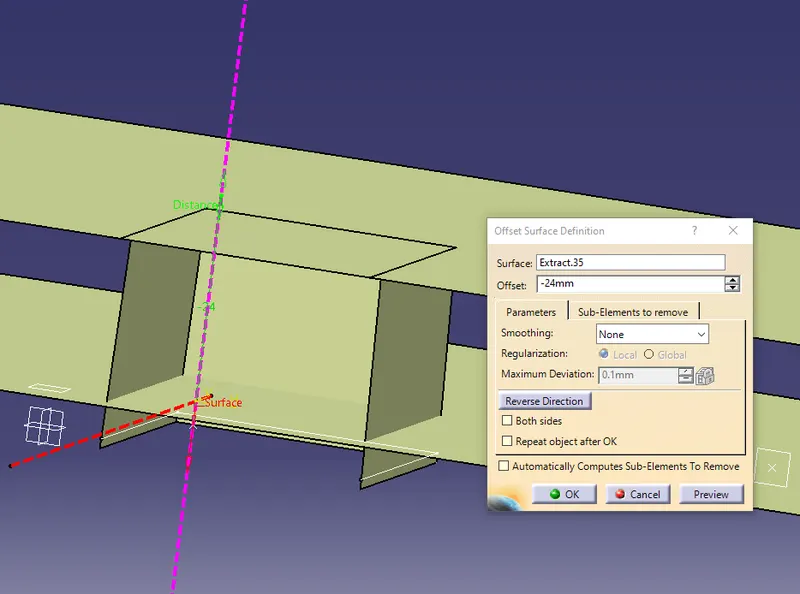
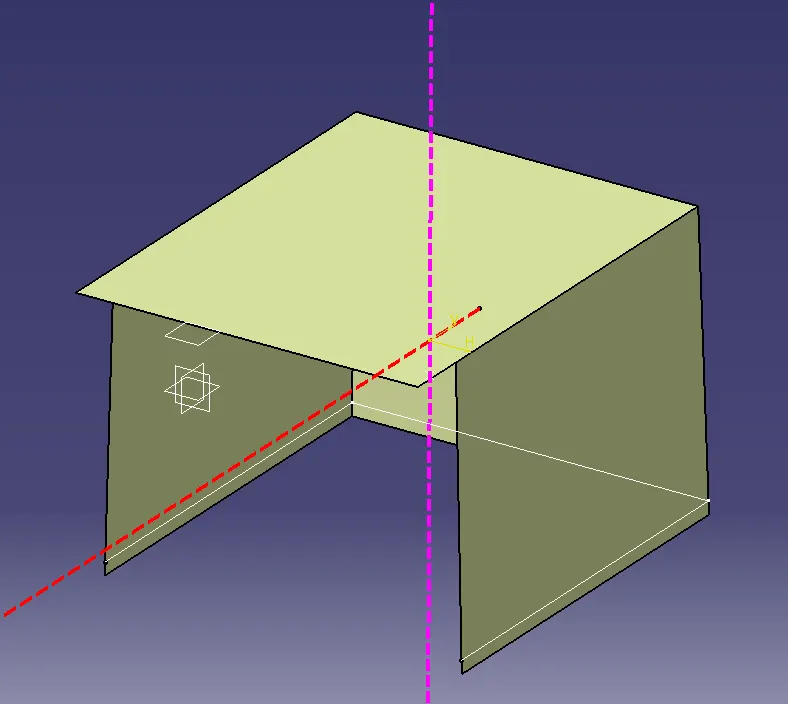
Then the extended portion is again trimmed with the surface to form the proper box and the edges are given the fillets of 1mm.
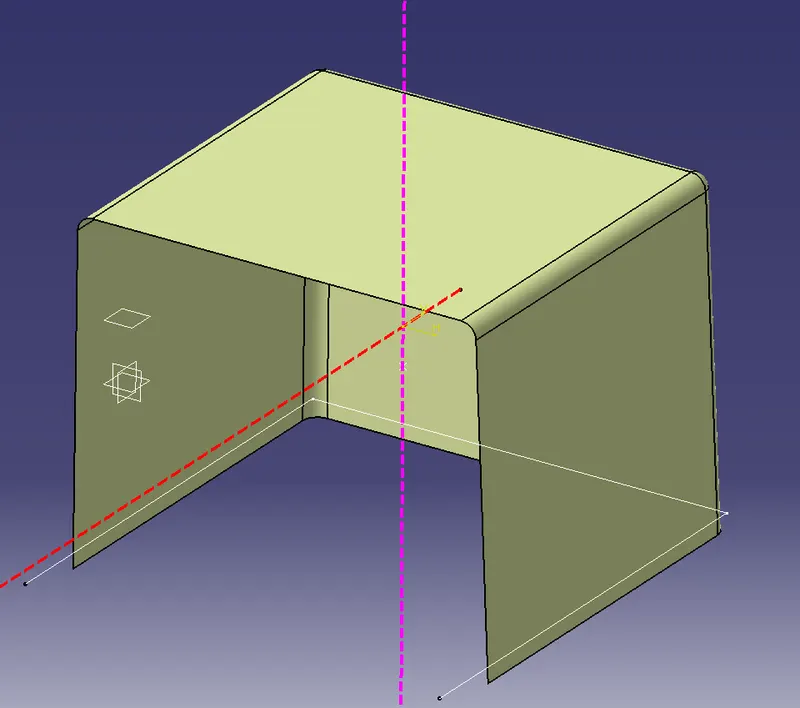
The above surface is then thickened to 2mm in the part workbench.
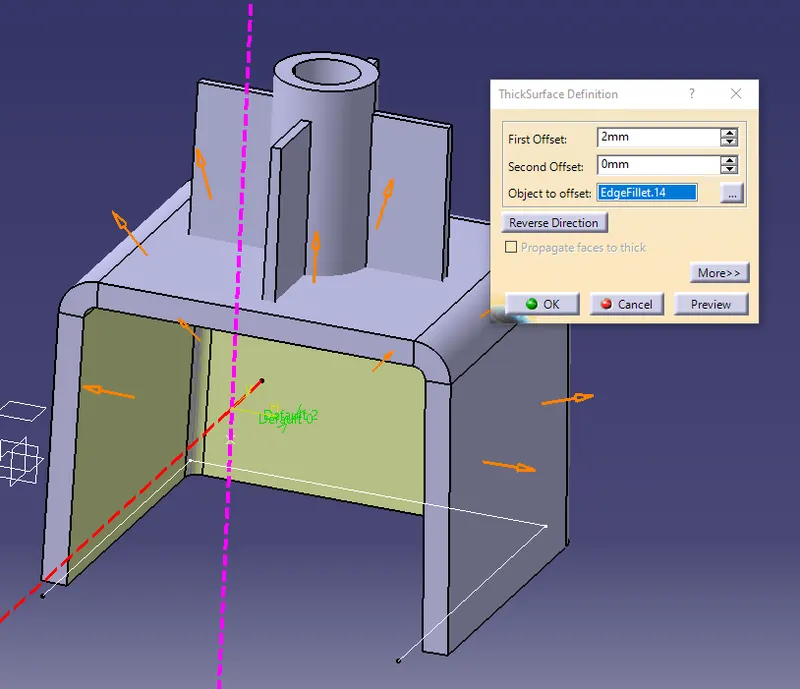
For the lower part of the dog house, the inner walls of the box are extracted and offset by 1mm to the outer side in a shape generative workbench.
C= 0.4*2.5 = 1mm
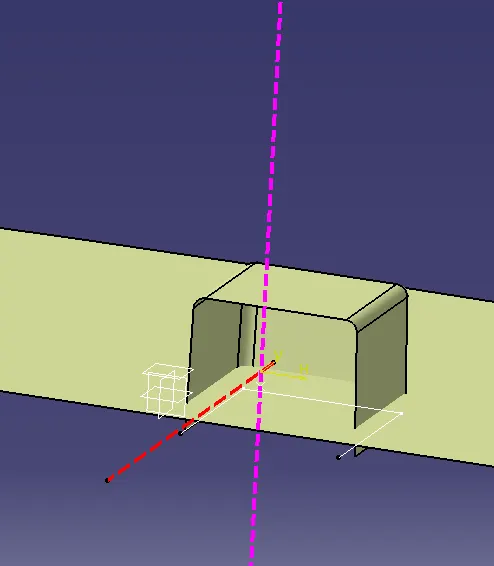
The offset face is then extrapolated by point continuity by 10mm and another face is from the base is offset by a distance of 6.5 mm such that the distance B should be around 4-5 mm as per the design rule.
The two offset faces are trimmed together to get the lower cut section of the house and later they are trimmed with the solid box to form the final dog house.
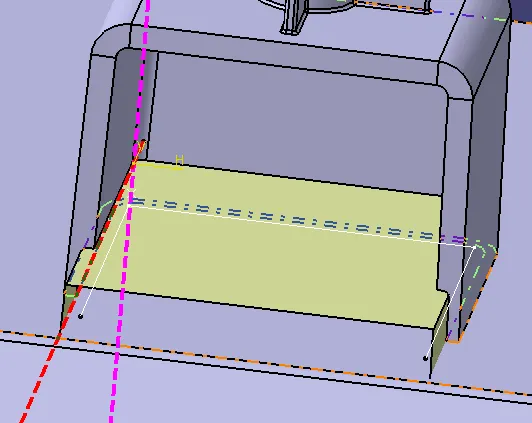
Lastly, the dog house is assembled with the main coin holder body and the screw bode is translated and positioned on the top of the dog house.
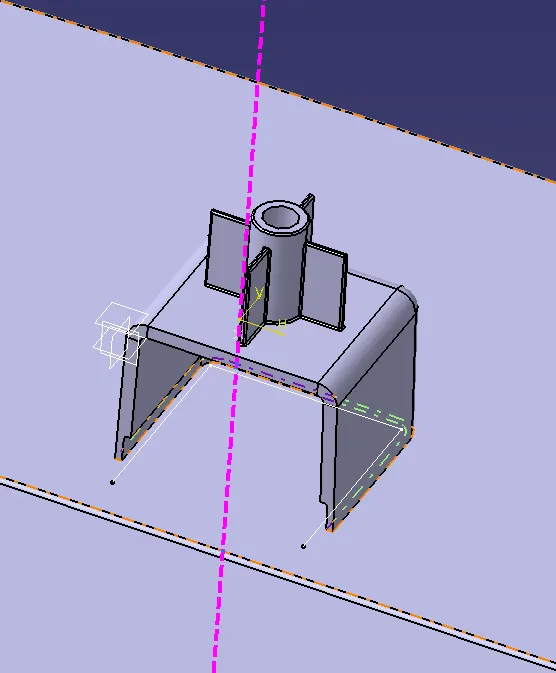
Draft analysis :
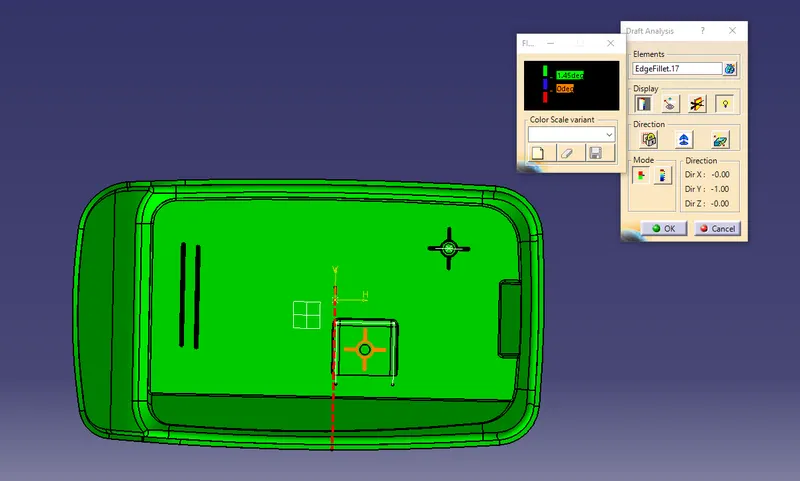
It’s important to perform the draft analysis for the final attachment features to see if the tooling axis will be able to capture all the features properly or if there is a need for the side core.
So the feature draft analysis is performed of the dog house since an inside portion of the dog house is questionable to capture in the current vertical tooling axis.
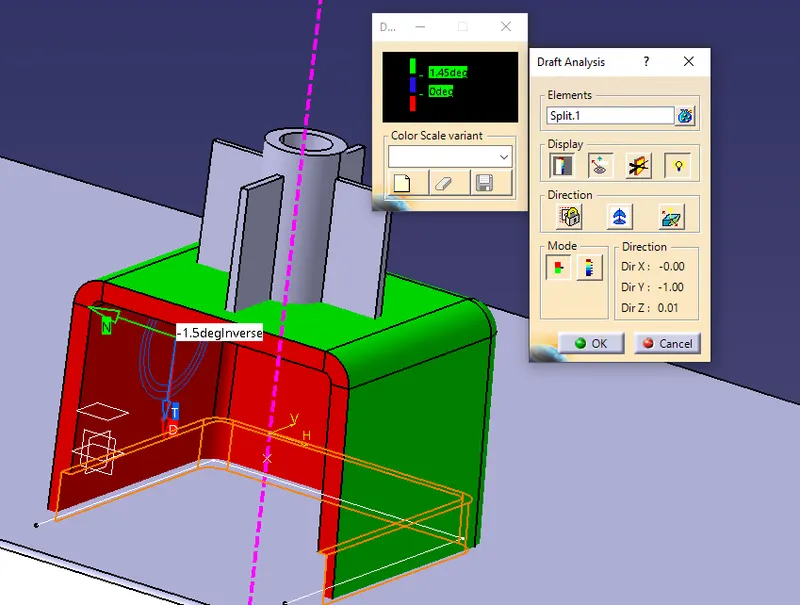
So the above draft analysis shows the negative draft for the inside feature, we need to create the side core tooling axis to properly extract the dog house properly.
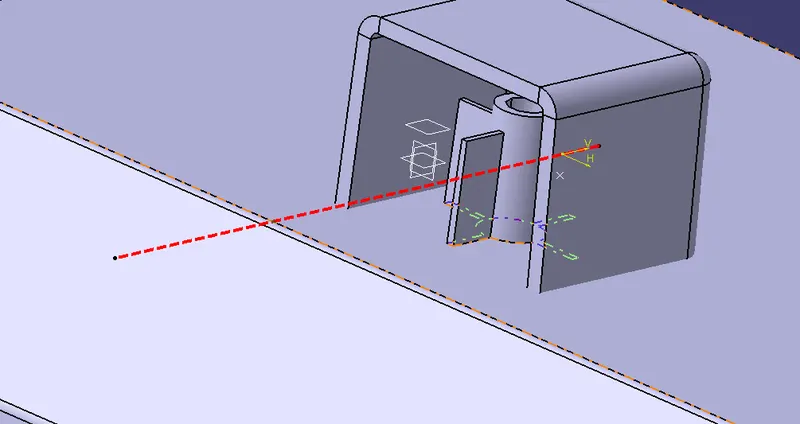
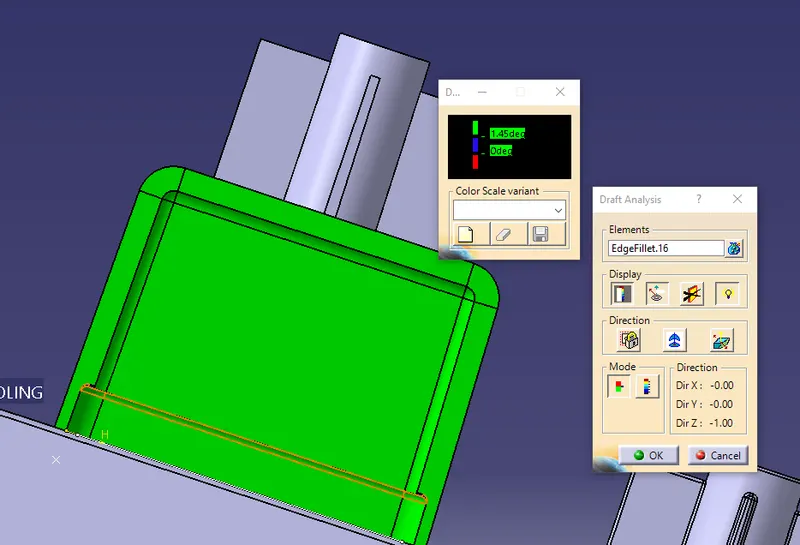
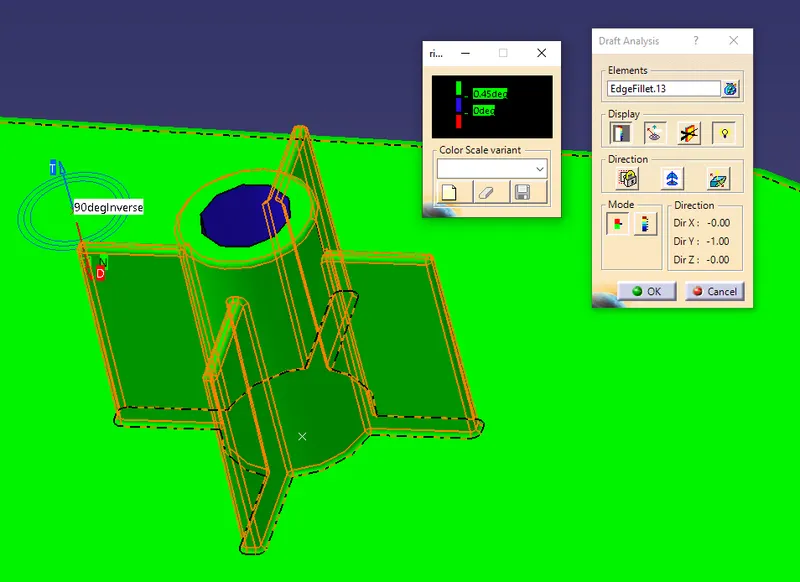
Final draft analysis for coin holder :
Tree structure :
Result:
The Screw Boss and Dog House for the Centre console coin holder has been succesfully created considering the design rules and the draft analysis for the final component have also been performed.