Week 2 - Flow over a Cylinder.
Aim: To Simulate the flow over a cylinder and explain the phenomenon of Karman vortex street.
Objective:
- To simulate the flow with steady and unsteady case and calculate the Strouhal Number for Re = 100.
- To calculate the coefficient of drag and lift over a cylinder by setting the Reynolds number to 10,100,1000,10000 & 100000. (Run with steady solver)
- To Discuss the effect of Reynolds number on the coefficient of drag. [ Results should be validated with any standard literature and error should be within 5 %]
To find:
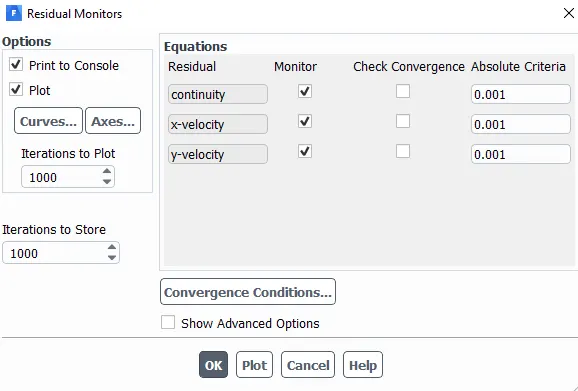
- In both approaches, show that the flow has converged. That is, what quantities or plots need to be looked at to determine that the flow has converged?
- Plots of the coefficient of drag and lift.
- Plots to show vortex shedding behind the cylinder.
- Mention the referred material at the end of the challenge submission page.
Introduction:
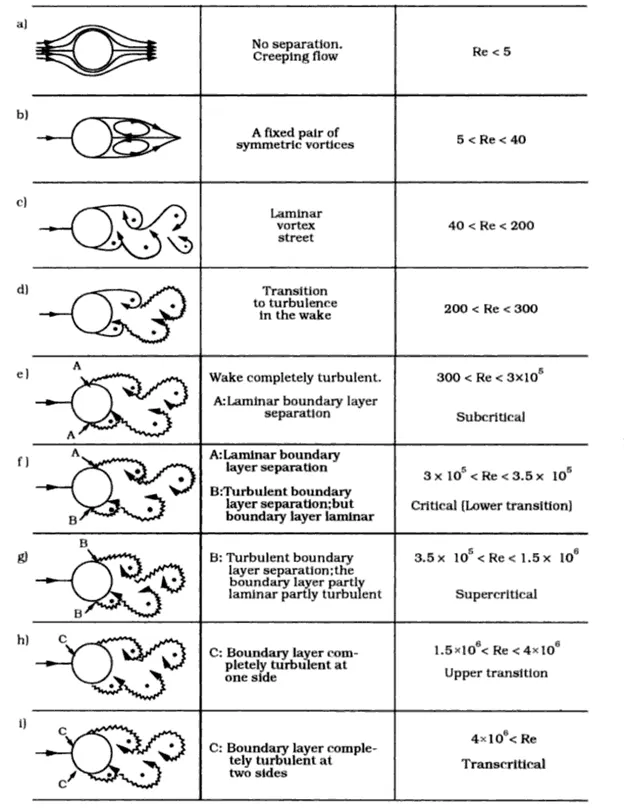
Simulating Flow over a cylinder helps us in analysing the effects of vortex shedding in steady state and in transient state simulations. Vortex shedding is an unsteady flow that takes place in a special flow velocities. It depends on the size and shape of the cylindrical body. Vertices are created at the back of the cylinder body and detach periodically from either side of the body.
Vertex shedding: It is the effet of two phenomena viscosity and reynolds number. It is observed above a particular Reynolds number value.
Reynold's Number: (ρ*u*D)/μ).
Where ρ = density,
u = velocity,
D = diameter,
μ = absolute viscosity.
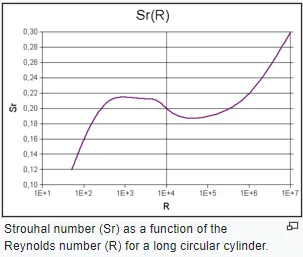
Strouhal Number is a dimensionless value useful for analyzing oscillating unsteady fluid flow dynamics problems.
Formula:
St = f D/ v
where
St = Strouhal Number
f= oscillation frequency
D= characteristic length/ Diameter of restricting body
v = flow velocity
Strouhal number is used for analyzing unsteady, oscillating flow problems. It is the measure of ratio of the inertial forces due to the unsteadiness of the flow or local acceleration to the inertial forces due to changes in velocity from one point to an other in the flow field.The vortices observed behind a stone in a river, or measured behind the obstruction in a vortex flow meter, explains significance of strouhal number.
The Strouhal Number is a function of Reynolds number.
Procedure:
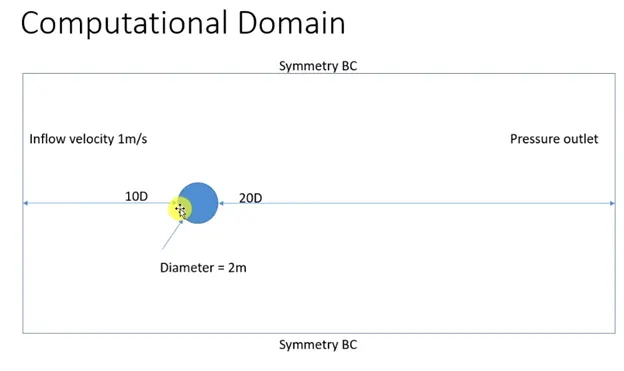
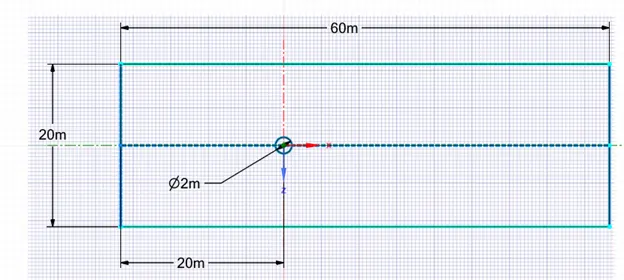
- Geometry preparation
Create Geometry
- Mesh
- MESH -- > GENERATE MESH.
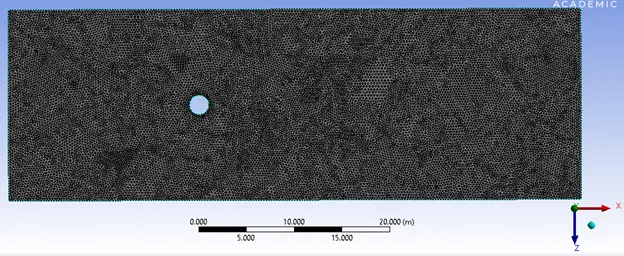
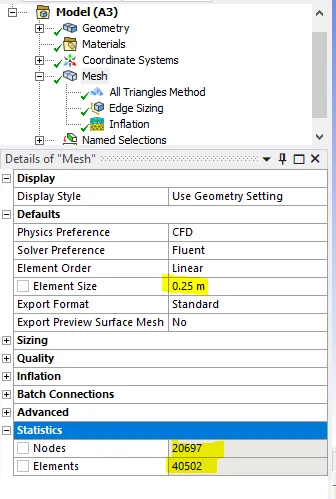
- mesh size 0.25
- Automatic method --> Triangular mesh
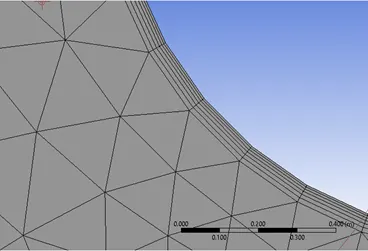
- Sizing and enter the number of divisions =36
- Body Fitting --> 6 layers Inflation
- Close the Mesh
- Set Up
-
Setting up physics:
Solver --> Steady state / Transient state, Pressure based, Velocity Formulation=Absolute.
Model --> Viscous--> Laminar
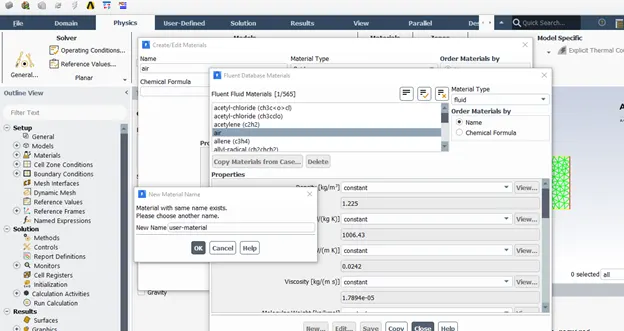
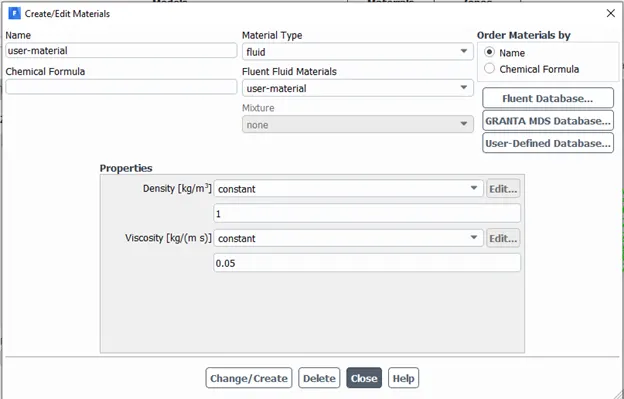
Material --> create a USER-MATERIAL i.e. Density = 1kg/m3, Viscosity = 0.02kg/m-s (Reynolds no. = 100)
-
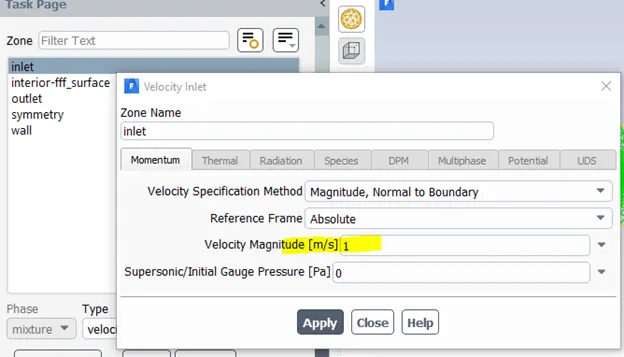
Boundary conditions --> inlet velocity = 1m/s, outlet- guage pressure = 0 (1 atm)
-
Setting up solution:
Steady state - HYBRID Initialization
Transient state - STANDARD Initialization
-
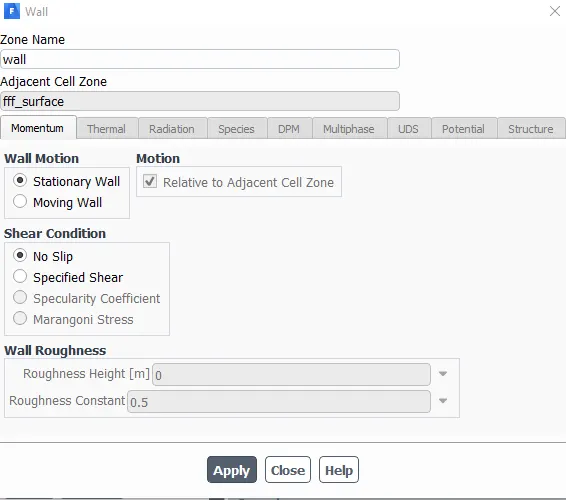
Velocity from the first cell attached to the cylinder is zero
-
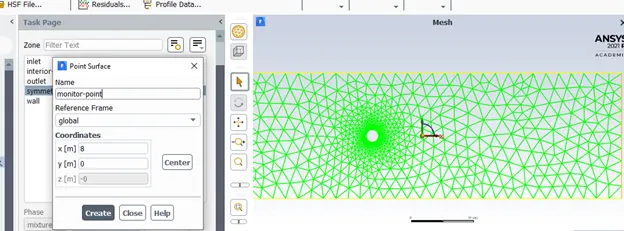
Monitor point creation for post processing
- Create a point where x-axis=8m and y-axis=0m.
- Setup contours for both pressure and pressure and velocity.
- Solution
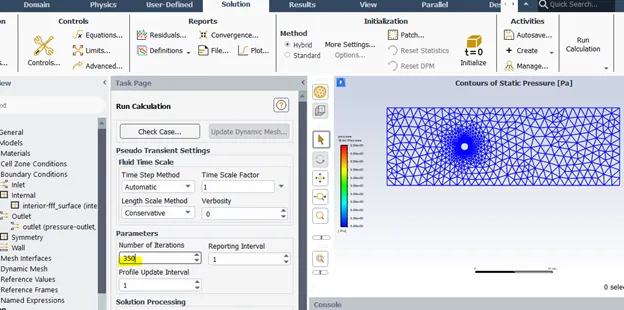
- SOLVING --> CONTROLS, REPORTS, INITIALIZATION, RUN CALCULATION.
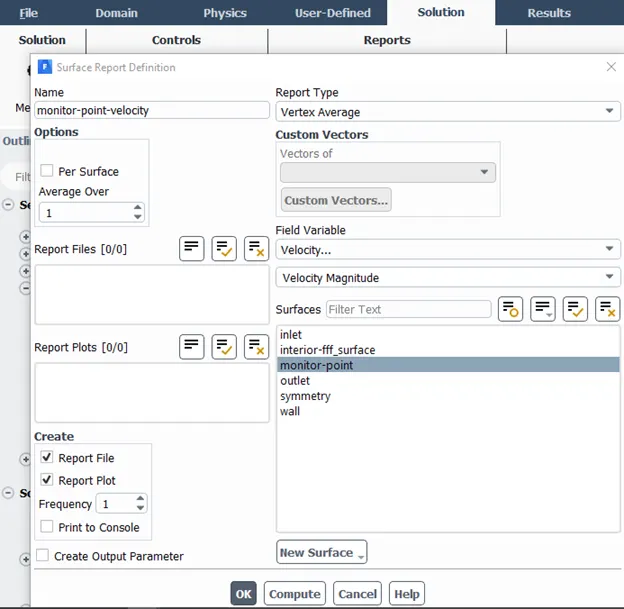
- REPORTS-- > DEFINITIONS --> Definitions and select create a Vertex Average of VELOCITY MAGNITUDE at the monitor point
- CREATE --> select REPORT FILE and REPORT PLOT.
- Contour - Velocity and Pressure
- ACTIVITIES, create and create a solution animation for velocity.
- INITIALIZATION --> select METHOD = HYBRID for steady and Standard for Transient--> click t=0 INITIALIZE
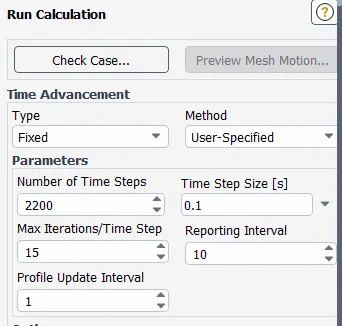
- RUN CALCULATION
3. RESULTS AND DISCUSSION:
Animation:
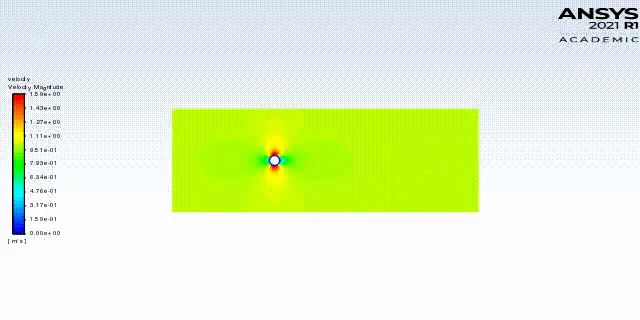
link: https://youtu.be/M2Gtn2ZARfs
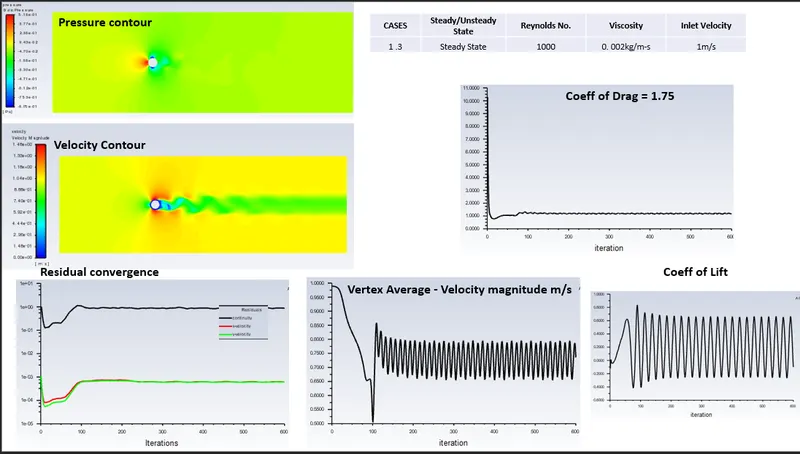
Reynold number is greater than 2000, the flow is turbulent. From this case turbulence model = k-omega SST model is used
| Diameter | 2 | m | |||
| Pho | 1 | kg/m^3 | |||
| velocity | 1 | m/s | |||
| CASES | Steady/Unsteady State | Reynolds No. | Viscosity | Inlet Velocity | Coeff of drag |
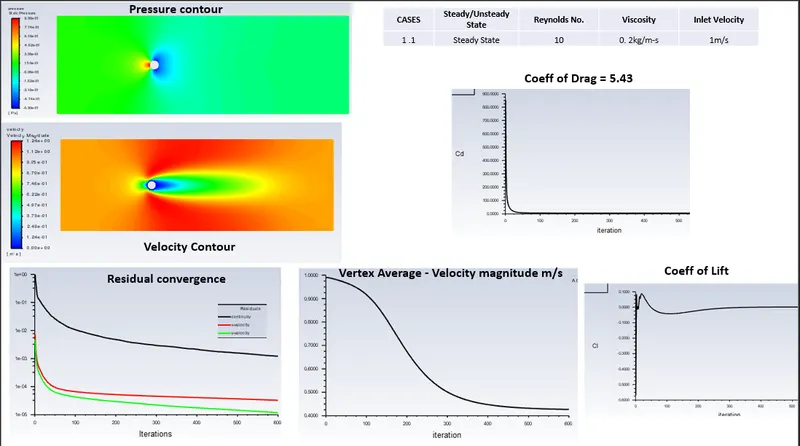
| 1 .1 | Steady State | 10 | 0.2 | 1m/s | 5.43 |
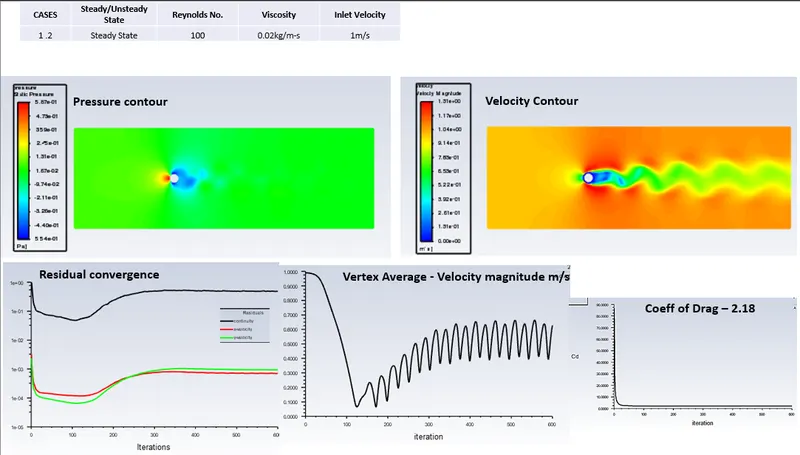
| 1.2 | Steady State | 100 | 0.02 | 1m/s | 2.18 |
| 1.3 | Steady State | 1000 | 0.002 | 1m/s | 1.75 |
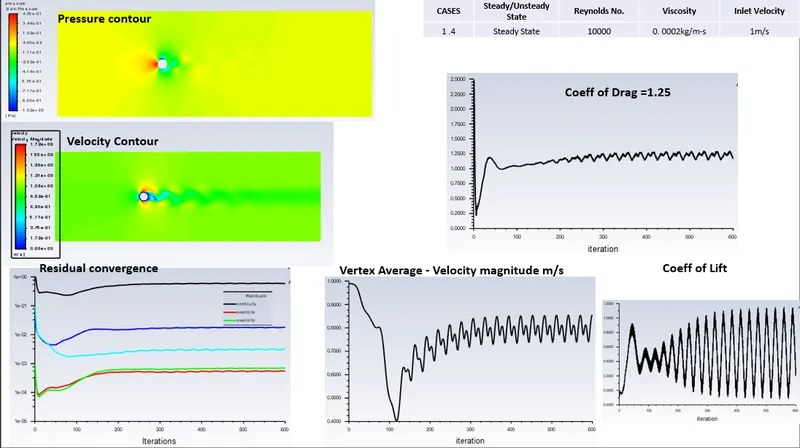
| 1.4 | Steady State | 10000 | 0.0002 | 1m/s | 1.25 |
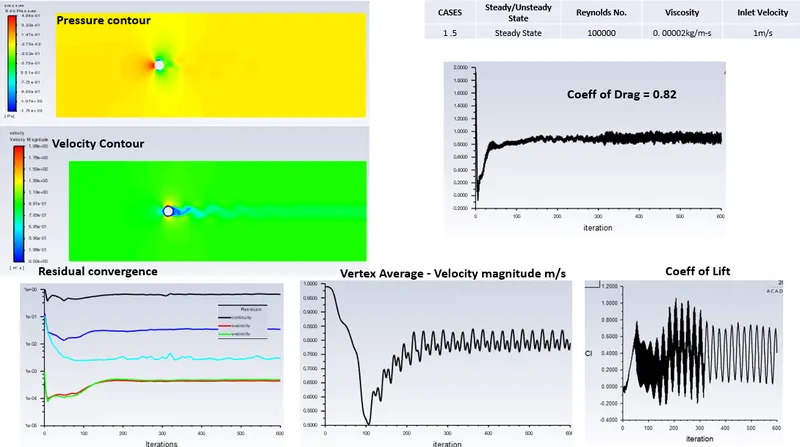
| 1.5 | Steady State | 100000 | 0.00002 | 1m/s | 0.82 |
Coefficient of drag: Drag coefficient is used to quantify the drag or the resistance of an object in a fluid environment. A low drag coefficient is that the streamline shape of the body is such as to enable it to move easily through the surrounding viscous air with the minimum resistance, whereas a high drag coefficient is caused by poor streamlining of the body profile so that there is a high air resistance when the body is in motion.
It is a dimensionless quantity.
Formula
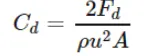
Where
Fd- drag force
ρ= density of fluid
A=Area
Inference:
- vortex shedding which is an oscillating flow that takes place when the fluid flows over the cylinder is observed in all the cases except Re=10. Vortex shedding was observed in animaion of velocity component. It depends on the velocity of flow, size and shape of the body.
- It is observed that drag coefficient(Cd) value changes with change in the Reynolds Numbers.
- It is envisaged from the table that as the reynolds number increases the value of cd decreases. Reynold Number is grater (Re>4000) flow is turbulent, in which laminar flow is very small, hence the viscosity effect also small, leads to lower skin friction drag. Similarly at low Re the laminar flow is dominant and friction is high so Cd is large.
- Plot Vertex average of velocity magnitude plot shows that initially the trend was smooth but later it showed an oscillating behaviour due to the formation of vortex shedding.Since there was no change after few iterations ,the flow has converged. More over the residuals also shows no change after few iterations.
Unsteady state
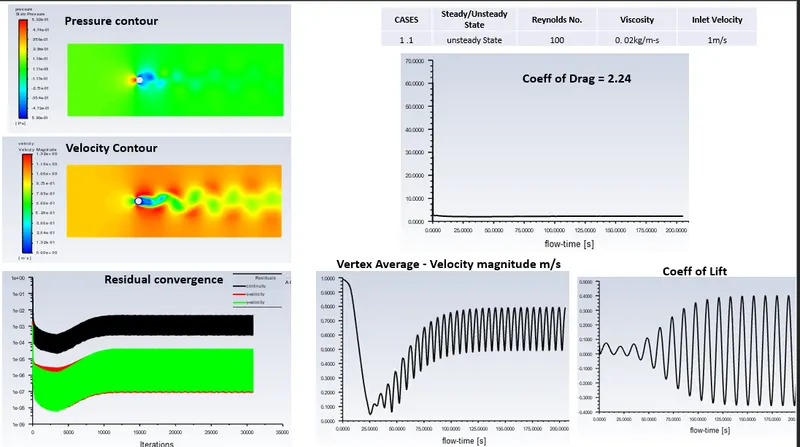
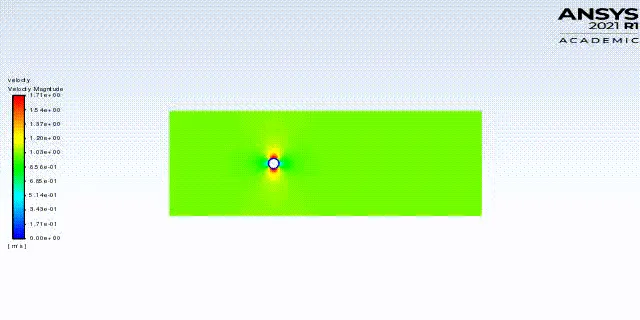
Animation link:
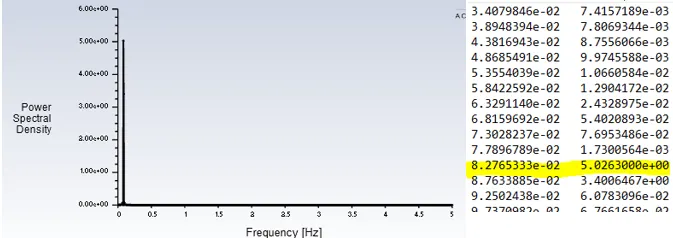
| Parameters | Symbol | Value | unit |
| oscillation frequency | f | 0.0827 | hertz |
| characteristic length | D | 2 | m |
| flow velocity | u | 1 | m/s |
| Strouhal Number | st = (f*D)/u. | 0.17 | approx |
Strouhal number is the measure of ratio of the inertial forces due to the unsteadiness of the flow or local acceleration to the inertial forces due to changes in velocity from one point to an other in the flow field.The vortices observed behind a stone in a river, or measured behind the obstruction in a vortex flow meter, explains significance of strouhal number.
The Strouhal Number is a function of Reynolds number.
Inference:
- In steady state analysis frequency cannot be obtained as there is no time parameter involved but in case of transient Analysis we can evaluate the frequency.
- Frequency(Hz) determined by using FFT Analysis(Fast Fourier Transform).
- Steps:
- DEFINITIONS --> NEW --> FORCE REPORT --> LIFT.
- Initialize and run the simulation.
- FFT -->load the input file(lift plot values)--> select Y-AXIS function= POWER SPECTRAL DENSITY and X-AXIS function= FREQUENCY --> plot FFT
- Plot Vertex average of velocity magnitude plot shows that initially the trend was smooth but later it showed an oscillating behaviour due to the formation of vortex shedding.Since there was no change after few iterations ,the flow has converged.
- Strouhal Number is a function of Reynolds number and its value at Re = 100 at unsteady state simulation is 0.17
References:
1. Numerical simulation of laminar flow past a circular cylinder. https://doi.org/10.1016/j.apm.2008.01.017
2. Compuational Fluid Dynaics by John D. Anderson Jr.
CONCLUSION:
The steady and unsteady state simulations to compare vertex shedding effect of a fluid flow over cylinder surface was successfully studied using Ansys Fluent.