Week 3 Sheet metal Bending challenge
OBJECTIVE
Perform the sheet metal bending for different materials and settings
Case 1: Aluminium Alloy 1199, Copper Alloy NL, and Magnesium Alloy NL. Find out the Equivalent stress, Equivalent elastic strain, and Total Deformation in the Y direction and compare the results for the three materials.
Case 2: With the material as Aluminium Alloy, change the friction coefficient to 0.19 and run the analysis as mentioned in Case 1. Compare the results with that in case 1.
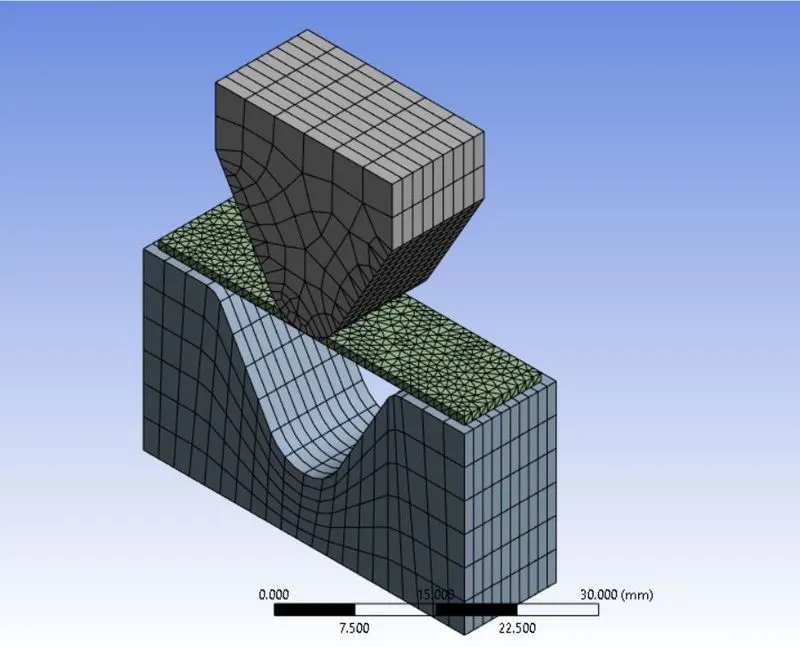
Case 3: Refine the mesh on the plate such that it doesn't cross the academic limit. With Aluminium alloy as material, run the analysis as in Case 1 and compare the results.
Step 1 :- Add material Properties :-
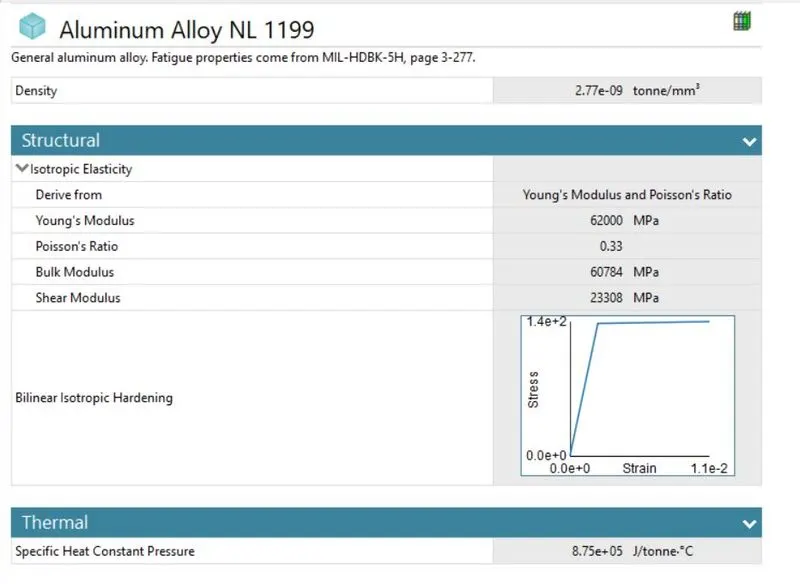
1. Aluminium Alloy 1199 :-
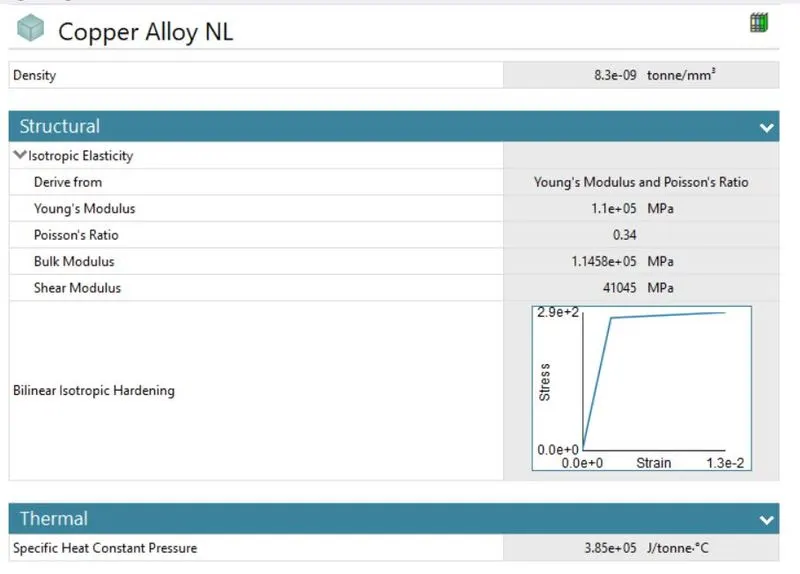
2.Copper Alloy NL :-
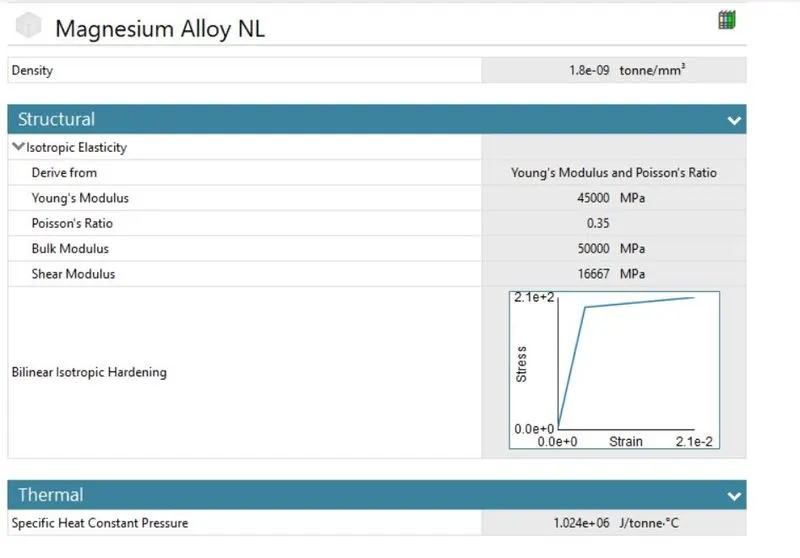
3.Magnesium Alloy NL :-
Step 2 :- Geometry import :-
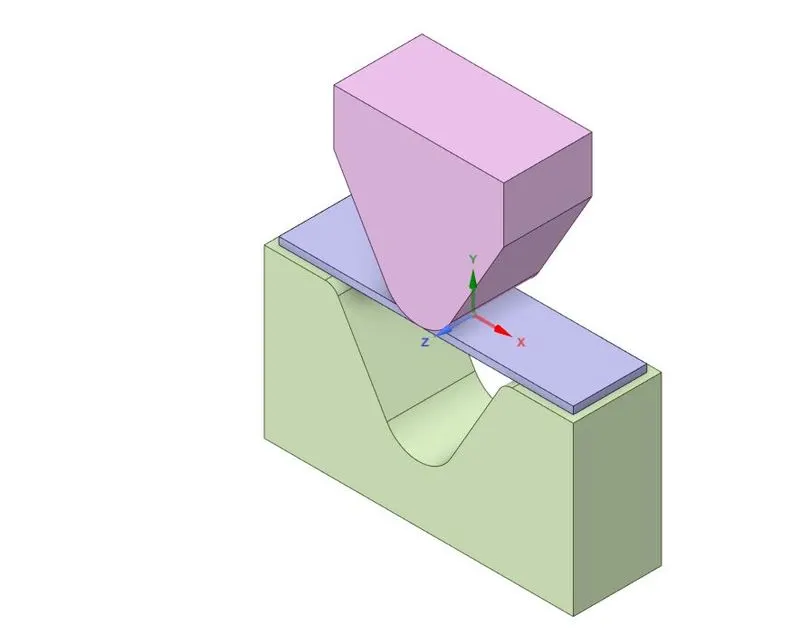
- Import the geometry and check in Spaceclaim for any irregularties
- Then open ansys mechanical and rename the geometry and assign the material according to the cases
Step 3 :- Set Connections :-
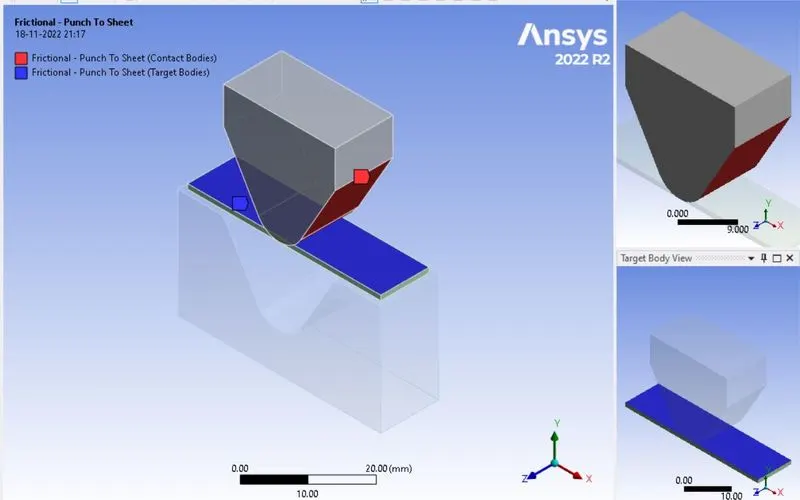
Contact NO. 1 :-
First contacts created between punch and sheet by selecting the faces. The contact type is frictional with friction coefficient of 0.1 .The behaviour is changed to auto Asymetric and the Formulation type used is Augumented lagrange .The interface treatment is set to add offset , Ramped effects
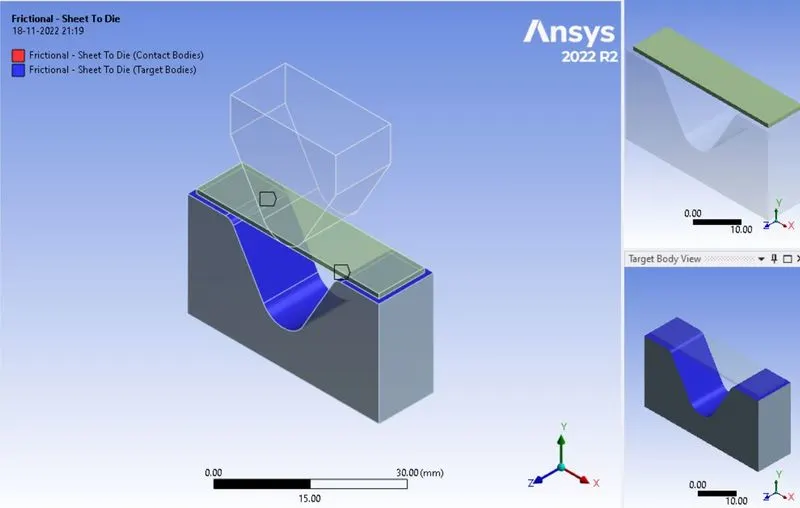
Contact No.2 :-
Second contacts created between sheet and Die by selecting the faces. The contact type is frictional with friction coefficient of 0.1 .The behaviour is changed to auto Asymetric and the Formulation type used is Augumented lagrange .The interface treatment is set to add offset , Ramped effects
Results
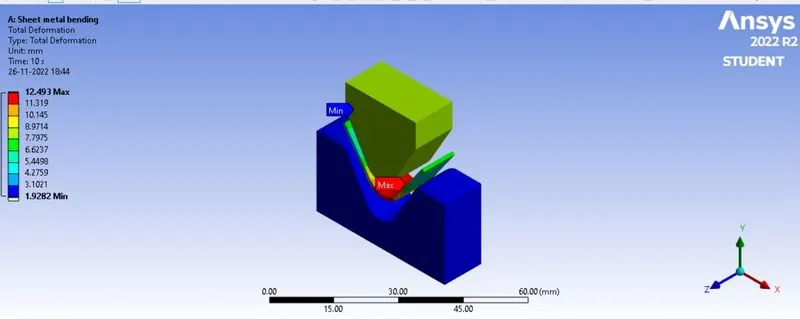
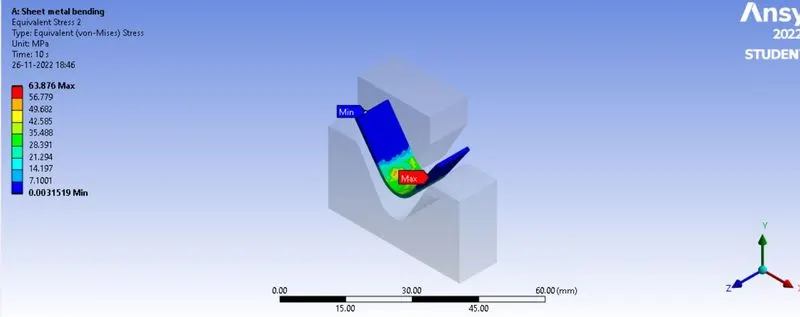
Case1 :-Aluminium Alloy 1199, Copper Alloy NL, and Magnesium Alloy NL. Find out the Equivalent stress, Equivalent elastic strain, and Total Deformation in the Y direction and compare the results for the three materials.
1) Material :-Aluminium Alloy 1199
Toltal Deformation :-
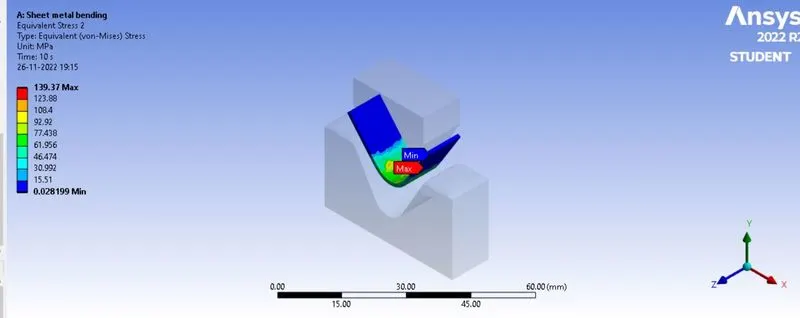
Equivalent stress on plate :-
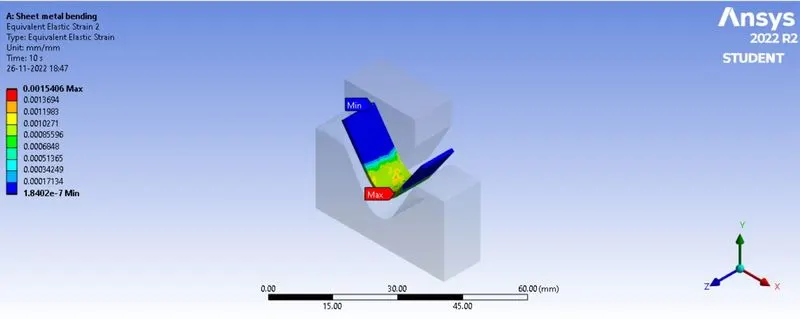
Equivalent strain :-
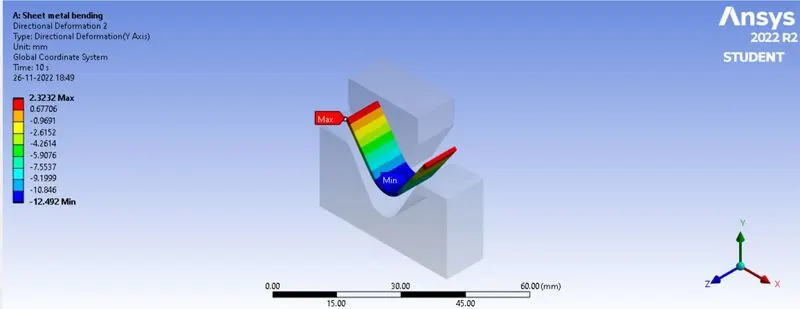
Deformation in Y direction :-
2) Material :-Copper Alloy NL
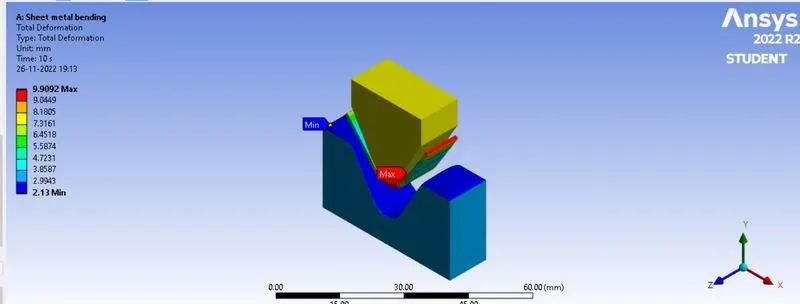
Toltal Deformation :-
Equivalent stress :-
Equivalent strain :-
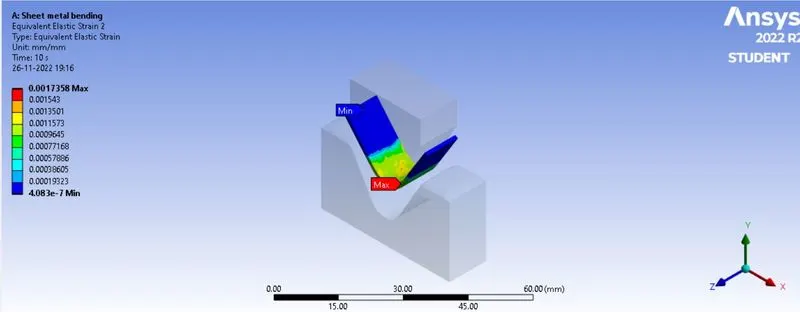
Deformation in Y direction :-
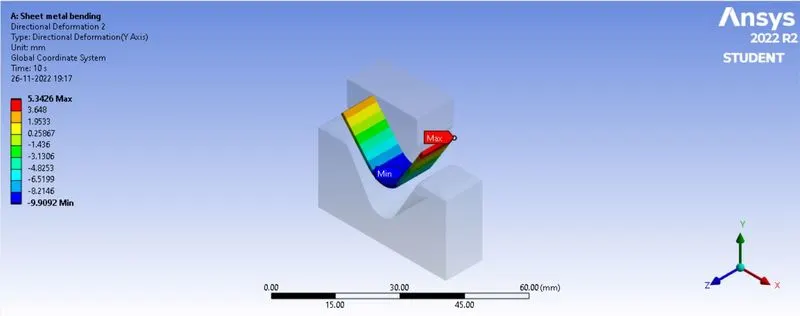
3) Material:-Magnesium Alloy NL :-
Toltal Deformation :-
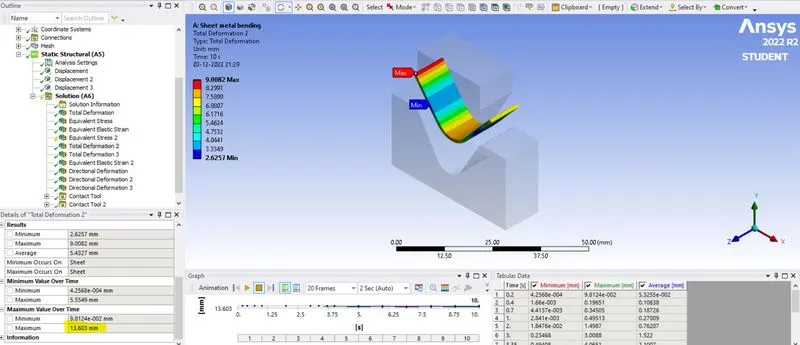
Equivalent stress :-
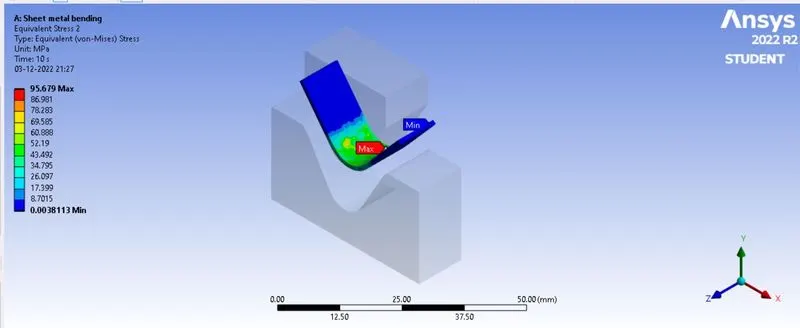
Equivalent strain :-
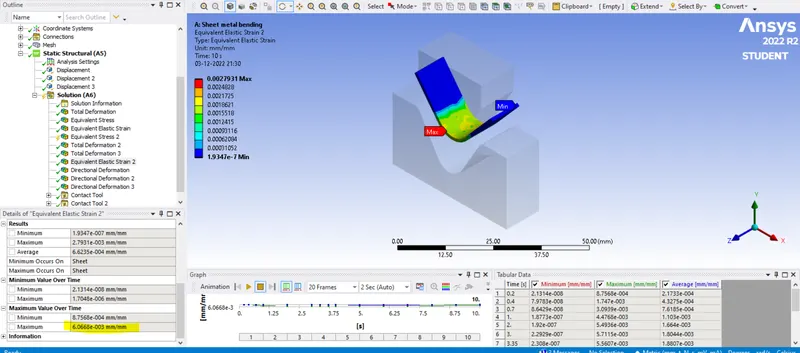
Deformation in Y direction :-
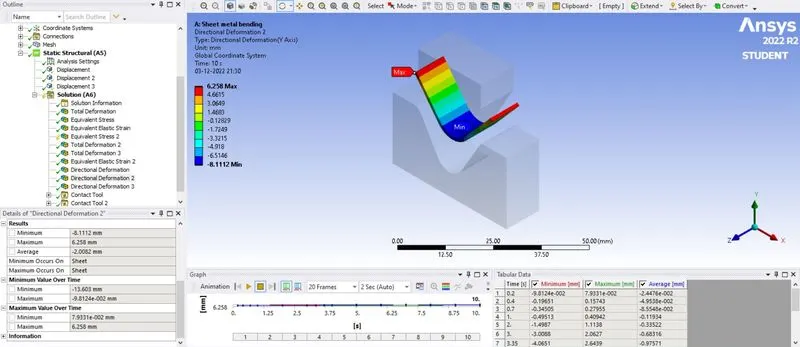
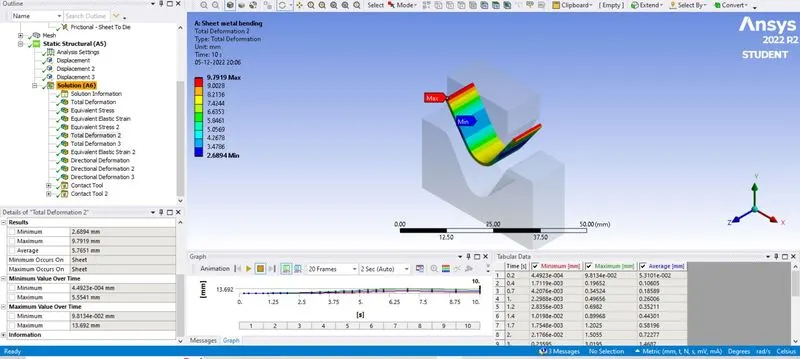
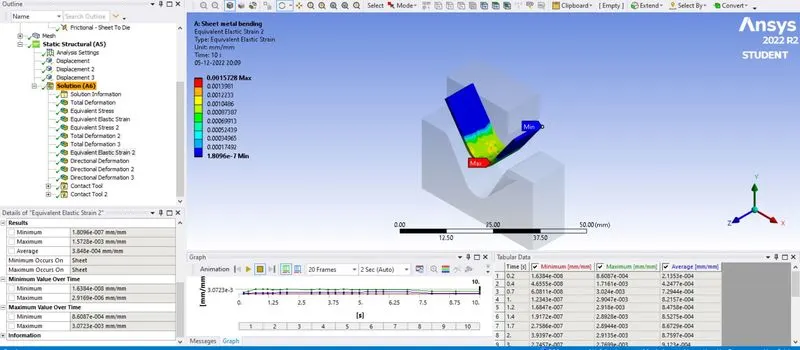
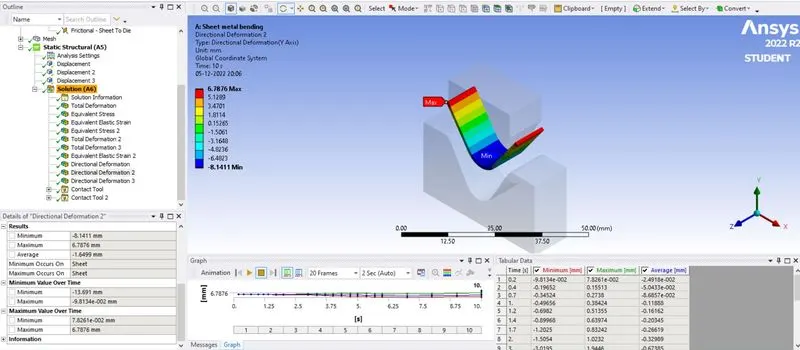
Case 2 :- With the material as Aluminium Alloy, change the friction coefficient to 0.19 and run the analysis as mentioned in Case 1. Compare the results with that in case 1.
Toltal Deformation :-
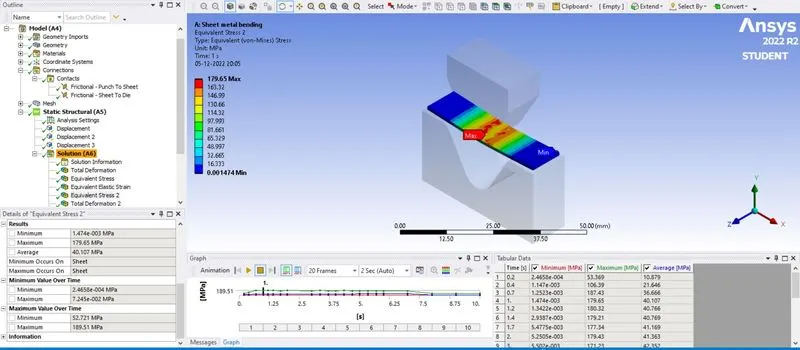
Equivalent stress :-
Equivalent strain :-
Deformation in Y direction :-
Case 3: Refine the mesh on the plate such that it doesn't cross the academic limit. With Aluminium alloy as material, run the analysis as in Case 1 and compare the results.
Refine mesh of sheet :-
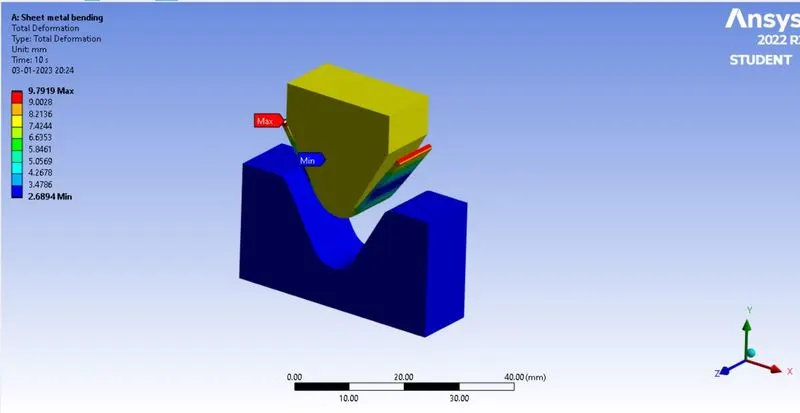
Toltal Deformation :-
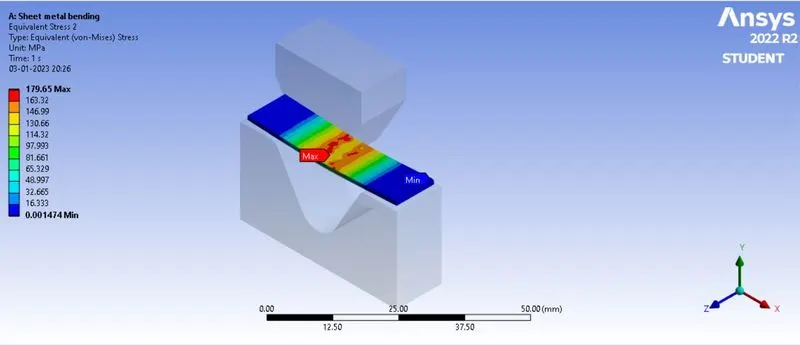
Equivalent stress :-
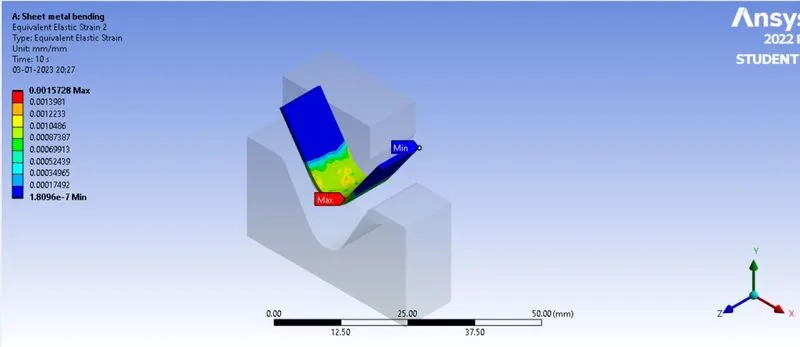
Equivalent strain :-
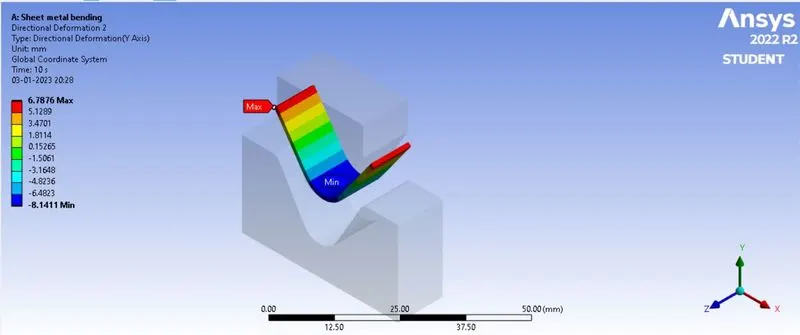
Deformation in Y direction :-
Conclusion :-
1. the Copper Alloy NL, since it endured the maximum equivalent stress, required the maximum force in order to get bent by the punch. Followed by Magnesium Alloy NL and the Alloy with the least required force out of the three is Aluminium Alloy 1199.
2. The strain developed during the bending operation was seen to be maximum for the Magnesium Alloy followed by Copper Alloy and Aluminium Alloy with the least of the three.
3. The deformation for all materials was seen to be nearly the same, just slightly more than the amount of displacement given to the Punch. However, Aluminium Alloy did have the highest values for both the Element Sizes.
4. Changing the Friction Coefficient did not have much impact on the listed parameters and since the Grid Dependency Test is not done for any of the materials so it cannot be, conclusively, said about it. however, from the results provided it can be said that the friction coefficient did not have much impact.
5. The results of analysis after the refining of the mesh size within the academic limit show decreased value of the maximum stress produced during the bending of the Aluminium Alloy. The stress value is lower than obtained for other mesh parameter analyses done for aluminum. So from the analysis standpoint, the analysis with a 0.68 mm element size is not acceptable since the results obtained are lower compared to the other similar analysis.
6. Regarding the bending process, from the above experiment it can be safely said that Aluminium Alloy 1199 is the best-suited material for the bending operation, the next pick from the three will be Magnesium Alloy and Copper Alloy is the worst pick. since it requires higher stresses for bending which can result in residual stresses and strains developed.