Week 7-Long Piston With Cam
OBJECTIVES
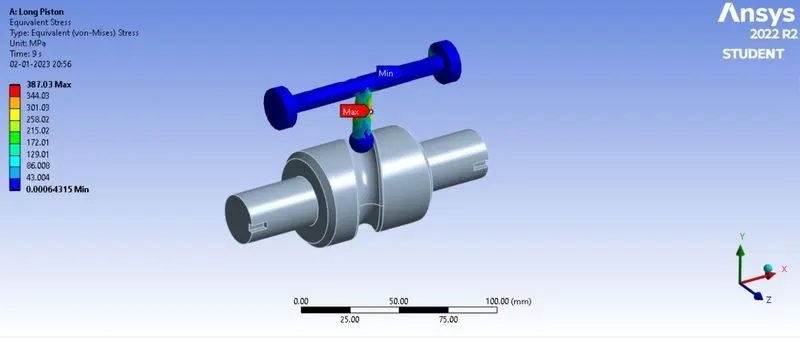
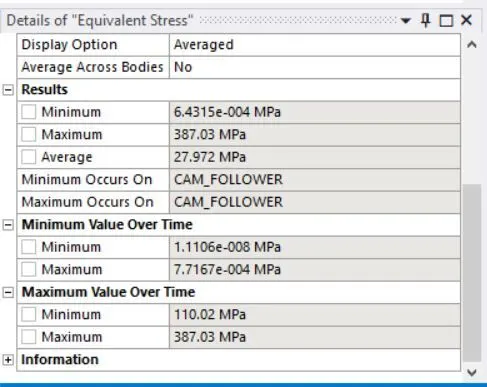
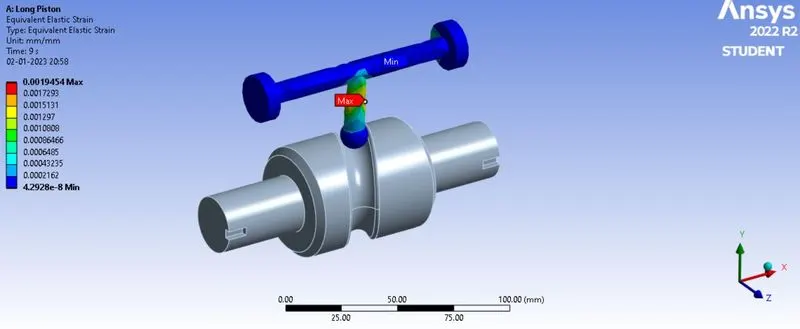
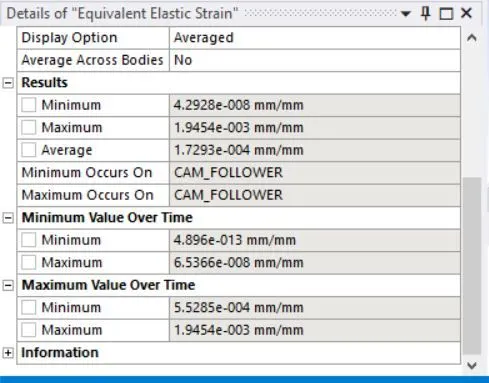
In this challenge, we have to perform a transient analysis on a piston and cam mechanism model that has been provided to you. You need to run the analysis with Frictionless contact, Frictional with 0.1 and 0.2 as the frictional contact for a total of 3 cases. Find out the Equivalent Stress, Directional Deformation and Equivalent Elastic Strain and compare them for all the three cases. Give an inference as to why the results vary between cases.
Transient analysis :-
Transient structural analysis is the process of calculating and determining the effects of loads and internal forces that are a function of time on a structure or an object.
PROCEDURE
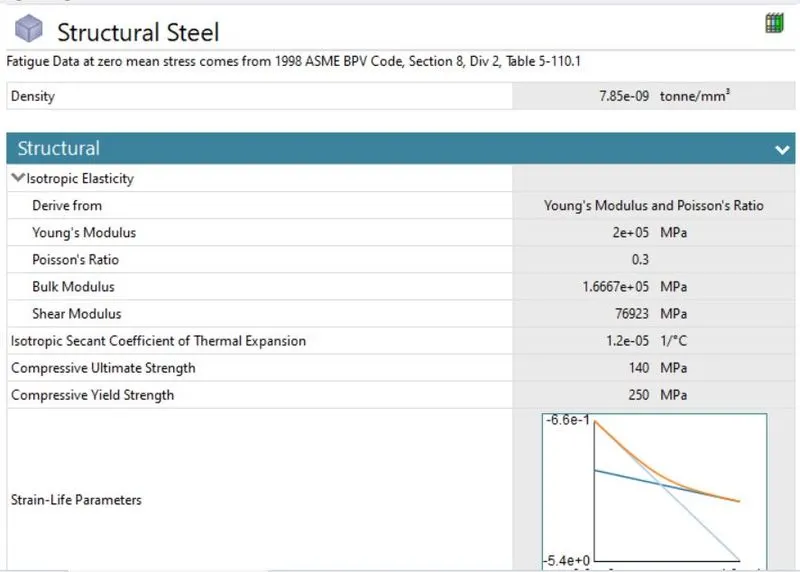
- First, we have to input the engineering materials with required properties or else by creating with required properties.
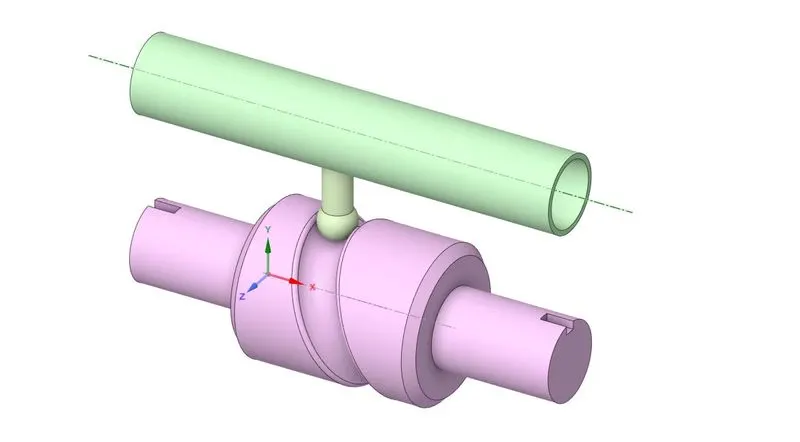
- Then we have to import our model into ansys, import the model and open it in space claim so that ansys will read it.
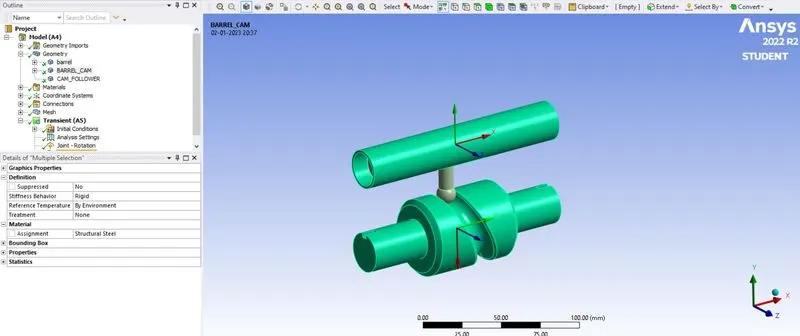
- Make the cam and barrel stiffness as rigid as we will not concentrate on that components.
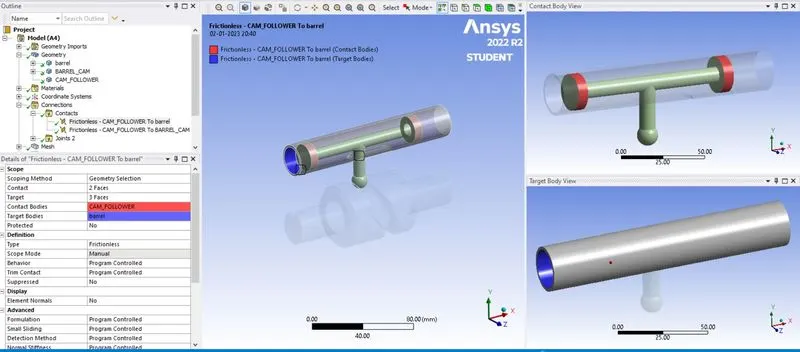
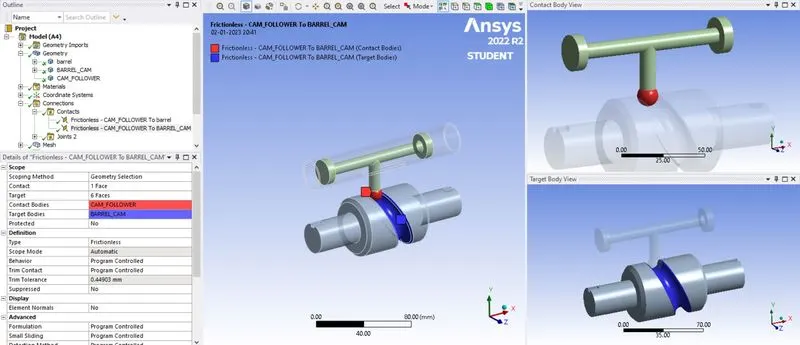
- Then assign required connections in this assignment we will use frictionless contact between the components for case 1 and frictional contact between the components for case 2&3 revolute joint at for the cam, then body-body tranlation joint between cam follower and barrel and finally make the barrel as fixed.
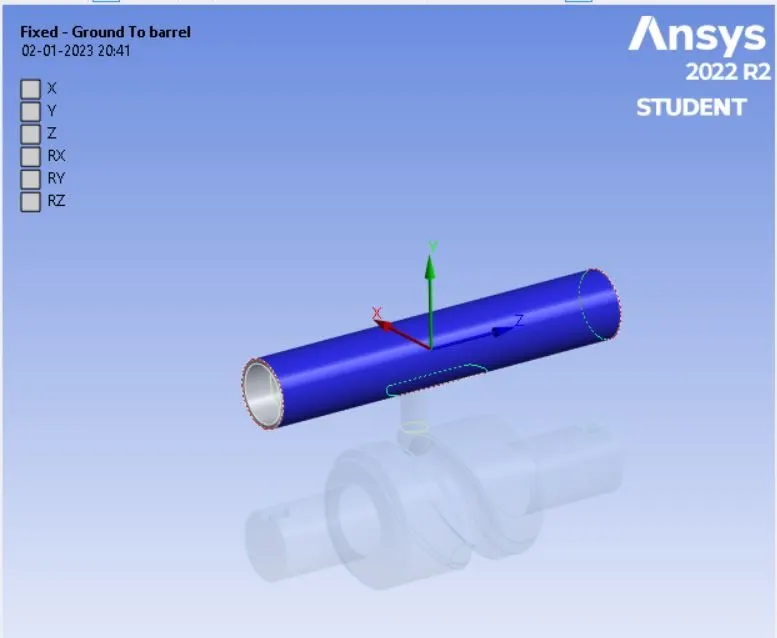
- Fixed the barrel
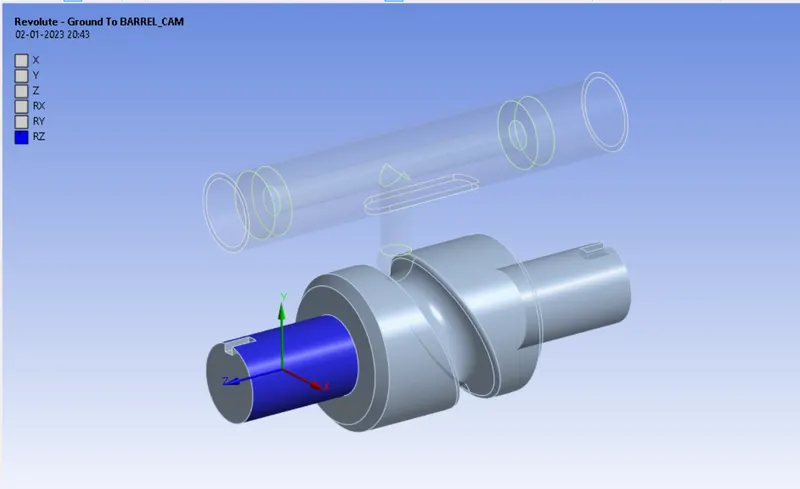
- Define revolute joint for cam :-
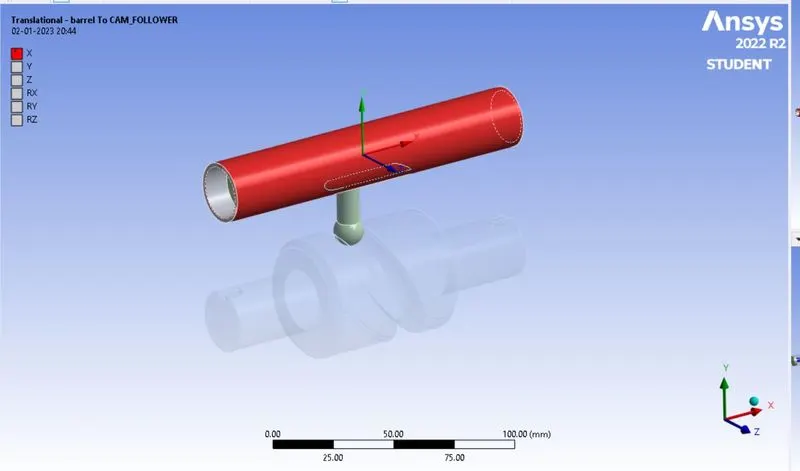
- Define translation joint for barrel
- Then mesh the component with required mesh size in this assignment we will use
- Mesh – default
- Sizing – 3mm
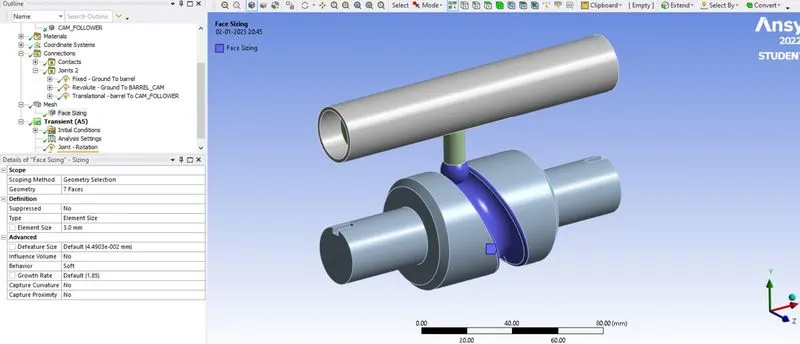
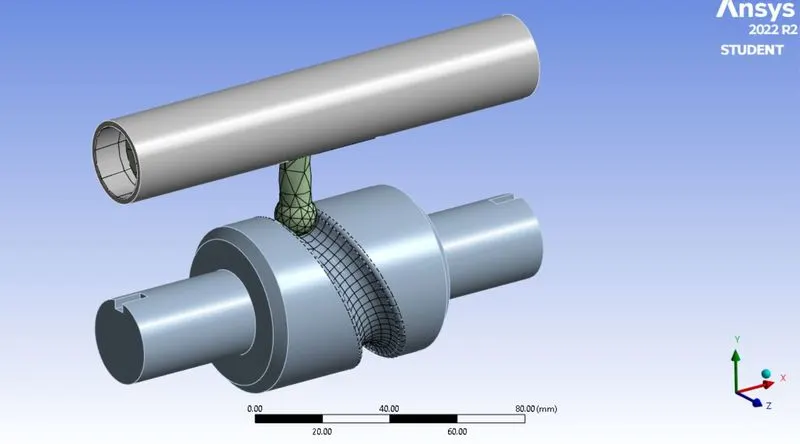
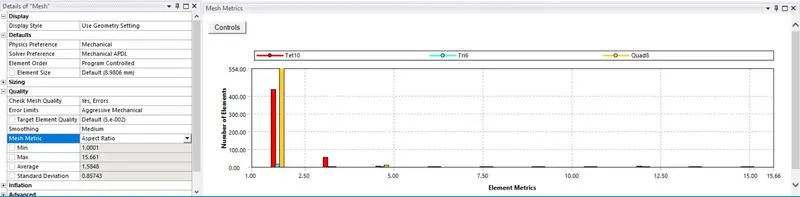
Mesh Matrics for aspect rato :-
- Analysis setting for 1 step :-
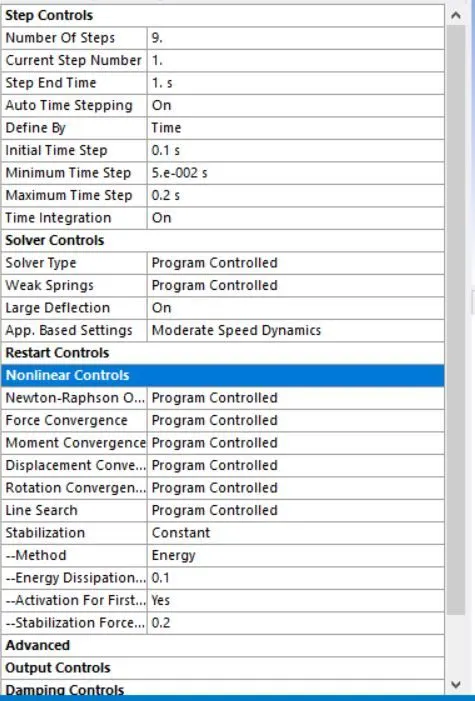
- Analysis setting for 2-9 step :-
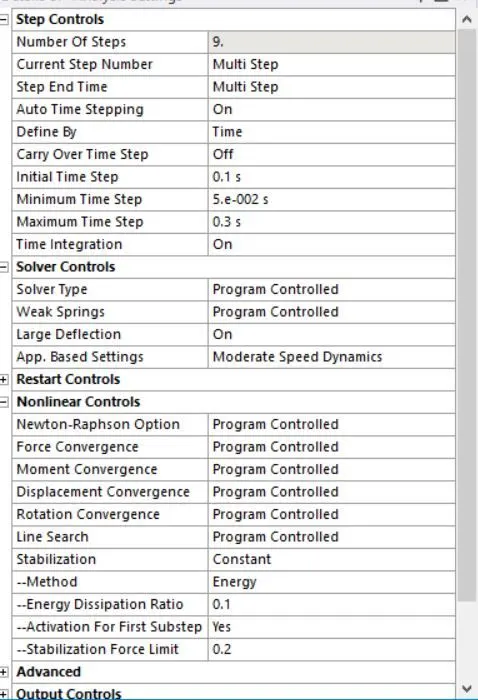
- Then define B.C. :-
Define Joint load for cam as ahown in snap.
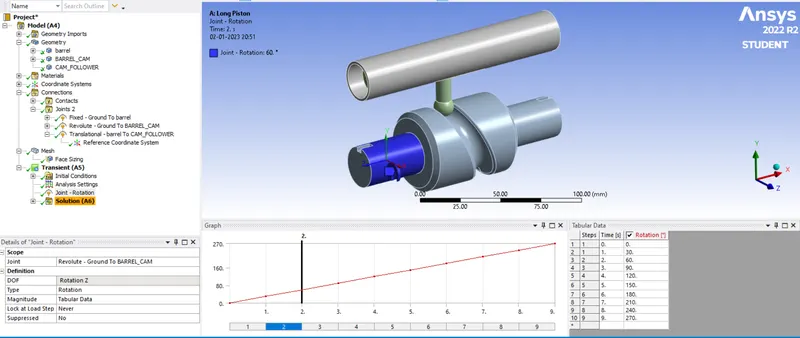
RESULTS
Case1 – Frictionless
Directional Deformation :-
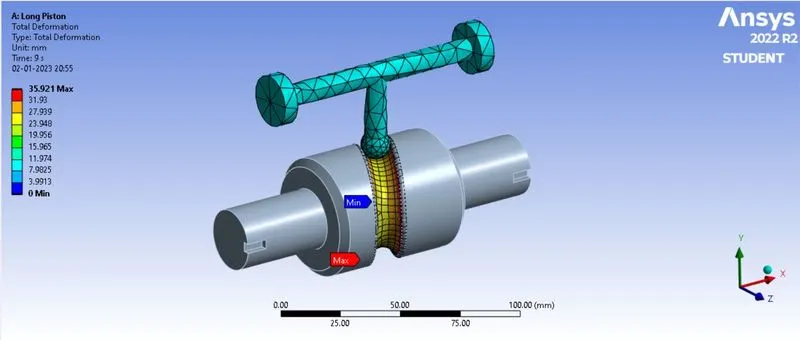
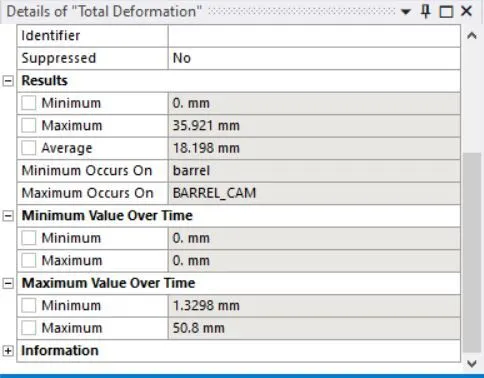
Equivalent stress
Equivalent strain :-
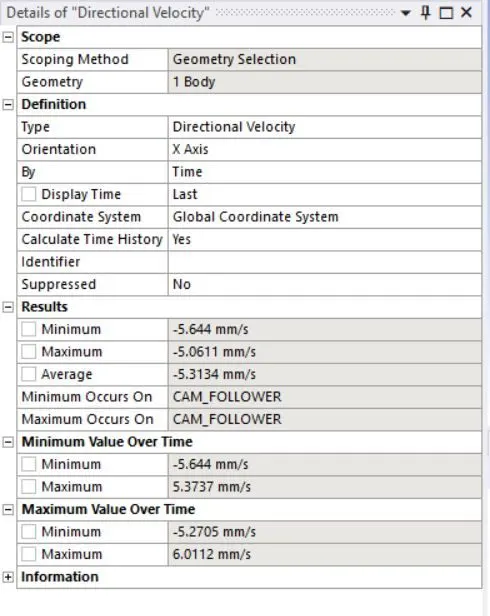
Directional Velocity :-
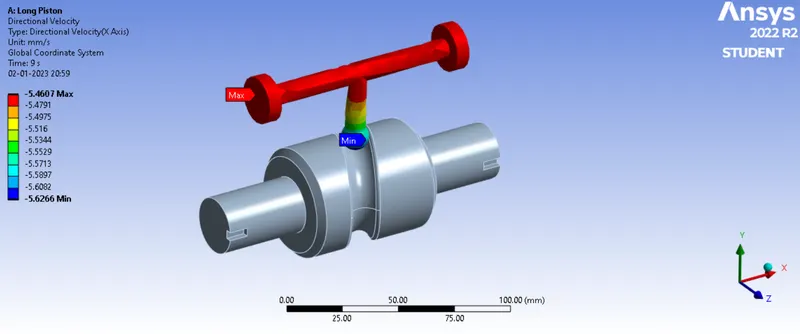
Case-2 For connection set as frictional joint with 0.1 coff. of friction :-
Directional Deformation :-
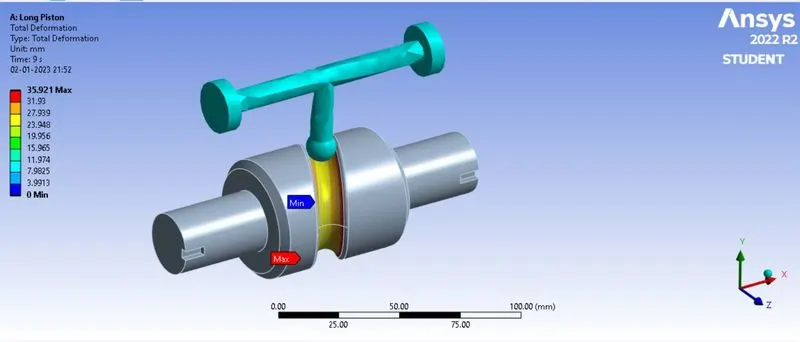
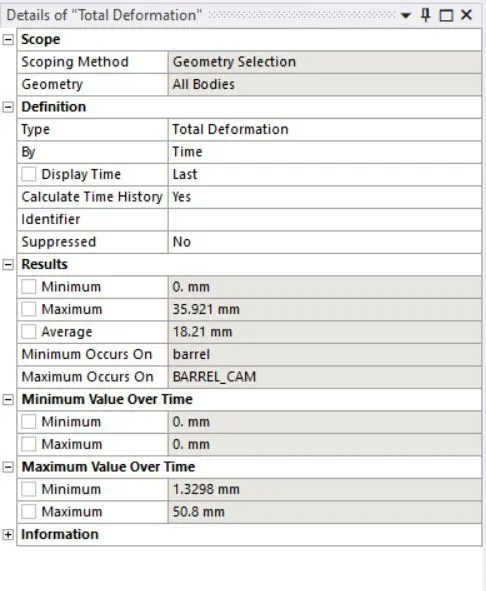
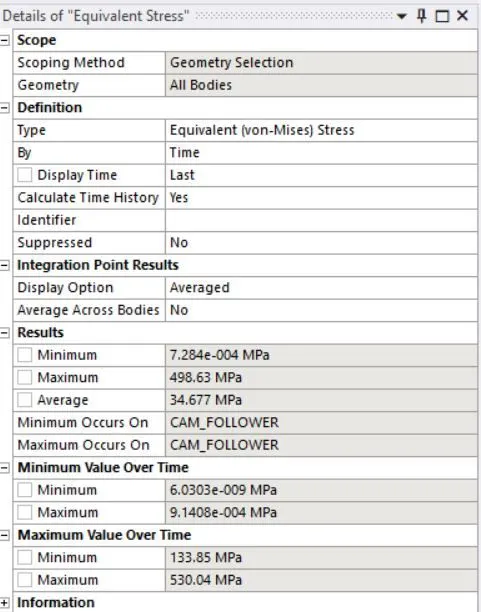
Equivalent stress :-
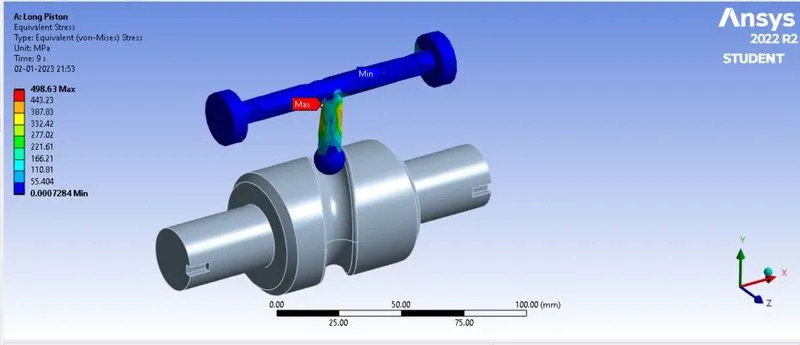
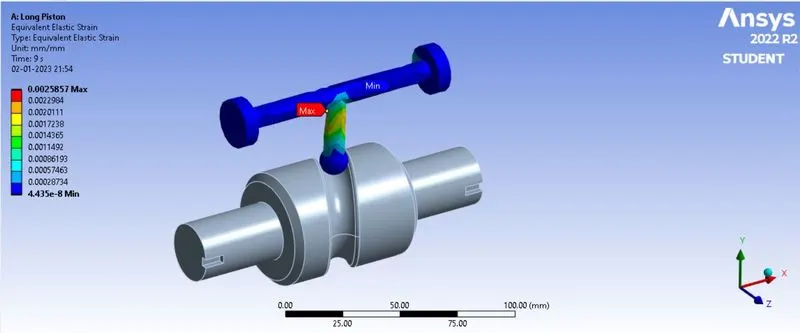
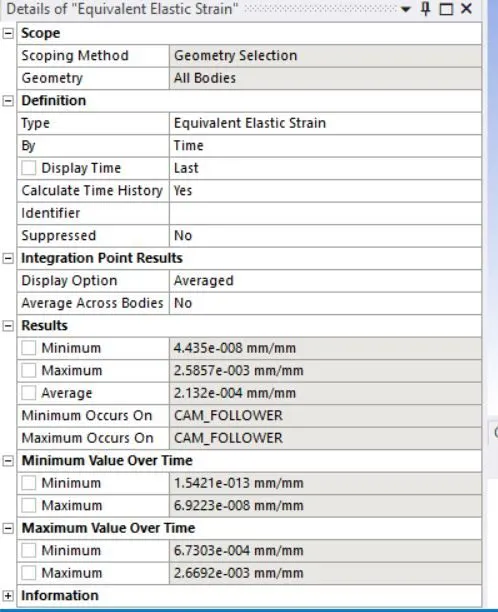
Equivalent strain :-
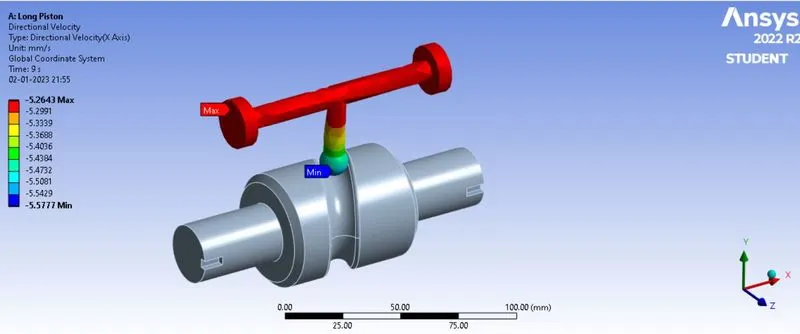
Directional Velocity :-
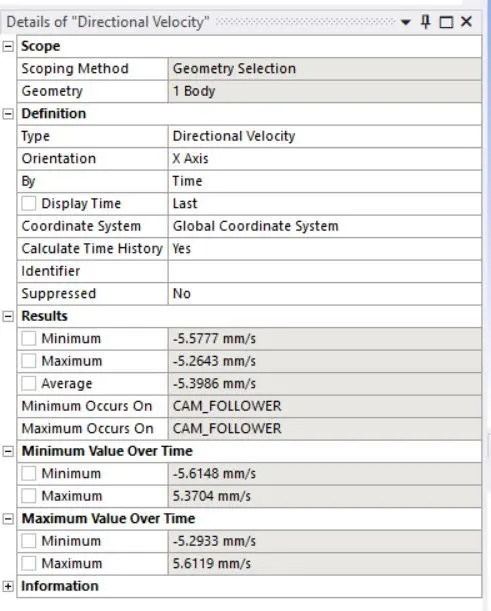
Case-3 For connection set as frictional joint with 0.2 coff. of friction :-
Directional Deformation :-
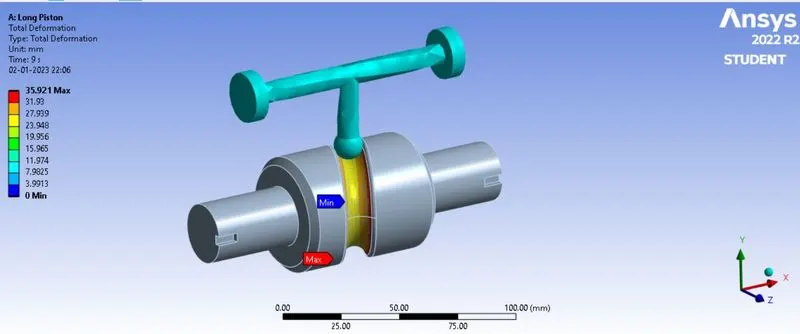
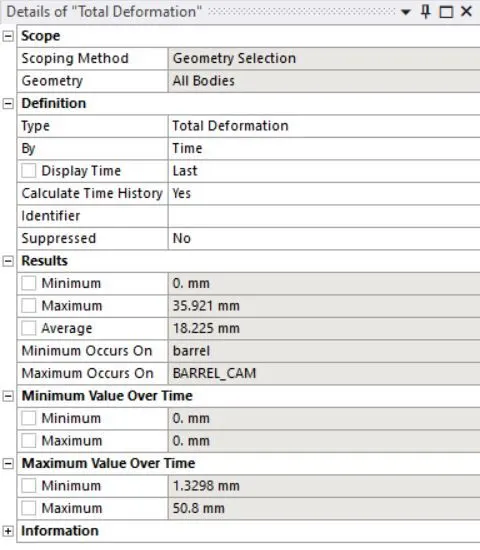
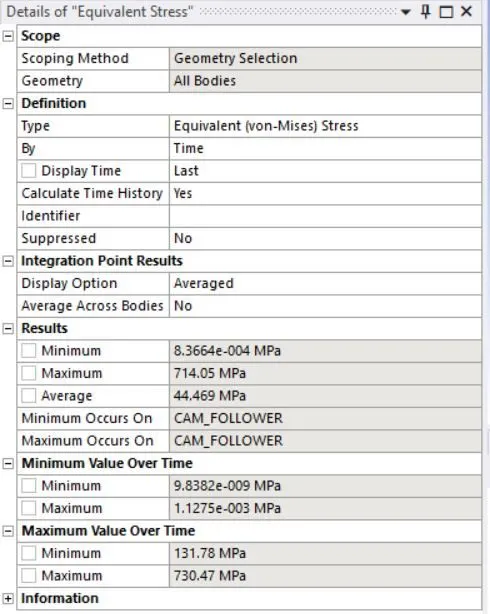
Equivalent stress :-
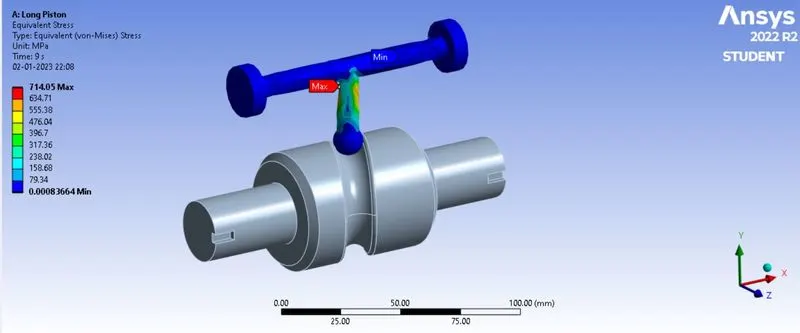
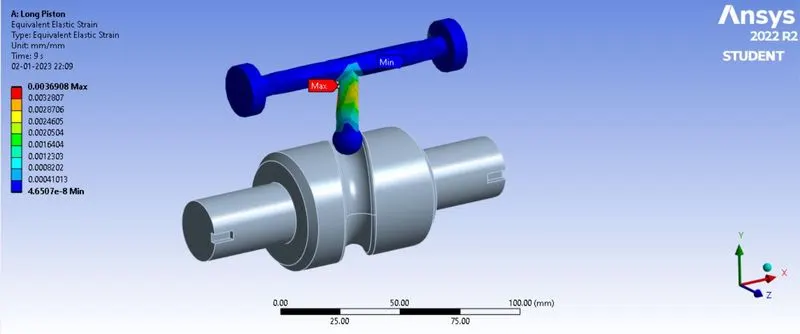
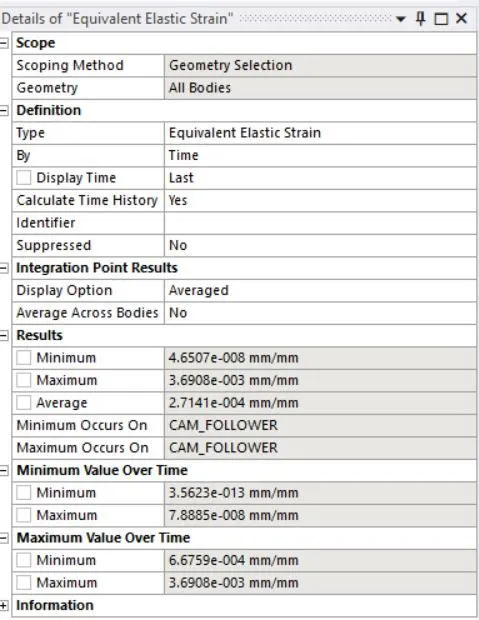
Equivalent strain :-
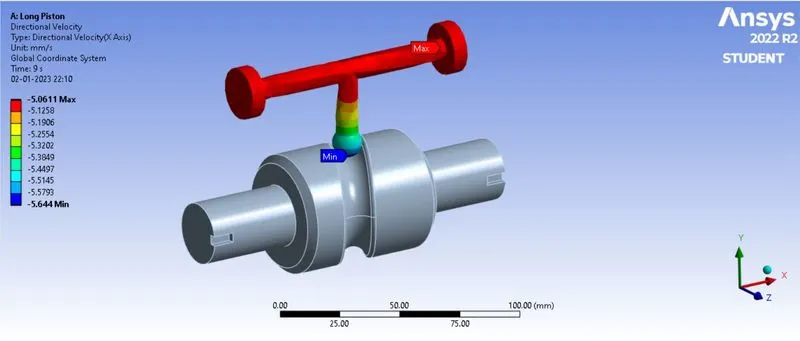
Directional Velocity :-
From the above stimulation result it is clearly understand that if coefficient of friction increases the stress and strain also increases because the frictional force always act on opposite direction of the motion and cause restiction to motion.