Week 11 Car Crash simulation
OBJECTIVES
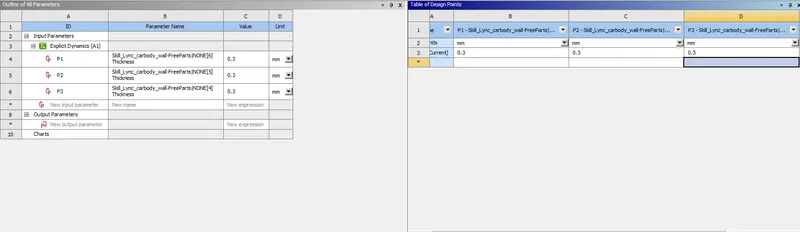
In this challenge, we have to perform a parametric study using 3 different values of thickness for the car body. You need to apply the same conditions as mentioned in the video that corresponds to this challenge. Analyse the total deformation and Equivalent stresses acting on the model.
PROCEDURE
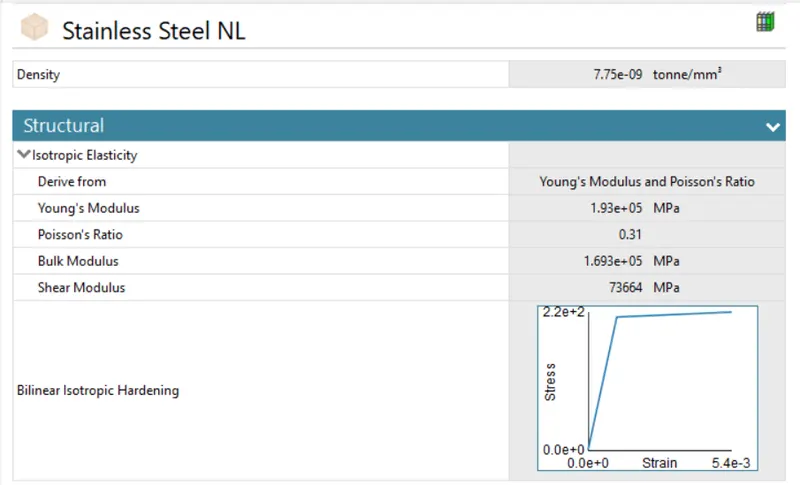
- First, we have to input the engineering materials with required properties or else by creating with required properties.
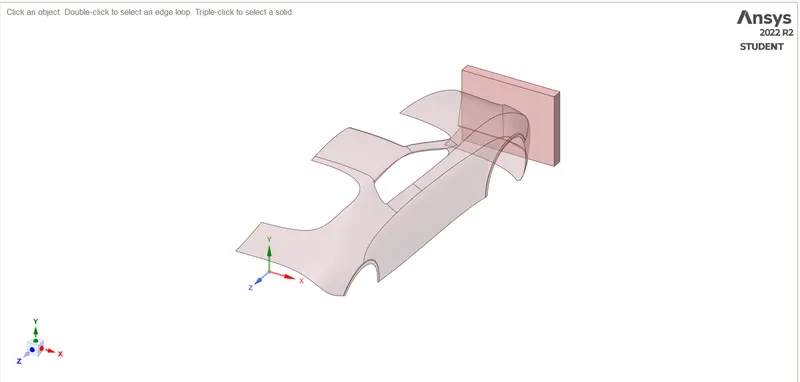
- Then we have to import our model into ansys, import the model and open it in space claim and cut the model into half so that the academic version support.
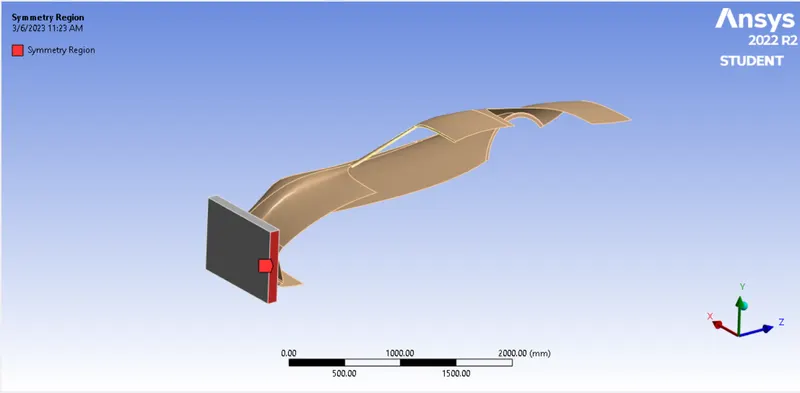
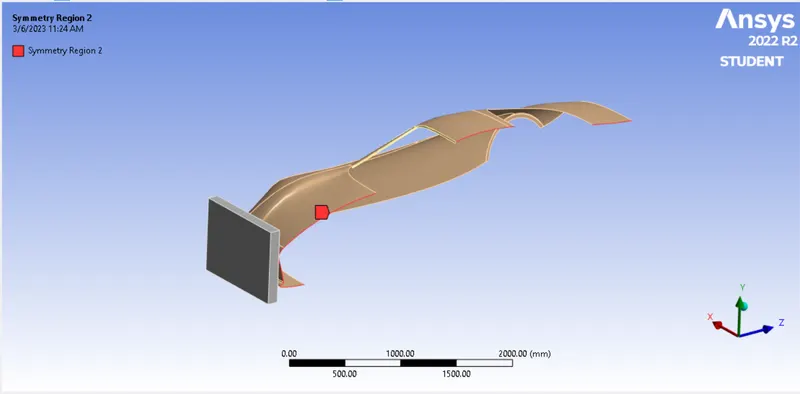
- Assign symmetry to the face of the wall and edges of the car.
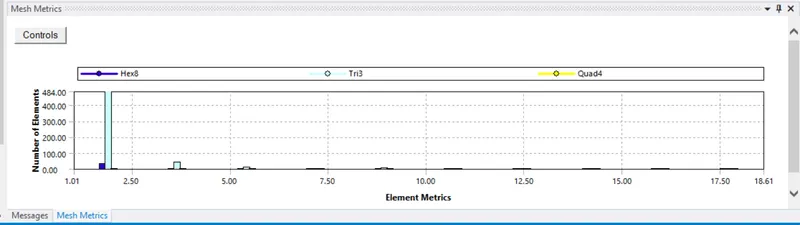
- Next step is to meh the model
Element Size :- 150 mm
Mesh Matrix for Aspect ratio :-
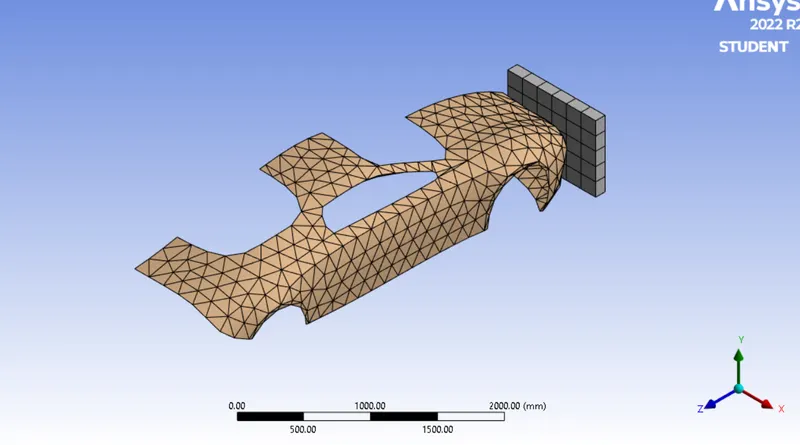
- Analysis setting give the end time as 1e-003, maximum energy error is given as 0.1 to avoid energy error and fix the car body and give displacement to the wall.
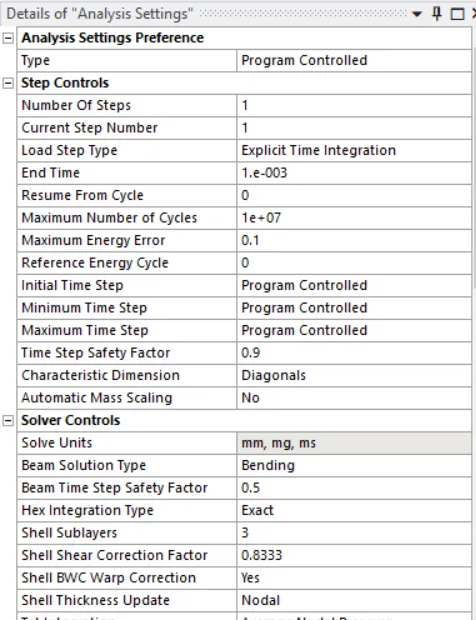
- Next step is apply BC's
1) Apply Fixed Support to car suface :-
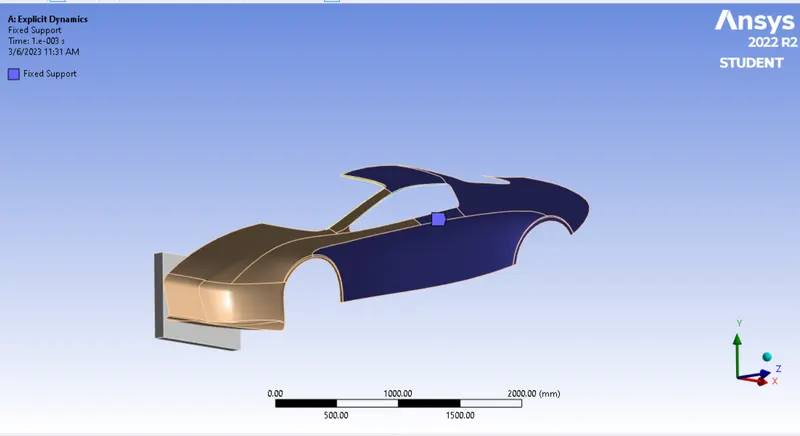
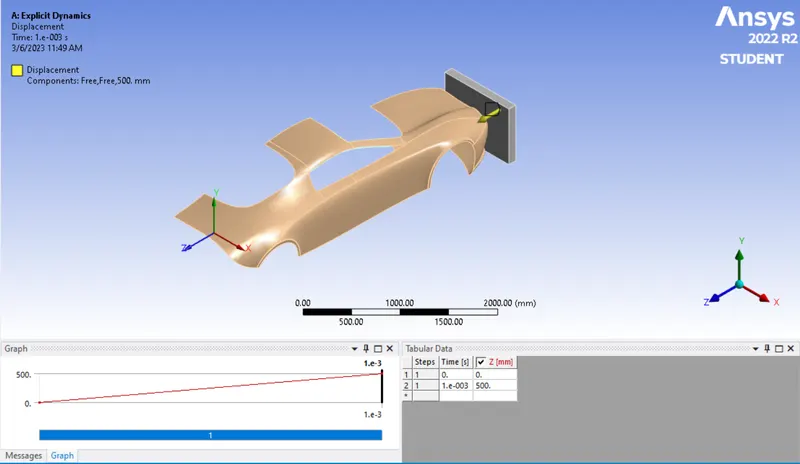
- Assign the parametric to study different cases of thickness of 0.3, 0.5 and 1 mm respective results.
RESULTS
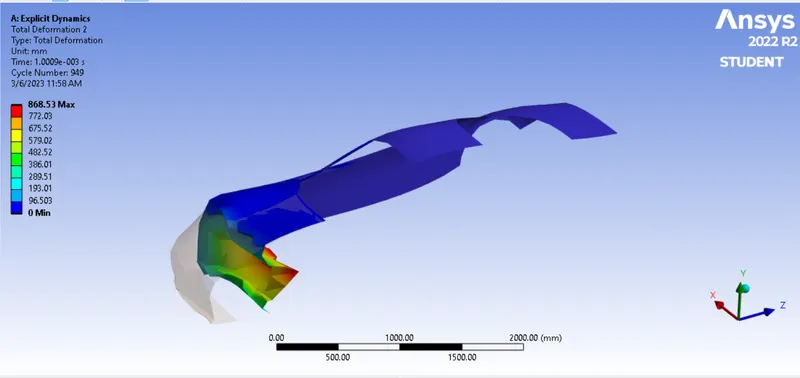
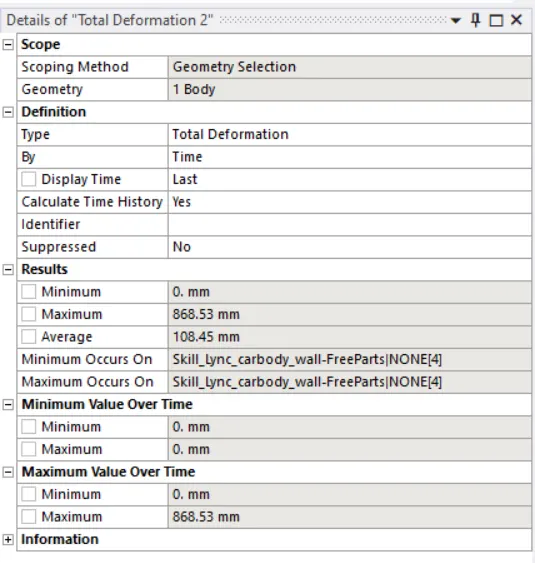
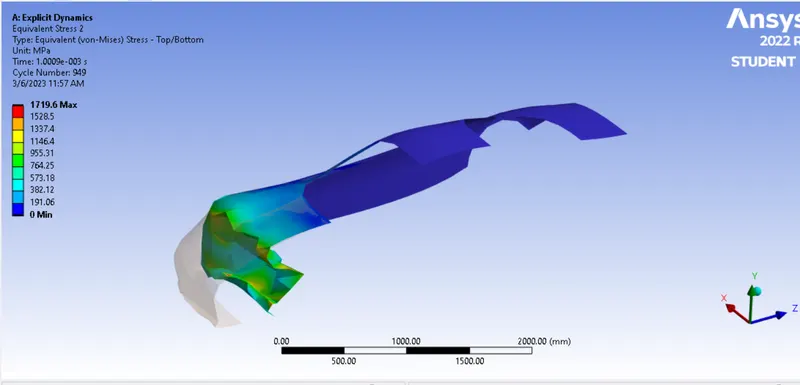
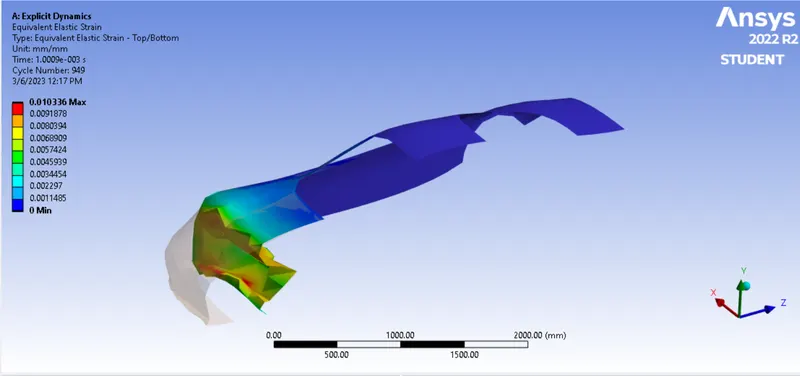
Case 1: Thickness 0.3mm
Total Deformation
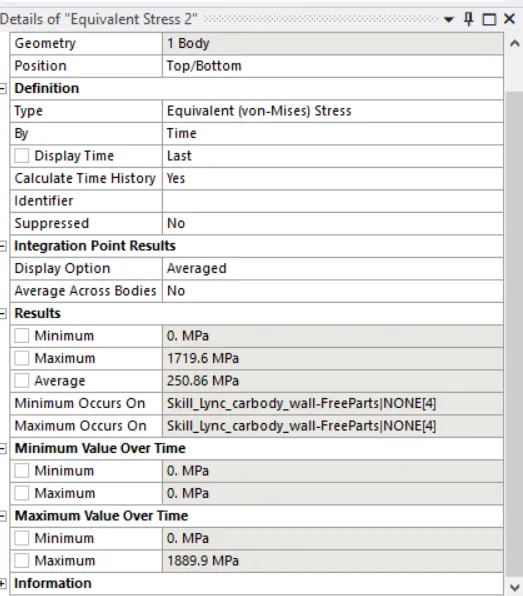
Equivalent stress
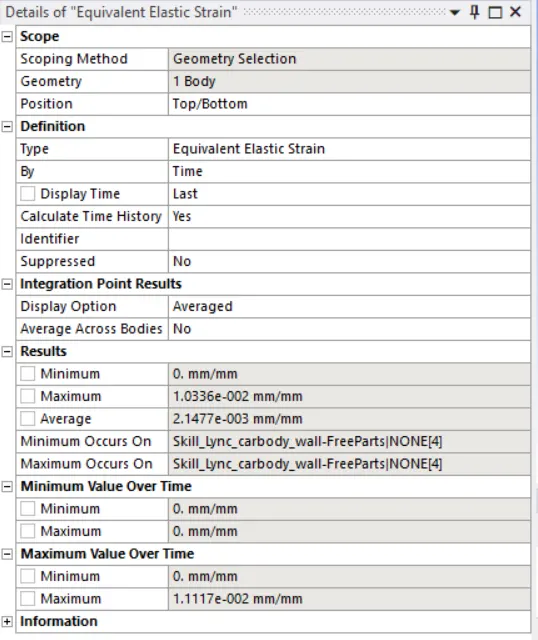
Equivalent strain :-
RESULTS
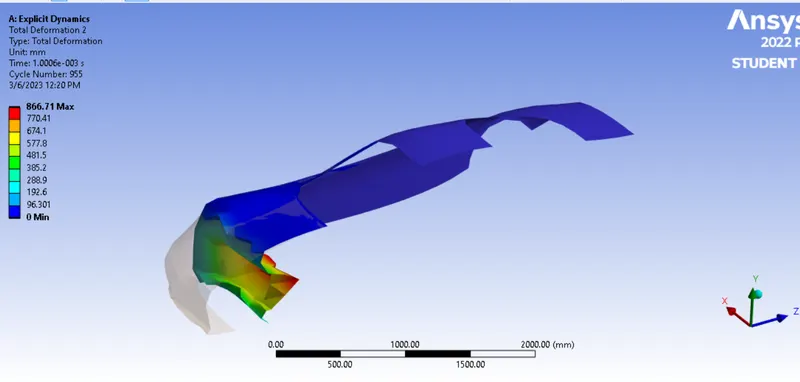
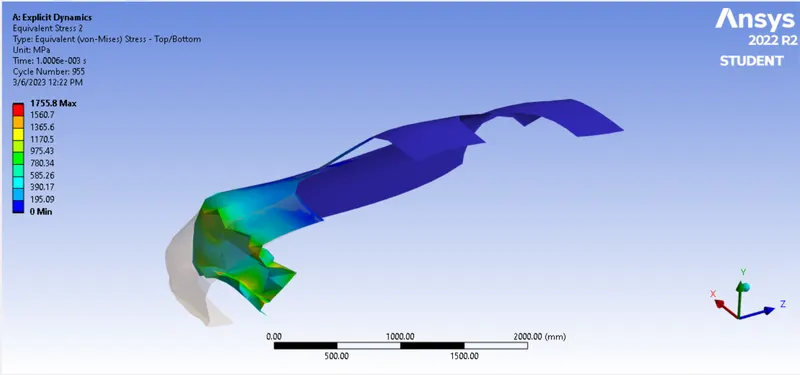
Case 2: Thickness 0.5 mm
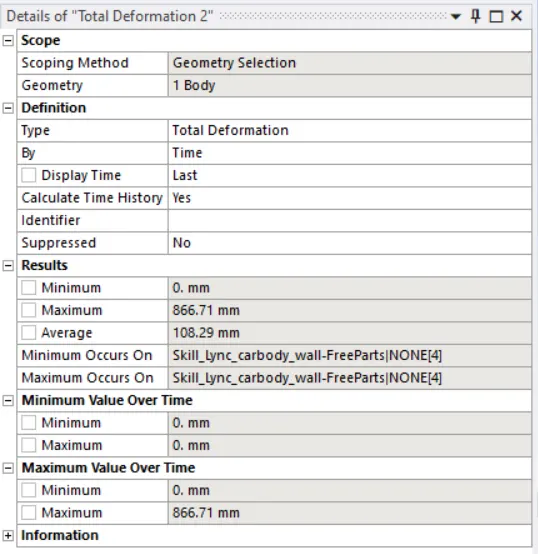
Total Deformation
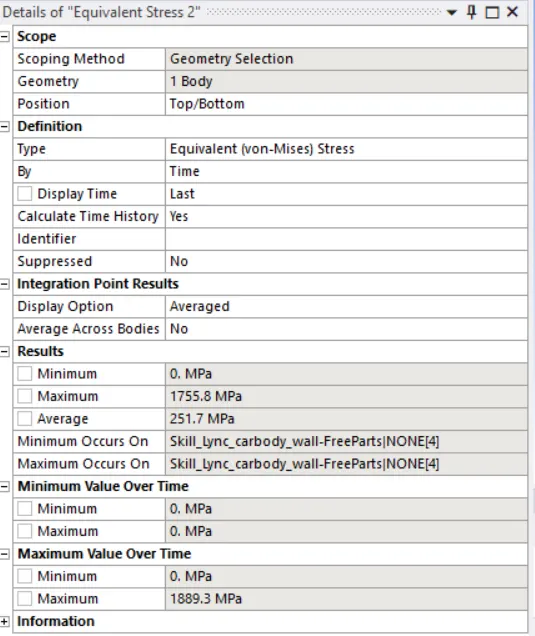
Equivalent stress :-
Equivalent strain
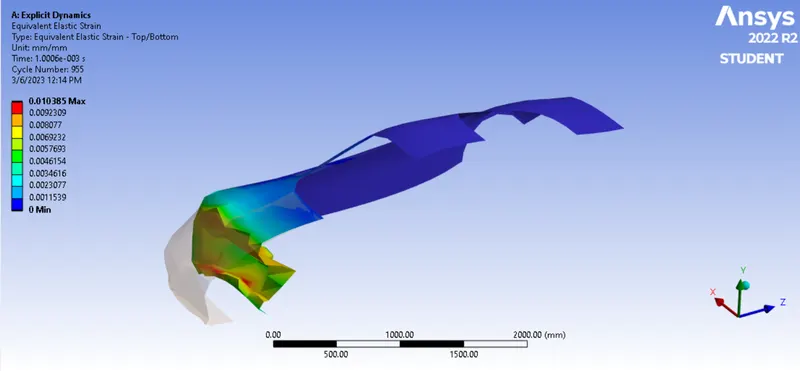
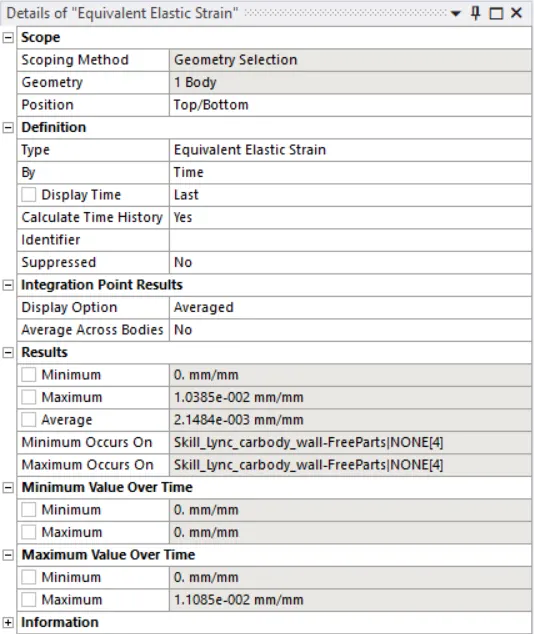
RESULTS
Case 1: Thickness 1.0 mm
Total Deformation
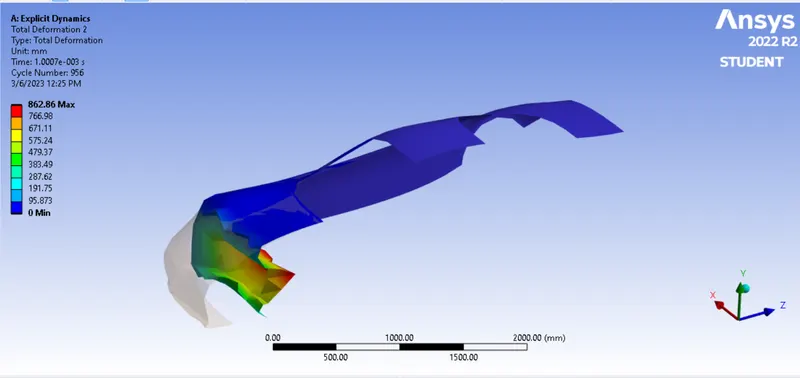
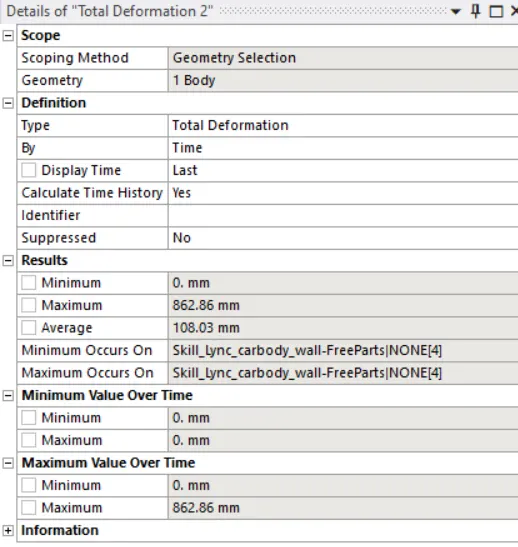
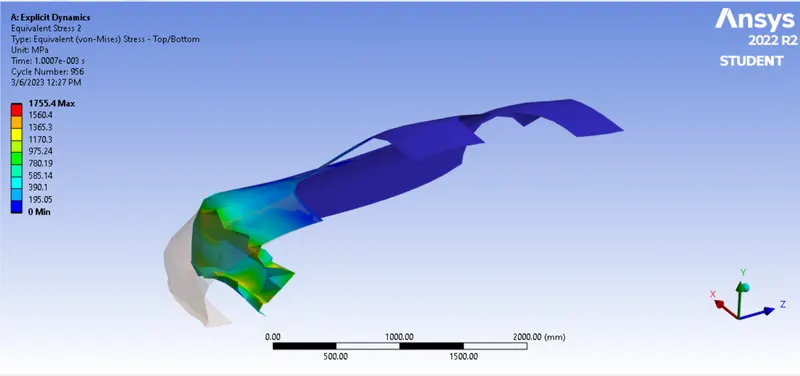
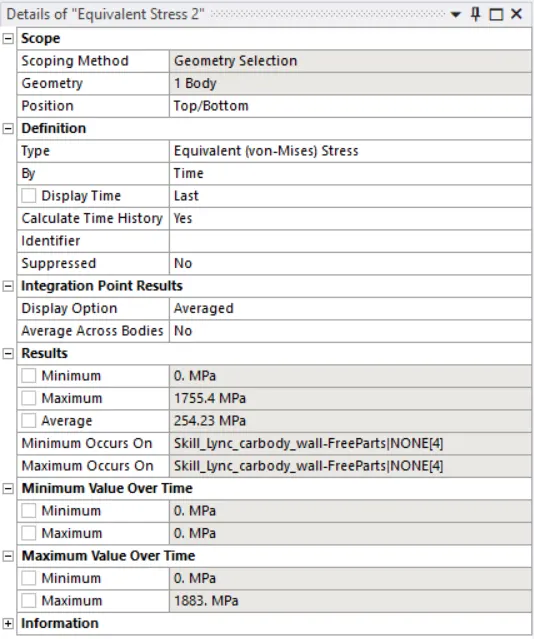
Equivalent stress :-
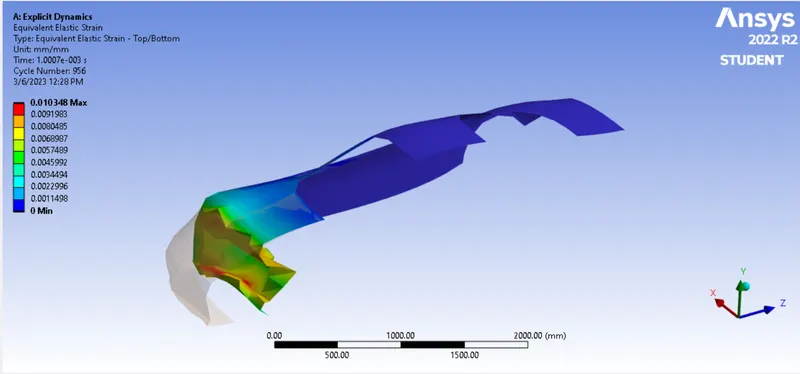
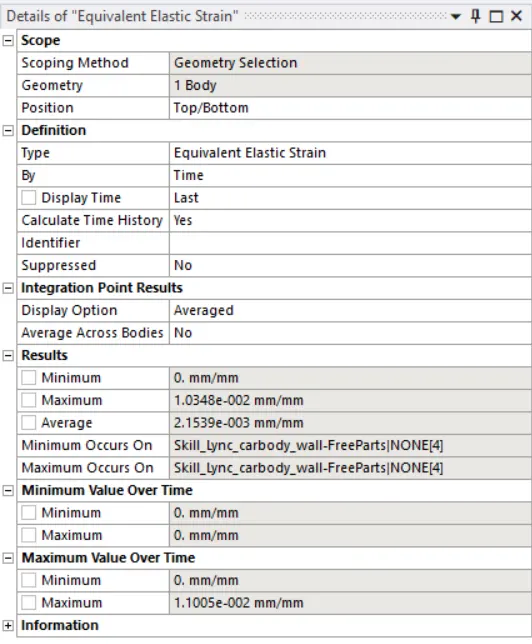
Equivalent strain :-
5. Comparison Of Results:

From the table, it is observed that the maximum total deformation for case-1 and case 2 is almost same 868.53 and 866.71 mm which is more compared to case-3. The thickness of the car body for Case-1 and Case 2 is 0.3 and 0.5 mm, hence it gets deformed easily compared to case 3.
The v-m stress developed for case-1 is 1889.9 Mpa which is maximum compared to other cases because the stiffness is less and the impact forces absorbed in case-1 is more compared to other cases.