Week 8 - Universal Joint
OBJECTIVE:-
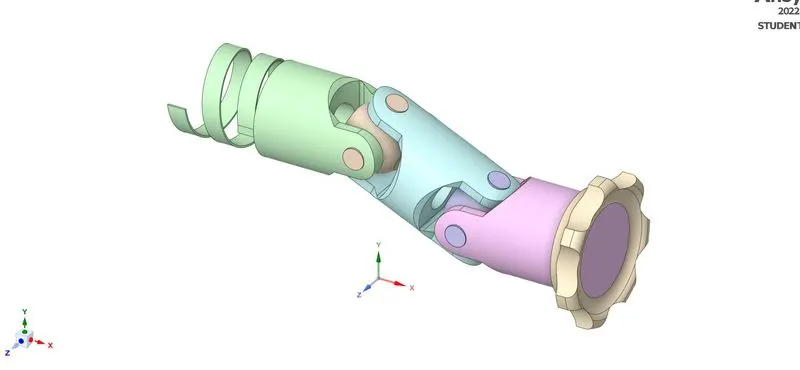
We have to perform a transient structural analysis on a double universal joint with a spring using three different materials: Structural Steel, Stainless Steel and Titanium alloy. The three materials must be used on the joint with the springs alone.
CASE SETUP AND EXECUTION:-
- First open the Ansys workbench.
- Go to toolbox select the analysis system and double click on the transient structural it opens a new tab on the graphical area as shown below.
- Next click on the engineering data select the required material.:-
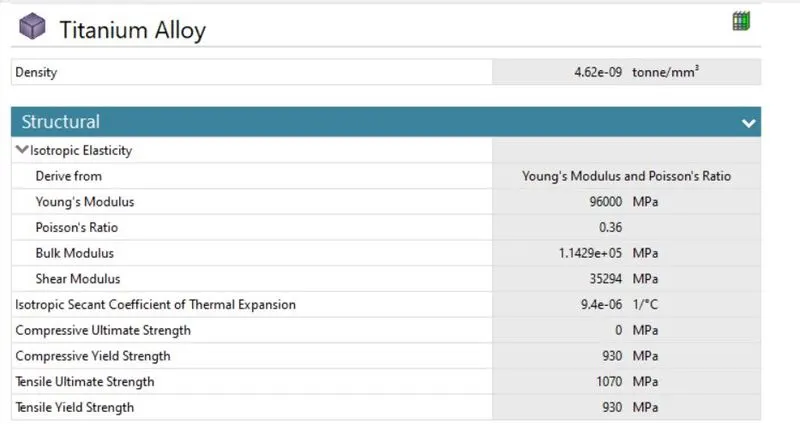
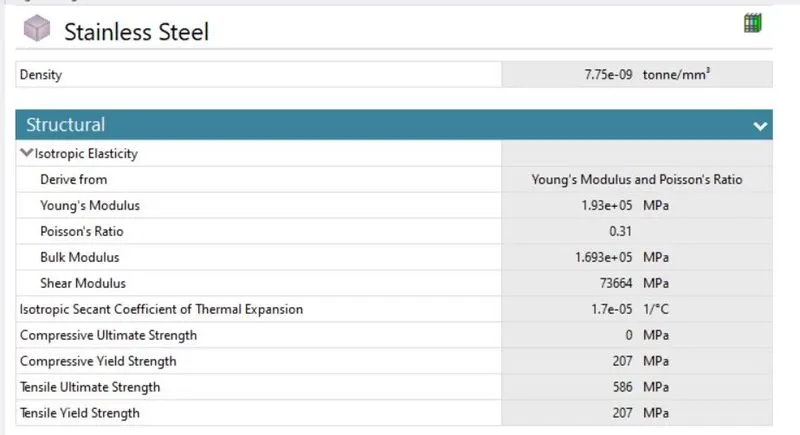
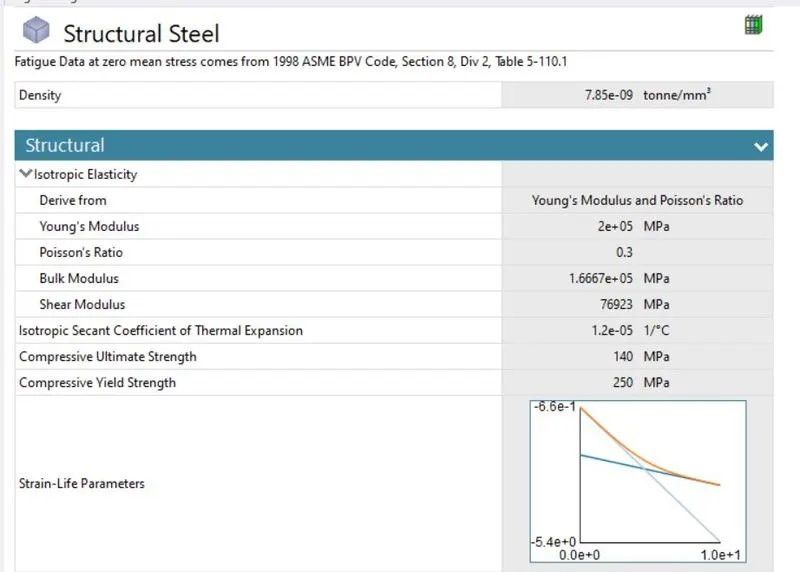
- Next import the geometry in geometry.
- Check the geometry it is fine to leave it or any error in the geometry fix them.
Case-1
- Now go to contacts from drop down arrow of connections and right click delete the all contacts, Since we have to go for frictionless contact so we delete all contacts prosent earlier.
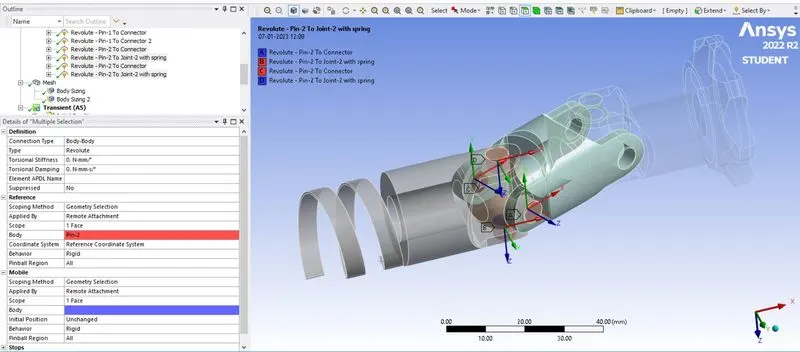
- Here we will give joint connections, as follows.
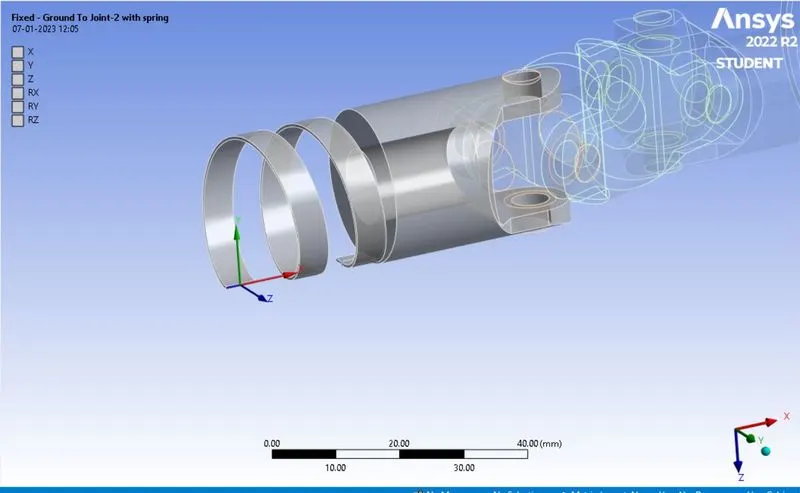
- Fixed joint to Spring Joint body to ground.
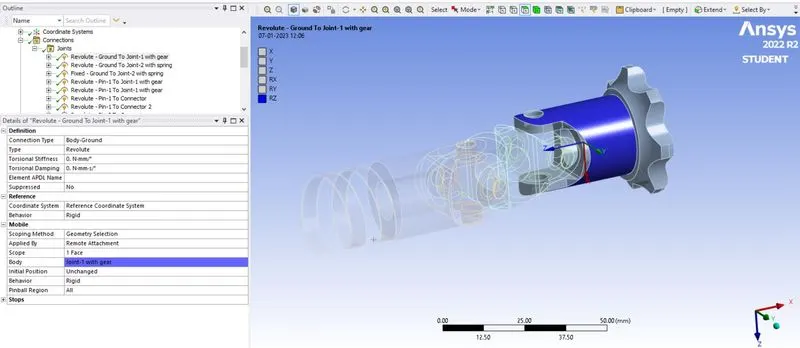
- Now Revolute Joint for Gear Joint Body to ground.
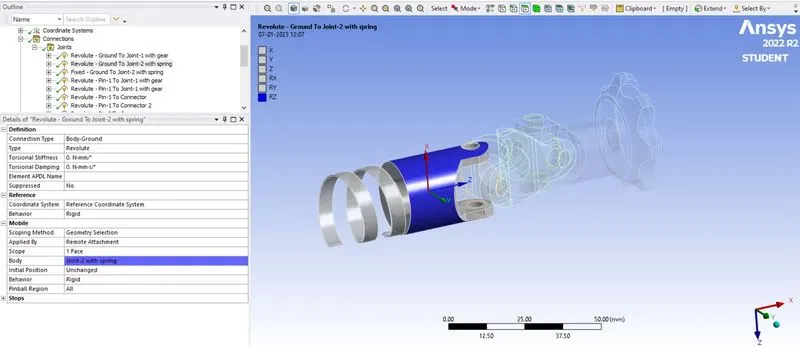
- Now Revolute Joint for Spring Joint Body to ground.
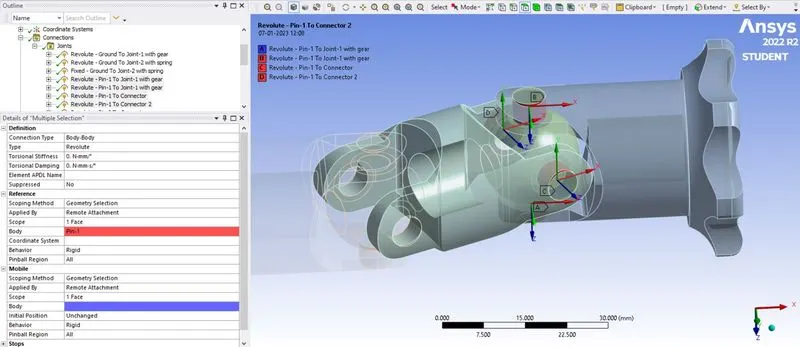
- Now Revolute Joint for Ball, Gear Joint & Coupling Body to body.
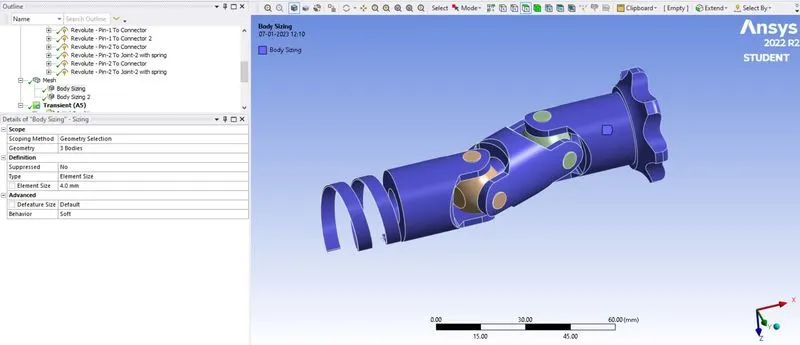
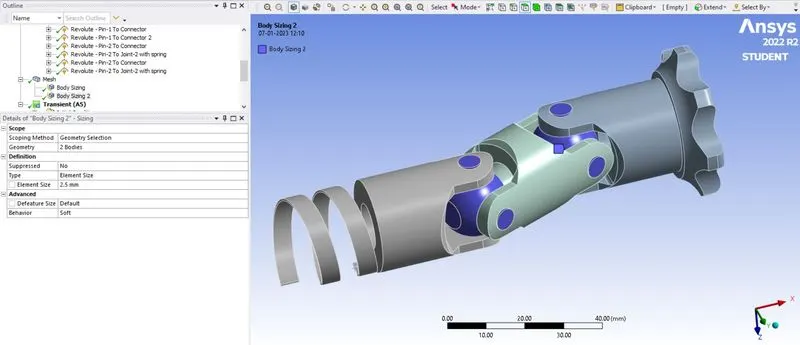
Mesh-
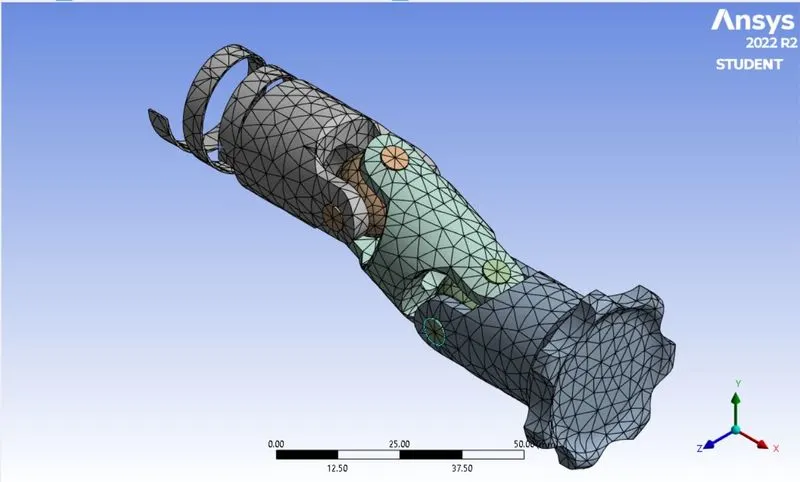
Complete mesh model:-
Analysis Setting-
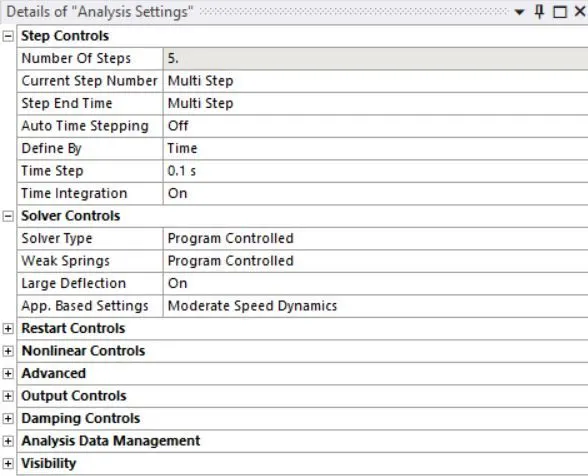
- Here we will run stimulation for 5 time steps, refer below setting for all steps.
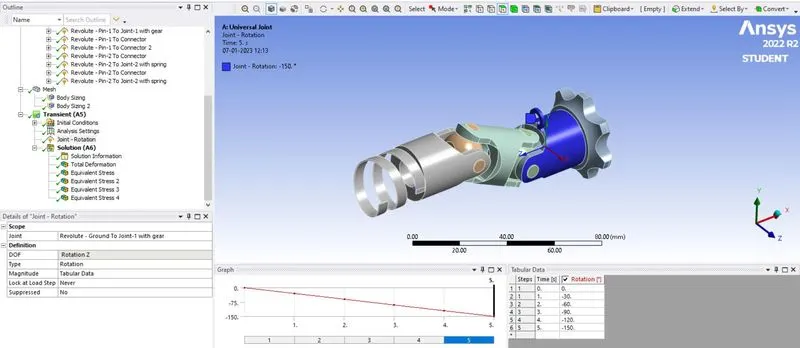
- Now we have to define a joint load rotation for geared joint select revolute-ground to gear joint.
Solution Setting-
- Now for stress right click on the solution>>insert>>stresses>>equivalent (von-Mises).
- Here we have to define directional deformation, to do so right click solution>>insert>>deformation>>Total.
Results-
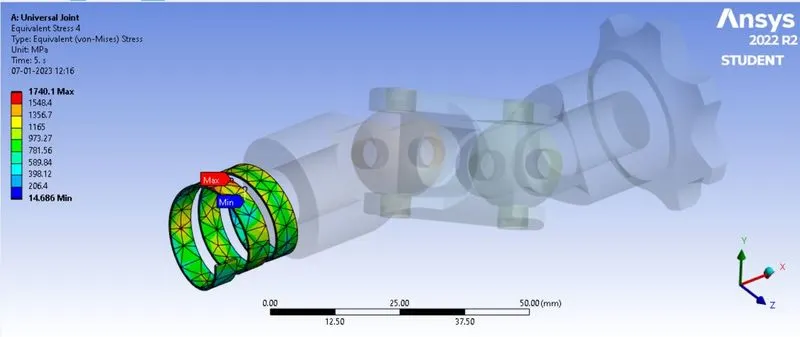
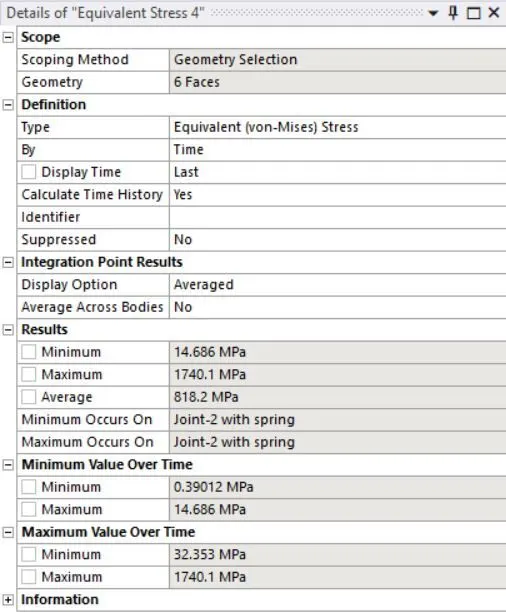
Case-1 (Structural Steel)
Equivalent Stress-
Total Deformation-
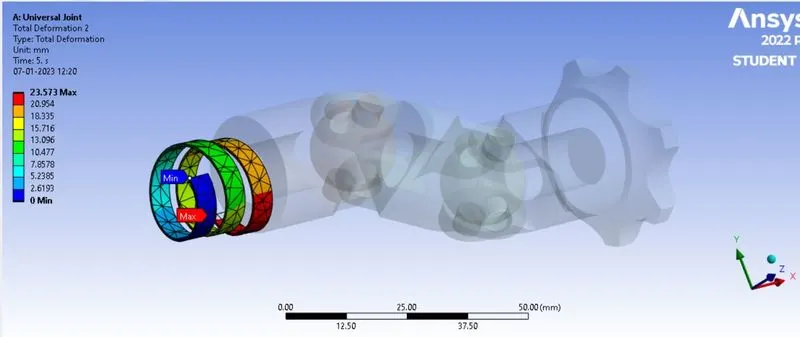
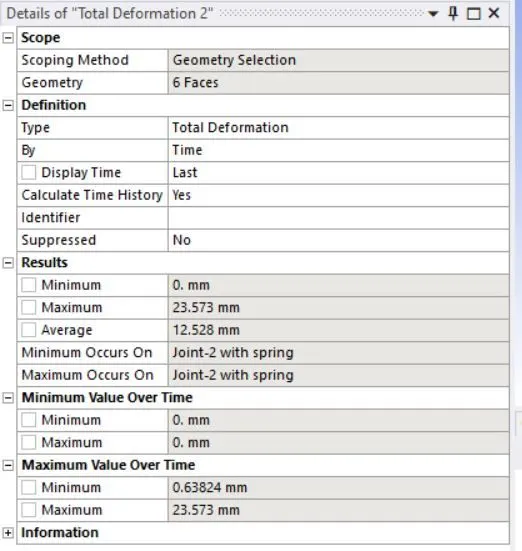
Case-2 (Stainless Steel )
Equivalent Stress-
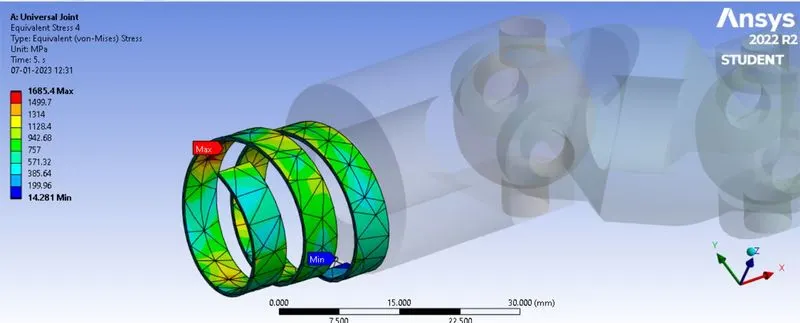
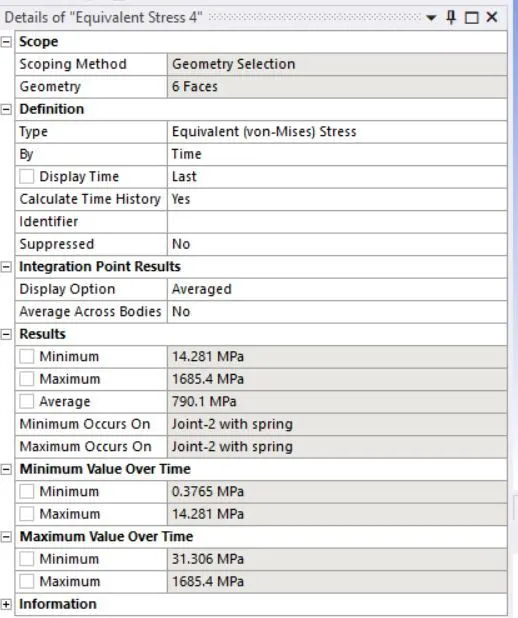
Total Deformation-
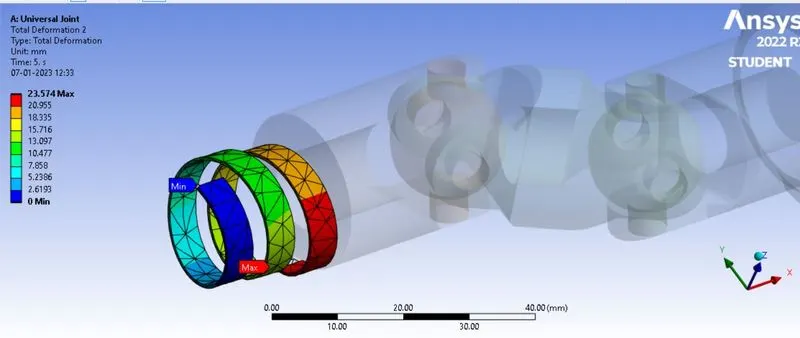
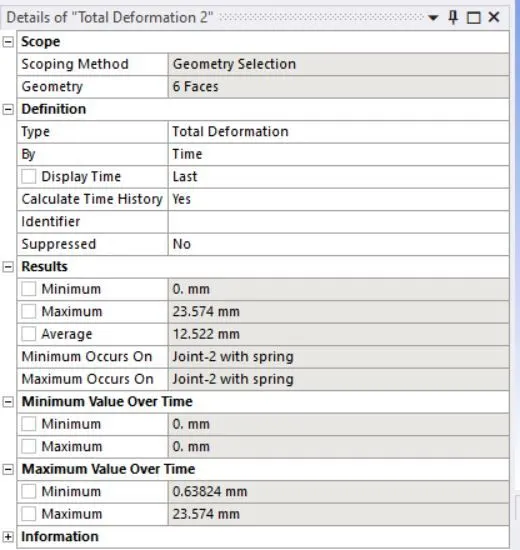
Case-3 (Titanium alloy)
Equivalent Stress-
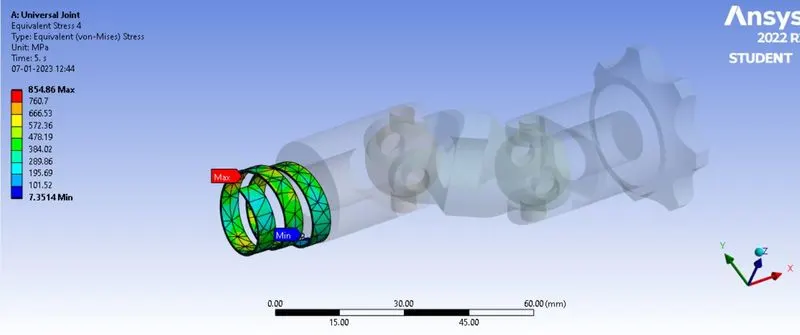
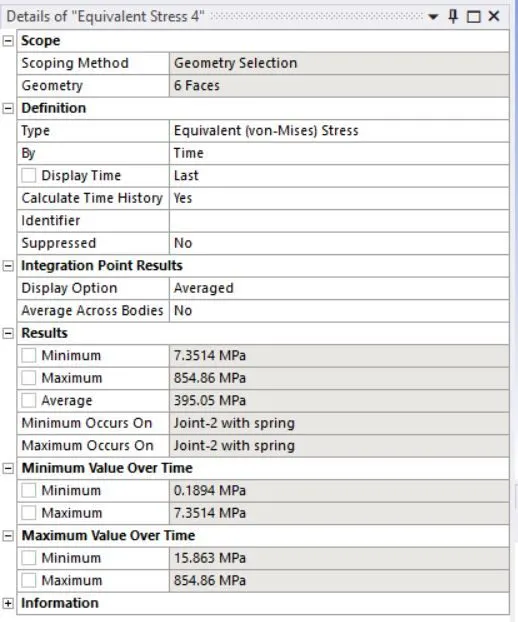
Total Deformation-
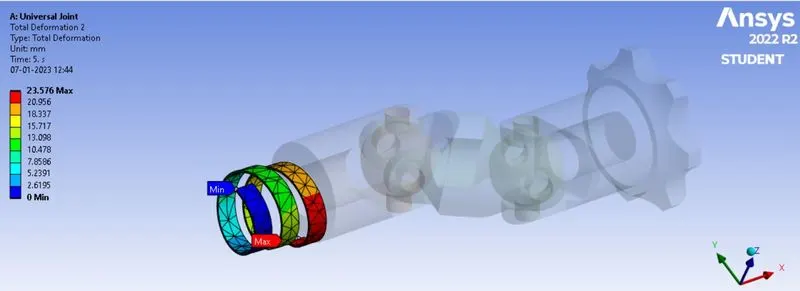
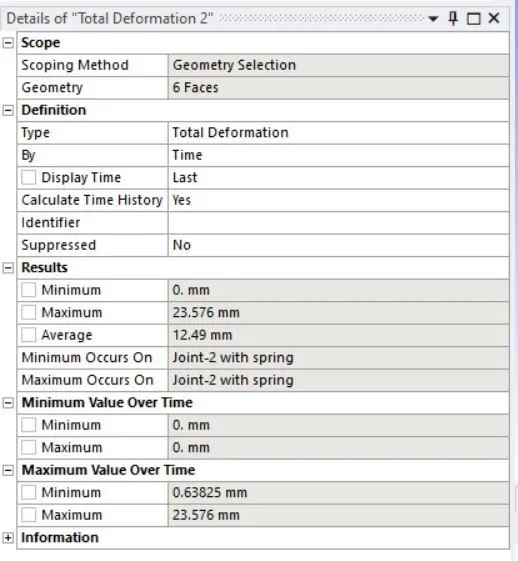
Result Comparision-
|
Case |
Equivalent Stress (MPa) |
Total Deformation (mm) |
|
|
Max. |
Min. |
Max. |
|
|
Case-1 |
1740 |
0 |
23.574 |
|
Case-2 |
1685 |
0 |
23.574 |
|
Case-3 |
854 |
0 |
23.574 |
Conclusion-
- From above analysis result we can say that the max. stress generated in structural steel and least in titanium alloy.
- Since due to high generated stress values and low yield strength values structural steel and stainless steel will under go plastic deformation.
- But in case of titanium alloy stress value is below yield strength value so it will be below yielding region and regain its original shape after load removal.
- Also density wise we check it is lesser in weight, so joint assembly will be light and more flexible compared to other two.
- So we can say that titanium alloy is best suited material here for joint to work effiently with greater life.
- But cost wise it might not be advisable in some cases.