Week 9 Tension and Torsion test challenge
AIM:
To perform the tension and torsion test on the specimen.
OBJECTIVE:
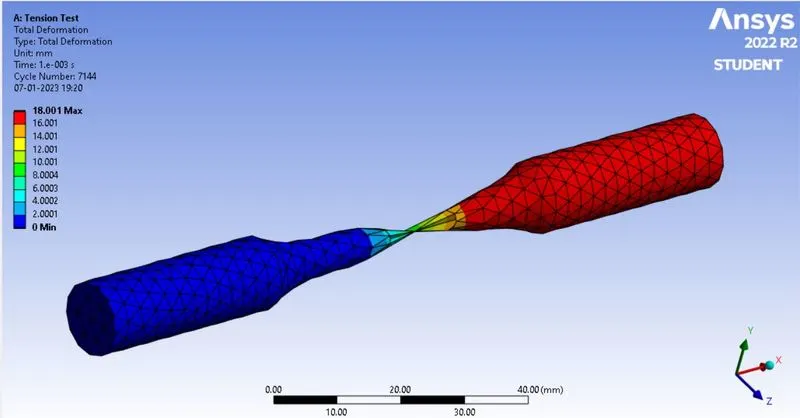
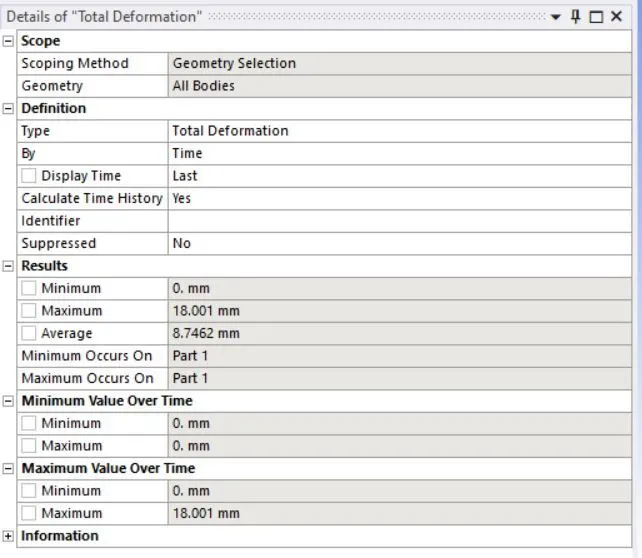
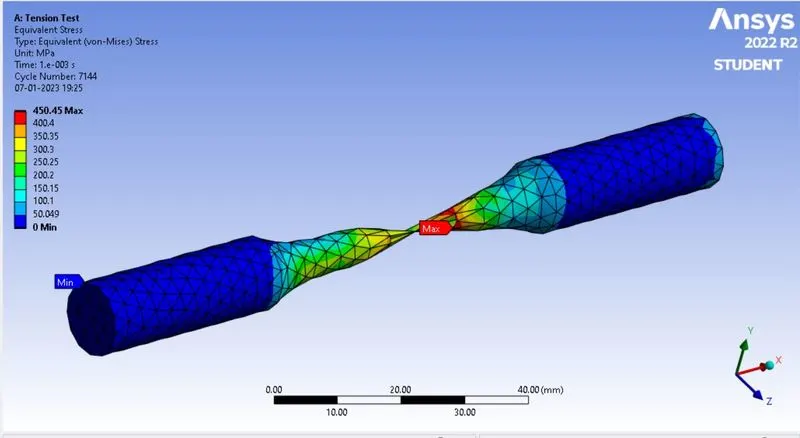
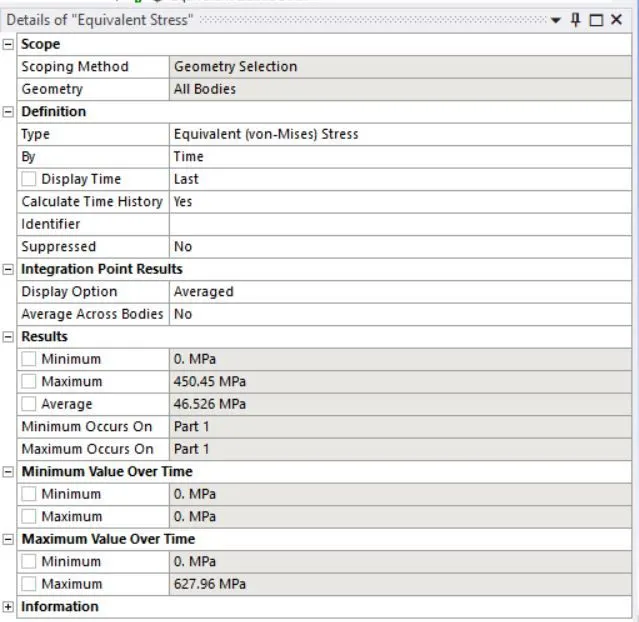
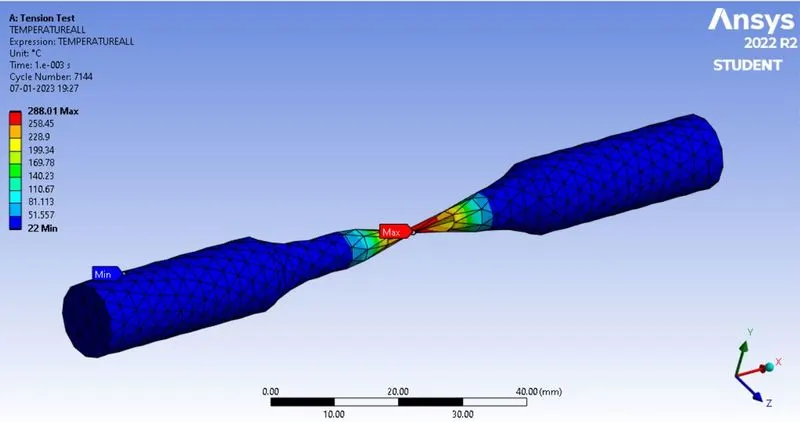
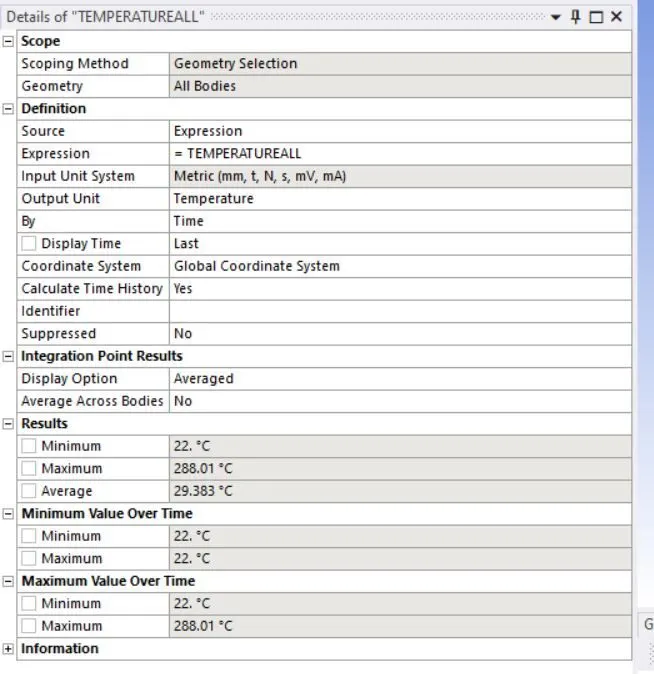
For the tension test, displace one end of the specimen to 18mm while keeping the other fixed. You will need to find out the total deformation, equivalent stress and temperature of the specimen and attach appropriate images to show your results.
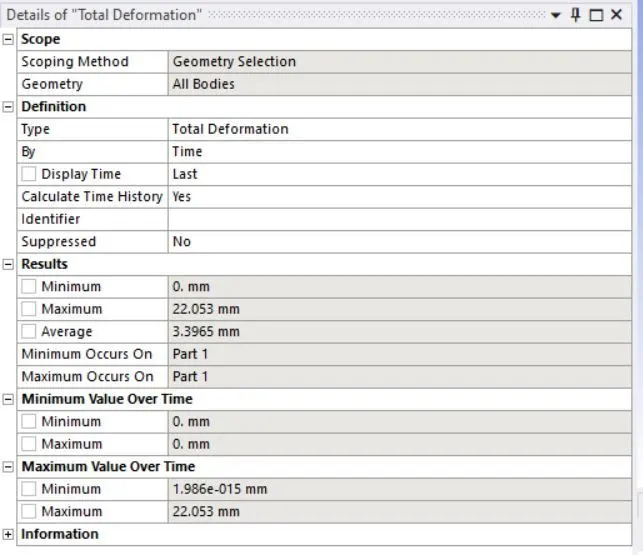
For the torsion test, you will need to displace one end of the specimen to an angle of 1200 degree. Find out the total deformation, equivalent stress and temperature of the specimen and attach images to show your results.
PROCEDURE
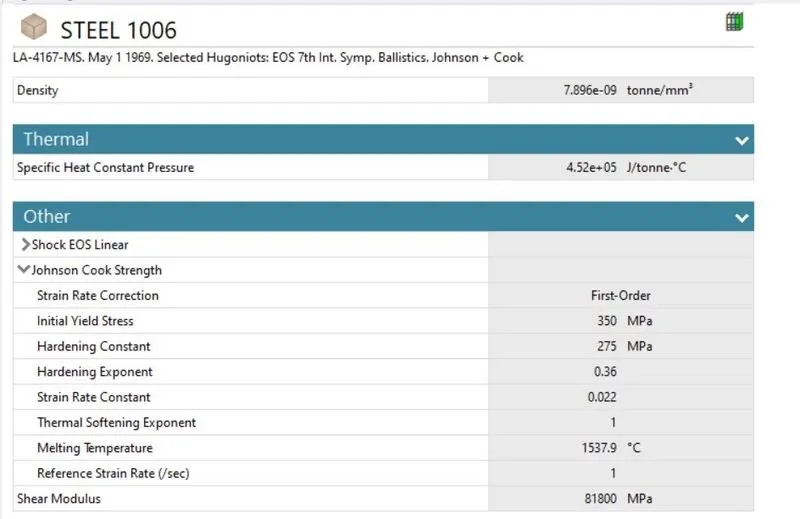
- First, we have to input the engineering materials with required properties or else by creating with required properties.
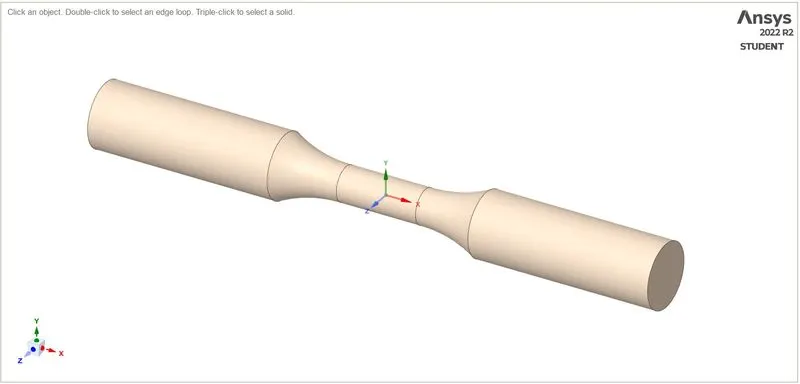
- Then we have to import our model into ansys, import the model and open it in space claim so that ansys will read it.
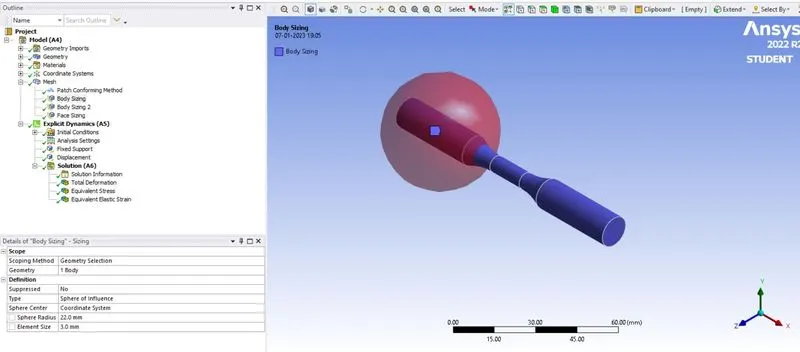
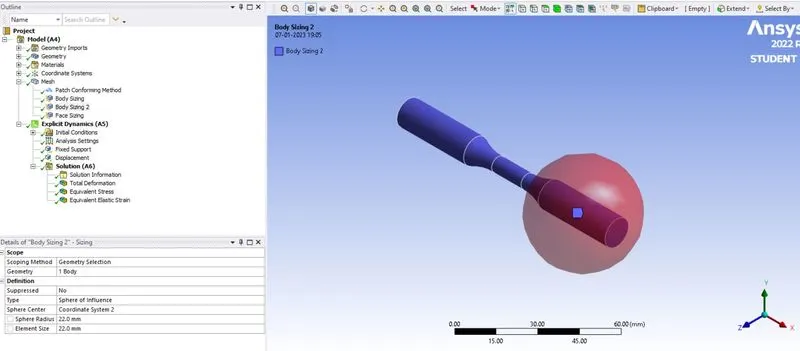
- Then mesh the component with required mesh size in this assignment we will use
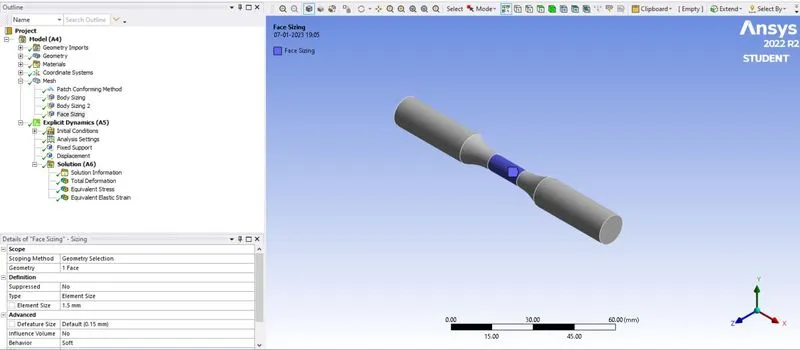
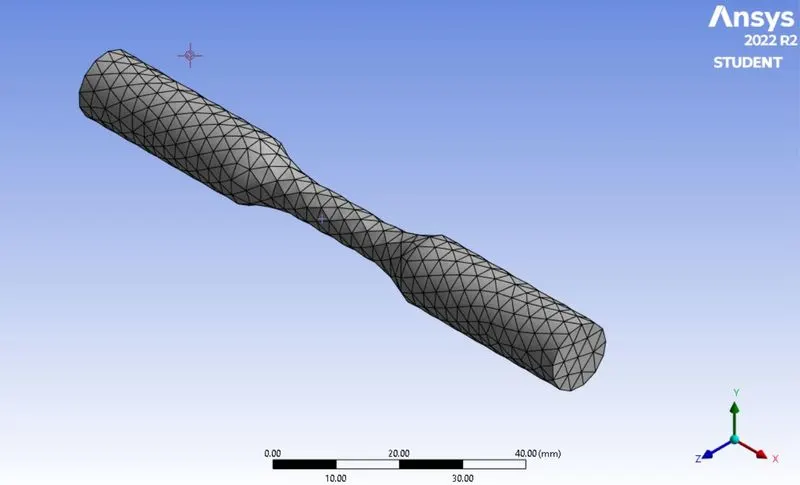
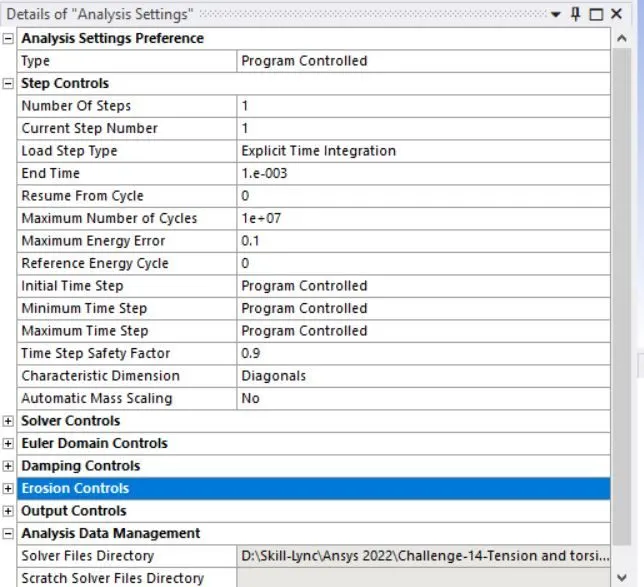
Define Analysis Setting :-
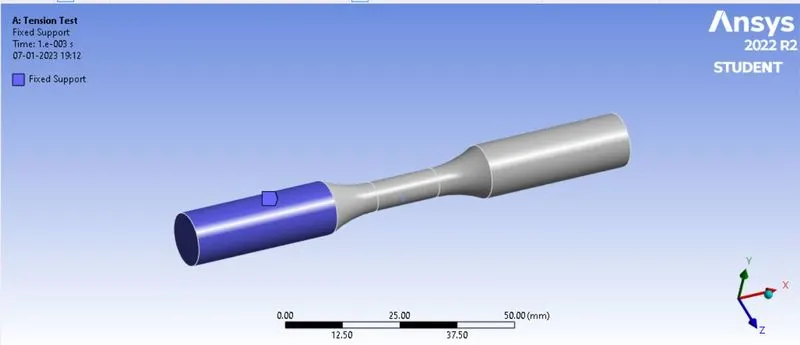
Define B.C. for Tension test :-
Apply fixed support at one end of geometry as shown in snap :-
Apply displacement of 18 mm as shown in SNAP :-
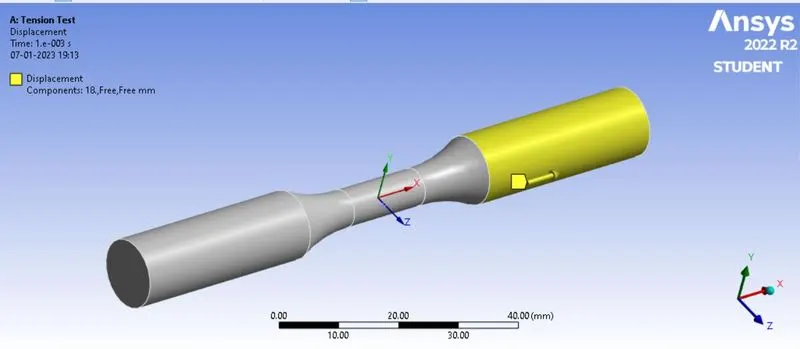
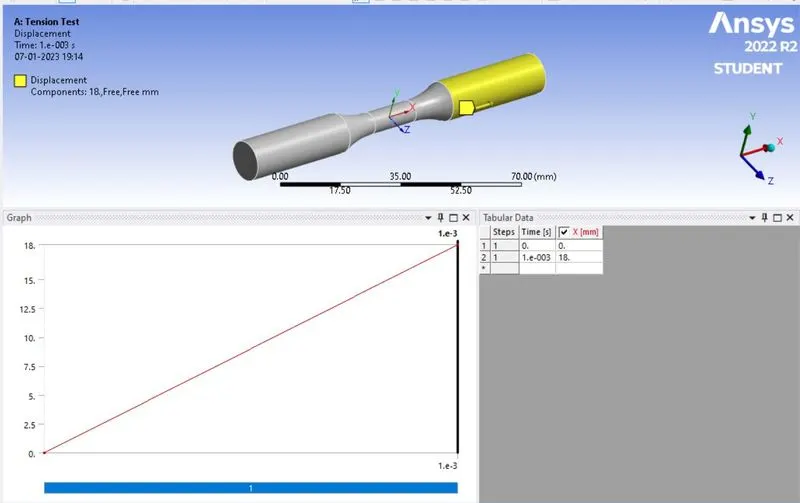
Results for tension test :-
Total deformation
equivalent stress :-
temperature :-
Define B.C. for Torsion test :-
Apply fixed support at one end of geometry as shown in snap :-
Apply displacement one end of geometry as shown in snap :-
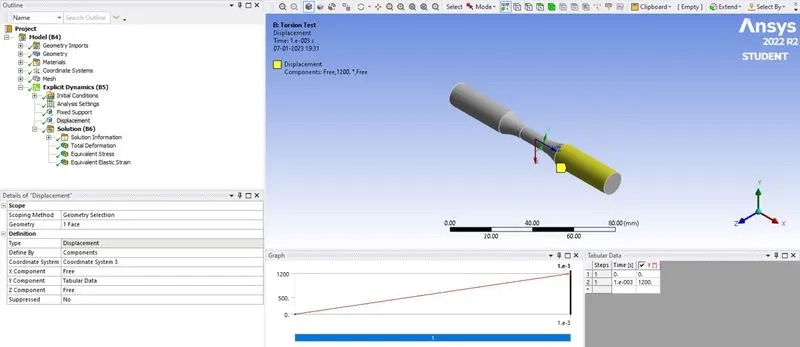
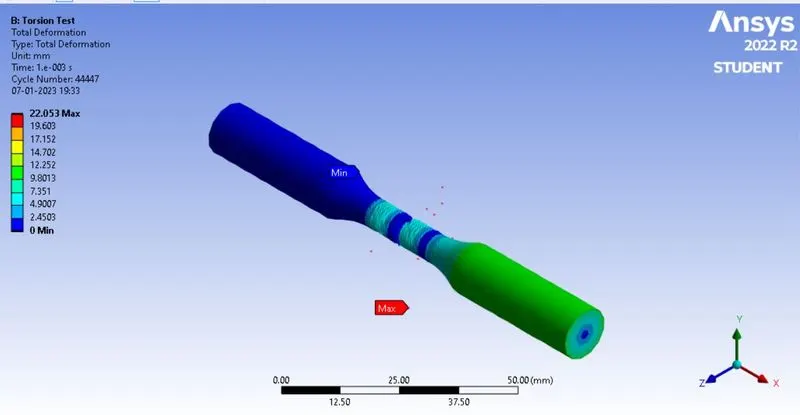
Results for torsion test :-
Total deformation
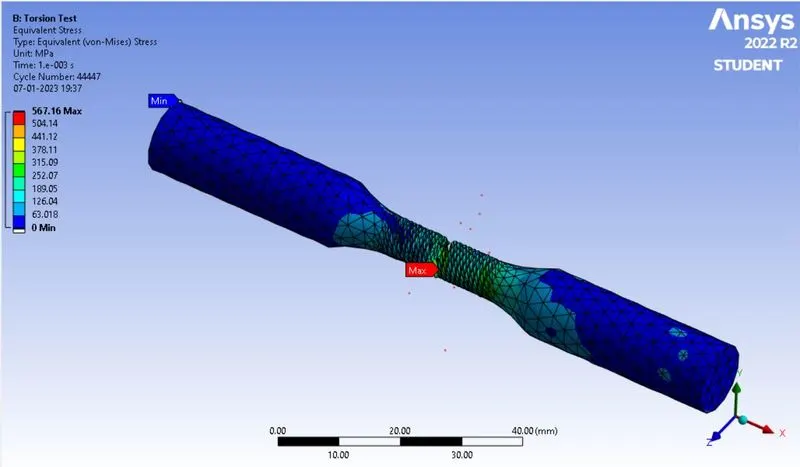
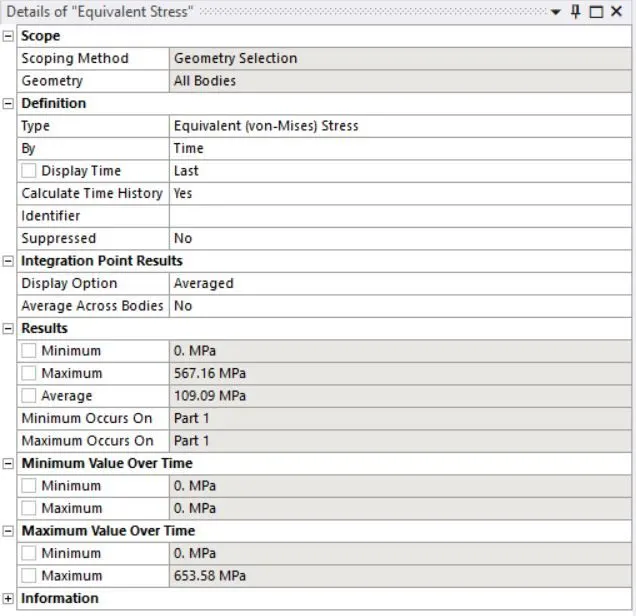
equivalent stress :-
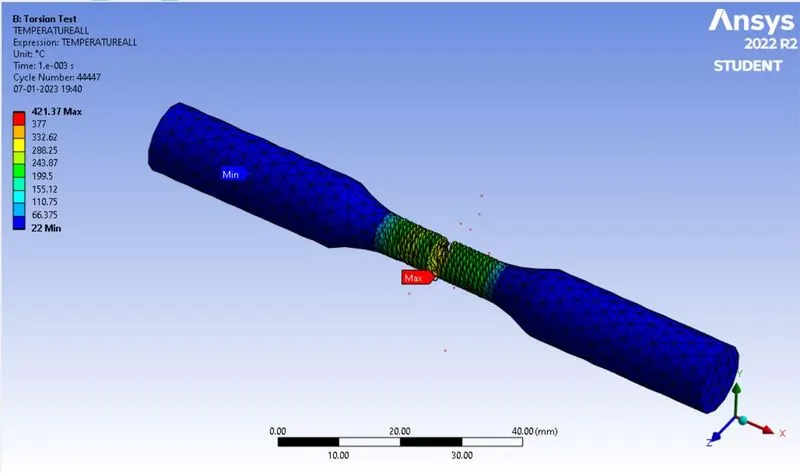
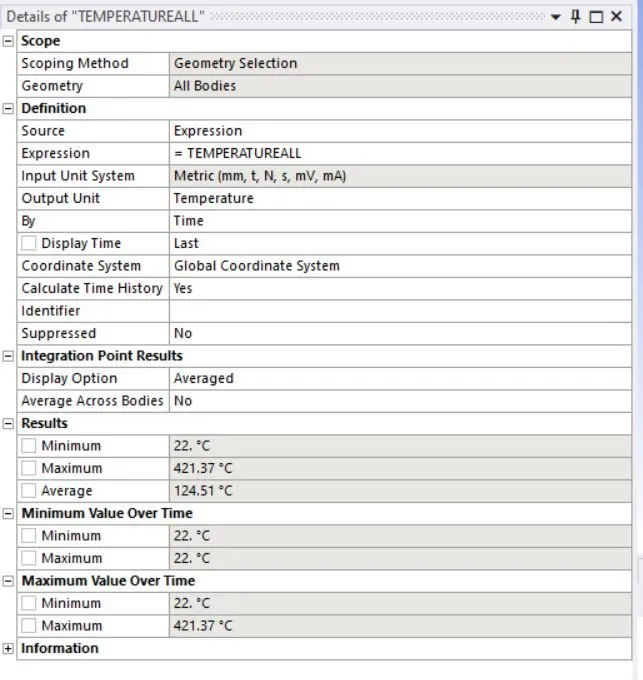
temperature :-
Conclusion:
- From the above results, we can conclude that the failure of the specimen in Tension Test is due to permanent deformation due to elongation and sue to neck generation. This concludes that failure of the Specimen is due to max. Tensile Stress.
- Failure of the Specimen in the Torsion Test shows, the flat failure surface. This concludes that failure is due to Max. Shear Stress. Also it is ductile material, which indicates the failure in the Plane of maximum sheer stress perpendicular to the axis of the Specimen.