Week 3 Verification of Weld Joints
Aim: To verify weld joints using static structural analysis.
Objective:
- To stimulate three different types of welding using three different weld materials.
- To find out the directional deformation and equivalent strain experience by the setup.
- To identify the weld joint that experiences the highest equivalent stress in each case and compare the results for all three cases.
PROCEDURE
- First, we have to input the engineering materials with required properties or else by creating with required properties.
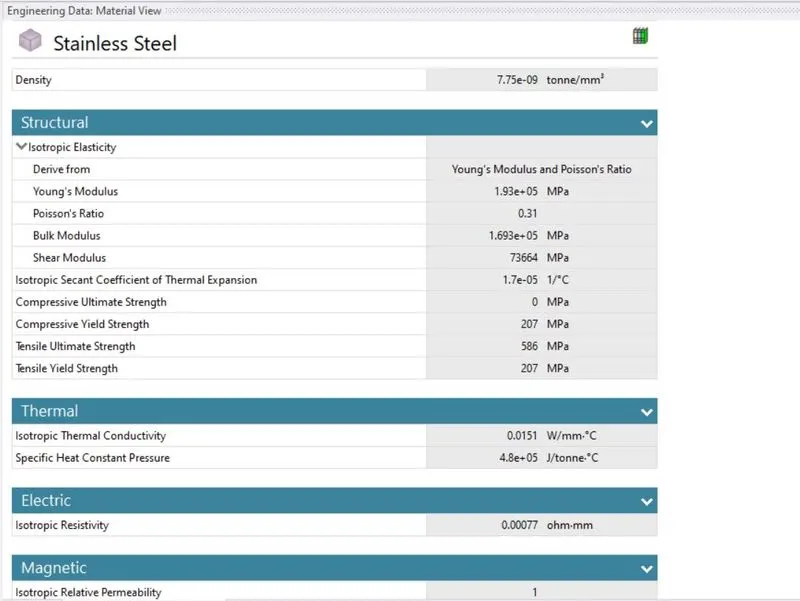
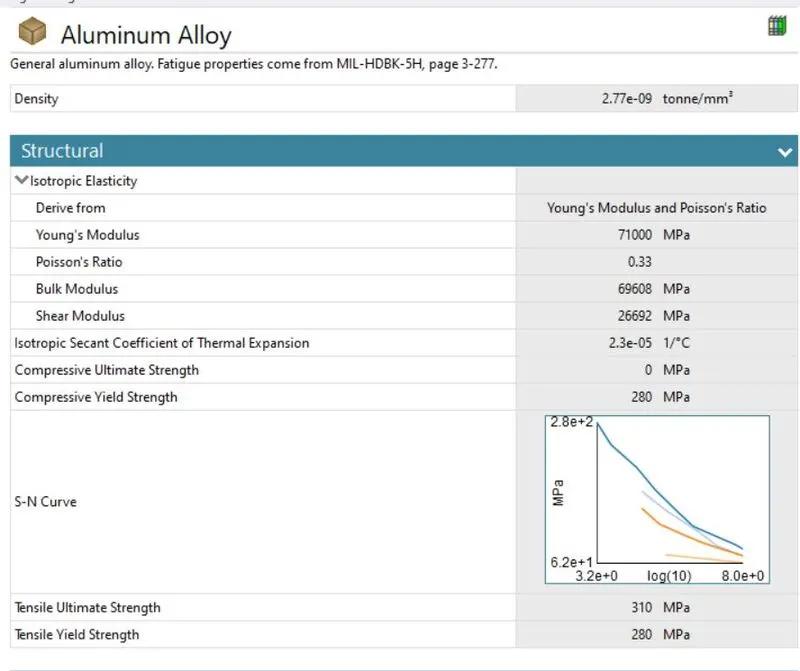
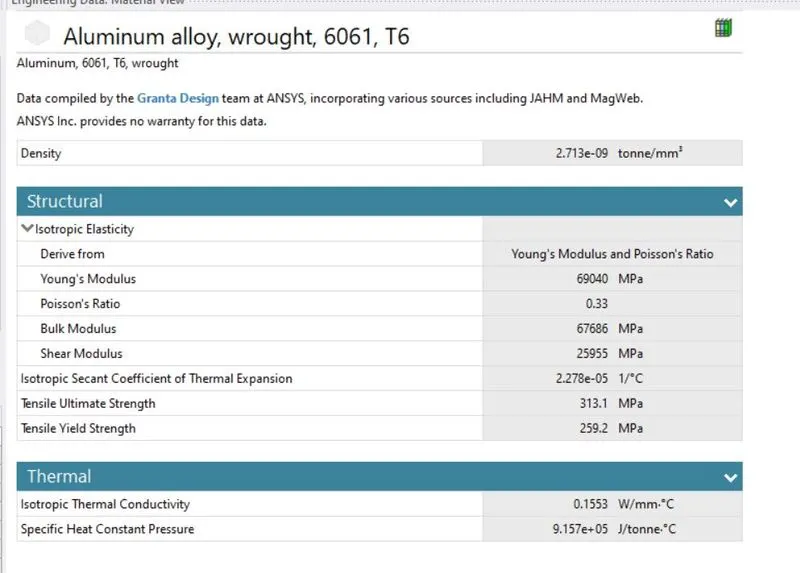
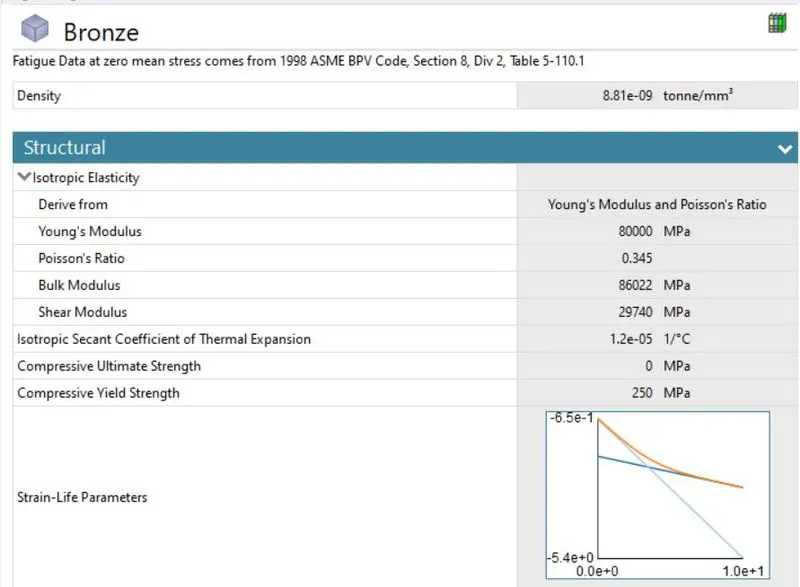
- Then we have to import our model into ansys, import the model and open it in space claim so that ansys will read it.
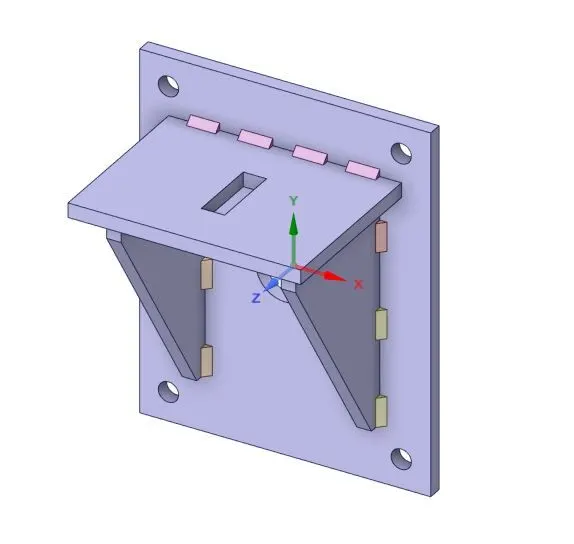
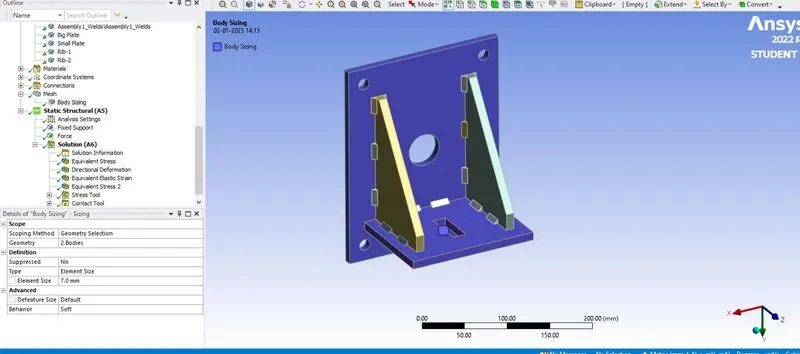
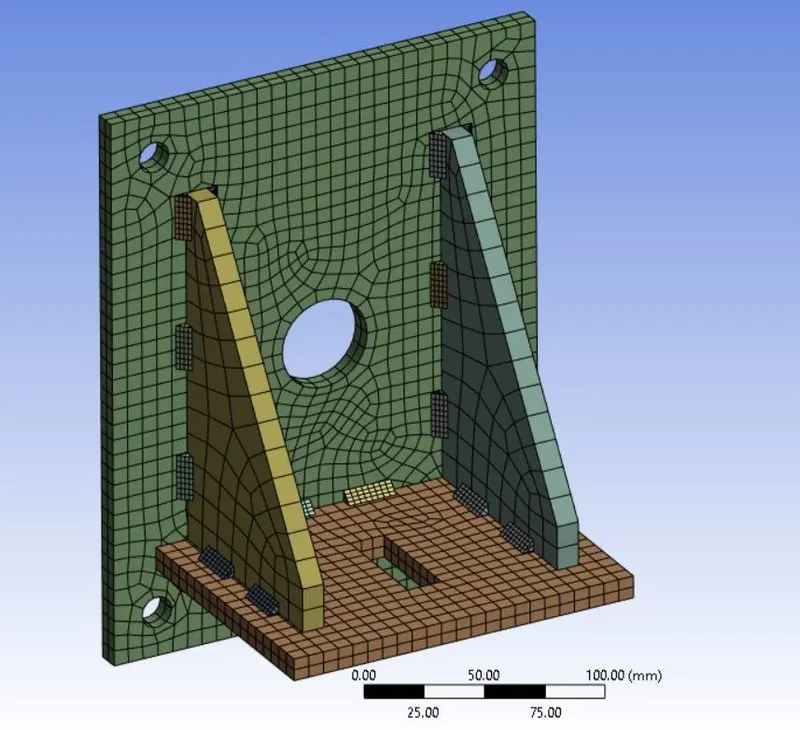
- Next step is meshing the given component with element size of 7 mm:-
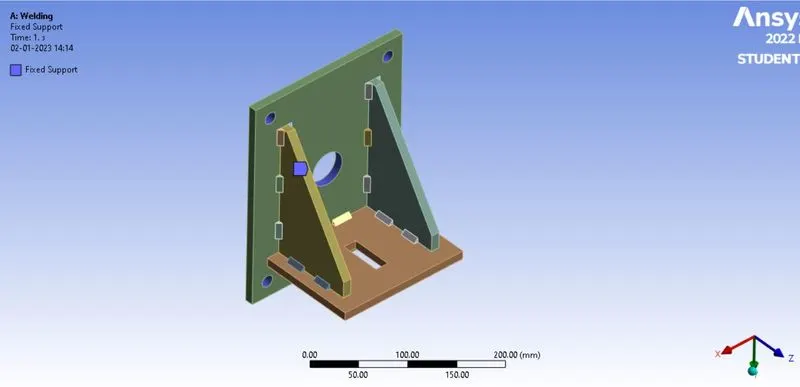
- Next Step is set-up Boundary conditions :-
1) Apply Fixed support at all bolting location as shown in snap.
2) Apply force of 15000 N as shown in snap:-
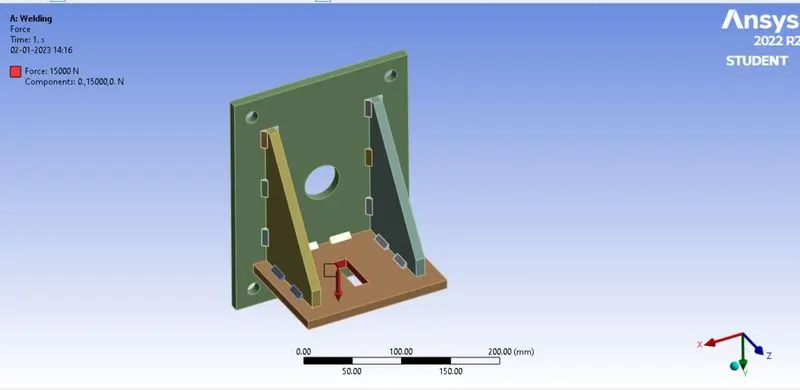
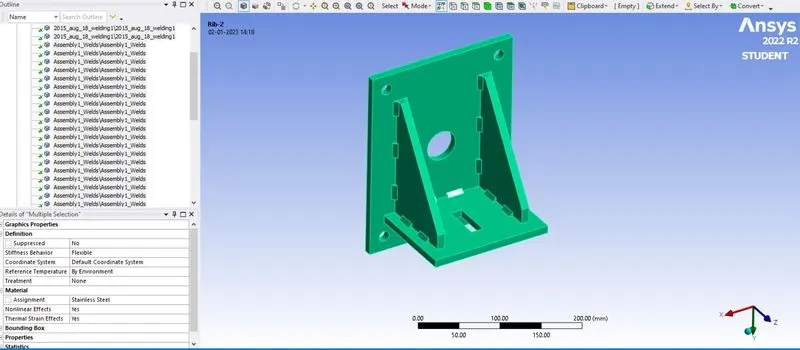
Case 1. Stainless Steel: In this case, the material of the plates must also be the same. Use Stainless steel for both weldments and plates. No need to add flux to the weldments.
Change Material of complete geometry to Stainless Stee as per case-1
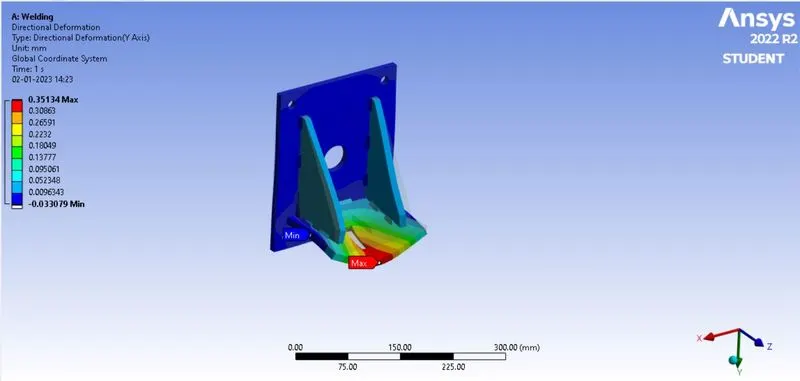
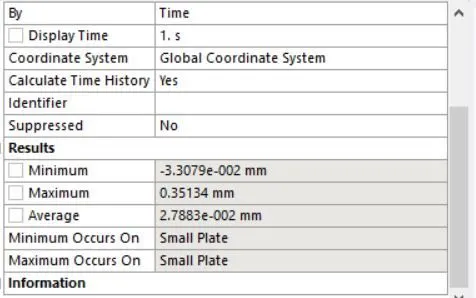
Result of Case-1 :-
Directional Deformation :-
equivalent stress on complete model:-
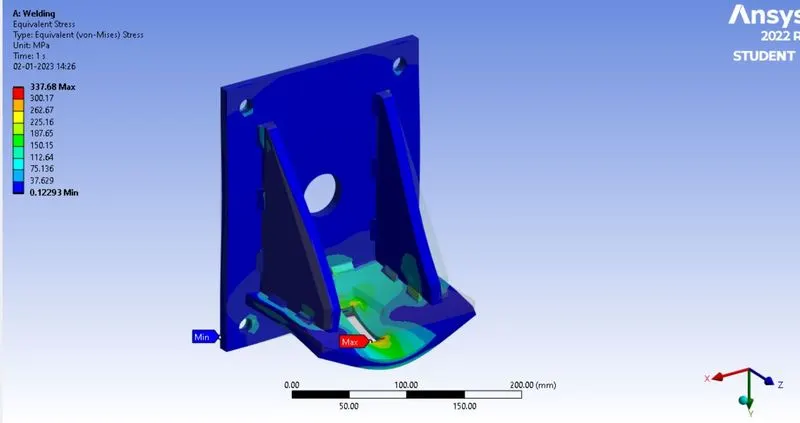
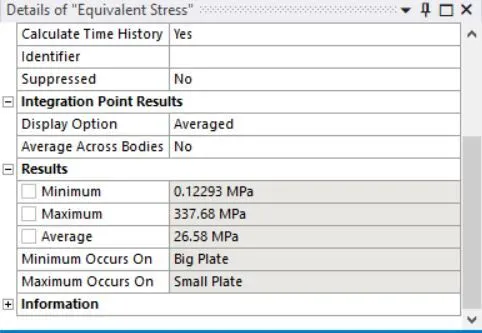
equivalent stress on welds:-
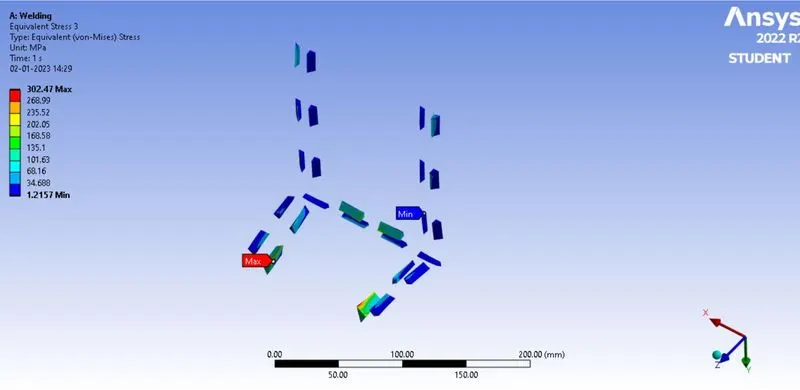
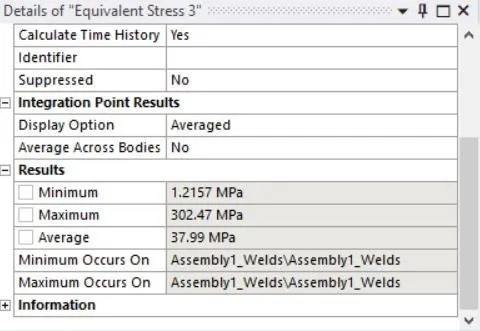
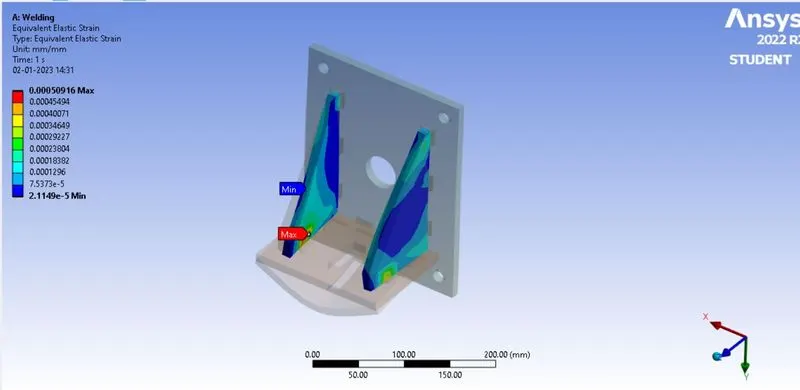
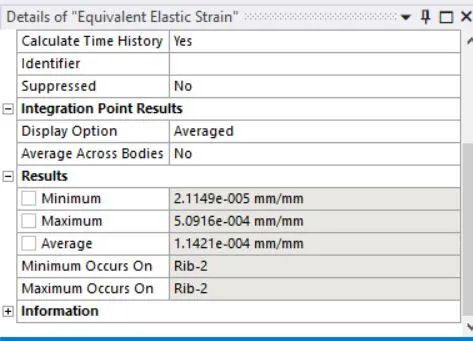
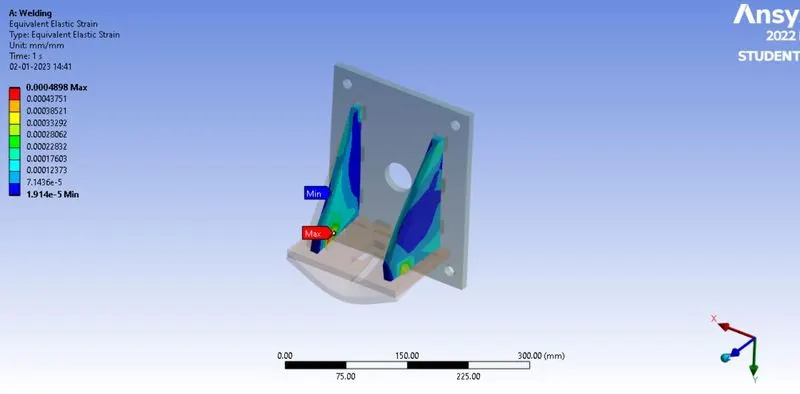
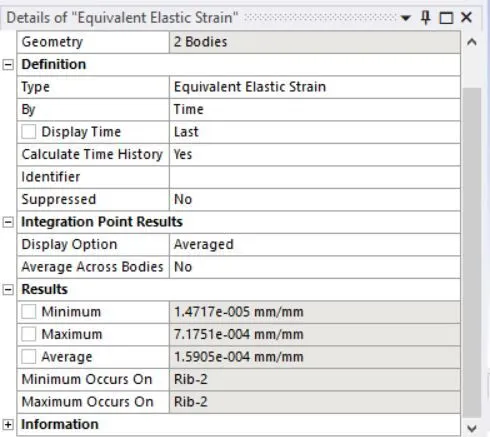
equivalent strain :-
Case 2. Aluminium Alloy:The material to be chosen for this case is Aluminium alloy(high strength, wrought). [Plate material to be used is stainless steel]
Result of Case-2 :-
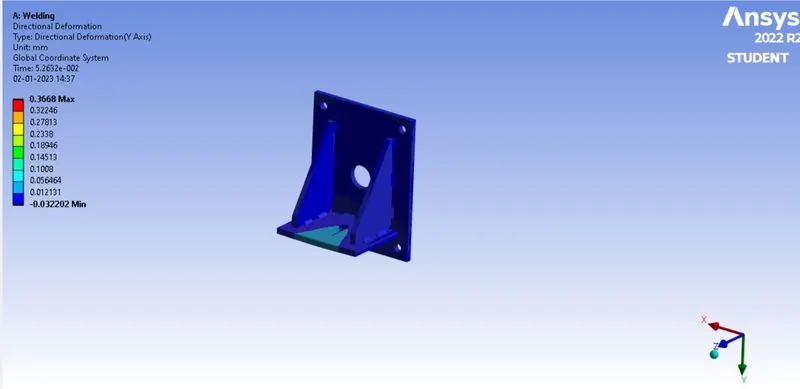
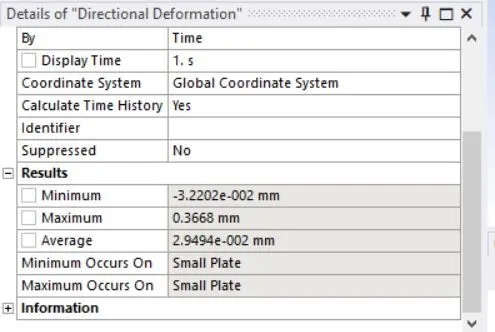
Directional Deformation :-
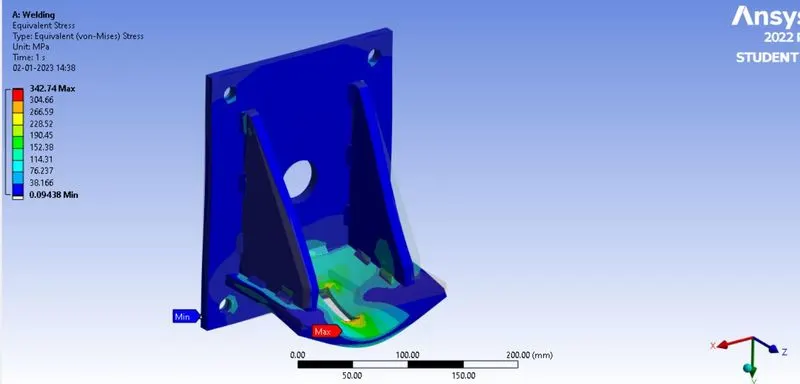
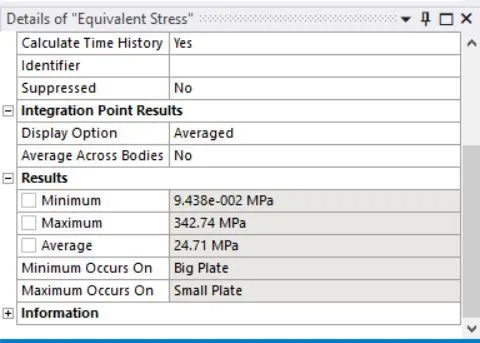
equivalent stress on complete model:-
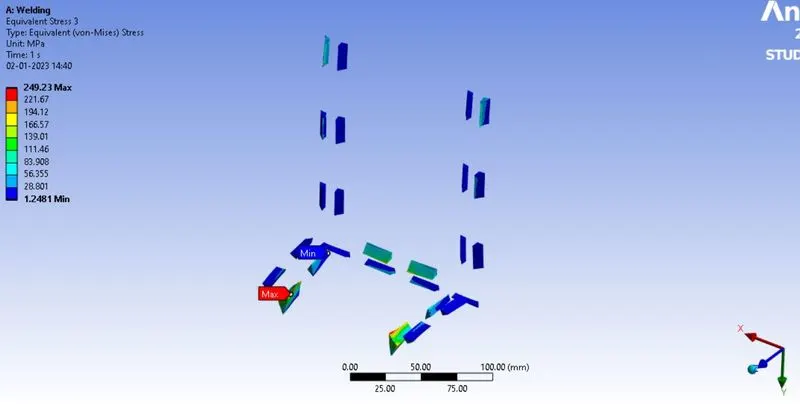
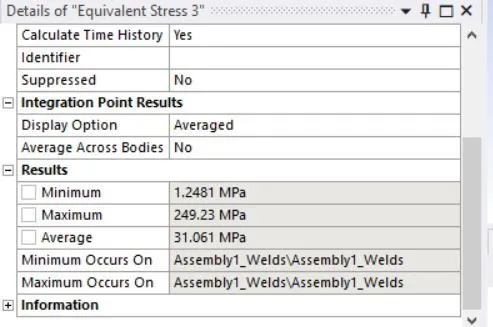
equivalent stress on welds:-
equivalent strain :-
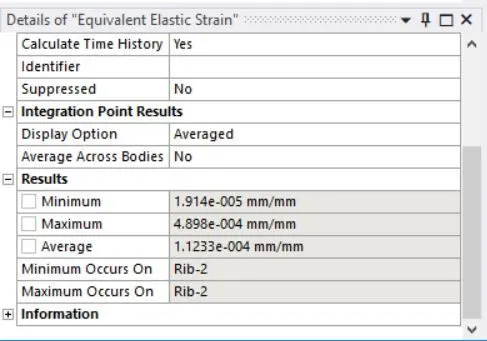
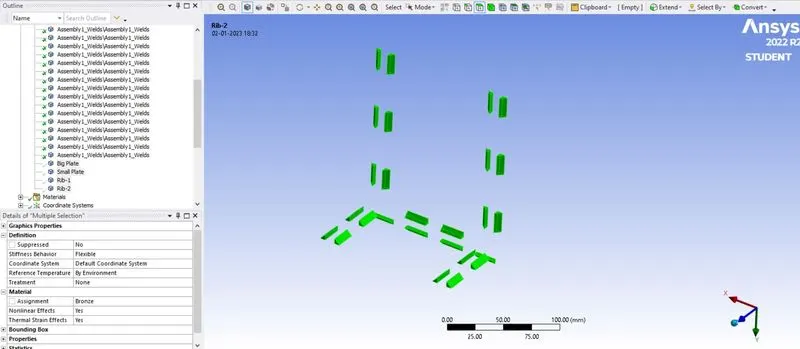
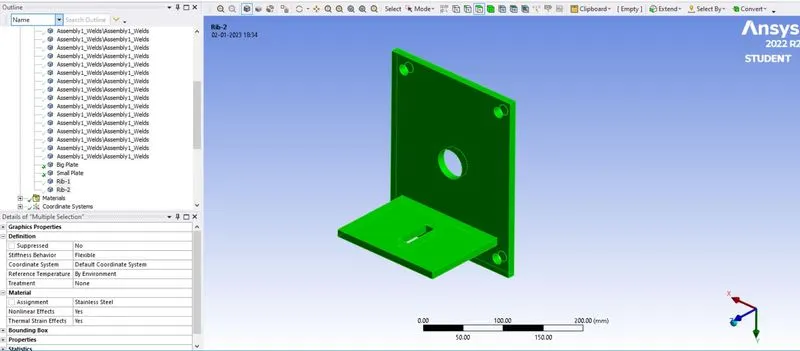
Case 3.Bronze: In order to simulate "Brazing", you should be using bronze as the weld material. Assign Stainless Steel to both plates and Copper to the "Ribs".
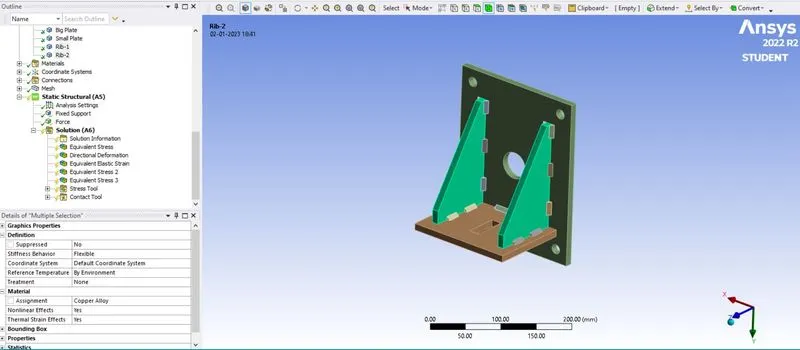
Result of case-3
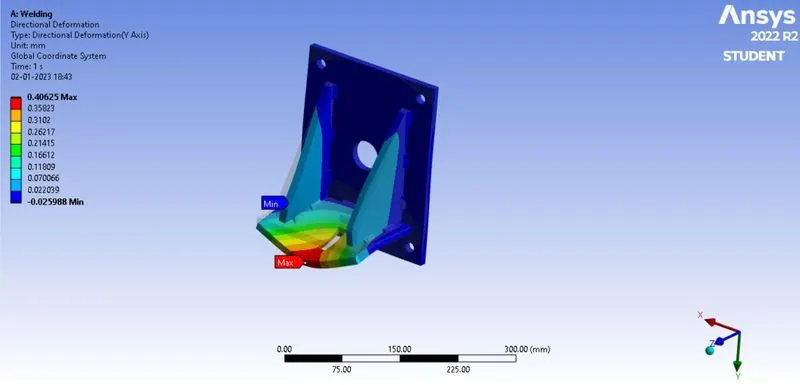
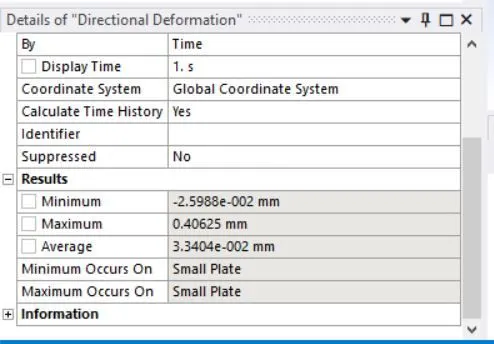
Directional Deformation :-
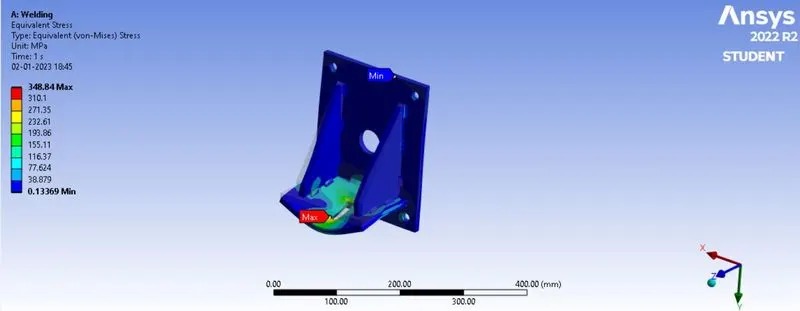
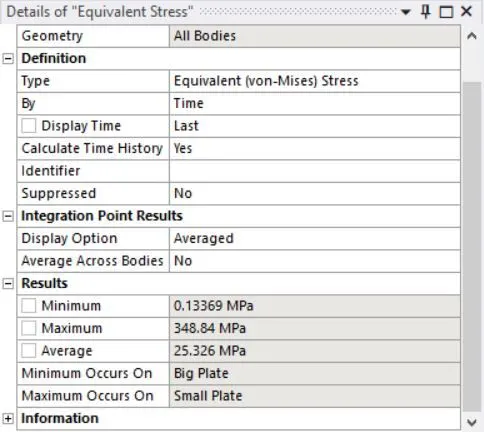
equivalent stress on complete model:-
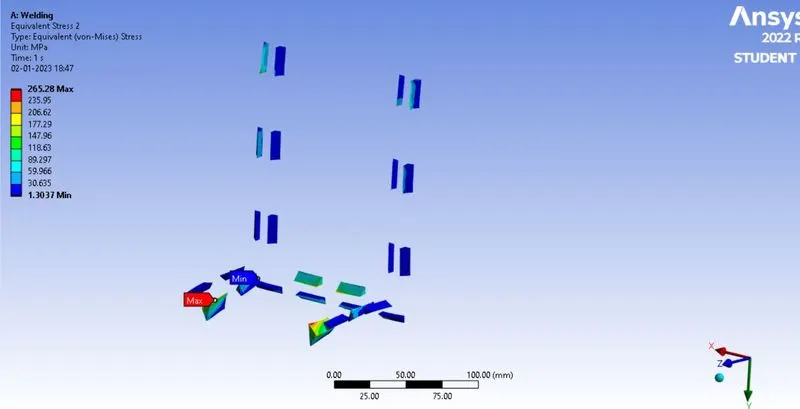
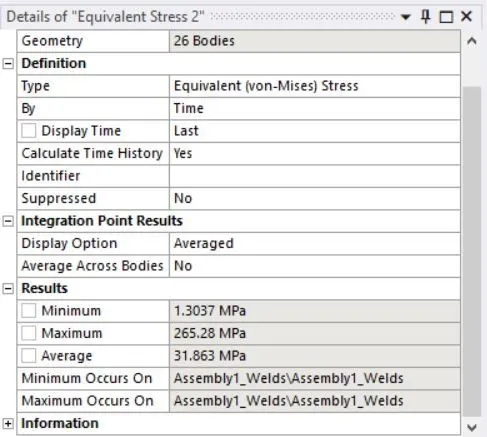
equivalent stress on welds:-
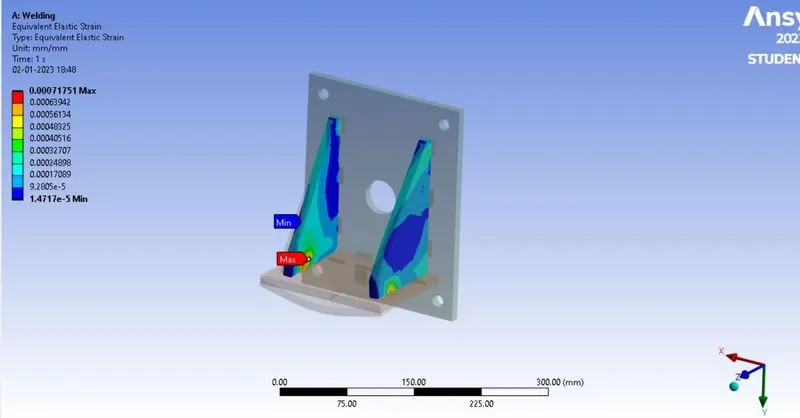
equivalent strain :-
| Parameters | Directional deformation(mm) | equivalent stress on complete model(MPa) | equivalent stress on welds(MPa) |
| Case-1 | 0.35 | 337.68 | 302.47 |
| Case-2 | 0.36 | 342.74 | 259.23 |
| Case-3 | 0.40 | 348.84 | 265.28 |
Conclusion: As per the above results, we can see that in case 3, stress developed in setup is 3491MPa and stress developed in weldments is 265MPa and also the directional deformation is more as compared to the rest of the cases. case1 has lesser stress, strain and directional deformation.
So it can be inferred from the analysis that stainless steel as weldments experience lesser stress as compared to aluminium and bronze.