Week 2:- BiW Fixture Basics Challenge
1)What is the process of project execution activity?
The diagram provided illustrates the process involved in executing activities related to BIW (Body in White) fixture & tooling. This process represents a fundamental stage in every project, marking its inception.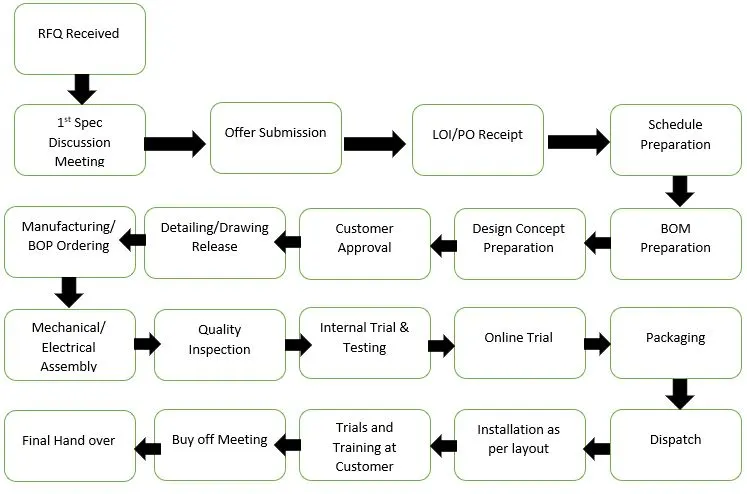
1. RFQ (Request for Quotation):
- RFQ involves the detailed submission of project requirements/specifications by the customer, typically in the form of data or documents.
- Technical and commercial aspects, as well as project execution timelines, are specified by the customer.
2. FIRST SPEC: DISCUSSION MEETING:
- Following receipt of RFQ, discussions are conducted externally to finalize technical and commercial offers.
- This phase encompasses activities such as data study, 3D design concept, simulation validation, quality checks, 2D drawing release, procurement of components, manufacturing, assembly, installation, and commissioning.
3. OFFER SUBMISSION:
- Once finalized, offers are submitted to the customer for evaluation.
- Customers may solicit offers from multiple suppliers, evaluating them based on technical, cost, quality, and industry reputation.
4. LOI/PO RECEIPT (Letter of Intent/Purchase Order):
- Upon finalizing an offer, the customer releases a LOI/PO, indicating their intent to proceed with the project.
- Upon receipt of the PO, project work commences, necessitating schedule preparation.
5. SCHEDULE PREPARATION:
- Post-PO receipt, scheduling activities to commence to align with committed timelines and customer requirements.
- This involves delineating various activities, including kick-off meetings, design studies, simulations, quality checks, manufacturing, assembly, installation, and commissioning.
6. BOM PREPARATION (Bill of Materials):
- BOMs detailing components required for the project are compiled.
7. DESIGN CONCEPT PREPARATION:
- Preceding design concept formulation, a thorough data study of consumer requirements is conducted.
- Conceptualization involves considerations such as load distribution, clamping processes, welding sequence, and tool travel.
- Spot plans are devised to optimize robot utilization and cycle times.
8. CUSTOMER APPROVAL (Design Approval Process - DAP):
- Customer review and approval of design concepts are obtained, incorporating any necessary simplifications or adjustments.
9. DETAILING & DRAWING RELEASE:
- Upon design approval, detailed fixture part drawings are released, including necessary dimensions and GD&T symbols.
10. MANUFACTURING/BOP ORDERING:
- Mechanical and electrical components are ordered as per design specifications.
11. MECHANICAL/ELECTRICAL ASSEMBLY:
- Upon component receipt, assembly adhering to design specifications commences.
12. QUALITY INSPECTION:
- Post-assembly, rigorous quality checks are conducted, including dimensional accuracy verification using CMM.
13. INTERNAL TRIAL:
- Initial in-house trials are performed to assess fixture operation, ensuring proper assembly seating, clamping, and alignment.
14. ONLINE TRIAL:
- Automated trials are executed to validate process sequences and operations.
15. PACKAGING:
- Fixtures are packaged to ensure safe transportation, preserving both aesthetic appeal and functionality.
16. DESPATCH:
- Packaged fixtures are dispatched for delivery to the customer.
17. INSTALLATION AS PER LAYOUT:
- Fixtures are installed according to predetermined layout designs.
18. TRIALS & TRAINING AT CUSTOMER:
- Production trials are conducted at the customer's facility, with training provided to operators, staff, and engineers on fixture operation and maintenance.
19. BUYOFF MEETING:
- Post-trials and buy-off meetings are convened to review fixture performance and address any additional requirements or improvements.
20. FINAL HANDOVERS:
- Completed fixtures and supporting documentation, including validation documents and BOMs, are handed over to the customer, ensuring compliance with industry standards such as ISO and IATF.
----------------------------------------------------------------------------------------
2) What are the types of joining processes?
Joining processes encompass a variety of methods employed to bring together individual parts to form a larger, more intricate component or assembly. These individual parts converge at what are known as joints. These joints serve to transmit or distribute the forces that arise during the functioning of the component to other parts within the assembly.
The durability and performance of any structure greatly hinge on the quality and design of its component joints. Since it's often impractical to construct the entire structure as a single piece, there are two fundamental options for joining materials and components:
1. Metallurgical joining
2. Mechanical joining
3. Chemical joining
These methods each offer distinct advantages and are selected based on factors such as material properties, structural requirements, and the intended application of the assembly.
Metallurgical joining methods are classified into three main categories:
1. Welding
2. Brazing
3. Soldering
These processes involve the fusion or bonding of materials at the atomic level, creating strong and durable joints between the components. Each method offers unique characteristics suited for specific applications and material combinations.
Welding: is the process of joining similar metals by applying heat. This can be achieved with or without the application of pressure, and with or without the addition of filler metal, known as an electrode. In welding, the edges of the metal pieces are either melted or brought to a plastic condition. This process creates permanent joints by forming a homogeneous mixture of the two materials being joined.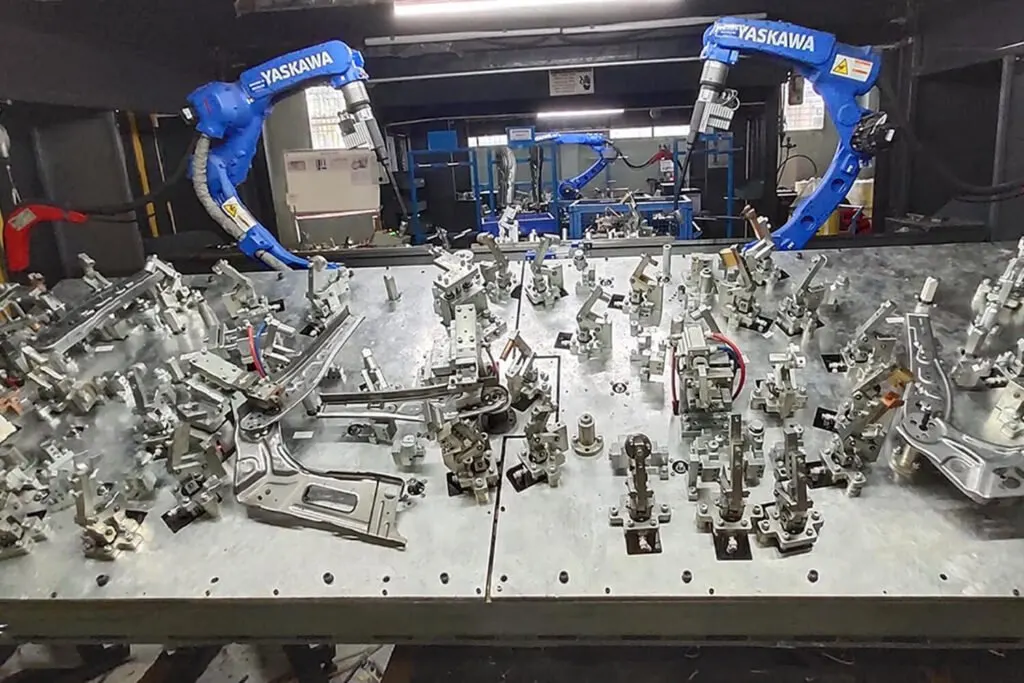
The types of welding processes are classified into:
1. Fusion Welding
2. Electric Resistance Welding
3. Solid-State Welding
a. Fusion Welding:
In fusion welding, the metal at the joint is heated to a molten state and then allowed to solidify. Pressure is not applied during the welding process, hence it is also called "non-pressure welding." Filler materials may be required during this type of welding to facilitate the joining process.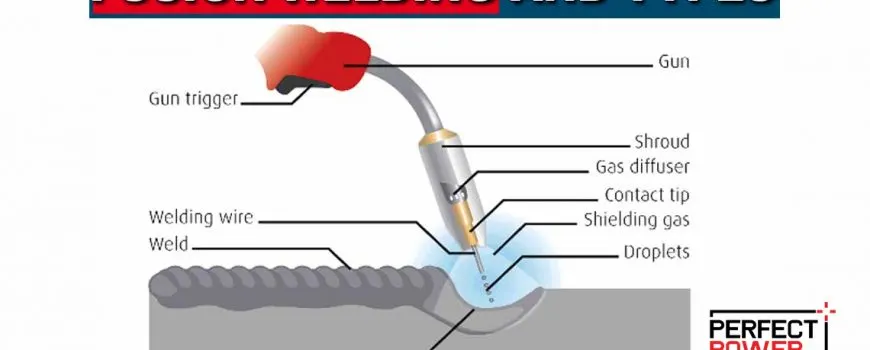
Classification of fusion welding:
I. Thermit Welding:
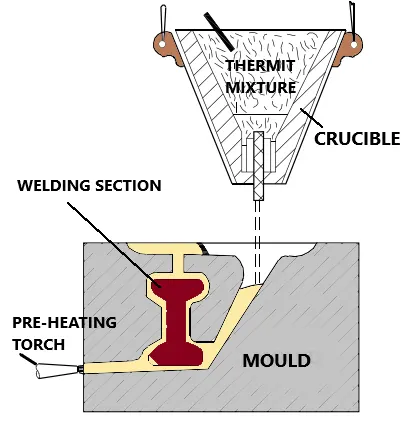
Thermit welding involves welding parts using liquid thermit steel around the portions to be welded. This process doesn't rely on the production of an arc to heat the parts, nor does it use flames. Instead, it utilizes an exothermic reaction to achieve high temperatures. The welding principle revolves around using the heat of the thermit reaction to weld the metal in a plastic state, with mechanical pressure applied for the joint. The process depends on the chemical reaction between iron oxide and aluminum, represented by the equation: 8Al + Fe3O4 = 9Fe + 4Al2O3. This reaction occurs rapidly, typically within about 30 seconds, reaching a heat liberation temperature of approximately 2800 degrees Celsius, twice the melting temperature of steel.
II. Arc Welding:
Arc welding involves generating heat through an electric arc. The arc is produced between an electrode and the workpiece. This process joins two metal pieces by melting their edges with an electric arc. Electrical energy is converted into heat energy, melting both the workpiece and the electrode without requiring external pressure. The temperature of the arc ranges from about 5000°C to 6000°C. An electrode supplies additional filler metal into the joints, deposited along the joint. A transformer or generator supplies current for the process. The depth to which the metal is melted and deposited is referred to as the depth of fusion. To enhance depth of fusion, the electrode is typically held at a 70-degree inclination to the vertical. Electrodes used in arc welding are generally coated with flux to prevent reactions with atmospheric air, remove impurities, and form slag over the weld metal, protecting it from rapid cooling. The molten metal is forced out of the pool by the electric arc, creating a small depression in the parent metal known as the "arc crater." The distance between the electrode tip and the bottom of the arc crater is called the "arc length."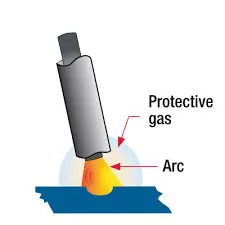
The types of arc welding is:
Manual Metal Arc (MMA) Welding:
Manual Metal Arc (MMA) welding aims to achieve clean, high-quality welds at a lower cost. It is one of the most flexible and widely used arc welding processes. This method involves striking an arc between a covered metal electrode and a workpiece.
MIG Welding (Metal Inert Gas):
MIG welding is typically used for large and thick materials. It employs a consumable wire that acts as both the electrode and the filler material. This process is much faster compared to TIG welding, resulting in shorter lead times and lower production costs.
TIG Welding (Tungsten Inert Gas):
TIG welding utilizes a tungsten electrode to heat the metal being welded, while a shielding gas, commonly Argon, protects the weld puddle from airborne contaminants. TIG welding produces clean and precise welds on various metals.
Submerged Arc Welding (SAW):
Submerged arc welding involves submerging the weld and arc zone beneath a blanket of flux. The flux material becomes conductive when molten, creating a path for the current to pass between the electrode and the workpiece.
Plasma Arc Welding (PAW):
Plasma arc welding is similar to gas tungsten arc welding, where an electric arc is formed between an electrode and the workpiece. However, in PAW, the electrode is positioned within the torch, separating the plasma arc from the shielding gas envelope.
Atomic Hydrogen Arc Welding (AHW):
AHW is an arc welding process that utilizes an arc between two tungsten electrodes in a shielding atmosphere of hydrogen. This process was invented by Irving Langmuir during his studies of atomic hydrogen.
Carbon Arc Welding (CAW):
CAW produces metal coalescence by heating with an arc between a non-consumable carbon (graphite) electrode and the workpiece.
Electroslag Welding (ESW):
Electroslag welding is a highly productive, single-pass welding process suitable for thick materials in a vertical or close to a vertical position. It is similar to electro-gas welding but with the arc starting in a different location.
III. Gas Welding:
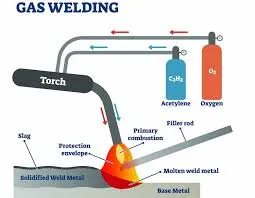
Gas welding is a welding process that melts and joins metals by heating them with a flame generated by the reaction of fuel gas and oxygen. The most commonly used method is oxyacetylene welding, known for its high flame temperature. Flux may be utilized to deoxidize and cleanse the weld metal. The flux melts, solidifies, and forms a slag skin on the resulting weld metal, protecting it from atmospheric contamination.
Electric Resistance Welding:
Electric resistance welding is a widely used welding technique in the manufacturing industry for joining metal sheets. It is particularly common in Body-in-White (BIW) assemblies.
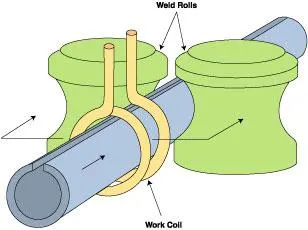
The weld is created by passing a strong current through the metal combination to heat and melt the metals at predetermined localized points, determined by the design of the electrodes or the workpiece to be welded. A force is applied before, during, and after the current application to confine the contact area at the weld interfaces and, in some applications, to forge the workpieces.
Types of Resistance Welding:
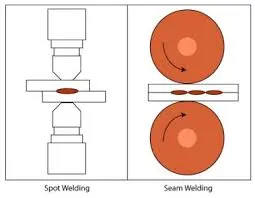
1. Resistance Spot Welding:
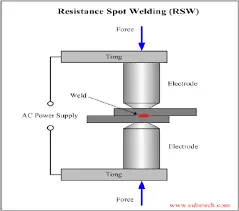
Resistance spot welding is used for joining sheet materials. It utilizes shaped electrodes made of copper-chromium or zinc conium alloy to apply pressure and conduct electrical current through the workpiece. Heat is generated mainly at the interface between two sheets, causing the material to melt and form a molten pool known as the weld nugget. The molten pool is contained by the pressure applied by the electrode tip and the surrounding solid metal.
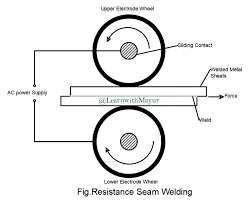
2. Resistance Seam Welding:
Seam welding is a resistance welding process used for joining metal sheets in continuous, often leak-tight, seam joints. It involves applying opposing forces with electrodes consisting of rotary wheels. The current and heat generation are localized by the peripheral shapes of the electrode wheels.
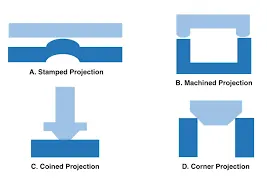
3. Resistance Projection Welding:
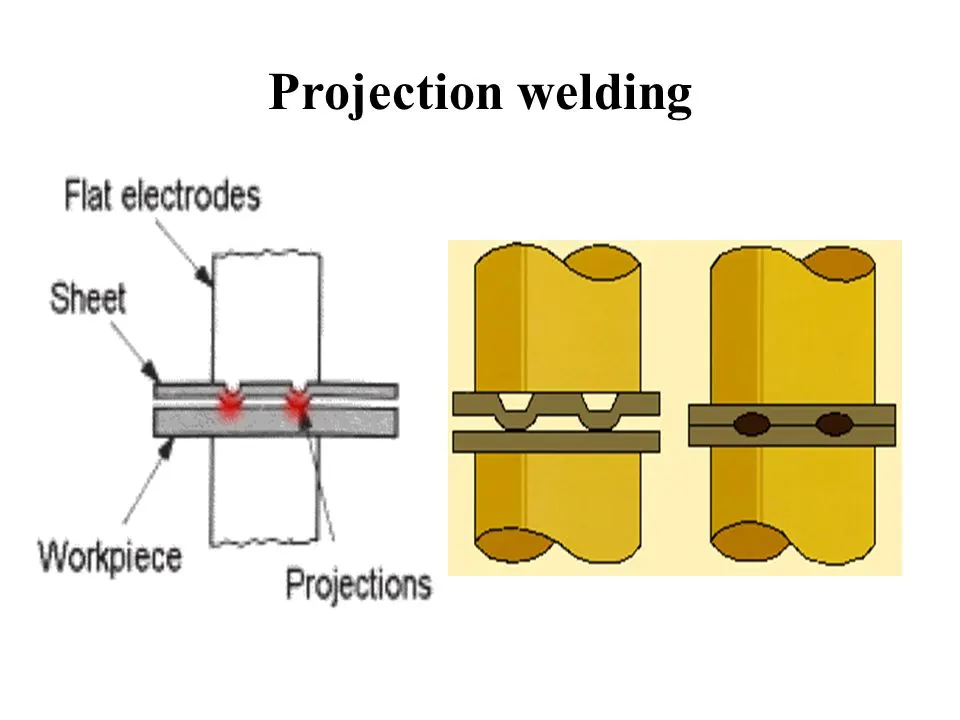
Projection welding is a resistance welding process used for joining metal components or sheets with embossments. It employs electrodes specially designed to fit the shapes of the workpieces. The current and heat generation are localized by the shape of the workpiece, either with their natural shapes or with specially designed projections. This process can result in large deformation or collapse in the projection part of the workpieces, indicating high pressure application.
Solid-state welding: encompasses a variety of techniques where joining occurs without the melting of the materials involved. Here's a brief overview of each process you listed:
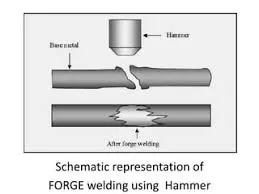
1. Forge Welding: This is one of the oldest welding processes, dating back thousands of years. In forge welding, the two pieces to be joined are heated in a forge and then hammered together. The heat and pressure cause the atoms at the interface to bond, creating a strong joint.
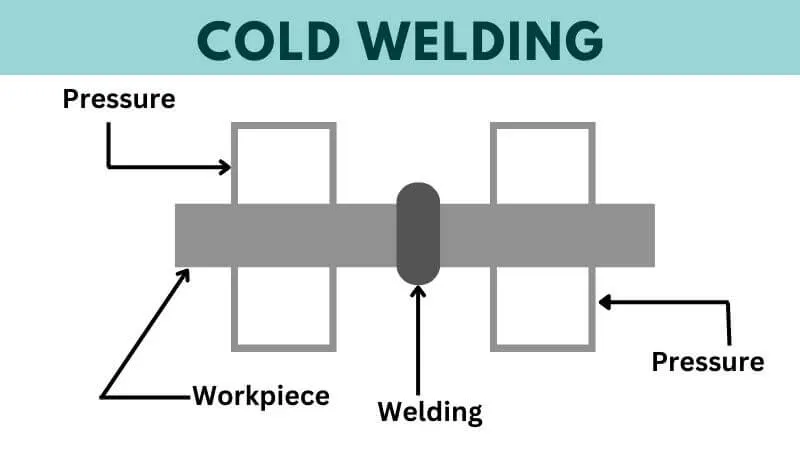
2. Cold Welding: Cold welding involves joining two clean metal surfaces at room temperature or slightly elevated temperatures without the use of heat or pressure. It relies on the principle that clean metal surfaces will bond together when brought into contact due to atomic attraction. This process is often used in applications like spacecraft construction where welding in a vacuum is necessary.
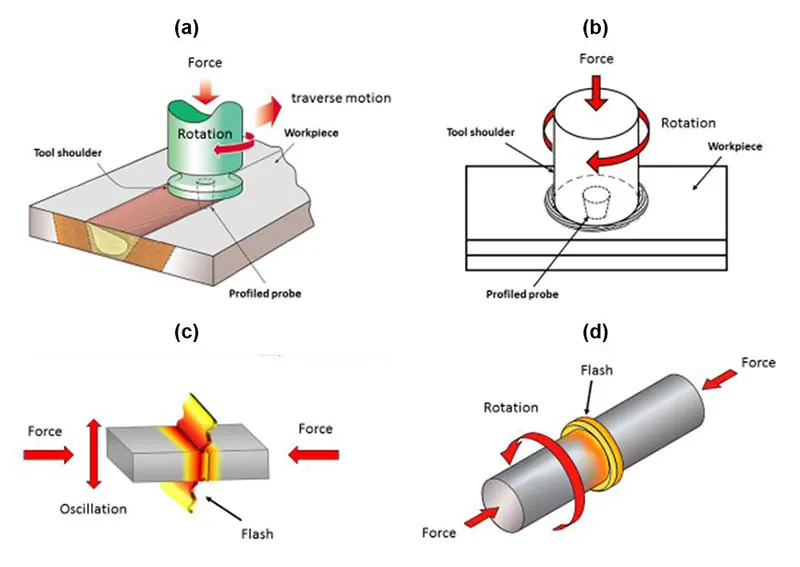
3. Friction Welding: In friction welding, the heat required for joining is generated by friction between the two surfaces being welded. The parts are brought together under pressure and rotated against each other, causing frictional heat to build up. Once the desired temperature is reached, the rotation stops, and pressure is maintained until the joint cools, resulting in a solid-state bond.
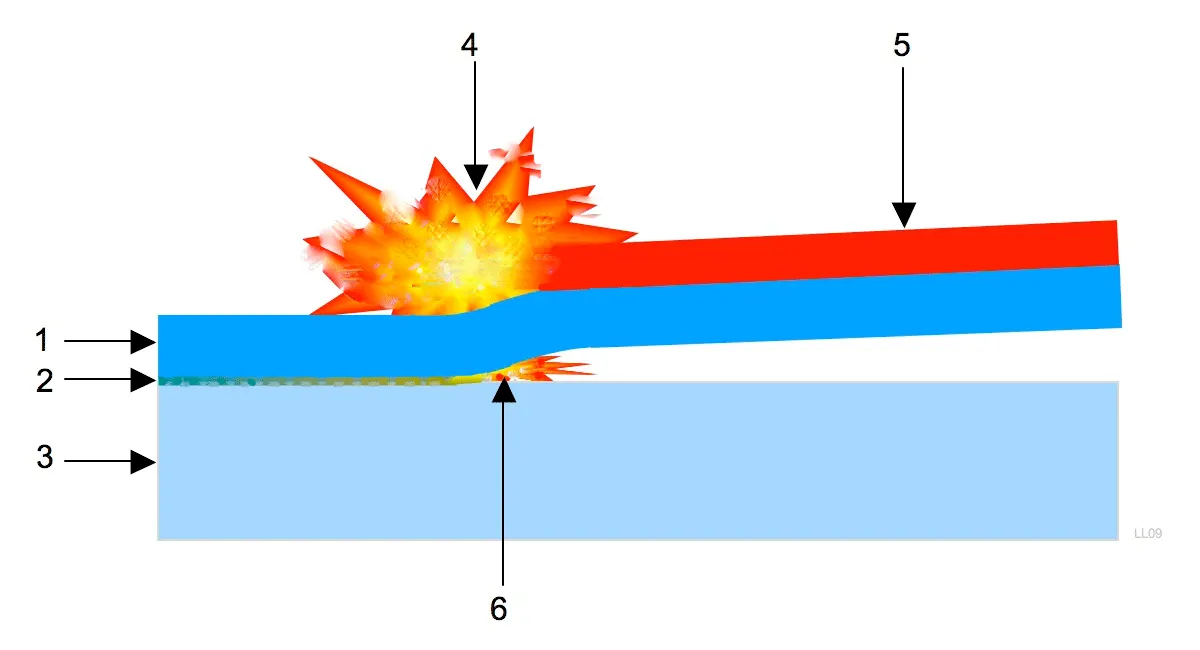
4. Explosive Welding: This technique uses explosives to bond two dissimilar materials together. The explosive force propels one material onto another at a high velocity, causing the atoms at the interface to bond together. It's often used to join metals that are difficult to weld by conventional means or to create composite materials.
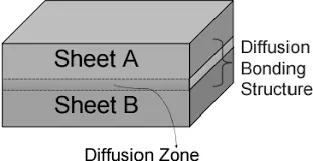
5. Diffusion Welding: Diffusion welding relies on the diffusion of atoms across the interface between two materials to create a bond. The two pieces are brought into contact under pressure at an elevated temperature, allowing the atoms to migrate across the interface and form a strong bond. This process is particularly useful for joining materials with similar compositions.
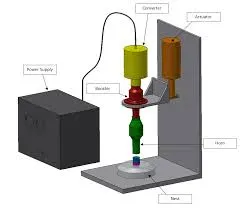
6. Ultrasonic Welding: Ultrasonic welding uses high-frequency ultrasonic vibrations to create frictional heat at the interface between two workpieces. The parts are held together under pressure while ultrasonic vibrations are applied, causing the material to soften and bond together. This process is commonly used in industries like electronics and automotive for joining small or delicate parts.
Brazing and soldering are both metal-joining processes that involve melting a filler metal to join two or more metal items. However, they differ in the temperatures at which they operate and the types of filler metals used.
Brazing:
Brazing involves melting a filler metal with a higher melting point than soldering, typically above 450°C (842°F), to create a bond between the base metals. The filler metal flows into the joint by capillary action and wets the base metals, creating a strong bond upon cooling. Brazing is suitable for joining similar or dissimilar metals and is often used for applications requiring high strength and durability.
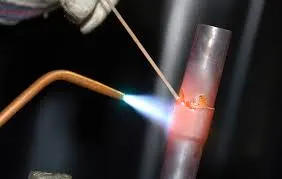
Different methods/techniques in brazing include:
1. Torch Brazing: Heat is supplied by a torch fueled by acetylene, natural gas, butane, or propane. Flux may be used in paste or powder form.
2. Furnace Brazing: Heat is supplied by gas or electric heating in a furnace, suitable for mass production.
3. Induction Brazing: Heat is generated by placing parts within the field of a high-frequency induction coil.
4. Dip Brazing: Parts are immersed in a molten bath of filler metal, either chemically or using a molten metal bath.
5. Resistance Brazing: Heat is generated by passing an electric current through the joint, minimizing oxidation and heat-affected zones.
6. Laser Brazing & Electron Beam Brazing: These methods use laser or electron beam heat sources for precision work with high-value or high-temperature materials.
Soldering:
Soldering involves melting a filler metal with a lower melting point, typically below 450°C (842°F), to create a bond between the base metals. Soldering is commonly used in electronics, plumbing, and other applications where lower temperatures are required to prevent damage to components or materials.
Different types of soldering methods include:
1. Hard Soldering: Also known as silver soldering, it uses a higher-cost filler metal for joining electrical and refrigeration parts.
2. Soft Soldering: This method uses a lower-melting-point filler material, commonly referred to as soft solder, and is widely used in various applications.
3. Dip Soldering: Parts are dipped into a molten solder bath after cleaning and fluxing.
4. Wave Soldering: Parts are passed over a wave of molten solder for mass production of electronic equipment.
5. Other Methods: Oven soldering, resistance soldering, induction soldering, and infrared soldering utilize different heat sources for joining.
Mechanical joining: methods offer versatile ways to connect metal components without the need for melting or altering the base materials. Here's a breakdown of some common techniques:
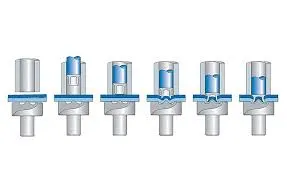
1. Self Piercing Riveting:
- A high-speed method for joining sheet materials like steel and aluminum alloys.
- Utilizes a semi-tubular rivet to clinch the sheets together in a single step.
- No pre-drilled holes are required, enabling rapid joint formation.
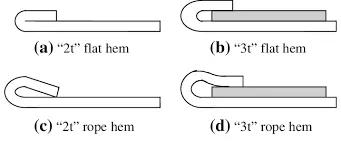
2. Hemming & Seaming:
- Both processes involve rolling a sheet metal edge onto itself.
- Hemming rolls the edge flush to itself, while seaming joins the edges of two materials.
3. Bolting:
- Bolted joints are prevalent in construction and machine design.
- Two main types: tension joints and shear joints.
- Tension joints transfer applied tension loads through clamped components, relying on bolt preload to prevent separation.
- Shear joints transfer loads through the bolt shank and rely on shear strength.
4. Shrink Fitting:
- Achieves an interference fit by altering component sizes through heating or cooling.
- Thermal expansion or contraction is utilized to create a tight joint.
- Examples include fitting metal components such as tires onto wheels through temperature changes.
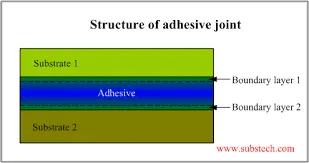
Chemical joining: specifically adhesive bonding, involves fastening surfaces together using adhesives like glues, epoxies, or plastic agents. Some key points about adhesive bonding include:
- Adhesive bonding creates smooth bonds between surfaces.
- Bonds are formed through the evaporation of solvents or the curing of bonding agents with heat, pressure, or time.
- Adhesive bonding can use organic or inorganic adhesives, and the procedure allows bonding at relatively low temperatures.
- Key process parameters for strong bonds include adhesive material, coating thickness, bonding temperature, processing time, chamber pressure, and tool pressure.
- -Adhesive bonding offers versatility in connecting different substrate materials like silicon, glass, metals, and other semiconductors.
- Drawbacks include the potential for corrosion, thermal instability, and limited hermetic sealing due to the permeability of gas and water molecules with organic adhesives.
-----------------------------------------------------------------------------------
3) What is Resistance Welding & its application in the automotive sector?
Resistance welding is a metal joining process that relies on the application of pressure and passing current through the metal area to be joined. Here are the main types of resistance welding and their applications:
1. Resistance Spot Welding:
- This process creates welds by generating heat through resistance to welding current between the faying surfaces, along with applied pressure over a specific period.
- It uses the face geometries of welding electrodes to focus the welding current and apply force to the workpieces.
- Once sufficient resistance is generated, the materials fuse to form a weld nugget.
- Commonly used in automotive, aerospace, and industrial applications for joining sheet metal.
2. Resistance Seam Welding:
- A subset of resistance spot welding where wheel-shaped electrodes are used to deliver force and welding current to the parts.
- The workpiece rolls between the electrodes while weld current is applied, creating overlapping welds to form a complete seam or individual spot welds at defined intervals.
- Seam welding is often used for creating watertight or airtight seals in fabricated metal products such as tanks, tubes, and pipes.
3. Projection Welding:
- Localizes welds at predetermined points using projections, embossments, or intersections on the workpieces, which focus heat generation at the point of contact.
- Solid projections are used for welding fasteners to parts, embossments for joining sheet or plate material, and intersections for cross-wire welding.
- Widely used in industries where fasteners, brackets, or other components need to be securely attached to metal parts.
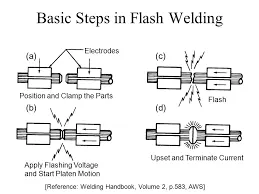
4. Flash Welding:
- Generates resistance using flashing action, created by very high current density at small contact points between the workpieces.
- Force is applied to the workpieces after flashing begins, and they are moved together at a controlled rate.
- Rapid upset from the force expels oxides and impurities from the weld.
- Flash welding is suitable for joining large components or dissimilar materials in applications like railway tracks, wire ropes, and automotive components.
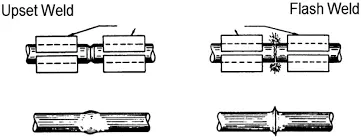
5. Upset Welding:
- Similar to flash welding, but the workpieces are already in firm contact with each other, so no flashing occurs.
- Pressure is applied before the current is started and is maintained until the process is complete.
- Commonly used for joining wire ends, rods, or bars in applications such as construction, fencing, and manufacturing.
Here are some applications of resistance welding in the automotive sector:
1. Body Panel Assembly: Joining body panels together for vehicle assembly.
2. Frame Welding: Welding vehicle frames to ensure structural integrity and safety.
3. Component Fabrication: Fabricating various automotive components such as exhaust systems, suspension parts, and engine components.
4. Electrical Connections: Welding electrical components like wires, terminals, and connectors in automotive electrical systems.
5. Heat Exchanger Manufacturing: Joining metal tubes and fins in the production of automotive heat exchangers such as radiators and condensers.
---------------------------------------------------------------------------------------
4)What is fusion welding & types of fusion welding with its application in the automotive sector?
Fusion welding processes involve melting the faying surfaces of the parent parts as well as any filler material during welding to form a weld bead. Heat is always involved in these processes. External pressure is typically not required, except for resistance welding, where substantial contact pressure is necessary for sound joining. The filler material may or may not be used.
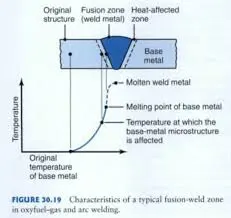
A typical fusion weld consists of several zones:
1. Fusion Zone:
- This zone comprises a mixture of filler metal and base metal that have completely melted.
- The component metals melted during welding exhibit a high degree of homogeneity.
- Solidification in this zone occurs by epitaxial grain growth, where atoms in the molten metal solidify at preexisting lattice sites in the unaffected base material.
- The grain structure in the fusion zone typically has a preferred orientation, with coarse columnar grains oriented roughly perpendicular to the weld interface.
- Factors influencing the grain structure include welding technique, types of metals being welded (similar or dissimilar), use of filler metal, and welding traverse speed.
2. Weld Interface:
- This is a narrow boundary that separates the fusion zone from the heat-affected zone.
- It consists of a thin band of base metal that was partially melted during welding but immediately solidified without mixing with the metal in the fusion zone.
- The chemical composition of the weld interface is generally the same as that of the base metal.
3. Heat Affected Zone (HAZ):
- This zone is located between the weld interface and the base material.
- It experiences temperatures below the melting point but high enough to change the microstructure and mechanical properties of the material.
- The mechanical properties of the HAZ are critical, as most failures occur in this region due to changes in microstructure and mechanical properties caused by the welding process.
Advantages of Fusion Welding:
1. Ease of Filler Material Application: Filler material can be applied easily, allowing for the filling of large gaps or voids in the welded joint.
2. No External Pressure Required: Fusion welding does not require external pressure, so the primary shape of the components being welded does not significantly impact the welding process. However, a suitable shape may be required to ensure uniform application of heat.
3. Flexibility in Joint Design and Edge Preparation: Joint design and edge preparation are not as critical in fusion welding as they primarily affect the achievable penetration depth. This allows for greater flexibility in designing weld joints.
4. Multi-Component Welding: Fusion welding allows for the welding of more than two components simultaneously, simplifying the assembly process for complex structures.
Disadvantages of Fusion Welding:
1. Distortion and Residual Stresses: Fusion welding involves melting and solidification, leading to distortion and the generation of residual stresses in the welded components. This can affect the dimensional accuracy and integrity of the welded assembly.
2. Heat-Affected Zone (HAZ): A distinct heat-affected zone (HAZ) is present in welded components, which is often considered the weakest portion of the welded assembly due to changes in microstructure and mechanical properties.
3. Impact on Mechanical Properties: Intense heating during fusion welding can severely affect the mechanical properties of the parent materials, including changes in strength, ductility, and toughness.
4. Challenges in Joining Dissimilar Metals: Joining dissimilar metals by fusion welding can be challenging, especially if the metals have substantially different melting points and coefficients of thermal expansion. Ensuring proper fusion and avoiding defects becomes more difficult when welding dissimilar materials.
let's discuss some common fusion welding processes:
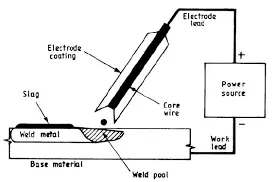
i. Shielded Metal Arc Welding (SMAW):
- Also known as stick welding, SMAW uses a consumable electrode covered with flux to lay the weld.
- An electric arc forms between the electrode and the metals to be joined, melting them to create a weld pool.
- The flux coating disintegrates to provide shielding gas and slag, protecting the weld from atmospheric contamination.
- Widely used in construction, industrial fabrication, and maintenance and repair due to its simplicity and versatility.
ii. Gas Metal Arc Welding (GMAW):
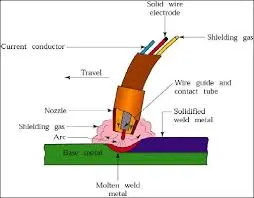
- GMAW, also known as MIG or MAG welding, forms an electric arc between a consumable wire electrode and the workpiece.
- A shielding gas feeds through the welding gun to protect the process from atmospheric contamination.
- Four primary methods of metal transfer include globular, short-circuiting, spray, and pulsed-spray.
- Used for a wide range of applications in manufacturing, automotive, and construction industries.
iii. Electro-Gas Welding (EGW):
- EGW is a continuous vertical position arc welding process where an arc is struck between a consumable electrode and the workpiece.
- No pressure is applied, and the arc remains struck throughout the welding process.
- Commonly used for square-groove welds in butt and T-joints, especially in shipbuilding and storage tank construction.
iv. Oxyacetylene Welding (OAW):
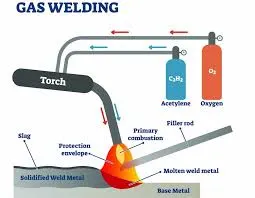
- OAW uses a flame formed by the combustion of oxygen and acetylene to weld metals.
- A filler rod coated with flux is sometimes used to prevent oxidation and improve joint quality.
- The process is portable and economical, suitable for low-quantity production and repair jobs.
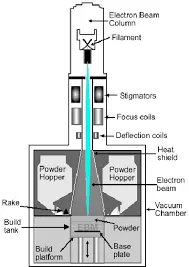
v. Electron Beam Welding:
- Welding is performed by a highly focused, high-intensity electron beam bombarding against the workpiece.
- Typically carried out in a vacuum to prevent disruption of the electron beam by air molecules.
- Known for high-quality welds with deep, narrow profiles, limited heat-affected zones, and low thermal distortion.
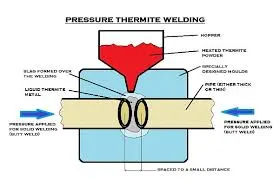
vi. Thermit Welding:
- Uses a mixture of aluminum powder and iron oxide to produce an exothermic reaction when ignited.
- The heat generated from the reaction melts the metals to be joined, forming a weld.
- Commonly used for joining railway lines and repairing large steel castings and forgings.
----------------------------------------------------------------------------------------
5) What is the 3-2-1 principle?
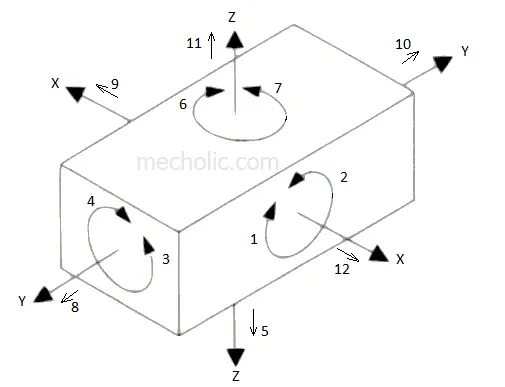
In fixture design, a significant amount of time is dedicated to determining how to position the workpiece within the fixture. Every free body possesses twelve degrees of freedom, which are categorized as follows:
6 translational degrees of freedom:
- Movement along the positive X-axis (+X)
- Movement along the negative X-axis (-X)
- Movement along the positive Y-axis (+Y)
- Movement along the negative Y-axis (-Y)
- Movement along the positive Z-axis (+Z)
- Movement along the negative Z-axis (-Z)
6 rotational degrees of freedom:
- Clockwise rotation around the X-axis (CROT-X)
- Anticlockwise rotation around the X-axis (ACROT-X)
- Clockwise rotation around the Y-axis (CROT-Y)
- Anticlockwise rotation around the Y-axis (ACROT-Y)
- Clockwise rotation around the Z-axis (CROT-Z)
- Anticlockwise rotation around the Z-axis (ACROT-Z)
PRIMARY LOCATOR:
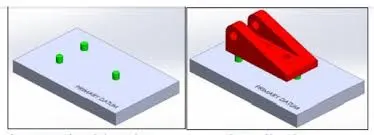
To begin with, three locators or supports are positioned beneath the workpiece, placing it on the primary locating surface, also referred to as a datum. This arrangement effectively limits five degrees of freedom:
1. Axial movement downward along the Z-axis
2. Rotation about the X-axis.
3. Rotation about the Y-axis.
SECONDARY LOCATOR: The following step involves placing two locators on the secondary surface, further constraining an additional 3 degrees of freedom:
1. Axial movement along the positive Y-axis
2. Rotation about the Z-axis 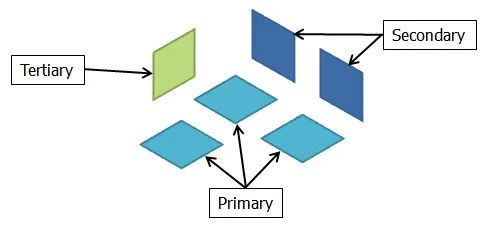
TERITARY LOCATOR: The tertiary locator is positioned at the end of the part, effectively restricting 1 degree of freedom:
1. Axial movement along the X-axis.
All six locators collectively restrict a total of 9 degrees of freedom, leaving the remaining 3 degrees of freedom (1, 4, & 5) to be constrained by the clamps.
To streamline assembly and disassembly processes, it's essential to minimize the number of pins required while effectively restraining a maximum number of degrees of freedom.
Jigs and fixtures are indispensable tools utilized for securely holding workpieces in the correct position for mass production. Various types of fixtures, including drilling fixtures, milling fixtures, and welding fixtures, are employed across industries. The 3-2-1 method serves as the foundational principle for designing fixtures of all kinds.
---------------------------------------------------------------------------------
6)Define the Body coordinate system ?
- The body coordinate system is extensively utilized in the automotive industry for the drafting of body parts and product and process design. It consists of a set of points, lines, and surfaces serving as a reference system to define the positions of points in space, either in two or three dimensions. In general, the body coordinate system is also referred to as the car line or body line.
- Car lines, depicted as grid lines on the fixture, represent corresponding locations in the Body in White (BIW). Each car line on the fixture displays coordinates at its corners for reference. These lines enable easy correlation with locations in the BIW.
- In some cases, a single coordinate hole is provided in the fixture, serving as a representation of the car line coordinates. From this reference point, the fixture is constructed and can be inspected. Body coordinates are typically indicated near the hole. The figure below illustrates car lines on a fixture.
- In the design of automotive sheet metal components using CAD software like CATIAv4-v5, UG, ProE, or Ideas, designers typically encounter a default axis system (X, Y, Z). However, if every designer were to start the design of BIW (Body in White) Door Assembly parts with this default axis system, it could lead to difficulties in assembly or positioning of the parts relative to each other.
- To address this issue, BIW car panels are designed with reference to the car axis, representing their original position in the final car build. The reference axis system of the software is used for designing various features of the parts, such as holes, fillets, and threads. This ensures that all automotive components can be correlated accurately during final assembly.
- In many cases, the vehicle axis system and software axis system align, simplifying the correlation process. For example, in most European OEMs, the X-axis represents the vehicle's length, the Y-axis represents its width, and the Z-axis represents its height. The Y-axis is typically located at the front axle.
- All BIW welding fixtures are designed with reference to the car line, providing a consistent reference system for part surfaces and features using body coordinates. This datum scheme replaces the traditional X, Y, and Z directional designations with fore/aft (X), in/out (Y), and up/down or high/low (Z). The 0,0,0 point of the car corresponds to the front, lower, and center position. The figure below illustrates a typical body coordinate system.
In vehicle product drawings, numerical identification is based on three vehicle planes:
- X: Longitudinal direction (fore & aft) or Front O line (FOL).
- Y: Transverse direction (cross car) or Centre O line (COL).
- Z: Vertical direction (up & down) or Bottom O Line (BOL).
The origin of the body coordinate system (OX) is defined at the front center of the vehicle, indicating its length. The coordinate system (OZ) below the underbody indicates the height of the car, while the coordinate system (OY) starting point is the center of the car body, indicating its width.
Maintaining X, Y, and Z coordinates in the fixture is crucial. It's preferable that the coordinates of locating and clamping points are not expressed with three decimals (e.g., X=100.124, Y=245.127, Z=450.458). Instead, they should be whole numbers or rounded to at most one decimal place. By ensuring this, the BIW base structure is automatically maintained.
-----------------------------------------------------------------------------------------
7) Elaborate Body plane system & its essentials.
In the field of automotive Body in White (BIW) manufacturing, the Body Plane System is a fundamental concept used to define and position various components and features of the vehicle body. It provides a standardized reference framework for designing, manufacturing, and assembling automotive body structures.
1. X-Plane: Represents the longitudinal direction of the vehicle, typically from front to rear.
2. Y-Plane: Represents the transverse direction, perpendicular to the X-plane, usually from side to side.
3. Z-Plane: Represents the vertical direction, indicating height or depth relative to the vehicle's ground clearance or underbody.
These planes serve as reference axes for locating and positioning various components, features, and measurements within the vehicle body
1. X-Plane (FOL - Front O Line):
- Longitudinal direction from the front to the rear of the vehicle.
- Originates from the front center of the vehicle.
- Used for defining positions along the vehicle's length, such as front and rear bumpers, engine compartments, seating arrangements, etc.
2. Y-Plane (COL - Center O Line):
- Transverse direction perpendicular to the X-plane.
- Originates from the center of the vehicle's body.
- Used for defining positions across the vehicle's width, such as side panels, doors, wheel arches, etc.
3. Z-Plane (BOL - Bottom O Line):
- Vertical direction indicating height or depth relative to the vehicle's underbody.
- Originates from the vehicle's underbody or ground clearance.
- Used for defining positions in terms of height, such as ground clearance, chassis components, suspension systems, etc.
Essentials of the Body Plane System:
1. Standardized Reference:
- Provides a universally accepted reference framework for vehicle design, manufacturing, and assembly.
- Ensures consistency and accuracy across different stages of the BIW process.
2. Coordinate System:
- Establishes a Cartesian coordinate system with X, Y, and Z axes.
- Allows precise measurement and positioning of components and features within the vehicle body.
3. Locating and Positioning:
- Enables engineers and designers to locate and position various BIW components accurately.
- Facilitates the alignment of components during assembly to ensure proper fit and functionality.
4. Integration with CAD/CAM Systems:
- Integrated into Computer-Aided Design (CAD) and Computer-Aided Manufacturing (CAM) software.
- Provides a framework for designing and modeling vehicle bodies digitally.
5. Manufacturing and Assembly Efficiency:
- Streamlines the manufacturing and assembly processes by providing a standardized reference for component positioning.
- Reduces errors and rework by ensuring components are aligned correctly during assembly.
-----------------------------------------------------------------------------------------