Week 1- Mixing Tee
OBJECTIVE
For this challenge, we have created two versions of the mixing tee. One of them is longer than the other.
Our job is to set up steady-state simulations to compare the mixing effectiveness when hot inlet temperature is 360C & the Cold inlet is at 190C.
Use the k-epsilon and k-omega SST model for the first case and based on your judgment use the more suitable model for further cases. Giving the reason for choosing a suitable model is compulsory.
- Case 1
- Short mixing tee with a hot inlet velocity of 3m/s.
- Momentum ratio of 2, 4.
- Case 2
- Long mixing tee with a hot inlet velocity of 3m/s.
- Momentum ratio of 2, 4.
AIM
Our AIM of the simulation is to get the room cooled. We are choosing the cooling application.So, hot air is coming through the inlet with higher diameter and cold air is coming through the inlet with lower diameter. If we want to choose the heating application, we have to interchange the hot air and cold air in the corresponding inlets.
INTRODUCTION
The function of mixing Tee is to provide proper mixing of quantities to get the desired result at the outlet.
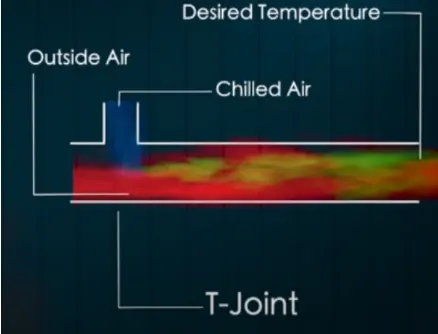
By controlling the velocity of chilled air we can get the desired temperature in the room.
ANSYS WORKFLOW:

GEOMETRY: Construct a two or three dimensional representation of the object to be modelled and tested using the work plane coordinate system within ANSYS.
MESH: At this point ANSYS understands the makeup of the part. Now define how the modelled system should be broken down into finite pieces.
SETUP: The case setup will be done using ansys fluent
SOLUTION: Ansys fluent where run time result visualization is done
RESULTS: Post processing of results will be done here using CFD-post
SHORT TEE:
GEOMETRY SETUP:
The computational models are uploaded to the Ansys Space Claim as a step file.
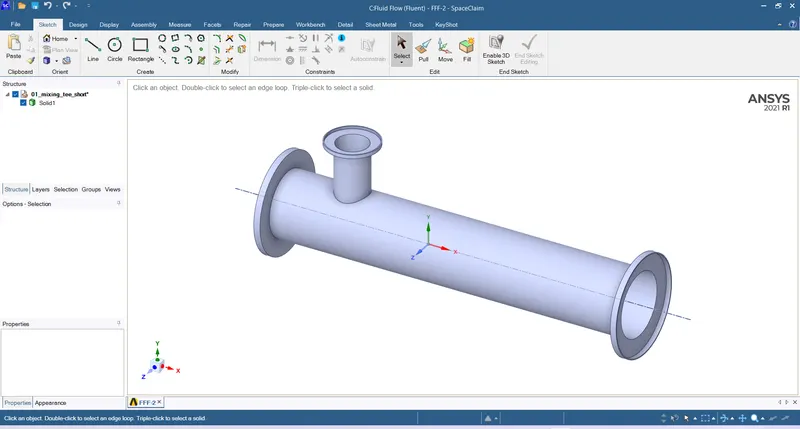
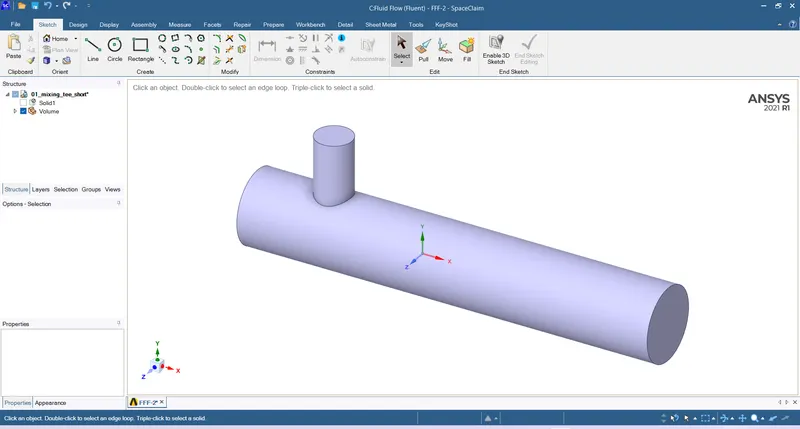
In this project, we are interested in performing fluid flow analysis through the geometry, hence we used the volume extraction option to extract the fluid volume from the geometry. Then the solid model is suppressed for physics from the fluid model to create mesh at the interested region.
The interested region is shown below
MESH GENERATION: - 4 mm
The boundary names inlet-x, inlet-y, outlet and wall are defined using the named selection option.
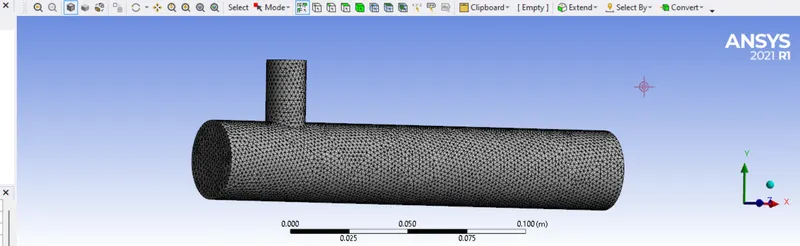
After that mesh generation is done and the figure looks like this as shown below. The mesh element size that I used is 0.004 m (4 mm)
Then the mesh quality is checked under mesh metric option.
We can check mesh quality under mesh metric
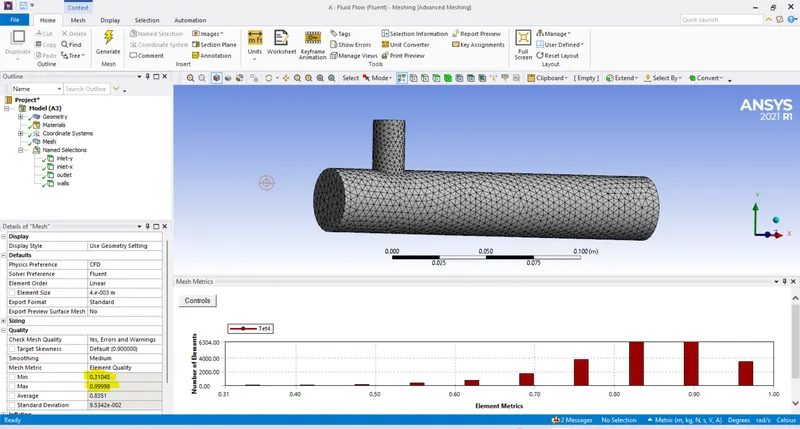
As my mesh quality having minimum of 31%, I can accept it. Because minimum mesh quality required is 5%
SETUP AND SOLUTION:
+++++++++++++++++++++++++++++++++++++++++++++++++++++++++++++++++++++++++++++++++++++++++++++++++++++++++++++++++++++++++++
CASE 1:
- Short mixing Tee with a hot inlet velocity of 3m/s
- Momentum ratio of 2,4
In order to get the cooling effect, the cold air should be supplied to the flow across the hot air
-------------------------------------------------------------------------------------------------------------------------------------------------------------------------------------------------------------------------------
CASE 1.1:
- Short mixing Tee with a hot inlet velocity of 3m/s
- Momentum ratio = 2
The mesh is checked and the mesh quality is evaluated, we can improve the mesh quality if required. After that do the following as shown in table below to initialise it into the fluent
|
SETUPS |
SHORT TEE (MR=2 AND HOT INLET VELOCITY = 3m/s)
|
|
|
K-EPSILON-Realisable |
K-OMEGA |
|
|
SOLVER TYPE |
Pressure based |
Pressure based |
|
VELOCITY FORMULATION |
Absolute |
Absolute |
|
TIME |
Steady |
Steady |
|
VISCOUS MODEL |
Realizable K-epsilon with standard wall function |
K-omega SST model |
|
MATERIAL |
Air |
Air |
|
CELL ZONES |
Fluid type : air |
Fluid type : air |
|
BOUNDARIES |
· Inlet-x (velocity inlet) Velocity magnitude 3m/s Temperature - 360c · Inlet-y (velocity inlet) Velocity magnitude 6m/s Temperature – 190c · Outlet (pressure outlet) Gauge pressure – 0 pa · Walls – stationary walls |
· Inlet-x (velocity inlet) Velocity magnitude 3m/s Temperature - 360c · Inlet-y (velocity inlet) Velocity magnitude 6m/s Temperature – 190c · Outlet (pressure outlet) Gauge pressure – 0 pa · Walls – stationary walls |
The hybrid scheme is used for initialization and the no. of iterations are setup and then click on calculate option.
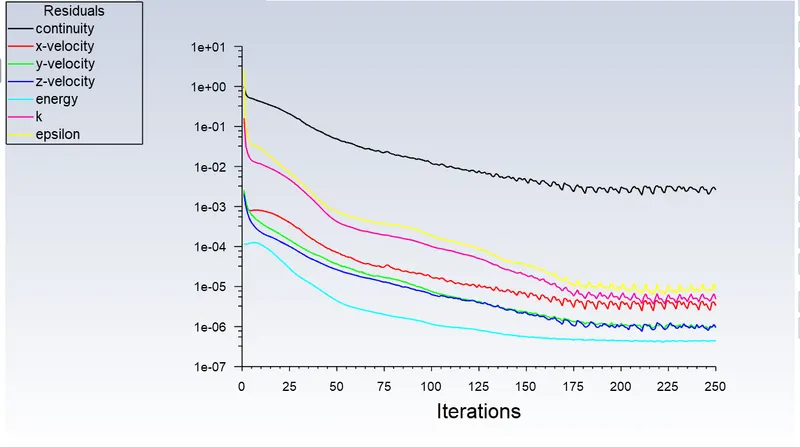
The iteration choosed is 250 nos
RESULTS:
The final values of these results are the values at outlet of the tee
*******************************************************************************************************************************************************
1)K-EPSILON MODEL (Realisable,standard wall function):
RESIDUAL PLOT:
AREA WEIGHTED AVERAGE for temperature:
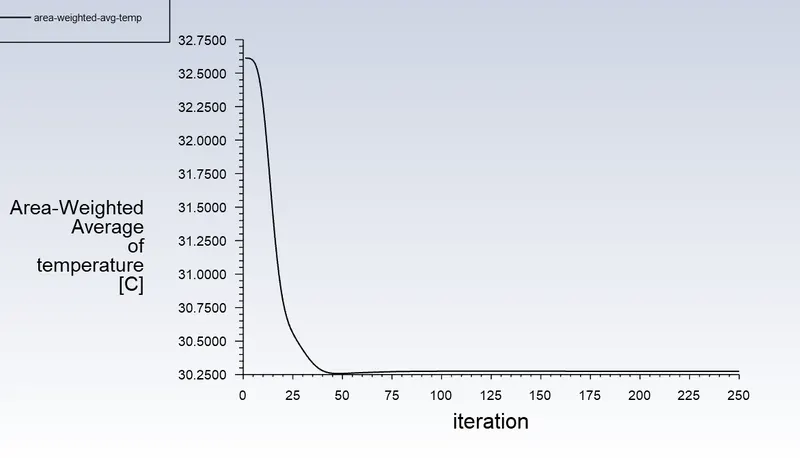
VALUE = 30.274584 [C]
STANDARD DEVIATION for temperature:
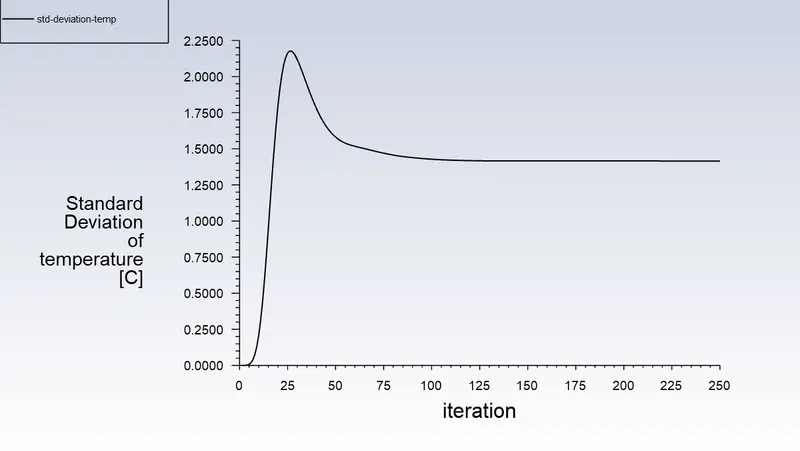
VALUE =1.4148356 [C]
AREA WEIGHTED AVERAGE for velocity:
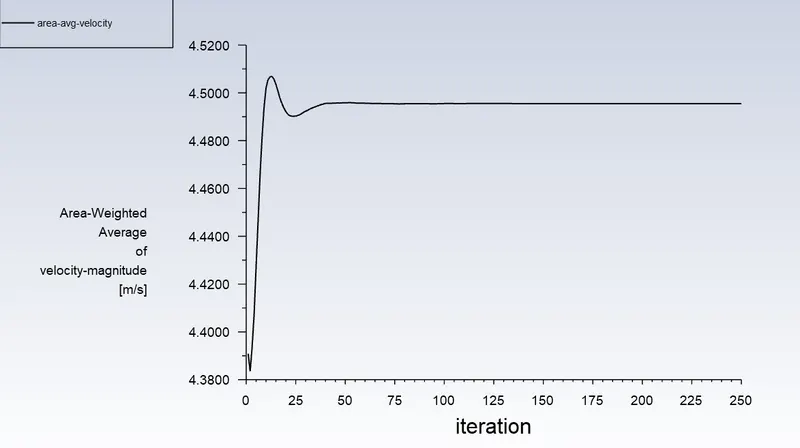
VALUE = 4.4954732 [m/s] (250 itr)
4.4954764 [m/s] (400 itr)
STANDARD DEVIATION for velocity:
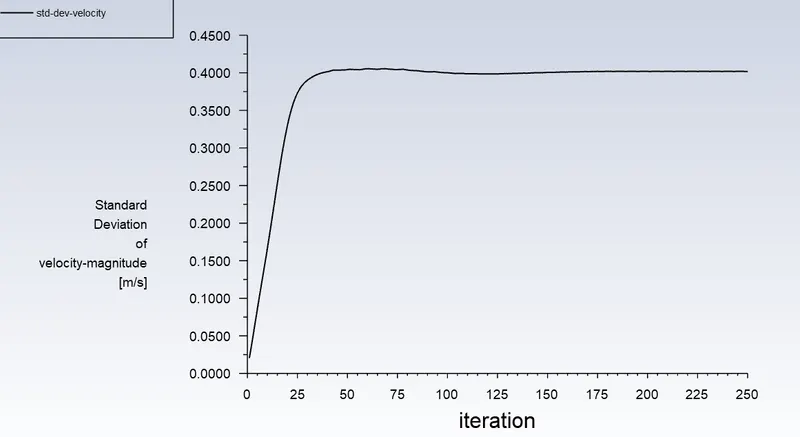
VALUE = 0.40183977 [m/s]
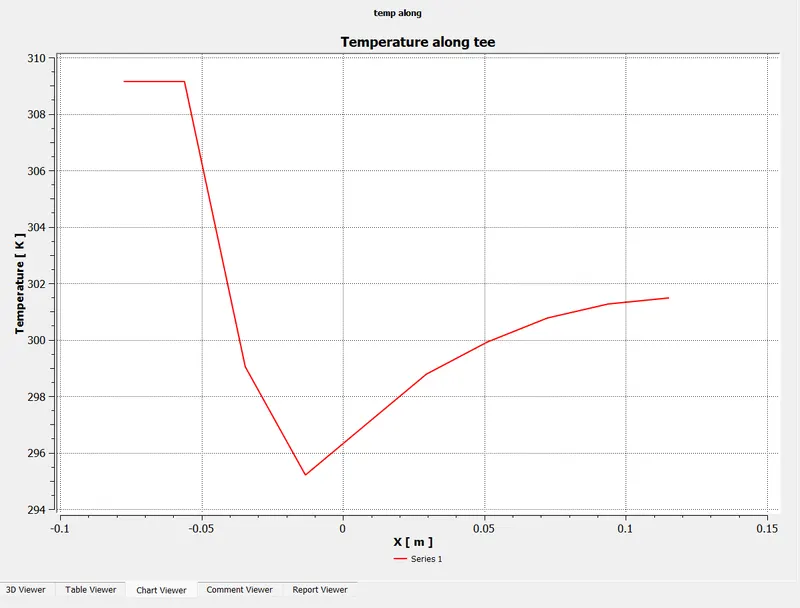
TEMPERATURE CONTOUR on the cut planes along the pipe:
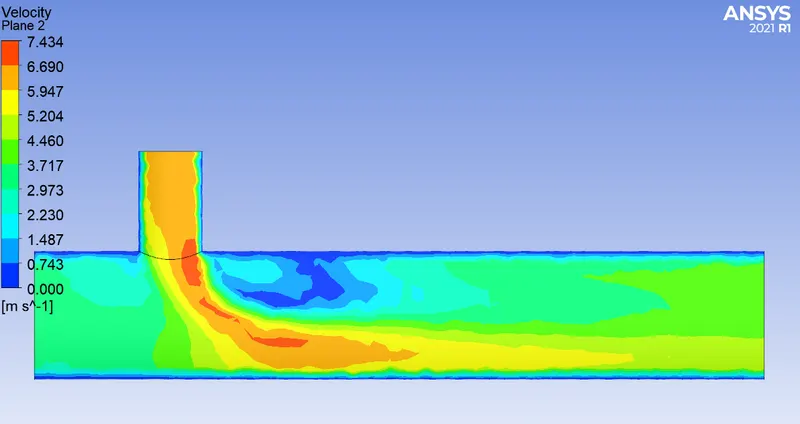
CONTOUR PLOT:
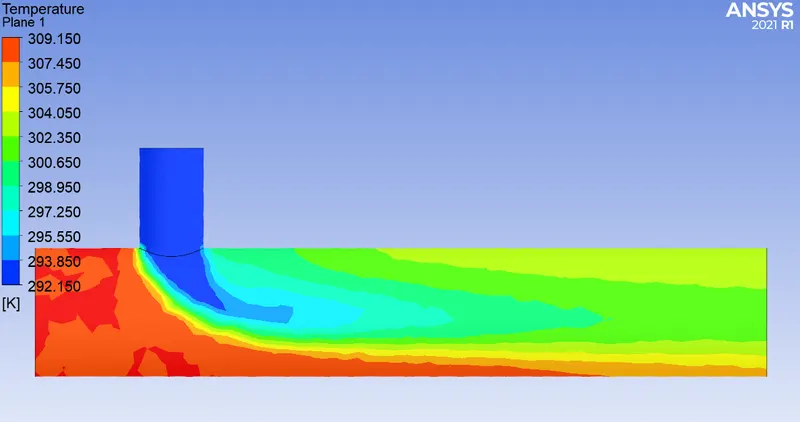
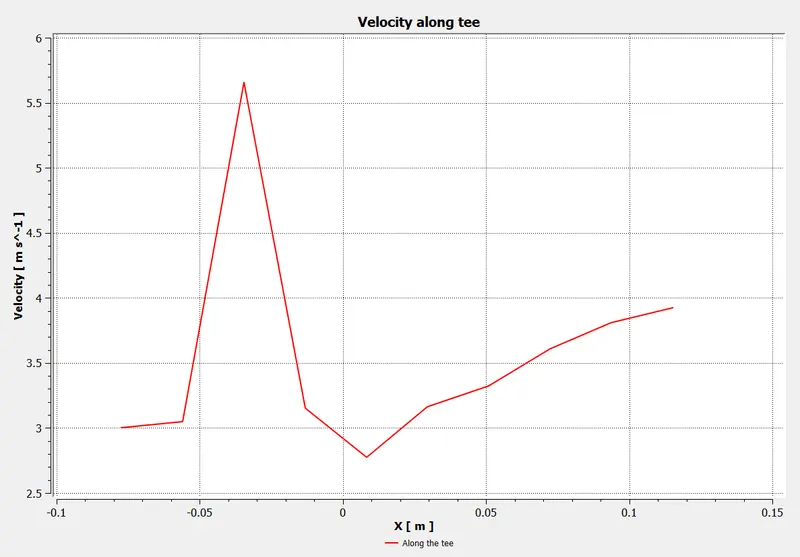
LINE PLOT:
Velocity CONTOUR on the cut planes along the pipe:
LINE PLOT
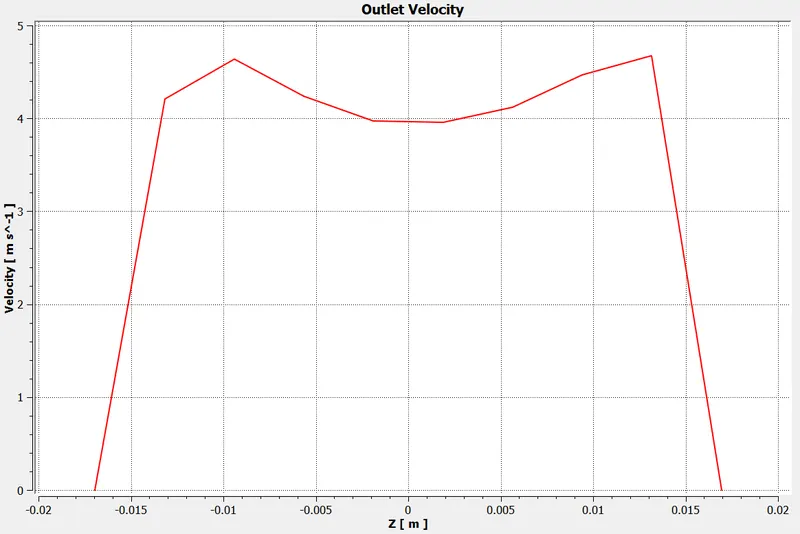
Velocity CONTOUR across the length of the pipe at outlet:
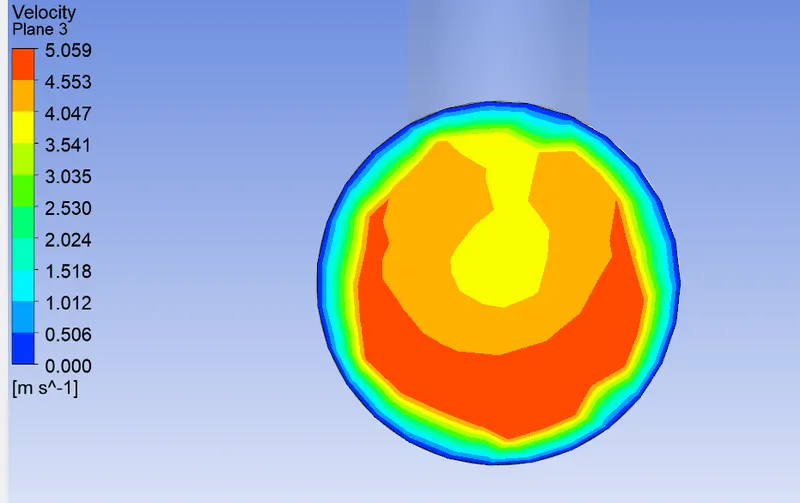
LINE PLOT
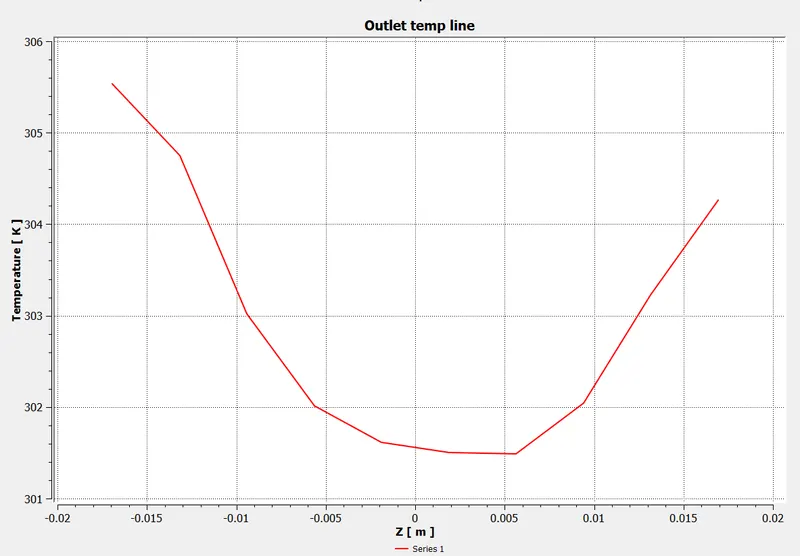
TEMPERATURE CONTOUR across the length of the pipe at outlet:
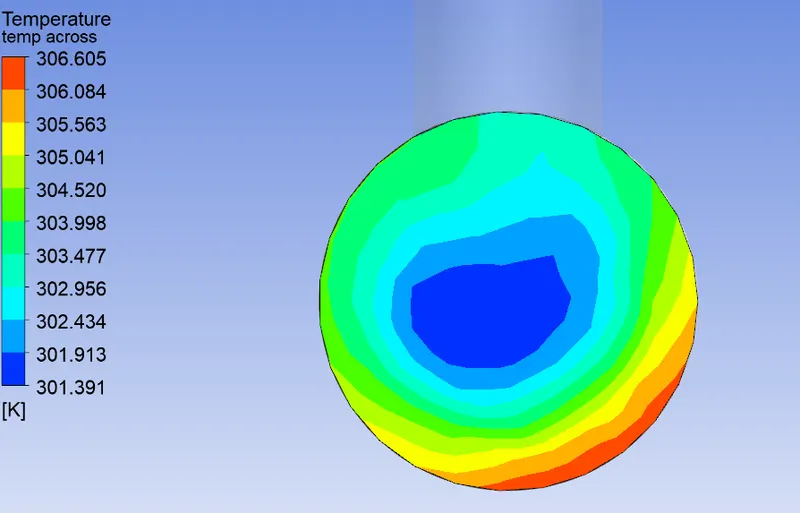
LINE PLOT
*******************************************************************************************************************************************************
2)K-OMEGA MODEL (SST):
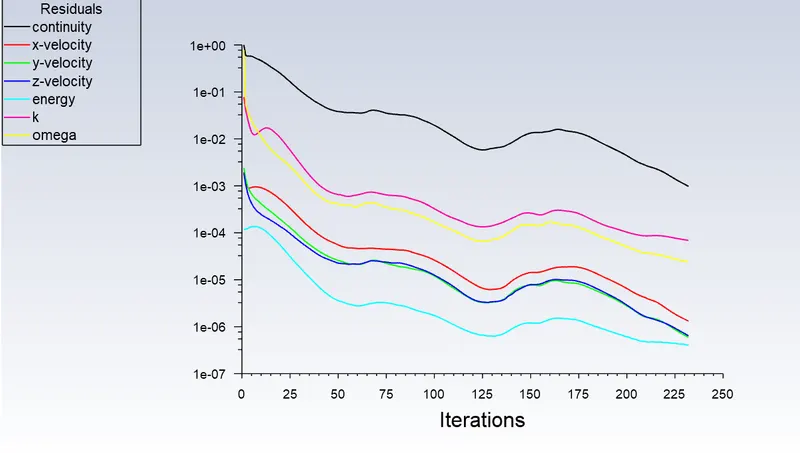
The values for k-omega model is converged at 231 iterations
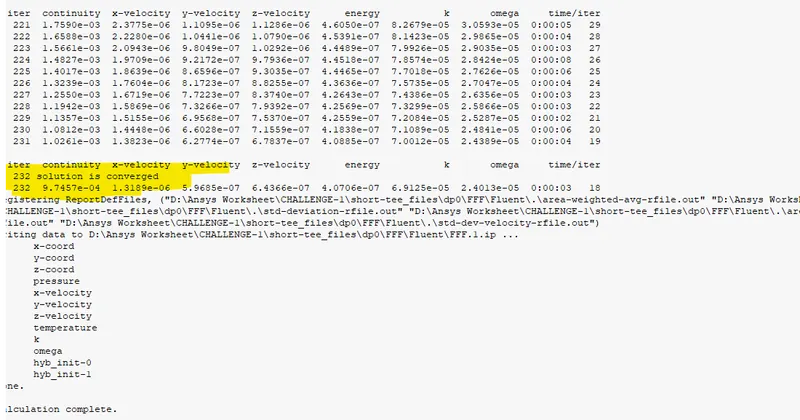
RESIDUAL PLOT:
RESIDUAL PLOT:
AREA WEIGHTED AVERAGE for temperature:
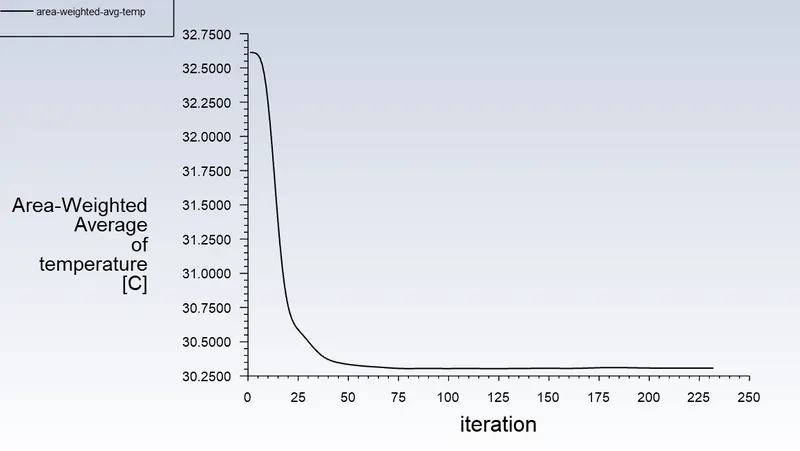
VALUE = 30.306995 [C]
STANDARD DEVIATION for temperature:
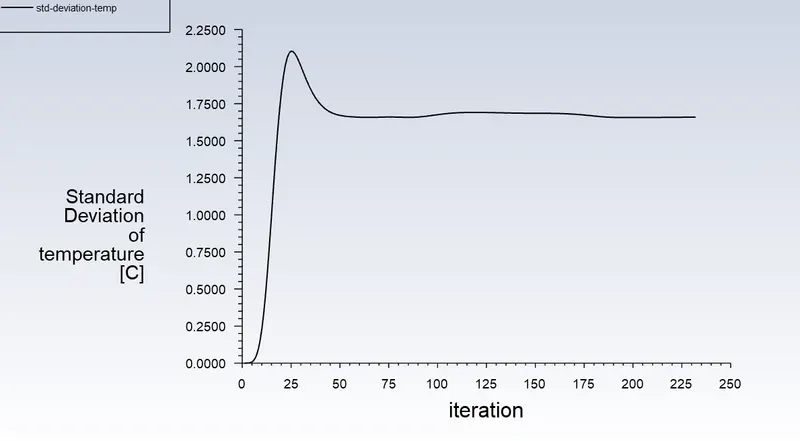
VALUE = 1.659199 [C]
AREA WEIGHTED AVERAGE for velocity:
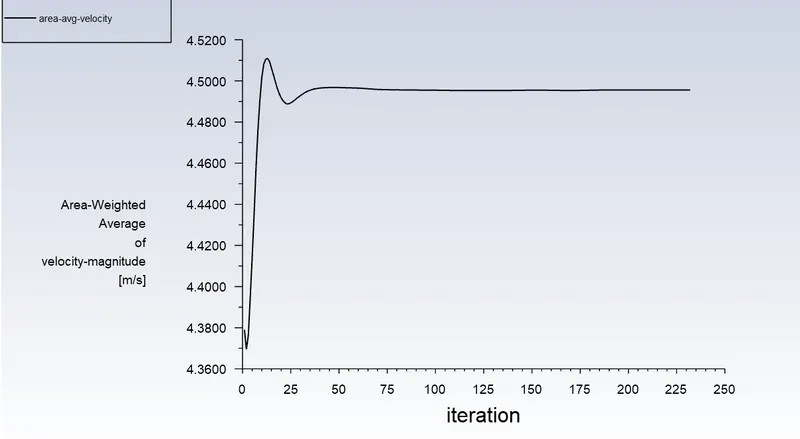
VALUE = 4.4955644 [m/s]
STANDARD DEVIATION for velocity:
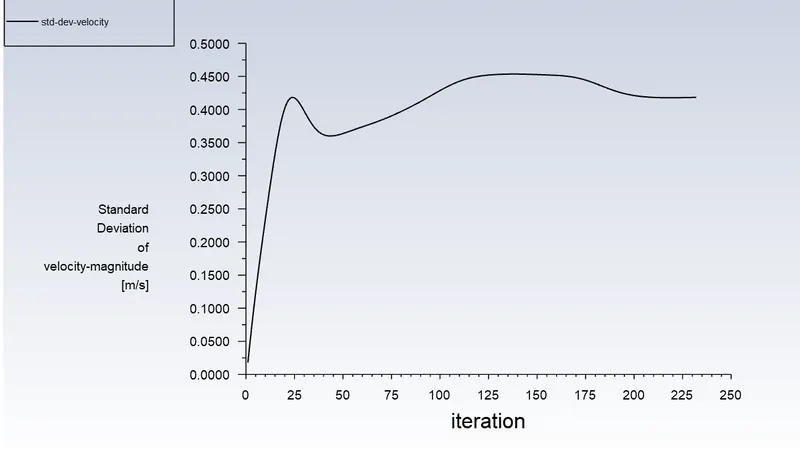
VALUE = 0.41834082 [m/s]
TEMPERATURE CONTOUR on the cut planes along the pipe:
CONTOUR PLOT:
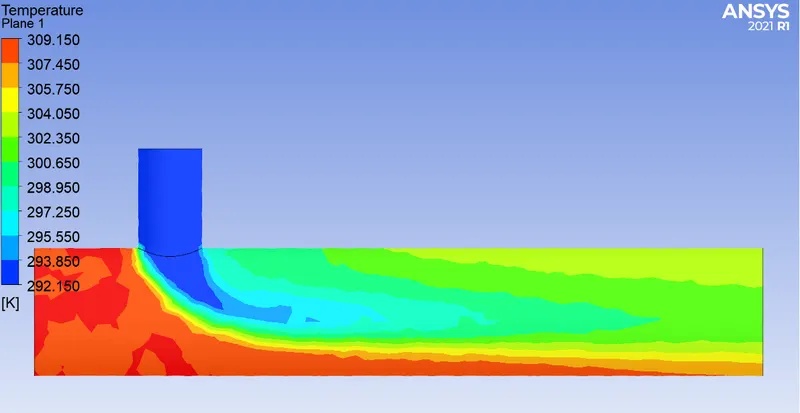
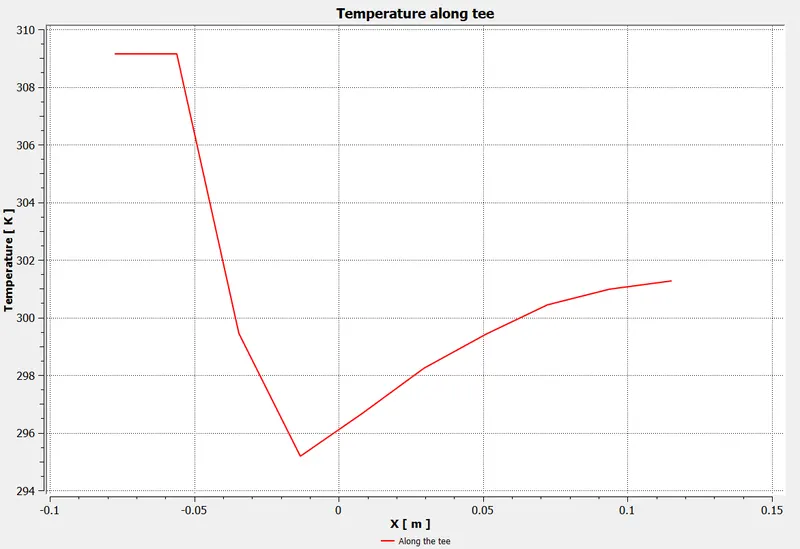
LINE PLOT
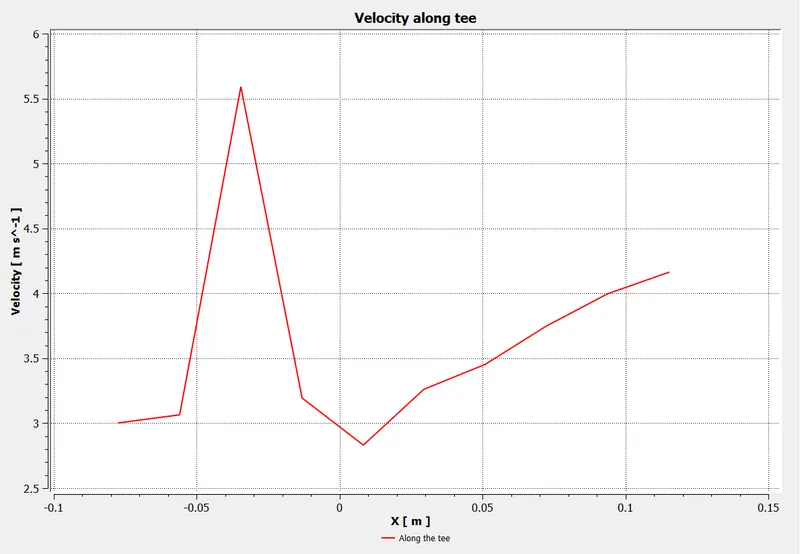
Velocity CONTOUR on the cut planes along the pipe:
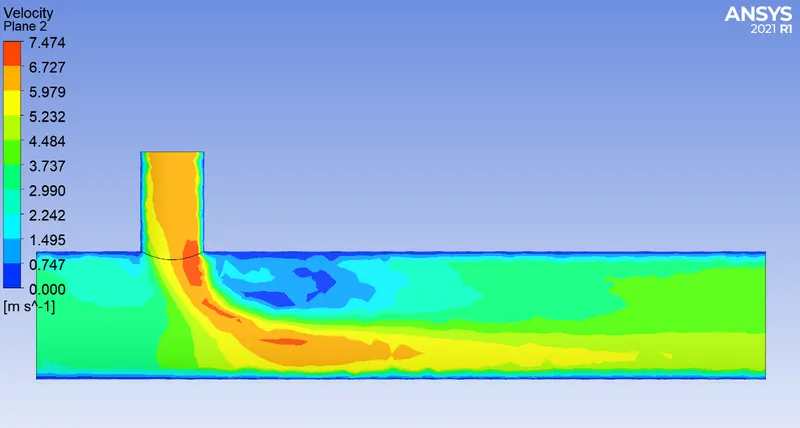
LINE PLOT
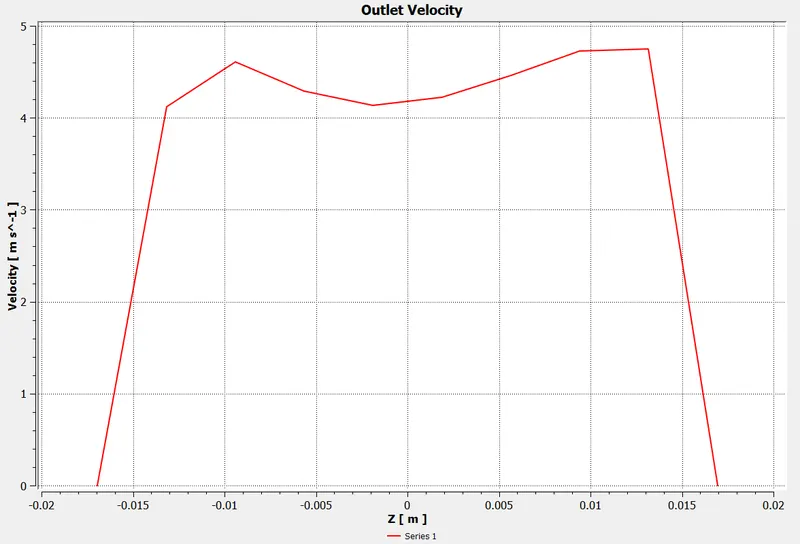
Velocity CONTOUR across the length of the pipe at outlet:
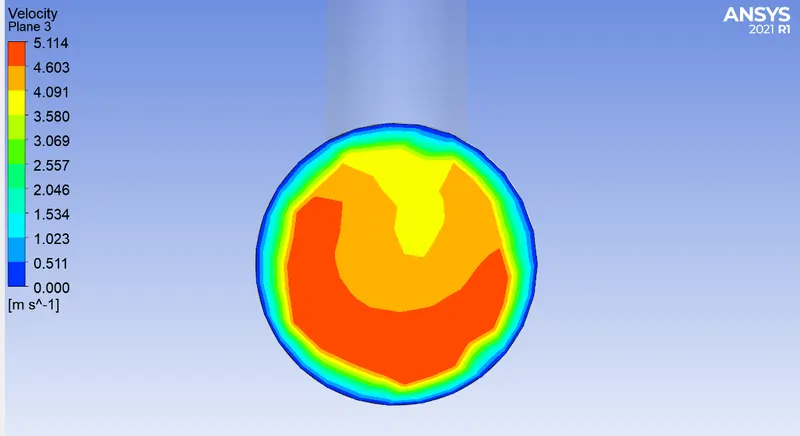
LINE PLOT
Temperature CONTOUR across the length of the pipe at outlet:
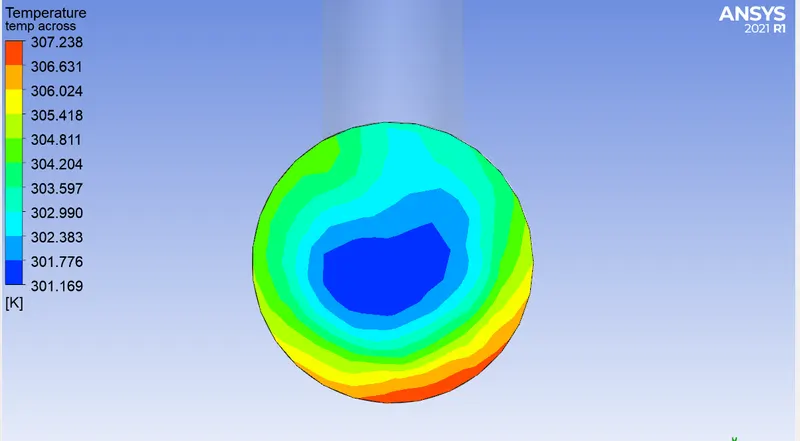
LINE PLOT
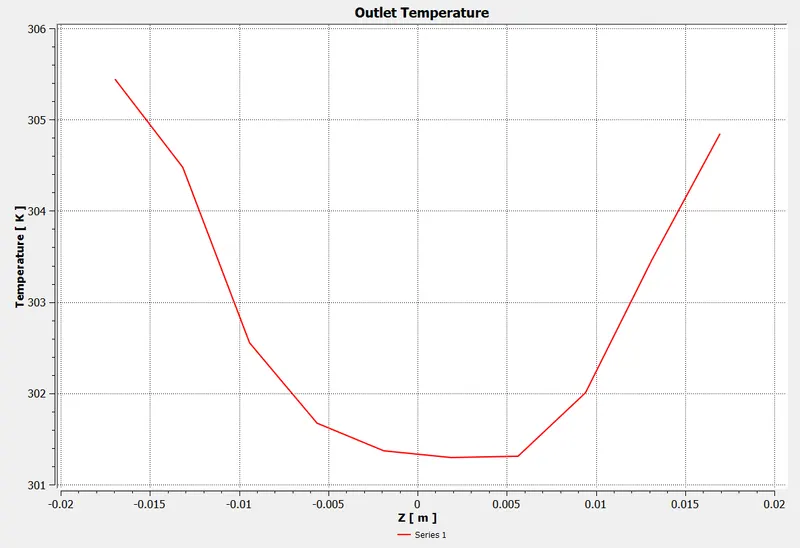
OBSERVATIONS from 2 models (K-epsilon Vs K-omega)
| Model | K-EPSILON | K-OMEGA |
| Temp Avg at outlet | 30.274584 [C] | 30.306995 [C] |
| Temp Std dev at outlet | 1.4148356 [C] | 1.659199 [C] |
| Velocity Avg at outlet | 4.4954732 [m/s] | 4.4955644 [m/s] |
| Velocity Std dev at outlet | 0.40183977 [m/s] | 0.41834082 [m/s] |
| Iterations initialised | 250 | 250 |
| Converged (Iteration) | not converged | 231 |
INFERENCE
Cell count = 22284 (mesh size=4 mm)
*******************************************************************************************************************************************************
-------------------------------------------------------------------------------------------------------------------------------------------------------------------------------------------------------------------------------
CASE 1.2:
- Short mixing Tee with a hot inlet velocity of 3m/s
- Momentum ratio = 4
Only the cold air velocity is changed to 12 m/s (4 x 3 = 12). Other boundary conditions are same as that of CASE 1.1
The iteration choosed is 250 nos.
RESULTS:
The final values of these results are the values at outlet of the tee
*******************************************************************************************************************************************************
1)K-EPSILON MODEL (Realisable,standard wall function):
The values for k-epsilon model is converged at 180 iterations

RESIDUAL PLOT:
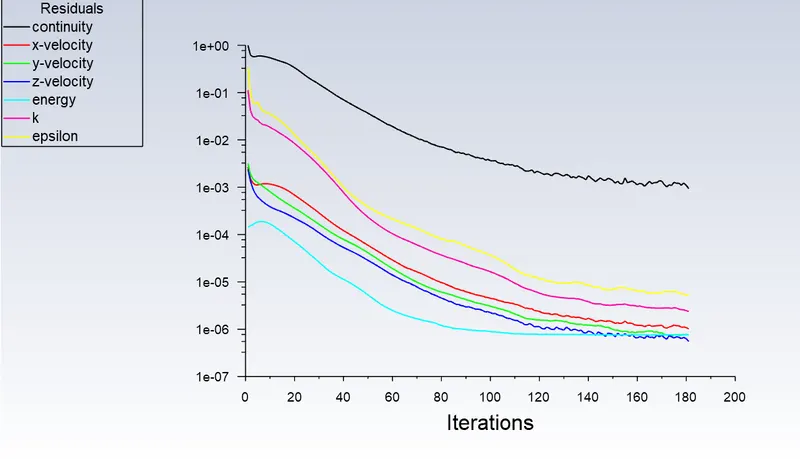
conv=180 itr;
AREA WEIGHTED AVERAGE for temperature:
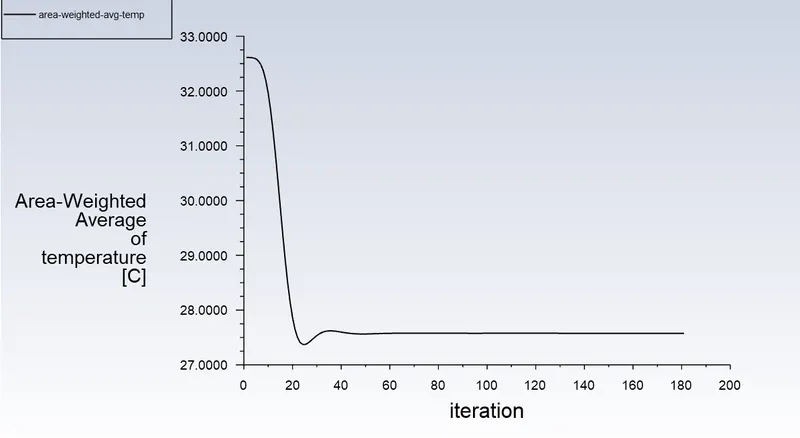
VALUE =27.576539 [C]
STANDARD DEVIATION for temperature:
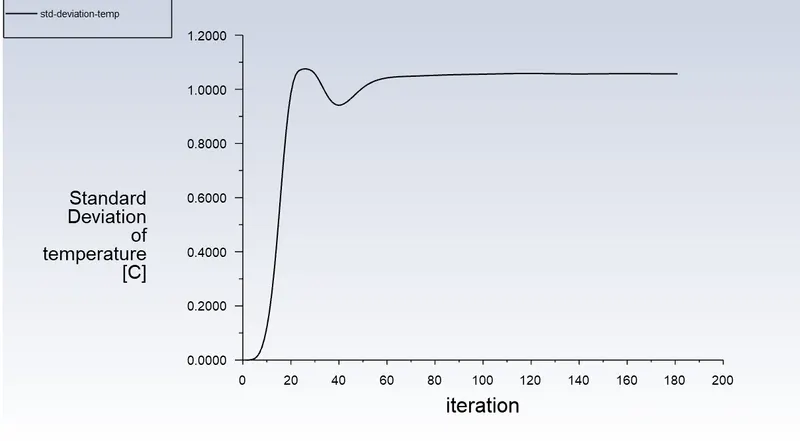
VALUE =1.057353 [C]
AREA WEIGHTED AVERAGE for velocity:
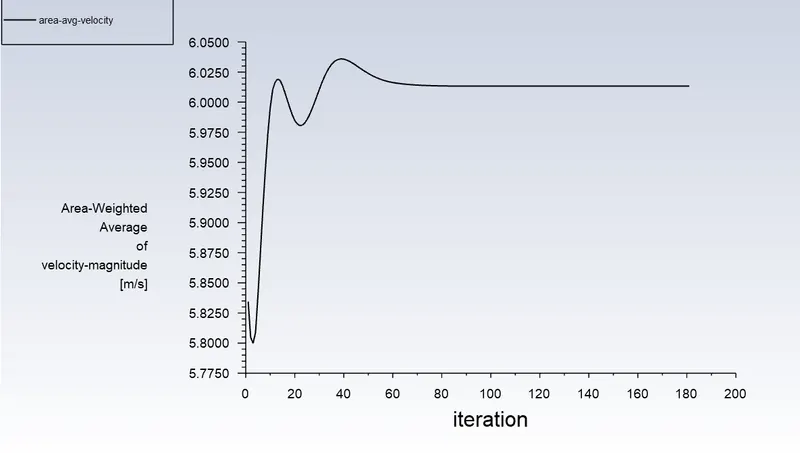
VALUE =6.0133886 [m/s]
STANDARD DEVIATION for velocity:
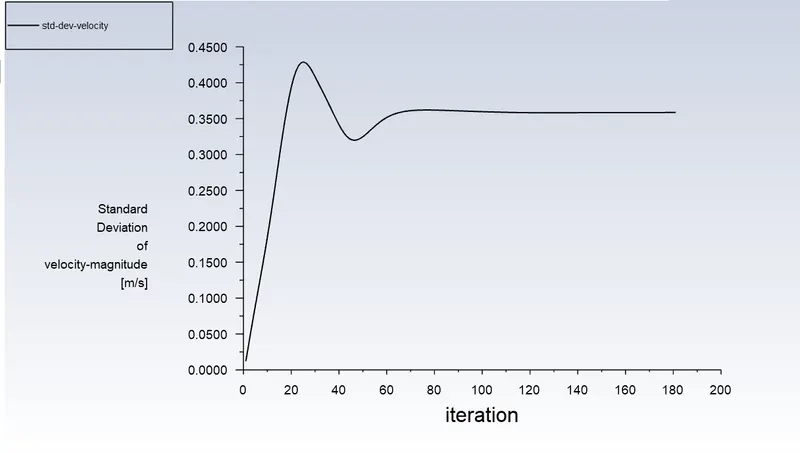
VALUE =0.35855883 [m/s]
CONTOUR PLOT:
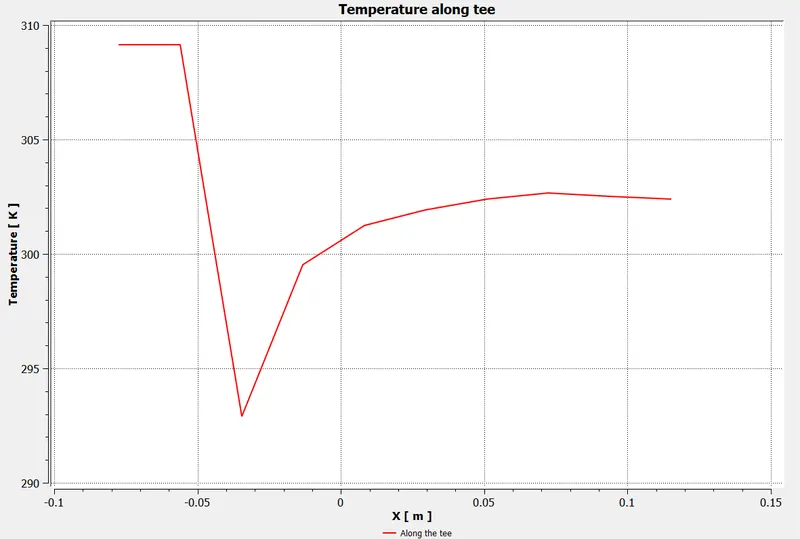
TEMPERATURE CONTOUR on the cut planes along the pipe:
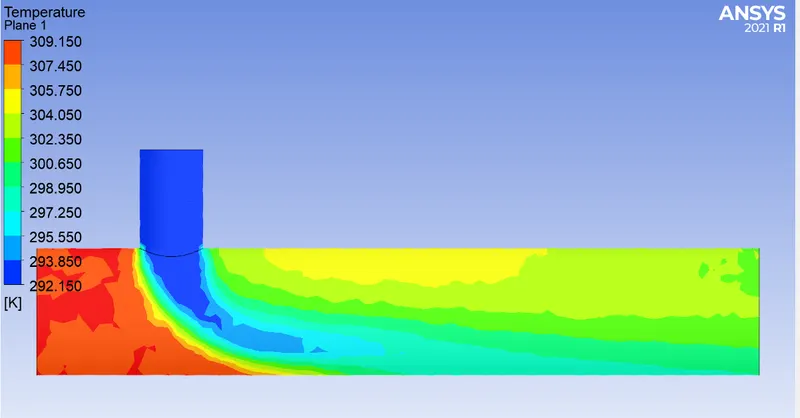
LINE PLOT
Velocity CONTOUR on the cut planes along the pipe:
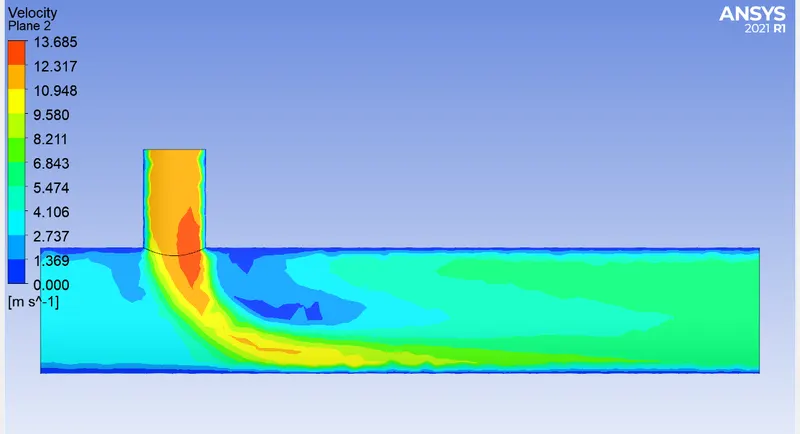
LINE PLOT
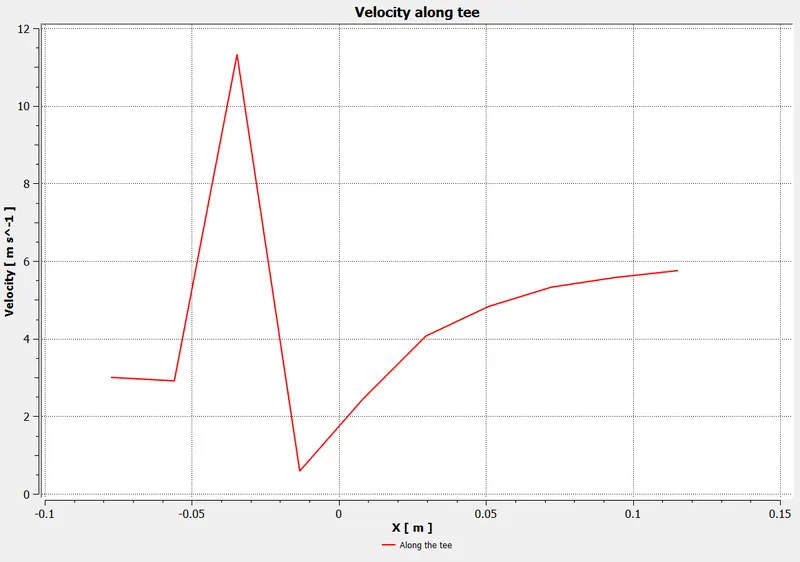
Velocity CONTOUR across the length of the pipe at outlet:
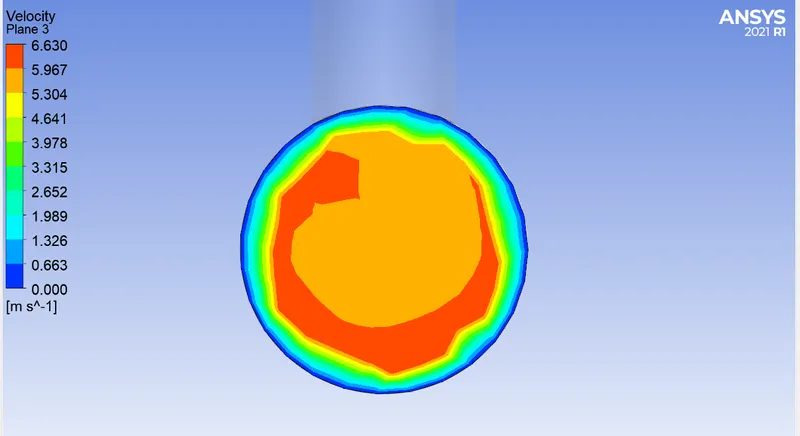
LINE PLOT
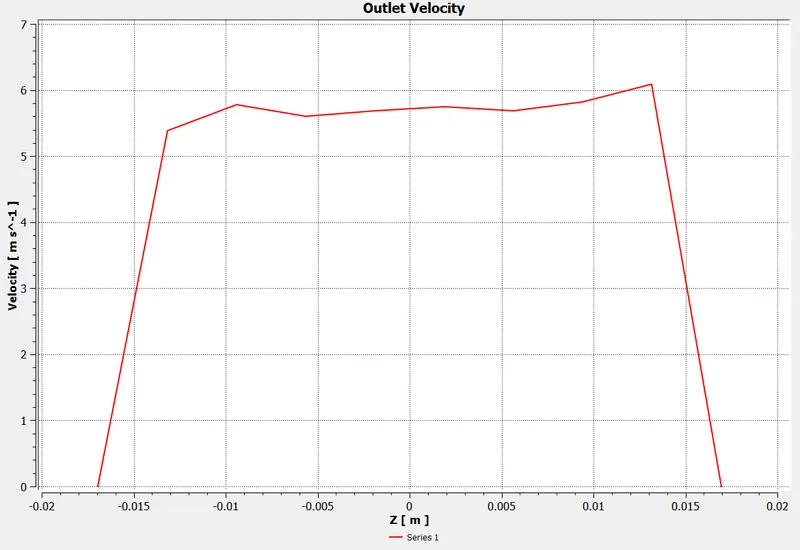
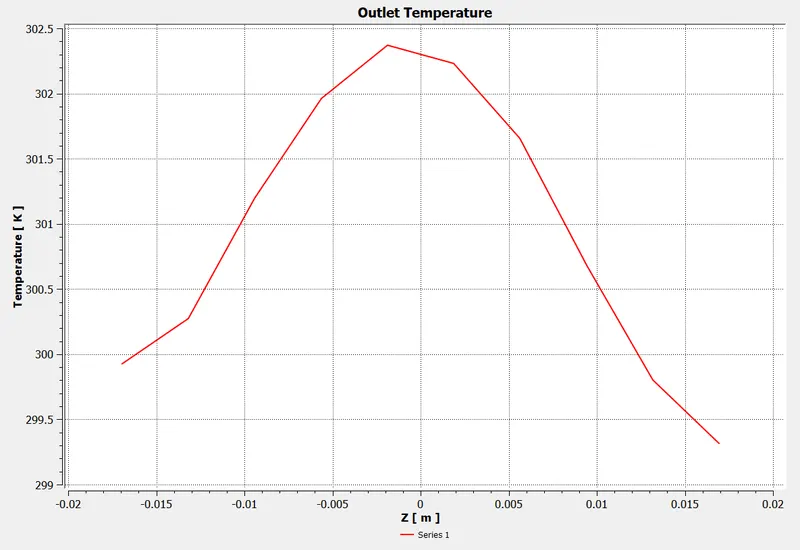
TEMPERATURE CONTOUR across the length of the pipe at outlet:
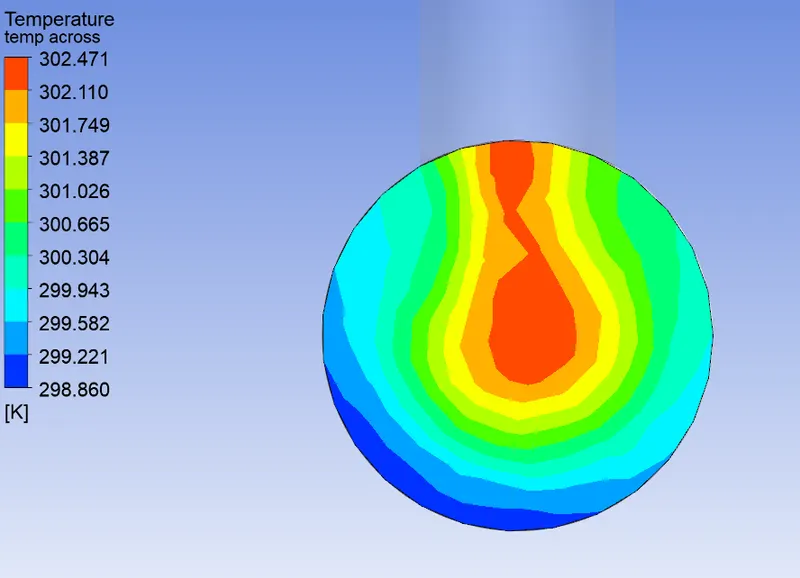
LINE PLOT
*******************************************************************************************************************************************************
2)K-OMEGA MODEL (SST):
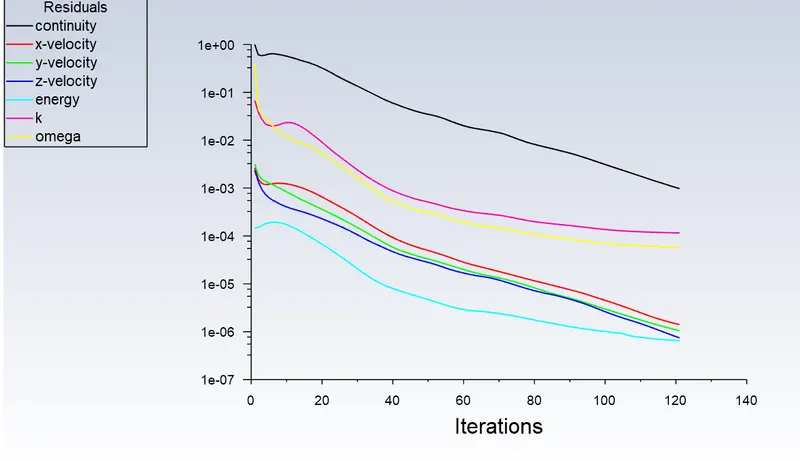
The values for k-omega model is converged at 120 iterations
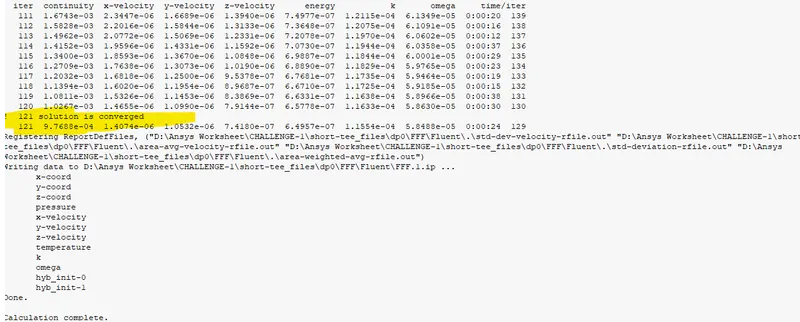
RESIDUAL PLOT:
AREA WEIGHTED AVERAGE for temperature:
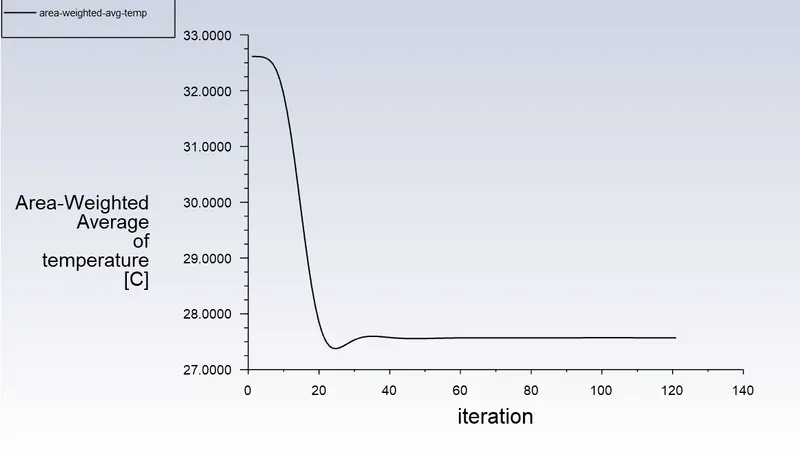
VALUE =27.57022 [C]
STANDARD DEVIATION for temperature:
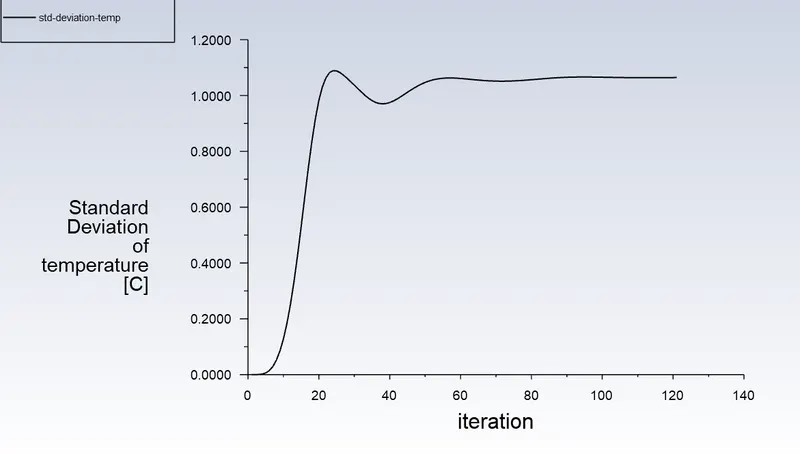
VALUE = 1.064299 [C]
AREA WEIGHTED AVERAGE for velocity:
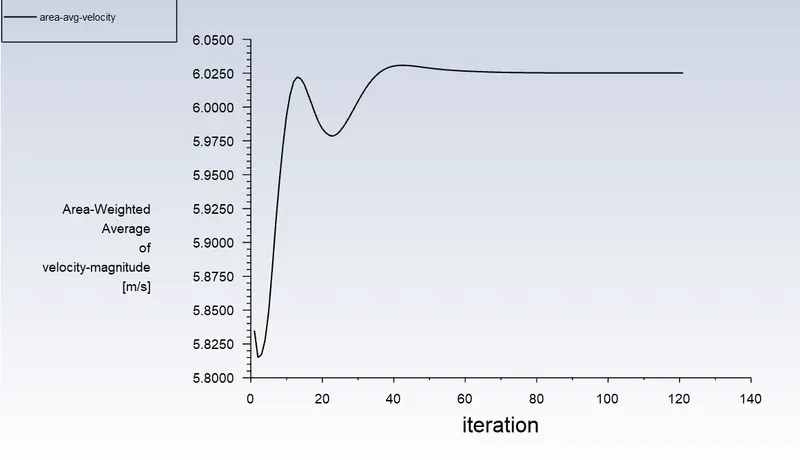
VALUE = 6.0251536 [m/s]
STANDARD DEVIATION for velocity:
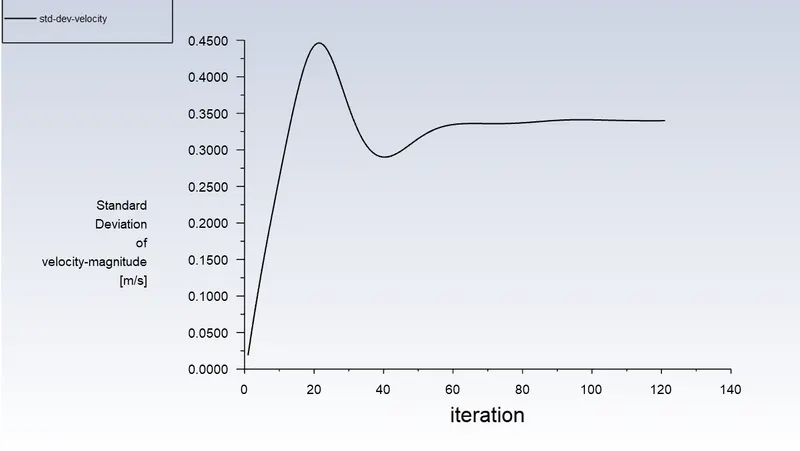
VALUE = 0.33995197 [m/s]
CONTOUR PLOT:
TEMPERATURE CONTOUR on the cut planes along the pipe:
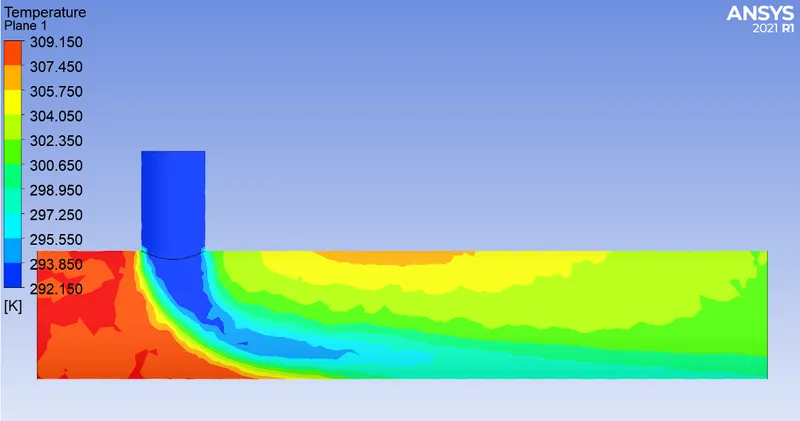
LINE PLOT
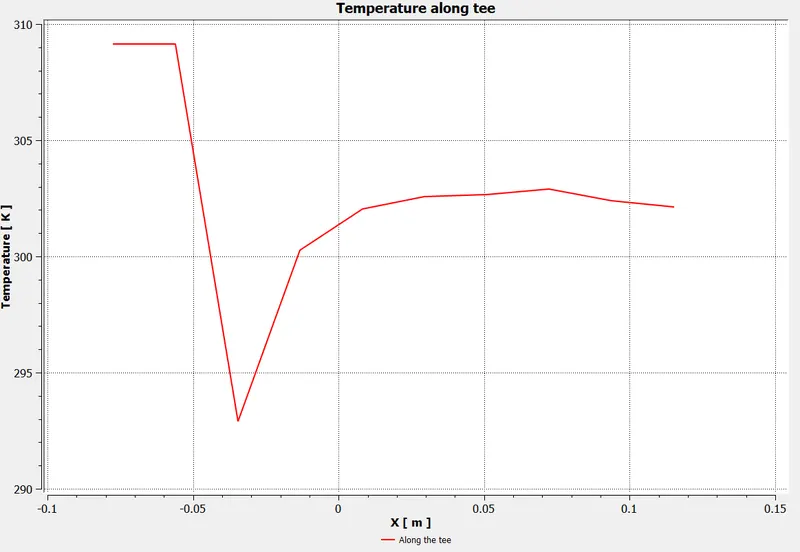
Velocity CONTOUR on the cut planes along the pipe:
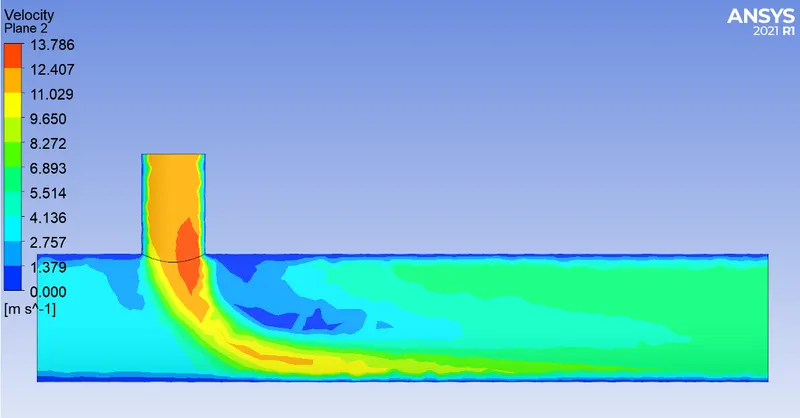
LINE PLOT
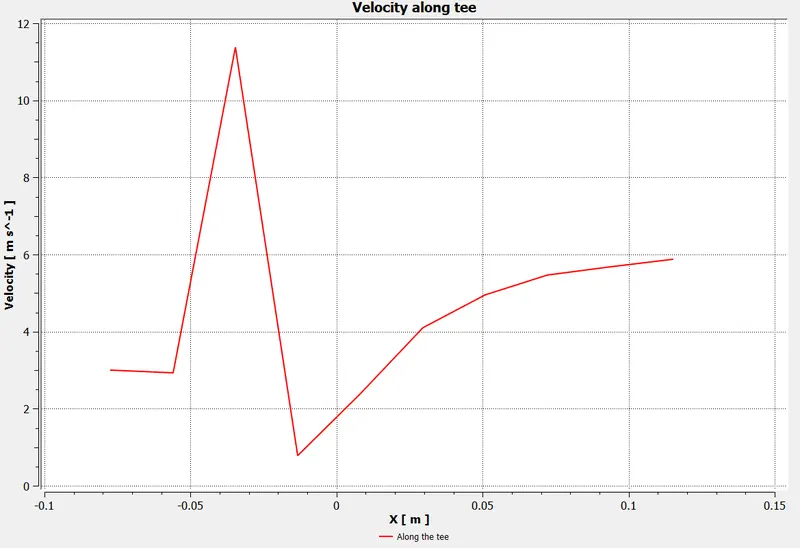
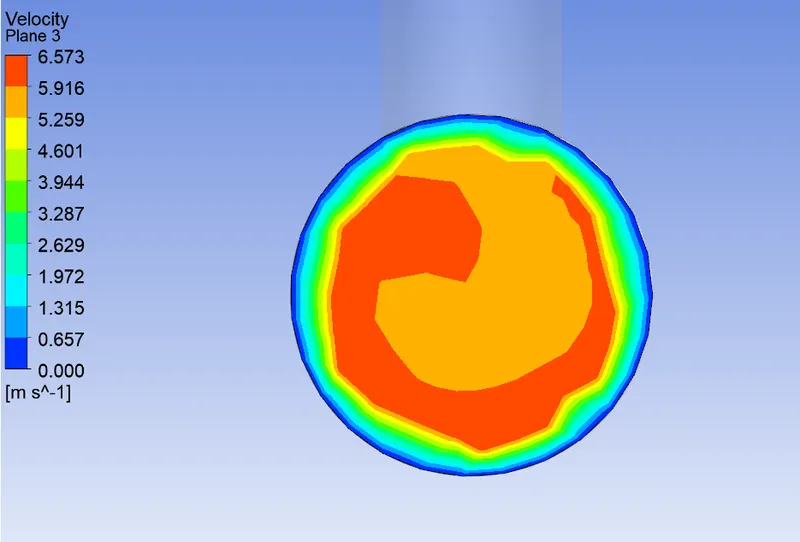
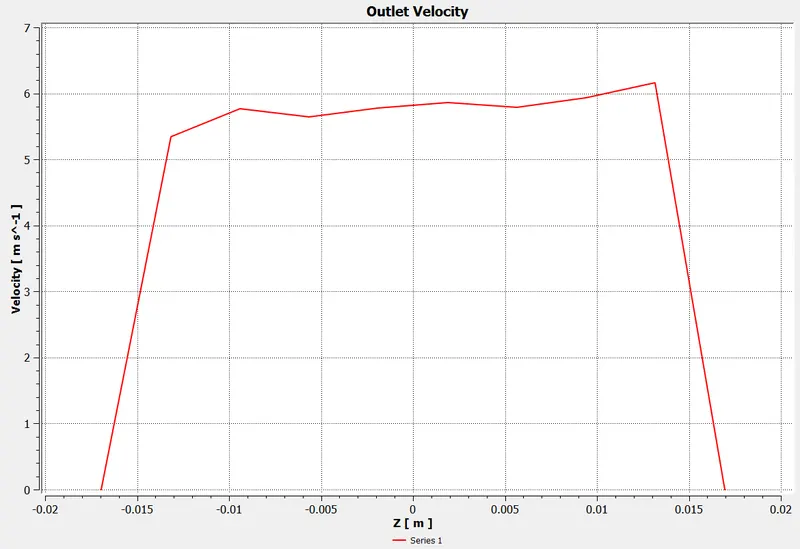
Velocity CONTOUR across the length of the pipe at outlet:
LINE PLOT
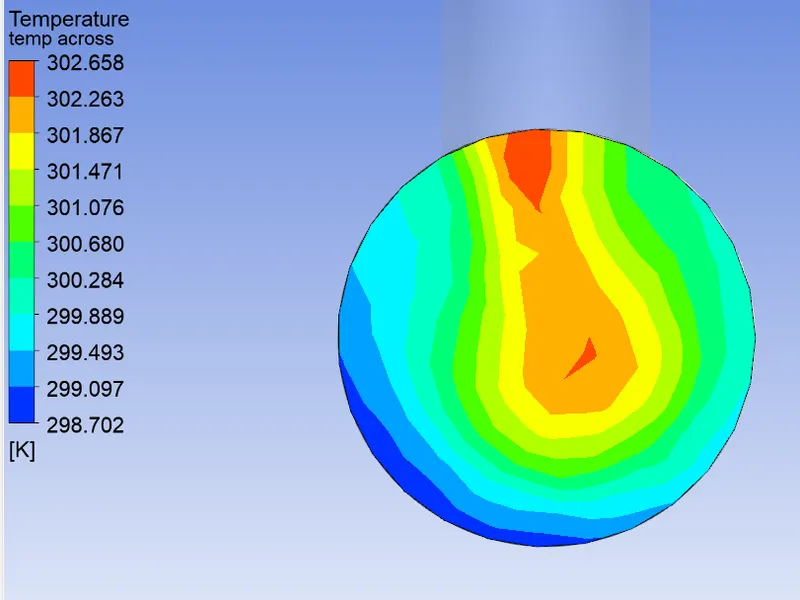
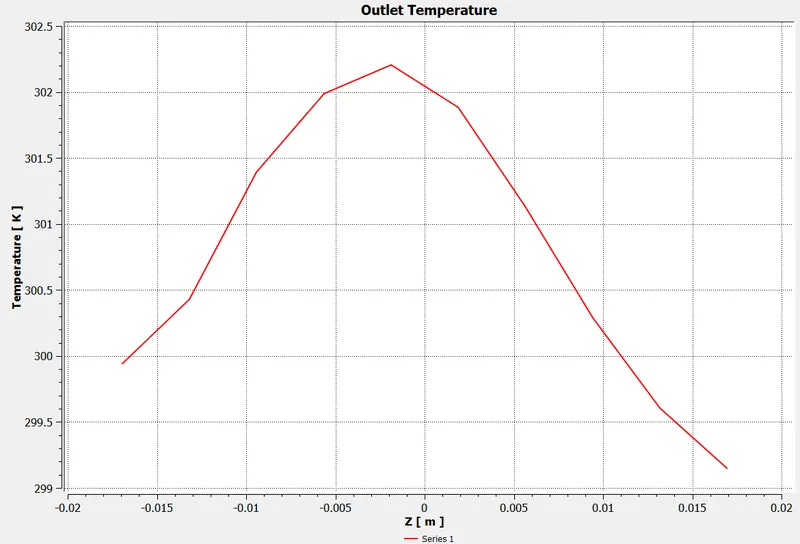
Temperature CONTOUR across the length of the pipe at outlet:
LINE PLOT
OBSERVATIONS from 2 models (K-epsilon Vs K-omega)
| Model | K-EPSILON | K-OMEGA |
| Temp Avg at outlet | 27.576539 [C] | 27.57022 [C] |
| Temp Std dev at outlet | 1.057353 [C] | 1.064299 [C] |
| Velocity Avg at outlet | 6.0133886 [m/s] | 6.0251536 [m/s] |
| Velocity Std dev at outlet | 0.35855883 [m/s] | 0.33995197 [m/s] |
| Iterations initialised | 250 | 250 |
| Converged (Iteration) | 180 | 120 |
No: of mesh elements for short tee = 22284;(4 mm mesh)
*******************************************************************************************************************************************************
-------------------------------------------------------------------------------------------------------------------------------------------------------------------------------------------------------------------------------
+++++++++++++++++++++++++++++++++++++++++++++++++++++++++++++++++++++++++++++++++++++++++++++++++++++++++++++++++++++++++++
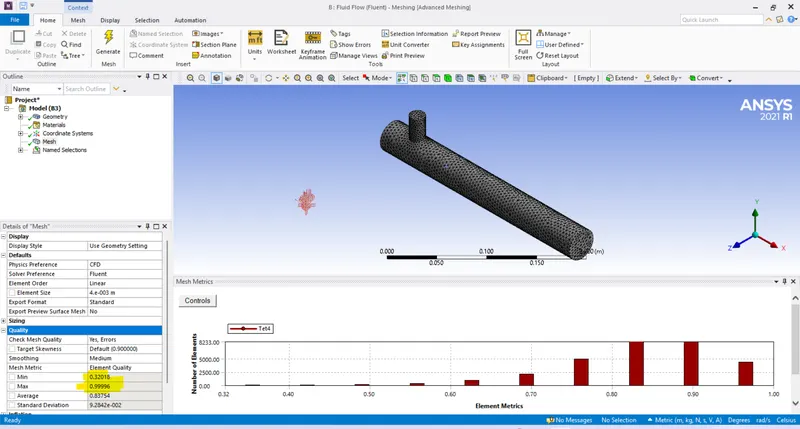
Do the same procedure for geometry and meshing part for long tee. Mesh it with 0.004 m(4 mm) and then check the mesh quality. For mesh quality it is greater than 32%. So, we can move on
CASE 2:
- Long mixing Tee with a hot inlet velocity of 3m/s
- Momentum ratio of 2,4
In order to get the cooling effect, the cold air should be supplied to the flow across the hot air
-------------------------------------------------------------------------------------------------------------------------------------------------------------------------------------------------------------------------------
CASE 2.1:
- Long mixing Tee with a hot inlet velocity of 3m/s
- Momentum ratio = 2
The mesh is checked and the mesh quality is evaluated, we can improve the mesh quality if required. After that do the following as shown in table below to initialise it into the fluent
|
SETUPS |
LONG TEE (MR=2 AND HOT INLET VELOCITY = 3m/s)
|
|
|
K-EPSILON-Realisable |
K-OMEGA |
|
|
SOLVER TYPE |
Pressure based |
Pressure based |
|
VELOCITY FORMULATION |
Absolute |
Absolute |
|
TIME |
Steady |
Steady |
|
VISCOUS MODEL |
Realizable K-epsilon with standard wall function |
K-omega SST model |
|
MATERIAL |
Air |
Air |
|
CELL ZONES |
Fluid type : air |
Fluid type : air |
|
BOUNDARIES |
· Inlet-x (velocity inlet) Velocity magnitude 3m/s Temperature - 360c · Inlet-y (velocity inlet) Velocity magnitude 6m/s Temperature – 190c · Outlet (pressure outlet) Gauge pressure – 0 pa · Walls – stationary walls |
· Inlet-x (velocity inlet) Velocity magnitude 3m/s Temperature - 360c · Inlet-y (velocity inlet) Velocity magnitude 6m/s Temperature – 190c · Outlet (pressure outlet) Gauge pressure – 0 pa · Walls – stationary walls |
The hybrid scheme is used for initialization and the no. of iterations are setup and then click on calculate option.
The iteration choosed is 250 nos
RESULTS:
The final values of these results are the values at outlet of the tee
*******************************************************************************************************************************************************
1)K-EPSILON MODEL (Realisable,standard wall function):
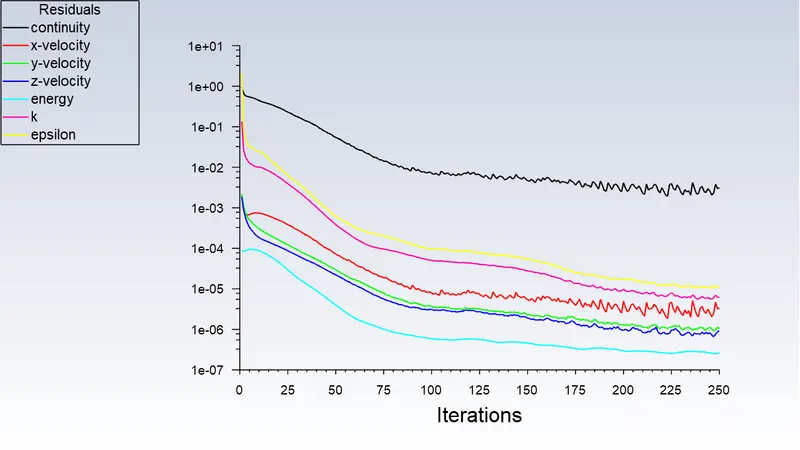
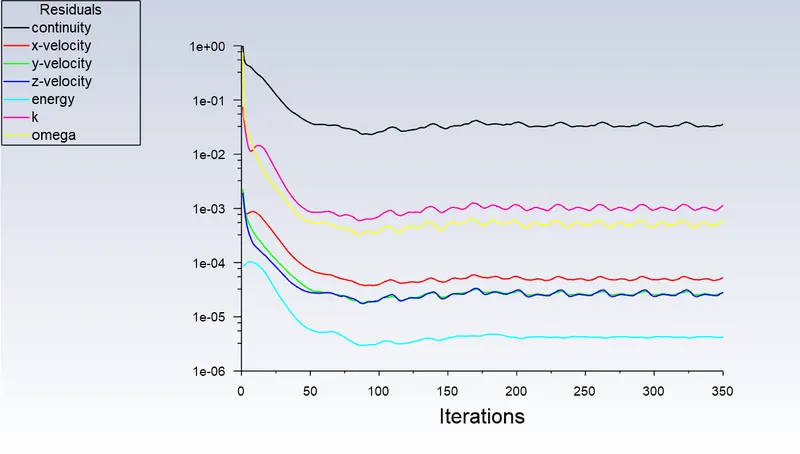
The values for k-epsilon model is not converged after 250 iterations. Then I tried seperately for 300 iterations. Then also not converged.
RESIDUAL PLOT:
AREA WEIGHTED AVERAGE for temperature:
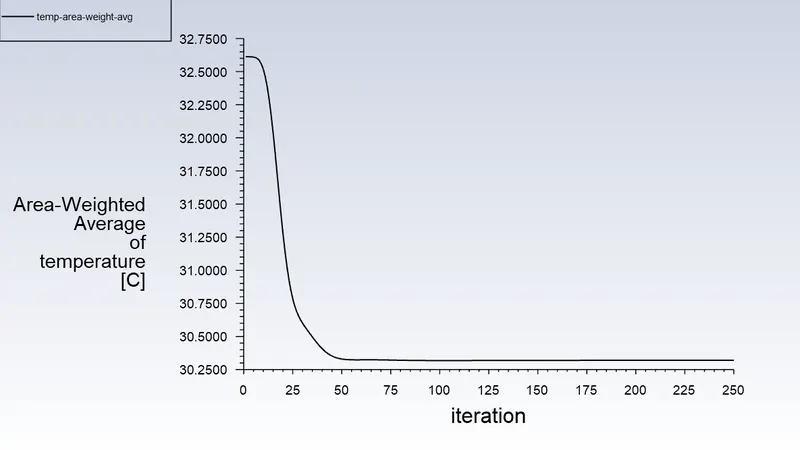
VALUE =30.320421 [C]
STANDARD DEVIATION for temperature:
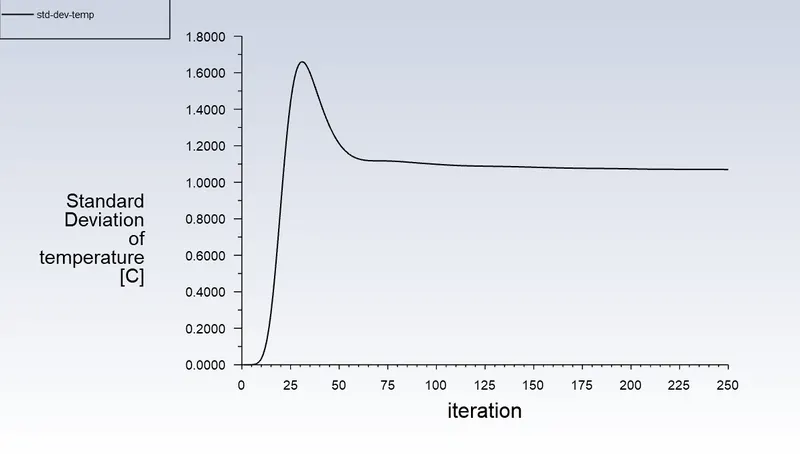
VALUE =1.0698159 [C]
AREA WEIGHTED AVERAGE for velocity:
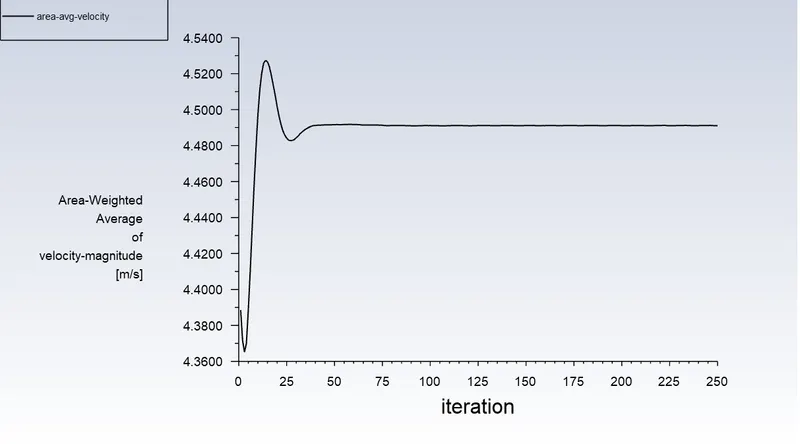
VALUE =4.4910412 [m/s]
STANDARD DEVIATION for velocity:
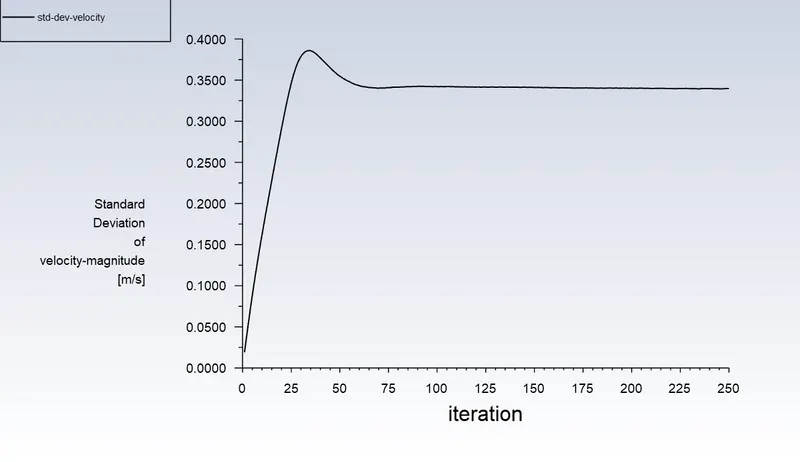
VALUE =0.33965879 [m/s]
CONTOUR PLOT:
TEMPERATURE CONTOUR on the cut planes along the pipe:
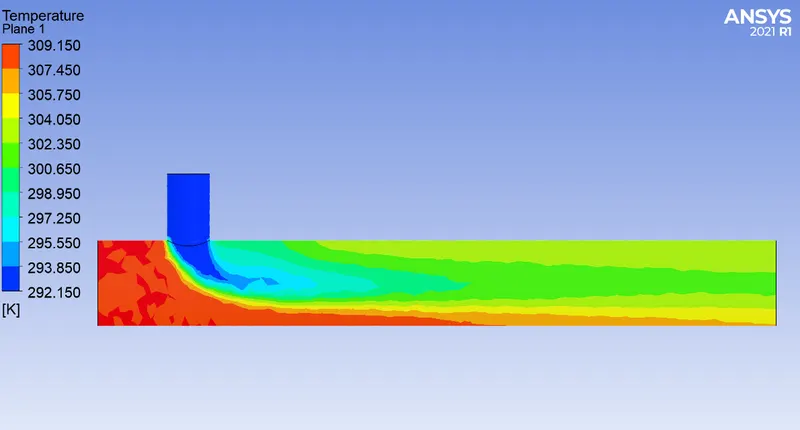
LINE PLOT
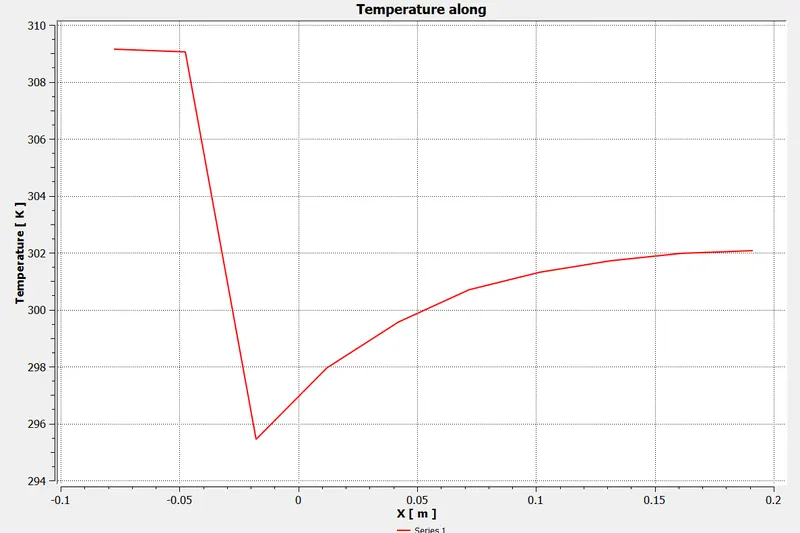
Velocity CONTOUR on the cut planes along the pipe:
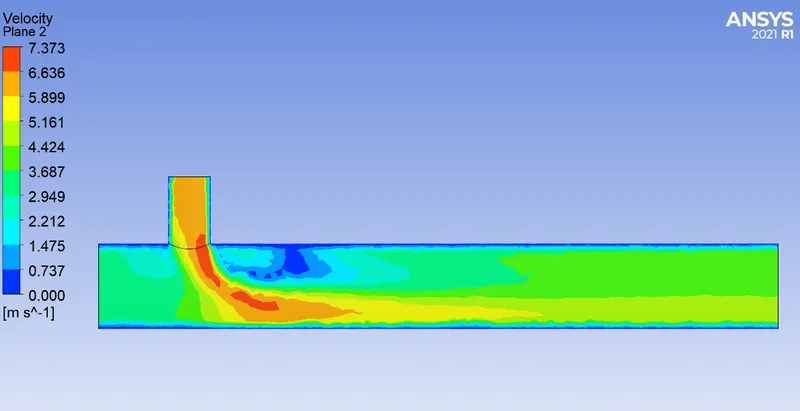
LINE PLOT
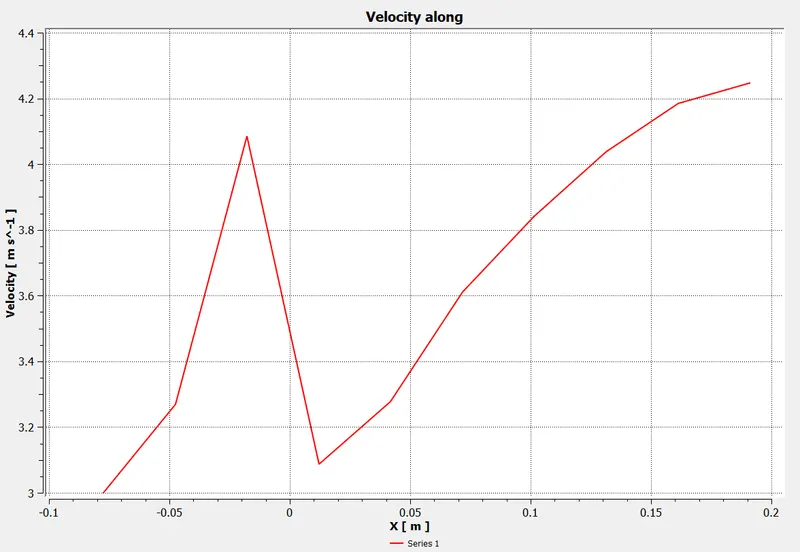
Velocity CONTOUR across the length of the pipe at outlet:
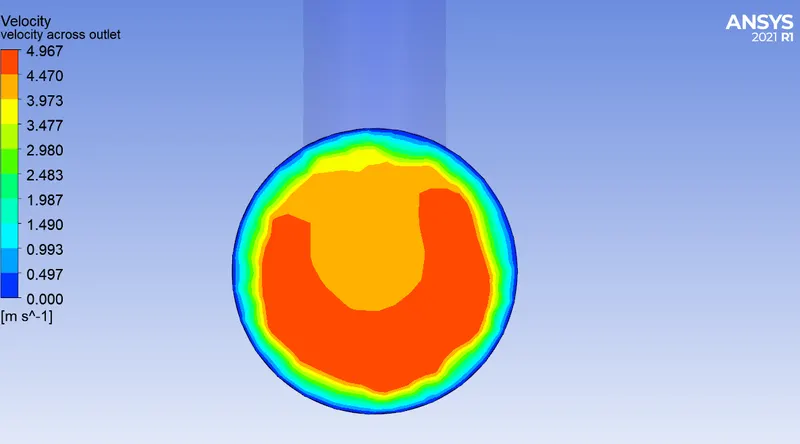
LINE PLOT
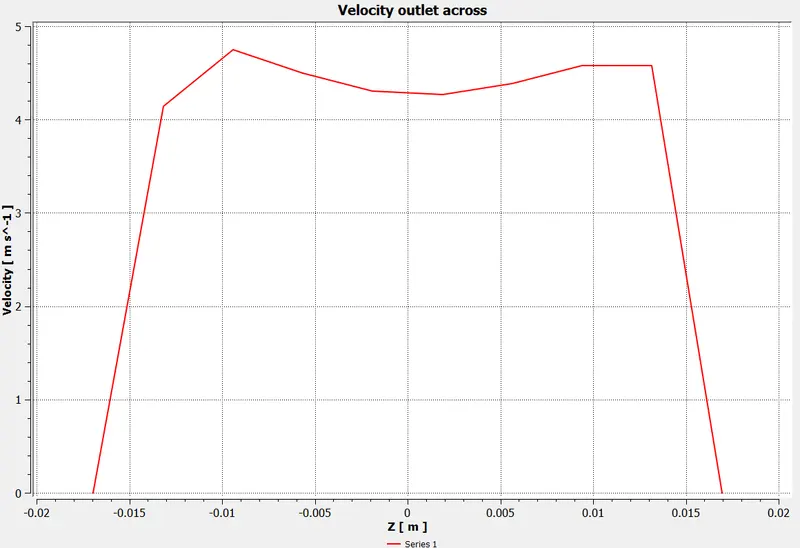
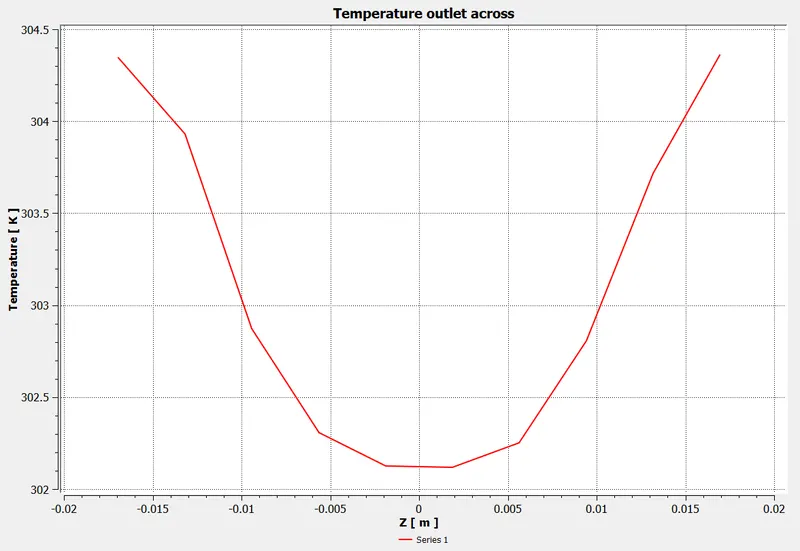
TEMPERATURE CONTOUR across the length of the pipe at outlet:
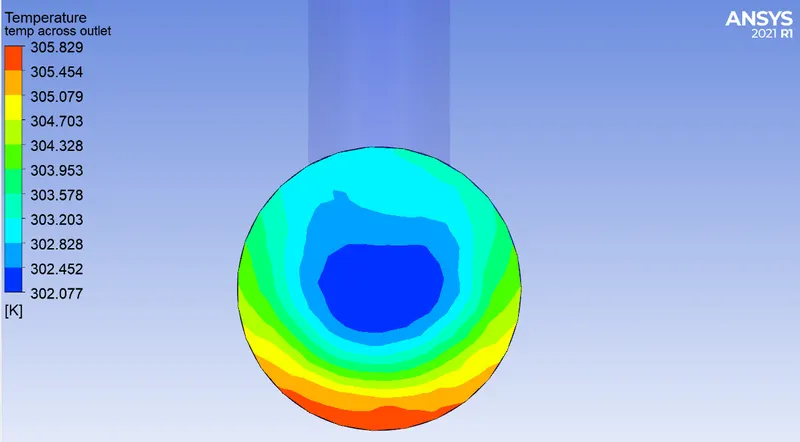
LINE PLOT
*******************************************************************************************************************************************************
The iteration is set for 350 nos.
2)K-OMEGA MODEL (SST):
The values for k-omega model is not converged after 350 iterations
RESIDUAL PLOT:
AREA WEIGHTED AVERAGE for temperature:
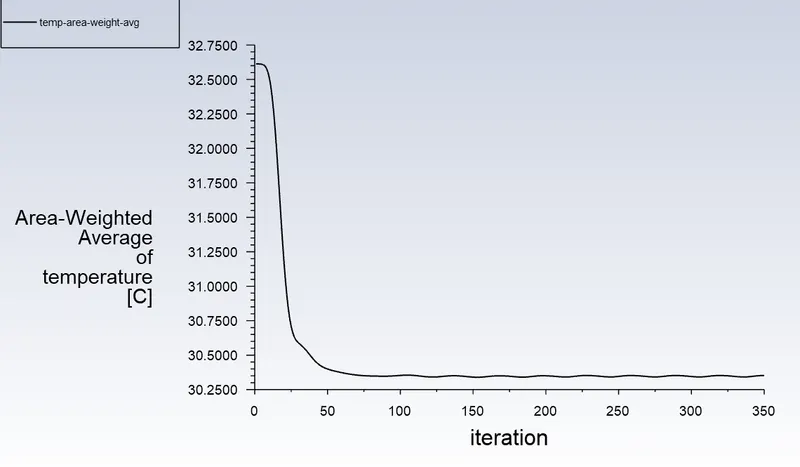
VALUE =30.352264 [C]
STANDARD DEVIATION for temperature:
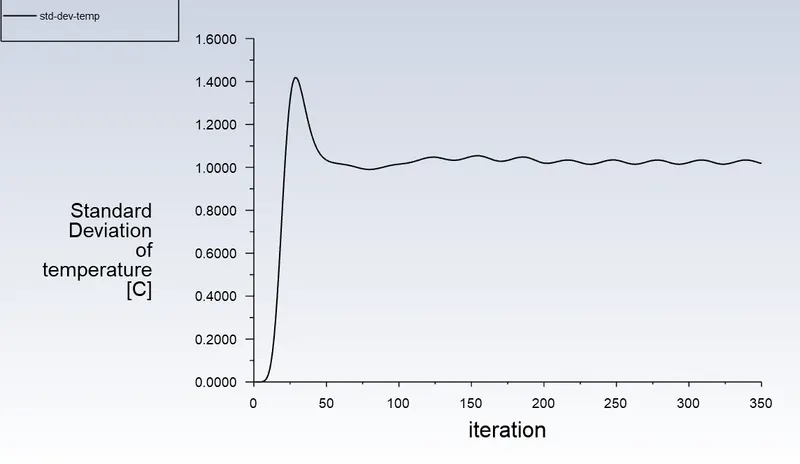
VALUE =1.0180611 [C]
AREA WEIGHTED AVERAGE for velocity:
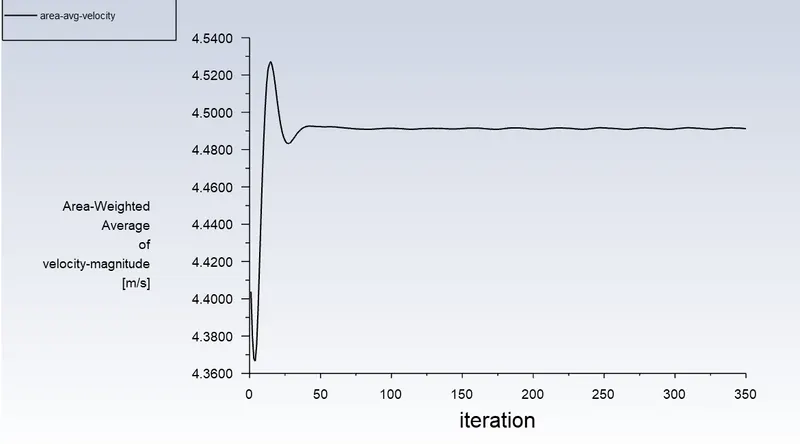
VALUE =4.4912016 [m/s]
STANDARD DEVIATION for velocity:
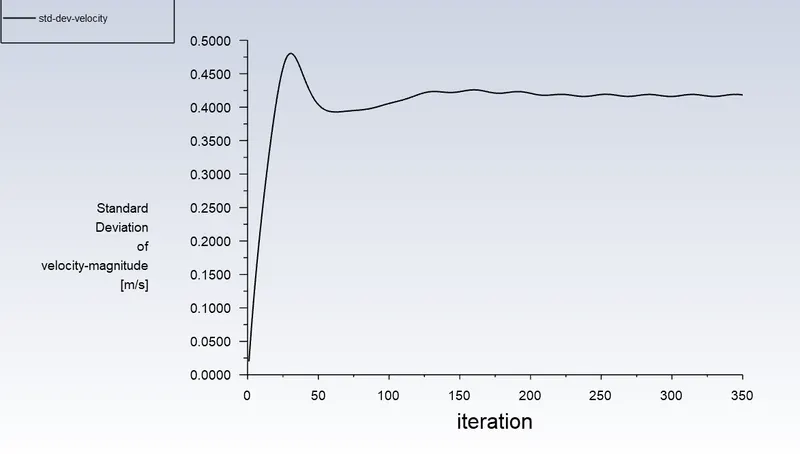
VALUE =0.41836583 [m/s]
CONTOUR PLOT:
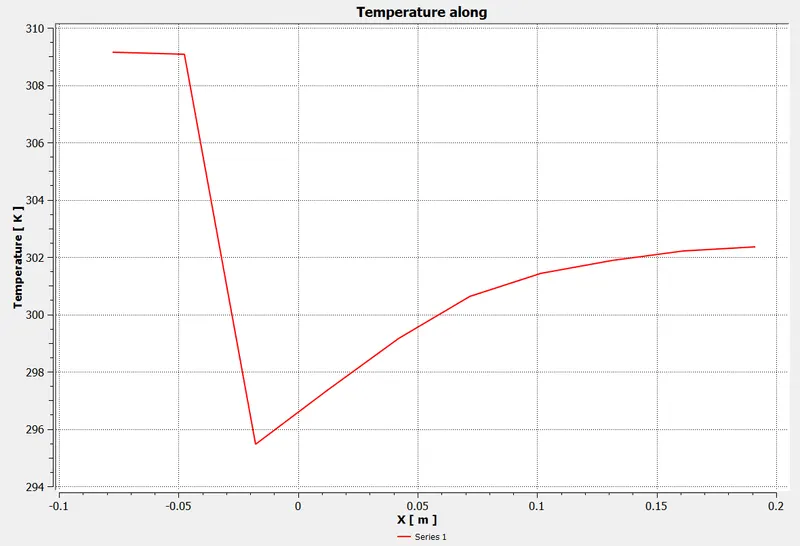
TEMPERATURE CONTOUR on the cut planes along the pipe:
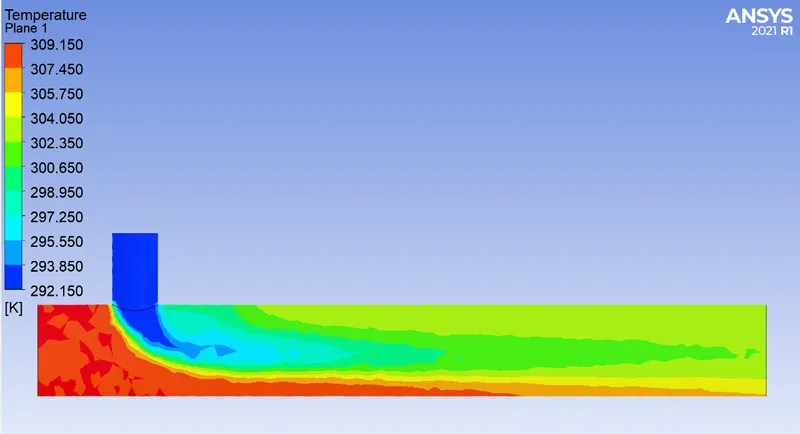
LINE PLOT
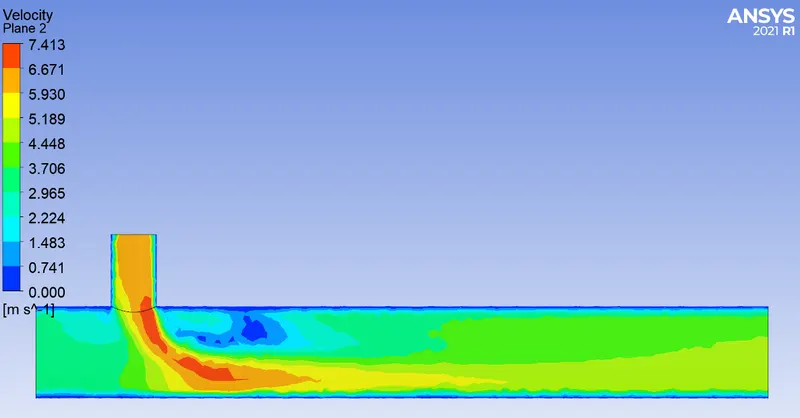
Velocity CONTOUR on the cut planes along the pipe:
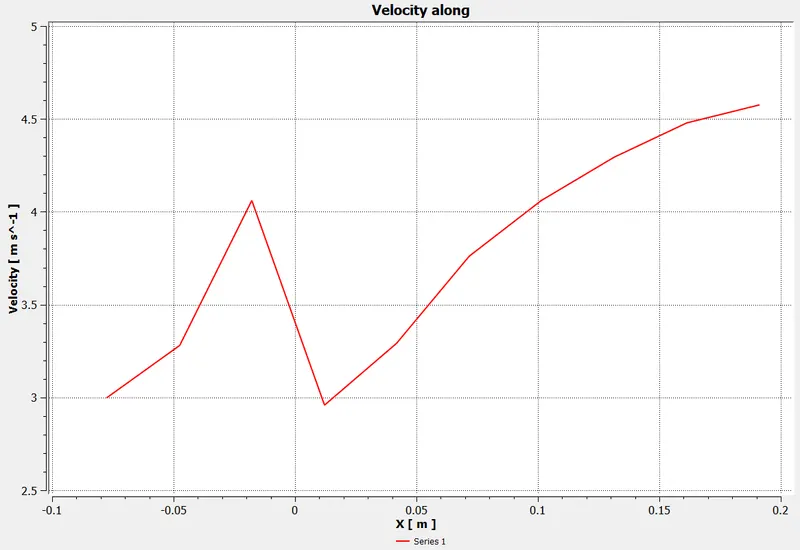
LINE PLOT
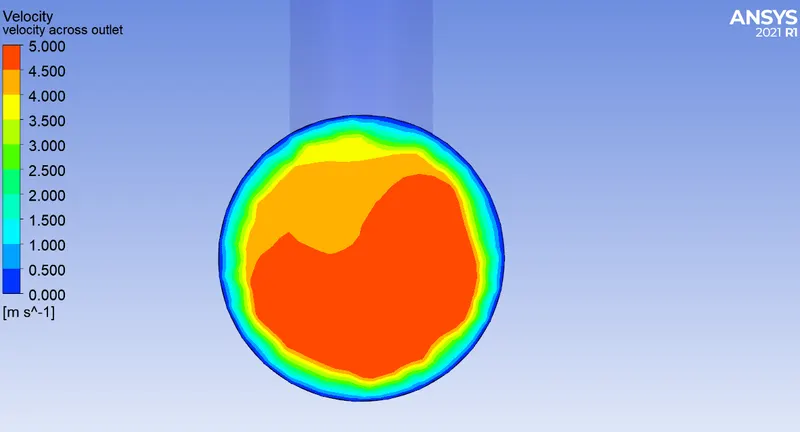
Velocity CONTOUR across the length of the pipe at outlet:
LINE PLOT
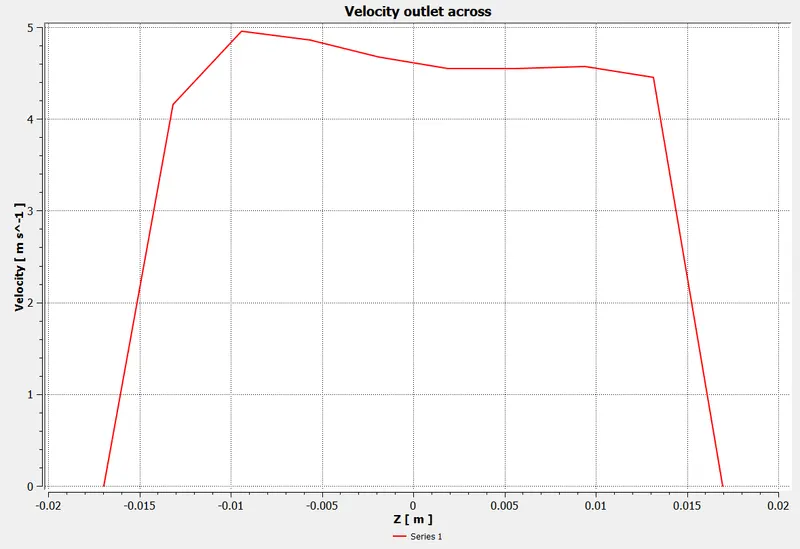
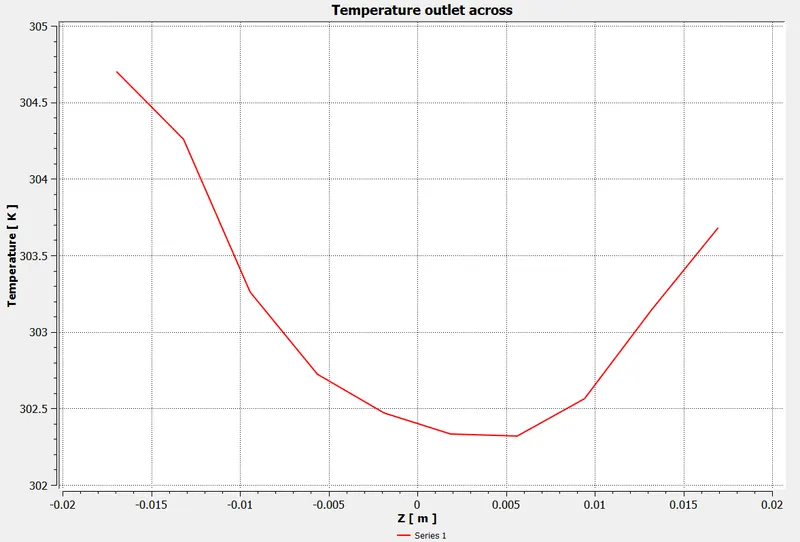
Temperature CONTOUR across the length of the pipe at outlet:
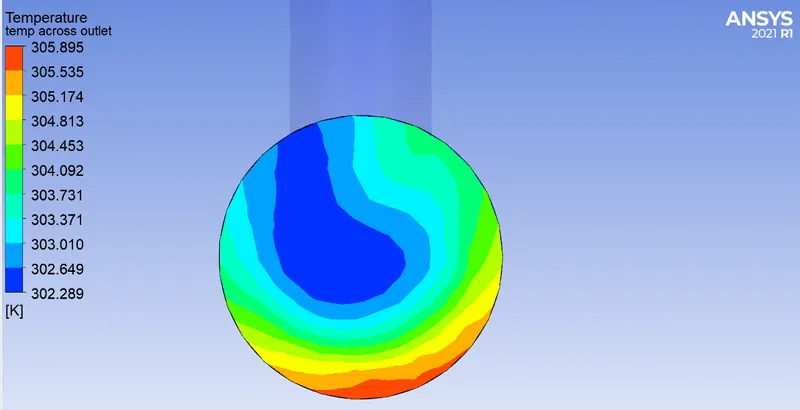
LINE PLOT
OBSERVATIONS from 2 models (K-epsilon Vs K-omega)
| Model | K-EPSILON | K-OMEGA |
| Temp Avg at outlet | 30.320421 [C] | 30.352264 [C] |
| Temp Std dev at outlet | 1.0698159 [C] | 1.0180611 [C] |
| Velocity Avg at outlet | 4.4910412 [m/s] | 4.4912016 [m/s] |
| Velocity Std dev at outlet | 0.33965879 [m/s] | 0.41836583 [m/s] |
| Iterations initialised | 250 | 350 |
| Converged (Iteration) | not converged | not converged |
*******************************************************************************************************************************************************
-------------------------------------------------------------------------------------------------------------------------------------------------------------------------------------------------------------------------------
CASE 2.2:
- Long mixing Tee with a hot inlet velocity of 3m/s
- Momentum ratio = 4
Only the cold air velocity is changed to 12 m/s (4 x 3 = 12). Other boundary conditions are same as that of CASE 1.1
The iteration choosed is 350 nos.
RESULTS:
The final values of these results are the values at outlet of the tee
*******************************************************************************************************************************************************
1)K-EPSILON MODEL (Realisable,standard wall function):
The values for k-epsilon model is converged at 118 iterations
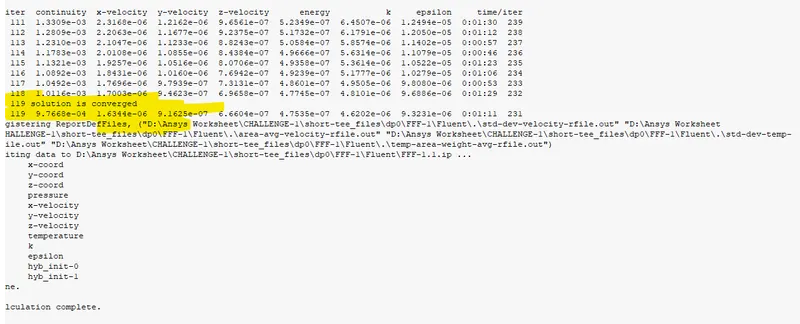
RESIDUAL PLOT:
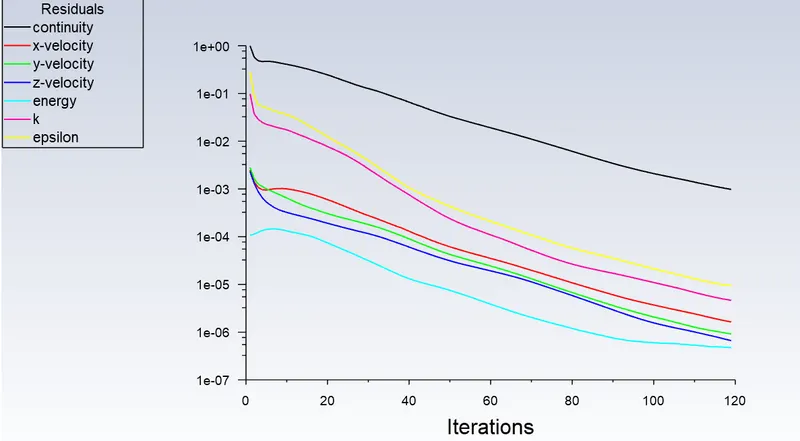
conv=118 itr;
AREA WEIGHTED AVERAGE for temperature:
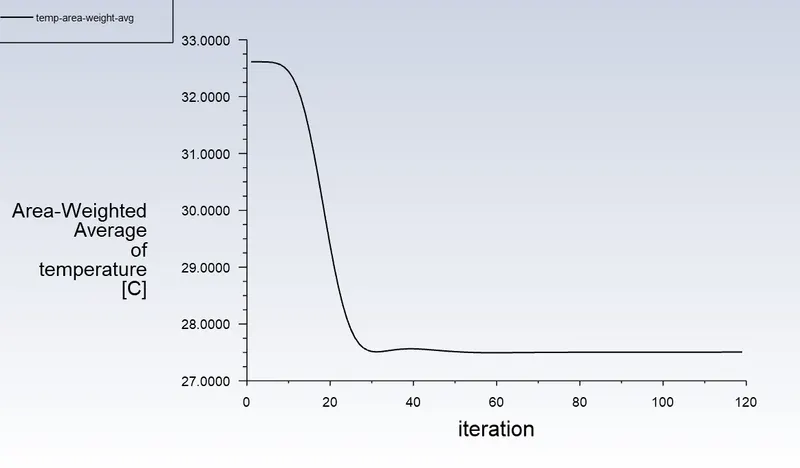
VALUE =27.505792 [C]
STANDARD DEVIATION for temperature:
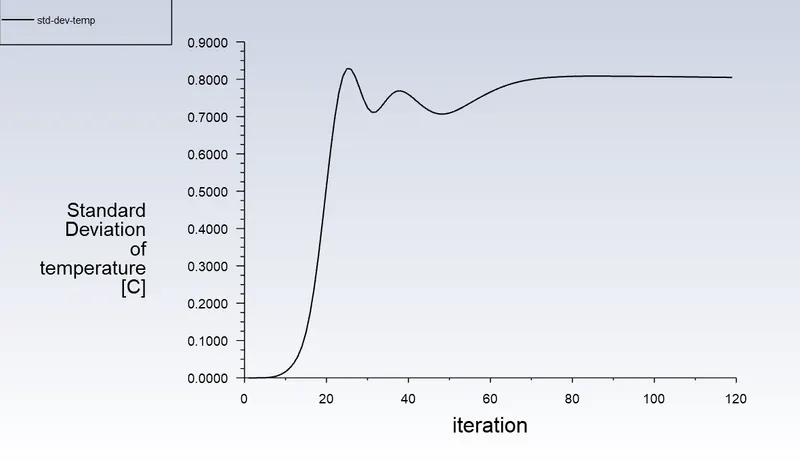
VALUE =0.80483231 [C]
AREA WEIGHTED AVERAGE for velocity:
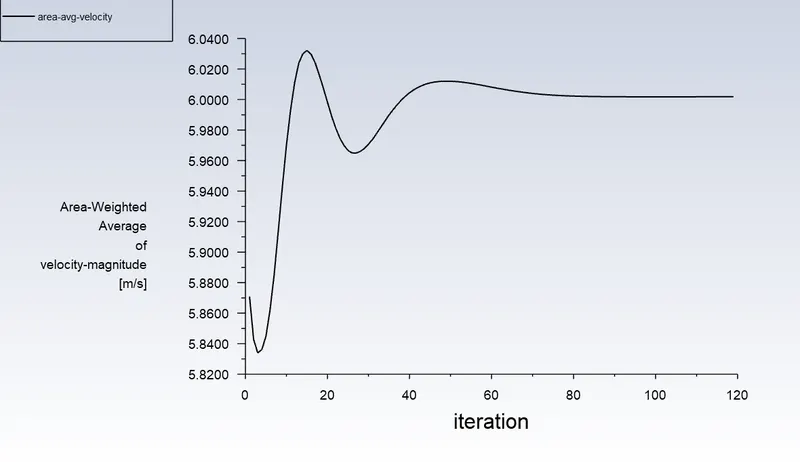
VALUE =6.0018135 [m/s]
STANDARD DEVIATION for velocity:
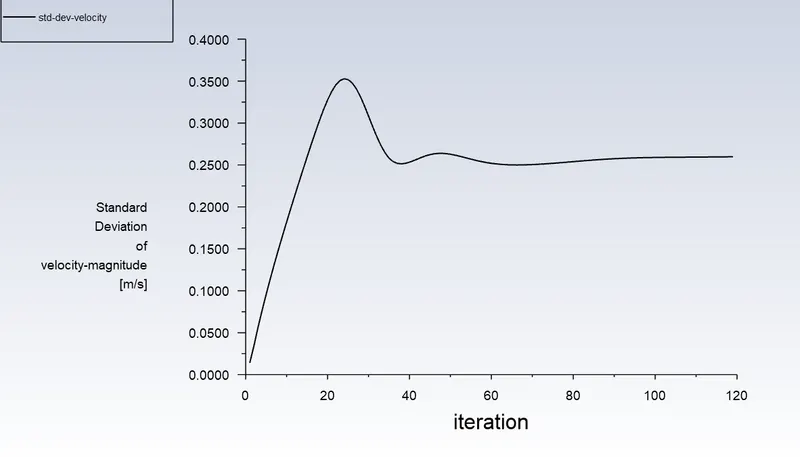
VALUE =0.25976507 [m/s]
CONTOUR PLOT:
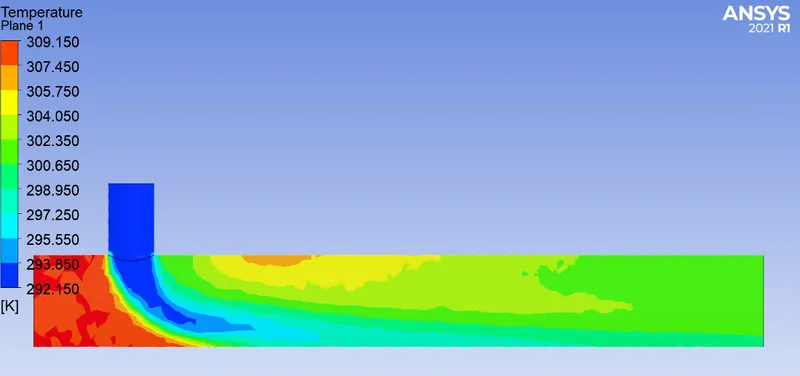
TEMPERATURE CONTOUR on the cut planes along the pipe:
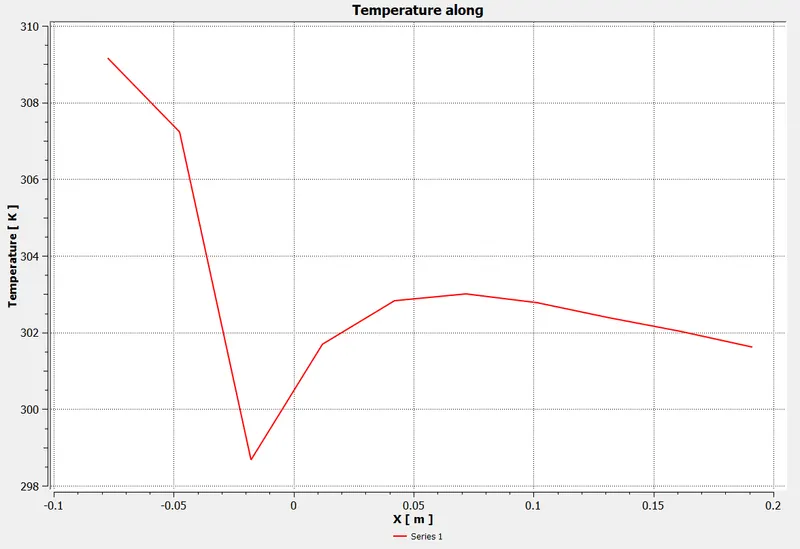
LINE PLOT
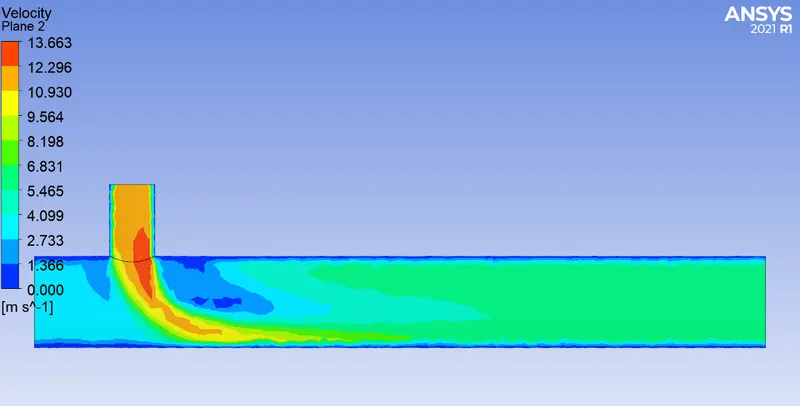
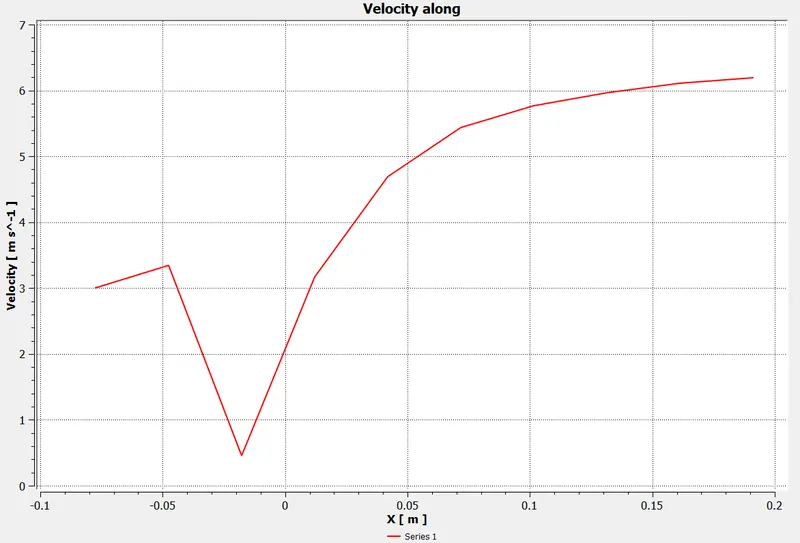
Velocity CONTOUR on the cut planes along the pipe:
LINE PLOT
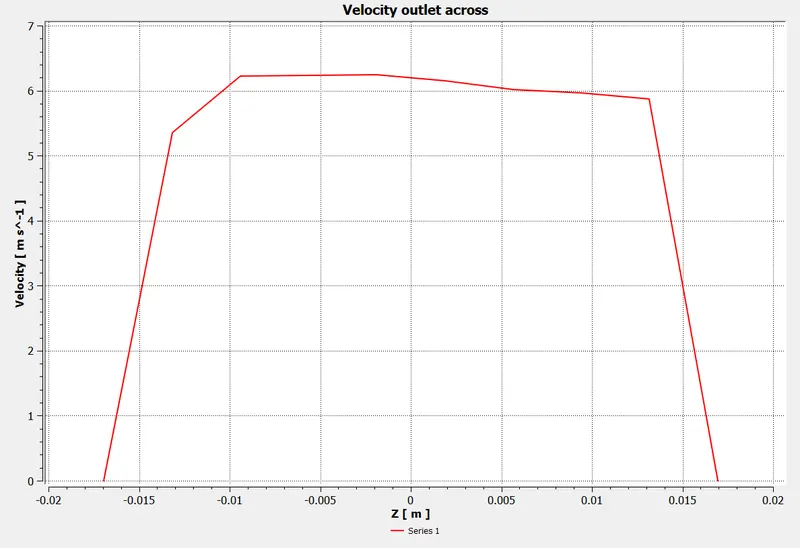
Velocity CONTOUR across the length of the pipe at outlet:
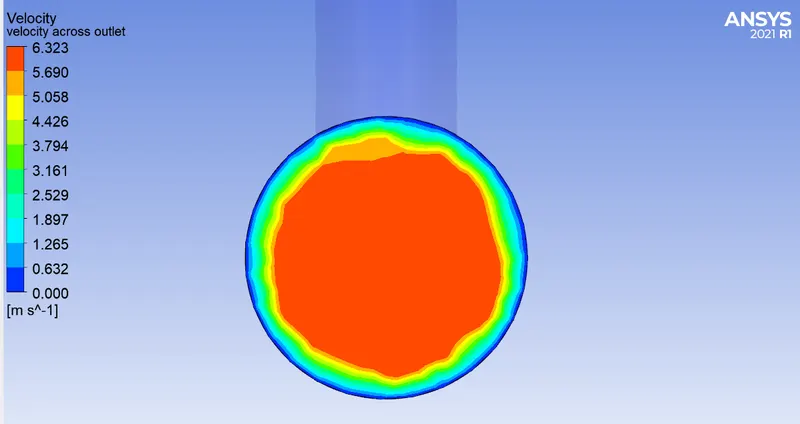
LINE PLOT
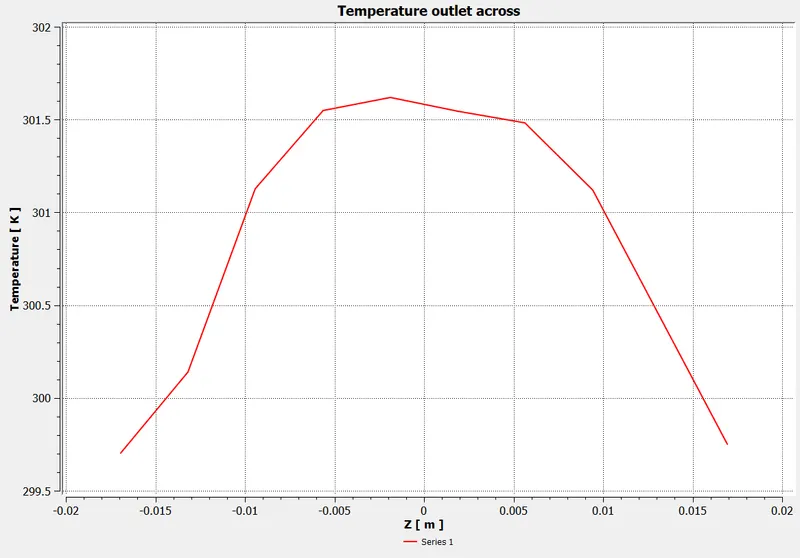
TEMPERATURE CONTOUR across the length of the pipe at outlet:
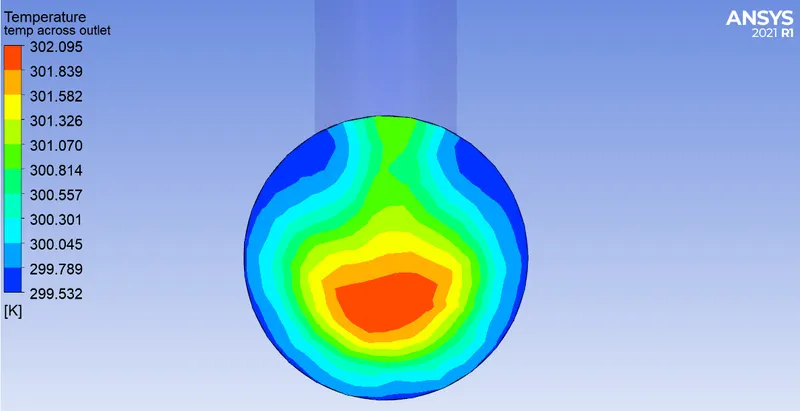
LINE PLOT
*******************************************************************************************************************************************************
2)K-OMEGA MODEL (SST):
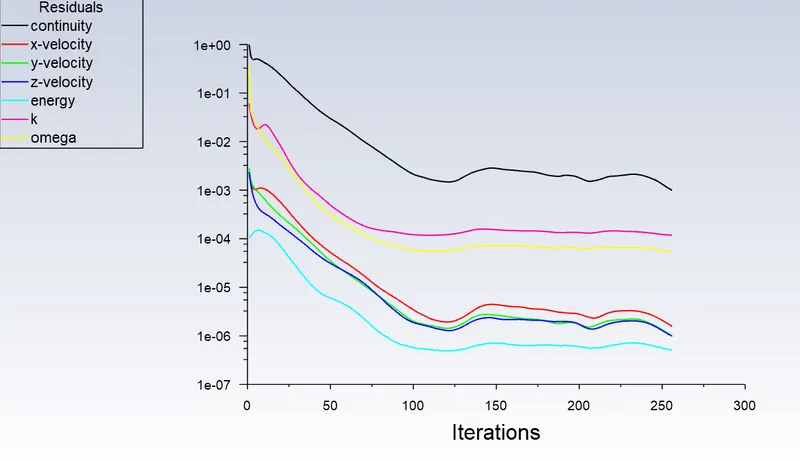
The values for k-omega model is converged at 255 iterations
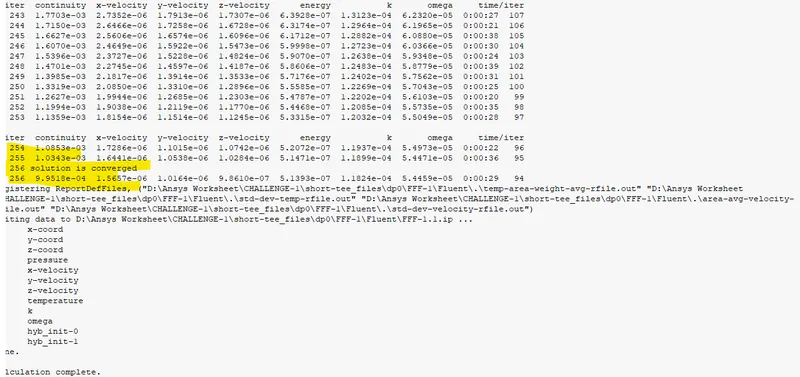
RESIDUAL PLOT:
AREA WEIGHTED AVERAGE for temperature:
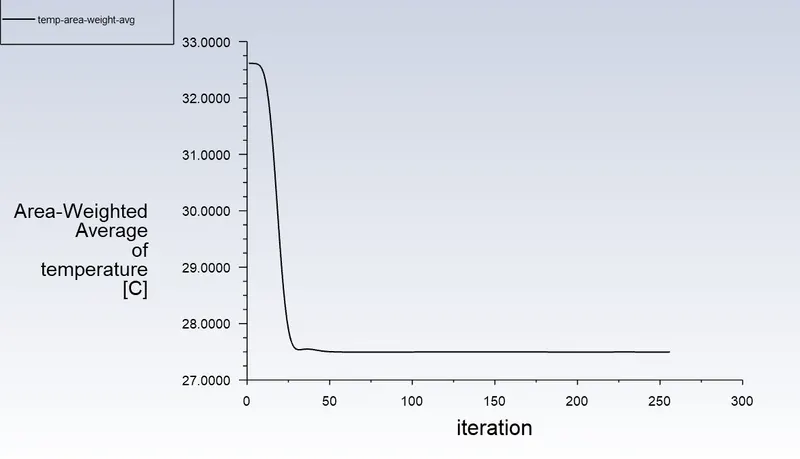
VALUE =27.496691 [C]
STANDARD DEVIATION for temperature:
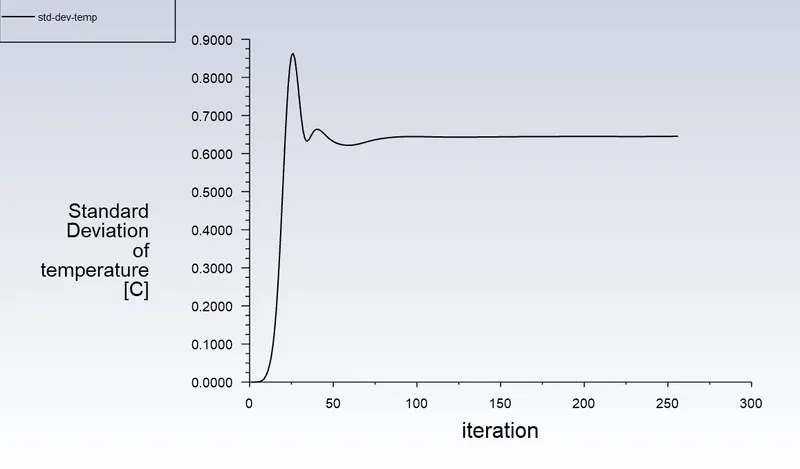
VALUE =0.64520403 [C]
AREA WEIGHTED AVERAGE for velocity:
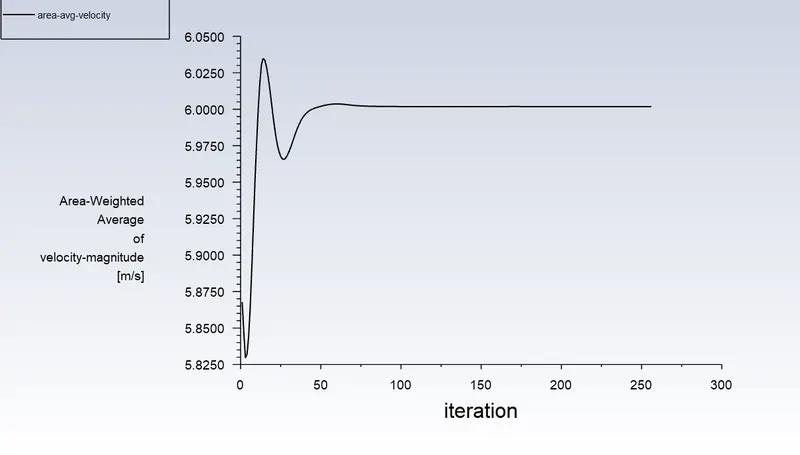
VALUE =6.0017499 [m/s]
STANDARD DEVIATION for velocity:
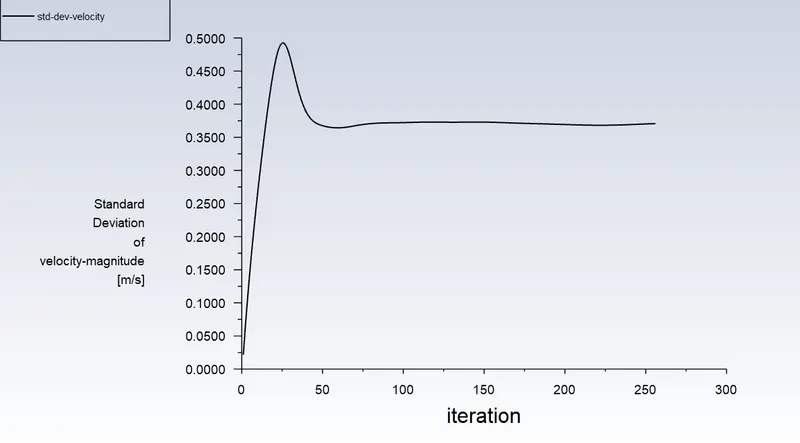
VALUE =0.37062642 [m/s]
CONTOUR PLOT:
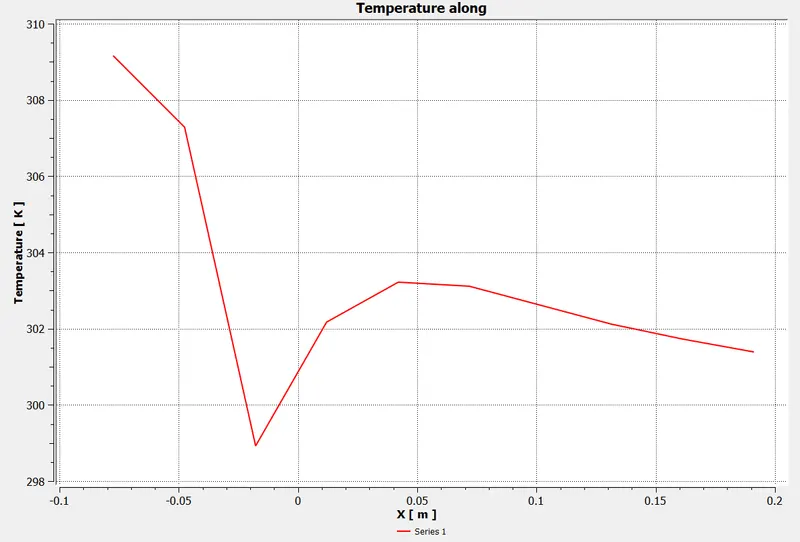
TEMPERATURE CONTOUR on the cut planes along the pipe:
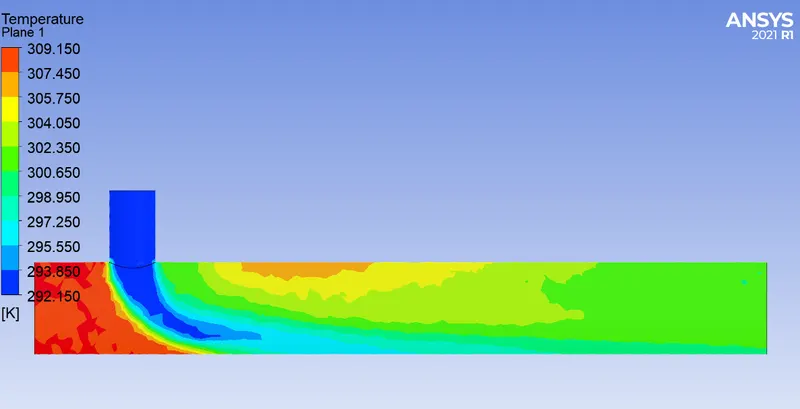
LINE PLOT
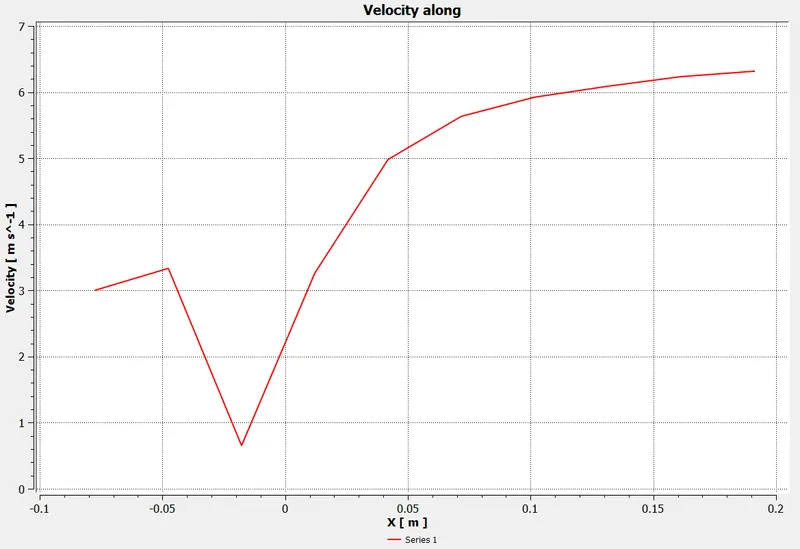
Velocity CONTOUR on the cut planes along the pipe:
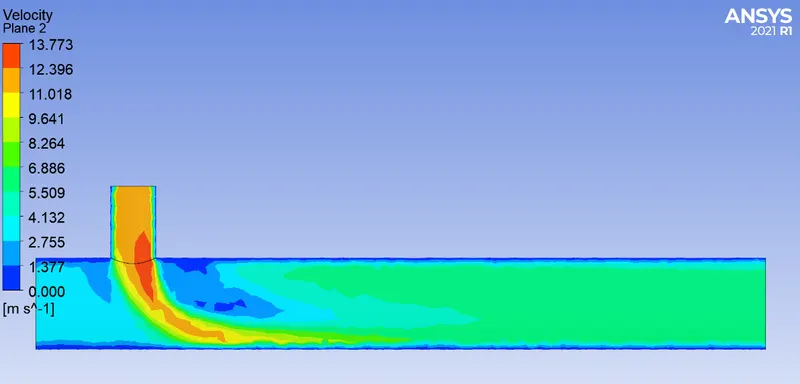
LINE PLOT
Velocity CONTOUR across the length of the pipe at outlet:
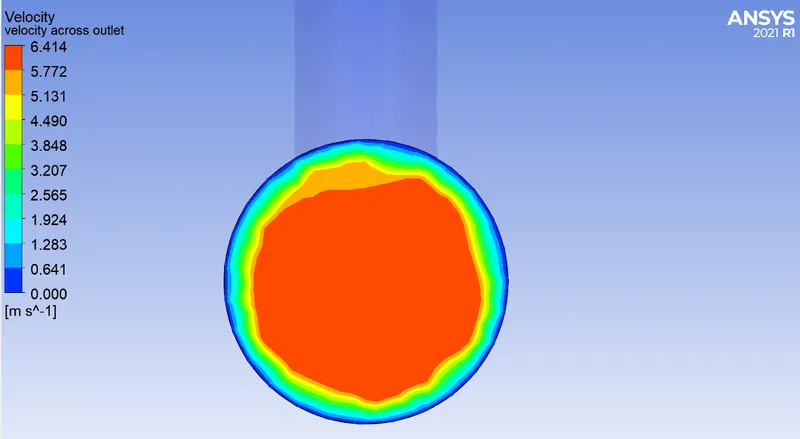
LINE PLOT
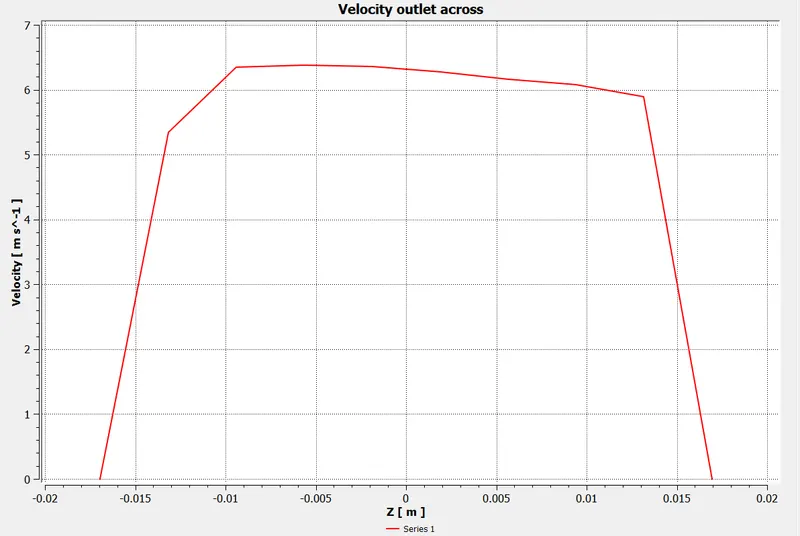
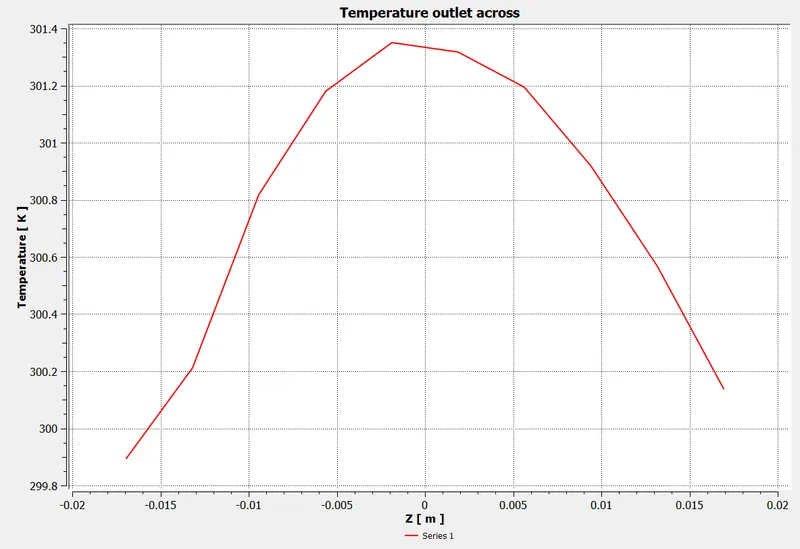
Temperature CONTOUR across the length of the pipe at outlet:
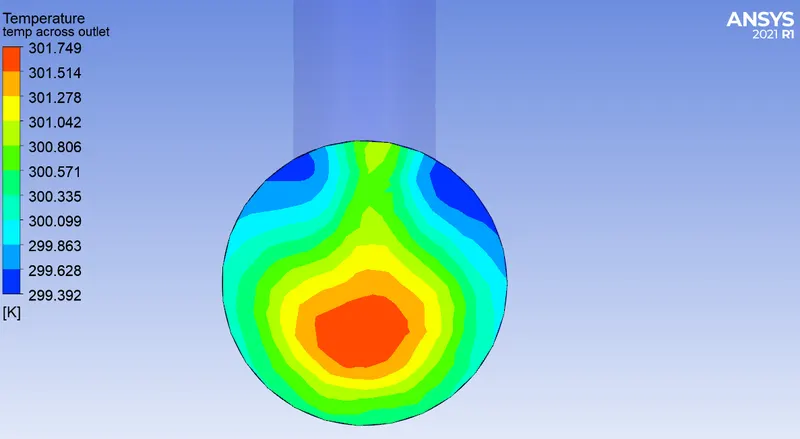
LINE PLOT
OBSERVATIONS from 2 models (K-epsilon Vs K-omega)
| Model | K-EPSILON | K-OMEGA |
| Temp Avg at outlet | 27.505792 [C] | 27.496691 [C] |
| Temp Std dev at outlet | 0.80483231 [C] | 0.64520403 [C] |
| Velocity Avg at outlet | 6.0018135 [m/s] | 6.0017499 [m/s] |
| Velocity Std dev at outlet | 0.25976507 [m/s] | 0.37062642 [m/s] |
| Iterations initialised | 350 | 350 |
| Converged (Iteration) | 118 | 255 |
No: of mesh elements for long tee = 29061 nos; (4 mm mesh)
*******************************************************************************************************************************************************
-------------------------------------------------------------------------------------------------------------------------------------------------------------------------------------------------------------------------------
+++++++++++++++++++++++++++++++++++++++++++++++++++++++++++++++++++++++++++++++++++++++++++++++++++++++++++++++++++++++++++
TABLE OF COMPARISON for values at outlet
| SHORT TEE,Mom ratio=2 | LONG TEE,Mom ratio=2 | ||||||
| Model | K-EPSILON | K-OMEGA | Model | K-EPSILON | K-OMEGA | ||
| Temp Avg at outlet | 30.274584 [C] | 30.306995 [C] | Temp Avg at outlet | 30.320421 [C] | 30.352264 [C] | ||
| Temp Std dev at outlet | 1.4148356 [C] | 1.659199 [C] | Temp Std dev at outlet | 1.0698159 [C] | 1.0180611 [C] | ||
| Velocity Avg at outlet | 4.4954732 [m/s] | 4.4955644 [m/s] | Velocity Avg at outlet | 4.4910412 [m/s] | 4.4912016 [m/s] | ||
| Velocity Std dev at outlet | 0.40183977 [m/s] | 0.41834082 [m/s] | Velocity Std dev at outlet | 0.33965879 [m/s] | 0.41836583 [m/s] | ||
| Iterations initialised | 250 | 250 | Iterations initialised | 250 | 350 | ||
| Converged (Iteration) | not converged | 231 | Converged (Iteration) | not converged | not converged | ||
| SHORT TEE,Mom ratio=4 | LONG TEE,Mom ratio=4 | ||||||
| Model | K-EPSILON | K-OMEGA | Model | K-EPSILON | K-OMEGA | ||
| Temp Avg at outlet | 27.576539 [C] | 27.57022 [C] | Temp Avg at outlet | 27.505792 [C] | 27.496691 [C] | ||
| Temp Std dev at outlet | 1.057353 [C] | 1.064299 [C] | Temp Std dev at outlet | 0.80483231 [C] | 0.64520403 [C] | ||
| Velocity Avg at outlet | 6.0133886 [m/s] | 6.0251536 [m/s] | Velocity Avg at outlet | 6.0018135 [m/s] | 6.0017499 [m/s] | ||
| Velocity Std dev at outlet | 0.35855883 [m/s] | 0.33995197 [m/s] | Velocity Std dev at outlet | 0.25976507 [m/s] | 0.37062642 [m/s] | ||
| Iterations initialised | 250 | 250 | Iterations initialised | 350 | 350 | ||
| Converged (Iteration) | 180 | 120 | Converged (Iteration) | 118 | 255 | ||
No: of mesh elements for short tee = 22284;(4 mm mesh)
No: of mesh elements for long tee = 29061 nos; (4 mm mesh)
Discuss the effect of length and momentum ratio on results.
On increasing the length and momentum ratio of the tee, the standard deviation of the temperature and velocity decreases at outlet. This means that the cold air and hot air are mixed uniformly, if we increase length and momentum ratio of tee. The outlet of tee is connected to the room. So, we will get uniform cooling and more comfort in the room if length and momentum ratio of tee increases.
i)Iteration performance
a)As the momentum ratio increases, the solution converges in lesser number of iterations. This is same for tee of short and long length.
b)With the small value of momentum ratio, it takes more iterations to converge for short and long tee. In this case, K-Omega is better as it is the only model converged on short tee.
c)As the momentum ratio increases, K-omega is suitable for short length tee as it takes less number of iterations to converge. But for tee of long length, K-epsilon is suitable as it takes less number of iterations to converge.
ii)Standard deviation performance
a)With the small value of momentum ratio for short tee,K-epsilon is preferred as it gives less value of standard deviation for temperature and velocity than K-omega.
For long tee, K-epsilon is preferred for standard deviation of velocity and K-omega is preferred for standard deviation of temperature as it gives less value of standard deviation.
b)With the high value of momentum ratio for short tee,K-epsilon is preferred for temperature standard deviation and K-omega is preferred for velocity standard deviation.
For long tee, K-epsilon is preferred for standard deviation of velocity and K-omega is preferred for standard deviation of temperature as it gives less value of standard deviation.
The brief summary that I found under 2 models are mentioned below. The desired values are coloured in the table of comparison. Usually we prefer low value of standard deviation and low number of iterations to converge.
This explains which model is suitable for the flow problems like this
K-EPSILON
a)Short tee
Standard deviation of temperature and velocity with mr=2.Standard deviation of temperature with mr=4.
b)Long tee
Standard deviation of velocity with all momentum ratio.
c)Iteration for long tee for high momentum ratio.
K-OMEGA
a)Short tee
Standard deviation of velocity with mr=4.
b)Long tee
Standard deviation of temperature with all momentum ratio.
c)Iteration for short tee of any momentum ratio
Perform Mesh independent study for any one case
1) Selecting long tee with mr=4
a)With mesh of 2 mm, I got the following table values for this model
| Model | K-EPSILON | K-OMEGA |
| Temp Avg at outlet |
27.498437[C] |
27.537966 [C] |
| Temp Std dev at outlet |
0.69165899[C] |
0.92732772 [C] |
| Velocity Avg at outlet |
6.0160042[m/s] |
6.0206133 [m/s] |
| Velocity Std dev at outlet |
0.51310357 [m/s] |
0.72587252 [m/s] |
| Iterations initialised | 350 | 350 |
| Converged (Iteration) | Not converged | 199 |
b)With mesh of 4 mm, I got the following table values for this model
| Model | K-EPSILON | K-OMEGA |
| Temp Avg at outlet | 27.505792 [C] | 27.496691 [C] |
| Temp Std dev at outlet | 0.80483231 [C] | 0.64520403 [C] |
| Velocity Avg at outlet | 6.0018135 [m/s] | 6.0017499 [m/s] |
| Velocity Std dev at outlet | 0.25976507 [m/s] | 0.37062642 [m/s] |
| Iterations initialised | 350 | 350 |
| Converged (Iteration) | 118 | 255 |
c)With mesh of 10 mm, I got the following table values for this model
| Model | K-EPSILON | K-OMEGA |
| Temp Avg at outlet |
27.485622 [C] |
27.482751 [C] |
| Temp Std dev at outlet |
0.6966685 [C] |
0.62272394 [C] |
| Velocity Avg at outlet |
6.0035382 [m/s] |
6.0026389 [m/s] |
| Velocity Std dev at outlet |
0.21212285 [m/s] |
0.32148919 [m/s] |
| Iterations initialised | 350 | 350 |
| Converged (Iteration) | 114 | 152 |
Observations for mesh independent study
a) The standard deviation of outlet temperature for K-Epsilon model changes in an uneven manner while changing the mesh length.
b) The standard deviation of outlet temperature for K-Omega model decreases while increasing the mesh size.
c) The standard deviation of outlet velocity for K-Epsilon & K-Omega model decreases while increasing the mesh size.
Discuss the geometry, mesh, and solver requirements for the problem. Also, provide the snippets of the same
The geometry that I used in solidworks model which is in SLDPRT form. The mesh that I used is volume mesh of 4 mm for the challenge.
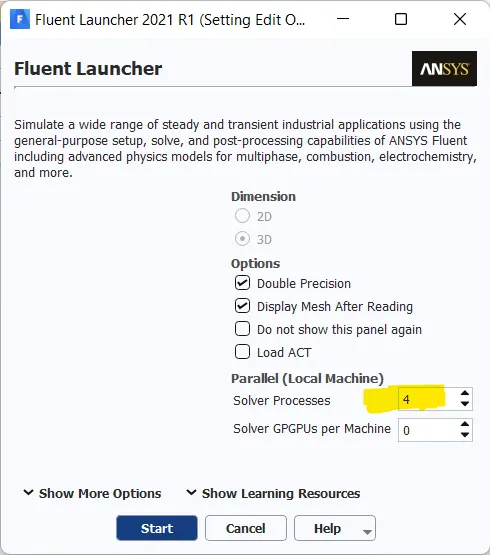
The solver is fluent which has parallel solver with 4 processor.