Underbody Coating
UNDERBODY COATING
The underbody coating is applied underneath an automobile to protect components lying under the car from rust, corrosion and damage. This will improve the lifespan of the vehicle.
Underbody coating is usually a dense cladding applied uniformly to the undercarriage of the automobile. It is normally sprayed or painted on when the car is just out of the dealership and is clean.
The main purpose of the undercoating is to check rust, especially in the body components like frame rails along with other exposed metal parts. Underbody coating can also reduce wear and tear.
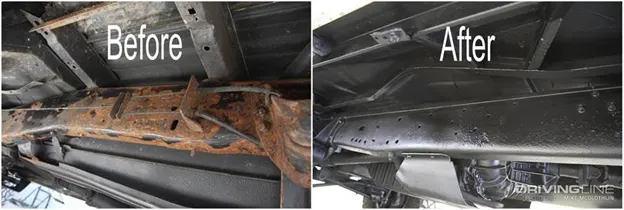
Undercoating processes :
1. Spray - tar is applied to the undercarriage
2. Electronic - electrical current capacity is removed underneath the vehicle.
3. Drip oil spray - thin oil film
4. Dripless oil spray - fog or film of thick oil
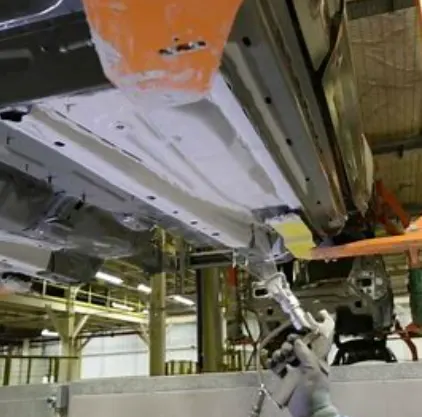
Types of underbody coating :
1. Rubberized underbody coating
It is one of the best underbody coating for the car. It prevents the underbody well, protecting from the scratches.
2. Wax based underbody coating
The wax based rust preventive, which is applied underneath the car. It will give the big fight against moisture, and it is an affordable option.
3. Asphalt based automotive undercoating
It is best suited for the lorries, trucks and large vehicles this provides greater degree of protection compared to rubber based coatings. It contains little amounts of rubber for sound-insulation purposes.
4. Polyurethane underbody coating
This coating closes up splits and fractures on the underbody of the vehicle. It offers good protection against corrosion and also bonds with the metal.
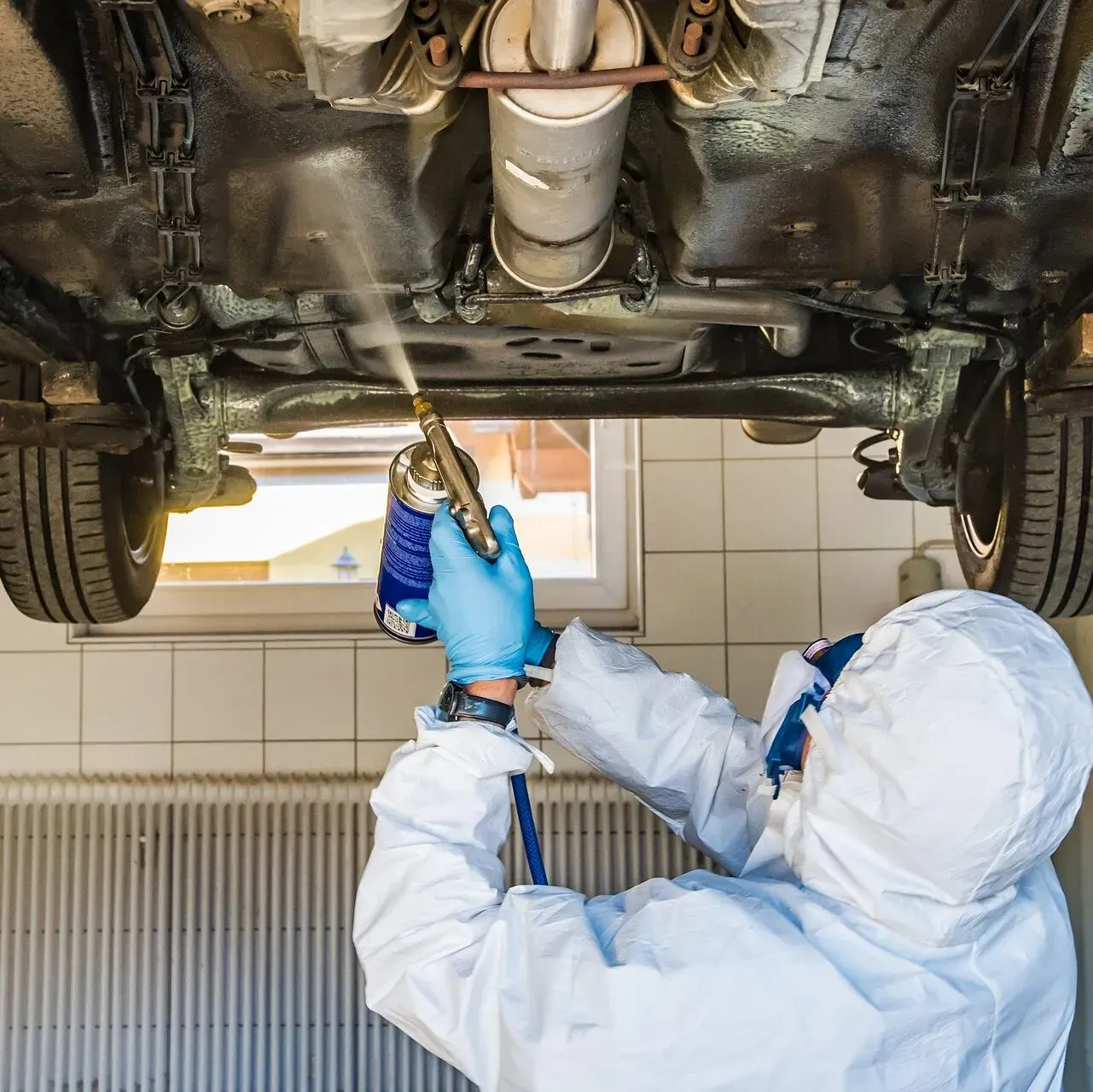
Coating steps :
The undercoating is applied to the car through the following steps :
1. Cleaning the body - Before applying coating the body, we have to remove all the debris and contaminants from the chassis and other parts to be undercoated. The body is cleaned using degreaser (removes oil and grime from the undercarriage), Grinding (to grind the existing hard contaminants and rust from the undercarriage and other components that you want to treat) and sanding (to remove the scratches and stubborn contaminants of the grinding)
2. Applying priming - Primers serve as a base coat. Primers usually contain a high level of zinc. Zinc helps in reducing rusting, even if the protective layer is penetrated.
3. Applying undercoating - The undercoating is similar to bed liners. It was applied in two layers. The first layer should be thin, covering the entire surface. After this layer is dried for half an hour, the second coat is applied. It will take few hours to days to curing.
Advantages of undercoating :
Most of the vehicles manufactured these days are rust proofed, especially in rainy and cold region. When a car is exposed to saltwater and other common electrolytes, it will support the movement of the electrons, the rusting will occur.
Using of the underbody coating will improve the lifespan of the car.
The undercoating serves as an extra layer of insulation, reducing the noise from penetrating inside components. The padding acts as a barrier between you and the source of the noise.
If the car comes with the stock underbody coating, using another coating on top of it, will offer additional r
Disadvantages :
We have to apply the underbody coating regularly to the vehicle.
Coating is easily chipped away under bad road conditions.