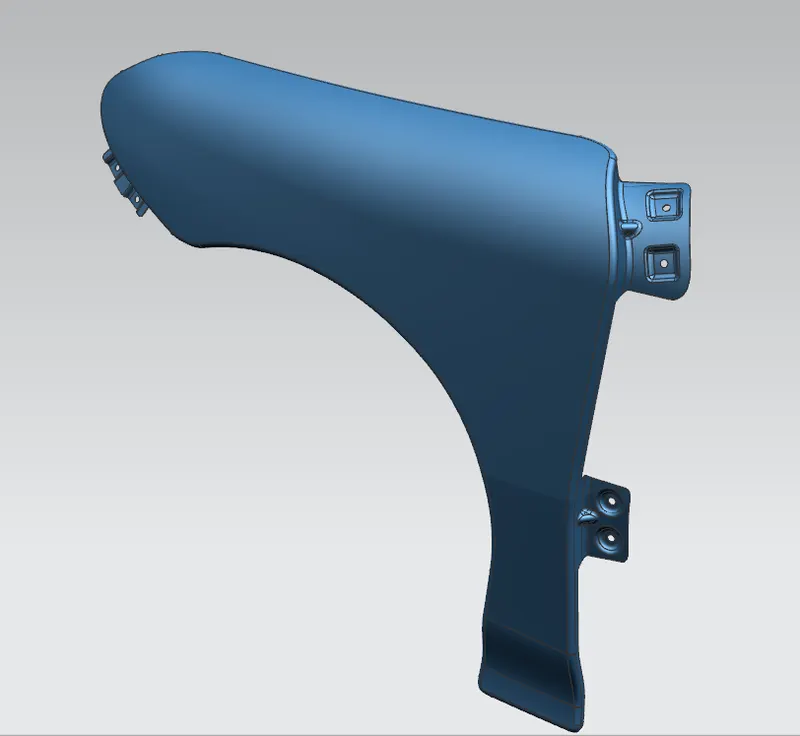
Fender Design Challenge
FENDER DESIGN
Objective :
To create a fender from the given Class A surface and to provide flanges, brackets for the various mounting ares such as, A-pillar, Drip area, bumper mounting, baffle mountings, sill area and body mountings.
Theory :
Fender -
The word fender is actually a shortening of the word 'defender', an attachment added to boats, fireplaces and eventually to cars to protect their parts from damage.
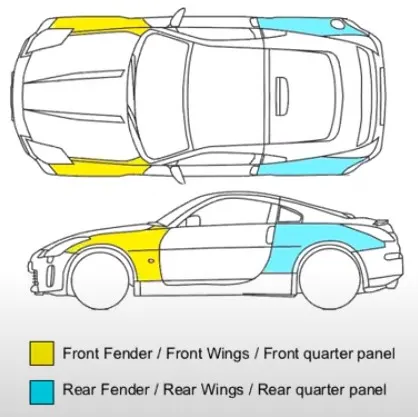
A fender is a metal or plastic enclose over the wheels of an automobile or other vehicle to protect against splashing mud, sand, stones, etc. preventing them to hit the engine compartment as well as pedestrians nearby the car.
Nowadays, all OEMs mainly aiming at the reducing the dead weight of the car, thereby reducing overall production cost.
The fender is an aesthetic surface which is located over front and rear wheels, which protects the components inside the engine compartment from chipping caused by the tires.
Types of fenders :
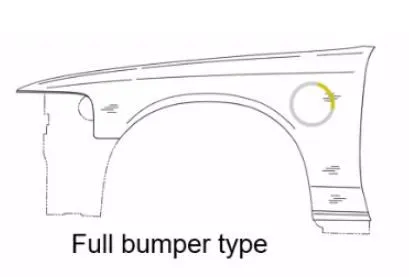
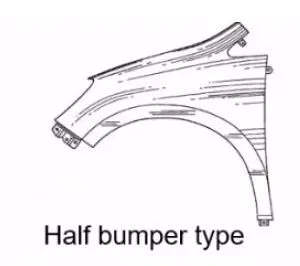
There are two types of fenders
1. Full bumper type -
2. Half bumper type -
Mounting of fender :
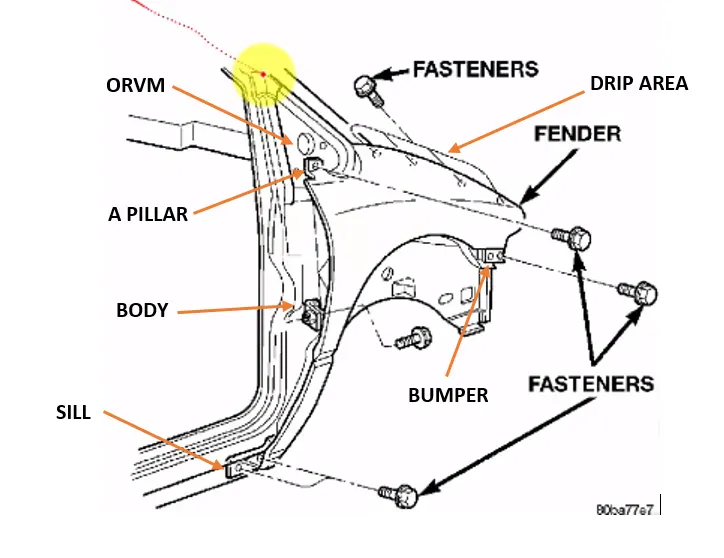
There are five mounting points in a Fender. They are;
- Body
- A pillar
- Sill
- Cowl
- Drip
Design requirements for the fender :
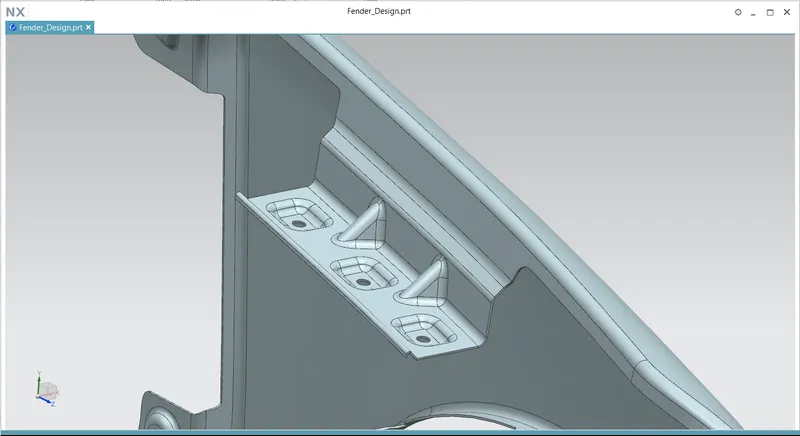
The design of the fender should follow the given master section. Mainly we have to focus on the drip area where the fender is fastened with the engine compartment. The drip area created for the fender should not collide with engine room, and it must have to maintain the distance of 10 mm or less with the engine room. The drip is located at a distance of 200 mm to 300 mm from the A pillar mounting point and minimum of 150 mm from the bumper mounting point. Also, the drip created should be accessible for the fastening tools.
Components of the fender :
The below image the shows the various components of the fender of the 2013 Suzuki Kizashi.
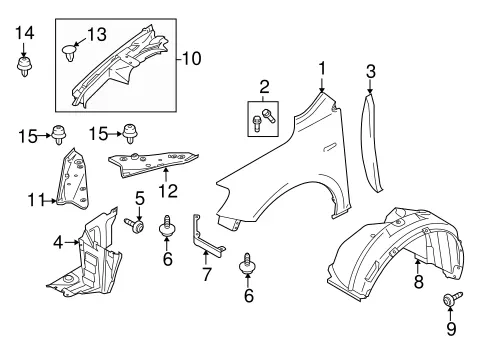
1. Fender
2. Fender bolts
3. Rear insulator
4. Front shield
5,9. Splash shield retainer clip
6. Bumper cover screw
7. Front shield bracket
8. Fender liner
10, 11, 12. Cover plate
13. Front weather strip clip
14. Top finish panel clip
Functional requirements of fender :
- To avoid shooting of sand, dirt, stones, mud, etc., into the engine room
- To prevent the shooting of stones towards the pedestrians
- To give an aesthetic look to the front of the car
Important regulations :
Depending on the region of markets, the regulations that are to be followed to design the fender may vary.
European regulations of fender design -
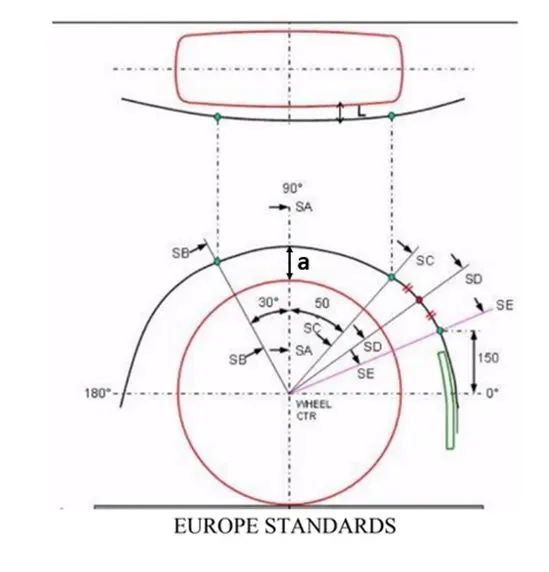
- Measure the clearance L at sections SA-SA, SB-SB, SC-SC, SD-SD and SE-SE and produce the clearance check chart to validate.
- At all five sections, the clearance L value should be greater than 10 mm to satisfy the European regulations.
- Wheel guard requirement - The value of 'a' shall be more than 5 mm at a line 30 degrees forward and 50 degrees rearward from the central vertical axis of axis of wheel.
Drip area :
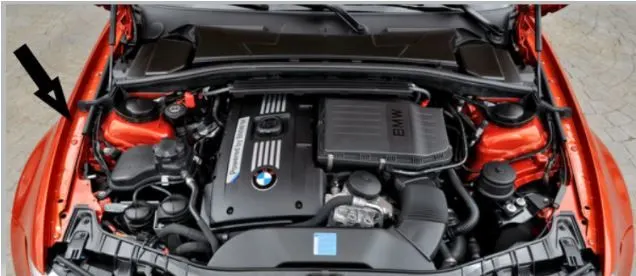
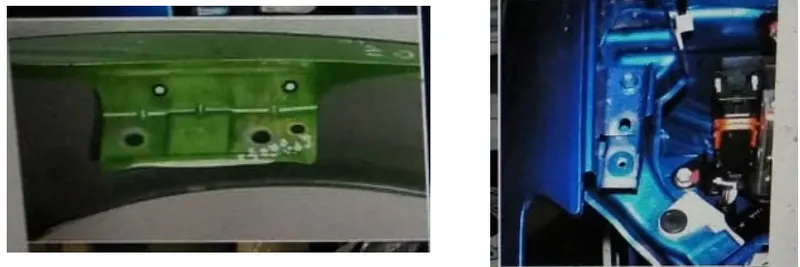
It is the area where the fender is mounted with the engine compartment. The drip area created for the fender should not collide with engine room, and it must have to maintain the distance of 10 mm or less with the engine room. The drip is located at a distance of 200 mm to 300 mm from the A pillar mounting point and minimum of 150 mm from the bumper mounting point. Also, the drip created should be accessible for the fastening tools
Wheel arch :
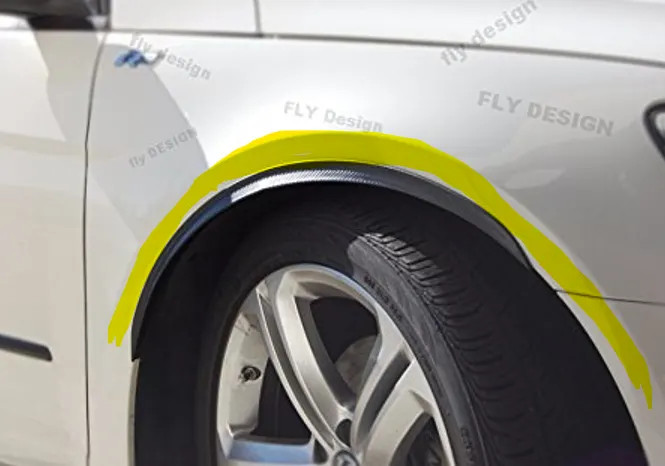
In the above picture, the highlighted area represents the wheel arch area. It also plays a vital in role in design of the fender.
Baffle mount area :
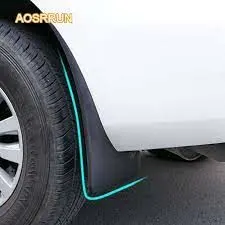
The above picture shows the baffle mounting on the fender of the car
GAP and FLUSHNESS requirements :
The gap, gap parallel (equal distance between two gaps over a distance) and flush are the terminologies involved in automotive industry which influences the customer appeal. The gap and flush measurements of side closure are shown in the below picture.
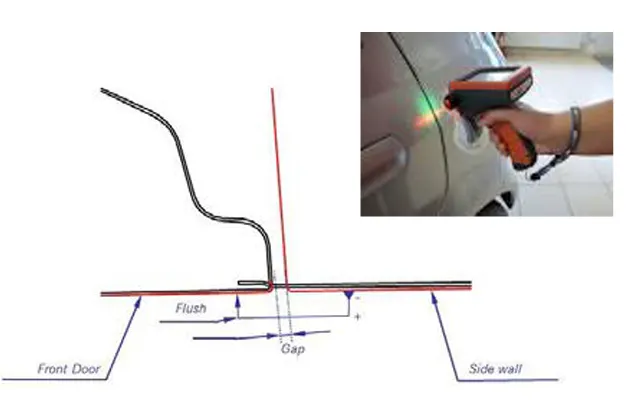
The gaps and flushes are given to the hood of the car with fender and sidewall by adjusting the hinge and striker during assembly.
In case of an automotive design, gap and leveling between the adjacent parts, known as gap and flushness, respectively, can be cited as examples of aesthetic dimensional requirements that influence customer's perception of quality.
Procedure :
Given fender skin
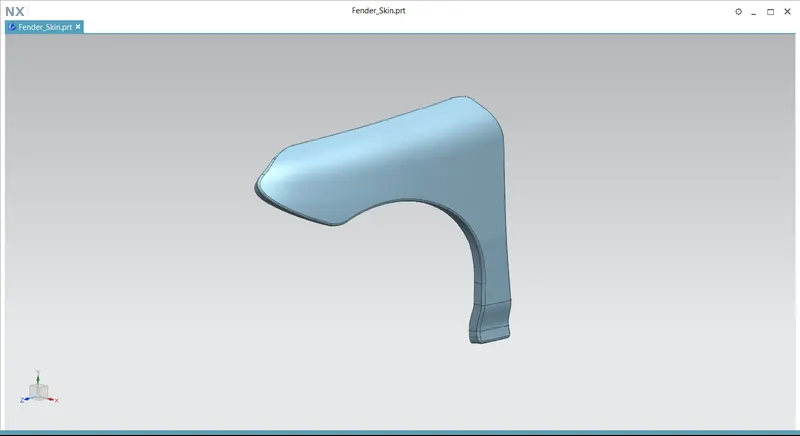
Create the offset surface on the flange face for 5 mm. Now cut the flanges by creating a curve on face using trim sheet.
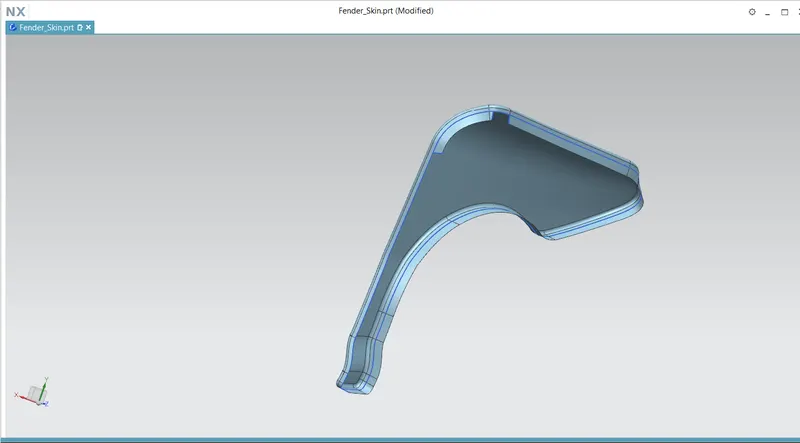
Law extend the surface where we mount the fender with the A-pillar and trim the irregular edges. Now create the datum planes for the drip area, create a plane at the distance of 150 mm from bumper mounting and also 150 mm from the A-pillar mounting on other side. Then create the intersection curve at the planes with the fender surface.
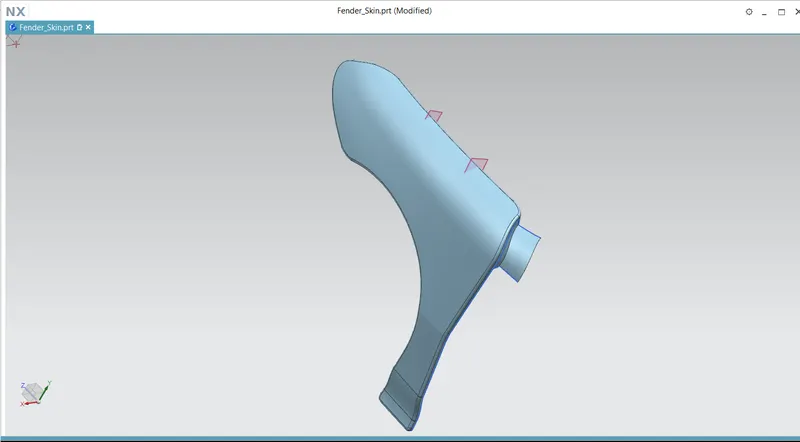
Trim the flanges for drip area and bumper mounting by using the curve on face. Law extend the edges of the drip as mentioned in the master section. And now apply the face blends on sharp corners.
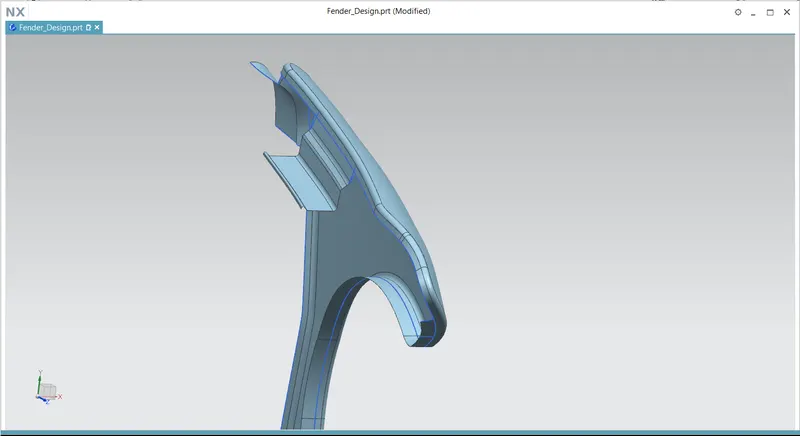
Create the emboss in the drip for mounting purpose.
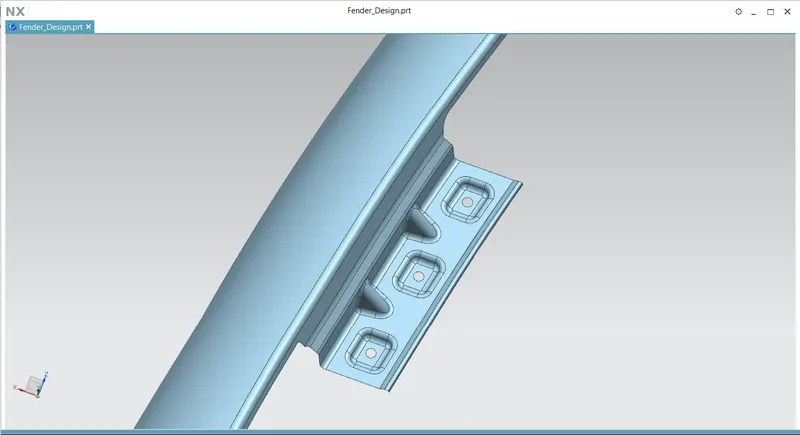
Trim the flange to create the mounting regions for the bumper, baffle and sill as shown in the below picture
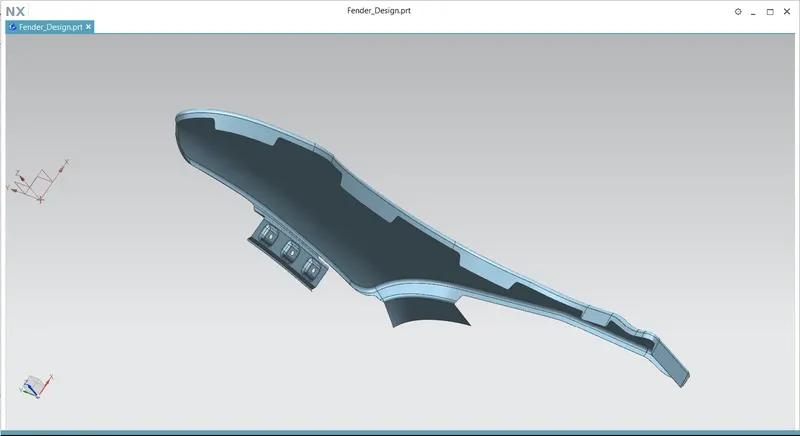
Create flange using law at extension at sill mounting area. Create the sketch for emboss. Also create the edge relief at the corners
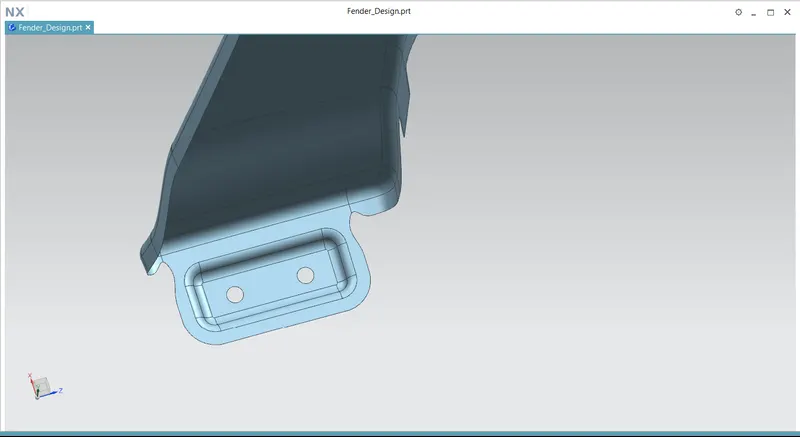
Also do the same at the A-pillar mounting area. Add a dart for increasing the strength of the flange.
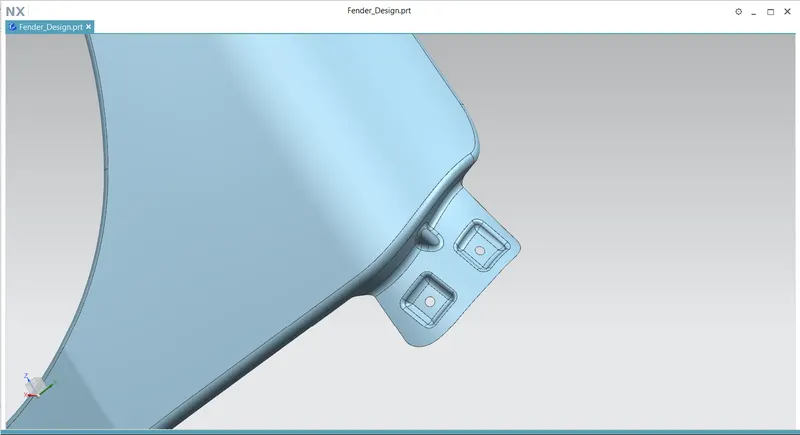
Flanges for mounting on baffle and also create the reliefs at the corners
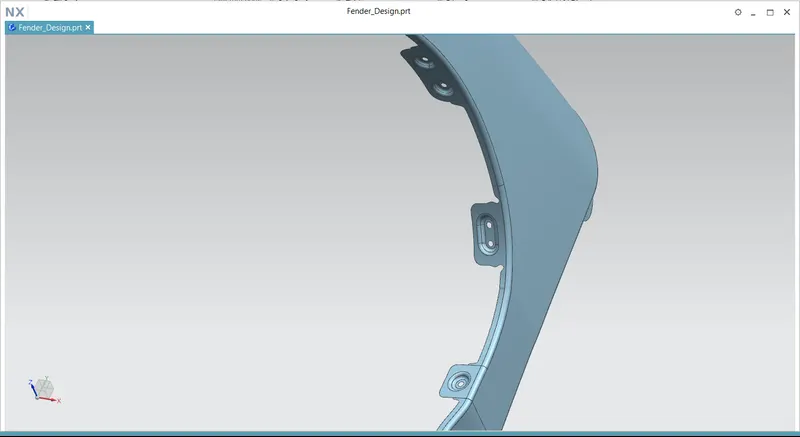
Flanges for body mounting ares
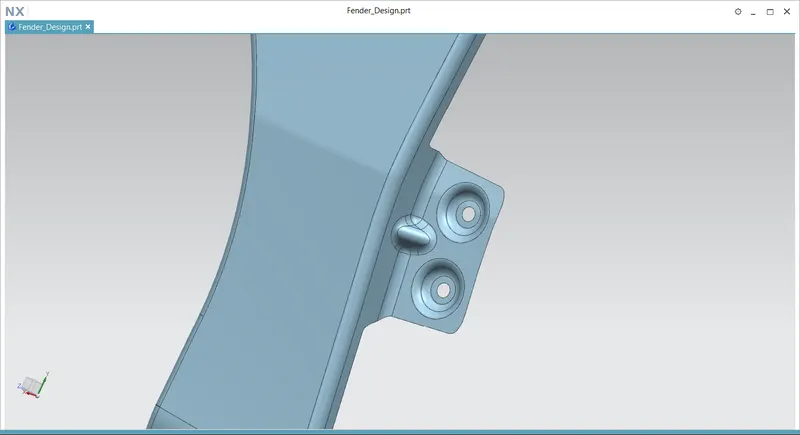
Finally, thicken the fender skin to 0.75 mm and edge blends the all sharp corners.
Views :
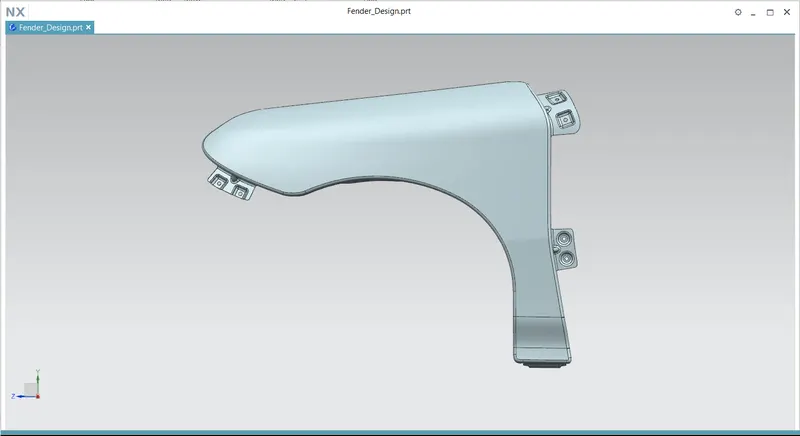
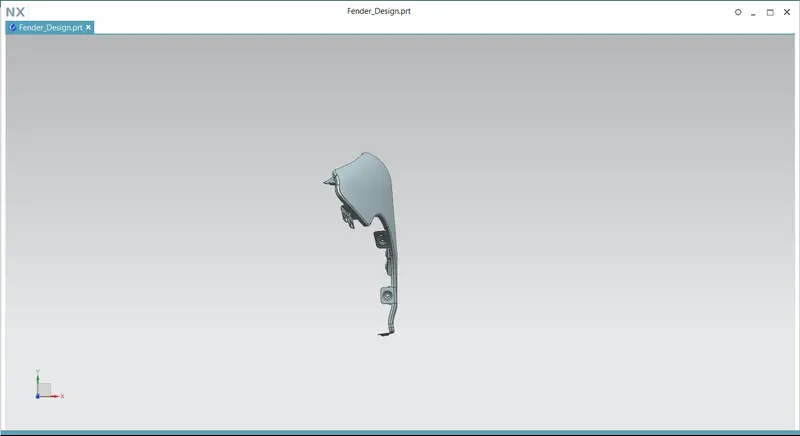
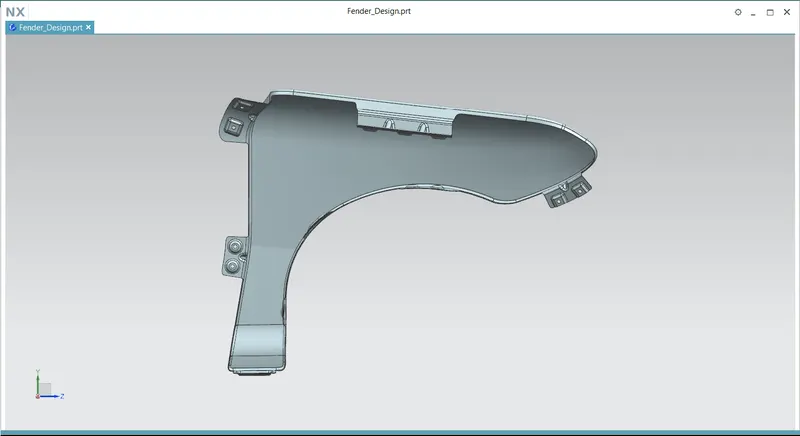
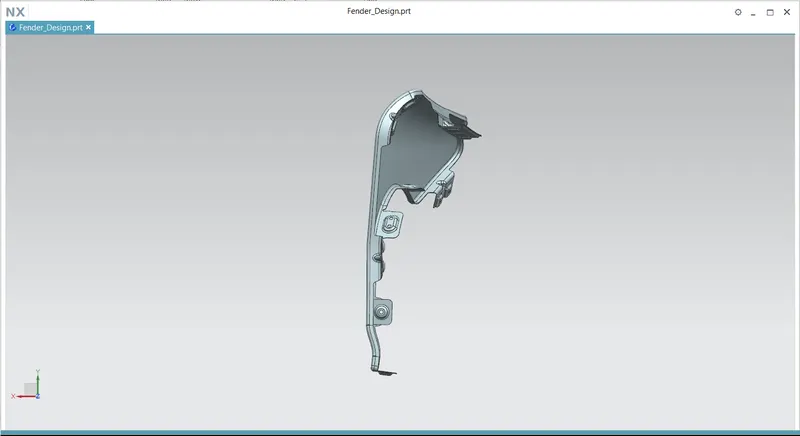
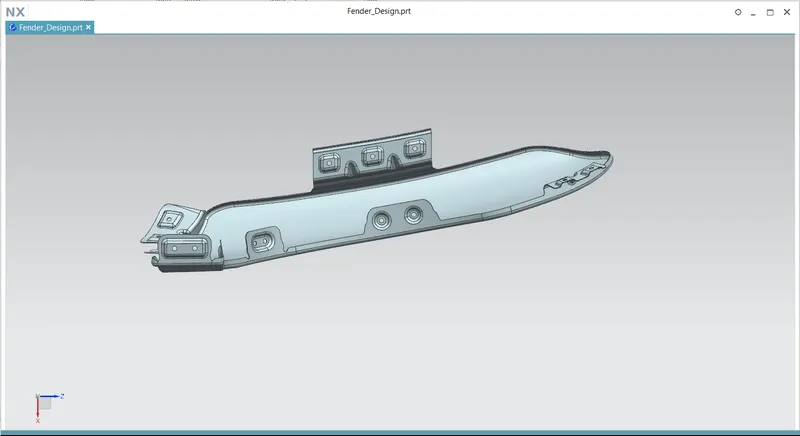
Mounting areas :
Drip area -
Bumper mounting -
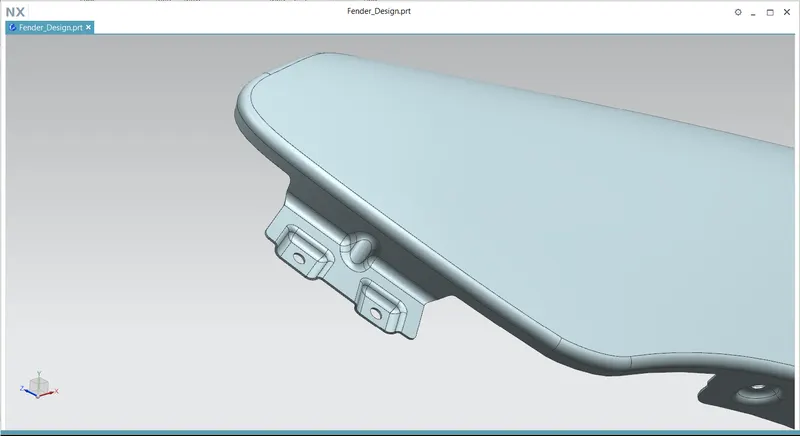
Baffle mounting -
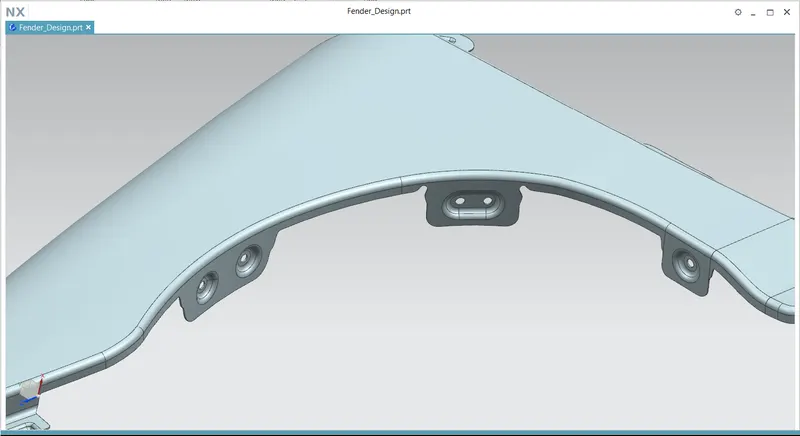
Sill and Body mounting areas -
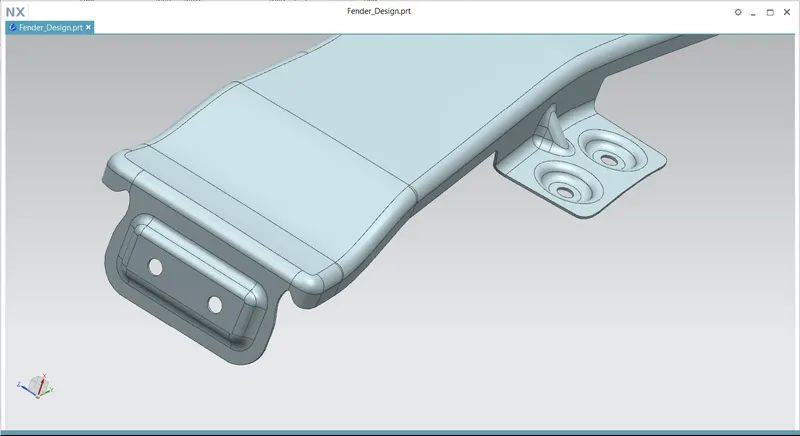
A pillar mounting -
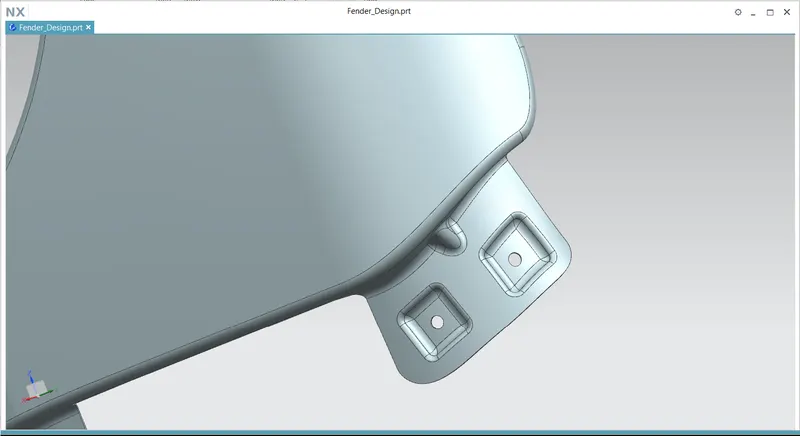
Conclusion :
The fender is created from the given Class A surface and features such as, flanges, brackets for the various mounting ares such as, A-pillar, Drip area, bumper mounting, baffle mountings, sill area and body mountings are designed.