Structural analysis of a buidling using Robot Structural Analysis
1) What are HVAC systems? Why are they essential in the modeling of buildings
Answer 1:
HAVC system is stand for Heating Ventilation and Air Conditioning. this system is design to achieve the environmental requirements of the comfort of occupants and a procces. HVAC systems generally control temperature, humidity, and quality of air in a building or any occupied space. it is a technology of indoor elements, our indoor environment comfort, its goal is to provide thermal comfort and acceptable indoor air quality.
HAVC is an important part of residential structures such as single-family homes, apartment buildings, hotels and senior living facilities, medium to large industrial and office buildings such as skyscrapers and hospitals were safe and healthy buildings conditions are higher regulated with respect to temperature and humidity using fresh air from outdoors.
There are basically seven main processes required to achieve the full meaning of HVAC:
- Heating: It is the process of raising the temperature of the space by the process of adding additional thermal energy (heat) to the conditioned space.
- Cooling: It is the process of lowering the temperature of the space by the process of removing thermal energy (heat) from the conditioned space.
- Humidifying: It is the process of lowering the moisture content of the air by the process of adding water vapour (moisture) to the air in the conditioned space.
- Dehumidifying: It is the process of lowering the moisture content of the air by the process of removing water vapour (moisture) from the air in the conditioned space.
- Cleaning: It is the process of improving the air quality by removing particulates and biological contaminants from the air delivered to the conditioned space.
- Ventilation: It is the process of improving the air quality, composition and freshness by exchanging air between the outdoors and the conditioned space for the purpose of diluting the gaseous contaminants present in the air.
- Air Movement: It is the process of circulation and mixing of the air through the conditioned spaces in the building for the purpose of achieving proper thermal energy transfer.
Essential in Building Modelling:
- HVAC systems control the overall climate in the building. They also make the proper adjustments whenever we experience changes in outdoor temperature. During the winter season, the HVAC systems (mainly the boilers or heaters) work to keep the indoor temperature at a comfortable level. In hotter times of the season, the HVAC systems regulate air temperature by providing the necessary cooling to keep the entire building comfortable.
- HVAC systems not only regulate the temperature inside the building, they also improve the quality of air. The quality of air pertains to humidity, and a typical HVAC system will reduce the amount of humidity in the air.
- Proper HVAC systems are a worthy investment for any business or building owner because it gives you energy savings. HVAC systems today are automated, which means you no longer have to manually adjust the temperature settings or the time settings of each machine. Given that your entire HVAC system operates in an automated system, proper adjustments will be made right when they are needed. This makes your energy consumption more efficient as it gets rid of energy wasted on improper settings.
- Another important contribution HVAC systems have on the workplace is that it is believed to also lower the attrition rate of employees. Studies on corporate workplace behaviour and employee motivations suggest that workers are more enticed to keep coming to work if their office is properly cooled and/or heated. Having the proper temperature at work is seen to be one of the most understated factors for building a solid team at work.
2) From week 7 assignment, based on the building designed use the same Revit file to design a HVAC system for each floor to cover the topics included in the class.
a. Typical HVAC unit includes Distribution center
b. Collector
c. Ducts
d. Blower
Based on the layout choose appropriate ducts and elevation using property browser and assign the components to appropriate groups to complete modeling of the HVAC unit
AIM: Based on week 7th assignment, designed HVAC system for Residential Building.
INTRODUCTION: To design HVAC system for each floor on 7th week assignment including Typical HVAC unit with Distribution center, Collector, Ducts and Blower and final result given.
PROCEDURE:
STEP 1) CREATE MODEL FOR PROJECT
- Open Revit software
- Select new model from Revit home interface
- Choose Mechanical template>OK
- From the file tab save the model with appropriate folder and name
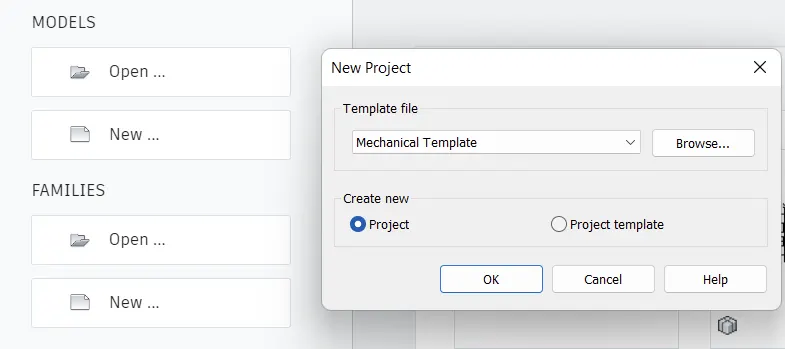
STEP 2) LINK THE 7TH WEEK ASSIGNMENT
- Select Manage tool from Mange view
- Click on Add in manage tool and navigate to 7th week project and click Open
- Finally click ok to link the project
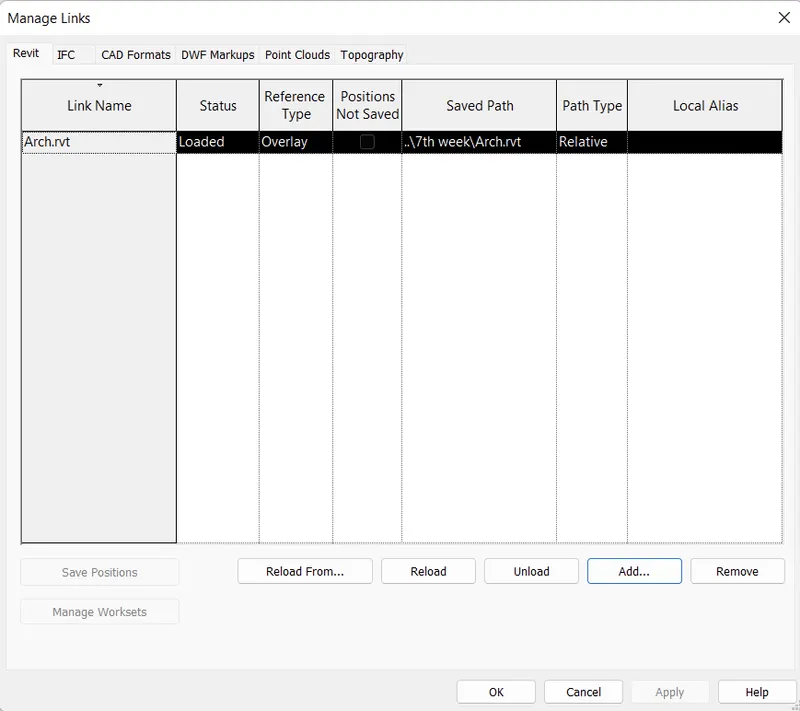
STEP 3) ADD HVAC SYSTEM
- In the first-floor mechanical plan adds HVAC unit
- Select Air Terminal from System View and select the desire Air Terminal from property browser
- Place the air terminal in each room
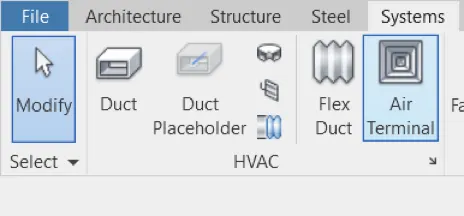
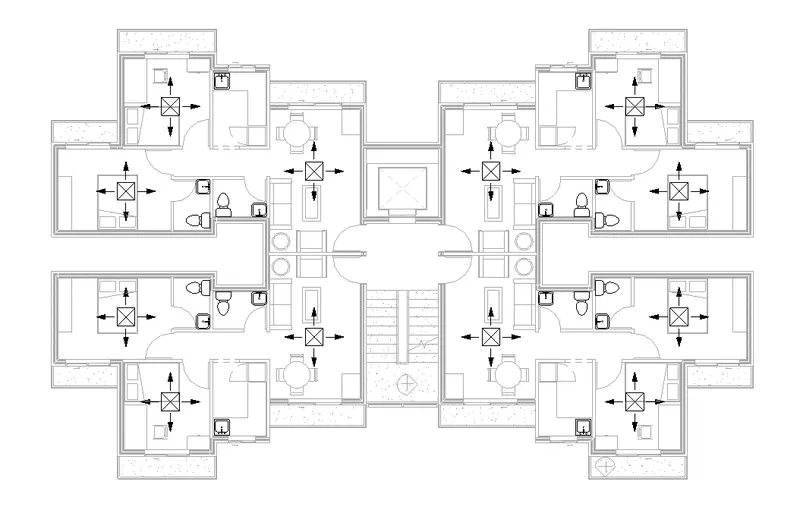
STEP 4) ADD COLLECTOR
- In the same floor plan add some mechanical equipment
- Go to system tab select mechanical equipment and select appropriate collector unit
- Place in each flat

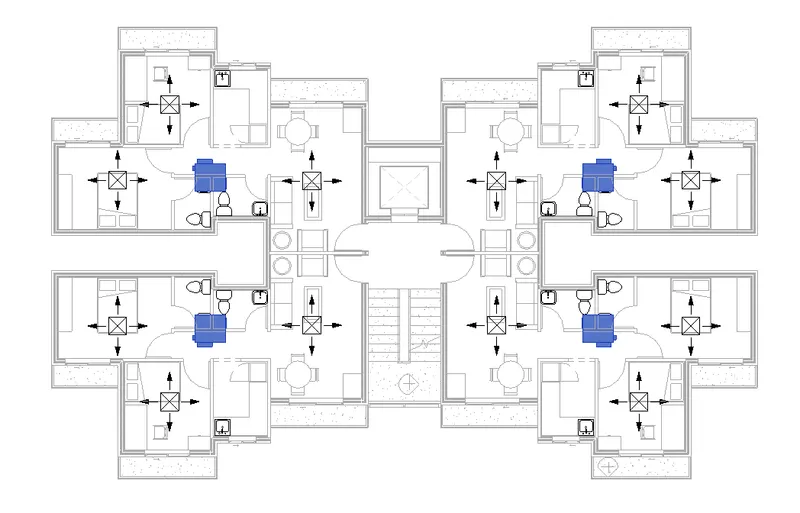
STEP 5) ADD DUCT and BLOWER
- In the same floor plan connect duct
- Select all equipment in one flat by pressing ctrl
- In the modify tab select duct

- Click OK on appeared dialog box
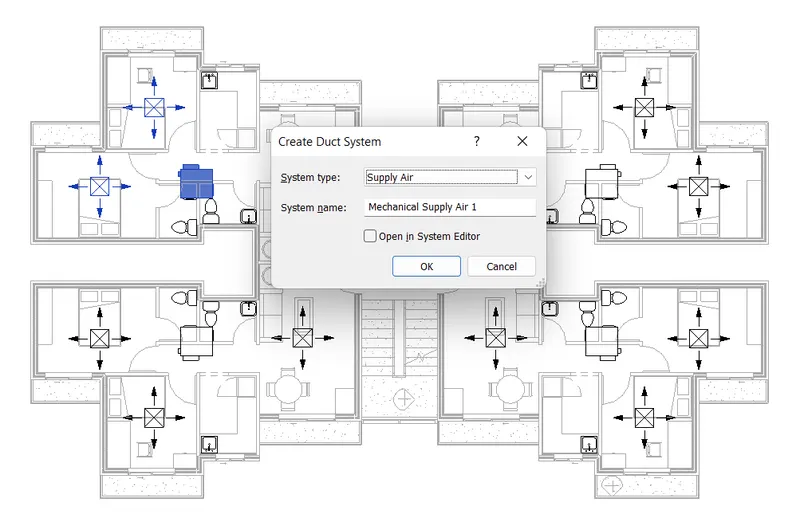
- Click on generate layout
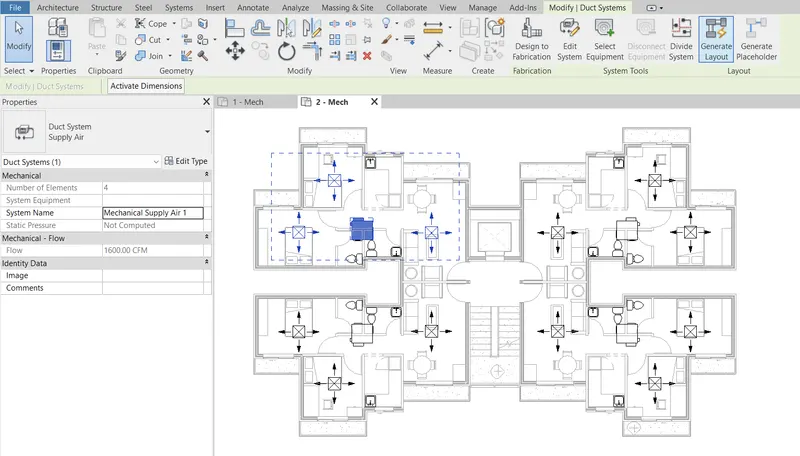
- Select suitable network to connect ducts
- Finish the generate layout tab
- Similarly do for other flats
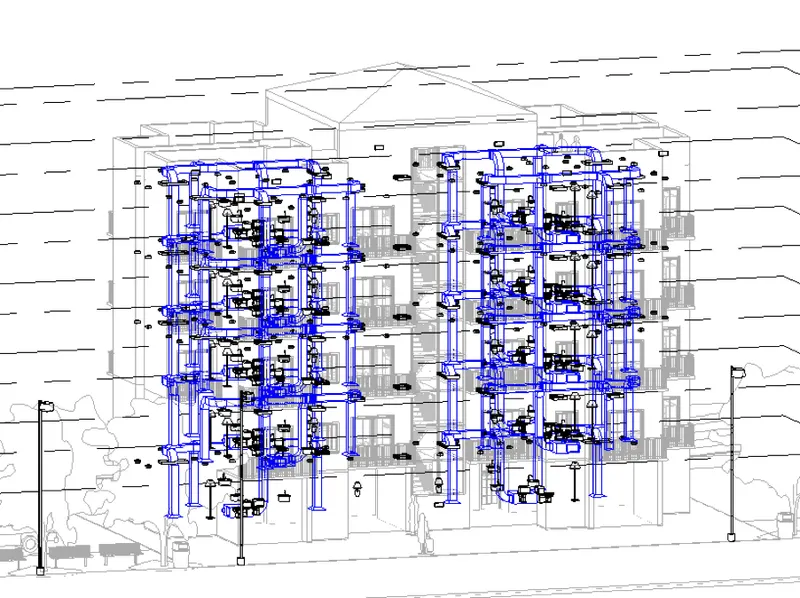
- After that select all placed HVAC system and copy to align the other level
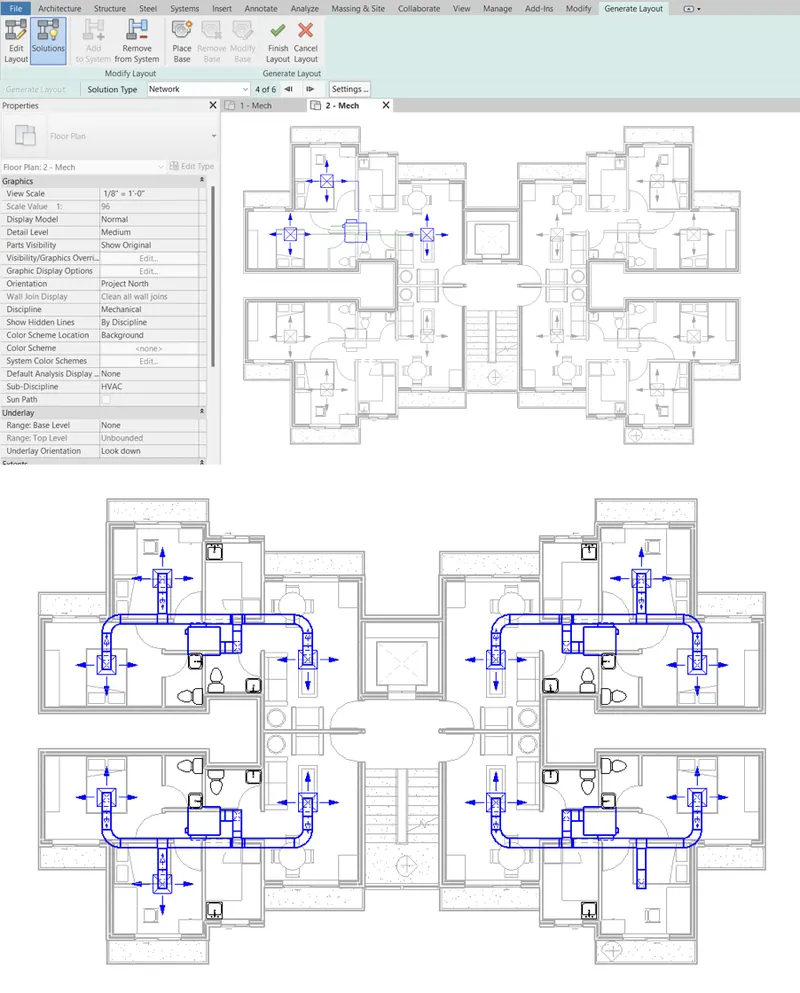
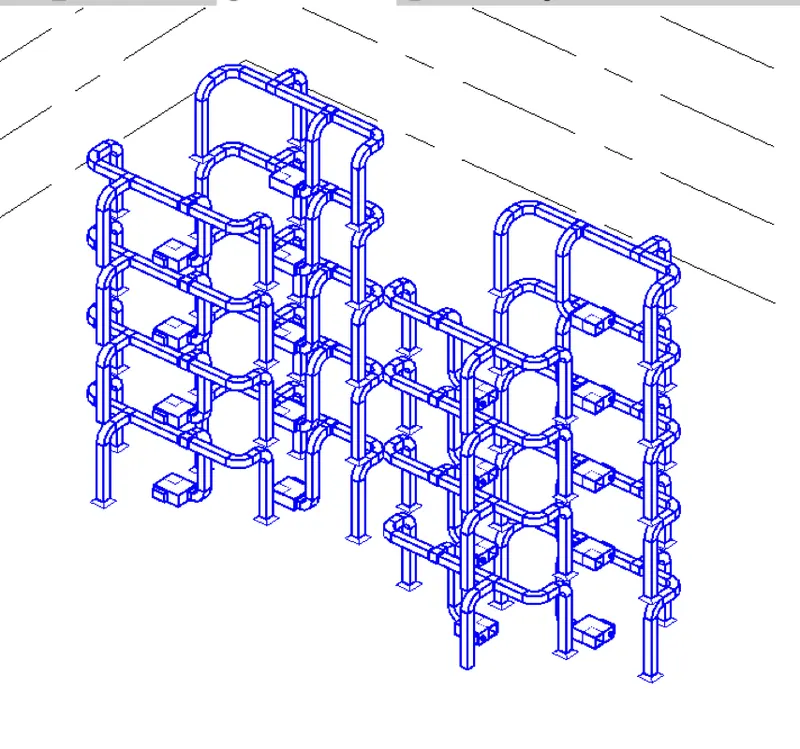
RESULT:
Following above procedure, we have installed the all-HVAC system in each floor
3) Use the add-ins tab to load plug-ins for robot structural analysis to your Revit software
AIM:
Add robot structure analysis to my Revit software
INTRODUCTION:
By using add in tab to load plug in for robot structure analysis
PROCEDURE:
STEP 1) ADD ROBOT ANALYSIS
- Open any model in Revit software
- Go to cart upper right side then click
- Autodesk app store will be open in web browser
- Then log into and search robot structure analysis professional 2020
- Download and install the software
- After completion go to analyse tab, it will show in structure analysis panel

RESULT:
To following the above procedure, we have installed successfully Robot Structure Analysis Professional 2020
4) Why do we need to assess buildings/analyze while modeling elements? Does design affect modeling in anyways?
Answer 4:
It Helps to calculate loads and internal forces: structural analysis is essential in modelling elements as it helps in calculating and determining the effects of loads and internal forces on a structure, building on any object.
It helps to cross check the engineering design: It is particularly important for structural engineers to ensure that they have complete understanding on the load bars and impacts the loads have on their engineering design. It also allows engineers or designer to ensure that a piece of equipment or structure is safe for use under the estimated loads it is expect to with stand.
Can perform during design: Structural analysis can be either we perform during design, testing or postconstruction and will generally account for the material used geometry of the structure and applied loads.
Can analysis each and individual elements: Structural analysis is usually looks at an individual structural element and forces they undergo. Structural engineer will look at structural analysis results for all the structural components like beam, slabs, cables and walls so all of these elements have forces applied to them such as wind load, live load, dead load for all the loads which will be based on the building, so it is important for the engineer to review how each of these elements behave under these loads.
the structural design that affects the model they will help to design better models and cover the issues with an existing model and allows to incorporate the alternatives.
5) From the structural model developed in week 6 and 7, export the complete analytical model to robot structural analysis.
a. List your assumptions on what boundary conditions will be realistic for the analysis approach
b. Use the design standards to decide what loads must be applied to floorings based on the type of structure decided
c. List the load combinations and include them in the analysis model
d. Analyze the building and report the following results
i. Maximum Moment in each floor for all Load Combinations
ii. Maximum Displacement in each floor for all Load combinations
iii. Lateral Displacement in building for all Lateral Load combinations
e. After analysis, do you think you have a better approach or idea in modeling structural members?
AIM:
Exported the complete structure analytical model to robot structure analysis which is developed in week 6 and 7
INTRODUCTION:
In the exported model we analyse different type of load cases, load combination and boundary condition
PROCEDURE:
STEP 1) ASSUMPTION ON BOUNDARY CONDITION
- Area load for Multi-Story Residential Building will be acting on over all floor
- Live load, dead load and wind load subjected on the structure
- Boundary condition are fixed for the Multi-Story Residential Building
STEP 2) LOAD THAT WILL BE APPLIED FOR DECIDED STRUCTURE
- For Multi-Story Residential Building the load which applied are Live-load, Dead-load, Wind-Load
STEP 3) ANALYSE THE BUILDING
- According to the IS CODE – 875, the load combination for Multi-Story Residential Building
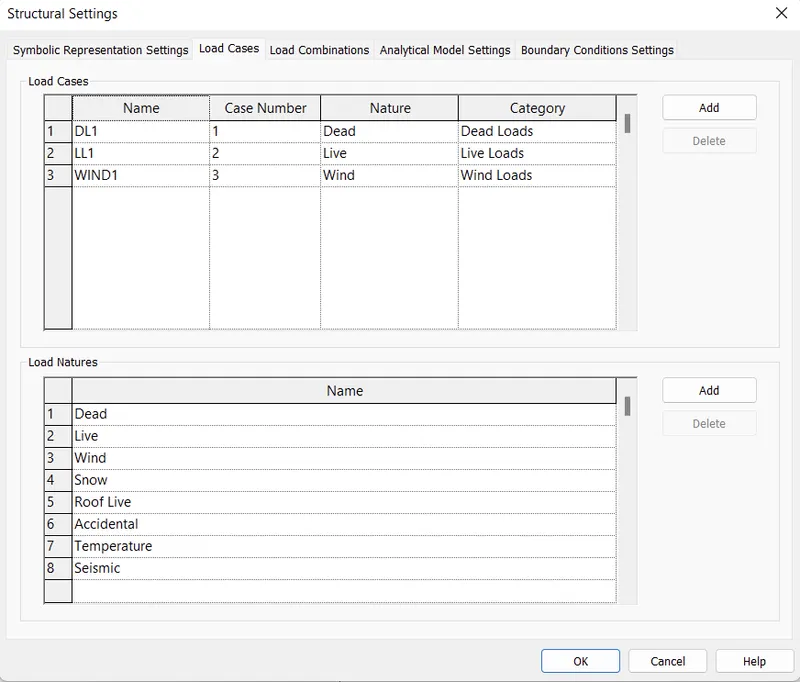
- Go to manage tab drop down structural setting and open

- Go to load case tab delete unwanted load from the dialog box
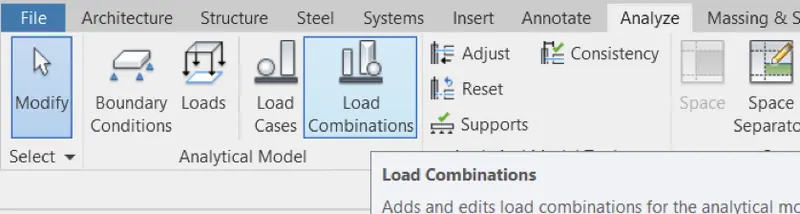
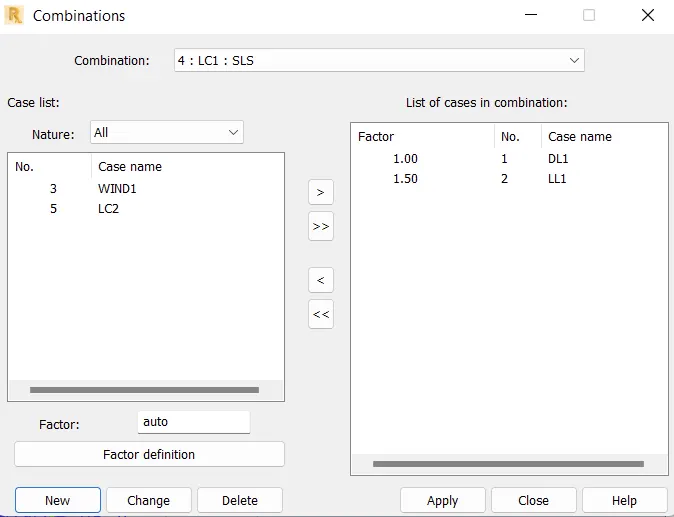
- Go to analyse tab select load combination and add load combination and formula as well
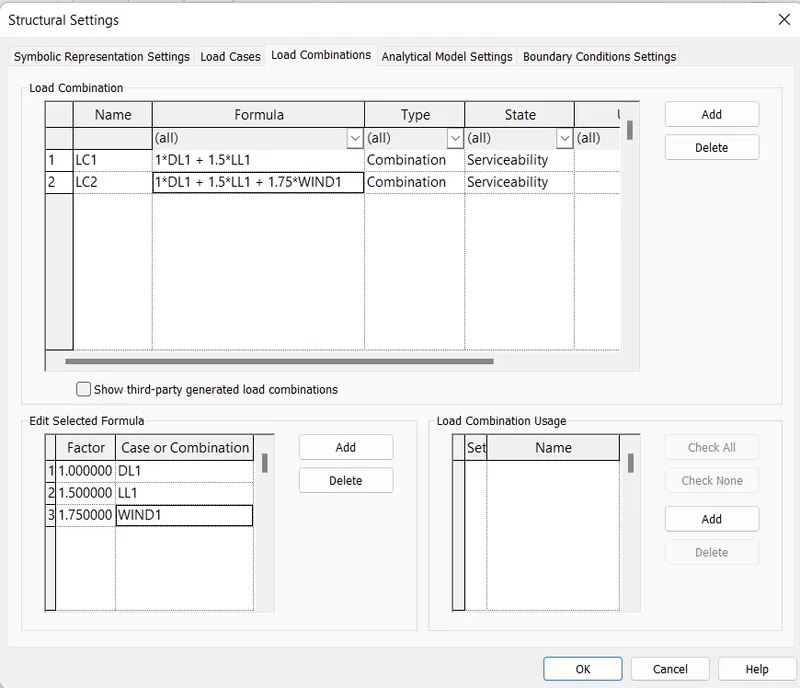
- After that define load form analyse tab under the analytical model
- Select area load and draw periphery line
- Copy the area load to all floors

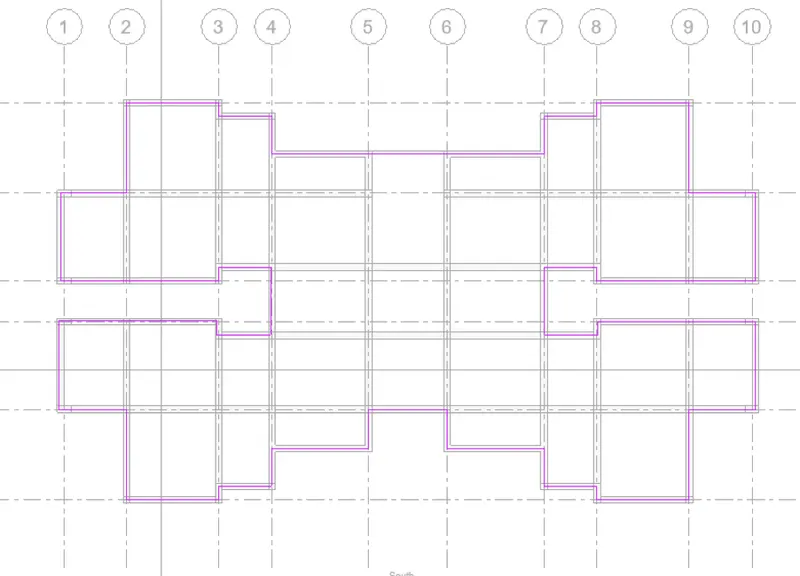
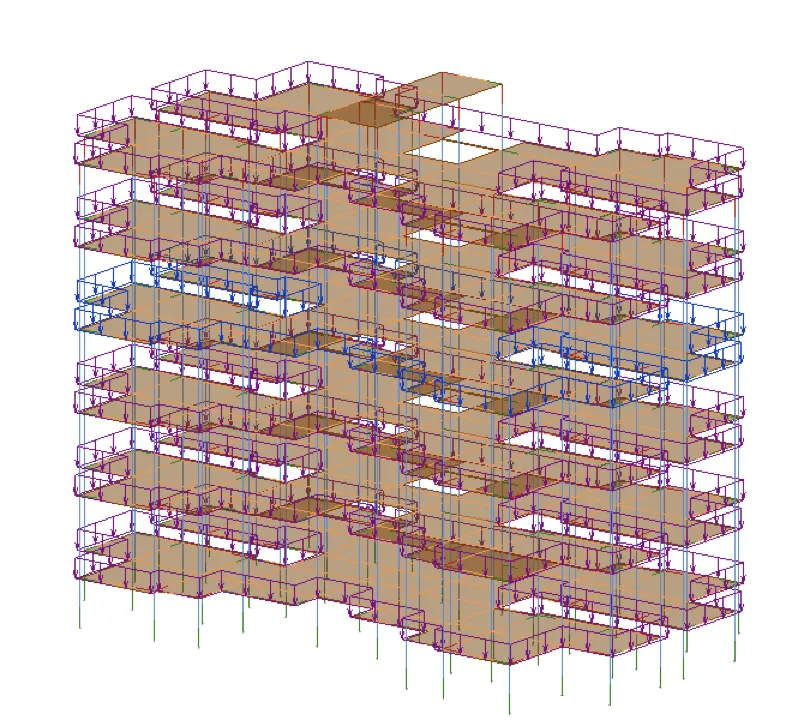
- From the analyse tab select boundary condition
- Select the bottom point of the column
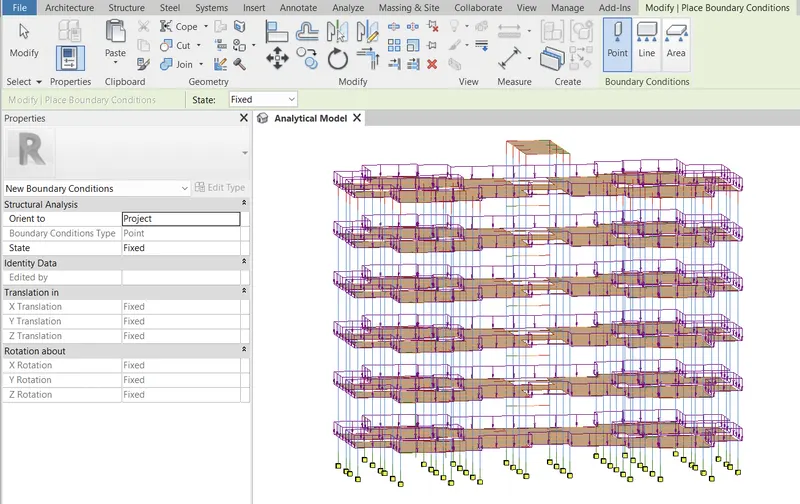
STEP 4) ROBOT ANALYSE OF THE BUILDING
- From the analyse tab drop down newly added robot structure analysis
- Then select robot structure analysis link

- Select from the dialog box
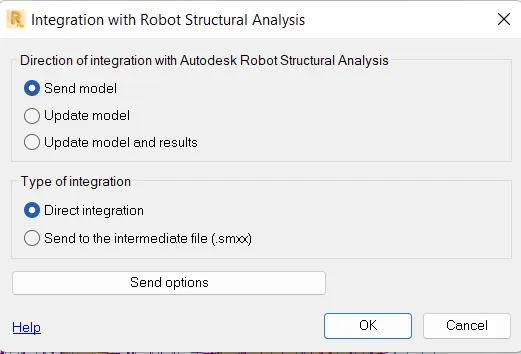
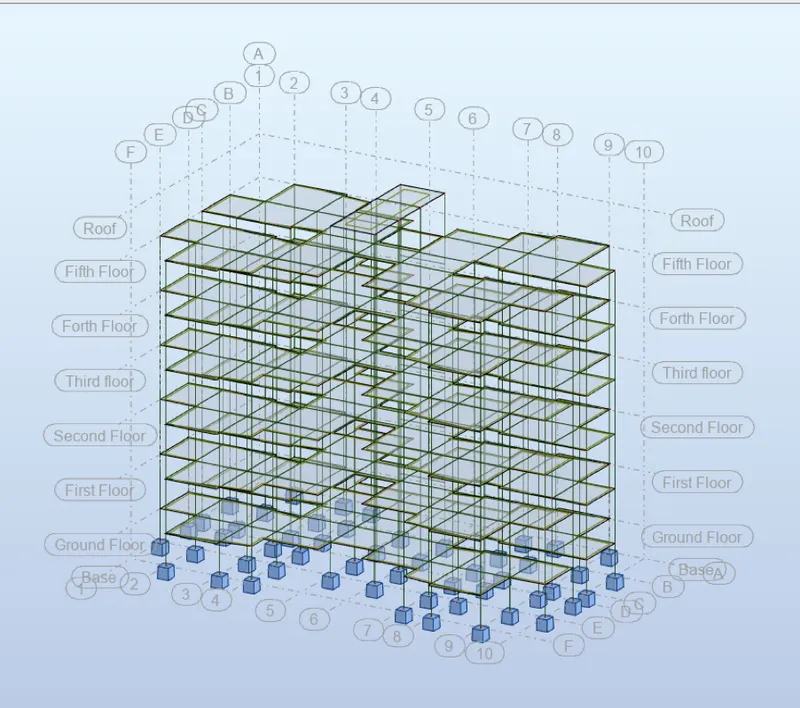
- Robot structure analysis software open the model
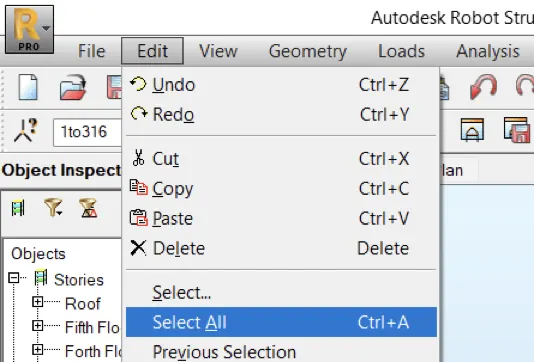
- From the edit tab click select all
- Then go to loads tab and select manual combination
- Click on apply form the dialog box
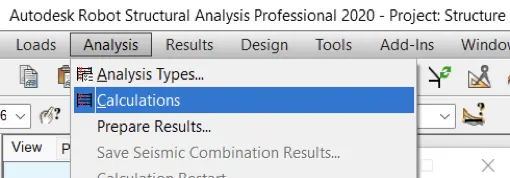
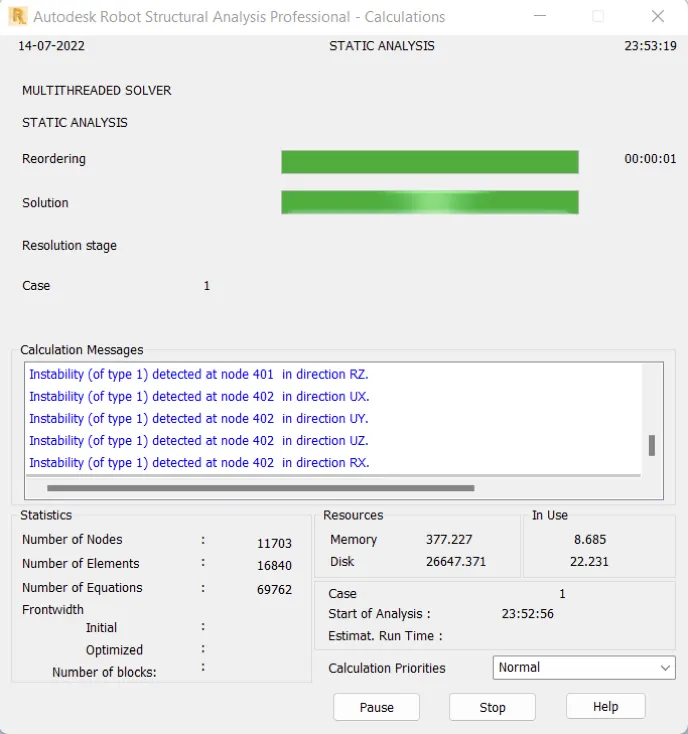
- After that go to analyse tab select calculation
- After selection the analysis will start analysing
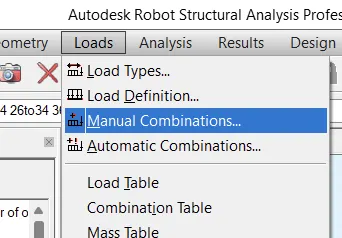
RESULT:
After analysis, i get a better approach or idea in modeling structrual member
6) What is energy analysis and why do we need to consider it while modeling in Revit?
How does the factor of sustainability improve the quality of your design?
Answer6:
Buildings demand energy in their life cycle right from its construction to demolition energy. Energy analysis is a traditional method of assessing the energy. it is used in operation involving the physical and chemical processing of material. High energy consumptions may lead to serious environmental impacts like increase in the rate of global warming. Therefore, it is important to study the energy consumption of building at the conceptual stage.
Energy usage analysis of buildings involves four principal steps:
- Calculation of heat loss and gain to the building spaces and the heating and cooling loads imposed upon the building HVAC systems. This calculation is carried out for a space temperature fixed in time and is commonly called the Loads calculation. It answers the question: how much heat addition or extraction is required to maintain the space at a constant temperature as the outside weather conditions and internal activity vary in time and the building mass absorbs and releases heat.
- Calculation of the energy addition and extraction actually to be supplied by the HVAC system in order to meet the possibly varying temperature set-points and humidity criteria subject to the schedules of fans, boilers and chillers, and to outside air requirements. This calculation results in the demand for energy that is made on the primary energy sources of the building.
- Determination of the fuel requirements of primary equipment such as boilers and chillers, and of the' energy production of solar collectors, etc., in the attempt to supply the energy demand of the HVAC systems. This Plant calculation answers the question: how much fuel and electrical input is required to feed the secondary HVAC system given the efficiency and operating characteristics of, the plant equipment and components.
- Evaluates the costs of equipment, fuel, electricity, labor and retrofit components against the alternative of investing the money in other ways.
Factor of Sustainability:
- Lower energy: A sustainable design is intendant to completely eliminate negative environmental impacts throughout the design process this concept can be applied across all field of such as designing buildings. A sustainable design regardless of application will seek to incorporate environmentally preferable outcomes such as lower energy and water consumption through the entire life cycle.
- Impact of climate change: It minimises the impact on climate change by reducing greenhouse gas emission or mitigating them through the carbon neutralising activities.
- Resource consumption: Limit resource consumption through waste free manufacturing.
- Quality and durability of price: It looks for ways to incorporate biomimicry principles wherever possible. It emphasises into the quality and durability of over the price
- Nontoxic material: It gives preference to non-toxic materials.