Reinforcement Detailing of Beams from ETABS output
Aim:
To Providing details of longitudinal and shear reinforcement for the two continuous beams using ETABS
Step 1:
1) After downloading the model given in the question, click the Concrete frame design tool in the ribbon tab.
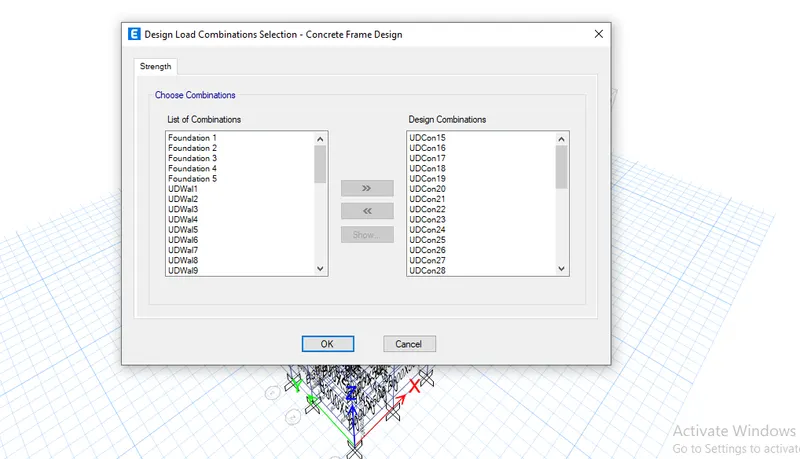
2) Choose Select design combinations
3) Select the appropriate combination from the dialogue box
4) Click ok
Step 2:
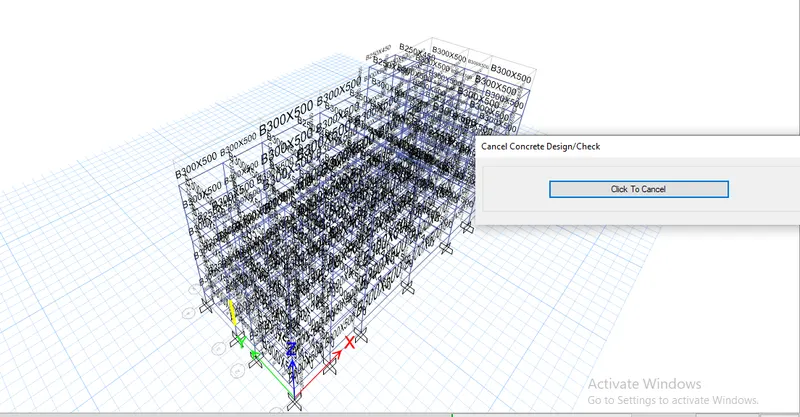
1) Once the analysis is done, Click concrete frame icon
2) After clicking the icon, it starts checking the concrete design
Step 3:
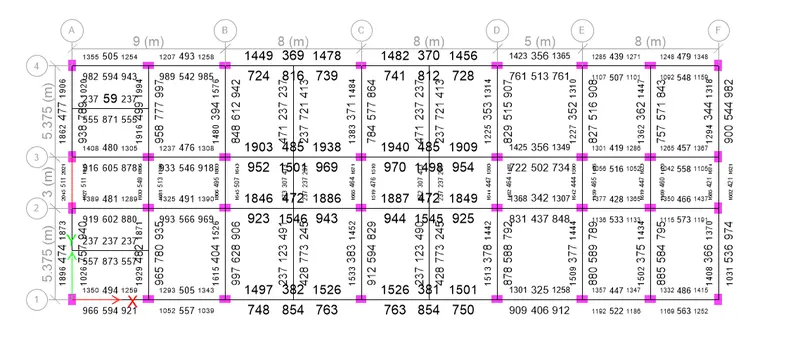
1) After the checking is done, go to the plan view
2) On the plan view we have a column and beam detailing
3) For this, Grid 3 and Grid A need to provide reinforcement details.
Step 4:
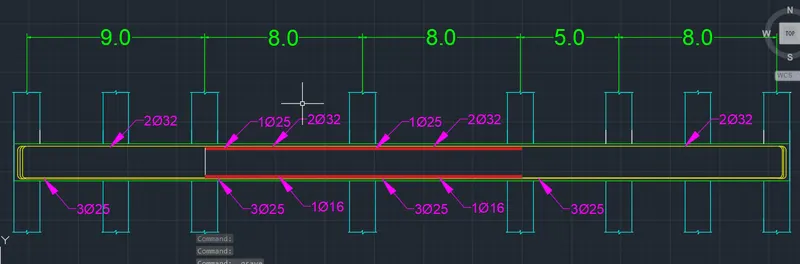
Grid 3:
At Top:
1) Maximum Ast at Support = 194
2) Maximum Ast at Middle = 485.
* 2 dia of 32mm = 1606
* 1 dia of 25 mm = 490
Therefore, to satisfy the support we need to provide 2 dia of 32mm bar and additionally in the middle need to provide 1 dia of 25mm.
At Bottom:
1) Maximum Ast at Support = 1056
2) Maximum Ast at Middle = 1501
* 3 dia of 25mm = 1470
* 1 dia of 16mm = 200.96
Therefore, to satisfy the support we need to provide 3 dia of 25mm bar and additionally in the middle need to provide 1 dia of 16mm.
Step 5:
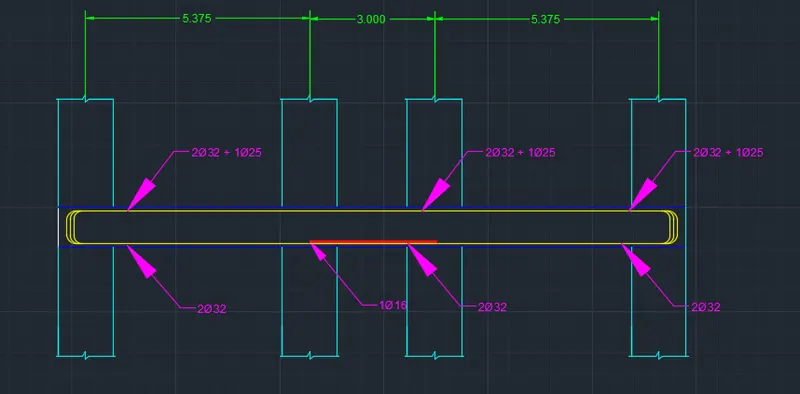
Grid A:
At Top:
1) Maximum Ast at Support = 2045
2) Maximum Ast at Middle = 477.
* 2 dia of 32mm = 1606
* 1 dia of 25 mm = 490
Therefore, to satisfy the support we need to provide 2 dia of 32mm bar and additionally need to provide 1 dia of 25mm.
At Bottom:
1) Maximum Ast at Support = 1927
2) Maximum Ast at Middle = 789
* 2 dia of 32mm = 1606
* 1 dia of 16mm = 200.96
Therefore, to satisfy the support we need to provide 2 dia of 32mm bar and additionally in the middle need to provide 1 dia of 16mm.
Step 6:
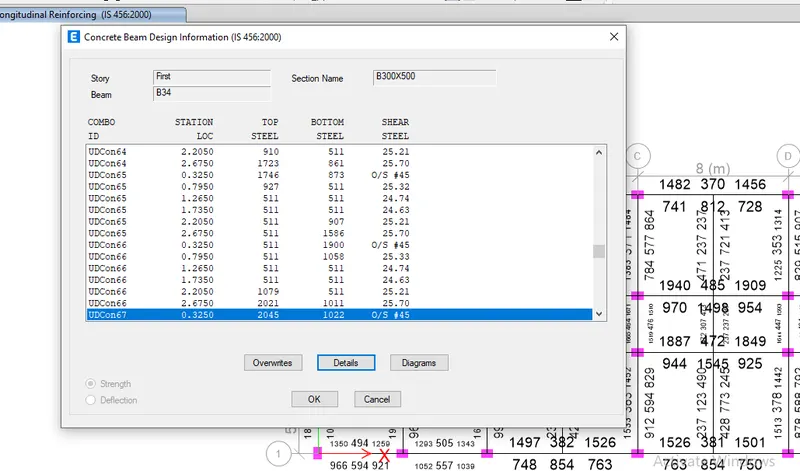
1) Right-Click the Grid A beam
2) Click Details and switch it into shear details
Step 7:
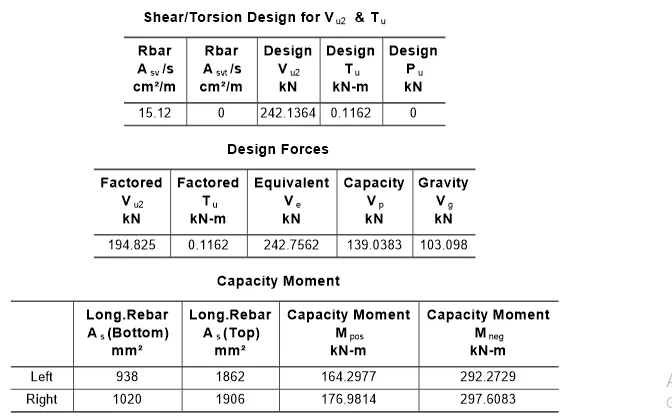
1) As per clause 6.3.3 the design force of equivalent Ve = 242.75 kN
2) Shear force under the linear analysis as per the load combination of UDCons66 = 194.825 kN
Step-1:
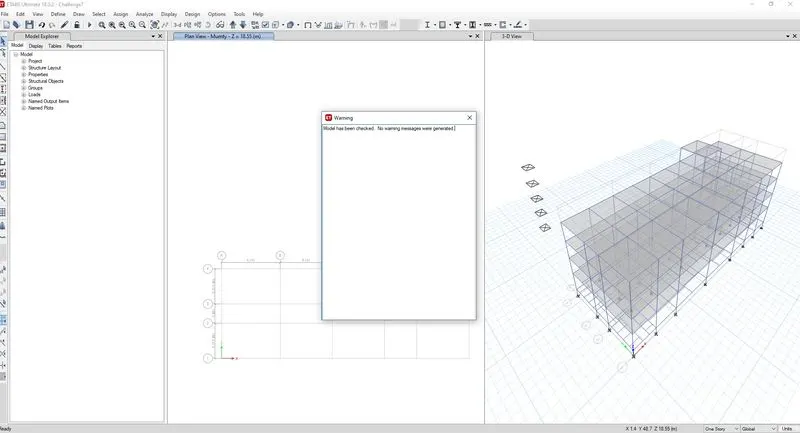
Analyse > Check model
Analyse > Run analysis
Using the above toolpath, the given model is first checked for its errors and warnings. The model is found to be OK. The Model has completed analysis.
Step-2:
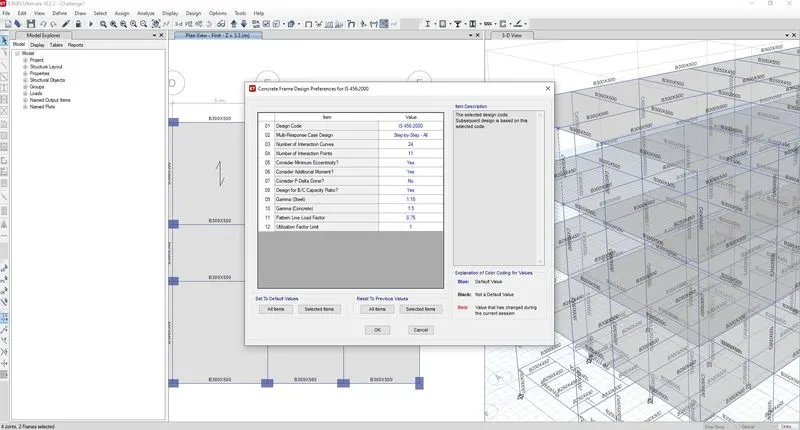
Design > Frame design Preference
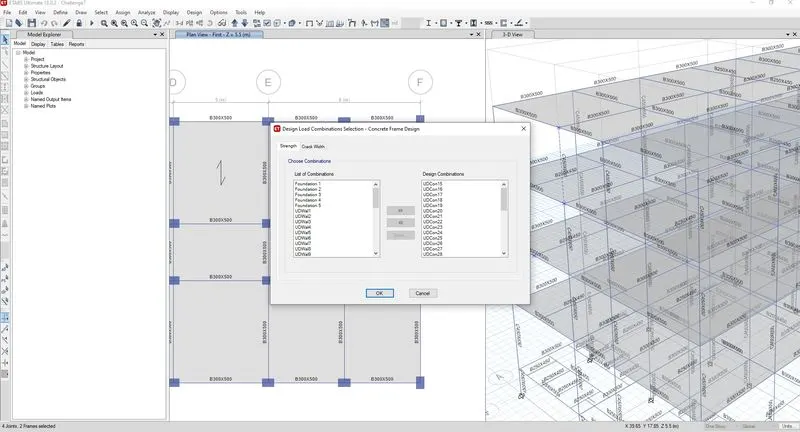
Design > Design combination
Design > Start design/check
Using the above toolpath, the given ETABS model is ensured for its design code assignment and combination assignments. Then the ETABS model is design initiated.
Step-3:
Design > Verify all members passed
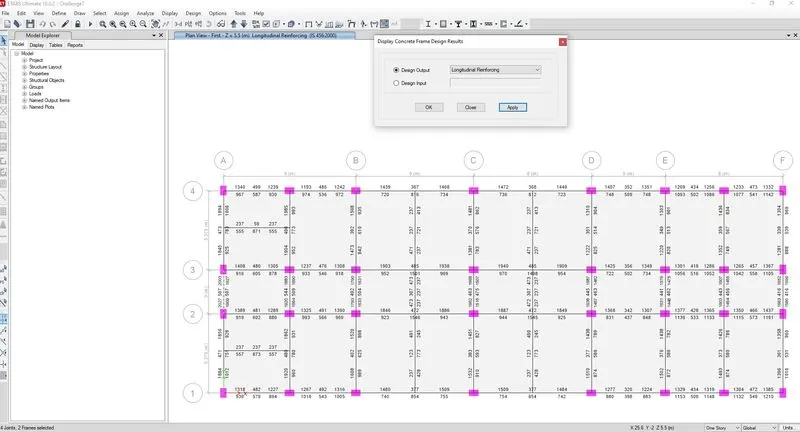
Design > Display design info > Flexural reinforcement
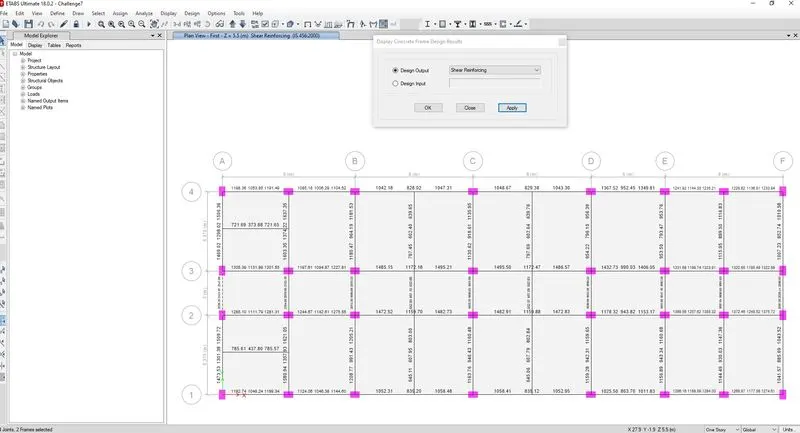
Design > Display design info > Shear reinforcement
Using the above toolpath, the Model is verified for all members satisfy design criteria. The design flexural reinforcement and shear reinforcement are noted from the Frame design output for the requested RC beams along Grid-A and Grid-3.
Step-4:
As per the noted rebar outputs, the Longitudinal sections for those two RC beams are drawn using AutoCAD software and detailing is done complying IS 13920-2016 requirements.
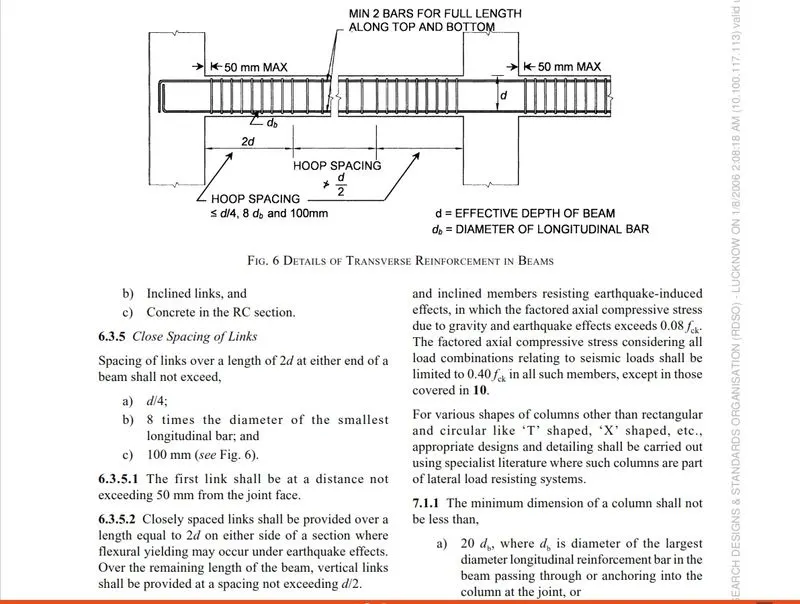
Note: Drawing is attached as PDF format.
The scope of failure in midspan of Grid-A RC beam:
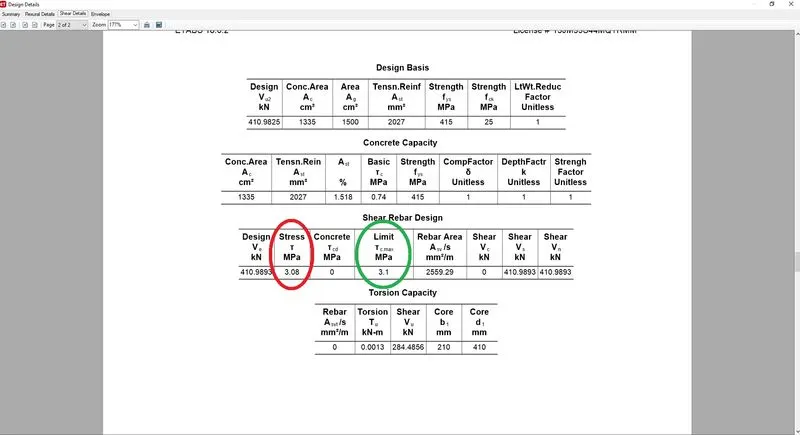
It is noted that central span of Grid-A RC beam is nearly failing due to higher shear stress. As per the above shear force value (3.08 MPa) against the maximum allowable shear stress (3.1 MPa), is almost failing but passes numerically. This design shear force is arrived in philosophy of Capacity design concept. This can be resolved in any of the following process.
- a) Optimizing provided flexural reinforcement
- b) reducing depth of RC beam which in turn reduce stiffness and flexure requirement
- c) increasing concrete grade will increase allowable shear stress limit.