Fender Design - Wheel Arch Challenge
FENDER WHEEL ARCH -DESIGN CALCULATIONS
AIM: To calculate the wheel arch gaps at required points and conclude whether the car passes the test based on the European standards
Objective :the main objective is to give projections for the points at 30& 50 degress and a point at a distance of 150mm from the wheel arch centre and a middle line paxssing in between the 50 deg line and the 150mm line and calculate the gap in between the ptrojected lines and the wheel arch edge and come to conclude whether a gap of 10mm is present based on the European standards
Defnitions :
Fender :
A fender is the part of a car, truck, motorcycle, or other vehicles that frames or covers a wheel well. Its main purpose is to prevent debris, rocks, mud, liquids, sand, and other road debris from getting thrown in the air while the tires rotate
The “fender” typically refers to the front panel that covers the front wheels, and the “quarter panel” typically refers to the rear panel that covers the wheel that also includes the roof pillar. The “bumper” is the front and rear ends of a motor vehicle to absorb impact in a minor collision.
The below image shows a fender and quarter panel on a car. The top half of the image is the fender or “front fender” (highlighted in red). The bottom half of the image shows the quarter panel or “rear fender” (highlighted red).
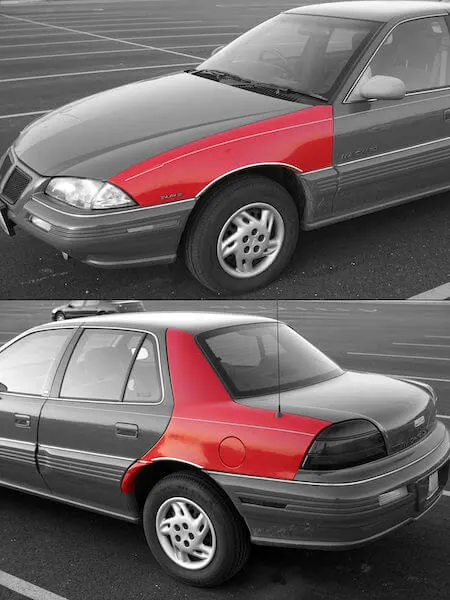
The fender car part is the body kit or body part installed on the left and right sides of the vehicle. Manufacturers usually attach fenders to the wheel arches. There are different reasons why they are a requirement in vehicles. One obvious reason is to improve the aesthetics of the vehicle.
Fenders also enhance the car’s aerodynamics. They also prevent mud, sand, rocks, liquid, and all sorts of debris from being thrown in the air while you’re driving your car.
This body part was given a name that describes its intended purpose quite well, not just how they look. Fenders actually guard the vehicle against the different types of debris that fly off from the road. They are just that – “defenders of road debris.”
Primary Function of Fender
The main purpose why there are fenders on cars is that they shield the wheels and they protect the passengers, the pedestrians, and the other vehicles from stones, mud, liquid, and other debris that can fly in the air because of the speeding rotating wheels while the car is running.
Driving will be very messy if your car doesn’t have fenders that house the wheel wells. The tires of your car spin fast when you drive. As they rotate, they catch moisture and debris from the pavement and spray them into the air.
The tire’s kinetic energy ejects these foreign matters into the air at high velocities. As this thing is happening, the moisture and debris that fly in the air can cause the following to happen:
- Get other vehicles or pedestrians on the road side dirty
- Hurt pedestrians
- Scratch the bodies of other vehicles
- Cause minor, and even major damage to other vehicles
These are some of the reasons why your car should have fenders. They catch the dirt, moisture, and debris and prevent them from hurting people and causing damage to other vehicles on the road. Fenders are there to contain these foreign materials within the confines of your car.
Types of fenders:
Full Bumper Type:
The full bumper type is the traditional type of fender where more material consumption is observed. This type is used in the old designs of automobiles where it increases the overall weight and thus reduces performance. The maintenance also relatively more due to more surface.
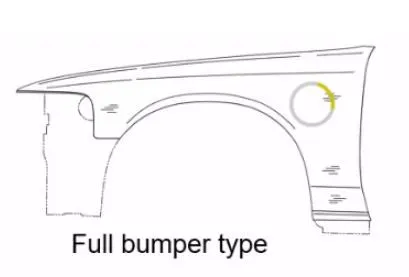
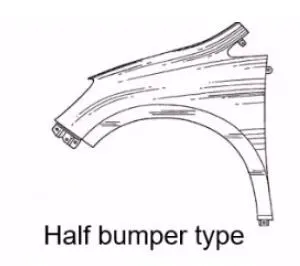
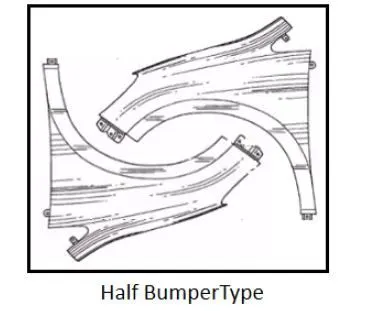
Half Bumper Type:
Half bumper type is the modern design where less material consumption is observed, so productivity increases by reducing the size of the blank and thus providing more performance. The maintenance also relatively low compared to the full bumper type.
We are changed from full bumper type to half bumper type to reduce the scrap rate per blank. In the full bumper, we can only produce one Fender per blank, whereas as a half bumper type we can produce 2 fenders per blank.
Wheel arch :
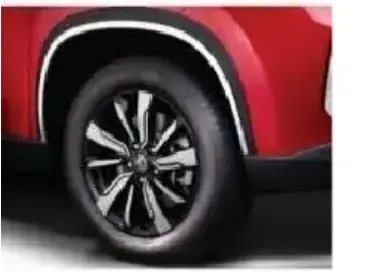
Te wheel arch is a semicircular paret positioned above the wheel of a vehicle. The design of the wheel arch will be different based on countries and the main goal is
designing of fender wheeel arch should satisfy the regulations and standards as per the countries
REGULATIONS PRESCRIBED BY THE COUNTRIES :
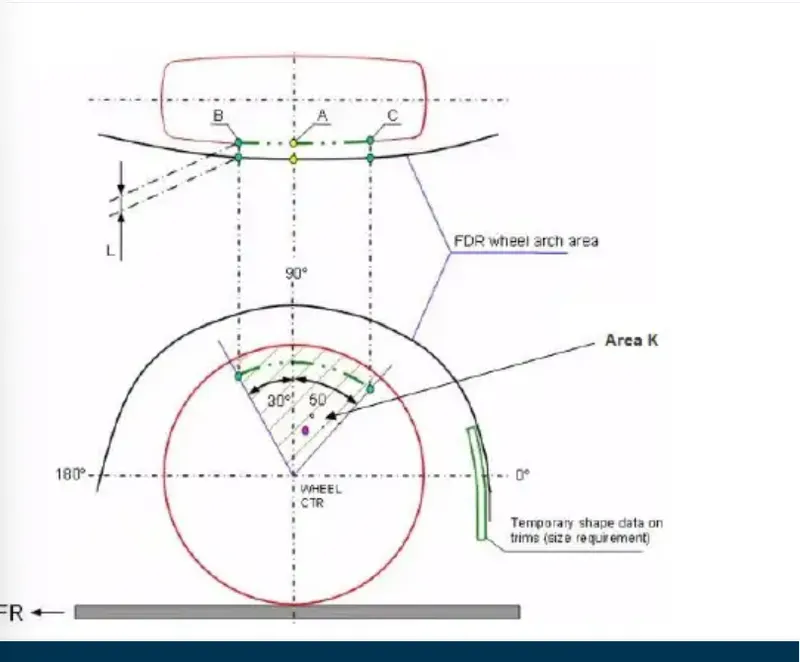
JAPAN REGULATIONS STANDARD:
- The clearance L is more than 5 mm should be following in the japan regulation
and standard
- Take an angle of 30 degree, 50 degree and 90 degree and from then centre of the wheel and create a vertical line B , A , C as shown below L value has been measured between point of B,A, C and edge boundary of the fender wheel arch
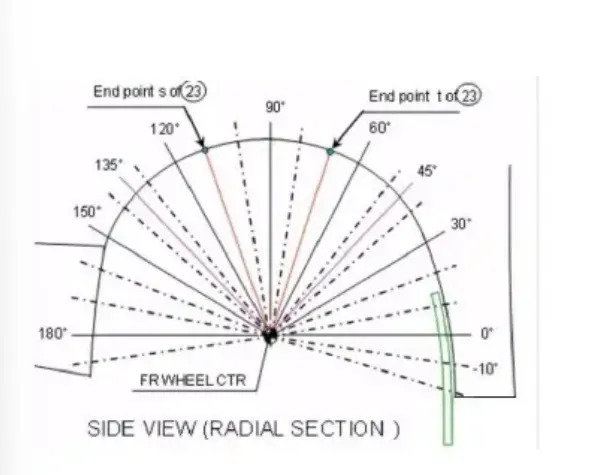
US REGULATIONS STANDARD:
- The section that we are going to measure L ewill be divided from -10deg to 190 deg from the centre of the wheel as shown in the below fig
- The clearance L is more than 5 mm should be followed in US regulation and standard
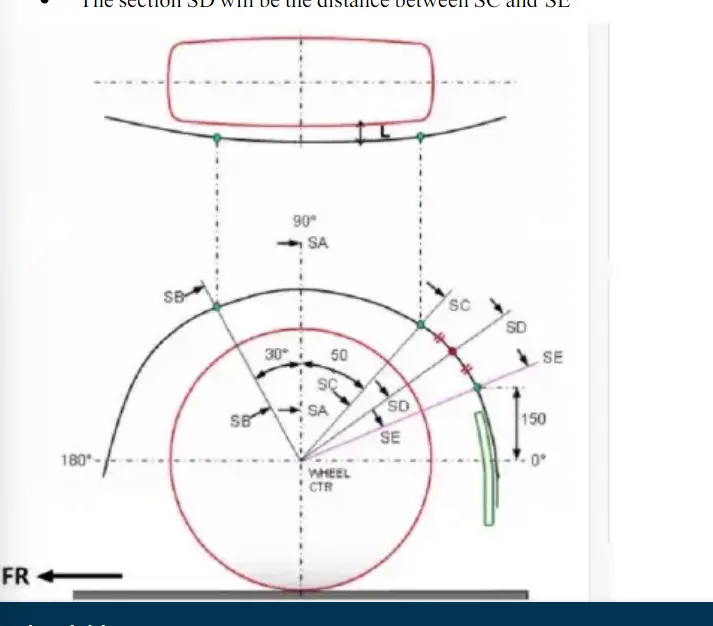
EUROPEAN REGULATION STANDARD:
- The clearance L will be more than 10mm at the section of SB, SA, SC, SD , SE
- The section SA will be 90 deg from the centre of the wheel
- The section SB will be 30deg from the line SA
- The section SC will be 50deg from the line SA
- The section SE will be 150mm from the horizontal from the point of centre
- The section SD will be at a distance between SC and SE.
European standard calculations on the provided fender wheel arch fender
The provided wheel arch is
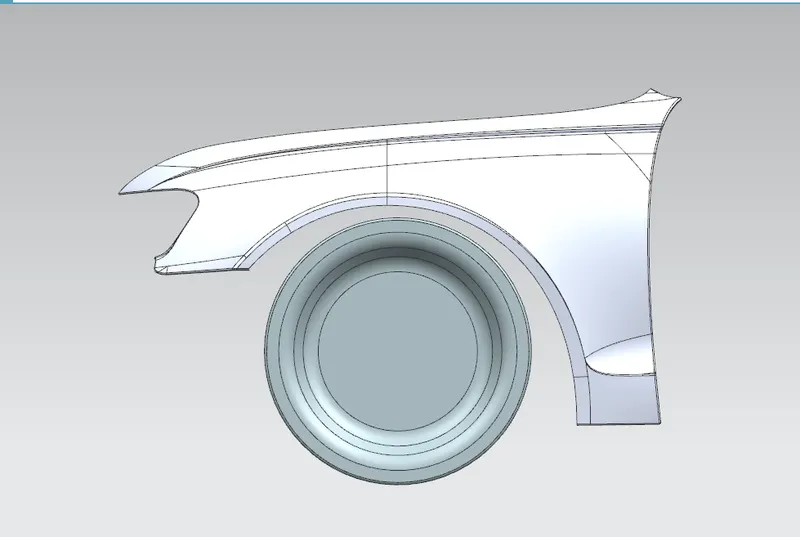
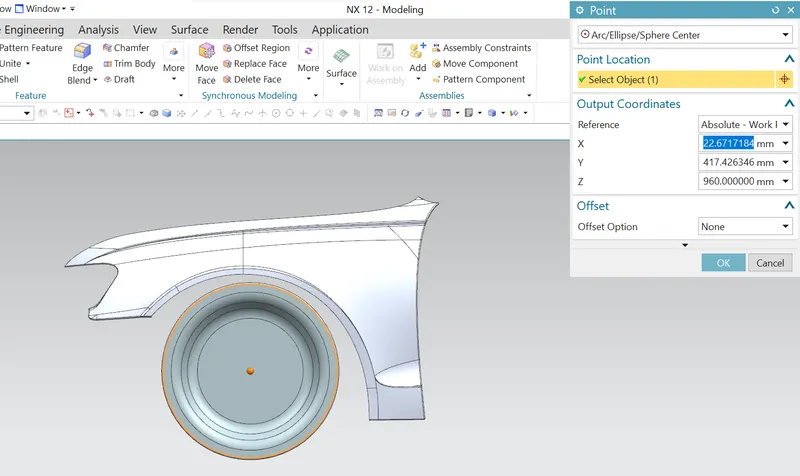
First of all create a point by taking the reference of the outer most circle and mark the point on the gender wheel arch centre.
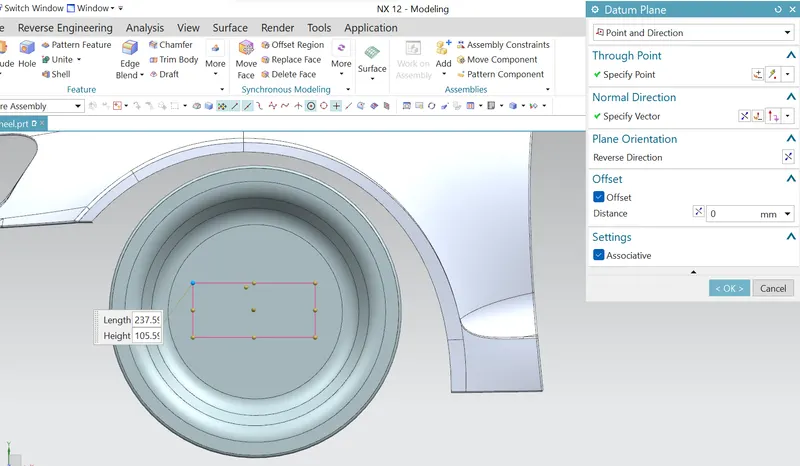
Then create an datum plane by using the point and the direction commnad .
Then creat a sketch according to the standard sketch followed in the European standards
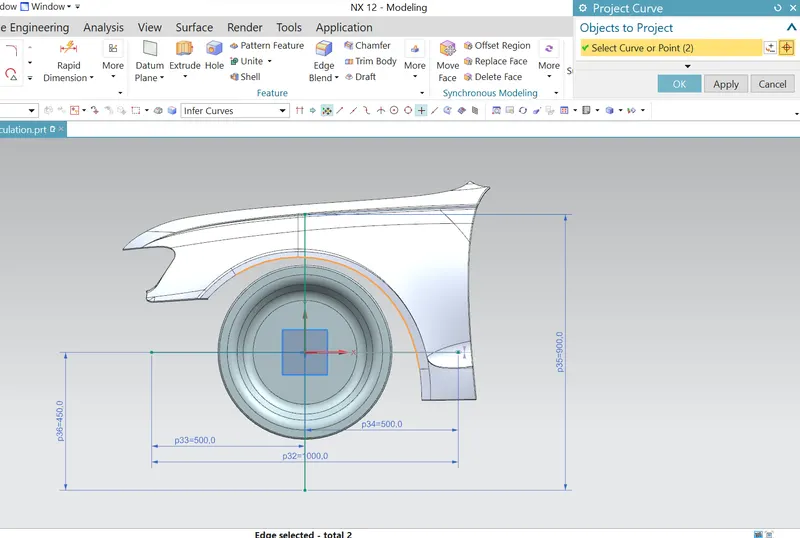
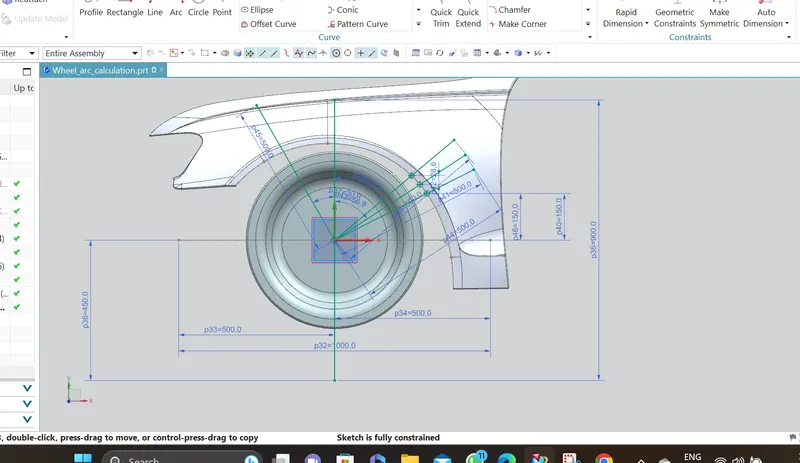
Now mark the SA, SB, SC, SD, SE pooints in the sketch
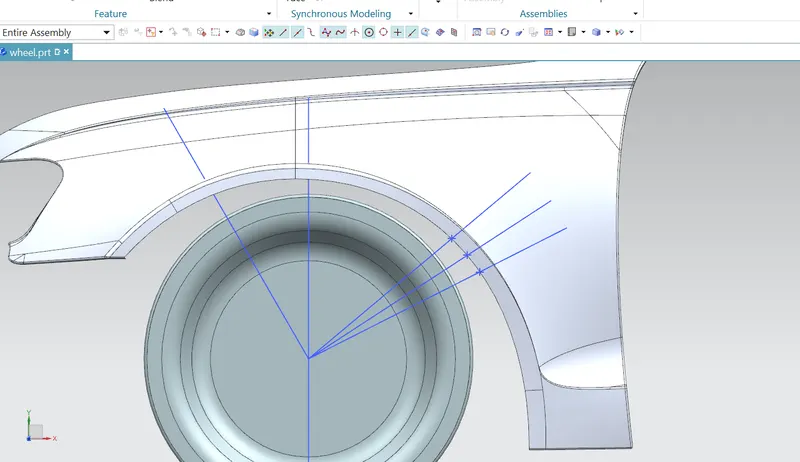
Now calculate the distance of the gap between each line with respect to the fender wheel arch edge
Distance of SA with the wheel arch edge
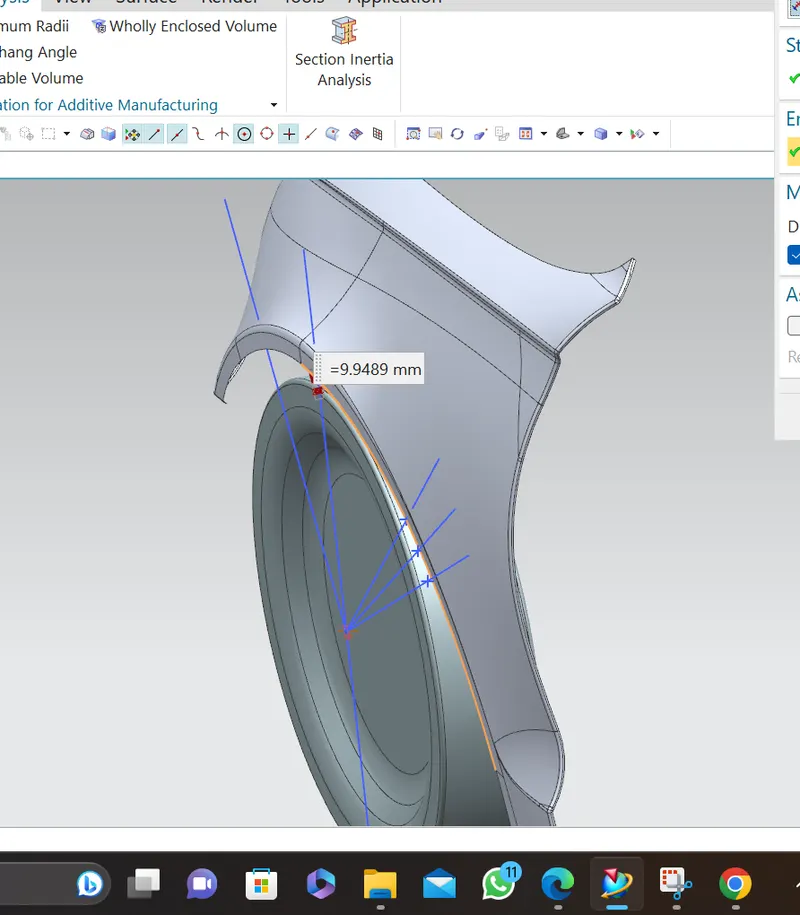
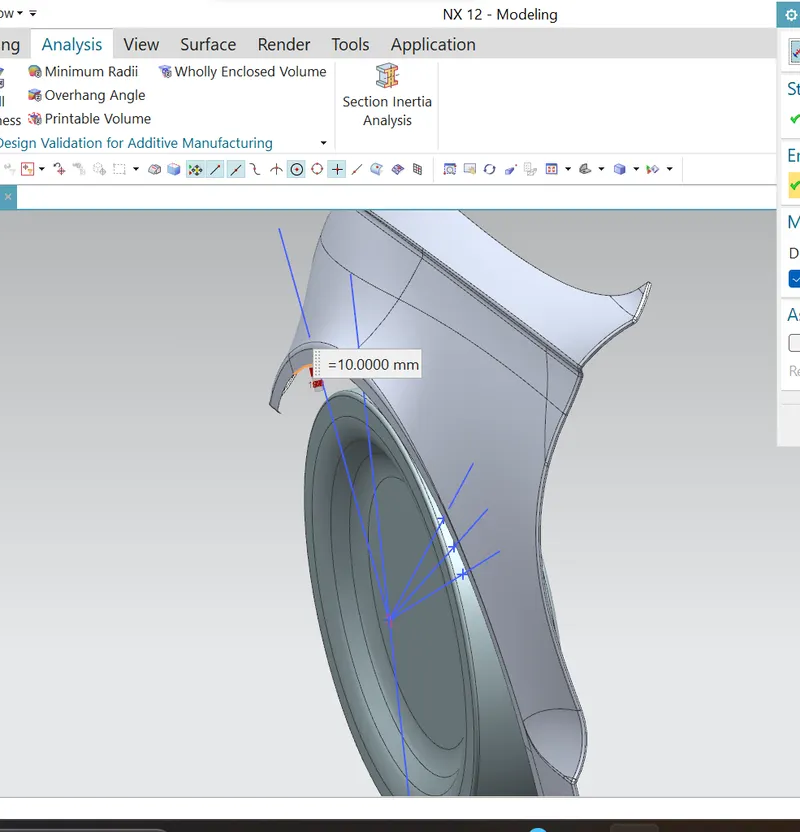
Distance of SB with the wheel arch edge
Distance of SC with the wheel arch edge
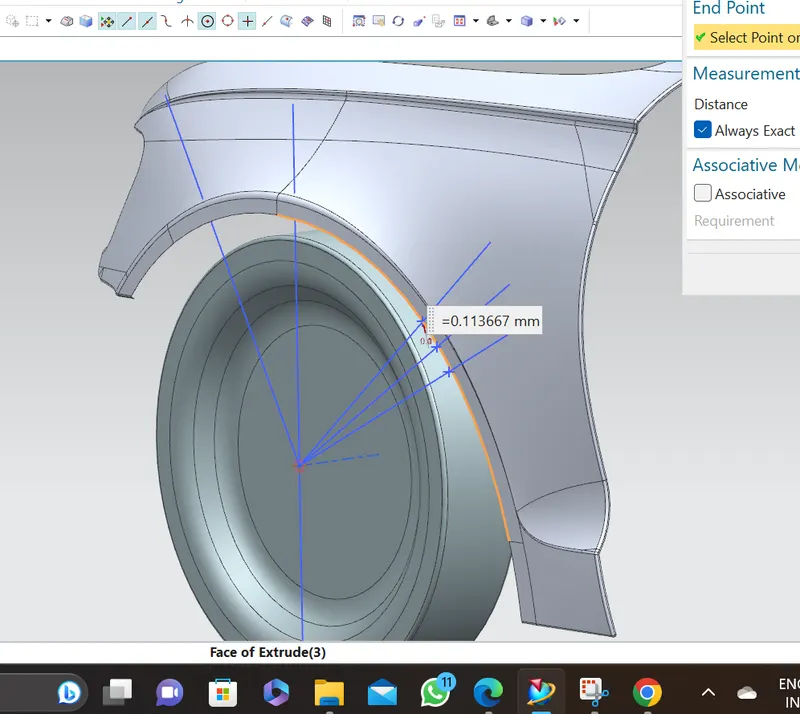
Distance of SD with the wheel arch edge
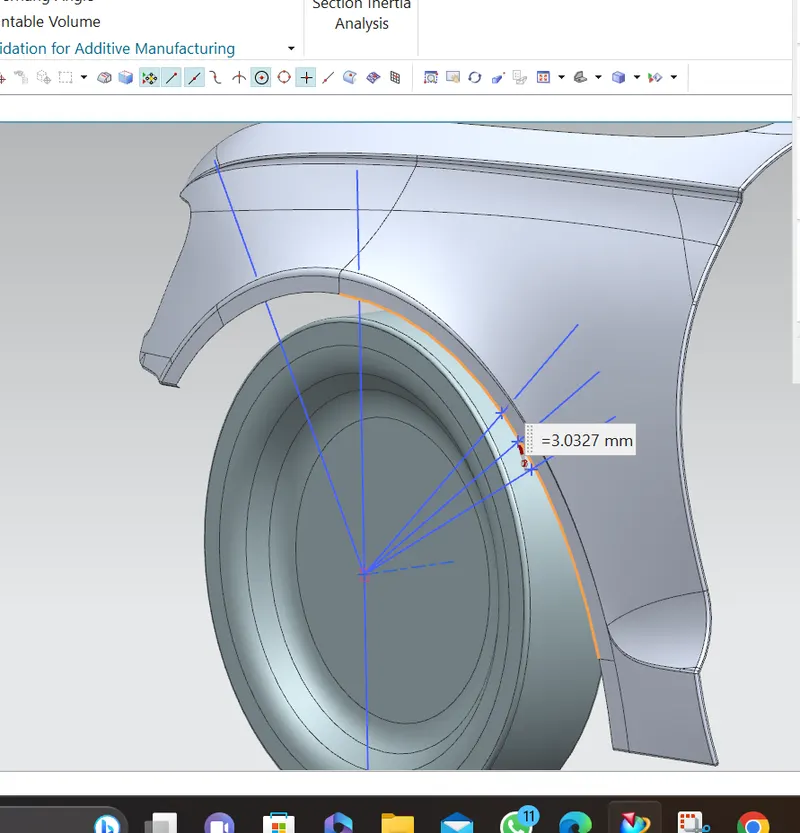
Distance of SE with the wheel arch edge
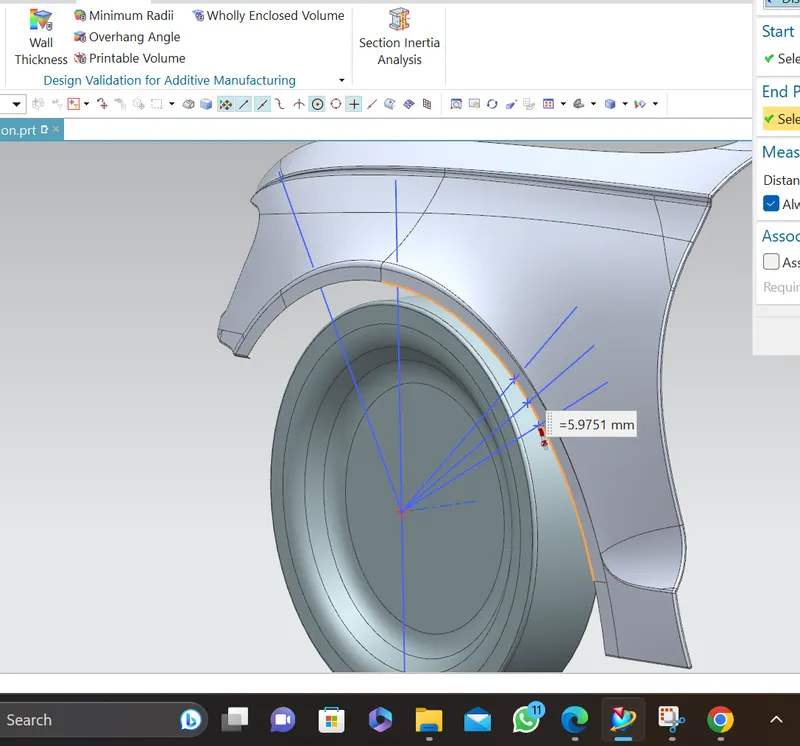
Now compare with the required regulation and standard values of the Europe and comes to conclude whether is good or need modification
| POSITION | MEASURED VALUE | REQUIRED VALUE | DIFFERENCE VALUE ABOVE & BELOW |
| SA | 9.9489 mm | 10 mm | -0.0511 mm |
| SB | 10 mm | 10 mm | 0 mm |
| SC | 0.113667 mm | 10mm | + 0.113667 mm |
| SD | 3.0327 mm | 10mm | +3.0327 mm |
| SE | 5.9751 mm | 10mm | + 5.9751 mm |
Basically the value of the gap needs to be measured from the lines of SC, SD, SE to the wheel arch edge from inside but the gap here is measured from the outside as the lines are protruded to the wheel arch from ouside so it is a positive difference which clarly shows that the lines SC, SD, SE clarly fails the European standards of regulations
Conclusion:
After all measuring the values of the gaps bewteen the lines SA, SB, SC, SD, SE the respective values of the gaps arenoted and observed that the line SB only clars the European regulation and the standard desifn of the fender arch by claiming a gap of 10mm between the wheel arch edge and the projected line and the remaining lines SA, SC, SD, SE clarly fails and hence we need to report to the fender designer to make changes in the dimensions so, that the European standard of regulations is satisfied