Benchmarking
BENCHMARKING IN AUTOMOTIVE INDUSTY
Benchmarking:
In automotive industry , benchmarking is a technical word which provides the meaning of COMPARSION that means when we need to develop a new car and release in the prevailing market to compete with the other comapanies fiurst of all the designer automotive engineer neeed to get the following information before the start of developing and designing the new one they are basically
- What are the prevailing cars aiming the market today?
- What are the features and comfort offered?
- What are the safety mesasures they are providing ?
After all gethering all the questions mentioned above he need to develop an ideology that how can I be able to provide the same product with desired available features at a lesser cost and how can be be able to recifty the drawbacks in the present running model cars , and how can i be able to add more comprehensive features so that my developed cars should aim to rule the market . For making all the things possible the designer needs a proper benchnmaking study.
Benchmarking is a process of measuring the performance of a company’s products, services, or processes against those of another business considered to be the best in the industry, “best in class.” The point of benchmarking is to identify internal opportunities for improvement. By studying companies with superior performance, breaking down what makes such superior performance possible, and then comparing those processes to how your business operates, you can implement changes that will yield significant improvements.Businesses are always striving for high performance, from creating more efficient processes to selling more of their products and services.Through the benchmarking process, any business can compare itself against a standard and develop a consistent way of measuring performance. Below we’ll cover what benchmarking is, how the benchmarking process can help your business, and how to create benchmarks for a successful improvement plan.
Objective of benchmarking:
The objective of benchmarking is to use the data gathered in your benchmarking process to identify areas where improvements can be made by:
- Determining how and where other companies are achieving higher performance levels than your company has been able to achieve.
- Comparing the competition’s processes and strategies against your own.
- Using the information you gather from your analyses and comparisons to implement changes that will improve your company’s performance, products, and services.
Importance of benchmarking:
The goal of your business should be to grow, improve processes, increase quality, decrease costs, and earn more money. Benchmarking is one of many tools you can use as part of any continuous improvement model used within your organization.
Consistent benchmarking can help you:
- Improve processes and procedures.
- Gauge the effectiveness of past performance.
- Give you a better idea of how the competition operates, which will help you to identify best practices to increase performance.
- Increase efficiency and lower costs, making your business more profitable.
- Improve quality and customer satisfaction.
Steps involve in bench marking:
1. Select a subject to benchmark
What to benchmark is just as important as how to benchmark it. Executives and other senior management should be involved in deciding which processes are critical to the company’s success. Prioritize the processes based on which metrics are most important to all stakeholders, with an emphasis on processes or functions that are easily quantifiable. After prioritizing, select and define the measures you want to collect.
2. Decide which organizations or companies you want to benchmark
Determine if you are going to benchmark processes within your own company, a competitor, or a company outside of your industry.
It may be hard to collect all the data you want if you benchmark a direct competitor. So you should select several different organizations to study in order to get the data you need. Gather information from several sources to get the most detailed information about the organization you select to study.
3. Document your current processes
Map out your current processes so you can identify areas that need improvement and more easily compare against the chosen organization.
4. Collect and analyze data
This step is important—but it can prove difficult when you are trying to gather data from a competitor because a lot of that information may be confidential. Gather information through research, interviews, casual conversations with contacts from the other companies, and with formal interviews or questionnaires.
You can also collect secondary information from websites, reports, marketing materials, and news articles. However, secondary information may not be as reliable.
After you have collected enough data, get all stakeholders together to analyze the data.
5. Measure your performance against the data you’ve collected
Look at the data you’ve collected side by side with the metrics you gathered from your analysis of your own processes. You may want to layer your performance metrics on top of your process diagrams or map out your competitor’s processes to more easily see where you’re falling behind.
As you analyze the comparisons, try to identify what causes the gaps in your process. For example, do you have enough people and are they sufficiently trained to perform assigned tasks? Perhaps there are multiple steps that can be automated or combined to streamline workflow. Brainstorm ideas to effectively and efficiently fill those gaps.
6. Create a plan
Create a plan to implement agreed-on changes that you have identified as being the best to close performance gaps. Implementation requires total buy-in from the top down. Your plan must include clearly defined goals and should be written with the company’s culture in mind to help minimize any pushback you may get from employees.
7. Implement the changes
Closely monitor the changes and employee performance. If new processes are not running smoothly as expected, identify areas that need to be tweaked. Make sure all employees understand their jobs, are well trained, and have the expertise to complete their assigned tasks.
Document all processes and make sure all employees have access to documentation and instructions so that all are on the same page working toward the same goal.
8. Repeat the process
After successfully implementing a new process, it’s time to find other ways to improve. The benchmarking process is one of continual improvement and iteration. Review the new processes you’ve implemented and see if there are any changes that need to be made. If everything is running smoothly, look to other areas or more ambitious projects that you may want to benchmark and start the process again.
When you correctly implement and follow the continuous practice of benchmarking, your company will grow, and you will keep up with (or even surpass) your competitors.
Case study:
1. Benchmark with presently available cars in the market for the following case.
Mr. D.S. Pughazhyendhii is a married man who lives in Bangalore which is a highly crowded city. His Family comprises five members including his wife, a five-year-old boy, his father, and his mother. He visits his native place Madurai which is 500kms away from Bangalore once a month. Also, he will be using his car to commute to his office. His budget falls between 8 to 10 lakhs on road. Please suggest to him options so that he will buy a good car for his family.
Note: Pughazhyendhii is fond of big cars
Initial report on the case so that we need to be more focussed on those features :
- From the above case we need to clearly understand that the user is fond of big cars thatt fall a near price of 8 and upto 10Lakhs
- He need of car of more than 5 seater
- He lives in crowed city so the mileage need to be taken in consideration along side with better safety features as the traffic is menace in those cities
- Car should be more comfort for long journies too
Based on the study we ned to understand that the user included with his family members of 4 needs a car with a
- A 5 seater car
- Good mileage
- Car with all child lock features and protections
- good safety
- Proper mileage
- Convivent for long range travel
- Budget friendly
- Low maintanence
So for the above mentioned specifications my suggestion of the 4 best cars based on the requirements of the family, the climatic conditions of the metropolitian city, more ecofriendly
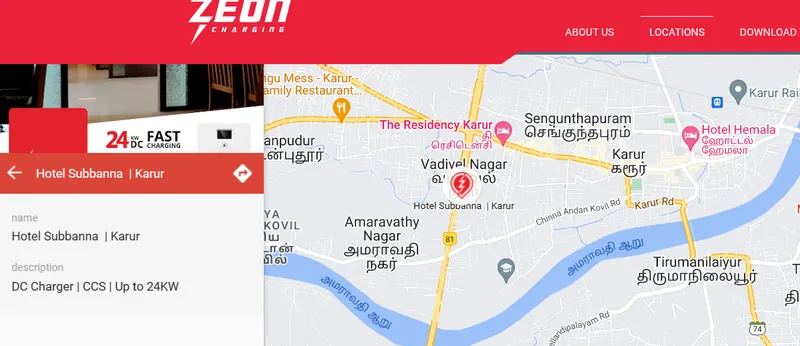
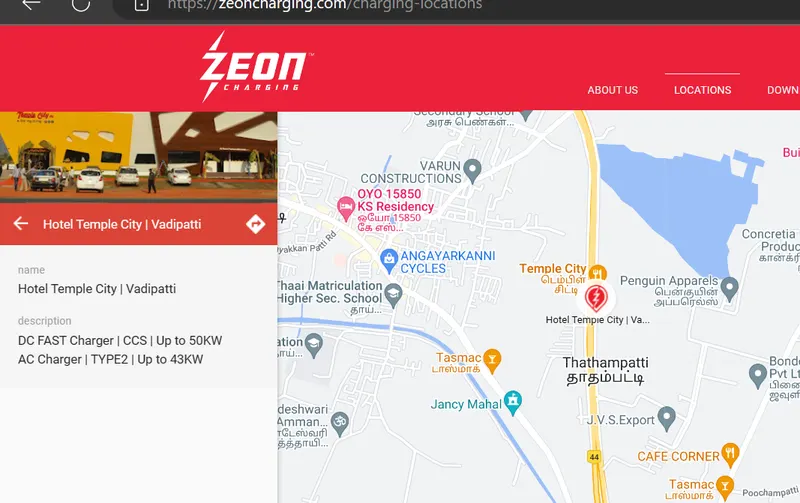
So, i would like to conclude and path my decisions towards the CNG, and the electric (EV) cars because there are very friendly nature and CNG stations are available at each and every locations of the bangalore town and the on road journey between bangalore and the madurai along side with the electric charging stations
The number of electric vehicle charging stations are
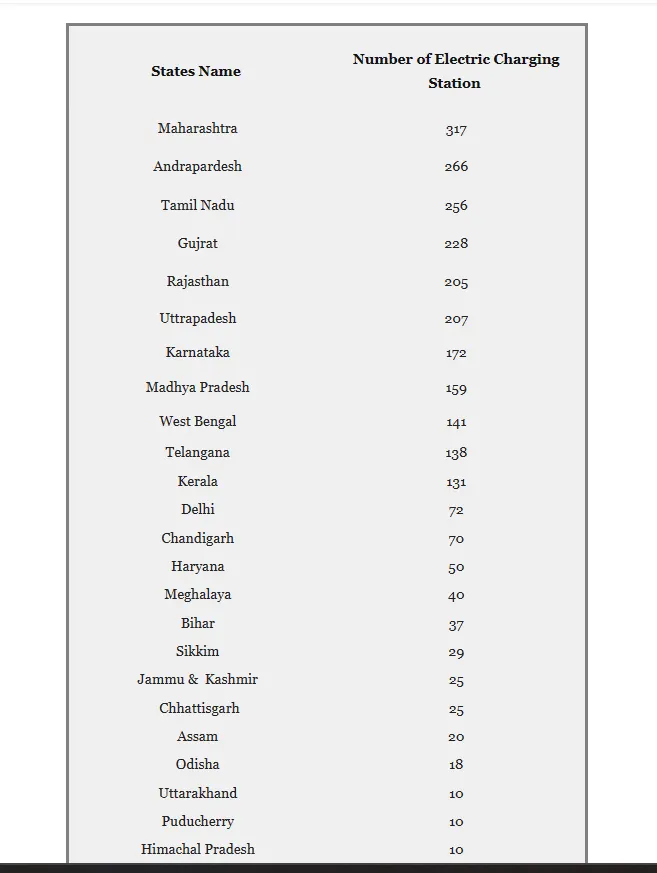
Hopefully the number can be incresed to more in count
So the car suggestions are the following
- TATA TIAGO EV
- MG COMET EV
- MARUTHI SUZUKI BALENO CNG
- HYUNDAI AURA CNG
RECOMMENDATION OF HYBRID ELECTRIC VEHICLE:
As mentioned in the case that the family lives in the bangalore which is a metropolitan city , where the cost of living is too high as well the the pollution reaches to the top gear and there is always a hike on the fuel prices so my recommendation includes the electric vehicles too along side with the petrol and the diesel vehicles
From the analysis we must understand that major contribution for the air pollution in bangalore is fromn the carbon monoxide (co) emissions so we need to electric vehicle which are ecofriendly in our recommmendation too
So our recommendation includes the electric cars , petrol, diesel,
The first car for the analysis is
Tata Tiago EV
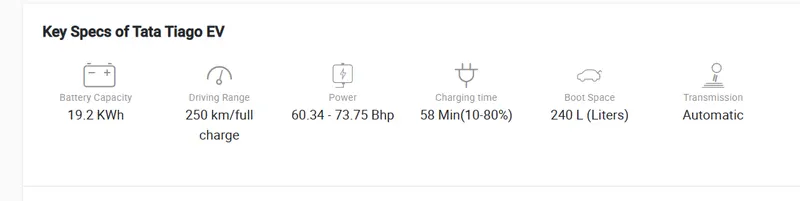
The Tata Tiago.ev was launched in 2022. The LR version has a range of 315 km with battery capacity of 24 kWh while the MR version has a certified range of 250 km with a battery capacity of 19.2 kWh. The battery can be charged in 3.6 hours with a normal charger and in 57 min with fast charger. It can go from 0-60 km/h in just 5.7 seconds
An electric hatchback that’s affordable, generously equipped, and built specifically for the daily city grind.
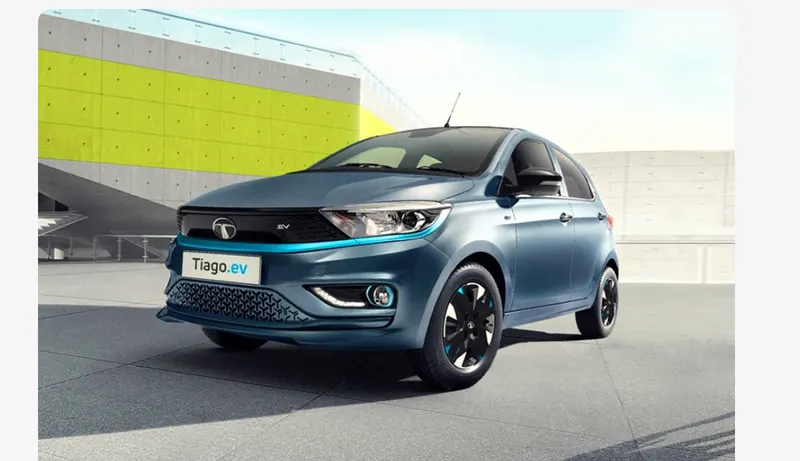
The key specifications of the tata tiago EV is
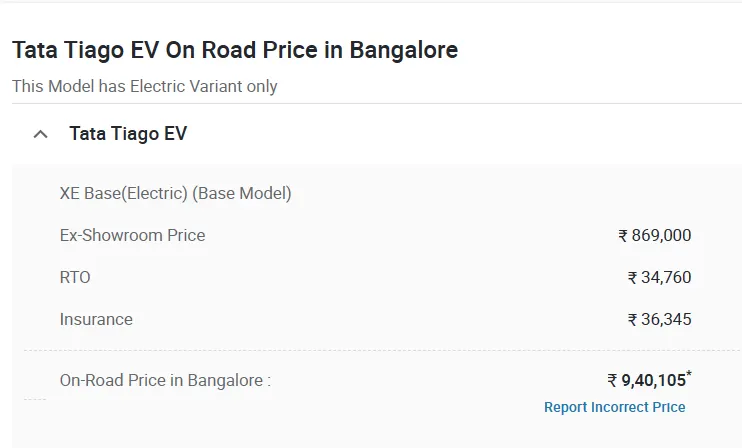
The price of the vehicle on road price in bangalore is
Key Specifications of Tata Tiago EV
|
Charging time |
3.6 Hours |
|
Battery Capacity |
24 KWh |
|
Max Power (bhp@rpm) |
73.75bhp |
|
Max Torque (nm@rpm) |
114Nm |
|
Seating Capacity |
5 |
|
Range |
315 |
|
Boot Space (Litres) |
240 |
|
Body Type |
Hatchback |
Key Features of Tata Tiago EV
|
Power Steering |
YES |
|
Power Windows Front |
YES |
|
Anti Lock Braking System |
YES |
|
Air Conditioner |
YES |
|
Driver Airbag |
YES |
|
Passenger Airbag |
YES |
|
Wheel Covers |
YES |
|
Automatic Climate Control |
YES |
|
Fog Lights - Front |
YES |
Tata Tiago EV Specifications.
ENGINE AND TRANSMISSION:
Battery Capacity: 24 KWhMotor
TypePermanent: Magnet Synchronous Motor
Max Power: 73.75bhp
Max Torque: 114Nm
Range: 315
Battery Warranty: 8years
Charging Time ( A.C) : 3.6 Hours
Charging Time (D.C): 58 Mins
FUEL AND PERFORMANCE:
|
Fuel Type |
Electric |
|
Emission Norm Compliance |
ZEV |
|
Acceleration 0-60kmph |
5.7 |
CHARGING:
|
Charging time |
58 Min(10-80%) |
|
Fast Charging |
ACCEPTABLE |
DIMENSIONS AND CAPACITY:
|
Length (mm) |
3769 |
|
Width (mm) |
1677 |
|
Height (mm) |
1536 |
|
Boot Space (Litres) |
240 |
|
Seating Capacity |
5 |
|
Wheel Base (mm) |
2400 |
|
No of Doors |
5 |
SAFETY:
|
Anti-Lock Braking System |
YES |
|
Child Safety Locks |
YES |
|
No of Airbags |
2 |
|
Driver Airbag |
YES |
|
Passenger Airbag |
YES |
|
Day & Night Rear View Mirror |
YES |
|
Passenger Side Rear View Mirror |
YES |
|
Rear Seat Belts |
YES |
|
Seat Belt Warning |
YES |
|
Door Ajar Warning |
YES |
|
Adjustable Seats |
YES |
|
Tyre Pressure Monitor |
YES |
|
Engine Immobilizer |
YES |
|
Crash Sensor |
YES |
|
Automatic Headlamps |
YES |
|
EBD |
YES |
|
Advance Safety Features |
Key in Reminder,Auto Battery cut-off on impact / accident,Puncture Repair Kit,Liquid cooled Thermal Management System,IP 67 Ingress Protection for Motor & Battery Pack,Smart Regenerative Braking, Camera-based Reverse Park Assist (with Dynamic Guideways) |
|
Follow Me Home Headlamps |
YES |
|
Rear Camera |
YES |
|
Speed Alert |
YES |
|
Speed Sensing Auto Door Lock |
YES |
|
Pretensioners & Force Limiter Seatbelts |
YES |
|
Geo-fence Alert |
YES |
|
Impact Sensing Auto Door Unlock |
YES |
PROS AND CONS OF THE TATA TIAGO EV:
Pros:
- Affordable EV - The Tiago EV is currently the most affordable EV in the Indian market
- City driving range - 19.2kWh runs 250km (claimed), 24kWh runs 213.9km (tested)
- Safety kit - This EV is kitted-out with a decent list of safety equipment
- Powertrain options - Is offered in two battery pack options, 19.2kWh and 24kWh
- Charging options - 15A plug point, 3.3kW charger, 7.2kW AC fast charger, DC fast charger
Cons:
- Long distance range anxiety - Not enough for people to venture out on highways
- Expensive hatchback - Despite its 'green' interests, the top-end variants are pricey
- Charging infrastructure - Charging station scarcity restricts carefree EV driving
Verdict:
My opinion on the tata tiago EV is the best car fall under our budget provided with blasted features and specifications and most affordable for amedium scale family only the drawback concern is that we need to take care of the charging stations near by.
My second suggestion is
MG Comet EV
MG Motor India recently launched the much anticipated MG Comet EV to the Indian market. The price for the EV starts from Rs 7.98 lakh and goes up to Rs 9.98 lakh (ex-showroom). The micro EV is available in three variants - Pace, play and top-of-the-line Plush. The EV gets five colour options and more than 250 customisation options.
The MG comet sits in a segment of its own and doesn’t really have direct competition. MG is targeting customers looking for a small compact EV for city runabouts.
So the MG comet Ev available in 3 variants and they are basically priced at
MG Comet EV: Pace Price : 7.98lakhs ( ex- showroom )
MG Comet EV: play price :9.28 LAKHS
MG Comet EV: plush price : 9.98 lakhs
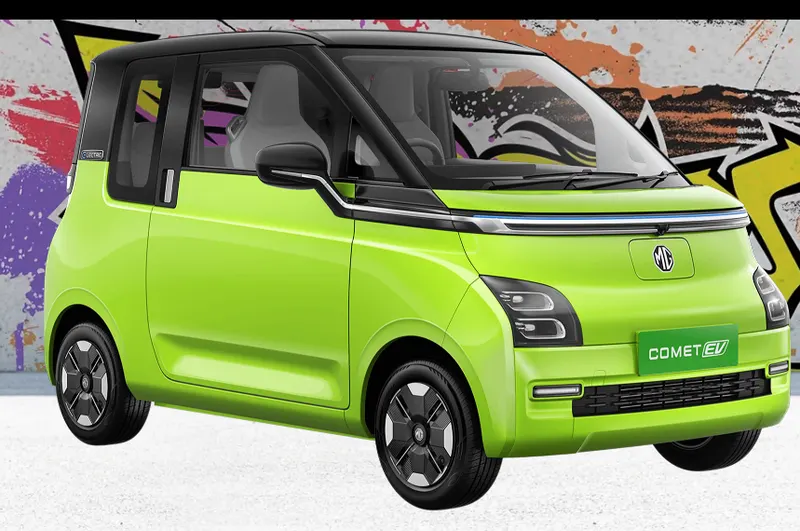
Fuel & Performance
| Fuel Type | Electric |
| Emission Norm Compliance | ZEV |
Charging
| Charging time | 7 Hours |
Suspension, Steering & Brakes
| Front Suspension | McPherson Strut |
| Rear Suspension | Multi-Link Coil Suspension |
| Steering Type | Electric |
| Steering Column | Tilt |
| Turning Radius (Metres) | 4.2 |
| Front Brake Type | Disc |
| Rear Brake Type | Drum |
Dimensions & Capacity
| Length (mm) | 2974 |
| Width (mm) | 1505 |
| Height (mm) | 1640 |
| Seating Capacity | 4 |
| Wheel Base (mm) | 2010 |
| Kerb Weight (Kg) | 815 |
| No of Doors |
2 |
Safety
| Anti-Lock Braking System | YES |
| Central Locking | YES |
| Child Safety Locks | YES |
| No of Airbags | 2 |
| Driver Airbag | YES |
| Passenger Airbag | YES |
| Day & Night Rear View Mirror | YES |
| Passenger Side Rear View Mirror | YES |
| Rear Seat Belts | YES |
| Seat Belt Warning | YES |
| Tyre Pressure Monitor | YES |
| Crash Sensor | YES |
| EBD | YES |
| Electronic Stability Control | YES |
| Advance Safety Features | Manual Parking Brake, 3-point seat belts for all Passengers, IP67 Rated Battery |
| Follow Me Home Headlamps | YES |
| Rear Camera | YES |
| Speed Alert | YES |
| Speed Sensing Auto Door Lock | YES |
| ISOFIX Child Seat Mounts | YES |
| Pretensioners & Force Limiter Seatbelts | YES |
| Geo-fence Alert | YES |
| Hill Assist | YES |
| Impact Sensing Auto Door Unlock | YES |
Comfort & Convenience
| Power Steering | YES |
| Power Windows-Front | YES |
| Air Conditioner | YES |
| Heater | YES |
| Adjustable Steering | YES |
| Accessory Power Outlet | YES |
| Vanity Mirror | YES |
| Rear Seat Headrest | YES |
| Parking Sensors | Rear |
| Navigation System | YES |
| Find My Car location | YES |
| Foldable Rear Seat | 50:50 Split |
| KeyLess Entry | YES |
| Voice Control | Y |
| USB Charger | Front |
| Additional Features | Full Digital Cluster with 26.04 cm Embedded LCD Screen, One-touch slide & recline passenger seat for 2nd row entry, Intelligent Key, Smart Start System, Front Co-Driver grab handle, Chit Chat Voice Interaction |
- Funky design - It looks like a shrunken little hatch, vertical rear window looks cool
- Modern interiors - Adequate feel-good features, fantastic visibility, decent quality
- Compact size -Driving it on busy streets is a cakewalk, ideal size for city/town folk
- Ride quality - Makes light work of potholes and rumbler strips, ample ground clearance
- Performance - The Comet EV is easy to drive, overtakes quickly, near-silent propulsion
CONS:
- Restricted usability - The MG Comet EV is a compact car that's ideal for city dwellers
- Inadequate thigh support - Even basic levels of under-thigh support are absent overall
- Charging capabilities - The absence of faster charging options can restrict usage
THE NEXT SUGGESTION IS
Maruti Baleno
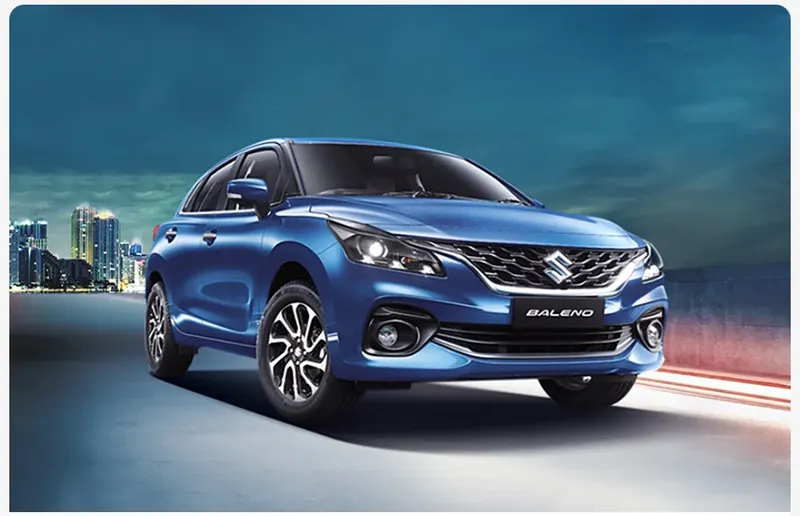
| Engine | 1197 cc |
| BHP | 76.43 - 88.5 Bhp |
| Transmission | Manual/Automatic |
| Mileage | 22.35 - 22.94 kmpl |
| Fuel | CNG/Petrol |
| Airbags | 2-6 |
Maruti Suzuki Baleno Key Features
- 360-degree camera
- heads-up display
- 9-inch touchscreen infotainment system
- Fast charging rear USB ports (A & C type)
- Auto-dimming IRVM
- Footwell lamps
- LED fog lamps
- Suzuki Connect telematics
- 6 airbags
- Cruise control
- LED projector headlamps
- Auto headlamps
The new Baleno gets just one engine option. It is powered by a high tech 1.2 litre naturally aspirated petrol motor with dual injectors and variable valve timing, producing 90PS and 113Nm, and is paired to either a 5-speed manual or an AMT gearbox.
This motor still sets a benchmark when it comes to drivability and refinement. The response from this engine is so good that you can cruise at low speeds in third or even fourth gear and even when you want quick acceleration the motor responds without any hesitation. As a result, its performance is effortless as gear shifts are kept to a minimum. The gear shifts too are slick and the light and progressive clutch makes driving in the city a comfortable affair.
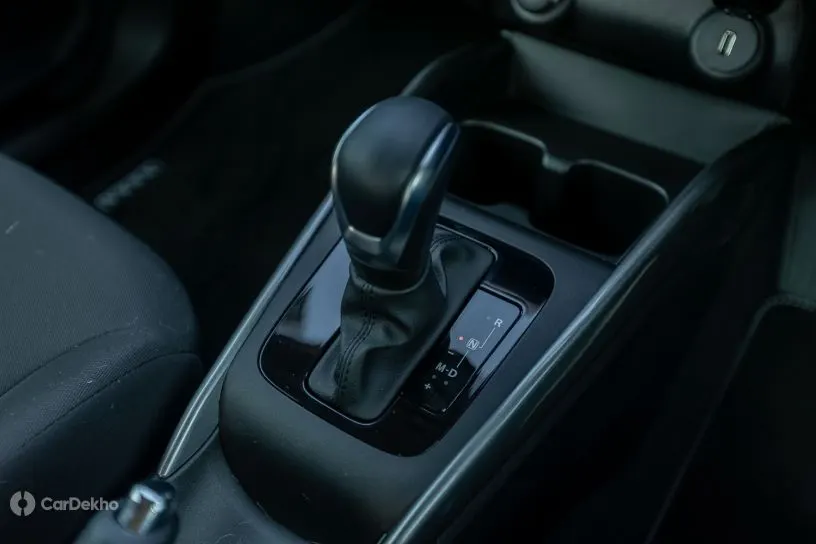
If the Baleno is the first automatic car you are going to experience then it will feel good enough but if you have driven more advanced gearboxes like CVT, DCT or torque converter then you will feel its basic nature. For a basic AMT transmission it works really well, with quick enough downshifts for overtaking and it stays smooth for most part. But it's at crawling speed where the gear shifts feel slow and a bit jerky.
The Baleno was always known to be a family friendly car and the new one is no different as it doesn't really enjoy being hustled around corners. The steering is slow, devoid of any feel and it also rolls quite a bit when pushed hard. As a result the Baleno feels comfortable when driven in a relaxed manner. The brakes on the new Baleno have been improved thanks to a larger front disc. In our experience it has more than enough stopping power with a good pedal feel.
PROS AND CONS OF THE MODEL:
PROS :
- Packed with modern equipment, this large hatchback offers a wide range of features.
- The refined Maruti engine is peppy and revs cleanly up to 6,000rpm, thereby providing brisk acceleration.
- Although the ride quality of Baleno is on the firmer side, it is comparatively plusher than the previous iterations.
- This Maruti car's cabin is spacious and allows long hours of commuting. Three adults can be comfortably seated at the rear.
- Owners benefit from Maruti's wide network of sales, service, spare parts and excellent resale value.
CONS:
-
- A more powerful engine could have made the driving experience more exciting.
- The tall boot enclosure makes it necessary to lift one's luggage considerably to load the trunk.
- The Maruti Baleno’s cabin is not particularly quiet as a fair amount of external and road noises can be heard inside.
Verdict:
Overall, just like the old car the new Baleno is still a safe and sensible choice. Now with the design changes, feature additions and improved ride it has become more desirable too. Some things could have been better though. Maruti Suzuki should have improved the seating comfort, given it a more powerful petrol engine option, and made more significant changes to the exterior to help it look like a brand new car.
But the one thing we missed the most is a more premium automatic option, especially when you consider one of its biggest rivals, the Hyundai i20, offers a CVT as well as a DCT option. But what brings the battle back in the Baleno’s favour is the price. Despite the improvements and feature additions, it only costs slightly more than the outgoing model, which makes it an exceptional value proposition.
THE NEXT SUGGESTION IS
Hyundai Aura
The price of Hyundai Aura, a 5 seater Compact Sedan, ranges from Rs. 7.74 - 10.83 Lakh. It is available in 7 variants, with an engine of 1197 cc and a choice of 2 transmissions: Manual and Automatic. Aura has an NCAP rating of 2 stars and comes with 4 airbags. Hyundai Aura is available in 6 colours. Users have reported a mileage of 20 to 25 kmpl for Aura.
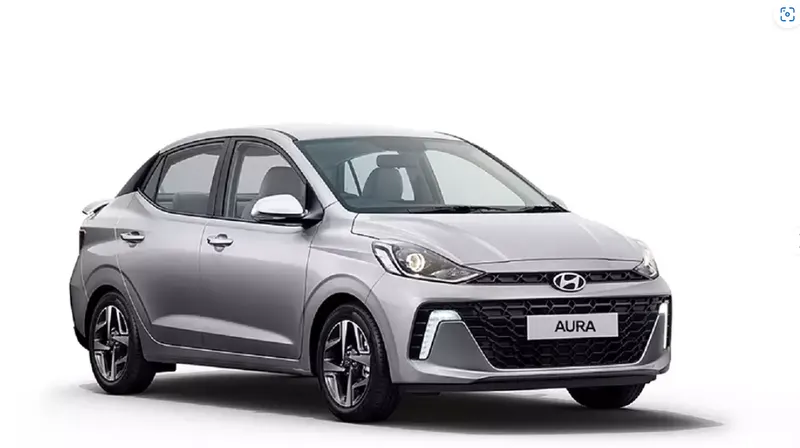
Hyundai Aura Car Specifications
| Price | Rs. 7.74 Lakh onwards |
|---|---|
| Engine | 1197 cc |
| Safety | 2 Star (Global NCAP) |
| Fuel Type | Petrol & CNG |
| Transmission | Manual & Automatic |
| Seating Capacity | 5 Seater |
Hyundai Aura S 1.2 CNG Summary
Engine & Transmission
-
Engine1197 cc, 4 Cylinders Inline, 4 Valves/Cylinder, DOHC
-
Engine Type1.2 Bi-Fuel (Petrol with CNG)
-
Fuel TypeCNG
-
Max Power (bhp@rpm)68 bhp @ 6000 rpm
-
Max Torque (Nm@rpm)95 Nm @ 4000 rpm
-
DrivetrainFWD
-
TransmissionManual - 5 Gears
-
Emission StandardBS 6
-
Alternate FuelPetrolPROS AND CONS OF THE MODEL:PROS :
- Recently facelifted - Refreshed styling - inside and out, more features, premium quality
- Spacious and airy - As per compact sedan standard, further aided by large seats/windows
- Ground clearance - We could not scrape the underbody over large speed breakers
- Adequate power - Smooth, has enough grunt, aids drivability, CNG option available
- Hyundai after sales - Wide network of service centres, spares availability, strong resale
CONS:
- Rear design - Despite the recent update, the Aura’s rear section still looks displeasing
- Ride quality - At highway speeds, the rear feels bouncy, more so when fully loaded
- Agility when driven hard - Understeers, lacks feedback from the steering when pushed
Hyundai Aura 2023 Verdict
The facelifted Hyundai Aura gets design tweaks, inside and out, along with a longer list of equipment. Sure, the design tweaks may not make its rear look less bulbous, but other than that, there's little to find fault with in this sedan.
FINAL CONCLUSION:
Here in this report I mentioned the 4 different models of the car comprises of the 2 Ev and the 2 CNG models so mr. D.S. Pughazhyendhii needs to take an idea of shifting in between the models My suggestion is to take the MG COMET EV which is the most affordable EV in the present day maket with all specified features and the safety measures any to a whooping range of 250km on the full charge go and there are a lot public and the private charging filling stations in between the journey from bangalore to madurai as mentioned the boy is of 5 years old so no need to worry about the seating capacity as it would 4 or 5 seater mentioned
MY OPINION IS TO TAKE THE MG COMET EV : PLUSH MODEL
COST : 9.98 LAKHS
RANGE :250KM