Design of backdoor
DESIGN OF THE BACK DOOR OF A CAR
AIM:In this project we design the back door of a car using the class A surface provided along with the reinforcements ( Hinge, Latch and the striker , gas stay, wiper motor reinforcements ) in siemens nx cad software
Objective of the project :
- The objective of this project is to design a BIW Back Door of a car with th provided class A surface by following the proper design metholodies .
- Design the inner panel with the proper design parameters using the outer panel references .
- Proper tooling direction is specified for evaluating the draft analysis of the inner panel of the back door .
- Developing the reinforcements for providing the additional strenth at the sections which are subjected to high stress concentration factor( latch , Hinge , Wiper motor, Gas stay Reinforcements ).
- Design the hemming process for joining the inner panel with the outer panel.
Software used :
Siemens NX CAD
Commands Used:
The commands we use for the assembly are the following
- Wave geometry linker
- Bridge curve
- Offset curve in face
- Project curve
- Intersection curve
Surface commands
- Wave Geometry Linker – With this you can create, associative or linked copies of any entity of a part into other parts. It may be a surface, edge, curve, body, sketch etc. The changes made to the original entity will be reflected in the copy of that entity.
- Extract Body – It is used to create an associative body by extracting faces, entire body or region of faces.
- Bridge Curve – It helps to create a tangent blend curve between two objects. The objects may be edges or sketch curves.
- Sew – It combines sheet bodies together by sewing their common edges. There shouldn’t be any gaps larger than specified tolerance.
- Unsew – This command is used to separate the existing sheet body or solid body into multiple bodies.
- Projected Curve – It is used to project an existing curve/curves on a selected plane or surface by selecting a direction for projection.
- Trim Body – It is used to trim one or more bodies using a face or plane. You can also specify the bodies to retain and the bodies to discard.
- Offset Surface – It allows you to offset one or more existing surfaces.
- Offset Curve in Face – This command will allow you to offset particular edges or curves on selected faces.
- Trim Sheet – It is used to trim off a portion of a sheet body using curves, faces, edges or planes.
- Through Curves – It will allow you to create a body Through multiple sections, where it’s shape changes to pass through each section.
- Law Extension – This command extends a curve or edge to create a sheet body at desired angle length by changing the rules under angle law and length law.
- Trim and Extend – It helps you to trim and extend intersecting surfaces and make corner at their intersection.
- Face Blend – It creates fillets between faces.
- Edge Blend – It creates fillets on edges.
- Extend Sheet – It will allow you to extend an existing surface to required distance.
- Emboss – Emboss command creates an embossing by modifying a body with faces created by projecting a curve/section along a direction. You can modify the emboss using options like endcap location and draft angle.
- Mirror Geometry – As name suggests, it allows you to mirror geometries about selected plane or surface.
- Thicken – It is used to convert a surface to solid body by providing thickness.
- Extrude – It helps you to create a feature from a sketch. You are also able to create thin feature using a sketch or curve under this command.
Defnition:
Back door of the car:
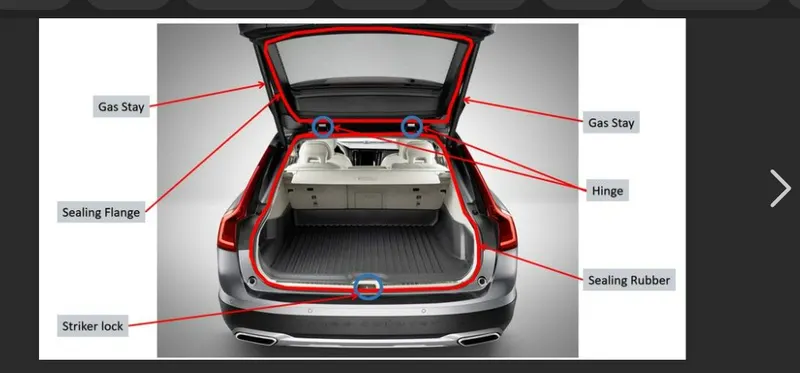
Back door is also called as tailgate. Back door in a car gives the access to luggage area and few cars have passenger compartment too. In most of the cars gas stay is used to operate the back door as it reduces the effort for the person opening. Few cars have electric motor to lift the back door when a switch is pressed. It is the rearmost part of the car and has mounts for tail lamp, hinges, wiper motor, gas stay etc. Back door is made up of 1 inner panel and 2 or 3 outer panels joined together by hemming and spot welding process.
Parts identification for the back door of the car
Types of the backdoors of the car:
Based on the type of the opening they are basically classified into the following tyoe
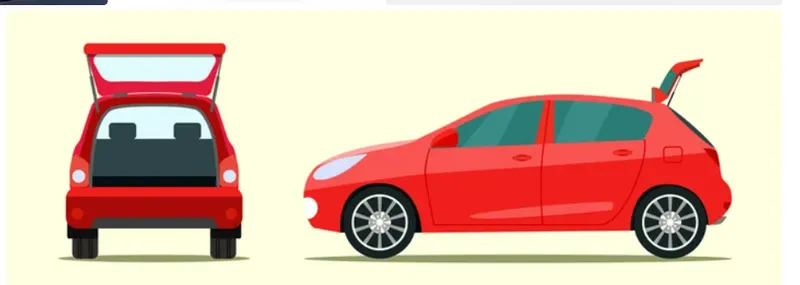
- Cantiliever tail gate
In this type the car back door is lifted downward towards the ground For the opening it can done with manual or by the automatic mechanism
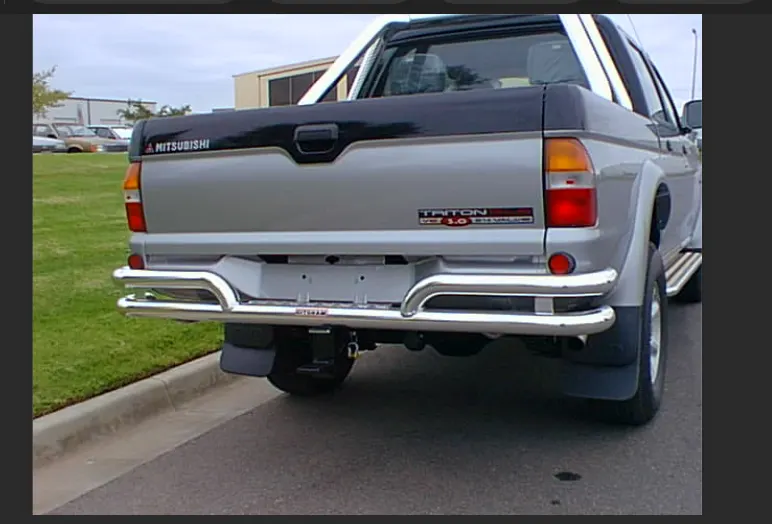
2. Side tail gate
In this the car doors are opened towards the left and right side of the car
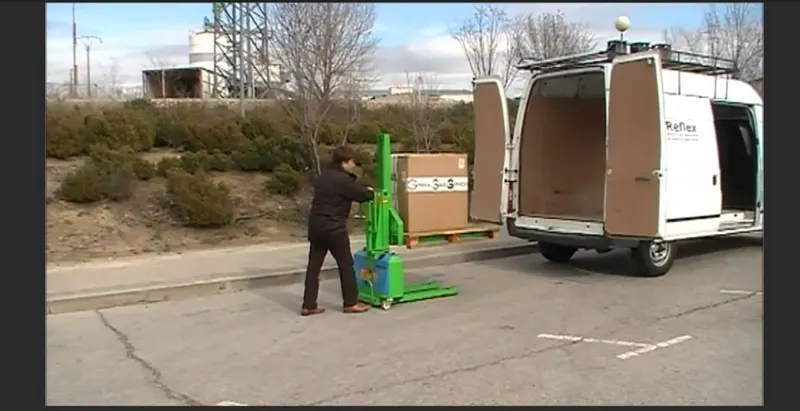
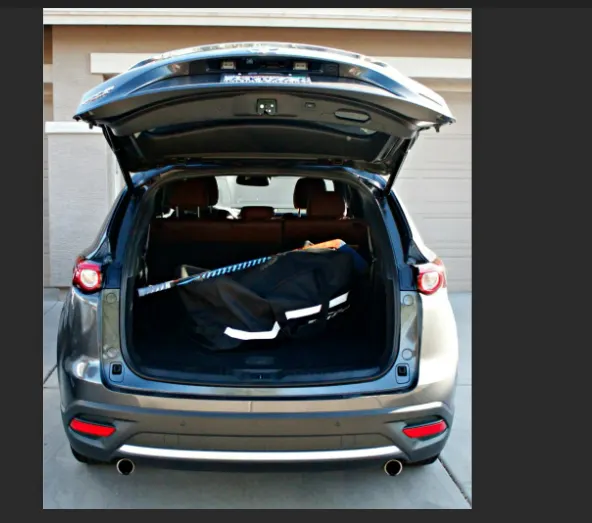
3. Top mounted tail gate
Pick up trucks, station wagon and sports utility vehicles use this type of back door. These are both gas stay supported and motor powered. Advantage of this type of back door is it provides greater rear visibility compared to others.
Based on the mechanism they open
The classification is
- Gas stay type
- Power lift type
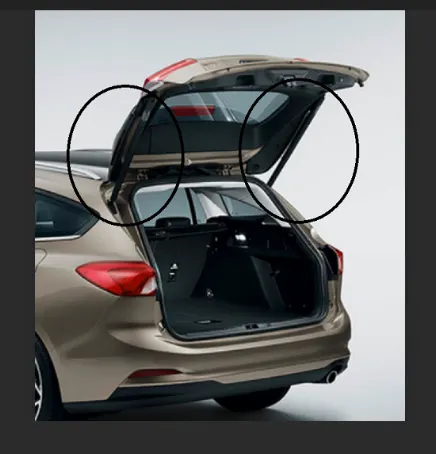
Gas stay type
Gas stay type is the most common type used in cars for operating the back door. Components of back door are gas stay, hinge, wiper mechanism, rear light and rubber beadings for sealing of door.
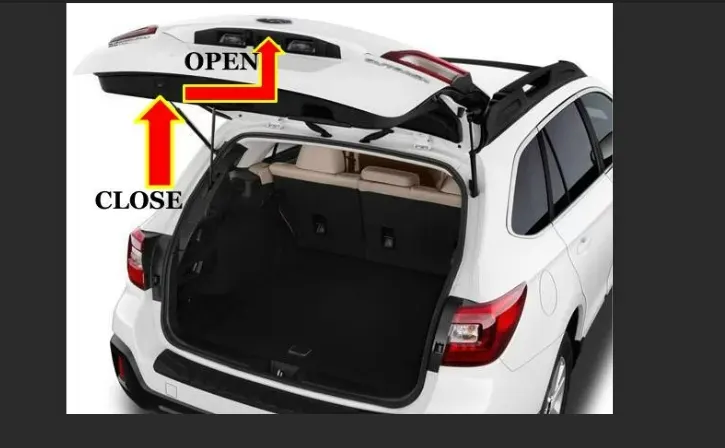
Powered lift type
Powered lift type is also known as electric motor actuated type. It is mostly used in luxury cars. As it is the sophisticated type of operating the back door. A switch is pressed to open or close the door. This consists of power latch, anti pinch switch, PTF assembly.
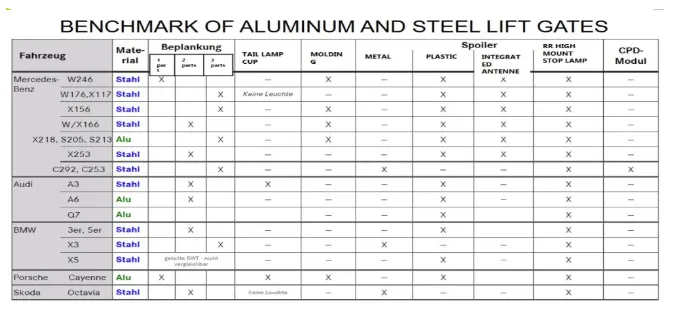
materials used for manufacturing :
The most commponly used materials for manufacturing the car back doors is
- Aluminium
- Steel
Aluminum:
- Parts are cast
- Reinforcements can be neglected
- Local thickness can be varied
- Lighter in weight and a smaller number of components
Steel:
- Parts are stamped
- Reinforcements are necessary
- Has only a uniform thickness
- Heavier in weight and more components
- Aluminum is costlier and lighter in weight and the aluminum parts are cast and can have a draft of 3 degrees for casting
- Where steel is deep drawn and heavy in weight and cheap at cost steel should have 7 degrees draft as it is deep drawn
- Premium cars use aluminum and entry-level cars use steel.
Structural performance requirements of the car door while designing:
- Noise vibration harness (NVH)
- Crash worthiness
- Durability
- Manufacurability
Design process :
Assembly components of the back door of the car:
- Outer panel upper portion
- outer panel lower portion
- Inner panel
- Hinge reinforcement
- Striker reinforement
- Wiper motor reinforcement
- Gas stay reinforcement
Input class A surface provided :
Class A surfacce is an aesthetic surface which is visible to the customer with better surface finish and designed by alias software
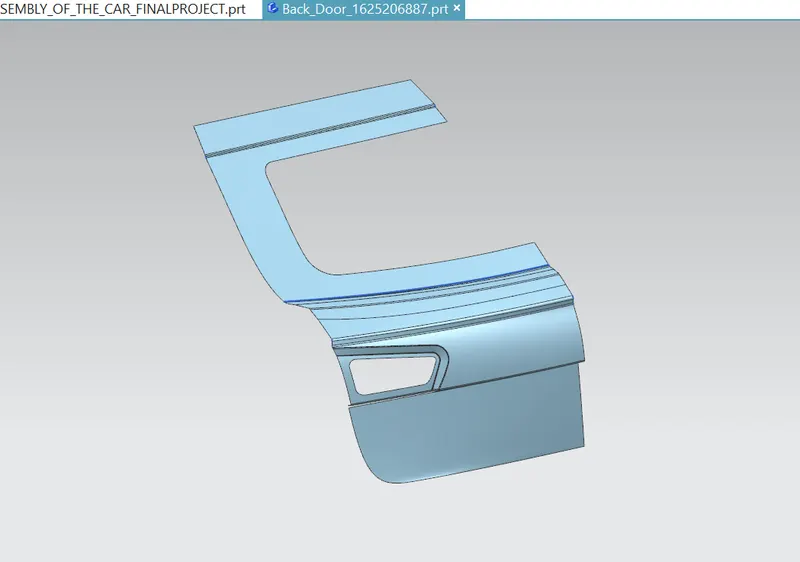
When a class A surface is proided we need to first check the continuity of the surface whether all the surfaces are knitted properly or any gaps are present .For this we neeed to join the surfaces all together using the sew feature.If all of the surfaces are join perfecly for the provided tolerance value of 0.01mm then the continuity of the surface is good and we can proceed further , if any error pops up while sew operation then surfaces either we need to repair the surfaces or else we can report the problem with the class A surface design engineer so, that he can alter the changes needed for the class A surface,to proceed further in the design process
So, first sew the class A surface to check the continuity of the surfaces
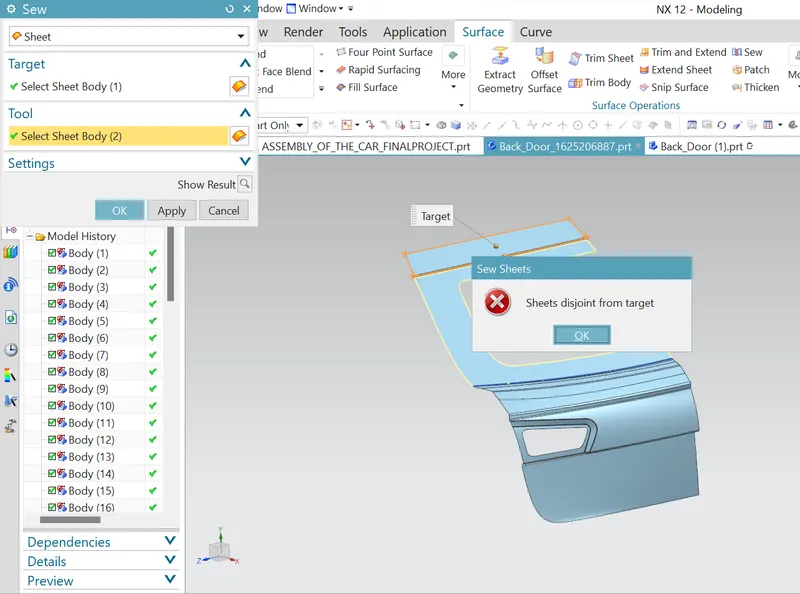
for this issue the solution we obtained is what ever the sheet that are not join properly with the adjaent sheet the sheets can be hidden and use the bridge curve and the through curve mesh option to fill up the gap inbetween the surfaces for sewing the sufaces properly Once all the surfaces are repaired then sew all the surfaces togrther to form asingle knit surface for designing the other panel of the assembly
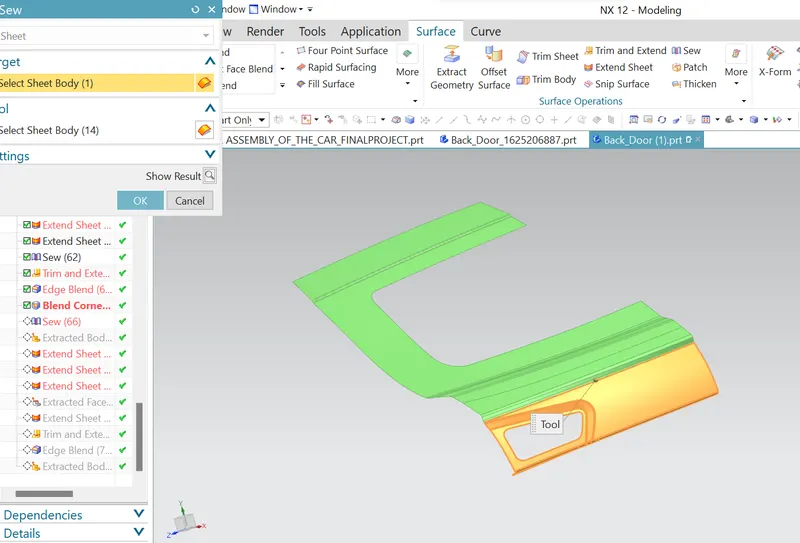
so , here the outer panel upper portion is repaired properly and sewed to form a single knit surface Follow the ame procedure for the lowe portionn to get proper knit surface out of it
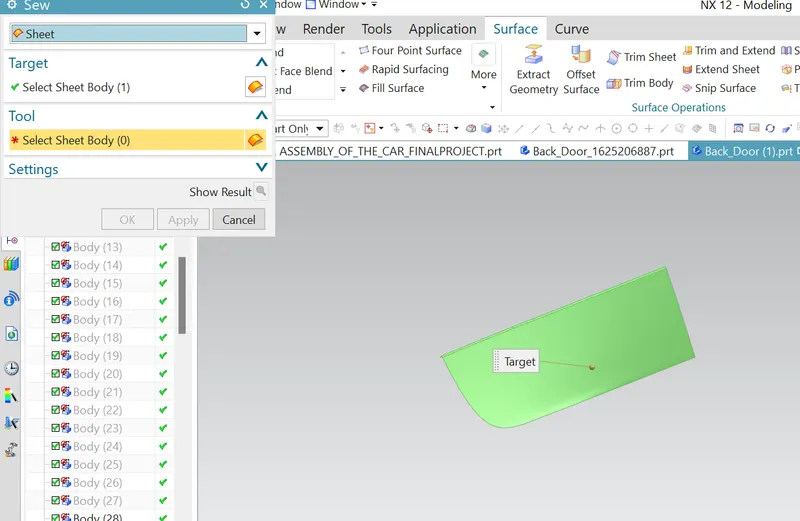
ASo, once teh repairing of the class A surface i completed extract the body over ther to use them for further design process
Outer panel design :
First of all create a new assembly for the back door design of the car and add the new part file naming as the back door outer panel of the car then copy the class A surface pepaired upper portion and paste it as in the outer panel part then start working on the ouTer panel upper portion part
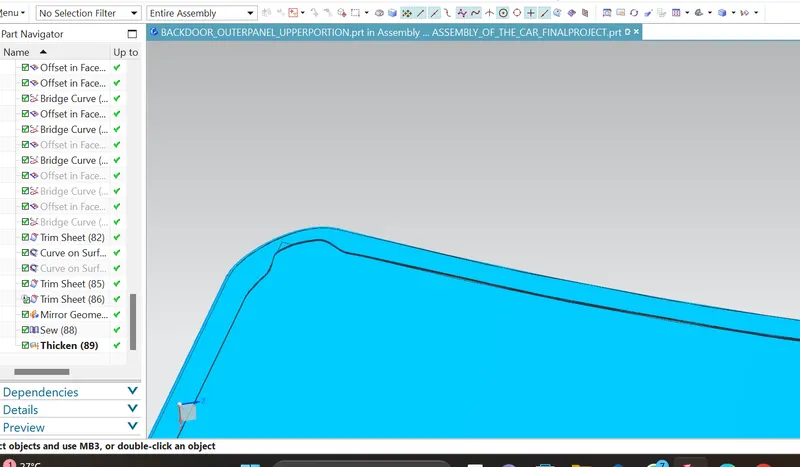
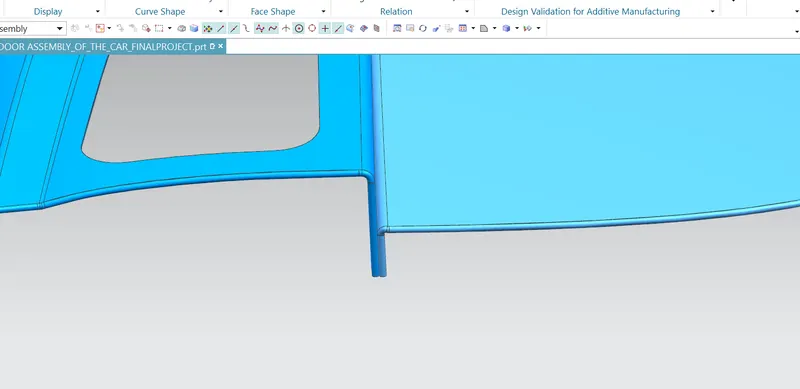
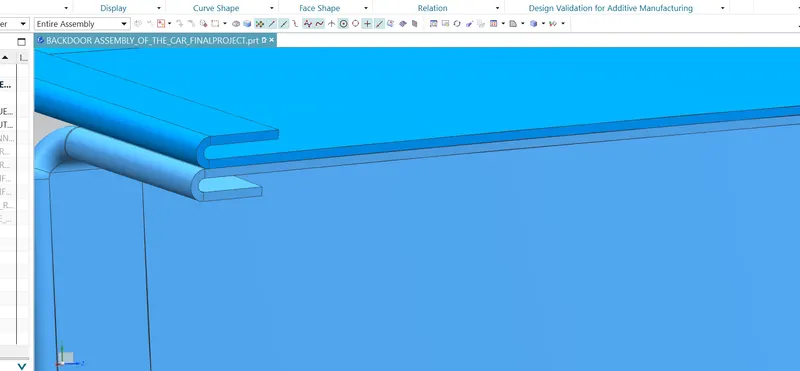
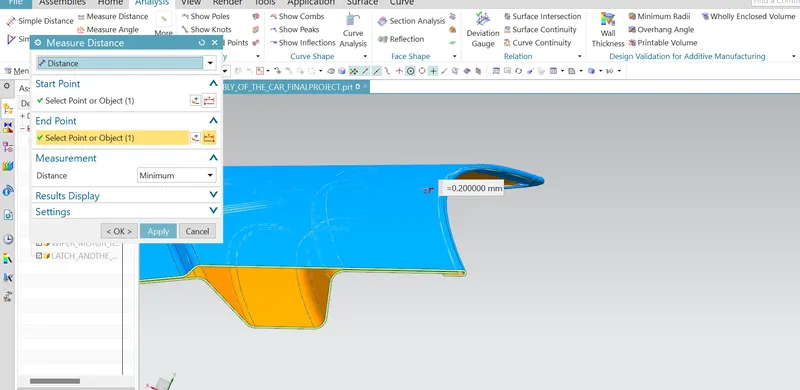
The design implemented for the outer panel is the flange that is used for the hemming process which is used to join the iner and the outer panel oof the back door with the help of the hemminh glue which is guided in the gap of 0.2 mm which is left in between the two thickken portions of the innerr and the outer panels of the baack door
For this wee need to offset thetop surface of the outer panel to a distance of 2.65mm and create s flange of nearly 8 to 10mm which is predominently used for hemming thre two panels properly
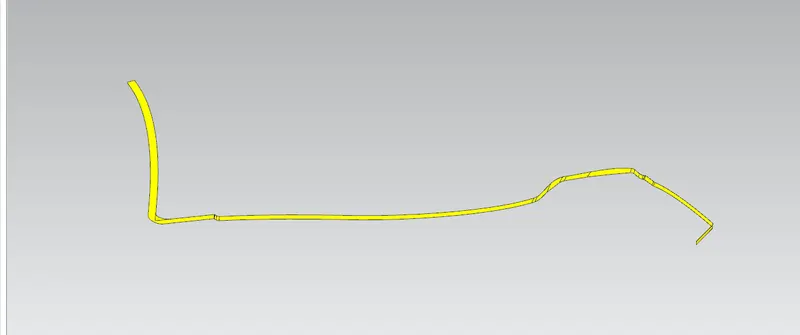
This is the offsetted surface flange of 10mm which is sewed properly and then use the top portion edge to law extend the surface which forms as an intermediate surface inbetween the two surfaces
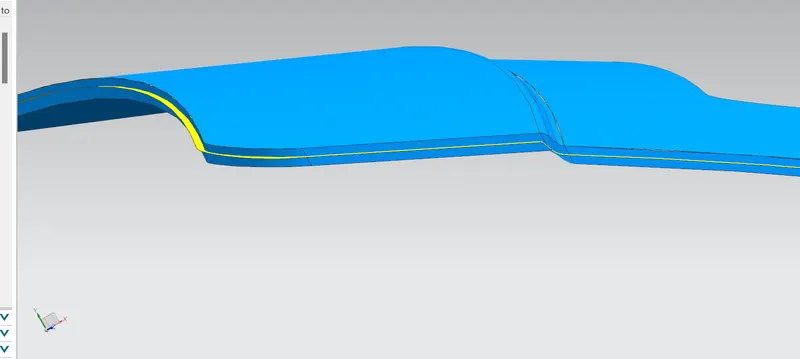
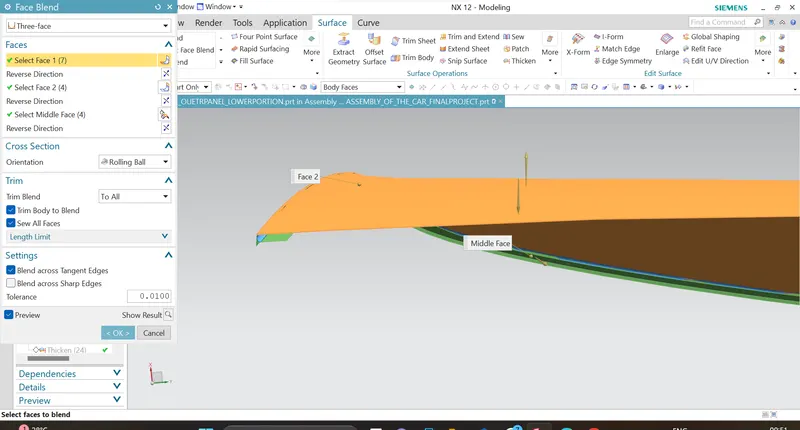
Now apply the three face blend inbetween the 3 surfaces to form a throuth curve among them which provides housing for holdoing the inner panel inbeteen the flange for the properm hemming process to occur
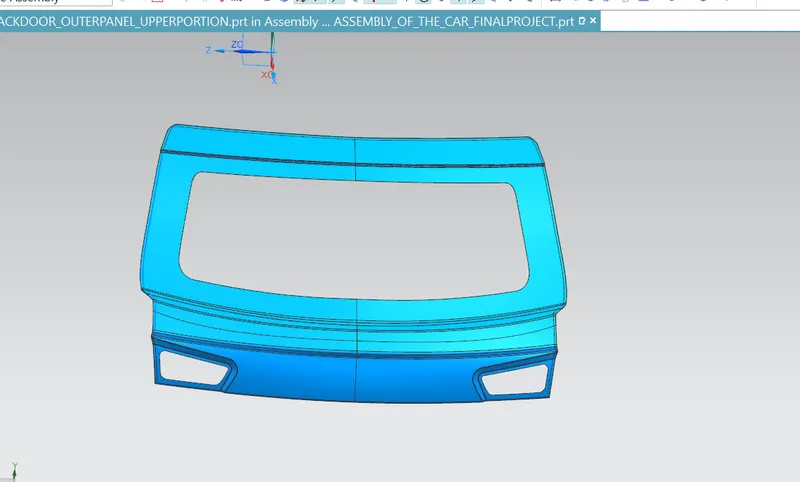
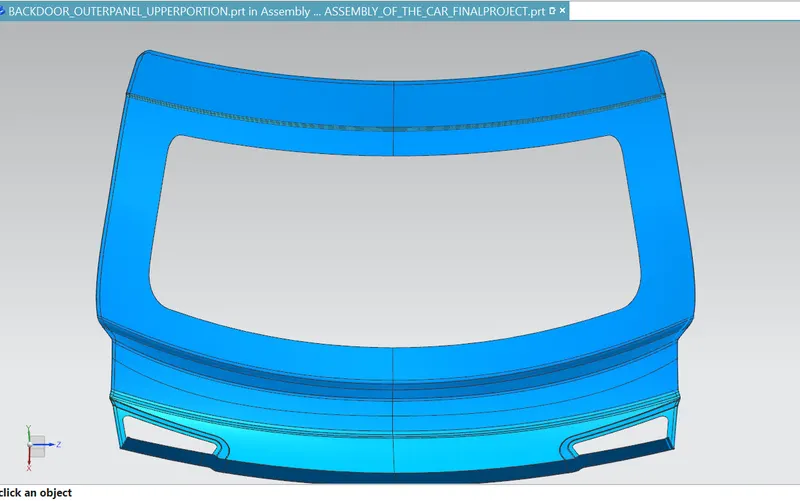
so once the proess is complete mirror geometry the outer panel with respect to the mid plane and thicken the sheet metal to a value of 0.75 mm downward
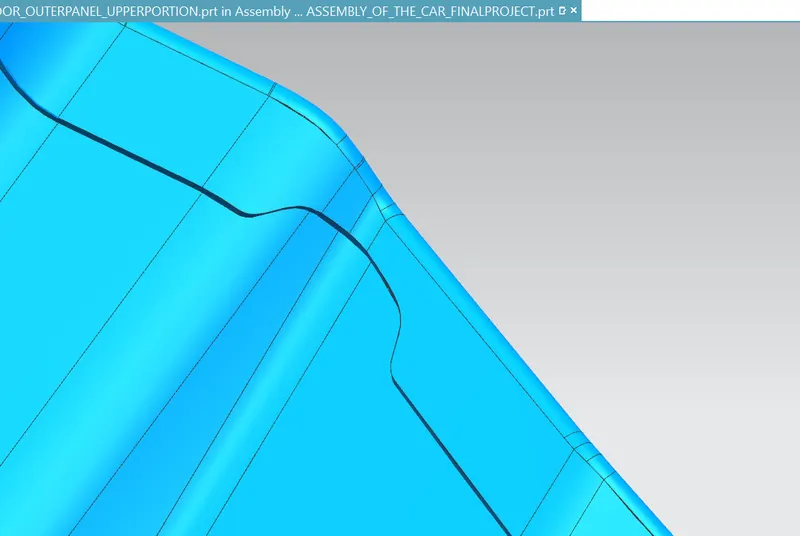
CORNER RELIEF:
During the hemming process, when giving the Corner Relief helps to control sheet metal material behavior and to prevent unwanted deformation during unbend operations and also helps to reduce the number of passes in hemming.
At the corners edges there may be a large deposition of stress concentration fsctor which leads to the failure of the compoent at the extreme load and the impact conditions so, inorder to prevent the stress concentration factor deposition at the one point or at one location we, need to provide the hemm reliefs such that the sharp corners are eliminated and the strss can be able to flow freely along the edges to the entire part insted of get impacting at one single point or the location
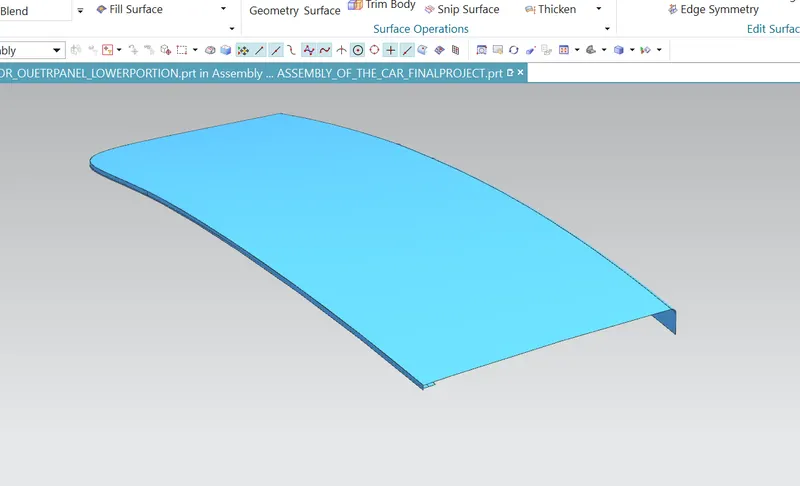
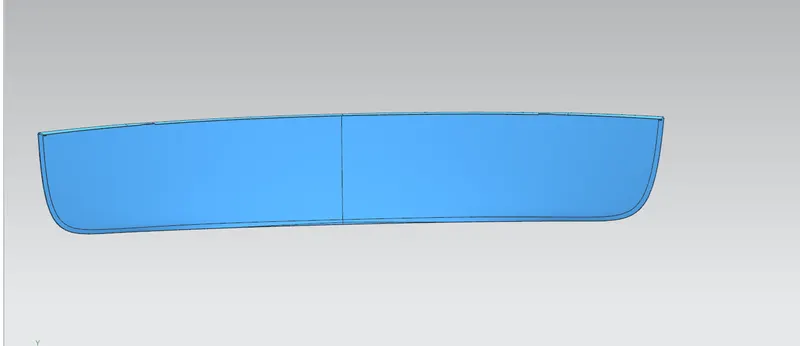
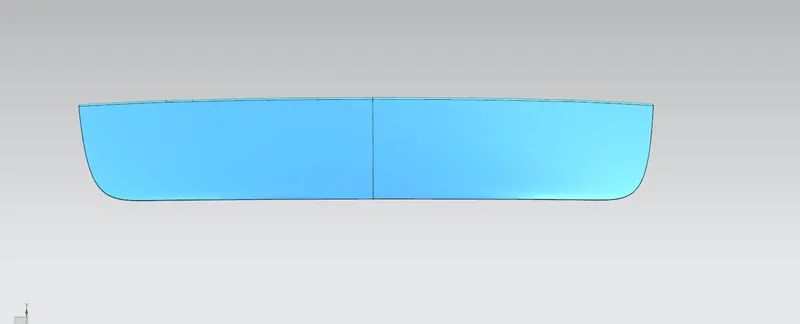
Now the same process is approaced for designing the hemming flange for the lower portion of the outer panel of the back door
Offset the surfsce to a valiue of the 2.65mm below the upper surface of the lowe panel of the back door
Joining process:
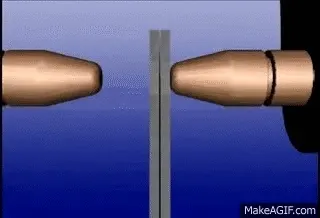
The joining of the upper portion and the lower portion of the outer panel of the back door is performed by the joining method called as the spot welding
Spot welding is a type of electric resistance welding. It is also known as resistance spot welding. The process of spot welding is sheet metals are made into contact with each other and pressure is applied on specified points. So heat is generated from the resistance and weld is for
Design of the inner panel of the back door :
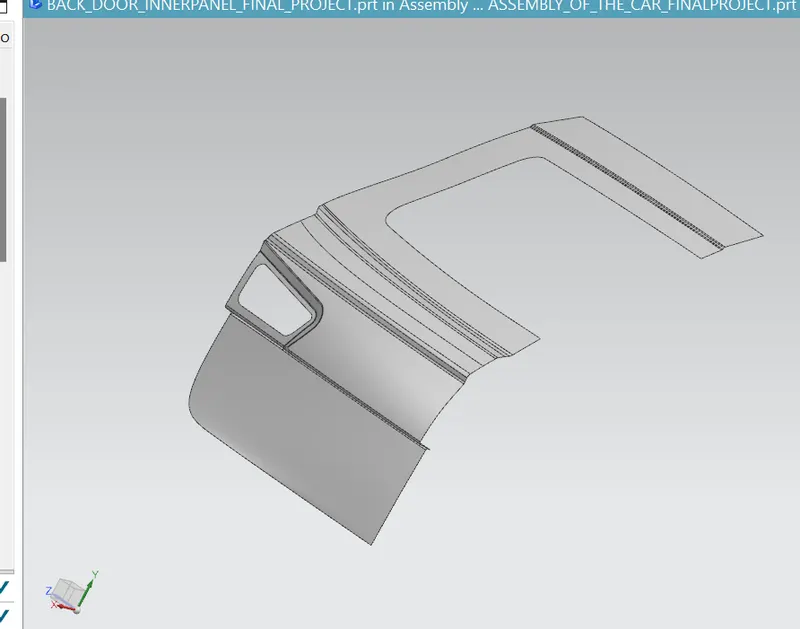
The inner panel is extraced from the lower and the upper portion of the outer panel of the backdoor using thewave geometry linker feature
Tooling axis creation:
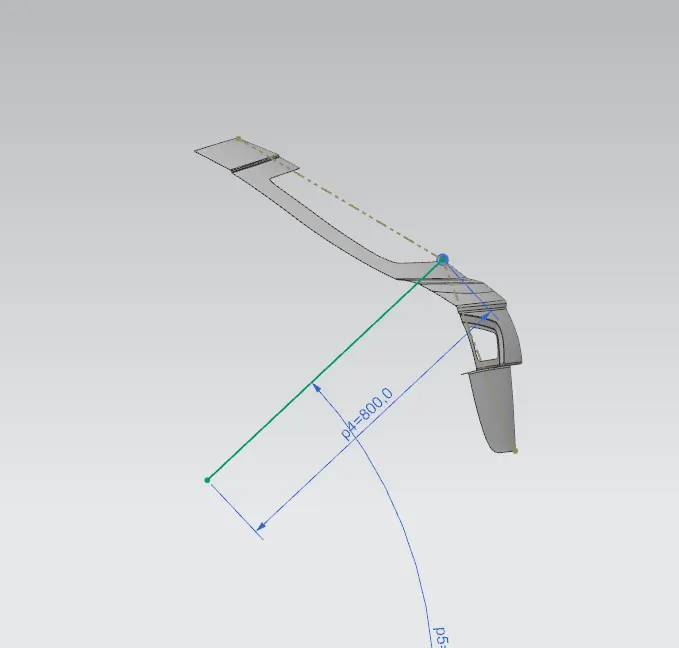
Before, starting the design process of the inner panel we crewat a tooling axis which desines the direction movement of the tool while producing the part i the manufacturing sector almost alll the components are manufacturedn by the single tooling axis and sone need the sidwe tooling axis for producing
with the help of the tooling axis we can produce each and every emboss and the surface operations include so, that all the parts can be easily clear the draft analysis of 7 degre along the toolind direction we created
Sealing flange design :
Once , the tooling axis is created then proceed for the creation of the sealing flange
Sealing flange:
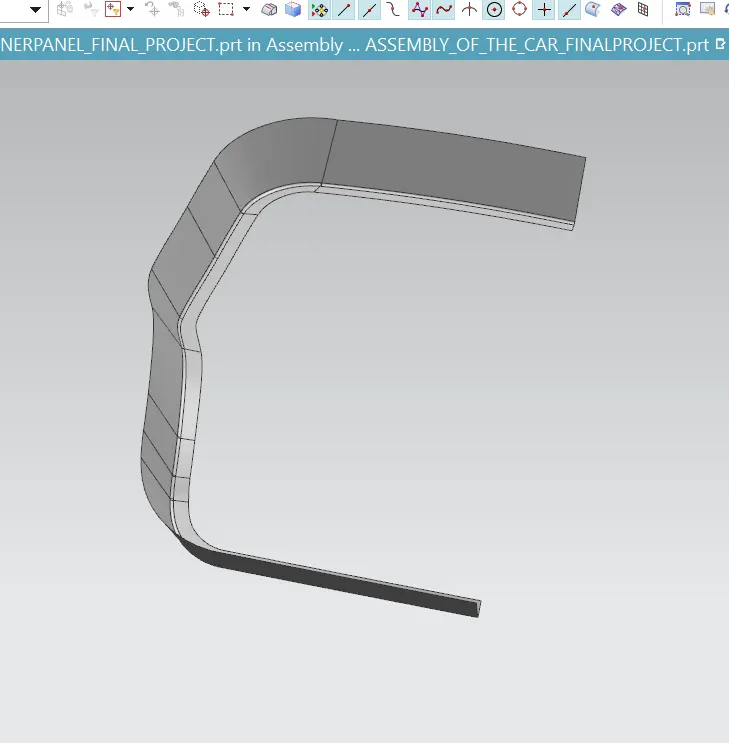
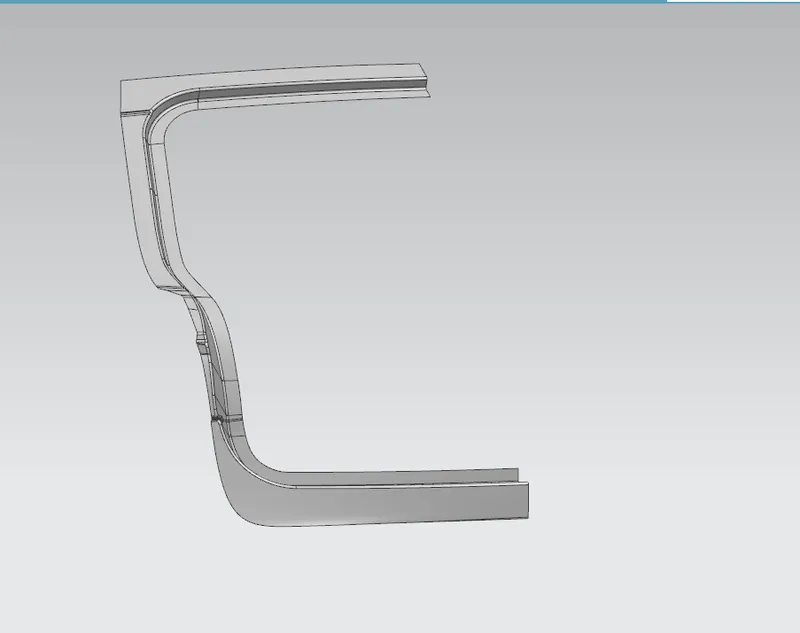
Proper sealing is also to be provided in between car body and backdoor thereby not allowing any foreign material to get inside the storage space, that is sealing prevents water, dirt, dust to get in the storage space. So, proper rubber sealing is to be provided on the car body, and a sealing flange is provided on the inner panel of the backdoor which gets in contact with the rubber sealing and forms bound when the door is closed.
So, offset the extracted surface to a value of 1.7mm and create the flange for the sealing by foolowing the design parameter and the methoodies
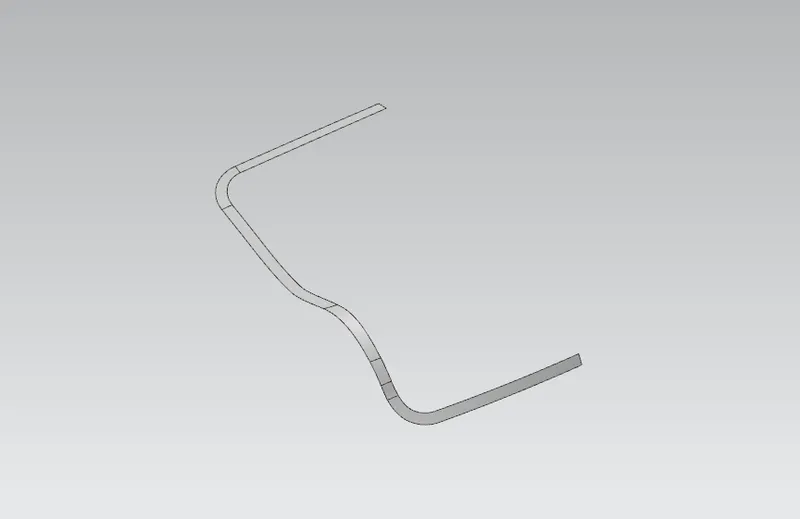
Now create the supporting connecting flange for the sealing flange
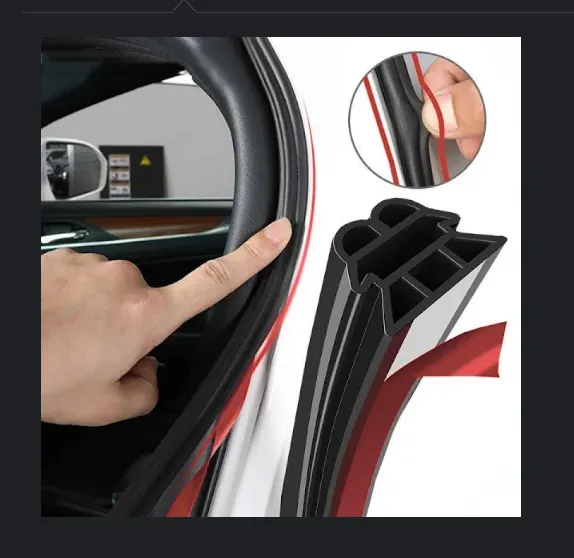
This rubber flange sits on the sealing rubber of the car body so, taht when the closIng of the back door is done the sealing rubber compresses and aligns properly on the sealing flange of the inner panel so that proper locking of the door takes palce and the sealant helps us to avoid the entering of the dust , water, any other pollutsnts entering into the car body and protecting the goods inside the car
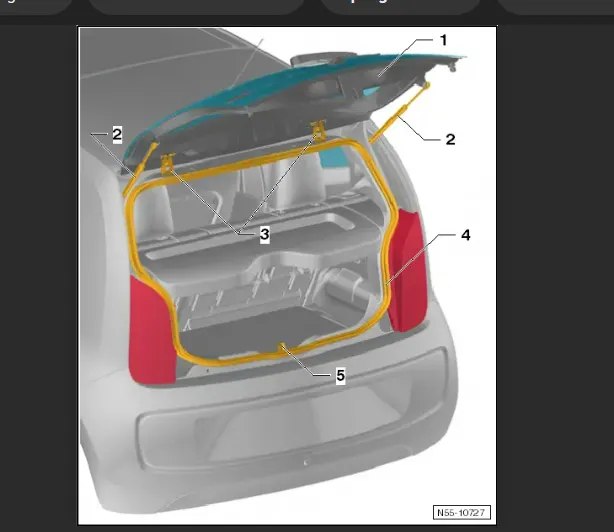
Once the sealing flange is done process for the creation of the wind shield part and the closure section for the boot space and the embosseses for improving the stength of the inner panel and cutouts on the inner panel to reduce the weight of the iner panel to increase the car efficiency
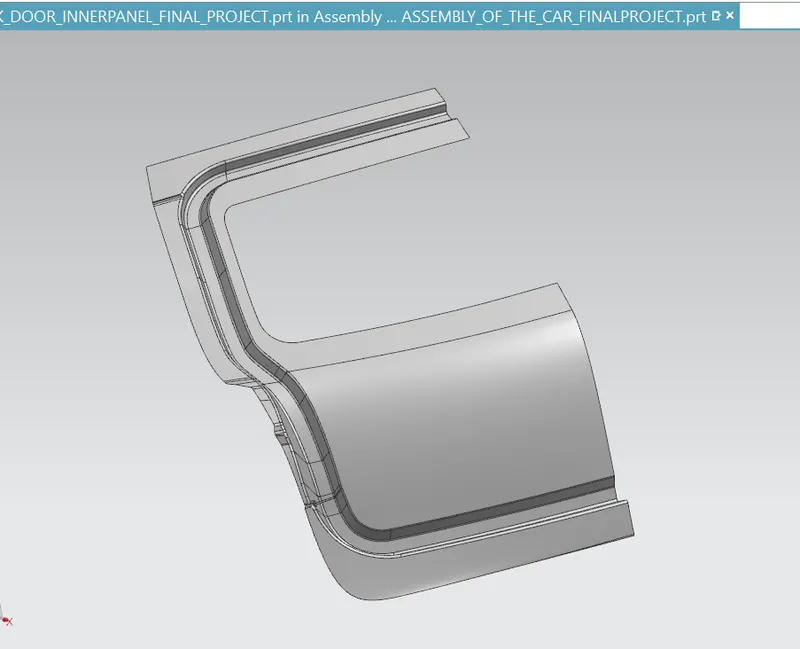
Here the boot surface is far from the outer panel so, we need to provide a flange on the boot surface so that it help us to join the boot space surface to the outer panel withe the mastic support
Lancing:
Lancing is a process in the sheet metal where the metal is cut to a sheet of metal through part of its length and then bending the cut portion. No material is removed in the lancing process. It is used to make tabs, vants, louvers in sheet metal workpiece. Here in back door inner panel we use this operation
These are the two mastic support flanes which are exactly at a distance of 5 mm between the two surfaces
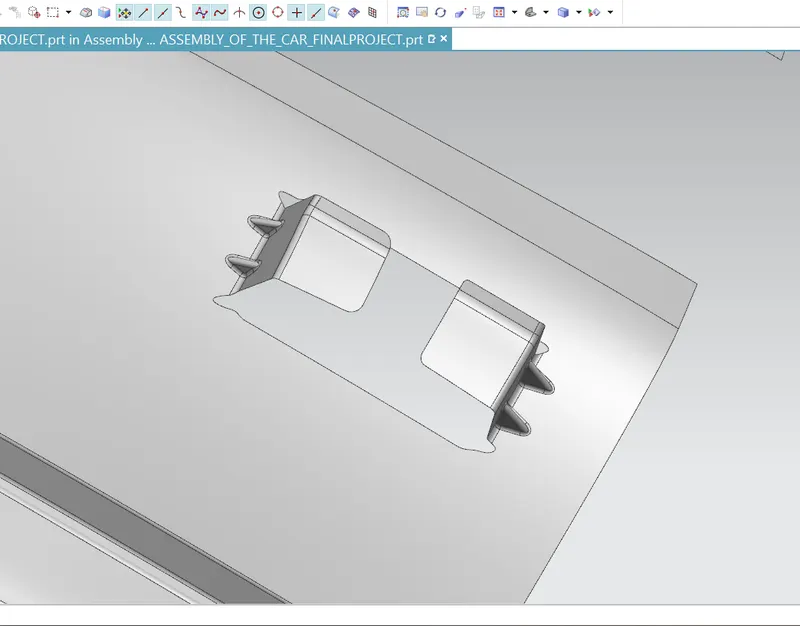
As mentioned above about the lancing process. Here we use in the inner panel of the door. It is done to join the outer and inner panel with the help of mastic sealants.
MASTIC SEALANT:
The mastic sealant is used to fix the inner panel with the outer panel which increases the NVH factor and stiffness of the back door.
So a 5 mm clearance is left inbetween the two surfaces which aid the joining of the mastic for sealing the two parts firmly
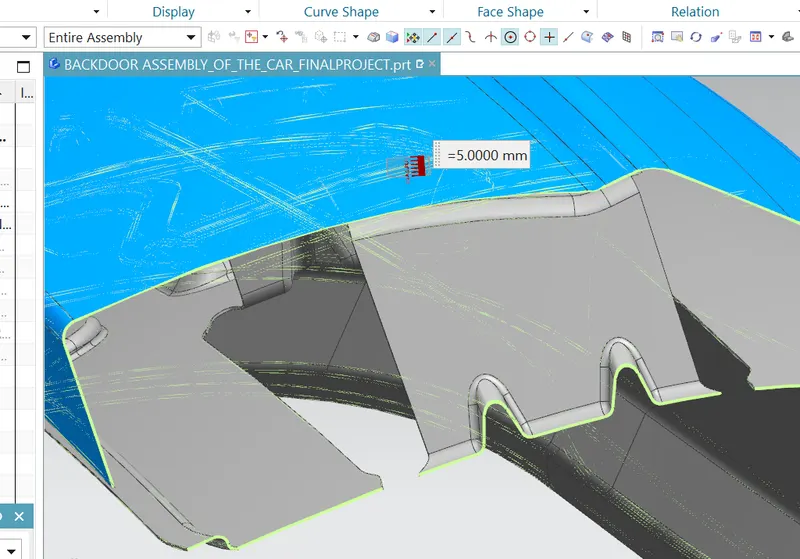
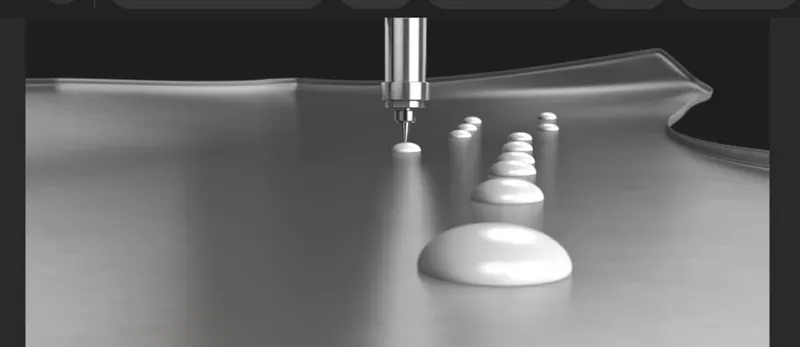
This sealant fills the gap between the two surfaces and help to hold them firmly intact
Emboses and the cutouts :
Just like the hood due to the pedestrain safety and the impact effect the surface of the hood is filled with th embosses for providing the external steength and impact durability capacity and helps to distribute the force along throughout the hood so that the impact force is distributed uniformly along thr entire surface which leads to improve the impact durable capacity
For the same like crearte the embosses and cutout are generally create to teduce the weight of the component in the inner panel of the back door so, that the distribution of the force flow entirely through out the surface there by reducing the impact
The embosses should follow the tooling direction
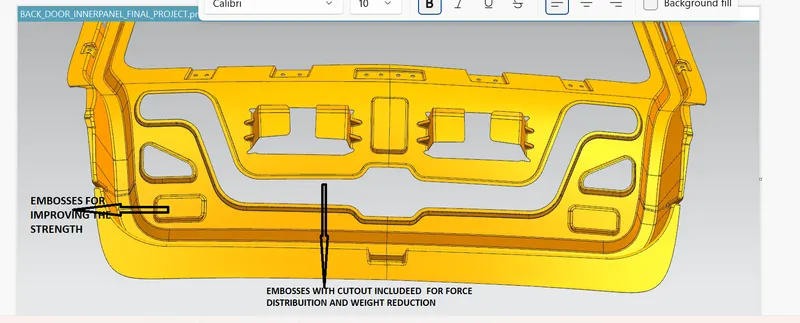
some of the embosses are used as the housing of the wiring harness of the components
GEnerally the wiring harness route follows the channel between the connectingflanges and the windshield flange , so it will incur the better routing of the wiring harness supplied for every individula componemts of the back door assembly
Reinforcements cutouts:
Once all the embosses are figured out then, proceed further for the creation of the cutouts for the reinforcements
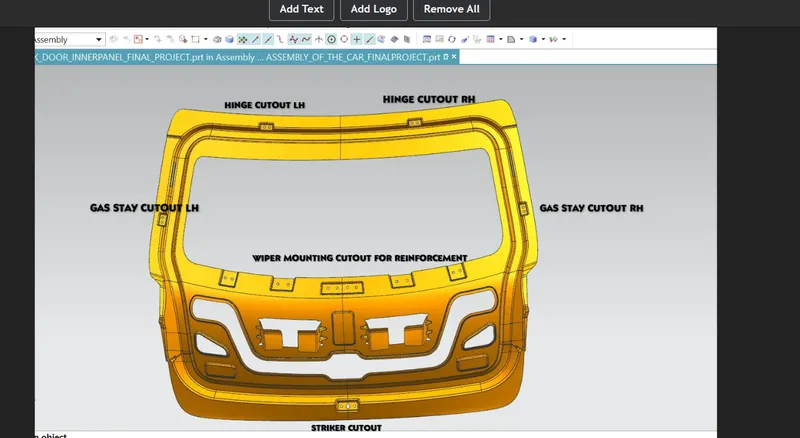
Generalyly reinforcements are provided on the inner panel for providing strength to the various assembly componemt slike the gas stay mountings, hinge mountings, wiper motor mounting, and the latch and the striker mounting parts .generally all these pparts are teh fastened components of the assembly and during motion lots of wear and tear occurs and these components would likely to be fail so, we need reinforcements of thes e parts on the inner panel of the backdoor to provide the additional strength
The cutouts for the reinforcements are mainly
- Hinge reinforcement cutout
- Gas stay reinforcement cutout
- Wiper motor reinforcement cutout
- Striker reinforcement cutout
Hinge reinforcement cutout:
Generalyly reinforcements are provided on the inner panel for providing strength to the various assembly componemt slike the gas stay mountings, hinge mountings, wiper motor mounting, and the latch and the striker mounting parts .generally all these pparts are teh fastened components of the assembly and during motion lots of wear and tear occurs and these components would likely to be fail so, we need reinforcements of thes e parts on the inner panel of the backdoor to provide the additional strength
Teh cutout would be generated such that it leads to the flat surface on the other side of the inner panel that is the below side so, that the support mountings can easily mount to the inner panel with the help of the screw fasteners
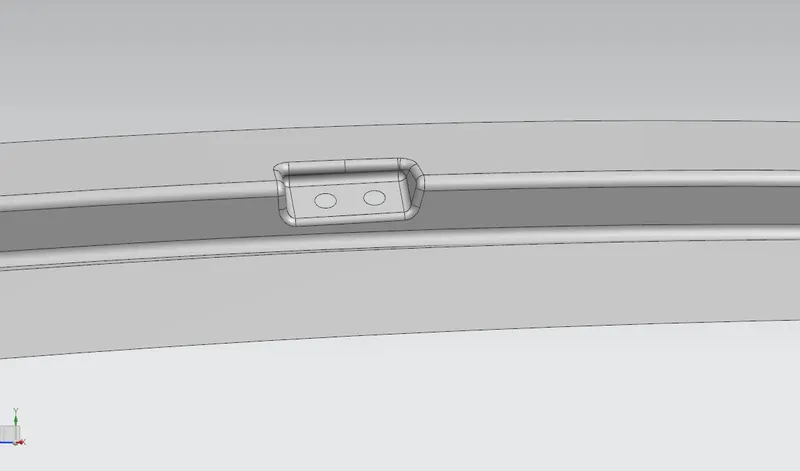
Create a box cutout using the law extension of the surfaces and trim it with the inner panel and apply the proper edge blends and create the housing for the bolts with a diameter of 8 mm
The flat surface thus formed on the other side where the actual mounting of the hinge takes place
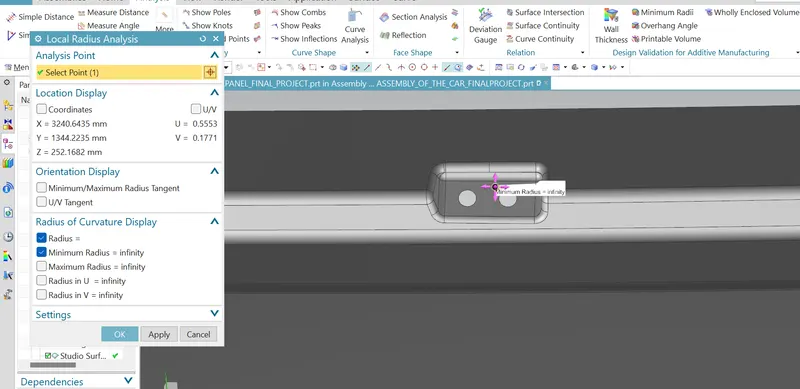
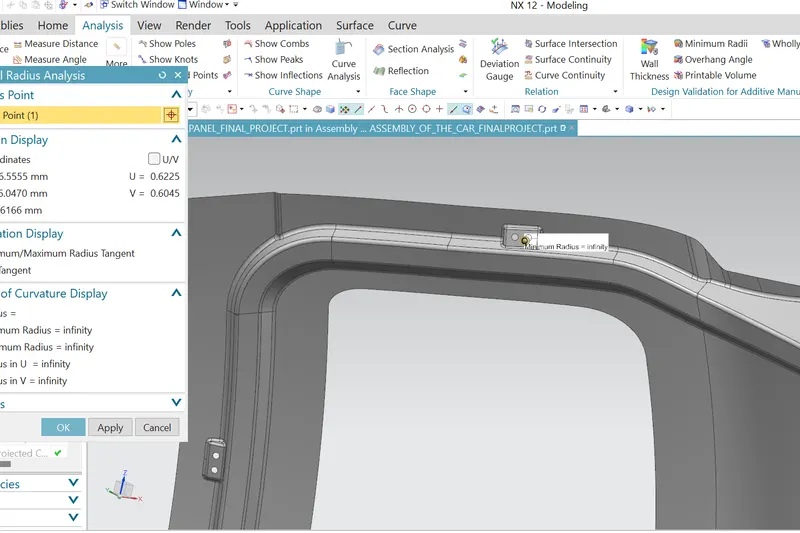
The local radius is infinity that means it shows the formed surface is flat
GAs stay cutout:
Gas stay cutout is marked on the left and right side top portions of the inner panel and the cutout will be like
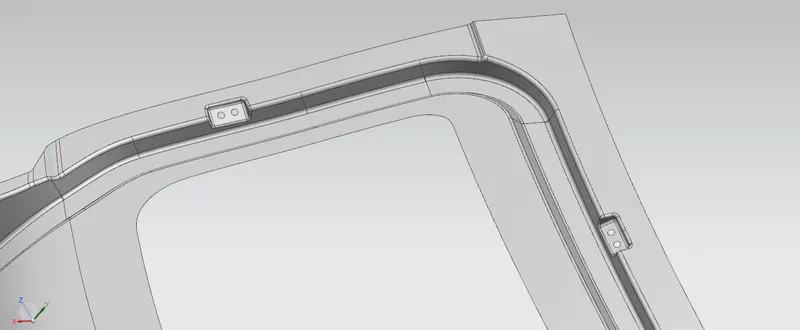
Wiper motor cutout:
Now a days lots of cars are provide dwith the wiper on the tail gate also for the mechanism to proceed ti will be activated by the motor support so , a reinforcement need to be provided for the better stability of the component
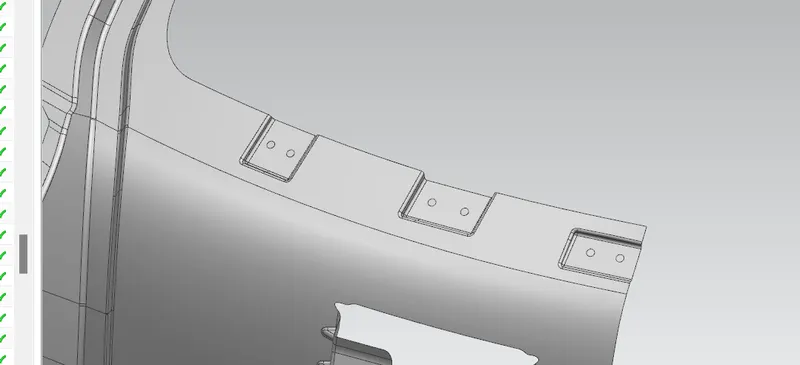
The other supports are used for proper assembling of the inner panel
Latch and the striker cutout:
The latch and the striker is used for proper locking of the inner panel with the car main body and it will be activatwed with the striker and the latch mechanism
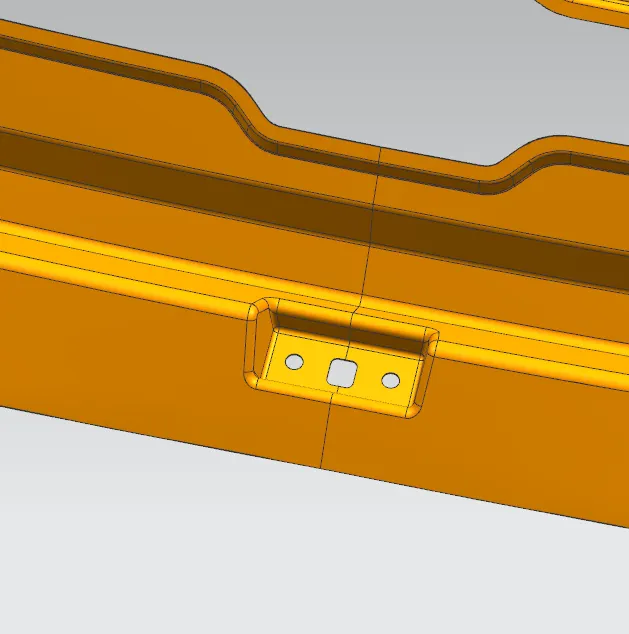
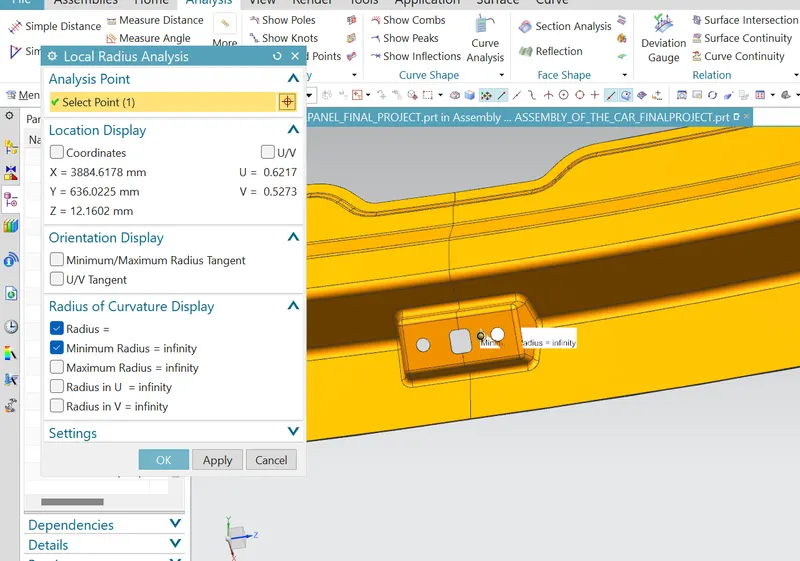
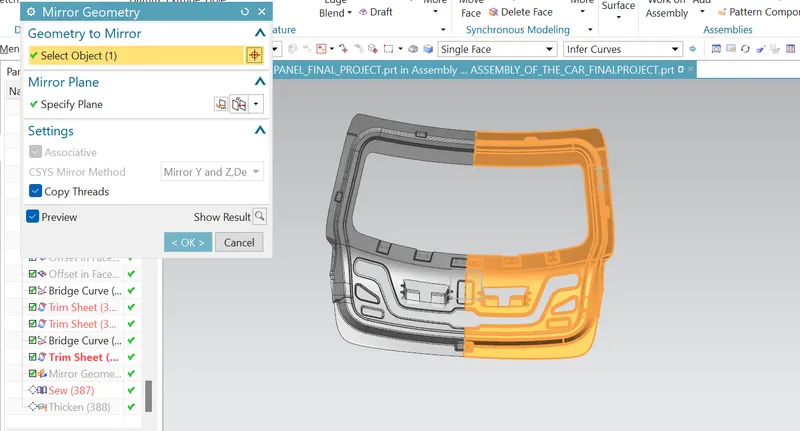
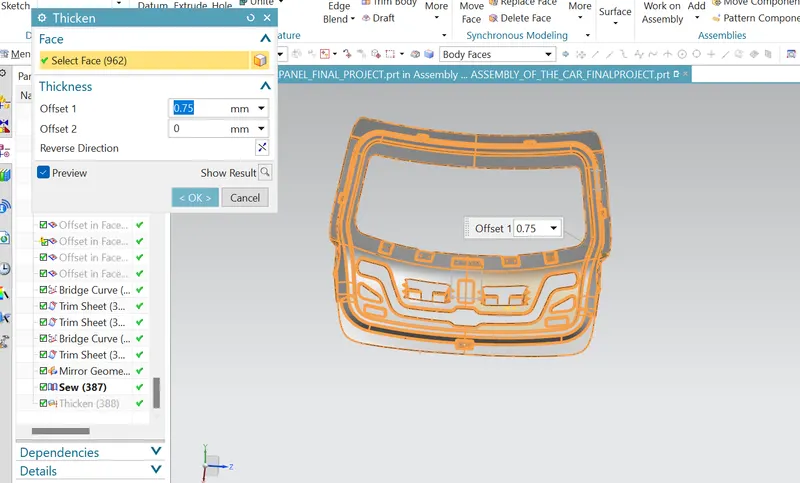
Once all the features required are designed mirror the geometry and sew the two surfaces togeTHER to form a single knit surface and thicken the surface to a value of 0.75 mm upwards
Thickening the surface
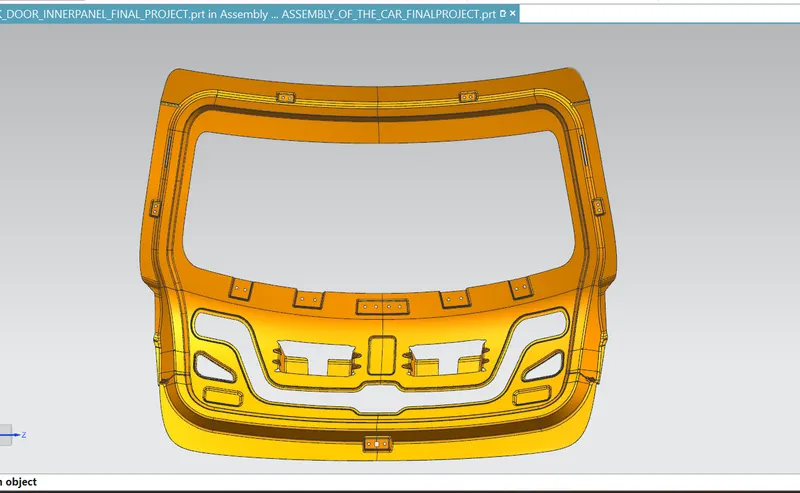
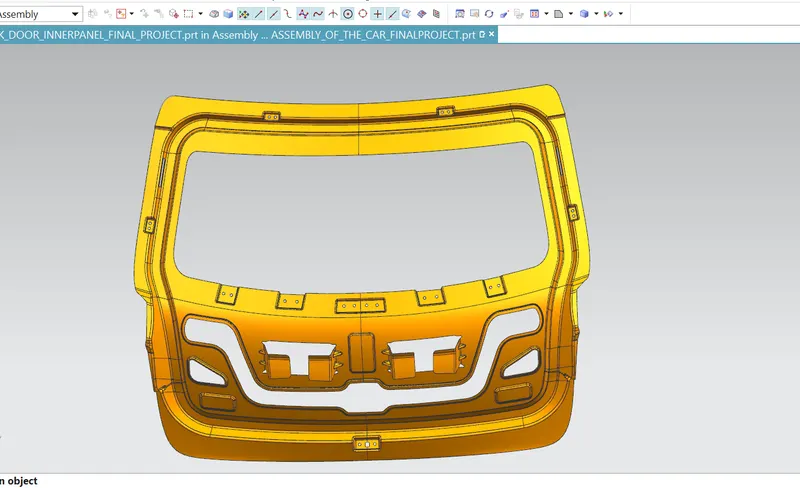
Now the complete inner panel is
Draft analysis of the inner panel:
The draft analysis technique is used to analyze whether our part model created in CAD is manufacturable based on the draft condition applied. Here the part should get easily removed from the panel dies (in case of Sheet metal part) or Mold (in case of plastic).
No parts can be ejected from the tool if it is having a straight 90-degree profile from its base surface. A small draft angle is provided to each and every area of the component in order to get easy removal of the component from the tool.
Here we are providing a direction in which components should eject in order to get easy removal of components from the tool. In other words, it also lets us know whether the model is having a draft angle and how much is the draft angle from the tool direction.
so, perform the draft analysis of the inner panel with respect to the toling axis as the vecor specified direction
The draft angle for the sheet metal component is 7 deg minimum draft
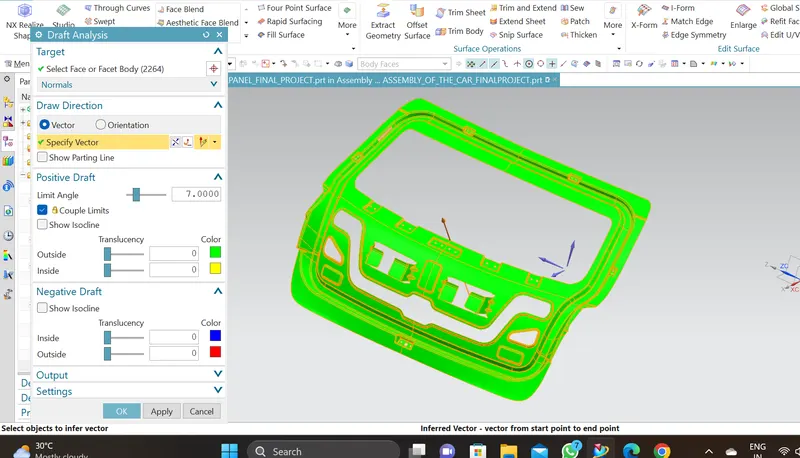
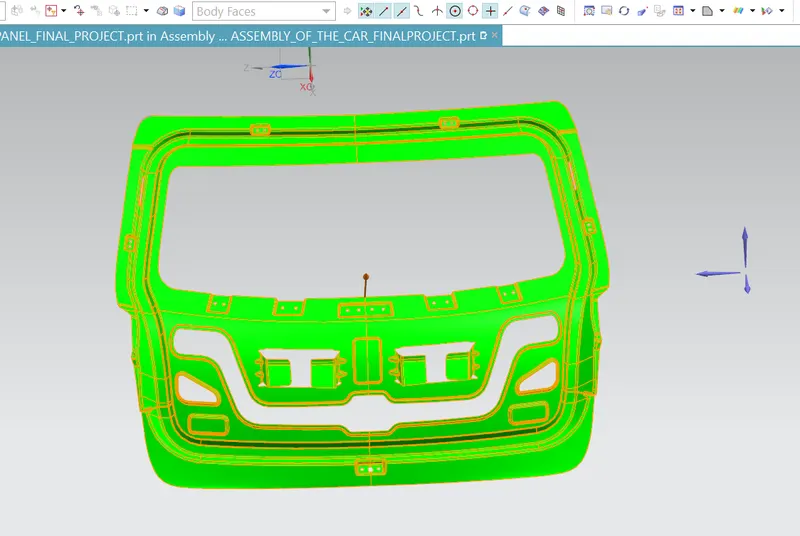
Almost all the parts are clearing the draft sangle of 7 deg along the tooling direction so, the part can be manufacturable Here are the parts that are made as per the master section and also clearing the draft analysis. Draft analysis is done in NX software. We can change the draft angle and analyze is it clearing the required criteria. It is shown is different color zones. So identifying it will be easier. It will let us know that the part can be removed easily during manufacturing or not. Minimum draft angle of 7 Degree is considered for analysis. green color infer on the parts that all face along the tooling direction has positive draft angle greater than 7 degree and passed in analysis.
Positioning latch:
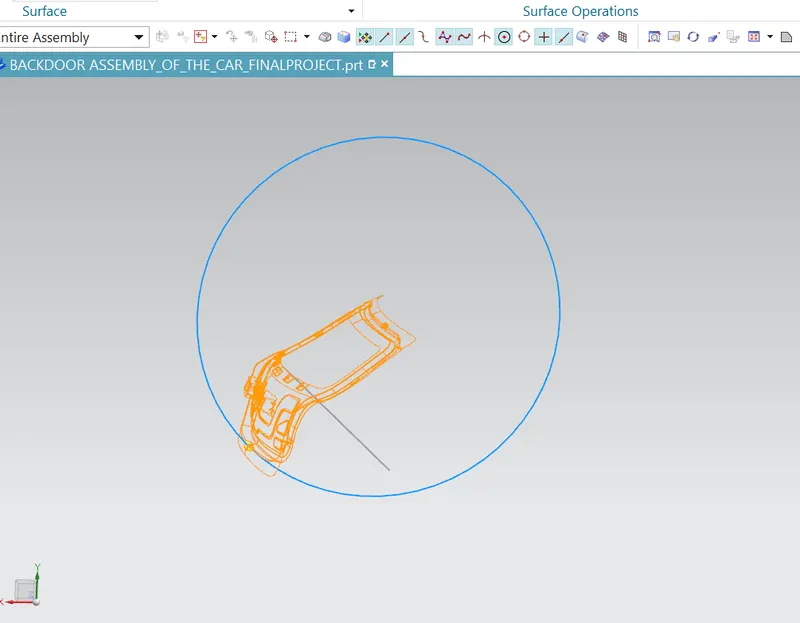
Latch and striker should be perpendicular to the hinge so only it will open and close properly. So i have made this trajectory to position the striker emboss.
Joining process :
Hemming:
Hemming is the joining process used to join the inner panel and the outer panel with the inner panel of the back door a gap of 0.2 mm is accumulated in between the two surfacers of the panel to accomodate for the hemming glue
Hemming is a type of forming operation in manufacturing components. Here the edges of the sheetmetal are folded on the other part achieving tight fit. This joins the both parts without affecting the appearance and hence it is used in hood, doors, fenders, tailgates etc,. In tailgate it is used to join the inner and Outer panel of the tail gate.
There are various types of heming operations
- Conventional Dai Hemming
- Roll Hemming
Conventional Dai Hemming:
This is used for mass productions. Here a hemming tool is used to fold the entire length of the sheet metal. Depending on the opening angle that will be several steps of the Hemming process. But this is an expensive process and it is restricted to flat and complicated profiles cannot be made in hemming.
Roll hemming:
The name says rollers are used in the hamming process and industrial robots are used to get the rollers over the part to fold over the other part and hemming is done. Comparing to the conventional die hemming the tool cost are significantly low the old hemming but the cycle time is higher the roll hemming
Hemming process of the inner panel with the outer panel of the back door
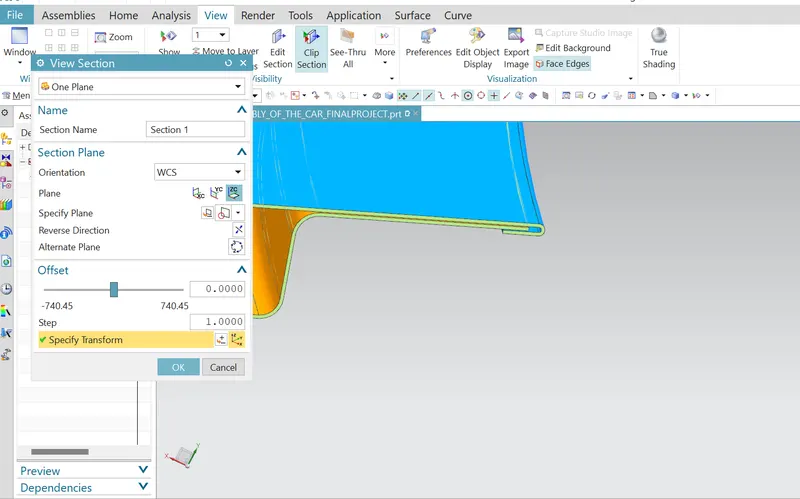
And the gap inbetwwen them woild be 0.2 mm
Reinforcement designs :
Hinge reinforcement design:
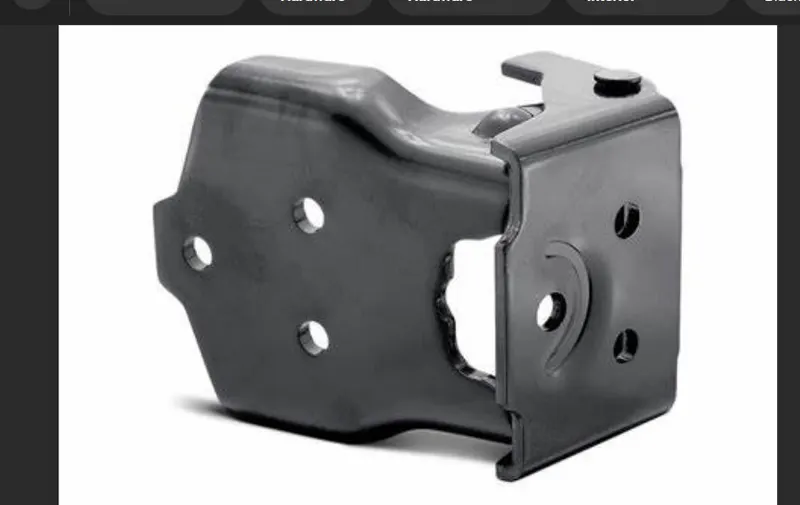
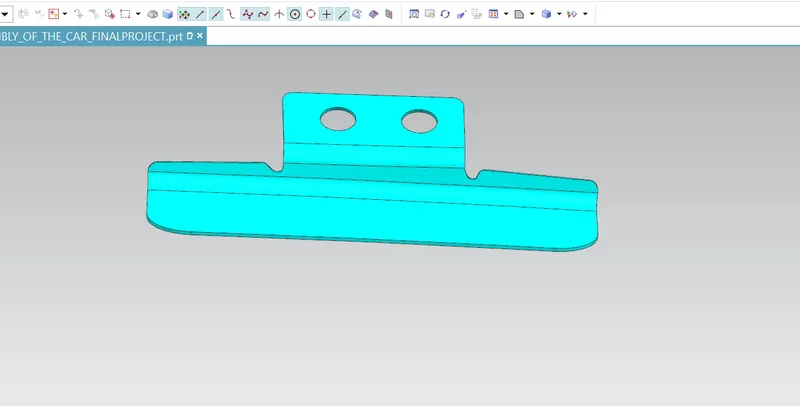
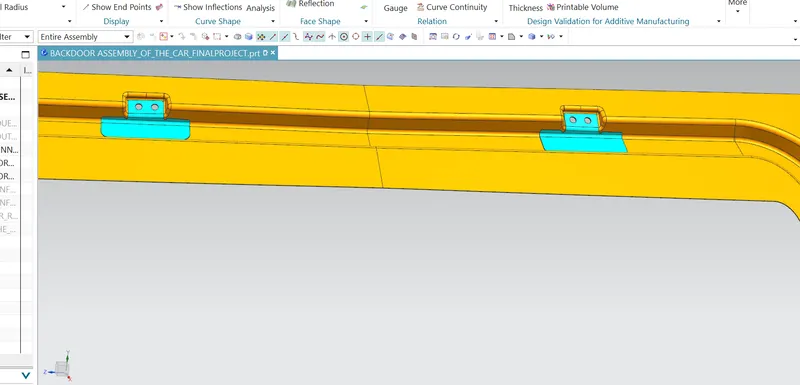
Hinges are used to opening and clsoing of the back door. Both halves of hinge on back door and roof combines to operate the door. Reinforcement is given to compensate the load acting on the region. Thickness is given 1.5mm in the above model towrards the outer panel.
Gas stay reinforcement:
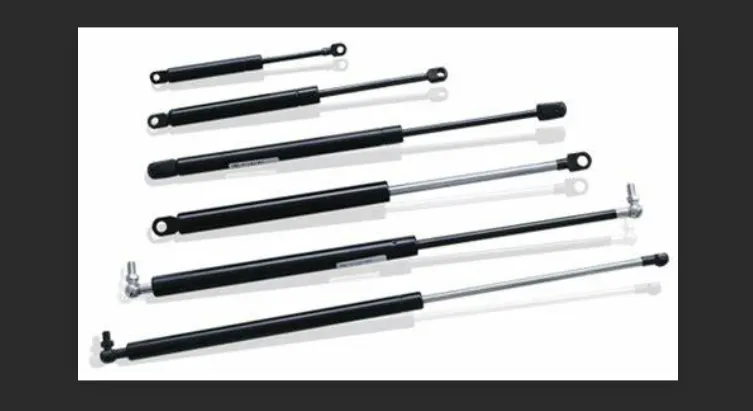
Gas stay in a tail gate is used hold open and close the tail gate. It eliminates man power by holding the back door open in position. one end of the gas stay is fixed on the door and other on the body side.
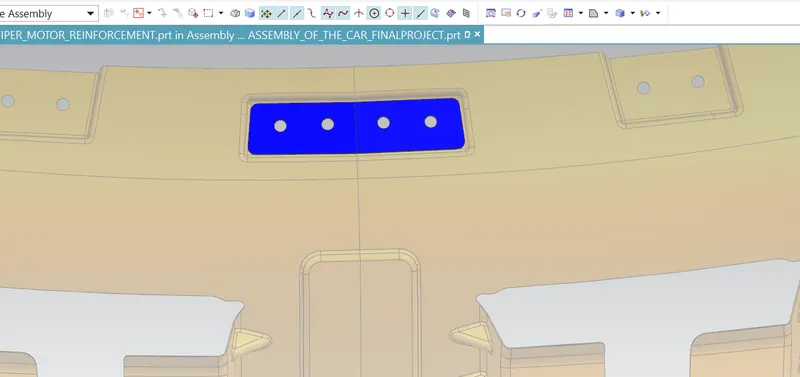
Wiper mounting reinforcement:
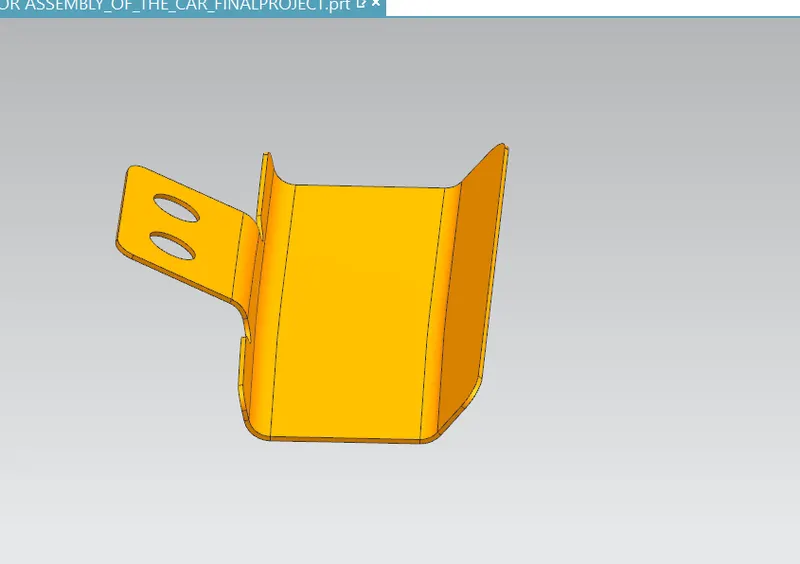
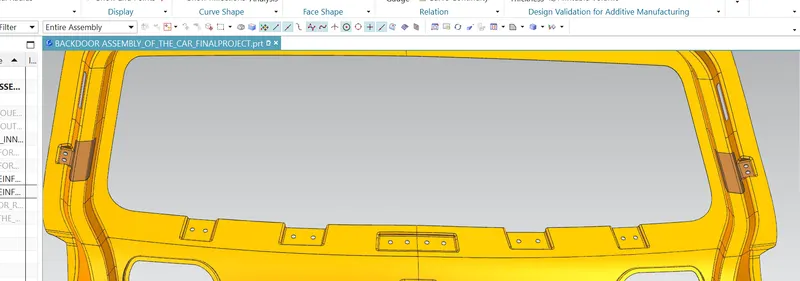
Wiper motor is placed in the back door area under the glass mounting portion. It comprises of small motor and modlues that actuates the wiper. reinforcement is given to strengthen the part locally. here the thickness is given 1.5mm.
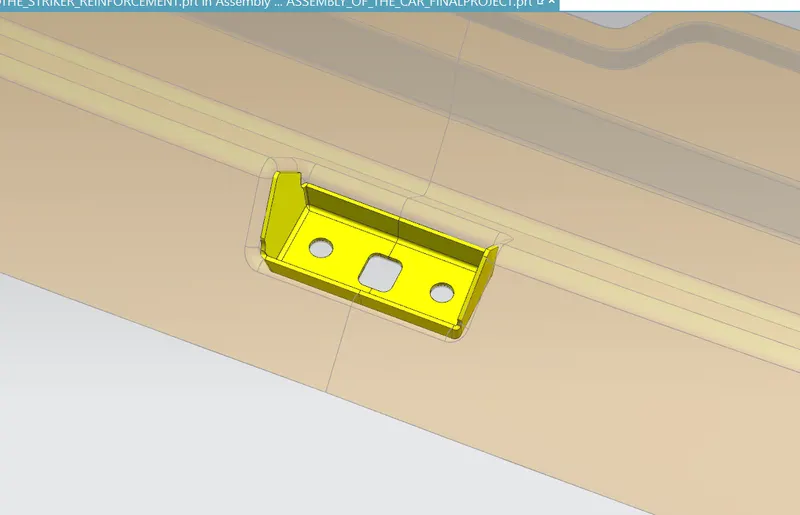
Striker mounting reinforcement:
Latch and striker is responsible for locking of the back door. Stress will be developed as we frequently open and close the door so adding a reinforcement will make it stronger.
Manufacturing process followed for these components production :
The following steps are pathways for manufacturing the back door of a car
THey are :
- Selection of material for car door
- Determining the process of manufacturing
- Steps of manufacturing process
The manufacturing process are
- Stamping
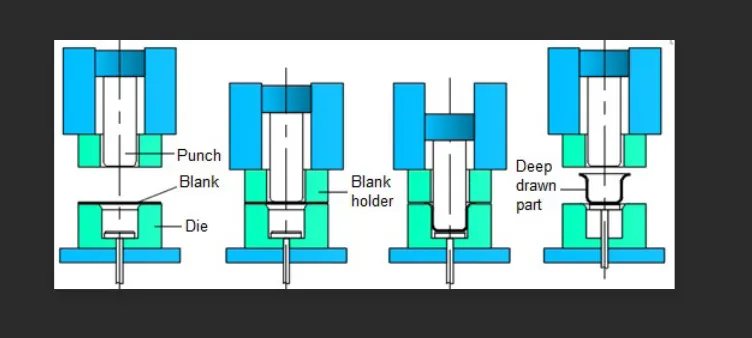
- Deep drawing operation
Stamping pressing :
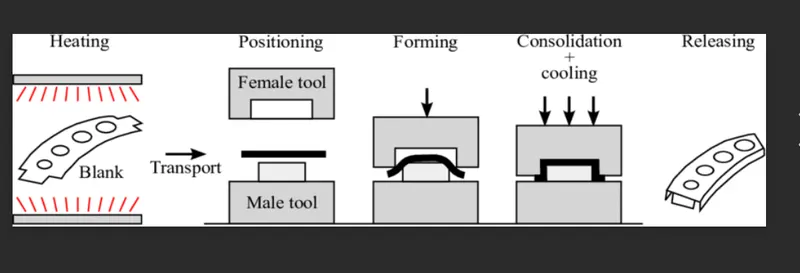
Stamping, also known as pressing, entails using a stamping press to form a net shape from either blank or coil form flat sheet metal using a tool and die surface. Like the processes used to create sheet metal, stamping also encompasses punching (with a machine or stamping press), blanking, embossing, bending, flanging, and coining. It is possible to carry out a stamping process in either a single operation or a series of stages.
Historically, the bicycle industry started to use stamped for mass-produced in the 1890s. Stamping replaced die forging and machining, resulting in great cost reduction. Although weaker than die forged parts, they were good enough for that purpose at the time.
Embossing is a stamping process used to produce raised or hollowed designs or relief in sheet metal. The method performs with a combination of heat and pressure depending on user requirements. Male and female roller dies are fit with a pattern or design and operate by drawing in a sheet of metal that embosses the design. The pressure and combination of heat work like “ironing” while raising the image higher than the substrate to make it smooth. It is possible to emboss ductile metals and for use in medium-to-high production runs. Likewise, it is possible to maintain the same metal thickness before and after, produce unlimited patterns (depending on roll dies), and uniformly produce a product.
Coining uses sufficiently high stress to precision stamp a workpiece by inducing malleable flow on the surface of a material. It is particularly beneficial for reducing the surface grain size and surface hardening while retaining toughness and ductility in the material more profound in the part. The term coining originates with the process initially used to manufacture coins.
In addition, stamping presses can also perform piercing and cutting. Progressive stamping combines the above methods done with a set of dies in a row through which a strip of the material passes one step at a time.
Deep drawing manufacturing process:
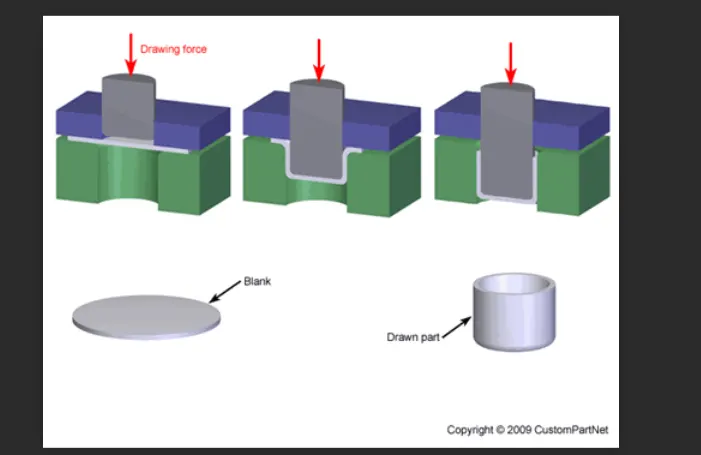
Deep draw stamping utilizes a forming die, a blank holder, and a flat metal sheet to generate parts that typically have depths greater than their diameters. The blank holder keeps the sheet metal workpiece on the die via compressive force, preventing it from moving around during the process. A punching tool presses down against the metal workpiece, deforming it by pushing it into the die cavity to produce the desired shape. Most often, this configuration consists of a hollow component with one open side. Deep draw stamping equipment can utilize multiple stations to further draw, shape, trim, and add additional features to the workpiece.
Benefits :
Automobile manufacturing is among the largest markets for deep-drawn parts as it offers this industry numerous advantages. The stamp automotive process is cost-effective and produces a wide variety of precision components in various sizes, shapes, and degrees of complexity.
Deep-drawn automotive components possess a solid, durable wall surrounding their full diameter, which creates a seamless structure. This enables deep-drawn parts to be leak-resistant, waterproof, and airtight, making them more reliable under tough operational and environmental conditions. Strain hardening takes place in the material during deep drawing. Also known as work hardening and cold working, strain hardening is the plastic deformation-based process of reducing ductility and making metals stronger and harder for rugged applications.
The deep draw stamping method is supremely efficient and economical for high-volume production. Additionally, the process and its equipment offer greater flexibility for incorporating secondary operations, decreasing the need for external processes and their associated costs.
Applications of Deep Draw Stamping
Deep draw stamping has a myriad of applications within the automotive sector. Some common examples include:
- Inflators and diffusers for airbags
- ABS brake modules
- Thermostat connections and fittings
- Oxygen sensors
- Fuel pump components
- Injector cups
- Bayonet sockets
- Leak-proof liquid storage vessels
- Connectors
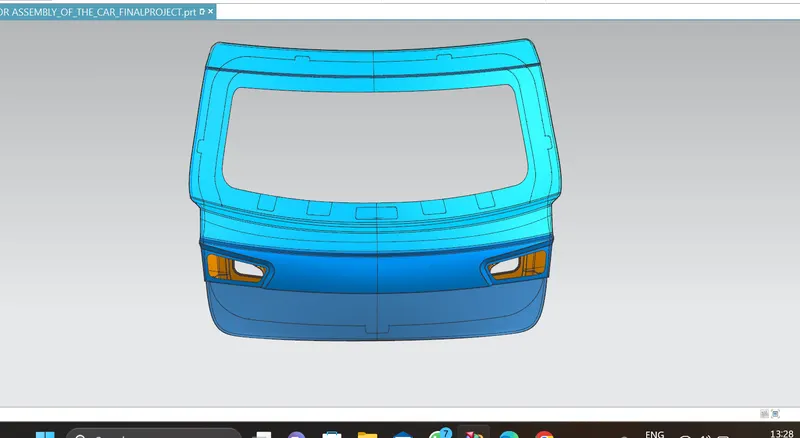
Final assembly of the car back door is
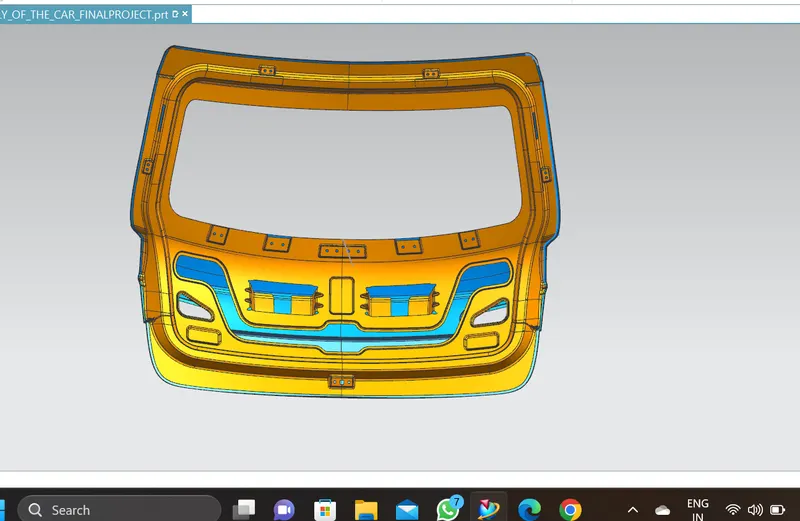
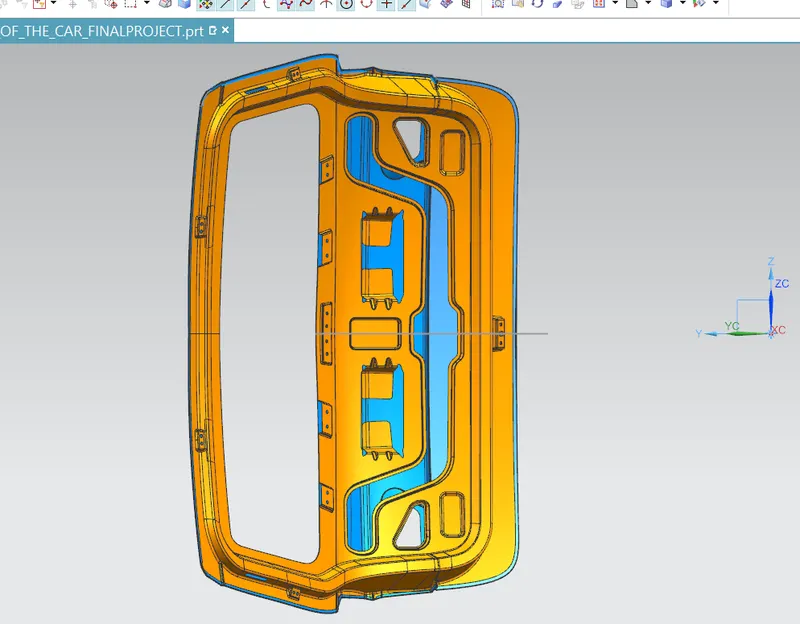
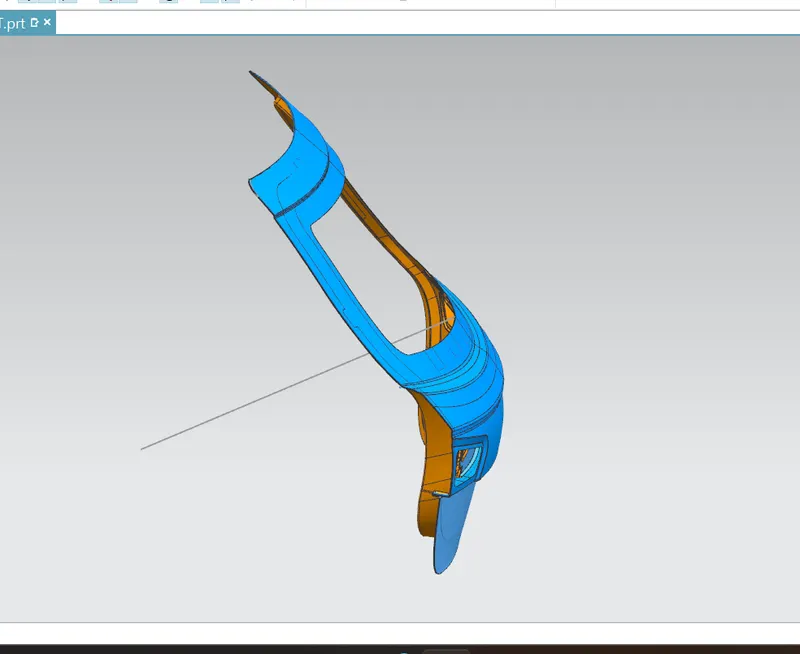
Conclusion:
Hence the design of the back door assembly of a car is created using the claas A surface provided and created all the parts that include the outer panel upper, lower portions , inner panel , reinforcements by following the proper design methodologies and performing the draft analysis with a draft angle of 7 deg along the tooling direction . Also mentioned sabove the joining priocess inviolved and the manufacturing processes involved for the manufacturing of the components along with the snapshots of all the design process along side with th snap shots of the joinoing and the manufacturing process and the design is performed in the siemens NX CAD software and the zip file is attached in the browse option below
THE END