Roof challenge
OBJECTIVE :
Design a Roof with its components by following the master section of the front roof rail (at least 1 Front roof rail, two bow roofs, 1 center roof rail and 1 rear roof rail) with all the design parameter mentioned and analysis report should be made on heat distortion and snow load criteria for roof.
INTRODUCTION :
Roof or car top is the portion of the vehicle which positioned and sits above the passenger compartment and protect the passengers from rain, sun, wind and other external elemets. along with the asthetic looks there is a lot of engineering works has been done to safe guard the passenger inside the vehicle.
TYPES OF CAR ROOF :
- convertible roof
- hardtop
- sunroof
- T-top
- targa top
- vinyl roof
CONVERTIBLE ROOF :
Convertible in the passenger car can either be driven with or without the roof . the method of extracting and storing the roof varies among the manufacturers.
BMW M3 CONVERTIBLE
HARD TOP :
It is a ridigid construction of automobile roof which is made of metal where it can be fixed rigid in the roof area or it can be detachable and stored in the separated space.

MAHINDRA THAR 2020
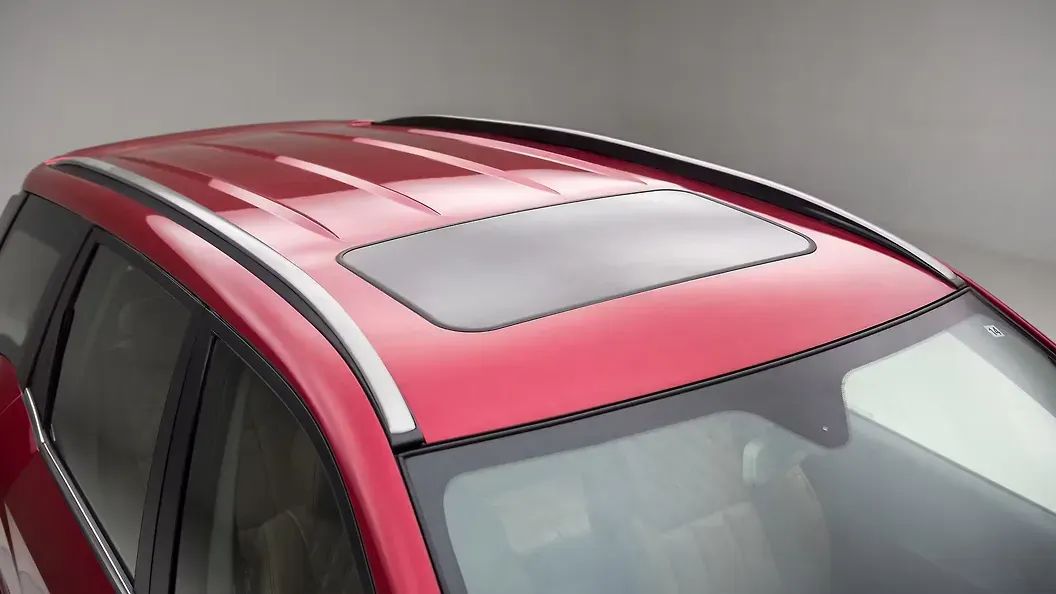
SUN ROOF :
It is a movable panel that opens uncover window which allows fresh air and sunlight enters to the passenger compartment. it can be either operated manually or a motor driven.
PORSCHE 911 CARRERA
T-TOP :
It is an automobile roof with an removable panel on each side of the ridgid bar running from center of one end of the structural bars between pillars to the center of next structural bars.
NISSAN 280 ZX
TARGA TOP :
It is a semi convertible car body style with romovable roof section and full with roll bar behind the seats
PORSCHE 911 T
VINYL ROOF :
It refers to the vinyl covering of an automobile. this covering is designed to give an apperance of convertible to model with a fixed roof and evolved into its syling statements with own rights.
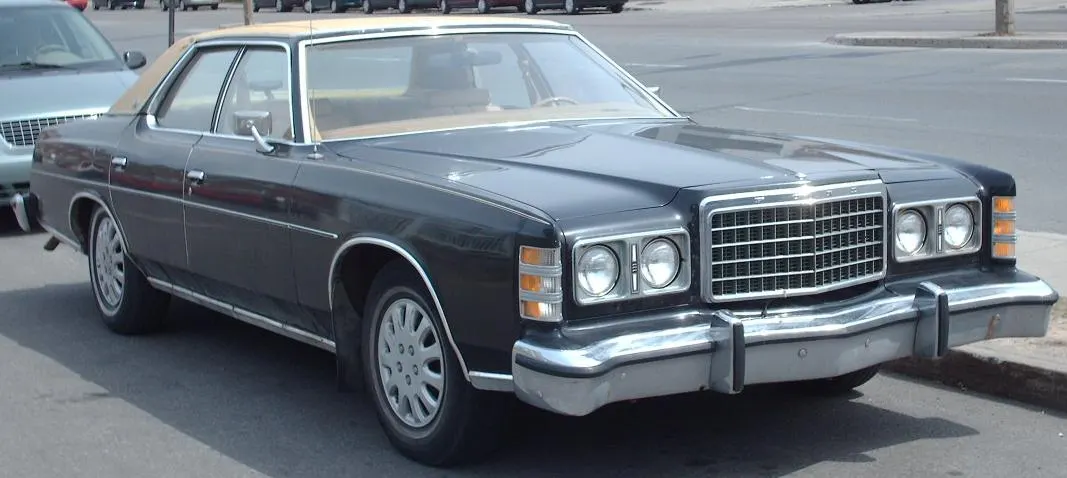
FORD LTD
DESIGN CRITERIA FOR ROOF :
- MATERIAL SELECTION :
this play an important role is design any product. the main goal of material selection in any product is to minimize the cost and also to meet the product performance goals.
In roof design there are different types of material for roof and rail are used to meet the value analysis of the member.
ROOF - SP121AQ
FRONT ROOF RAIL - SP783AJQ
REAR ROOF RAIL - SP783AJQ
REINFORCEMENT ROOF CENTER - SP153-980PQ
BOW ROOF RAIL - SP121BQ
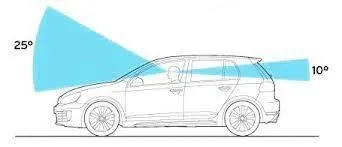
- VISIBILITY CRITERIA :
the visibility factor play important role while design a roof because the must be a ease of driver or the passenger to see the visiblity outside the car with certain regulations.
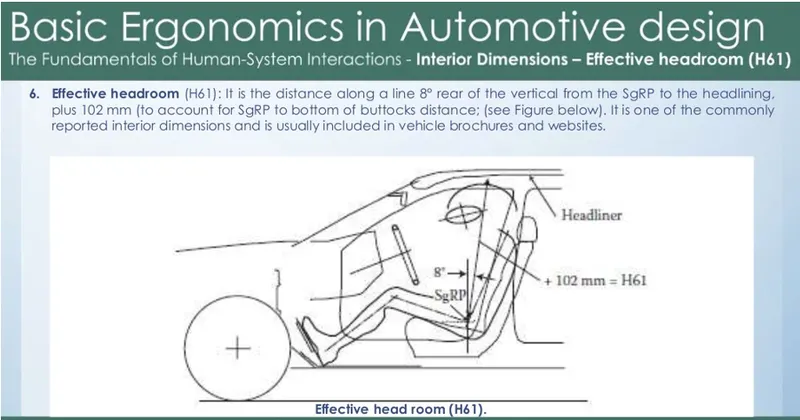
- HEAD ROOM CLEARANCE :
this factor is need to considered while desigining the roof because there must be a sufficicent clearance for passenger head while sitting to the roof . the roof rails are designed as such there must be a minimum clearance gap of 85 mm.
- HEAT DISTORTION :
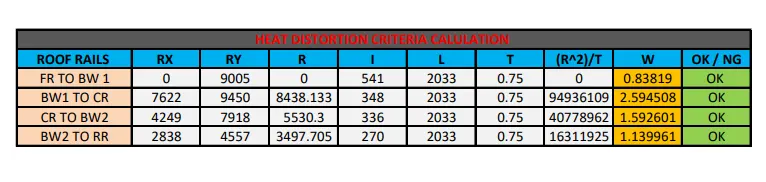
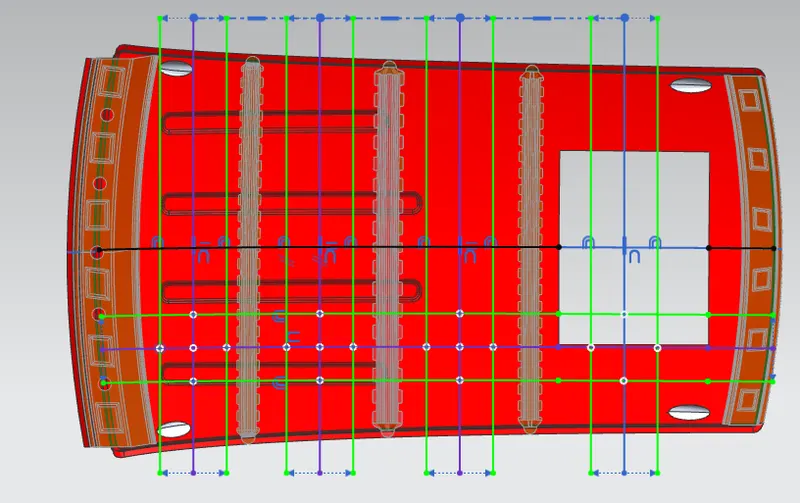
this determines the temperature of the roof that can withstand upto a limit. this can be predicted by using a heat distortion formula. this value must less than 2.7 which can dements it to fit. the heat distortion criteria is depends on the positioning of the reinforcement in roof.
- SNOW LOAD CRITERIA :
this criteria is tends to made of the region of snow fall. where ever there is snow fall on the roof of the car, the roof must acts in the elasticity where it should be come back to its original postion when the load is removed. this criteria is also depends on the positioning of the reinforcement in roof.
- ROOF CRUSH TEST :
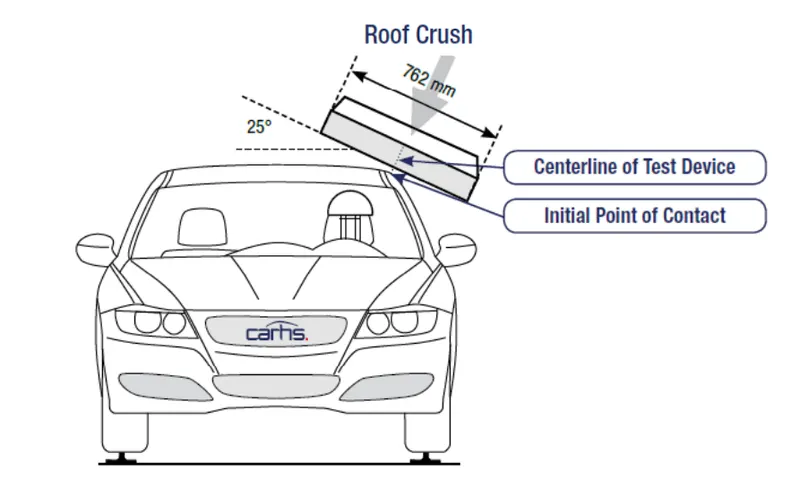
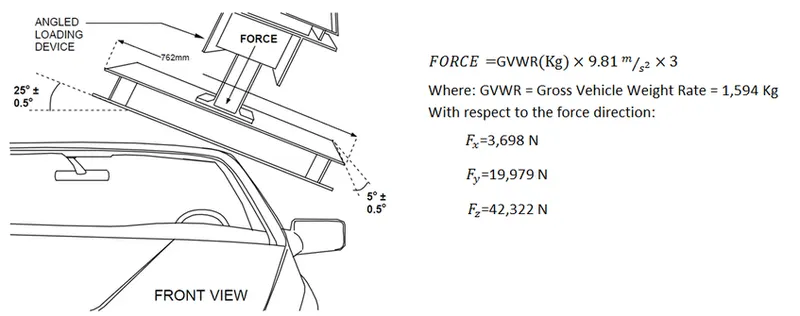
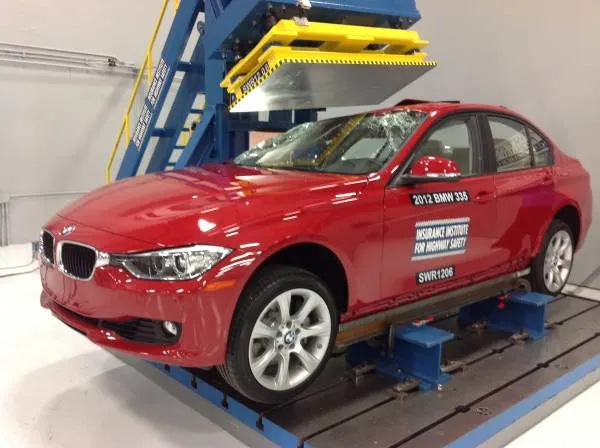
This test is done only when the body in frame is made. there is no prediction formula for this analysis. there must be a displacement of 127 mm or less , when the load 1.5 times the vehicle weight is unloaded. if there is more diplacement, then need to change the thickness of the reinforcement or increase the mastic region. the load is acted on the vehicle at almost 120 sec and speed of load acting will be 13 mm/sec. there will some regulation of the crush test where the angle of load acting and lenght of the load.
- DRAWABILITY OF THE SHEET METAL
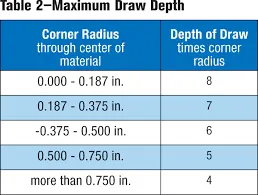
the ability of sheet metal to form into desired shape without any defects. the depth of the drawing is depends on the thickness of the material. there must be minimum of 3 degree inclination where the tool can comes out freely while manufacturing.
ROOF STRUCTURE :
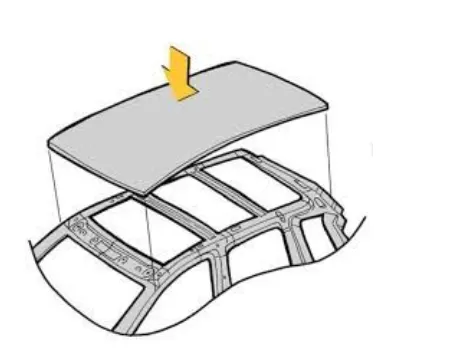
Apart from the areodynamic surface , it has to maintain the induced drag force of the surface. to make the roof more structural rigid , the BIW has designed as per this conderation .
the internal componet of the roof are
- outer roof
- front roof rail
- rear roof rail
- reinforcement centre
- bow roof rail
- OUTER ROOF :
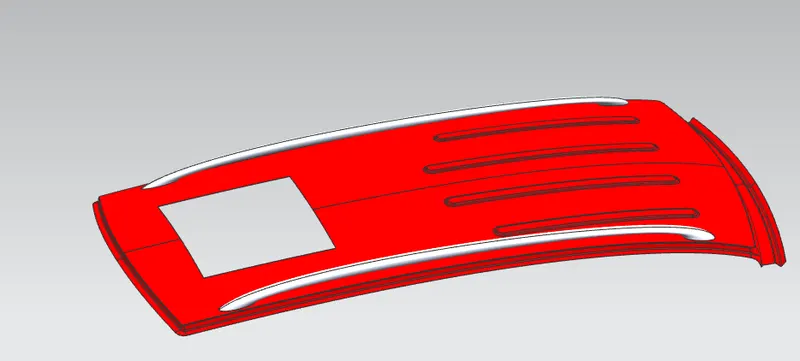
this is the desired part of the automotive structural membrane where it safe guards the passenger from the external calamities. this surface also said to be a styling area where it is manufactured with in the OEM's. there are different types of roof in the industry each play there vitual role with the passenger requirement and the safety standards. emboss are provided to outer roof with acts as a greater strenght and gives better result in design calculations. there must be a miniumum of 3 degree of inclination so that during manufacturing the tool canbe drawn easily. the sun roof area is provided while designing the outer roof. there must be additional reinforcement in that area in centre roof so that it can withstand the sunroof mechanism and also incase of passenger adding the luggages at the top of roof when rool rails are present.
SECTIONAL MODULUS CALCULATION OF OUTER ROOF :
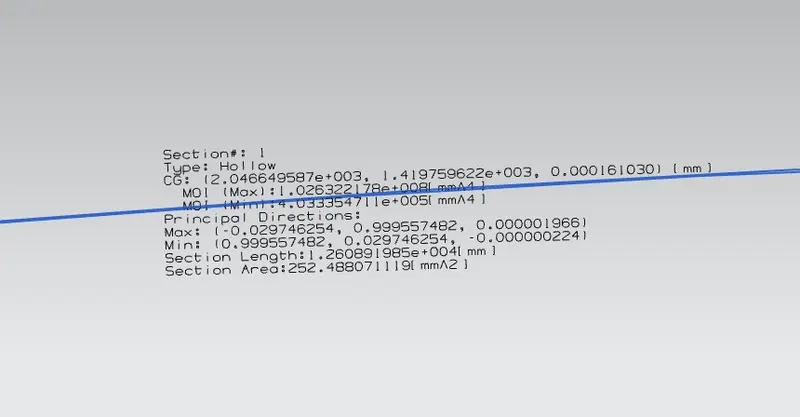
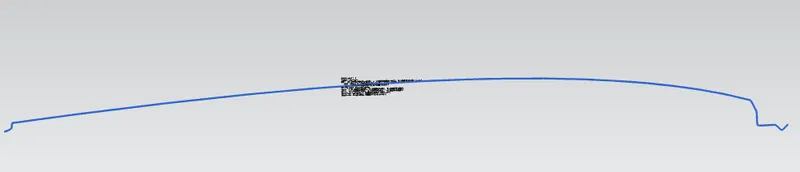
moment of inertia for bow roof rail is 4.033354711e+005 mm4
distance between the neutral axis and the extreme end is 1078.76 mm
sectional modulus of bow roof rail is 373.89 mm3
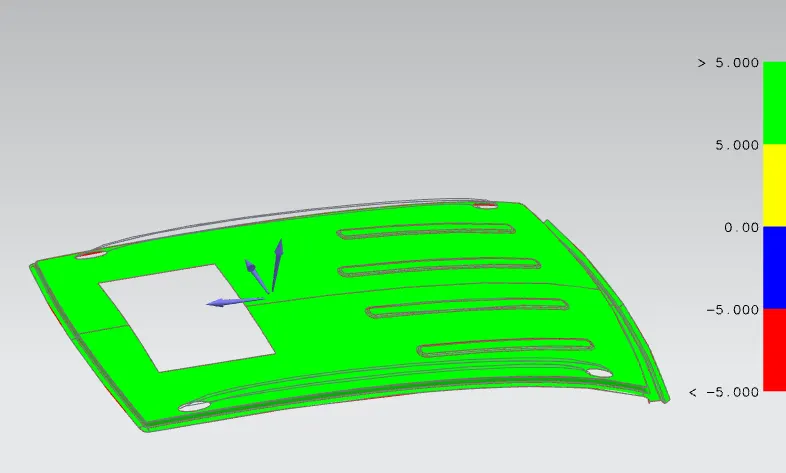
DRAFT ANALYSIS FOR OUTER ROOF :
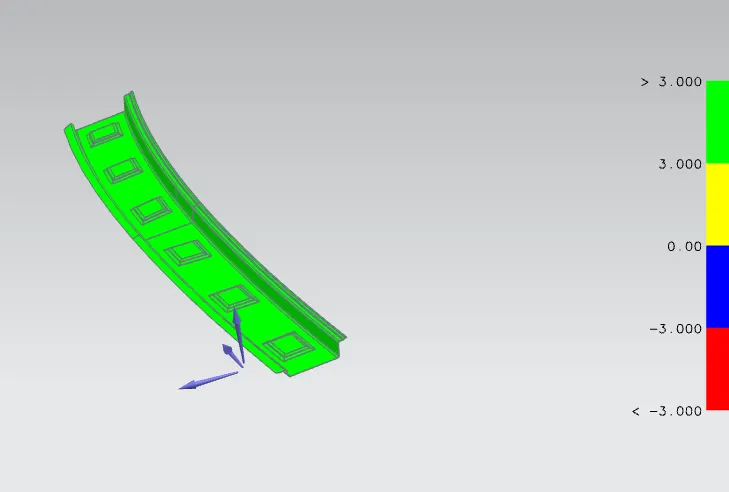
- FRONT ROOF RAIL :
This part joints the windsheild and body outer. the master section ofthe front roof rail is given below.
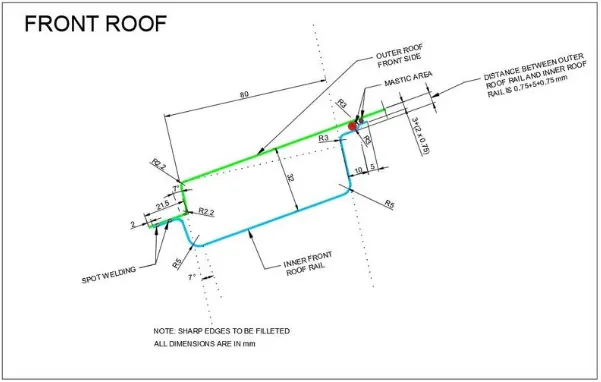
FRONT ROOF RAIL MASTER SECTION
the space between 21.5 mm is given for windsheild, mastic and rubber lining. the 32mm depth is given for the driver visibility and head room clearance. the 5 mm gap is given for mastic sealeants. the 80 mm lenght is depth on the surface match with the outer panel. when ever there is an inclination provided, must be considered for drawability also . the minimum drawability angle is 3 degree. corner relief must be provided on the stress concentration point. emboss are provided to have the better strenght for the structure.
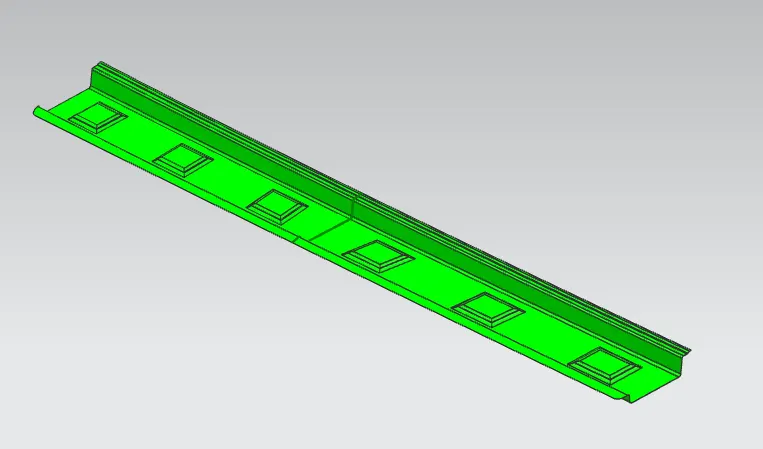
FRONT ROOF RAIL
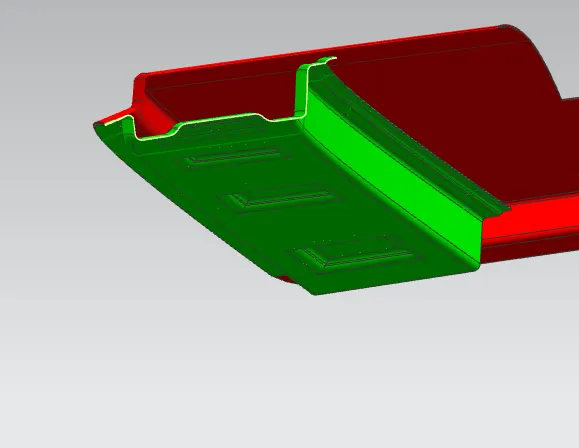
FRONT ROOF RAIL CUT SECTION
SECTIONAL MODULUS CALCUATION FOR FRONT ROOF RAIL :
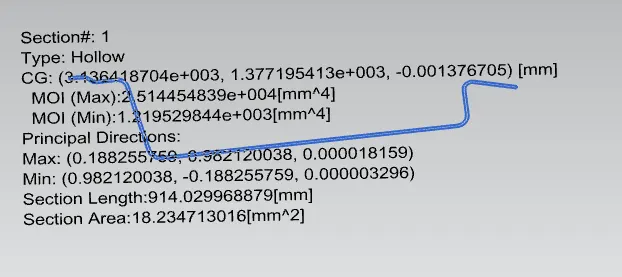
the moment of inertia of the front roof rail is (Min) 1.219529844e+003 mm4
the distance between neutral axis and the extreme end is 60.7 mm
therefore the sectional modulus of front roof rail is 20.09 mm3
DRAFT ANALYSIS FOR FRONT ROOF RAIL :
- REAR ROOF RAIL :
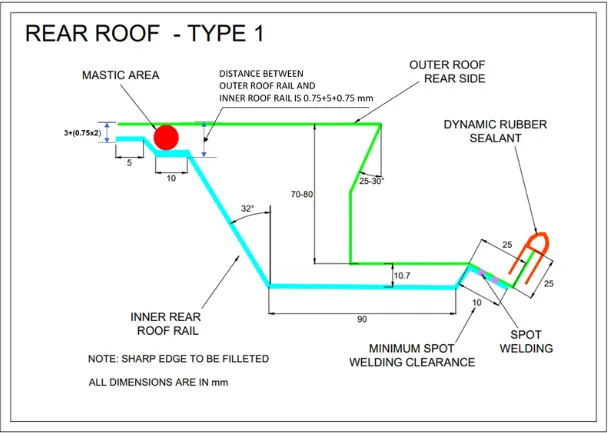
Rear roof rail joins with the back door and body outer, the master section for the rear roof rail is given below.
REAR ROOF RAIL MASTER SECTION
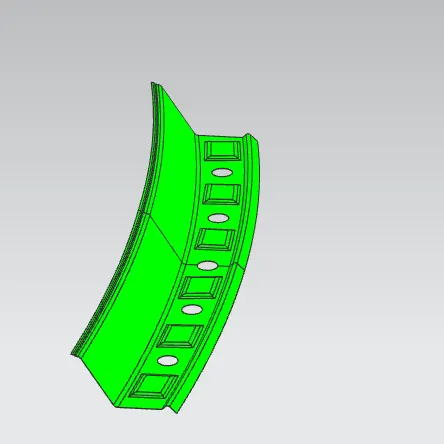
The 70 - 80 mm depth is provided for the back door hinge placement, head room clearance and also for the visiblity criteria. the 5 mm gap must be povided for mastic sealeants. minimum of 0.02 mm clearance should be provided between outer roof and inner roof. corner relief must be provided on the stress concentration point. emboss are provided to have the better strenght for the structure.
REAR ROOF RAIL
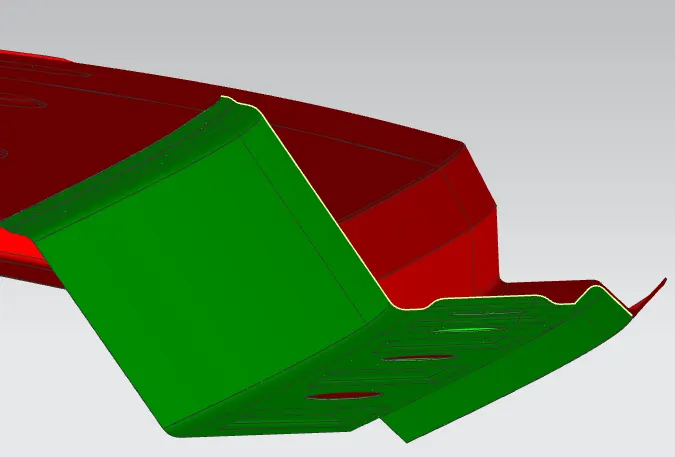
REAR ROOF RAIL CUT SECTION VIEW
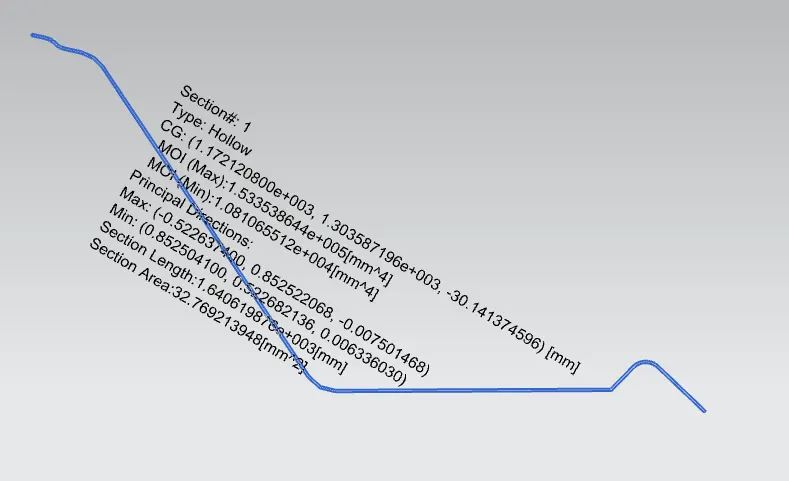
SECTIONAL MODULUS CALCUATION FOR REAR ROOF RAIL :
the moment of inertia for rear roof rail is (Min) 1.081065512e+004 mm4
the distance between neutral axis and the extreme end is 118.205 mm
therefore the section modulus is 91.45 mm3
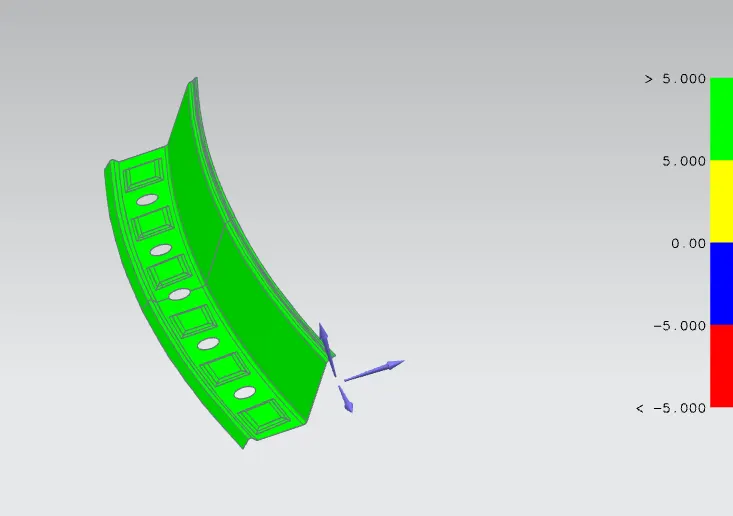
DRAFT ANALYSIS FOR REAR ROOF RAIL :
- REINFORCEMENT CENTER :
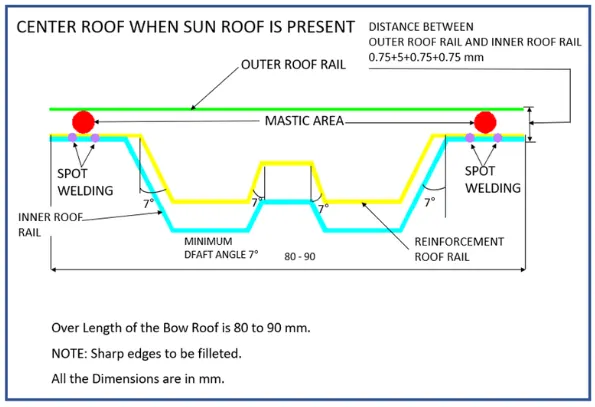
CENTER ROOF RAIL MASTER SECTION
this provides the support at the centre of outer roof which there by withstand maximum effect during the buckling of the outer roof. whenever there is sunroof is provided in the roof, the shall be an additional reinforcement for the centre rool rail which can withstand more strenght while placing the sunroof or sunroof mechanism. the drawability need to considered to make the part produceable during manufacturing process. the mainium draw angle is tends to 3 degree.
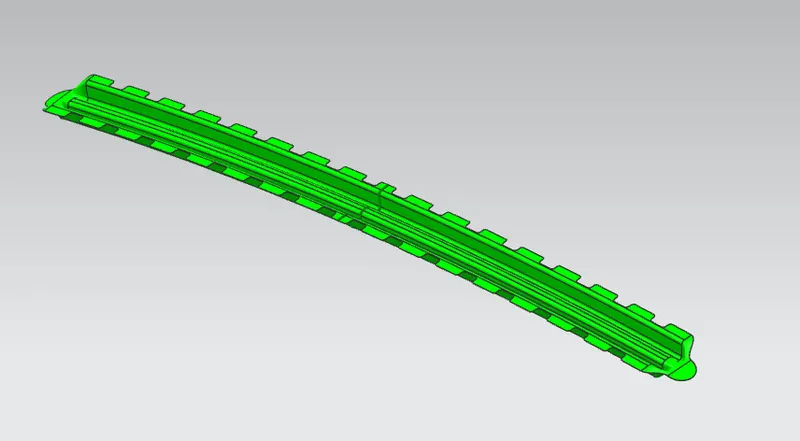
CENTER ROOF RAIL
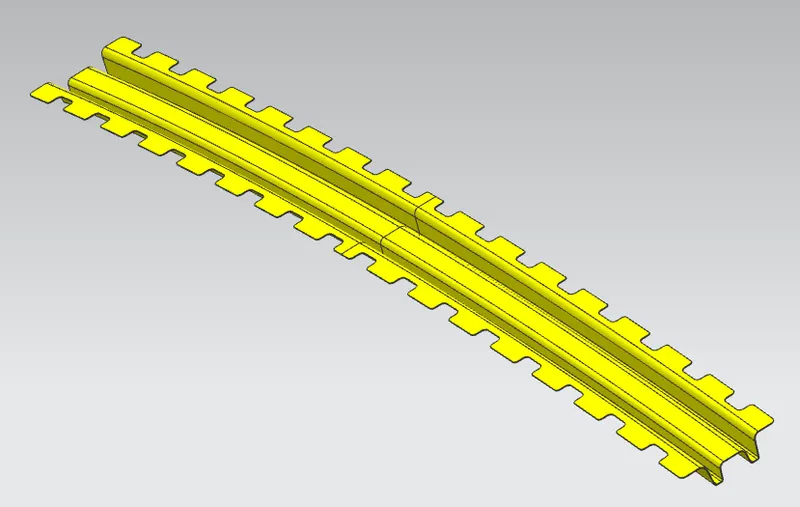
REINFORCEMENT CENTER
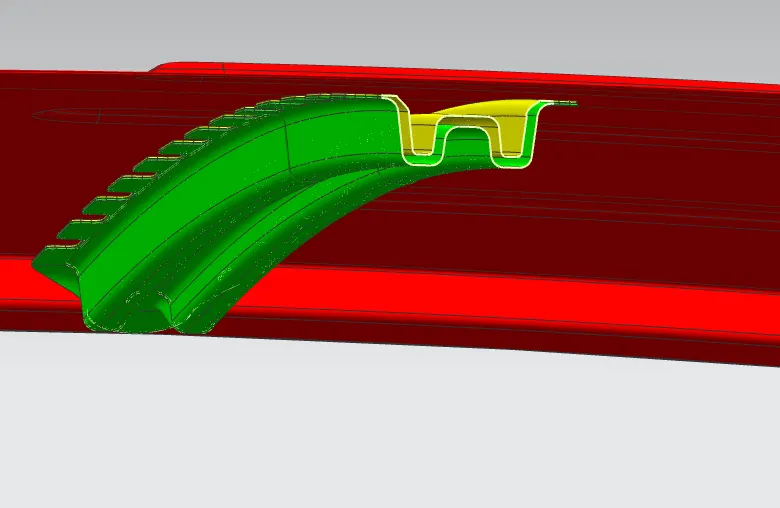
CUT SECTION VIEW OF CENTER ROOF RAIL WITH REINFORCEMENTS
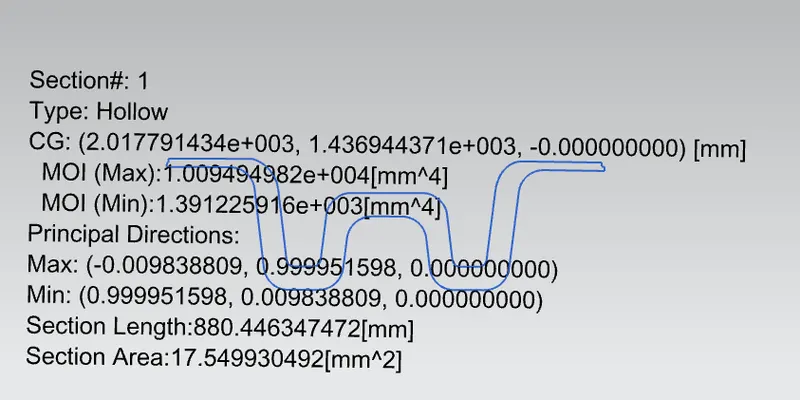
SECTIONAL MODULUS CALCUATION FOR CENTER ROOF RAIL WITH REINFORCEMENT :
moment of inertia for center roof rail with reinforcement is 1.391225916e+003 mm4
distance between the neutral axis and the extreme end is 44.39715 mm
sectional modulus of center roof rail with reinforcement is 31.335 mm3
DRAFT ANALYSIS FOR CENTER ROOF RAIL :
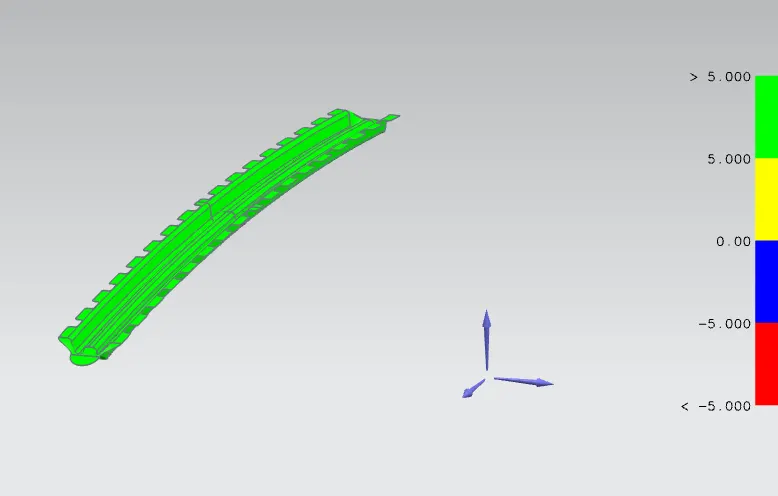
DRAFT ANALYSIS FOR CENTER REINFORCEMENT :
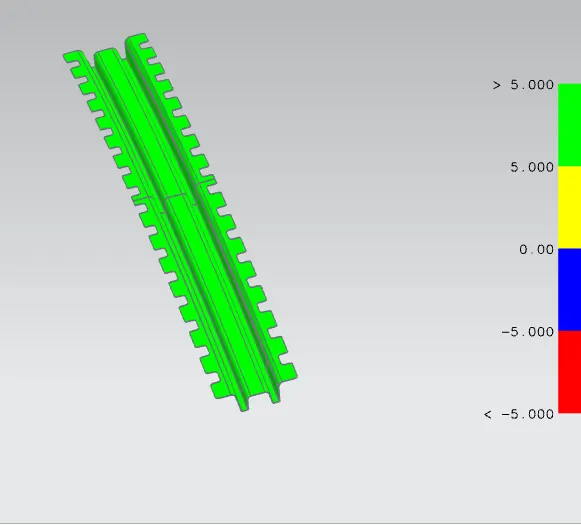
- BOW ROOF RAIL :
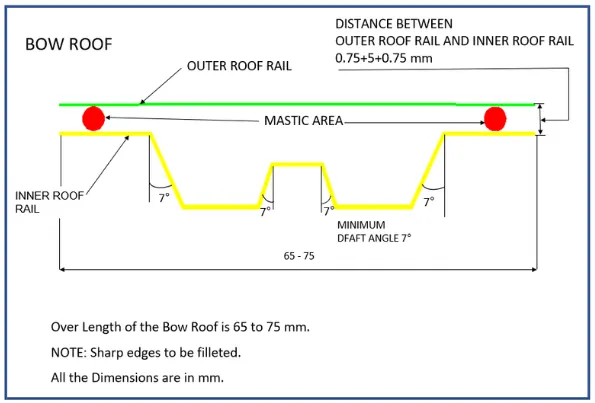
BOW ROOF RAIL MASTER SECTION
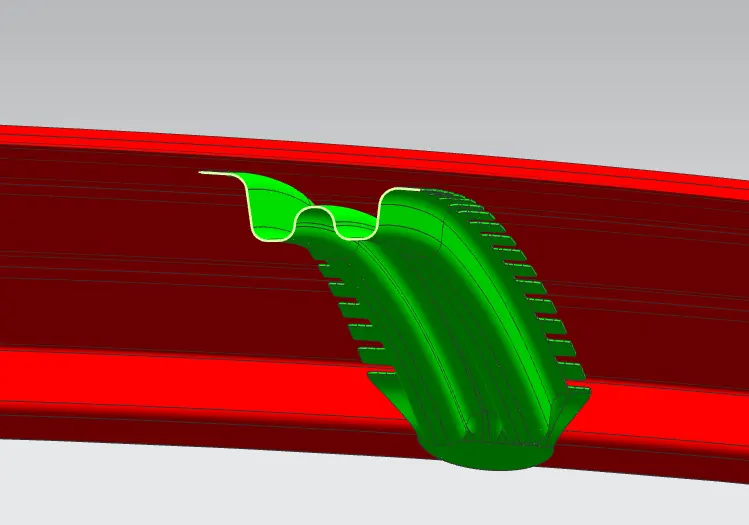
bow roof rails placed in the flat surface area where it gives strength at the bigger curvature region between the centre roof rail to rear roof rail and front roof rail to the centre roof. the no. of bow rails will be increased depends on the calculations on the snow load criteria and also on the length of the roof. the gap of 5mm is provided for the mastic sealeants.
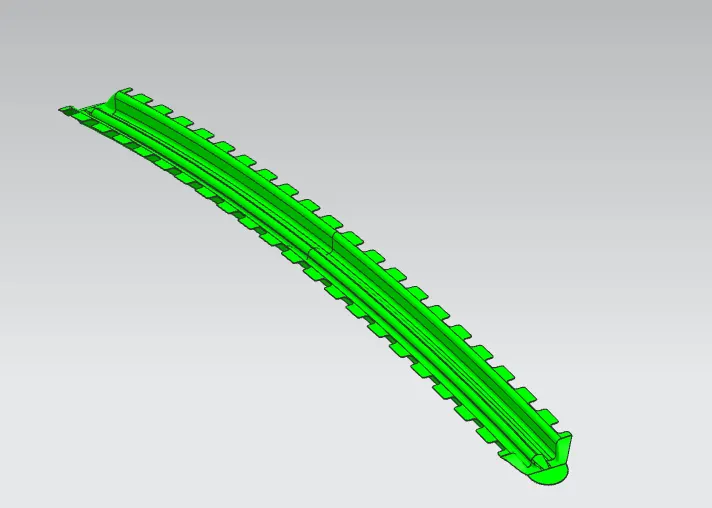
BOW ROOF RAIL
BOW ROOF RAIL
SECTIONAL MODULUS CALCUATION FOR BOW ROOF RAIL :
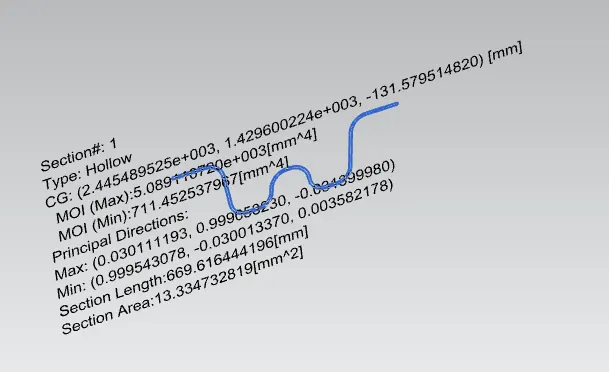
moment of inertia for bow roof rail is 711.452537967 mm4
distance between the neutral axis and the extreme end is 35.77 mm
sectional modulus of bow roof rail is 19.889 mm3
DRAFT ANALYSIS FOR BOW ROOF RAIL :
HEAT DISTORTION PREDICTION FORMULA :
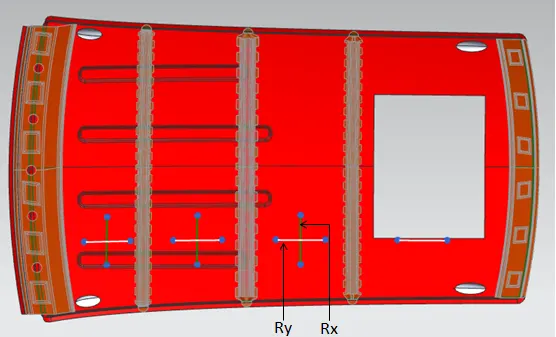
W = [1.73 x 10^(-3) x L] + [1.85 x 10^(-8) x (R^2)/t] + [ 1.10x10^(-3) x l] - 2.68
Where,
L = Roof Length in X-Direction[mm](Roof dimension in 0-Y)
R = Roof curvature
R = 2(Rx*Ry)/(Rx+Ry)
Rx = X curvature
Ry = Y curvature
t = Roof plate thickness [mm]
l = Bow Roof Span [mm]
JUDGMENT CONDITION - < 2.7
SNOW LOAD PREDICTION FORMULA :
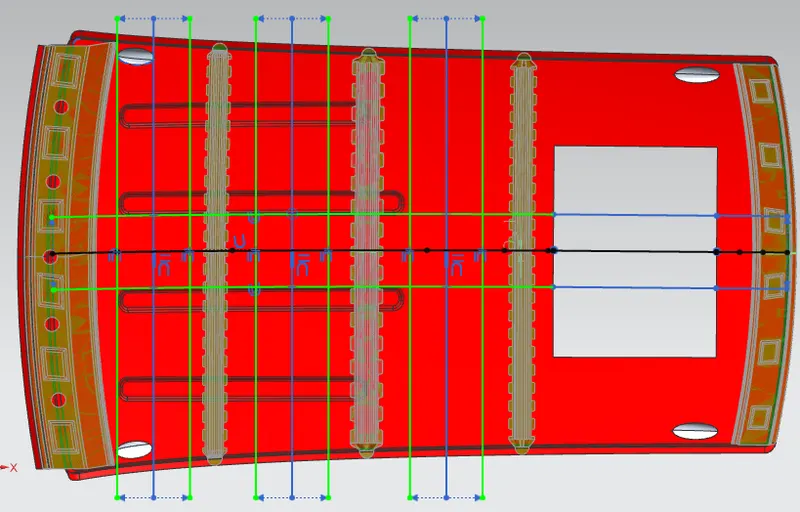
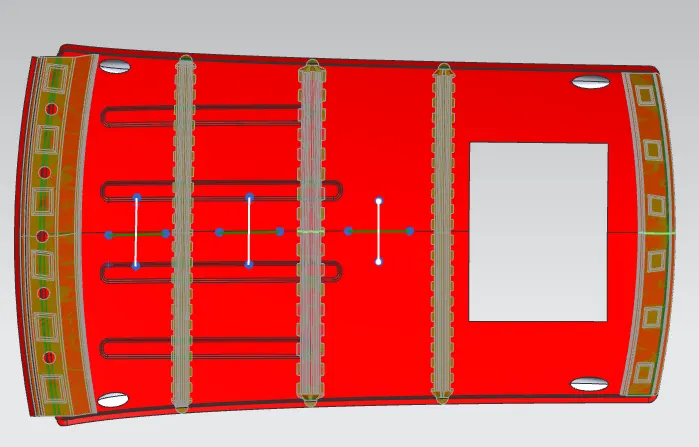
Qr = [Iy x t2] / [α x s x [(Rx + Ry)/2]2 x 10-8]
Note: The Qr value given over here is correct. There was a typo error in the formula given in the video.
Where,
α = My x Lx2 x 10-12 , My = Y(Ly-Y)
t = Roof plate thickness [mm]
Ly = Distance between the front and rear roof Rails on the Vehicle along with 0Y[mm]
Length of Roof panel with the center point between Roof rail Front /Rear as the front and rear reference point.
Lx = Distance between the Left and Right end of the roof on the Roof BOW [mm]
The width of the roof panel is exposed on the surface.
Y = Distance front Front Roof Rail to Roof BOW[mm]
s = Distance for which Roof BOW bears divided load [mm]
s = L1/2 + L2/2
Iy = Geometrical moment of inertia of Roof BOW (Y cross-section )[mm4]
Rx = Lateral direction curvature radius of roof panel Y cross-section on Roof BOW [mm]
Roof panel curvature Radius of the Length Lx in Front view
Ry = Longitudinal Direction curvature radius of the Roof panel X cross-section on Roof BOW [mm]
Roof panel X curvature radius of length s in Side view
JUDGEMENT CONDITION
Qr ≥ 3.1
250 ≤ s ≤ 380

CONCLUSION :
thus the roof top with rails and reinforcements are been designed and analyzed as per the automotive standards