Project 1 Mechanical design of battery pack
ANR26650M1-B cell
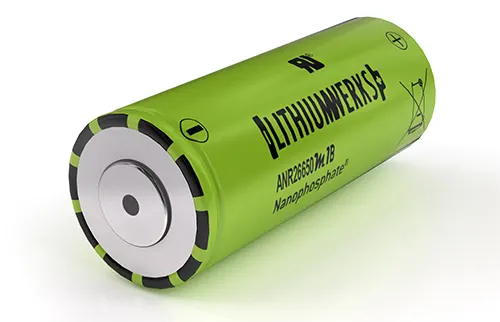
The ANR26650M1-B is the next generation of A123 Systems’ pioneering 26650 cylindrical cell, now with greater power and energy density and lower impedance. This versatile lithium ion cell is suitable for a wide variety of applications and system designs. Proven performance in the toughest conditions, combining durability, reliability, and safety, the ANR26650 cell offers an excellent combination of price-performance.
Lithium Werks’ 26650 cells are best for Power.Safety.Life.™ applications. They deliver very high power due to their use of patented Nanophosphate® battery technology. Based on lithium iron phosphate chemistry (LiFePO4), the cells are inherently safe over a wide range of temperatures and conditions. Whether the application requires outstanding cycle life or
stable float reliability, the Lithium Werks’ 26650 cells are suitable for a wide variety of power, pulse, or stand-by applications.
Application:
- Portable high power devices
- Stationary battery backup systems
- Grid stabilization energy storage systems
- Commercial truck and bus hybrid electric vehicles (HEVs)
Benifits:
- Cycle Life at 1C/1C, 100% DOD, > 4000 cycles
- Safety: Excellent abuse tolerance and environmentally friendly
- Life: Excellent calendar life, 10X cycle life vs. conventional lithium ion
ANR26650M1-B data:
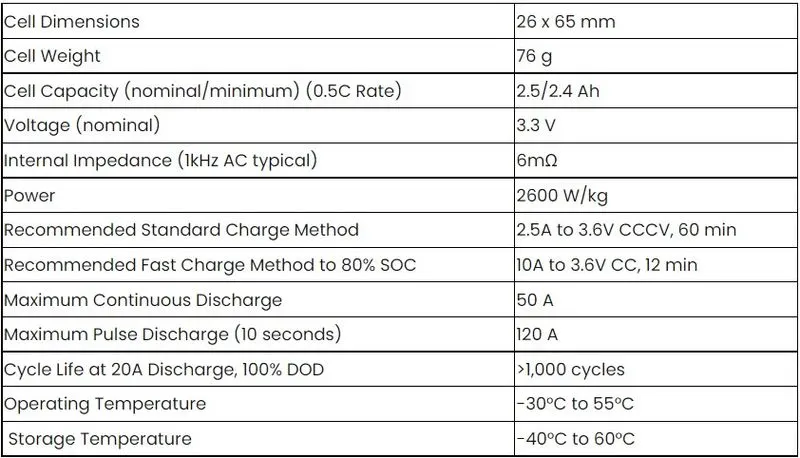
The mathematical calculation for designing an 18kWh battery pack, basically 18kWh is energy require to achieve the vehicle its proper range. It is depending upon the voltage (V) parameter and ampere-hour or capacity (Ah). Here I used to design a high voltage battery pack for an electric vehicle to achieve its range up to 250 km. For this calculation, I assumed 145.2 V a nominal voltage for series connection. General required value depending upon a single cell:
• Diameter = 25.96/26 mm 0.026 m
• Length = 15 / 65 mm 0.065 m
• Mass = 76 g 0.076 kg
• Single-cell Voltage = 3.3 V
• Capacity = 2.6 Ah
• Max Continuous Charge Current (C - rate) = 10 A
• Max Pulse Charge Current (C-rate) = 20 A
Single Cell Calculation
= `pir2h`
=`pi*0.013^2*0.065`
= 3.45104x10-5
= 3.14 (0.026)2 * 0.065
= 0.03451 m3
Basically, the value of the volume of the cell is used to find out the total volume of the battery pack.
• Single Cell Energy (Wh)
= Cell Capacity (Ah) * Cell Voltage (V)
= 2.6 x 3.3
= 8.58 Wh
The value of a single cell is used to calculate the total energy of the battery pack.
• Single Cell Energy Density
Volumetric energy (Wh/m3) = Single Cell Energy / Volume of each cell
= 8.58 Wh / 0.03451 m3
= 248.62 Wh/m2
Gravimetric energy (Wh/kg) = Single Cell Energy / Single Cell Mass
= 8.58 Wh / 0.076 kg
= 112. 89 Wh/kg
Calculation of High Voltage Battery Pack
For design and calculation of battery pack here, I assume a vehicle to achieve 250 km in 18 kWh battery pack. Also, assume 145.2 nominal voltage for series connection. So,
Vehicle Range = 250 KM (assumed)
Battery Pack capacity = 18.121 kWh or 18120.96 Wh
We will calculate per km average energy
= 18120.96 / 250
= 72.483 Wh/km
Battery Pack total energy = Average energy x km
= 72.483 x 250
= 18,120.96 Wh or 18.120 kWh
Nominal voltage for series connection = 145.2 V
Number of cells connected in series
= Nominal voltage of series connection / Nominal voltage of a single cell = 145.2 V / 3.3 V
= 44
44 Cells will be connected in a series connection to provide a proper voltage.
• Energy for battery pack (wh)= No. of cells connected in series * Single-cell energy
= 44 x 8.58 wh
= 377.52 wh
• Number of cells connected in parallel= Battery pack total energy (wh) / Energy for battery pack (wh)
= 18120.96 / 377.52 = 48
48 cells will be connected in parallel to provide a proper capacity power.
• Battery pack total energy (wh)
= No. of cells connected in parallel * Energy for battery pack (wh)
= 48 x 377.52
= 18120.96 wh or 18.120 kWh
• Battery pack capacity
= No. of cells connected in parallel * Single cell capacity (Ah)
= 48 x 2.6 Ah
= 124.8 Ah
The value of battery pack capacity is used for the total power required by the vehicle.
• Total number of cells for battery pack= No. of cells connected in parallel * No. of cells connected in series
= 48 x 44
= 2112
2112 Cells will be used to make a complete battery pack.
• Mass of battery pack = Total no. of cells for batter pack x Mass of single cell
= 2112 * 0.076 kg
= 160.512 kg
It is the total weight of cells connected in parallel or series.
• Total volume of the battery pack = Total no. of cells for batter pack * Volume of single cell
= 2112 * 0.0345
= 72.89 m3
This is the volume of 2112 cells which are used in the battery pack system.
• Cell peak current (A) = C(rate) (Max Pulse Charge Current) * Single cell capacity
= 20 * 2.6
= 52 A
Battery peak current = Cell peak current * No. of cells connected in parallel
= 52 x 48
= 2496 A
It is used for the operation of the battery pack. By this way, a vehicle will decide how much power is required to move.
• Battery pack peak power (w)
= Battery pack peak current Voltage of series connection
= 2496 A * 145.2
= 362419.2 or 362.42 KW
• Cell continuous current (A)
= C(rate) (Max Continuous Charge Current) * Single cell capacity
= 10 x 2.6
= 26 A
• Battery pack continuous current (A)
= Cell continuous current * No. of cells connected in parallel
= 26 x 48
= 1248 A
This is the power which is supply continue to the whole battery pack system.
• Battery pack continuous power (W) = Battery pack continuous current * Voltage of series connection
= 1248 x 145.2
= 18120.96 or 18.120 kwh
Above calculation is to find the total number of cells for a full battery pack for Electric vehicle, also the battery pack weight, current, capacity and voltage. For design purpose and easy for installation here, I configure this large battery pack into a small pack and the small pack consists of 32 cells into 66 pack.
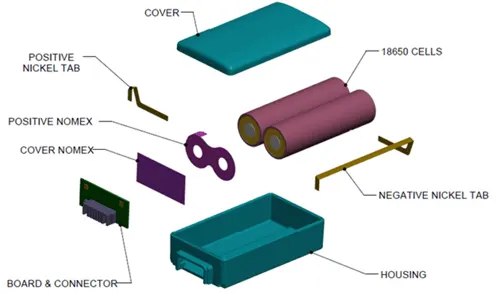
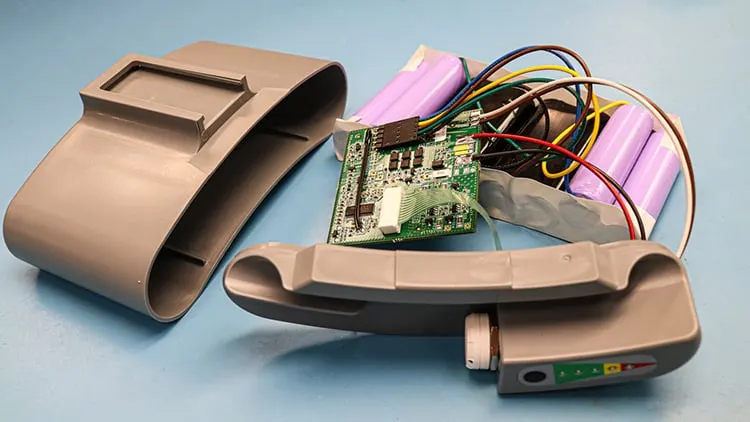
The diagram below illustrates the typical elements found in a rechargeable battery pack:
- Cells (Different form factors & chemistry types)
- BMS (Electronics to manage the battery)
- Connection System (Connector, pigtail, wires)
- Housing (Plastic, sheet metal, shrink, etc.)
Cells
At the base of every Li-ion battery pack is the battery cell or cells. A pack can contain one cell or many cells configured to achieve higher capacity or output voltage. This is achieved by connecting cells in parallel or series, and we'll explore this much further in our next blog. The cell is considered the “fuel tank” of the battery pack system, holding the energy that will be released during discharge (when the engine is running) or replaced during a charge cycle (when the tank is refilled at a gas station). However, there are other components needed to utilize the energy stored in the cell.
BMS
To safely use the energy stored in cells, the Li-ion battery pack needs a Battery Management System (BMS). The BMS is the control system of the pack and can be simple or complex, depending on the need of the battery pack and host application. Returning to the car analogy, think of a battery pack's BMS like a car's control system. In a car, the control system shuttles fuel from the fuel tank to the engine to be utilized in a controlled and safe manner and notifies the user of any issues (i.e. low fuel). The BMS performs a similar role by safely regulating the energy carried through the cells inside a battery pack. It can also communicate information back to the end user (i.e. low battery life).
Connection System
While we may understand the basic concept of a cell and the BMS, how do these components interact with one another? The connection system is what transforms a cell into a battery pack. There must be a connection between the cell and the BMS in order to interface with each other. Nickel strips are the preferred method of connecting a battery cell to the control system. A thin strip of nickel is capable of carrying high amounts of current, is flexible, durable, and can be attached to the cell without the use of excessive heat. These strips provide a safe means of getting the "fuel" out of the "fuel tank" to use it in a safe manner.
Housing
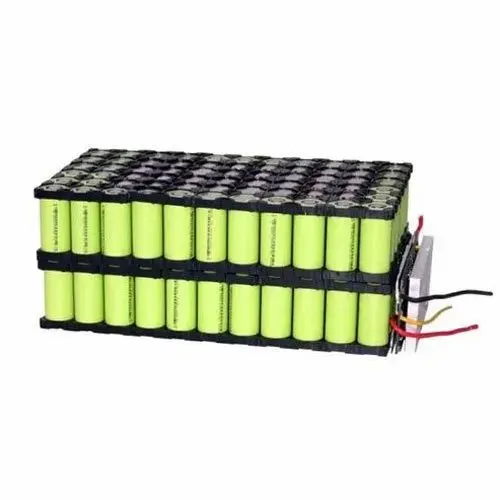
All these components need to be packaged so that the battery pack can be installed into a device. Once all components are properly placed and connected to one another, they are sealed with either shrink wrap or a hard case. The housing ensures that the components remain safely located and provides a clean package for the eventual use by an end user. The type of housing depends on where the battery pack will be located inside the device and if it is intended to be accessed by the end-user or a technician.
A new "climate" lithium-ion battery can warm itself up faster to overcome cold temperatures with minimal sacrifices of energy and energy savings, say researchers.
This in advance may enable applications that require the most efficient batteries at extremely cold temperatures, such as electric vehicles in cold climates, high-level drones, and location monitoring. EC Power now creates all battery-powered battery cells with driver-generating volumes that can be installed directly on cars, says lead study author Chao-Yang Wang, a mechanical and electrochemical engineer at Pennsylvania State University.
Lithium-ion batteries not only have problems with overheating, but they also experience strong energy losses at temperatures below zero degrees Celsius. The effects of this weakness include slow charging in cold weather, limited refurbishment brakes, the need for larger, more expensive battery packs to start cold engines, and a 40 percent reduction in driving distance, the researchers said.
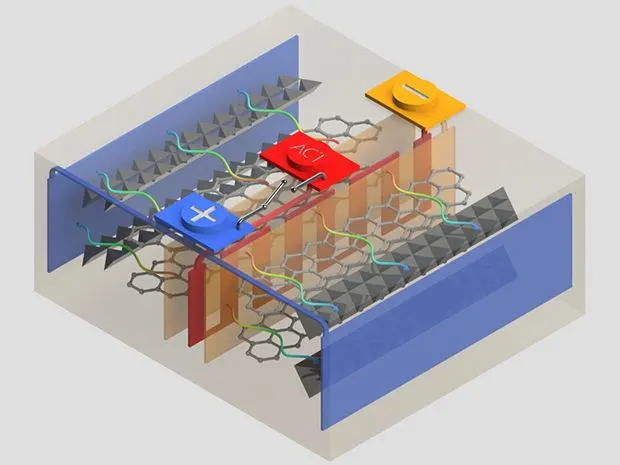
Previous efforts to help lithium-ion batteries perform better at lower temperatures consider additions to electrolytes that connect electrode batteries. However, such additives can release gases to extreme temperatures that reduce battery life. Another way to keep batteries running in the refrigerator involves external heating and heating batteries, but the external isolation and heaters make batteries larger and heavier, which is unacceptable in systems such as high-end drones where space and weight are a concern.
Researchers have now developed what they call a lithium-ion air-conditioning battery that can cool off from freezing without the need for electrolyte additives or external heating elements.
The machine components that unpack the battery cells from packaging are comprised of many components such as power cables, roller conveyors, rotary shafts, and linear ball bushings.
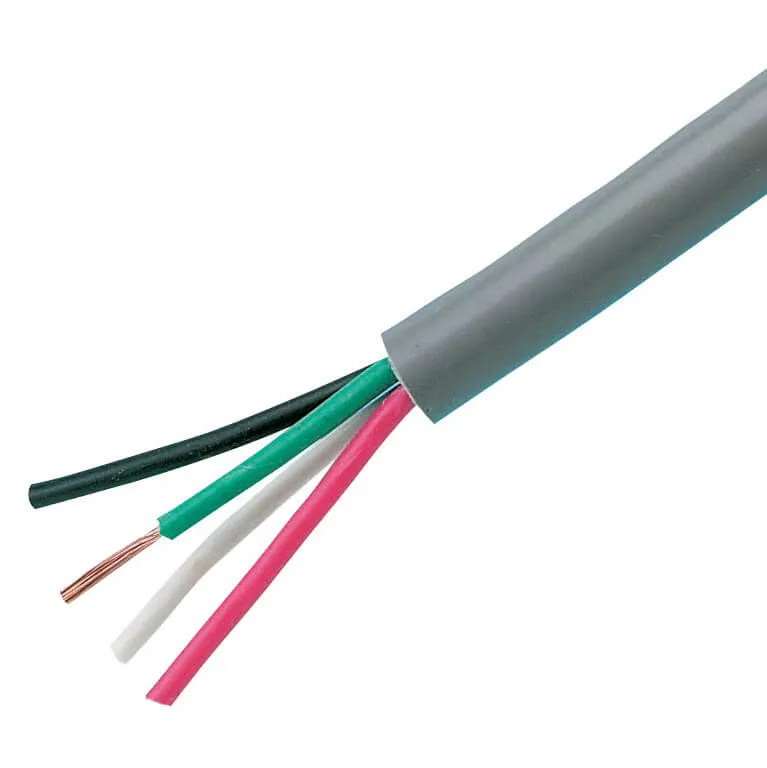
Power Cables
Rotary Shafts

Linear Ball Bushings
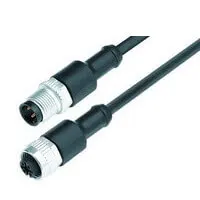
The fixtures that check the battery cells are also comprised of dozens of components such as aluminum extrusions, configurable mounting plates, timing belt/pulley systems, circular cordsets, and circular connectors.

Configurable Plates

Timing Belts & Pulleys
Circular Cordsets
The next step in the process involves assembling the battery cells into battery modules. Typically, there are about 12 battery cells per battery module, but this varies across automotive make and model. The modules stack within a metallic frame. This frame comprises the module housing and protects the cells from physical shock loads.
This assembly process is highly automated and involves many MISUMI configurable machine components. The most visible of these components are the timing and conveyor belts which run the workpieces through the process.

The last step in battery pack fabrication is assembling the modules into the battery pack housing. This step involves a significant number of electrical hookups and fine-tuning. For example, the Nissan Leaf EV contains 48 battery modules which are all connected together via electrical monitoring equipment. These modules are typically picked and placed by an automated robotic assembly arm into the battery pack housing. After all the modules are placed into the housing they are manually connected together by an automotive technician. After all connections have been made, the battery pack housing cover is placed manually; finally, an automated robot arm is typically used to drill all screws thus completing the battery pack fabrication process.

Pic:Nissan Leaf
Reference:
- https://lithiumwerksbatteries.com/lithiumwerks-anr26650m1-b-3-3-volt-2-5ah-lithium-iron-phosphate-lifepo4-battery/
- https://a123batteries.com/anr26650m1-b-lithiumwerks-nanophosphate-3-3v-2-5ah-lithium-iron-phosphate-battery/
- https://www.ednasia.com/passive-thermal-management-optimizes-lithium-ion-battery-pack-performance/