Fender Design Challenge
Fender:
A fender is the curved part of your car, truck, or SUV that stretches and sits over the wheels and considered part of your vehicle’s body.
The fender is designed to prevent debris from being thrown around from the tires and aside from that, is generally a decorative part of your vehicle’s body. A fender does have a purpose though, as it prevents damage to the sides of the vehicle and it makes the overall driving experience safer for the driver of the vehicle and for other vehicles around the road.
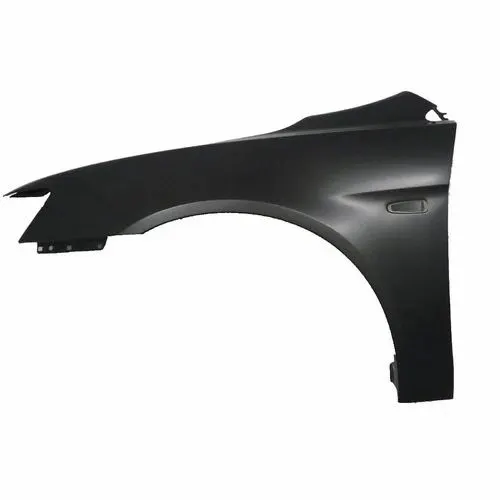
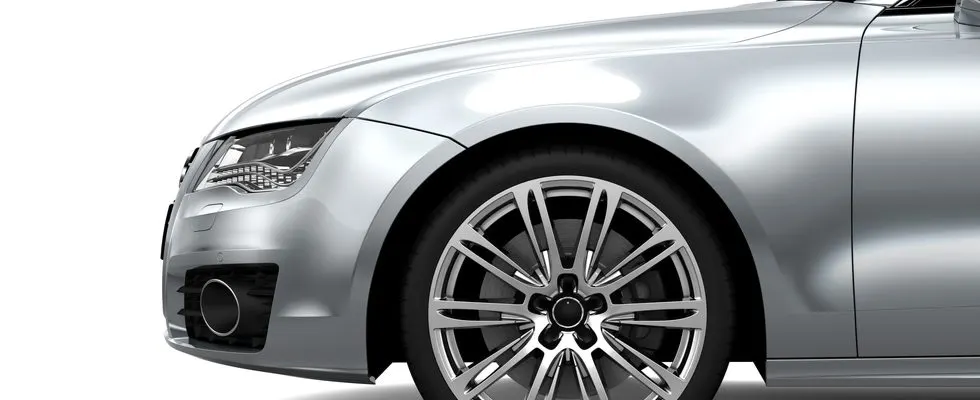
The fender is located over the wheels of the vehicle. As such, there are four fenders on a typical vehicle: front right, front left, rear right and rear left. The parts of the fender include the fender molding, fender trim, inner fender and fender brace.
One of the primary functions of a fender is to keep dirt, dust, and road debris away from the wheel and front braking system. Many have small flaps or wings that are designed to enhance this protective function. The fender will also help to keep debris off of the rest of the car as well, which be useful when a car throws up a rock or stick from the road.
Depending on the design, fenders can also act to make a car more aerodynamic. Many sports cars have very sleek fenders for this reason, and they may have additional features such as grooves or grillwork which are designed to enhance the car's performance at high speed.

The other function of fenders is of course aesthetic. Most people do not want to look at the framework of a car, and the panels cover the frame and the sides of the engine block. They can also be used to add flair and style to a car; many cars in the 1950s, for example, had bubble fenders, which stuck out prominently to create a desired look. They can have a wide variety of design features which make them more interesting or stylish to look at.
Depending on the make of the car, fenders may be made from fiberglass, steel, or other materials. Many of these materials are designed to crumple in a crash, distributing the impact across the frame of the car to make the crash more survivable for the occupants of the vehicle. Depending on the materials used, fenders can sometimes be bent back into shape after a minor accident; in other cases, they will probably need to be replaced.
Fender's attachment features:
- Drip area
- Sill mounting area
- Bumper mounting area
- Body mounting area
- Baffle mounting area
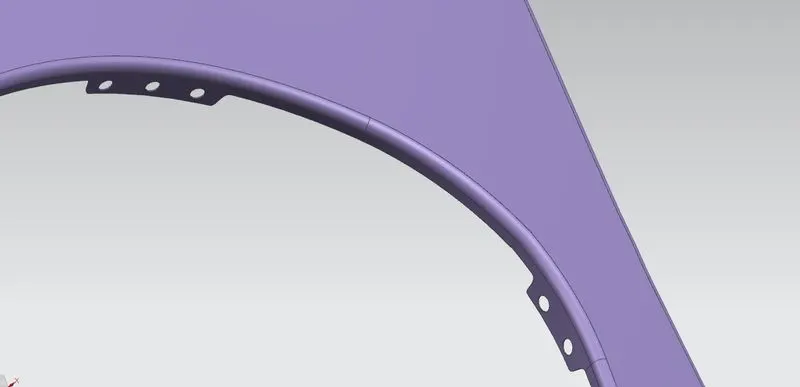
Drip mounting area:
Design considerations
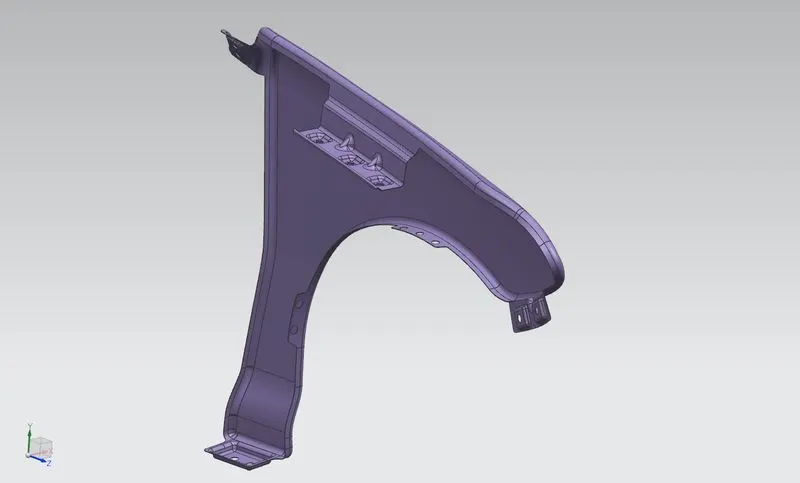
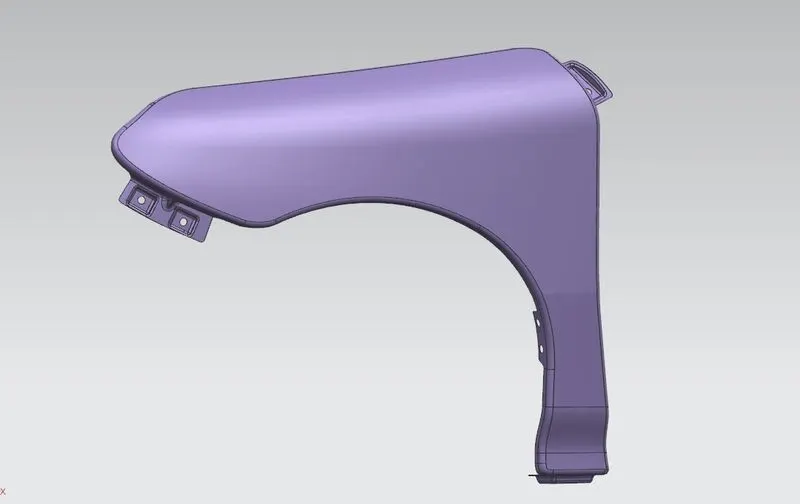
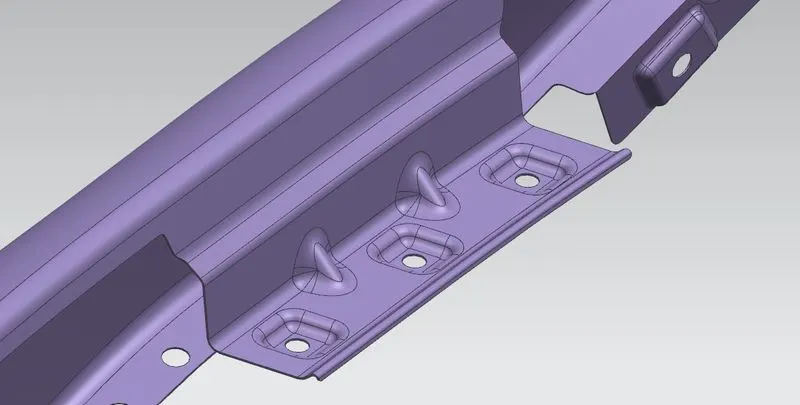
Considering the above design terminologies the below design was made by using UG NX 10 software.
The below parts consist of embosses,Darts, fillets and holes.
The commands which used for this part was law extend, curve on surface, Offset by curve,project curve, trim surface, face fillet and etc.
Sill mounting area:
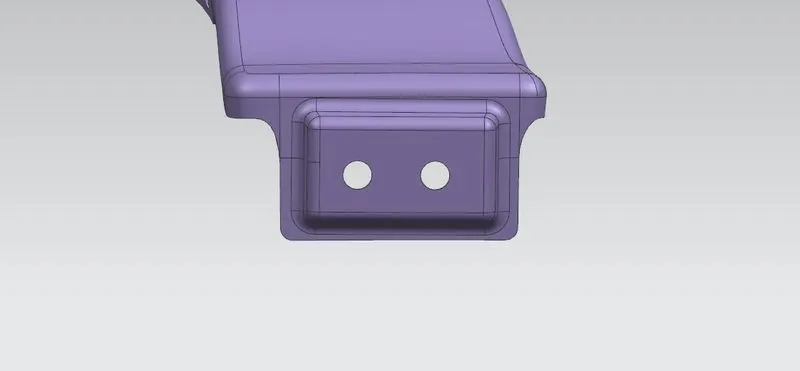
This attachment feature used to mount the bottom side fender with the chasis. For sill mounting the emboss, fillets and trim features were used to get a desired part.
Bumper mounting area
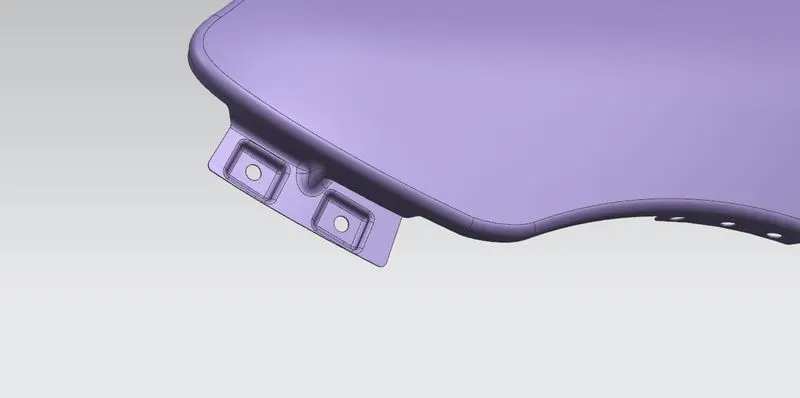
The front bumper of the car will be attached with the fender by using this attachment feature. And also the lighting system of the car will also be placed in this region. This attchment feature includes emboss, fillets, holes and ribs . Ribs are basically to increase the strength of an object. Here the attachment may get bend while working on that part. So this helps to provide more strength.
Body mounting area
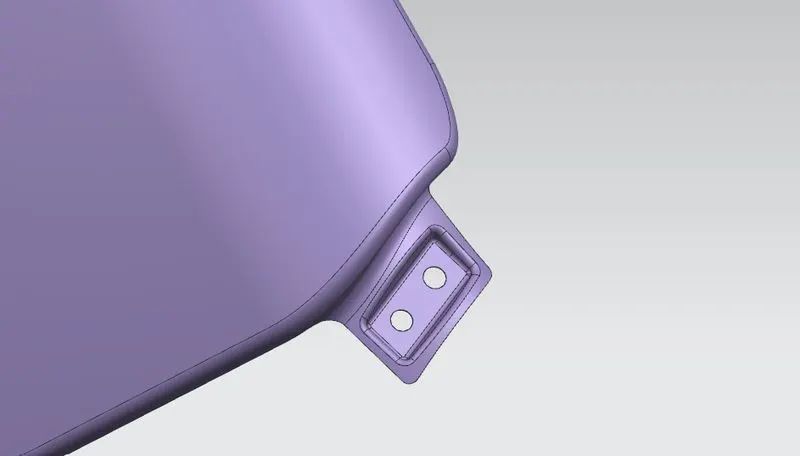
This feature used to get attached the fender with the car body.This attchment feature includes emboss, fillets, holes and extension.
Baffle mounting area
Baffle is basically a rubber or plastic cover which prevent the car from the mud or dirts. So it won't take too much design considerations. We can simplly stamp the baffle with the fender.
Final part