Section Modulus calculation and optimization
Inertia:
Inertia, property of a body by virtue of which it opposes any agency that attempts to put it in motion or, if it is moving, to change the magnitude or direction of its velocity. Inertia is a passive property and does not enable a body to do anything except oppose such active agents as forces and torques.
Moment of inertia
Moment of inertia can be defined as a quantity that expresses a body's tendency to resist angular acceleration, which is equal to the sum of the products of the mass of each particle in the body with the square of its distance from the axis of rotation.
The formula for the moment of inertia is the “sum of the product of mass” of each particle with the “square of its distance from the axis of the rotation”. The formula of Moment of Inertia is expressed as I = Σ miri2.
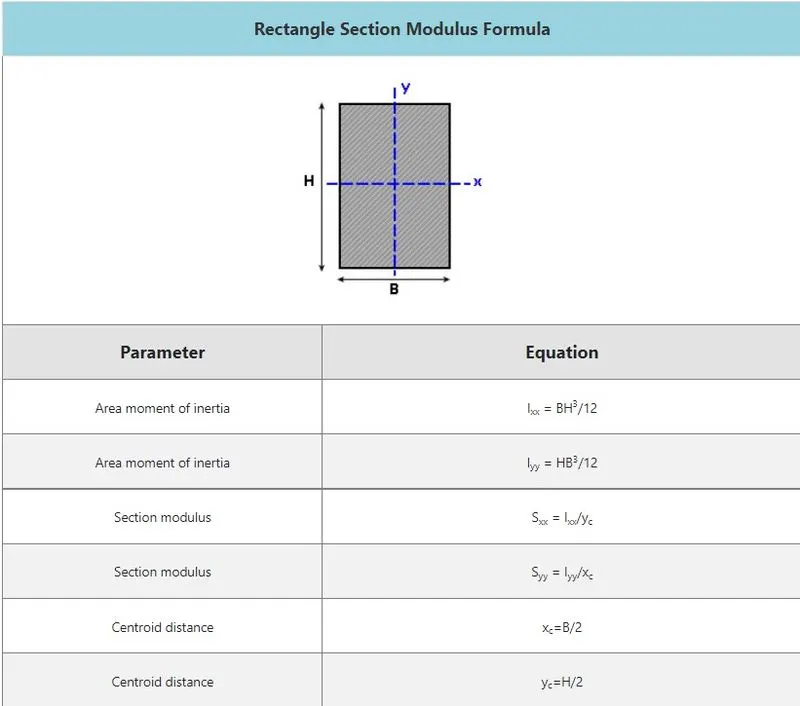
Section modulus:
Section modulus is the moment of inertia of the area of the cross section of a structural member divided by the distance from the neutral axis to the farthest point of the section.
The elastic section modulus is defined as S = I / y, where I is the second moment of area and y is the distance from the neutral axis to any given fibre. It is often reported using y = c, where c is the distance from the neutral axis to the most extreme fibre. It is also often used to determine the yield moment (My) such that My = S ⋅ σy, where σy is the yield strength of the material.
Section used to analyze section modulus
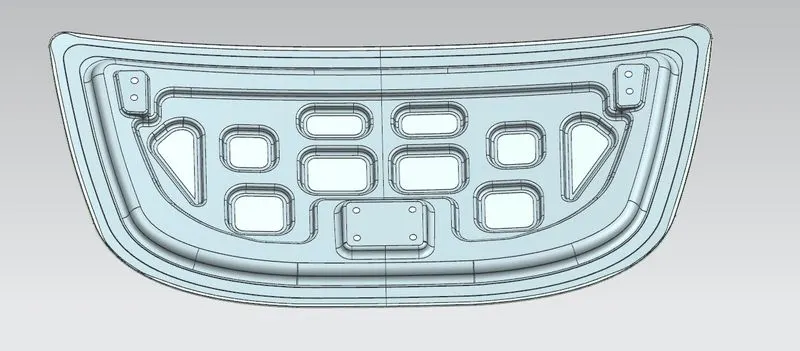
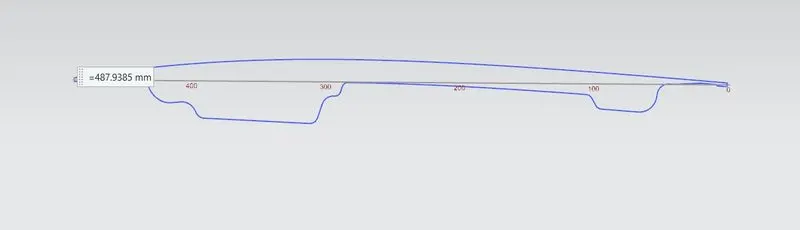
The cross section of this assemble was taken from the middle plane.
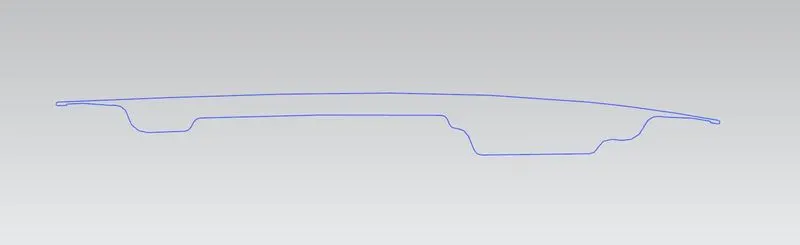
The above sketch was modified to get a fully closed sketch. Then section inertia analysis command used to analyze this sketch.
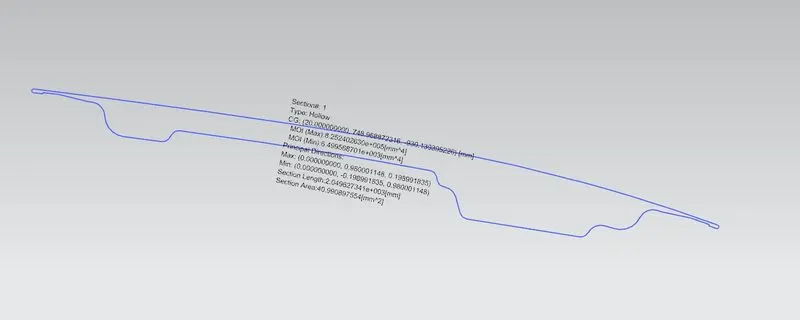
`Imax` = `8.25 xx 10^5 mm^4`
`Imin = 0.064xx10^5 mm^4`
The distance from the neutral axis to the farthest point of the section(Y) = 487.93/2 = 243.96 mm.
Section modulus S(max) = I/Y = `(8.25xx10^5)/243.96` = `3381 mm^3`
Section modulus S(min) = `(0.064xx10^5)/243.96` =`26.23 mm^3`
Now to increase the area of this cross section the embosses takes place.
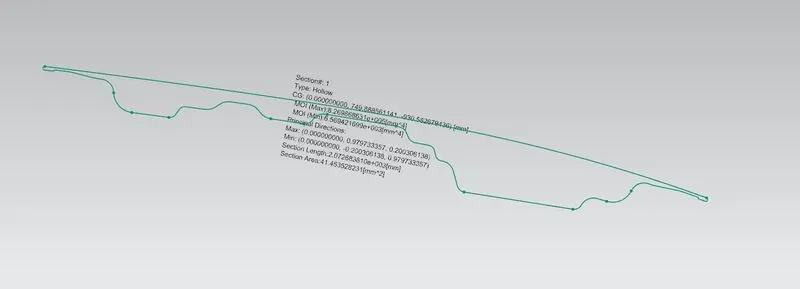
`Imax` =`8.26 xx 10^5 mm^4`
`Imin = 0.065xx10^5 mm^4`
Section modulus S(max) = I/Y = `(8.26xx10^5)/243.96` =`3385.8 mm^3`
Section modulus S(min) = `(0.065xx10^5)/243.96` =`26.64 mm^3`
Conclution:
So we can clearly see from the above calculations there is increase in strength when we increse the area of the object.
According to mass moment of inertia and newtons principle if we increase the mass of the object the moment of inertia of that object will also increase. But in case of area moment of inertia if we increase the area of the object the area moment of inertia will also increase with the same mass. The advantages of the analysis is to calculate and optimise the strenth of the object. So with the same amount of mass we can increse the strength by adding embosses, sections, ribs and etc.