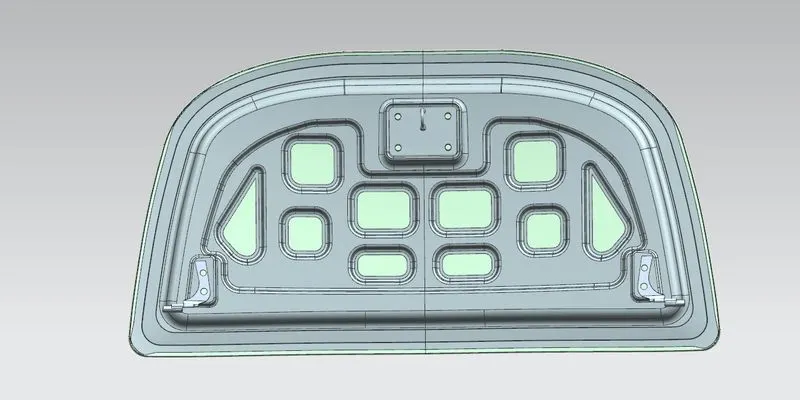
Hood design-Week 2
Hood:
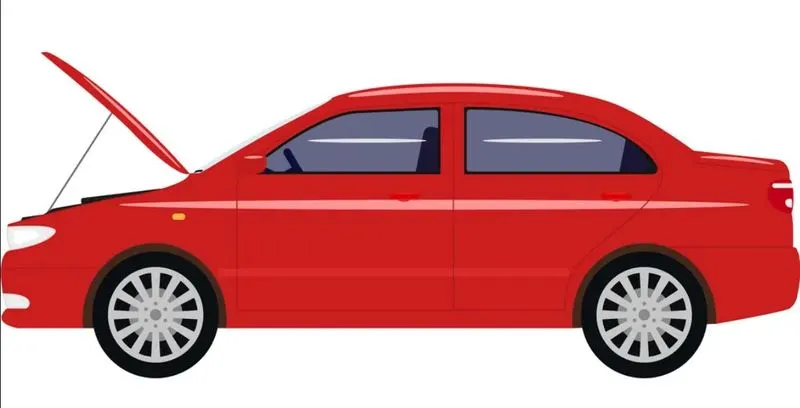
A car hood, also referred to as a bonnet in some other countries, is the hinged cover that rests over the engine of a front-engine vehicle. Its purpose is to provide access to the engine for repair and maintenance. A concealed latch is typically used to hold down the hood.
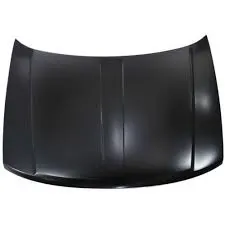
Hoods are usually made from the same material as the rest of the body. This can be steel, aluminum, fiberglass, or carbon fiber. However, some aftermarket companies produce fiberglass or carbon fiber steel hood replacements to make the vehicle lighter.
The hood release system is common on most vehicles and typically consists of an inner hood latch/lock handle, a hood release cable, and a hood lock assembly. The hood lock handle is usually located under the steering wheel, next to the driver’s seat, or in the door frame.
For racing cars or vehicles with aftermarket hoods (that do not use the factory latch system) the hood can be held down by hood pins. Some aftermarket hoods that have a latch system still have hood pins to keep the hood buttoned down if the latch fails.
A hood may contain a hood ornament, hood scoop, power bulge, and/or wiper jets.
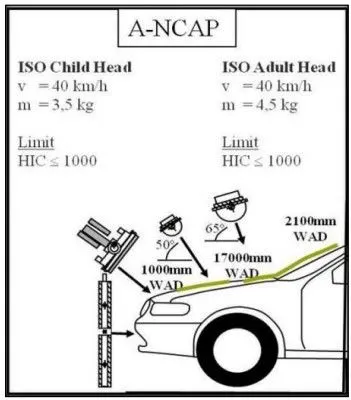
ANCAP provides measures for the assessment of pedestrian protection performance of a passenger car experimentally by firing subsystem impactors representing a child head, adult head, upper leg and lower leg at a specified angle and speed to the front end of a stationary vehicle. The resulting injury measures from these physical tests are assessed against the bounds specified by the protocols shown in Figure 1. This study focuses only on child pedestrian head impact to the outer hood
panel and do not include inner hood, upper or lower leg impacts defined in these protocols.
Data to be used:
Hood Thickness Information
- Outer Panel Thickness = 0.75mm
- Inner Panel Thickness = 0.75mm
- Reinforcement Thickness = 1.5mm
Master sketch:
By using provided class A surface we can design a car hood along with the design considerations.
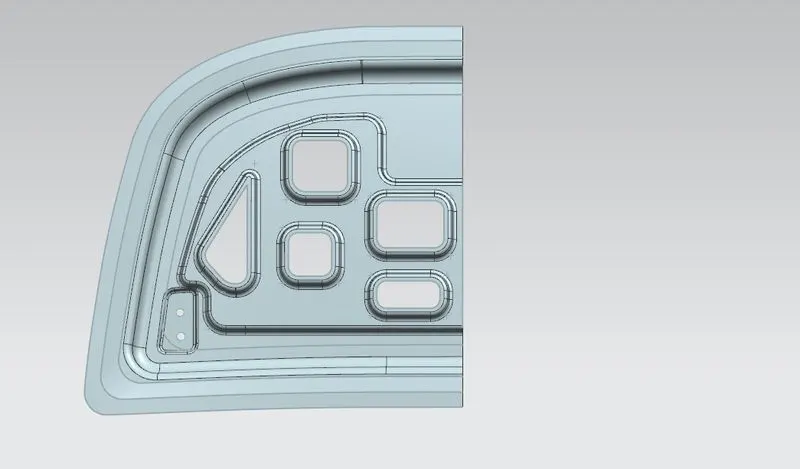
Hood Inner part:
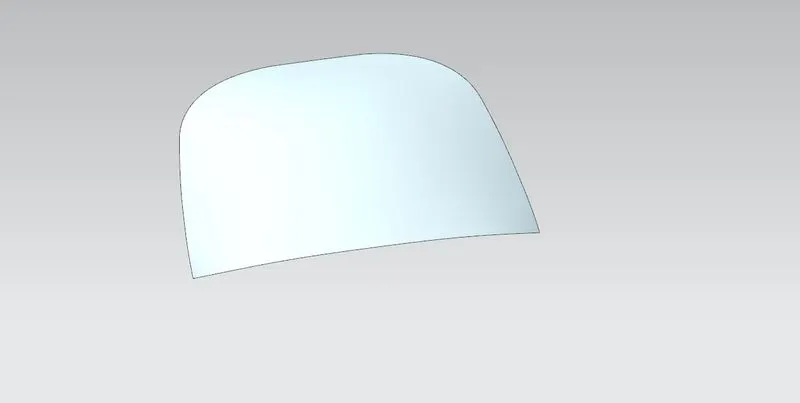
The surface then trimmed with the reference surface.
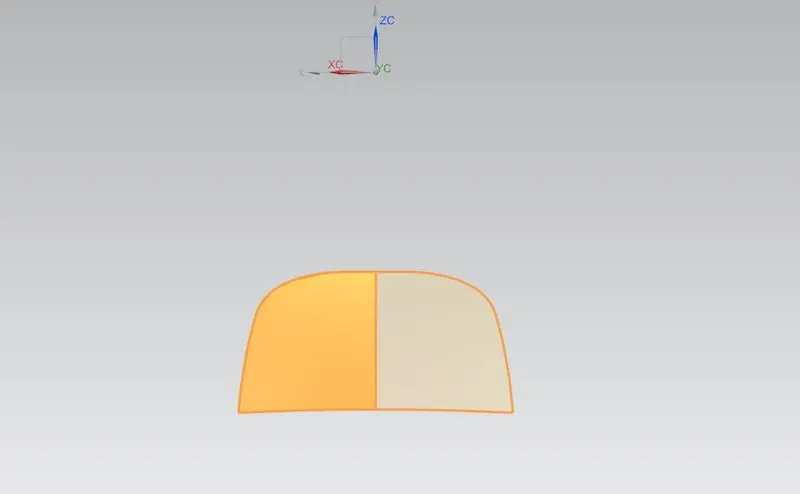
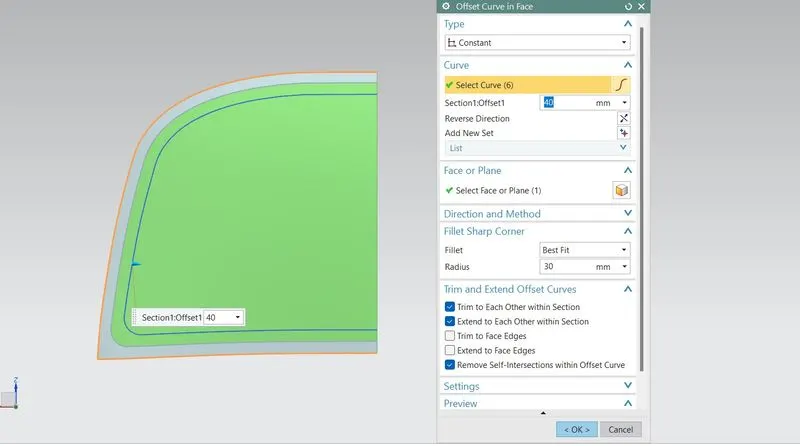
To create embosses the offset taken from the surface then trimmed the connected with the main surface.
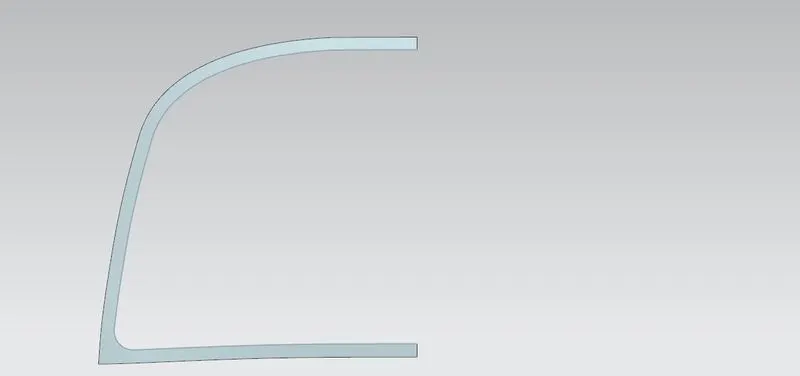
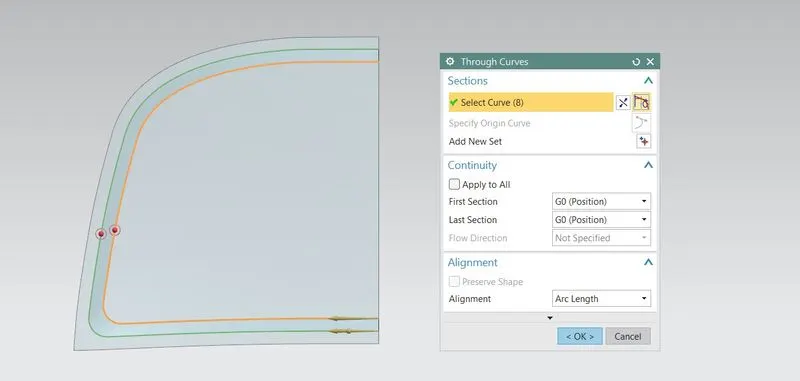
Deep drawing:
Deep drawing is a sheet metal forming process in which a sheet metal blank is radially drawn into a forming die by the mechanical action of a punch. It is thus a shape transformation process with material retention. The process is considered "deep" drawing when the depth of the drawn part exceeds its diameter.
Then the offset has been extended by using law extended command with an angle of 15 degree.
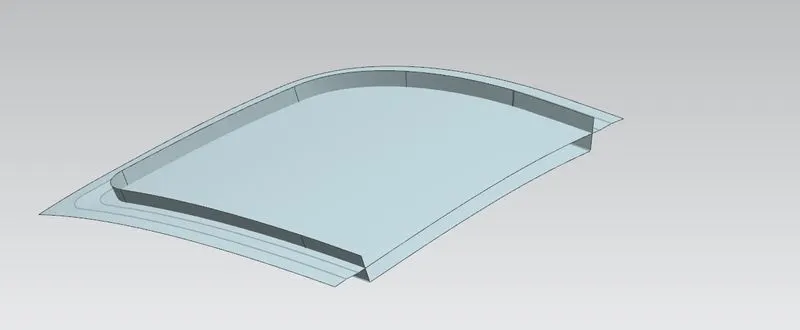
Then both the surfaces trimmed together the fillets were applied to the required edges.
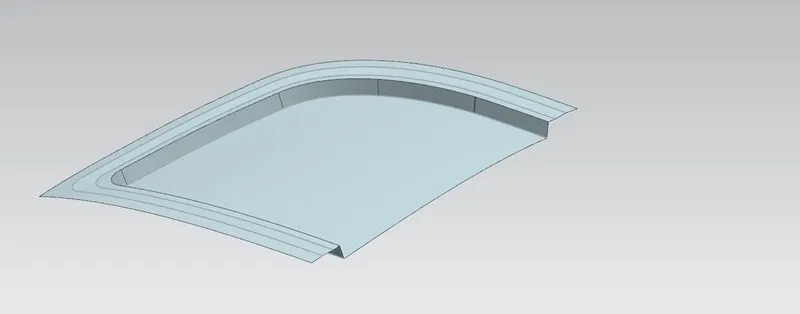
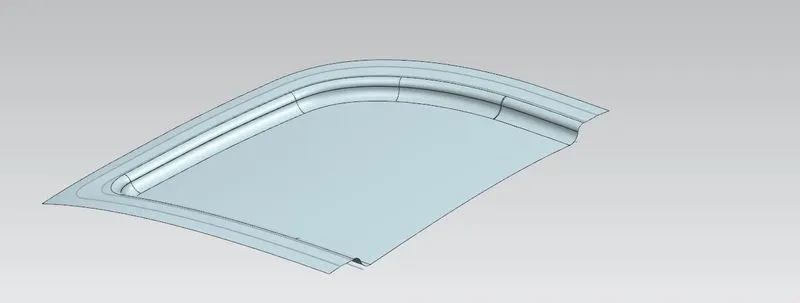
To create inner embosses the sketchs were made then project those curves to the surface then trimmed together.
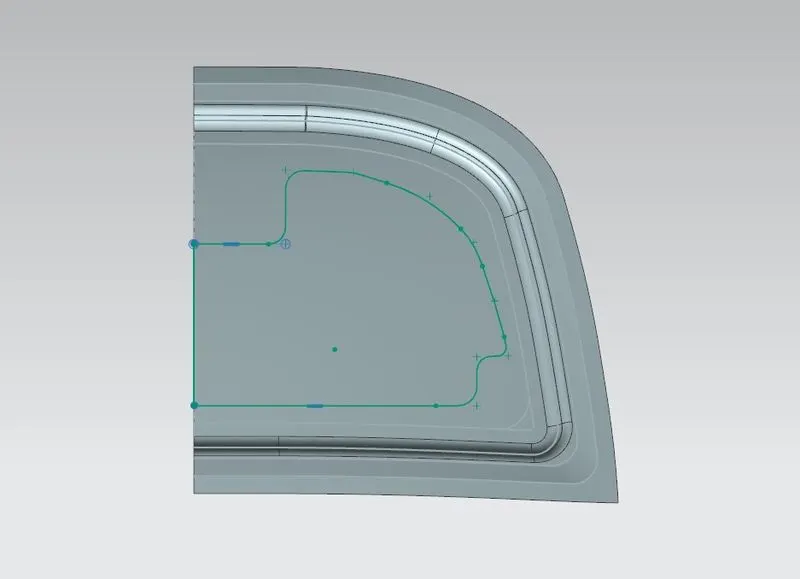
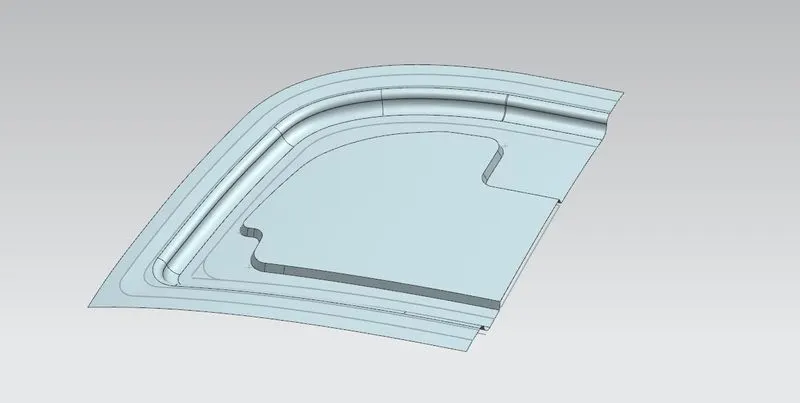
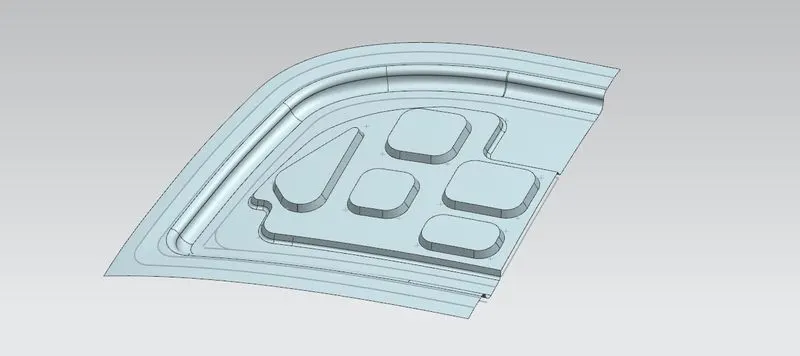
To strengthen the inner embosses another embosses were created inside the emboss with the height and angle of 9.25 and 15 degree.
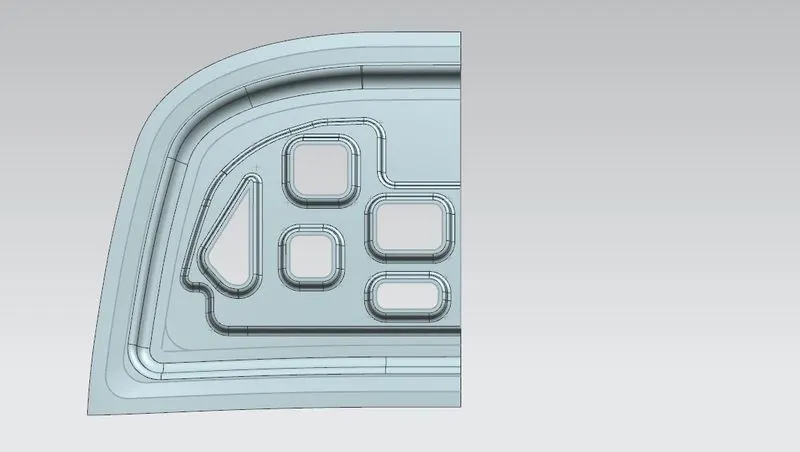
To place the hinge a flat emboss was created.
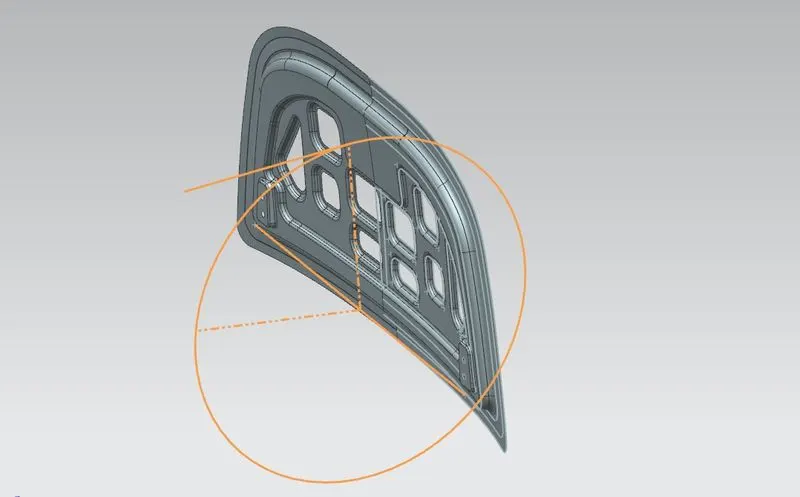
To assemble striker with the hood there is some creteria, for that we have to make a circle then create a tangent line with the circle.
Same for the sriker also we have to create a line to assemble it with the hood.
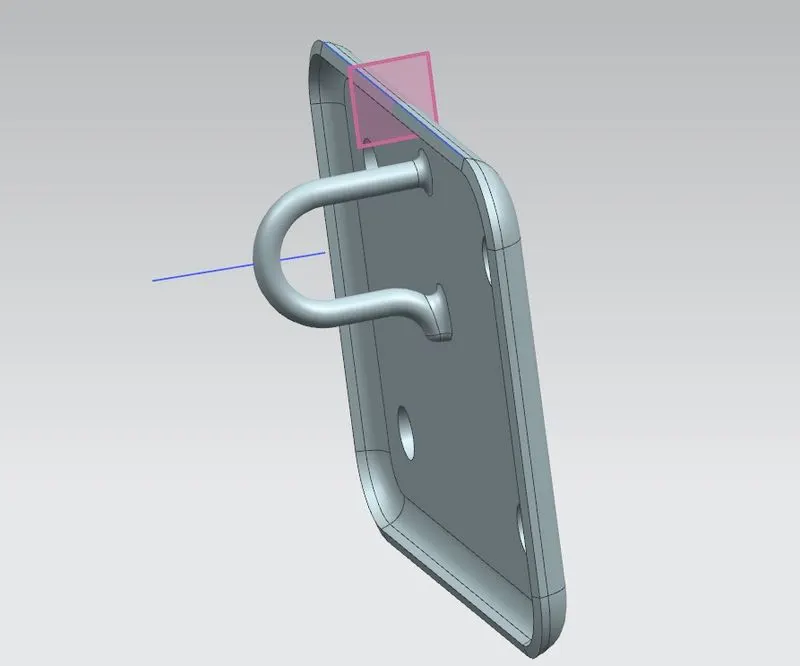
By using the sriker bottom face we can create a emboss for the stiker in the hood.
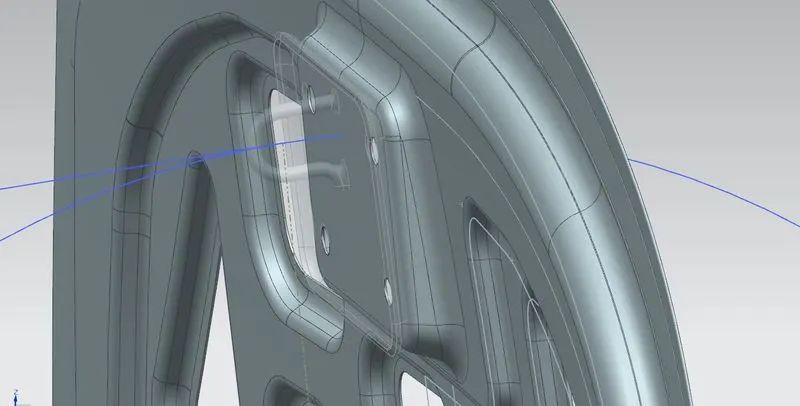
Then the geomentry mirrored and sewed together after that another emboss was created to place the striker.
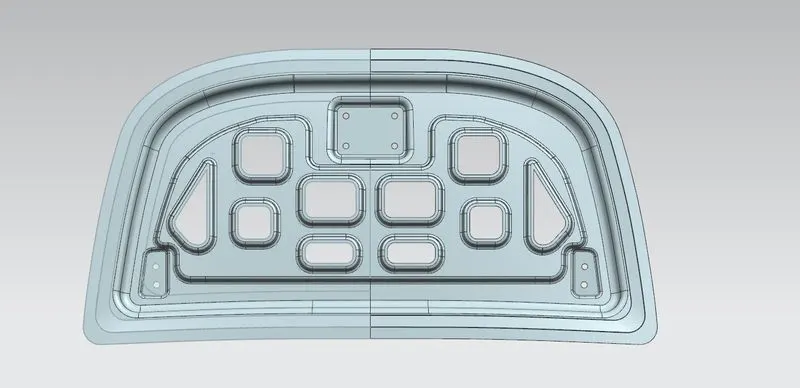
Hood Outter part:
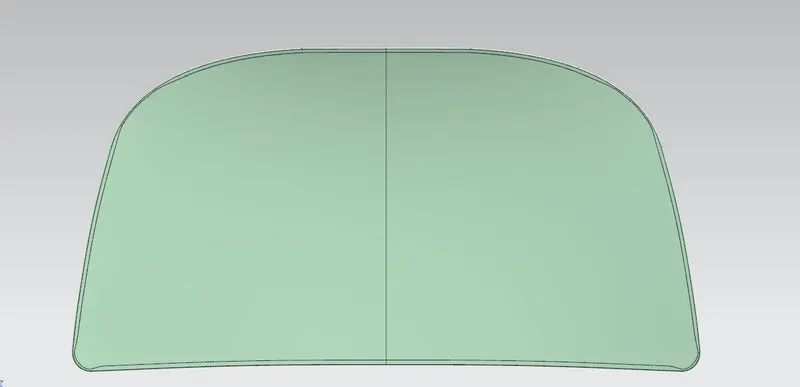
To create a hood outter panel the class A surface taken as a reference.
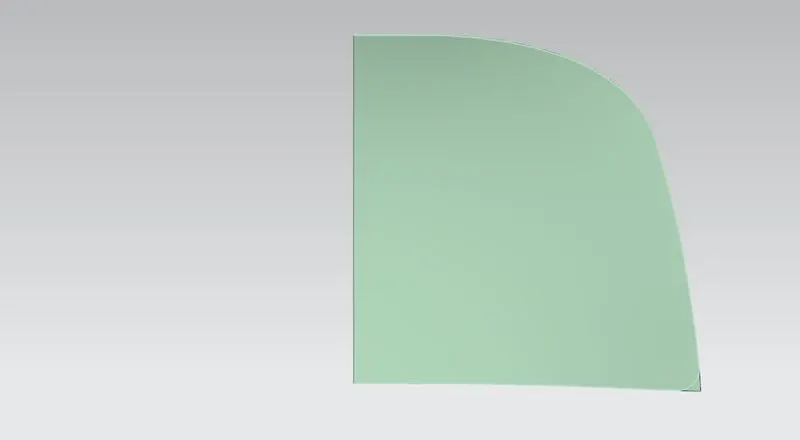
What is hemming?
Hemming is a sheet metal forming process in which sheets are joined by bending it usually to 180°. Automotive body panels and automotive parts such as deck-lids, trunk-lids, doors, hoods and tailgates are formed by hemming process.
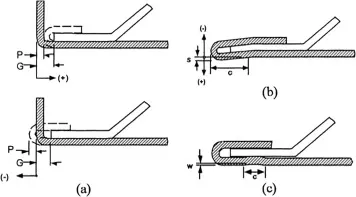
Hemming Data:
Relief rear section:
Front relief:
By using law extension the hemming part was created.
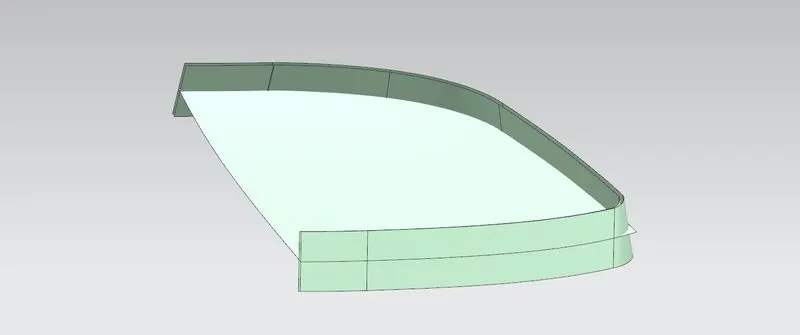
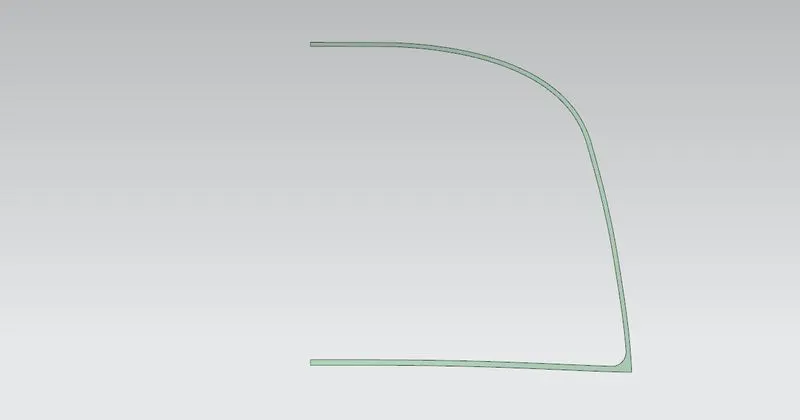
Three face blend option is used to crate a join between these two surface.
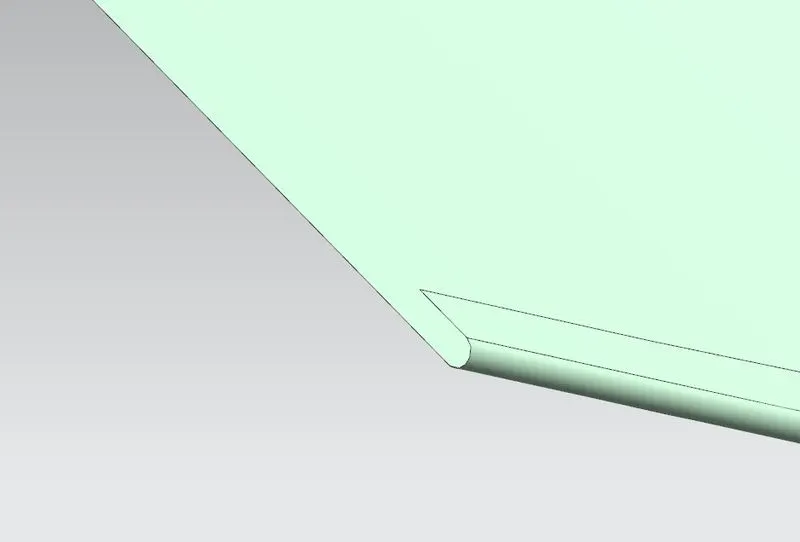
A relief section was given for the two radiel sections.
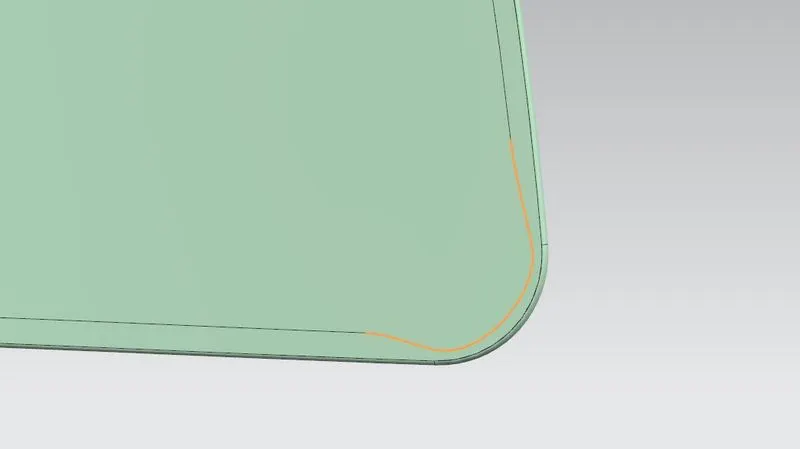
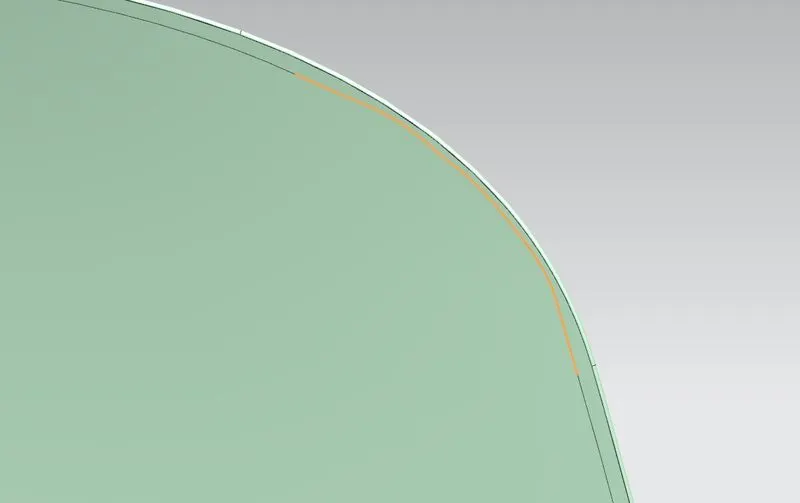
Mirror:
Finally Hinge,striker,outter panel and inner panel was assembled together.