Project 1 Mechanical design of battery pack
A battery is made up of an anode, cathode, separator, electrolyte, and two current collectors (positive and negative). The anode and cathode store the lithium. The electrolyte carries positively charged lithium ions from the anode to the cathode and vice versa through the separator. The movement of the lithium ions creates free electrons in the anode which creates a charge at the positive current collector. The electrical current then flows from the current collector through a device being powered (cell phone, computer, etc.) to the negative current collector. The separator blocks the flow of electrons inside the battery.
Lithium ion batteries
Lithium-ion batteries power the lives of millions of people each day. From laptops and cell phones to hybrids and electric cars, this technology is growing in popularity due to its light weight, high energy density, and ability to recharge.
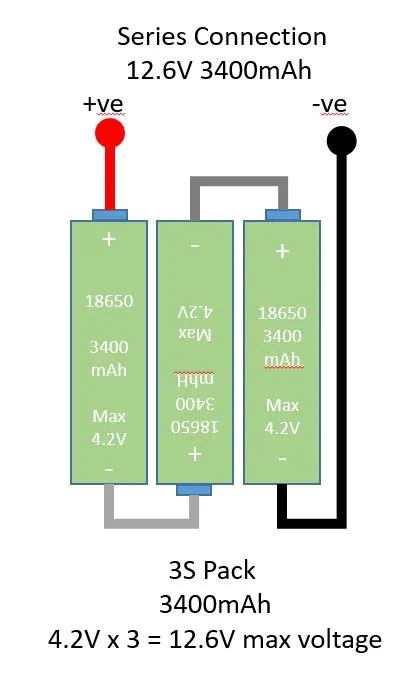
Series connections of cells
Connecting batteries in series adds the voltage of the two batteries, but it keeps the same amperage rating (also known as Amp Hours). To connect batteries in a series, use jumper wire to connect the negative terminal of the first battery to the positive terminal of the second battery. Use another set of cables to connect the open positive and negative terminals to your application.
Parallel connection
The other type of connection is parallel. Parallel connections will increase your current rating, but the voltage will stay the same.It's important to note that because the amperage of the batteries increased, you may need a heavier-duty cable to keep the cables from burning out. To join batteries in parallel, use a jumper wire to connect both the positive terminals, and another jumper wire to connect both the negative terminals of both batteries to each other. Negative to negative and positive to positive.
If you already have two sets of batteries connected in parallel, you can connect both of them to form a series. Electricity flows through a parallel connection just the same as it does in a single battery. It can't tell the difference. Therefore, you can connect two parallel connections in a series as you would two batteries. Only one cable is needed; a bridge between a positive terminal from one parallel bank to a negative terminal from the other parallel bank. It's alright if a terminal has more than one cable connected to it. It's necessary to successfully construct these kinds of battery banks.
In theory, you can connect as many batteries together as you want. But when you start to construct a tangled mess of batteries and cables, it can be very confusing, and confusion can be dangerous. Keep in mind the requirements for your application, and stick to them. Also, use batteries of the same capabilities. Avoid mixing and matching battery sizes wherever possible.
Cell imbalance
If lithium cells are overheated or overcharged, they are prone to accelerated cell degradation. They can catch fire or even explode as a thermal runaway condition can occur if a lithium ion cell voltage exceeds 4.2 V by even a few hundred millivolts.
Cell balancing
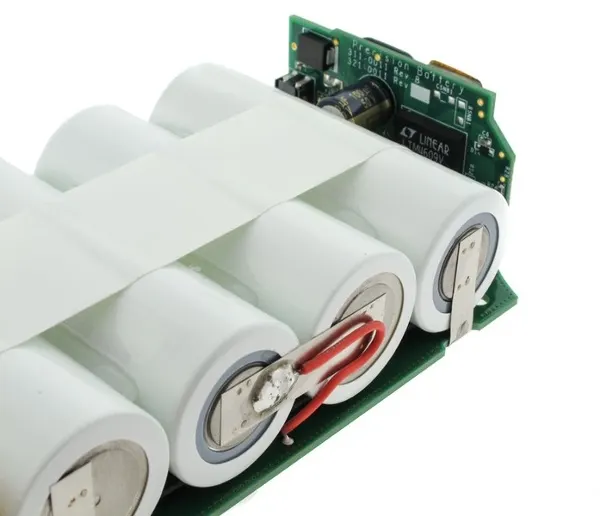
Cell balancing is a technique that improves battery life by maximizing the capacity of a battery pack with multiple cells in series, ensuring that all of its energy is available for use. A cell balancer or regulator is a functionality in a battery management system that performs cell balancing often found in lithium-ion battery packs electric vehicles and ESS applications.
Applications of ANR26650M1-B
Commercial solutions
- Datacenter UPS
- Telecom backup
- IT backup
- Medical devices
Government solutions
- Military vehicles
- Military power grids
- Soldier power
Grid solutions
- Frequency regulations
- Reserve capacity
- Renewables integration
Transportation solutions
- Commercial vehicles
- Off-highway vehicles
- Passenger vehicles
Here,
Battery pack capacity: 18 kWh
Cell: ANR26650M1-B
Prepare a detailed battery pack drawing along with its enclosure. State your assumptions.
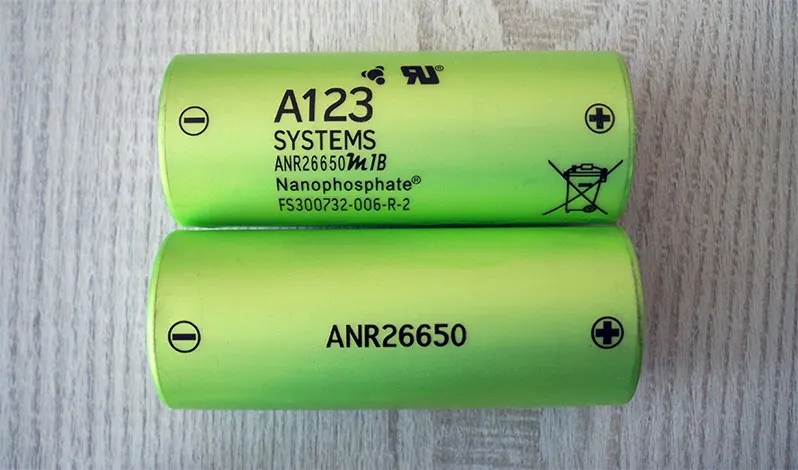
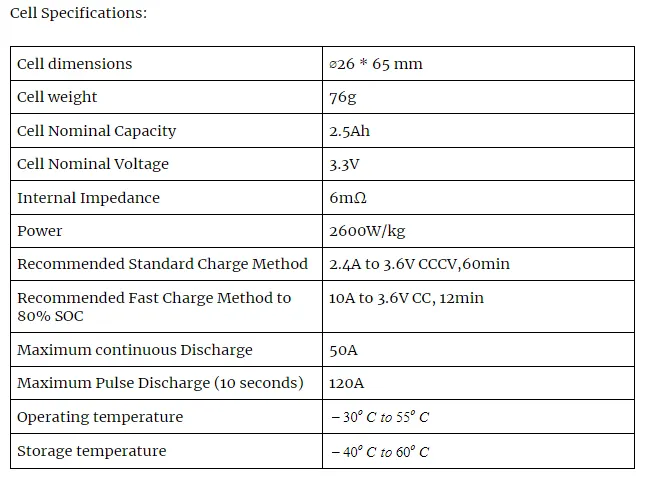
ANR26650M1-B Nanophosphate lithium iron phosphate (LiFePO4) battery delivers high power and energy density combined with excellent safety performance and extensive life cycling in a lighter weight, more compact package. Our cells have low capacity loss and impedance growth over time as well as high usable energy over a wide state of charge (SOC) range, allowing our systems to meet end-of-life power and energy requirements with minimal pack oversizing.
Calculations
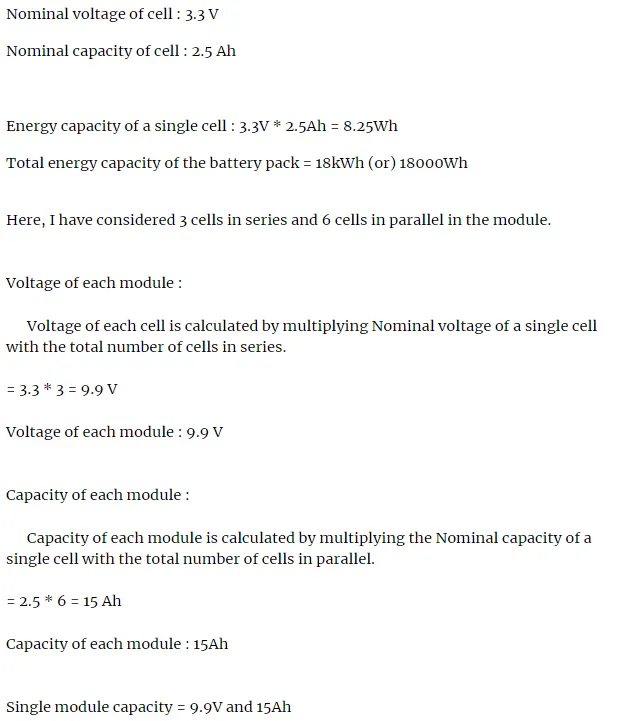
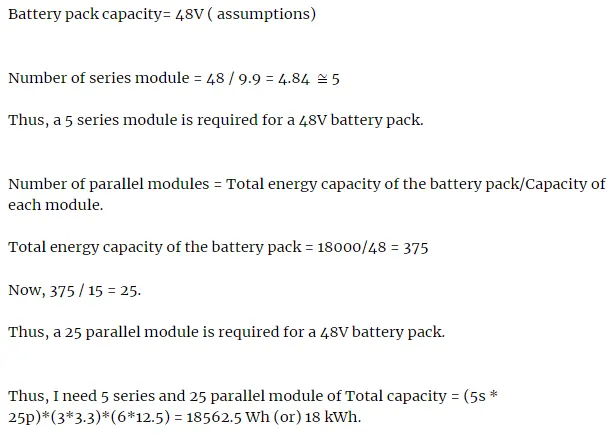
Design of battery pack using CATIA V5

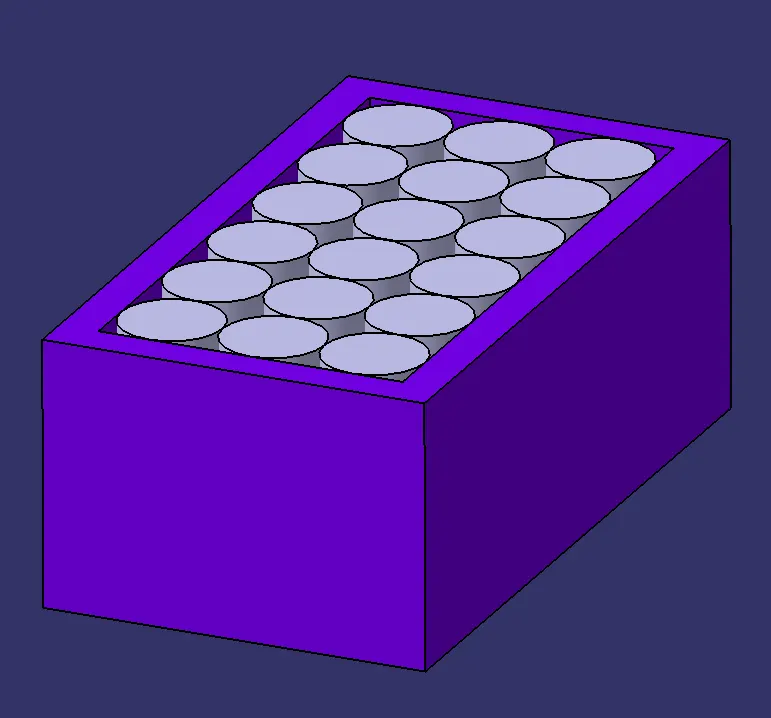
Datasheet: https://www.batteryspace.com/prod-specs/6610.pdf
Reference: https://www.ionenergy.co/resources/blogs/cell-balancing-battery-life/