Week-3 Challenge: ADVISOR Tool
AIM
- To conclude your observations on EV_defaults_in file, if cargo mass is 500 kg with all other default conditions, To observe whether the vehicle can travel for 45 km with FTP drive cycle.
- Try to change the battery capacity and to repeat the simulation.
- To Perform gradeability test with PRIUS_Jpn_defaults_in file and to compare the results in table and conclude.
The above stated challenges were done in Advisor Tool.
ADVISOR TOOL
ADVISOR, NREL’s ADvanced VehIcle SimulatOR, is a set of model, data, and script text files for use with Matlab and Simulink. It is designed for rapid analysis of the performance and fuel economy of conventional, electric, and hybrid vehicles. ADVISOR also provides a backbone for the detailed simulation and analysis of user defined drivetrain components, a starting point of verified vehicle data and algorithms from which to take full advantage of the modeling flexibility of Simulink and analytic power of MATLAB.
You may benefit from using ADVISOR if you want to:
- estimate the fuel economy of vehicles that have not yet been built
- learn about how conventional, hybrid, or electric vehicles use (and lose) energy throughout their drivetrains
- compare relative tailpipe emissions produced on a number of cycles
- evaluate an energy management strategy for your hybrid vehicle’s fuel converter
- optimize the gear ratios in your transmission to minimize fuel use or maximize performance, etc.
SOLUTIONS
a. To conclude your observations on EV_defaults_in file, if cargo mass is 500 kg with all other default conditions, To observe whether the vehicle can travel for 45 km with FTP drive cycle.
Steps
1. First we have to load EV_defaults_in file to the advisor tool.
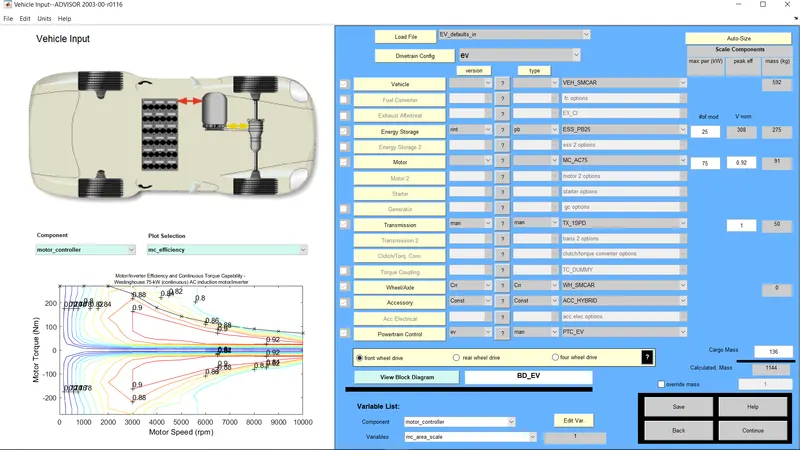
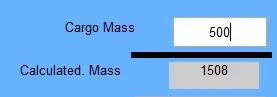
2. Cargo mass is set as 500kg, as mentioned in the question above.
3. Then Continue and Select FTP drive cycle.
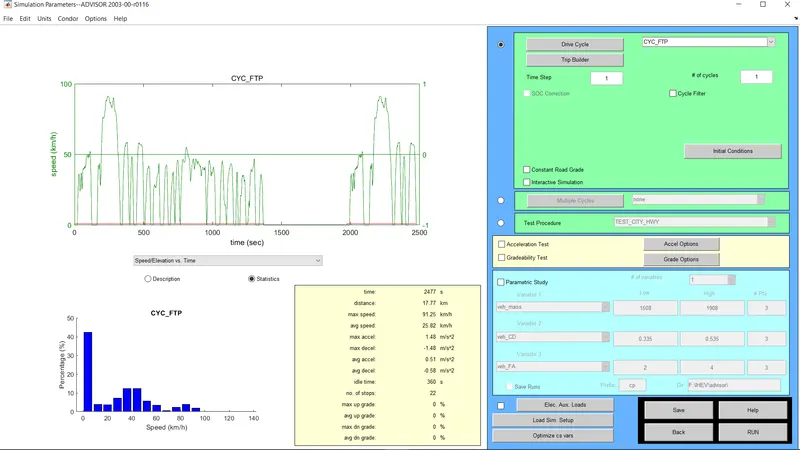
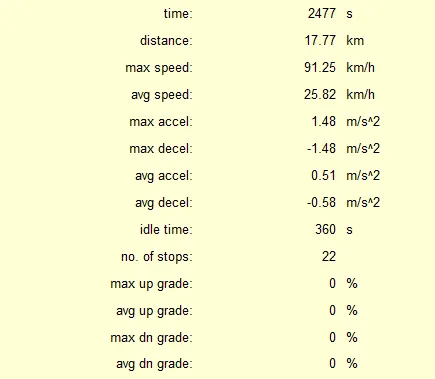
Here the distance travelled by the vehicle for the first drive cycle is shown. Which is 17.77km
4. By clicking on Run,
First Drive cycle
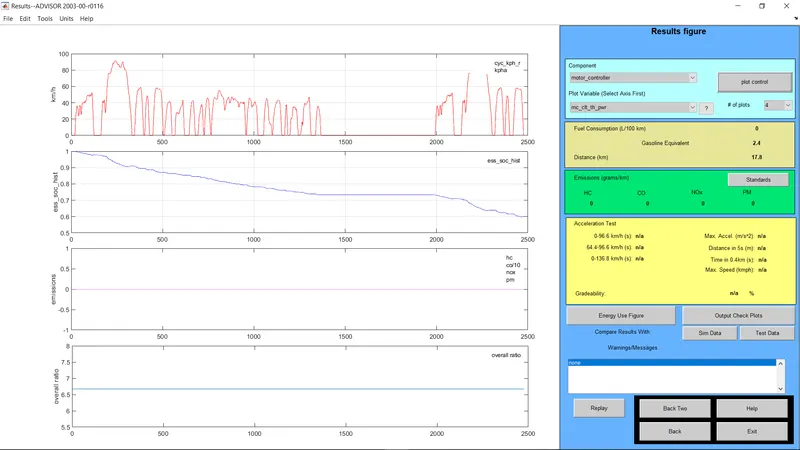
Here distance travelled by the vehicle is 17.77km and the 40% of the battery is used.
So, Now the observation is concluded that for the first drive cycle the vehicle can't achieve 45km. But it may or may not achieve in the upcoming drive cycles.
Second Drive Cycle
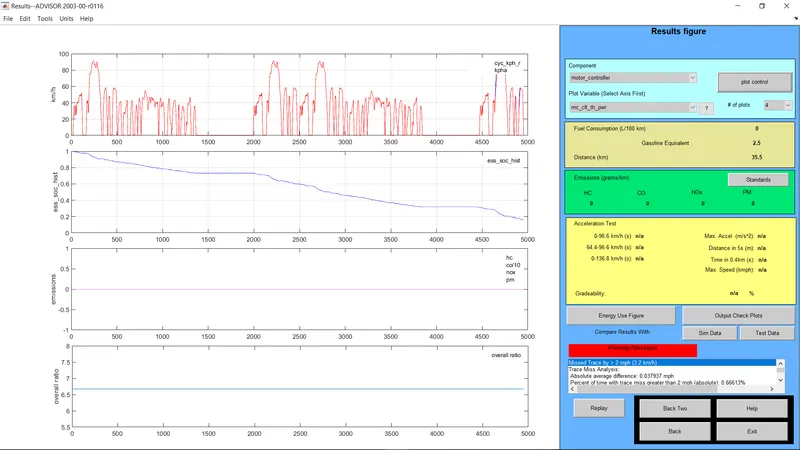
Distance covered from the 2nd drive cycle is 35.5km and 84% of the battery is used.
Third Drive cycle
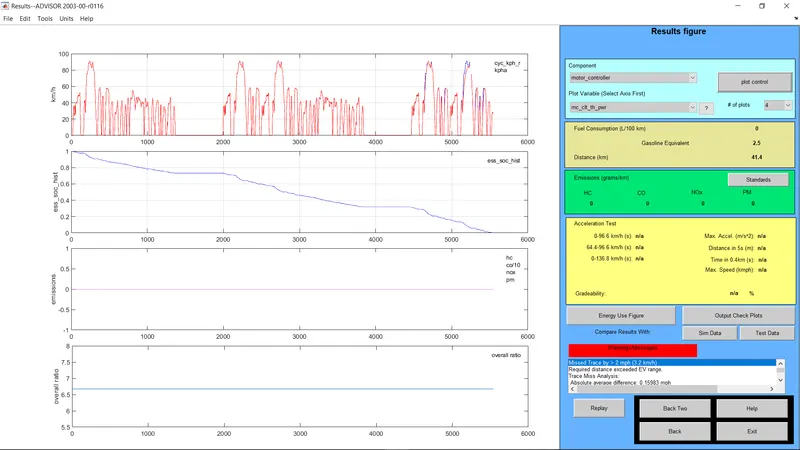
Distance covered from the 3rd drive cycle is 41.4km and 100% of the battery is used before the total cycle ends. So the total distance that can be covered by this EV_defaults_in is 41.4km. Hence the vehicle can't attain the given distance ie., 45km.
2. Try to change the battery capacity and to repeat the simulation.
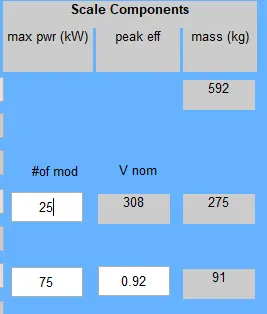
Battery module is varied from 25 to 29 in order to achieve the given distance in the FTP drive cycle before the battery power goes off.
As only Third drive cycle gives us the maximum distance travelled only those images were attached but the data fro the rest of thr drive cycles were given in words.
Third Drive Cycle
For 26 modules
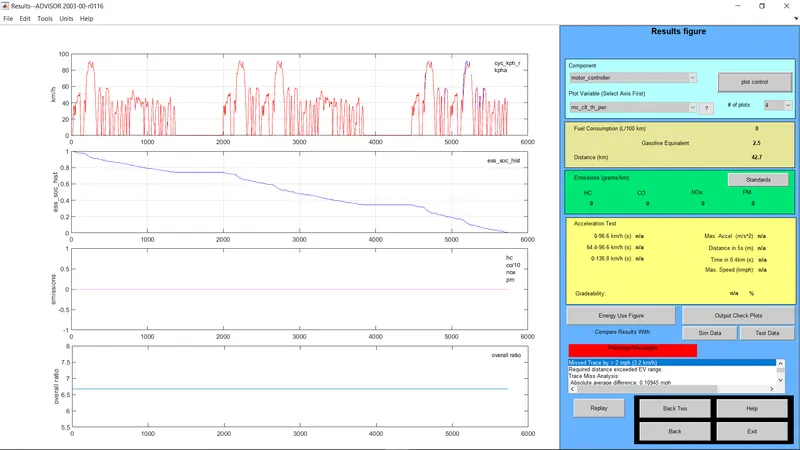
Distance covered here is 42.7km.
For 27 modules
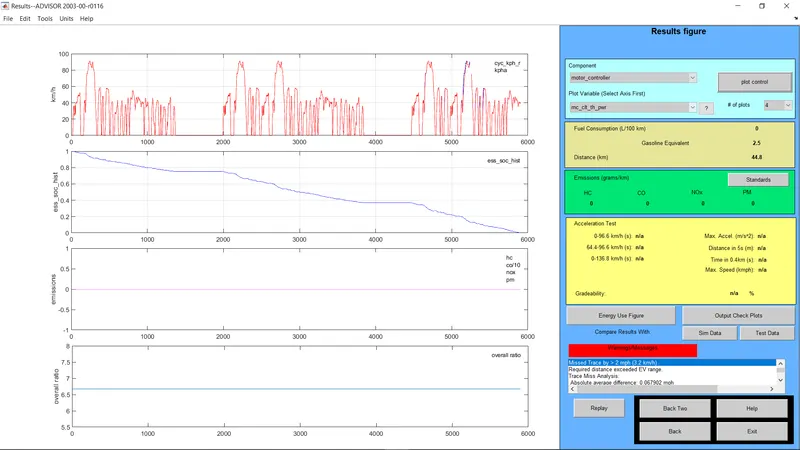
Distance covered here is 44.8km which is approximately equals to 45km.
For 28 modules
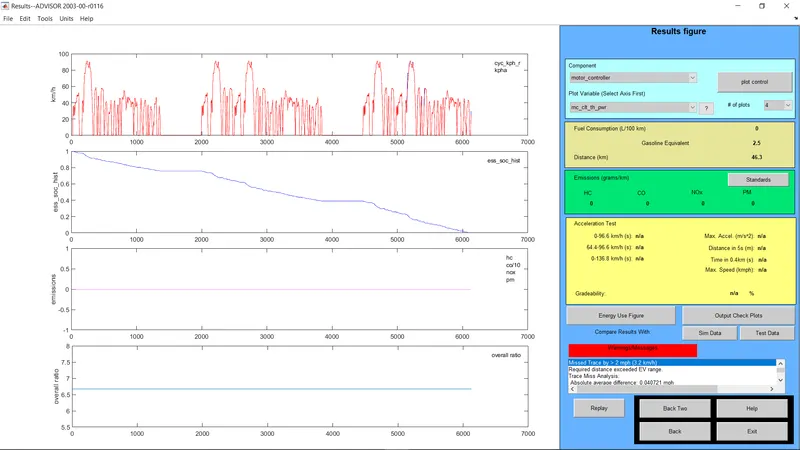
Distance covered here is 46.3km which is above 45km.
For 29 modules
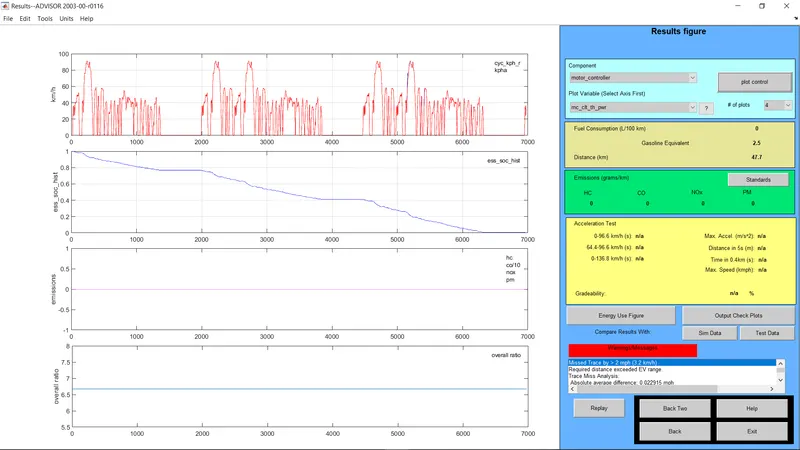
Distance covered here is 47.7km which is above 45km.
For the above stated varied battery modules, Data were compared
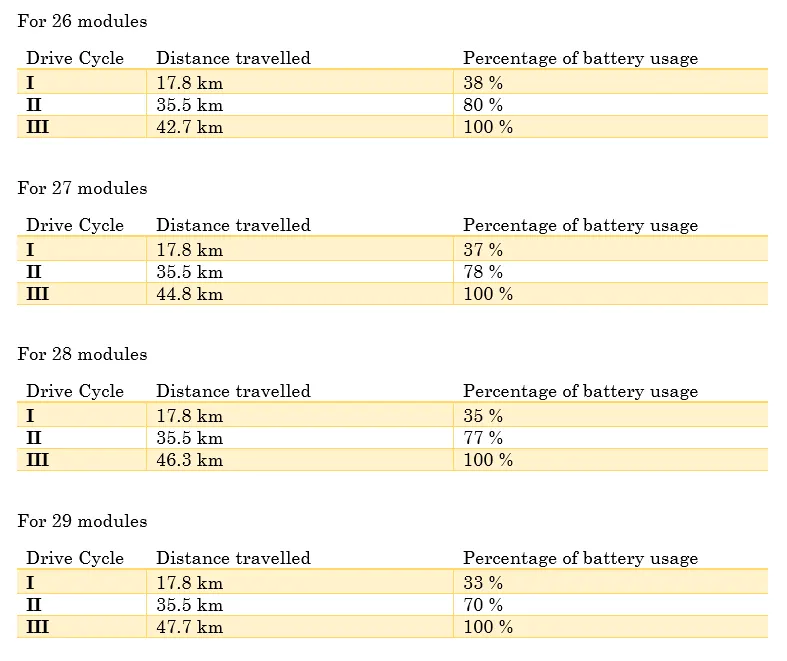
Thus 27, 28, 29 battery modules 44.8km, 46.3km, 47.7km were covered by EV_defaults_in respectively which satisfies the given 45km with payload of 500kg in FTP drive cycle.
3. To Perform gradeability test with PRIUS_Jpn_defaults_in file and to compare the results in table and conclude.
Load PRIUS_Jpn_defaults_in file into the advisor tool.
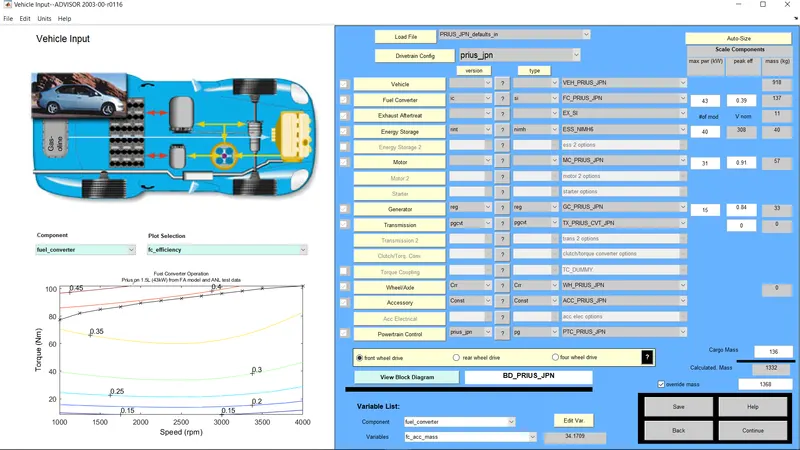
Here gradability test is done in PRIUS_Jpn_defaults_in with different sets of input data and then they were compared in a table. So here Speed and Time is varied and the comparison is studied.
Continue is clicked and then Gradeability test is enabled to perform the gradeability.

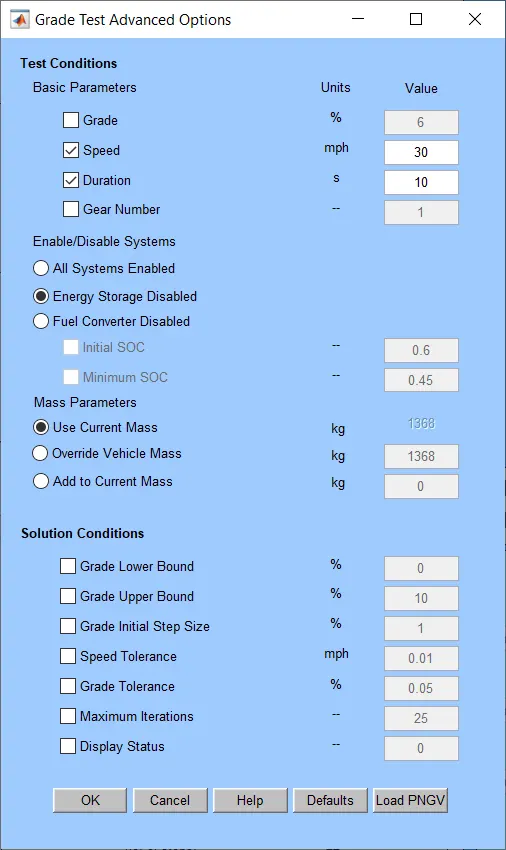
Here Speed and Duration is varied and then compared. Speed is varied from 30mph - 55mph and Duration is varied from 10 sec - 30 sec.
For 10 seconds speeds were varied.
30mph
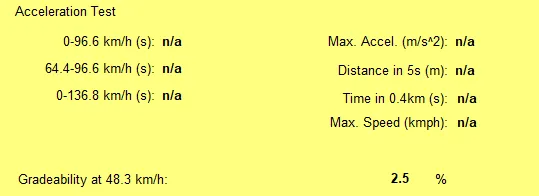
For 30mph, Gradeability at 48.3 km/hr is 2.5%.
35mph
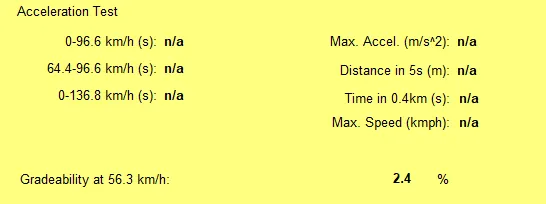
For 35mph, Gradeability at 56.3 km/hr is 2.4%.
40mph
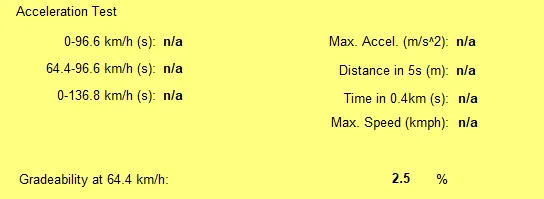
For 40mph, Gradeability at 64.4 km/hr is 2.5%.
45mph
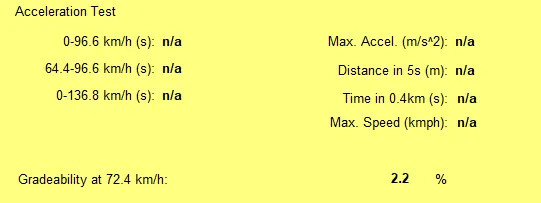
For 45mph, Gradeability at 72.4 km/hr is 2.2%.
50mph
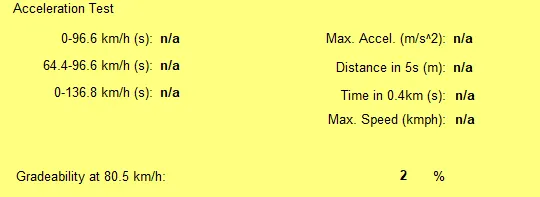
For 50mph, Gradeability at 80.5 km/hr is 2%.
55mph
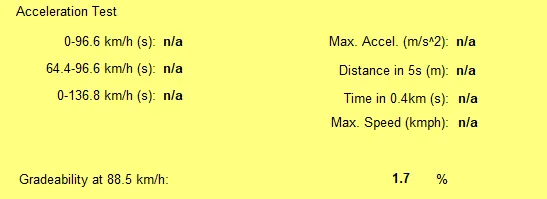
For 55mph, Gradeability at 88.5 km/hr is 1.7%
For 30 seconds speeds were varied.
30mph
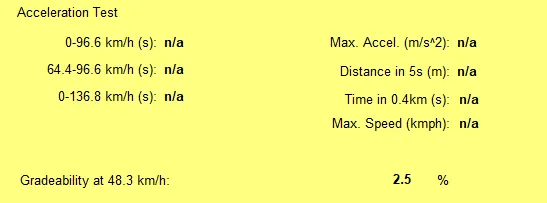
For 30mph, Gradeability at 48.3 km/hr is 2.5%
35mph
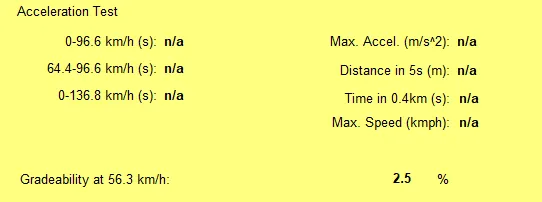
For 35mph, Gradeability at 56.3 km/hr is 2.5%
40mph
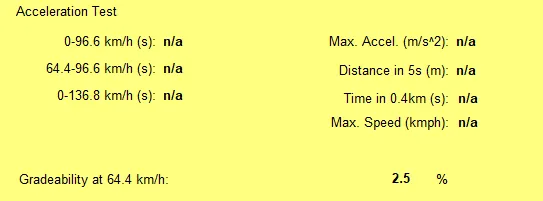
For 40mph, Gradeability at 64.4 km/hr is 2.5%
45mph
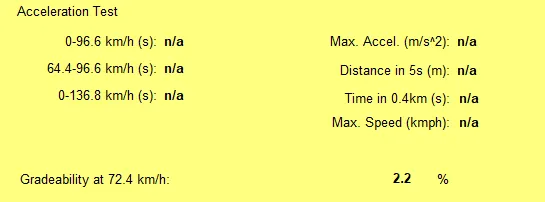
For 45mph, Gradeability at 72.4 km/hr is 2.2%
50mph
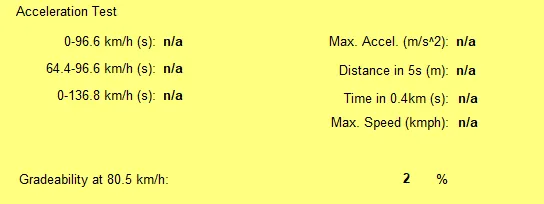
For 50mph, Gradeability at 80.5 km/hr is 2%
55mph
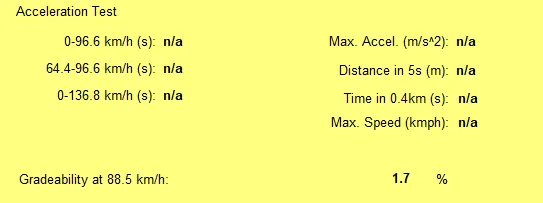
For 55mph, Gradeability at 88.5 km/hr is 1.7%
For 50 seconds speeds were varied.
30mph
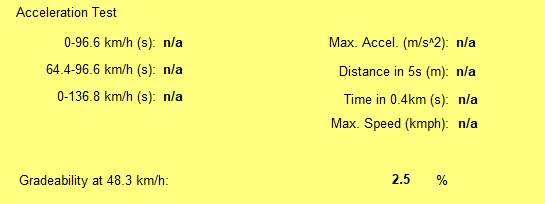
For 30mph, Gradeability at 48.3 km/hr is 2.5%
35mph
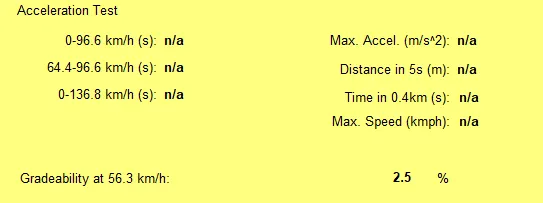
For 35mph, Gradeability at 56.3 km/hr is 2.5%
40mph
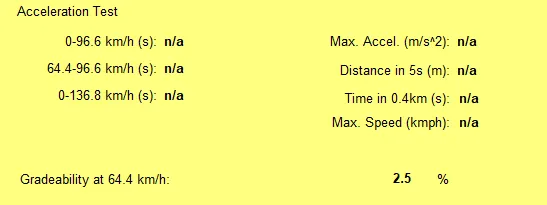
For 40mph, Gradeability at 64.4 km/hr is 2.5%
45mph
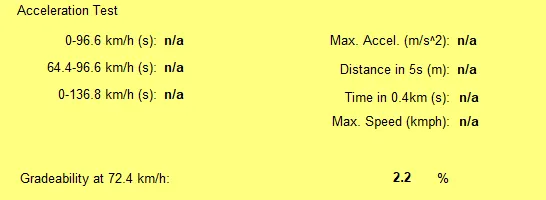
For 45mph, Gradeability at 72.4 km/hr is 2.2%
50mph
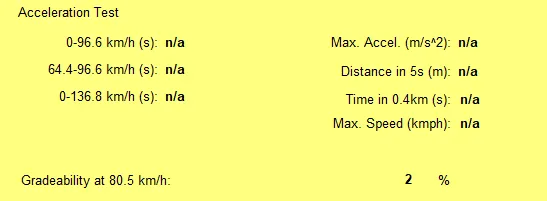
For 50mph, Gradeability at 80.5 km/hr is 2%
55mph
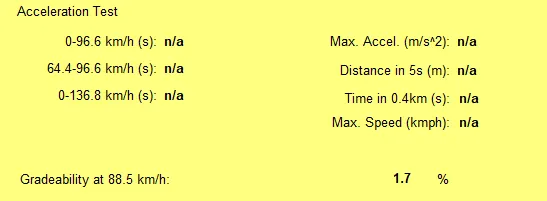
For 55mph, Gradeability at 88.5 km/hr is 1.7%
Thus for three different duration of seconds six speeds were varied in UDDS drive cycle and concluded here in the below table
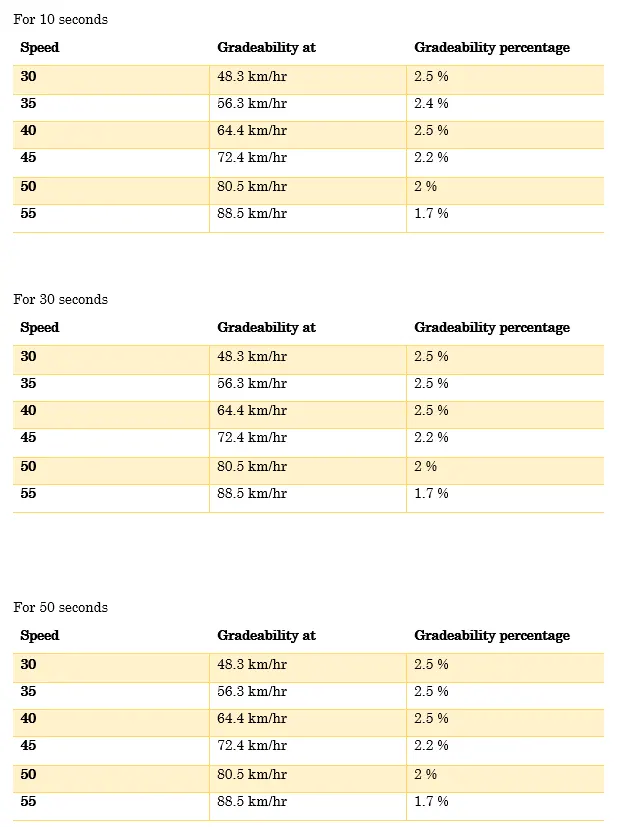
Thus all the duration gives same gradeability percent for the varied speeds. But observation here The gradeability changes with respect to speed.
As the speed increases, Gradeability percent is decreases.
RESULTS AND CONCLUSIONS
- Thus the observations on EV_defaults_in file is concluded and with the 3set of drive cycle it can't achieve 45km as the battery goes down.
- The battery capacity is changed from 25-29 and the simulation is repeated to achieve the given distance.
- Gradeability test with PRIUS_Jpn_defaults_in file is performed and the observation is concluded in the table.